How To Simplify Your Final Year IoT Projects

The Challenges in Building University’s IoT Projects

Use this method to demonstrate a great IoT project.
Collect, Aggregate, and Visualise the IoT Project in a Rapid Manner

[Note: Click here to have FREE access to this member-only story]

Let me share a bit about my experience listening to the struggles faced by university students who have to tackle an IoT project for their final year.

It’s fascinating and a bit daunting, to be honest.

Most students get the gist of what IoT is capable of, but when it comes down to actually building their projects, they hit some real roadblocks.

The challenges of building an IoT project

First off, there’s the hardware side of things.

It’s not just about slapping together some components; it requires genuine electrical and electronics know-how, which not everyone has.

Then, there’s the programming aspect — getting the IoT device to do what you want, or setting up an app to make sense of the data.

And speaking of data, the third hurdle is figuring out how to collect it from the sensors, store it properly, and then pull it out again for useful stuff like dashboard visualizations or app functions.

These steps can eat up a ton of time, especially if you’re trying to do it all solo.

From what I’ve seen, a student working alone often ends up with a simpler demo, not because they lack ideas, but because of resource and skill limitations.

Funding and team projects

While some universities don’t provide any funding for these projects, others might give just enough to cobble together a basic IoT setup.

In contrast, when students work in teams, they can pool their resources and skills, often leading to a more sophisticated project outcome.

That’s why I think it’s smarter for students to play to their strengths.

If you’re good with hardware, focus on that; if you’re a whiz at coding or data analysis, make that your centerpiece.

And here’s a bit of advice: don’t sweat the middleware or setting up a server from scratch.

Platforms like Favoriot can be a real game-changer.

They simplify device onboarding, streamline data collection, and offer ready-made dashboard widgets for customization.

This approach can free students up to concentrate on what they do best, whether that’s engineering a neat piece of hardware or developing killer app functionality, leading to a more polished and impressive final project.


Check out the Free Favoriot IoT Plan for a test run on an IoT platform.

Maximize Your Data Security with On-Premise Favoriot IoT Platform!

New Arrival from Favoriot

No annual subscription — Lifetime license!

Why settle for less when you can have the best in IoT technology right at your premises?

Contact us or schedule an appointment.

[Note: Click here to have FREE access to this member-only story]

Secure your enterprise’s data by keeping it on-site. With our on-premise Favoriot IoT platform, you maintain full control over your data, ensuring unparalleled security and privacy.

Contact us or schedule an appointment and let Favoriot help you in your IoT journey!

Internet of Things (IoT) — Book Review by Mazlan Abbas

Internet of Things (IoT) — Book Review by Mazlan Abbas

Excellent IoT book for business professionals

Not a member? Click here to read this story for free.

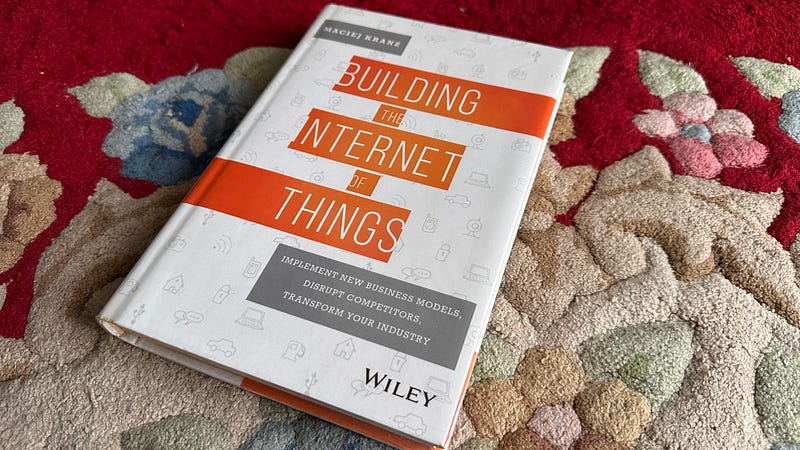
Where do I start with “Building the Internet of Things” by Maciej Kranz?

This book landed in my hands at a time when IoT was more of a buzzword to me than a clear-cut concept.

It was like finding a treasure map that promised to guide me through the maze of the Internet of Things.

Right off the bat, Kranz dives into the meat of IoT, not just skimming the surface with technical jargon that would fly over the heads of mere mortals like myself.

He’s talking business, strategy, and implementation, and my inner voice is like, “Finally, someone who gets it!

The book isn’t just a handbook; it’s a narrative that spins around the potential of IoT in a language that speaks directly to business decision-makers.

You know, the ones who nod along in meetings but are secretly wondering how IoT fits into their quarterly plans.

Kranz has this way of breaking it down, making you realize the vast opportunities IoT brings to the table.

And there I was, thinking, “This is it. This is the blueprint to revolutionize our business.

Kranz doesn’t stop at just selling you the dream.

He walks you through crafting a tangible IoT strategy that aligns with your company’s goals.

It’s not about jumping on the bandwagon; it’s about steering your ship with precision in the IoT sea.

The book made me pause and reflect, “Is my organization ready to embrace this? How can we not just participate but lead in this new frontier?

The use-cases sprinkled throughout the book are like mini lightbulb moments. T

hey’re not just hypothetical scenarios but real-world applications that show the ripple effect of IoT.

It’s as if Kranz is saying, “See, this isn’t just theory. It’s happening, and here’s how you can be a part of it.

And let’s talk about the security aspect.

In an era where data breaches are more common than I’d like to admit, Kranz doesn’t shy away from the nitty-gritty of securing your IoT infrastructure.

It’s reassuring, to say the least.

My inner skeptic was like, “Ah, finally someone who’s not glossing over the potential pitfalls.

Reading this book felt like having a mentor guiding me through the IoT landscape.

It’s not just about understanding IoT but about leveraging it to drive tangible business outcomes.

Building the Internet of Things” isn’t just a read; it’s an action plan that prompts you to get up and start integrating IoT into your strategy now, not tomorrow.

To anyone hovering on the edges of IoT, wondering how to dive in, or even the seasoned professional looking to deepen their understanding, this book is a beacon.

It’s like Kranz is right there, cheering you on, saying, “You’ve got this. Here’s how you can turn disruption into profit.

In conclusion, “Building the Internet of Things” is not just another book on my shelf. It’s a playbook that I find myself returning to, each time uncovering new insights.

It has shaped my approach to IoT in business, and I can’t help but think,

What would I have done without this gem?

If you’re in IoT or considering it, do yourself a favor and give this book a read. Trust me, your future self will thank you.

Get this book “Building the Internet of Things” from Amazon (Note: Affiliate link)

Book reviewed by Mazlan Abbas.

What Slows Down the Smart Cities Implementations in Malaysia?

The Smart City Winning Formula

If we think budget is the main issue… think again…

Image created using Canva by Author

[Note: Click here to have FREE access to this member-only story]

Smart Cities….

Just saying it out loud has this futuristic vibe, doesn’t it?

Makes me picture this utopia where everything’s interconnected, efficient, and, well, smart.

I’ve been down this rabbit hole more times than I can count, dreaming up the endless possibilities.

But then, reality checks in, and boy, does it bring you back down to Earth with a thud.

Let’s chat about why it feels like we’re stuck in the mud when it comes to getting Smart City projects off the ground in some local councils or municipalities.

It’s like everyone’s excited to talk about the potential, but when it comes to action, it’s a whole different story.

The first roadblock?

Budget. Or rather, the lack of it. It’s the age-old problem, isn’t it? No money, no progress.

But who’s going to solve this puzzle?

It seems like a merry-go-round of pointing fingers and shrugging shoulders when it comes to planning and execution.

And let me tell you, it’s causing quite a bit of frustration among industry players and solution providers. They’re all dressed up with nowhere to go, so to speak.

After stewing over this for a while, a lightbulb moment happened. Maybe we’re approaching this all wrong.

Instead of getting hung up on the budget issue first, what if we focus on getting the right talent and expertise on board?

It’s like, solve this piece of the puzzle, and the rest will start falling into place.

Because, let’s be real, you need people who know their stuff to navigate through the complex web of Smart City projects.

Now, let’s take a step back and really look at what we’re up against.

Smart Cities aren’t just about slapping some tech onto old infrastructure. We’re talking smart traffic lights, environmental monitoring, river monitoring, waste management, smart parking… the list goes on.

These projects are complex and need a dedicated team to handle them.

Think about it.

Can the existing IT team, who previously were just managing the network and computers, suddenly morph into jack-of-all-trades handling these advanced projects?

It’s a bit of a stretch, isn’t it?

I mean, if massive corporations with their fancy Smart Building solutions need a specialized IT team, how can we expect a small municipal IT team to manage an entire city’s worth of smart solutions?

It’s pretty clear that the current setup in the councils isn’t cut out for this monumental task.

What we need is a revolution in the organizational structure, a specialized team whose sole focus is on making Smart Cities a reality, from planning and procurement to implementation, operations, and maintenance.

But here’s the kicker — how many local councils in Malaysia, or anywhere for that matter, have a dedicated Smart Cities Department?

If we’re still scratching our heads on that one, it’s high time for a change.

We need to rethink our approach and start building the foundations for these departments.

So, where does that leave us? Well, I’d like to end on a hopeful note.

The road to Smart Cities might be bumpy, filled with budget woes, and a bit of a logistical nightmare, but it’s not insurmountable.

With the right talent steering the ship, a clear focus, and a bit of restructuring, we can get there.

It’s about building smarter, not just dreaming about it.

Let’s start the conversation, rally the right people, and make those Smart City dreams a reality.

Because, at the end of the day, we’re all in this together, aiming for a future that’s a bit brighter, a bit smarter, and a whole lot more connected.

Mini Weather Station — Use Case Scenarios

Harnessing the Power of Mini Weather Stations

Mini weather stations can be deployed anywhere

[Note: Click here to have FREE access to this member-only story]

One way or another, with accurate and localized weather information, value in all of it has never been more tangible, from agriculture, through environmental monitoring, to urban planning.

Lives are at stake.

While these systems function rather well for the purpose they serve, they are expensive, complex, and do not offer the granularity required to make site-specific and localized decisions.

That’s where the power of mini weather stations comes in — a solution that’s not only innovative but accessible and with the highest level of accuracy.

Why Precise, Local Weather Data Is Needed

You could think of it as planning an agricultural schedule without accurate rainfall predictions for your location down to the inch, or it’s like taking readings on urban air quality from a station miles off.

A shortage of localised weather data has the impact ranging from an inefficient use of resources to lesser productivity and to an additional environmental footprint.

Other than that, traditional weather stations are bulky, require substantial power, and added flexibility in deploying them effortlessly in different environments.

Increasing needs for accurate, real-time data on the environment

The rising impacts attributed to climate change elevate the importance, more than ever, of setting the bar high in environmental data production.

Demand is going through the roof — from farmers who need to know the precise time to plant or water, to city planners trying to mitigate urban heat islands.

This, obviously, delimits the existing system, pointing out to a critical necessity for a more flexible, accurate and cost-efficient solution.

Mini Weather Stations Driven by Solar Energy and 4G Connectivity

Enter the mini weather station: the compact and solar-powered IoT solution that redefines localized weather and environmental monitoring.

The sensors monitor the amount of rain, wind speed, atmospheric temperature, humidity, atmospheric pressure, and carbon dioxide, thus giving a complete environmental overview.

It is powered by solar energy, hence making the system to be up and be operational throughout, in the absence of other power sources.

Second, 4G cellular communicates real-time data with the IoT platform of Favoriot, hence, making collection and visualization of data easy.

Use Case Scenarios in Practice

1 — Precision Agriculture

An advanced knowledge of the environmental conditions provides information on the yield of the crops and helps in judicious decisions on how to manage resources.

The mini weather station is able to provide this real-time information on the data of rainfall, temperature, and humidity to the farmer, which informs judicious decisions on irrigation and planting.

This would not only optimize the use of water but also enhance the health of the crop and yield.

2 — Urban Environmental Monitoring

Microclimate differences and pollution are regularly evident in urban areas.

Mini weather stations are used by city managers and environmentalists to monitor levels of air quality and temperature and humidity conditions simultaneously in diverse segments of a city.

Such information is critical towards the formulation of methods of combating urban heat islands and air pollution that if successfully implemented, would further enhance urban livability.

3 — Disaster Preparedness and Response

Mini-weather stations would be of much use in disaster preparedness and response in areas affected by extreme weather events.

By way of illustration, monitoring the amount of rain and wind speed enables one to predict and reduce the impact of floods and hurricanes, hence further evacuations and resource allocation.

The Technology Edge

Really, what is intriguing about the mini weather station is its technological sophistication in the simplicity of use.

With solar power, it is deployable in remote areas without thinking of the battery life to recharge it.

It further ensures data is transmitted and received in real time, coverage and connectivity of 4G to the Favoriot platform, which collects the data and visualizes it, hence being accessible and actionable to the decision-makers.

The ability to use advanced sensors with connectivity options makes the mini weather station a robust tool for multiple applications.

Video — Mini Weather Station

Conclusion

The mini weather station is an innovative environmental monitor and data collection move that delivers a versatile, efficient, and accurate solution to real-time data collection.

And the applications in everything from agriculture to urban planning and disaster management show how geography could revolutionize our dealings with the earth and its response.

Taking advantage of the power of these mini weather stations to improve decision-making, make greater use of resources, and enhance preparedness for environmental challenges.

The next wave of environmental monitoring is here, and it’s compact, it’s solar-powered, and it’s smarter than ever before.

Contact Favoriot to schedule an appointment or for further details.

Why Malaysia Takes Almost 10 Years To Gain Traction in IoT

When New Technology Emerged

There must be a leading factor missing — this is what I found out.

Image created using Canva by Author

[Note: Click here to have FREE access to this member-only story]

Here I am, lounging in my office chair, a cup of my favorite tea in hand, staring out into the vastness of my thoughts.

It’s one of those moments where the world seems to slow down, and you’re left with nothing but your reflections.

Today, my mind wanders to a question that’s been bugging me for years: Why is the adoption of technology, specifically the Internet of Things (IoT), taking so much longer than expected?

I remember when Kevin Ashton coined the term IoT back in 1999.

It was a concept that promised to revolutionize the way we interact with the world around us.

Fast forward to 2014, Malaysia launched its National IoT Strategic Framework, and the buzz was electric. Yet, the excitement quickly fizzled out, and I couldn’t wrap my head around why.

Then came 2017, the year we launched our IoT platform at Favoriot.

We were pumped, ready to change the game, only to be met with a lukewarm response.

It was disheartening.

I spent countless nights looking at the stats, trying to figure out where we went wrong. It wasn’t until I hit the streets, talking to people, that it clicked.

The issue wasn’t with the technology itself but with the understanding of it.

Most people didn’t even grasp what IoT was, let alone why it was necessary. And if they were clueless about the ‘what’ and ‘why,’ the ‘how’ was even more of a mystery.

That’s when it hit me — the lukewarm response to our platform wasn’t about its functionality but about the lack of knowledge and understanding.

Fast forward a few more years, and the landscape started to change.

We realized that if we wanted to jumpstart IoT adoption, we needed to go back to the basics.

We needed to build awareness and nurture talent through IoT training.

It was a slow process, but with the push towards Industry 4.0 and AI, IoT began to gain prominence.

The need to collect data was undeniable, and how could you do that without IoT?

Image from Pixabay

Now, as I sit here in 2024, sipping my tea and looking over the latest stats, I can’t help but feel a sense of accomplishment.

The journey hasn’t been easy, but the growing IoT awareness and adoption is a testament to our efforts.

It’s a reminder that sometimes, to move forward, you have to take a step back and educate.

As I muse over this thought, I realize that the key to technology adoption isn’t just about creating cutting-edge solutions but also about bridging the gap in understanding.

And as the world slowly but surely embraces IoT, I can’t help but think, “We’re finally getting there.

Image from Pixabay

IoT Trainings Offered by Favoriot:

Why the Favoriot IoT Developer Plan is Ideal for System Integrators

How Favoriot IoT Developer Plan Can Help System Integrators to Expedite Their IoT Projects

[Note: Click here to have FREE access to this member-only story]

System integrators (SIs) are tasked with the challenging role of amalgamating diverse technologies to deliver comprehensive solutions.

Favoriot, as an innovative IoT platform, significantly simplifies this task, mainly through its Developer Plan, which is especially suited to the needs of SIs.

This article highlights why the Developer Plan of Favoriot is a superior choice for SIs looking to expedite their IoT projects effectively.

Understanding the Challenges in IoT Deployment

IoT deployment is laden with complexities, including device placement, seamless connectivity, platform integration, and ensuring robust security measures.

These challenges can be daunting, especially for smaller companies.

A seasoned IoT system integrator is crucial in weaving these disparate elements into a seamless solution.

Favoriot: A Strategic Partner for System Integrators

Favoriot offers a versatile IoT middleware that bridges a wide array of devices using standard IoT protocols.

Its significant features that cater particularly well to SIs include:

  • Versatile Connectivity: Compatibility with a diverse range of devices.
  • Flexible Deployment: Options for both cloud and on-premises deployment.
  • Customizable Solutions: Support for tailored dashboard and application development.
  • Scalability and Expansion: Designed for growth and interoperability, steering clear of vendor lock-ins.

The Developer Plan: A Closer Look

The Developer Plan by Favoriot is designed for advanced IoT developers, often including SIs working on complex, large-scale projects. Its features are:

  • Pricing: At MYR 180 per month, MYR 1,200 per year, or MYR 1,260 for the Developer Bundle, it’s an investment in high-level IoT development.
  • Capabilities: It encompasses all the features of the Beginner Plan and extends them significantly. This includes support for 100,000 daily APIs, data export options, unlimited dashboards, and advanced widget types.
  • Advanced Integration: It offers 3rd-party integration capabilities, manual and automated control, and comprehensive analytics.
  • Suitability: Tailored for complex projects that demand in-depth analytics, extensive device management, and third-party integrations.

Advantages for System Integrators

  1. Scalability and Flexibility: The Developer Plan allows SIs to scale and modify solutions as per evolving project requirements.
  2. Enhanced Device Management: With support for many devices and advanced control options, SIs can manage complex IoT ecosystems more efficiently.
  3. Advanced Analytics: Critical for SIs, as it enables them to derive meaningful insights and refine IoT solutions for optimal performance.
  4. Third-Party Integrations: SIs needs to incorporate various technologies and platforms, enhancing the functionality and reach of IoT solutions.
  5. Comprehensive Security: As IoT systems often handle sensitive data, the advanced security capabilities of the Developer Plan ensure robust protection.

Conclusion

The Developer Plan of Favoriot is particularly well-suited for system integrators due to its comprehensive features that cater to the demands of large-scale, complex IoT projects.

By choosing the Developer Plan, SIs can leverage advanced analytics, extensive device management, and robust integration capabilities, thus expediting their IoT projects while ensuring quality and scalability.

This plan is not just a tool but a strategic asset for SIs aiming to excel in the IoT domain, providing them with the necessary capabilities to successfully navigate the complexities of IoT deployment.


Download Mastering IoT With Favoriot eBook ← Here.

https://mazlanabbas.gumroad.com/l/masteringiot

Architectural Patterns and Techniques for Developing IoT Solutions — A Book Review

Internet of Things (IoT)— Book Review by Mazlan Abbas

Best and Practical IoT Book in the Market

Architectural Patterns and Techniques for Developing IoT Solutions

[Note: Click here to have FREE access to this member-only story]

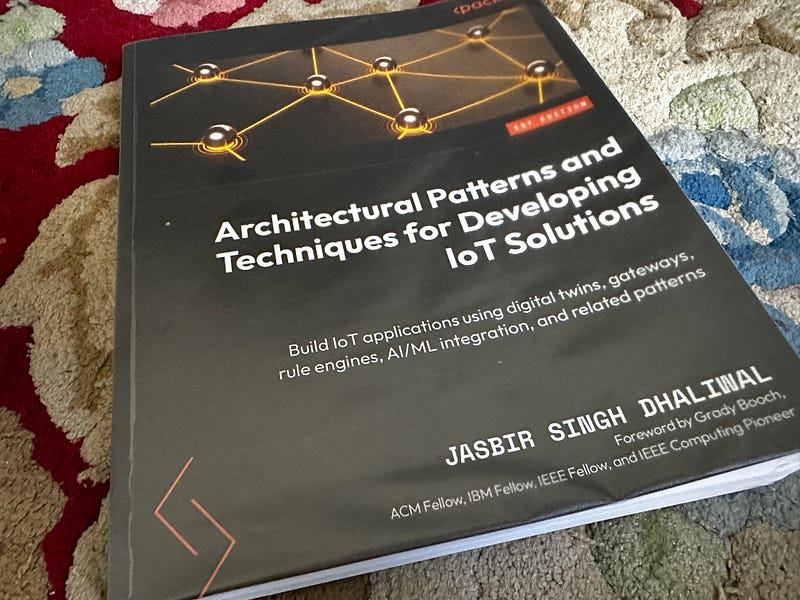
Big shoutout to Jasbir Singh Dhaliwal for dropping this gem: “Architectural Patterns and Techniques for Developing IoT Solutions: Build IoT applications using digital twins, gateways, rule engines, AI/ML integration, and related patterns.”

Architectural Patterns and Techniques for Developing IoT Solutions

Jasbir’s killing it in the IoT game and leading the way with some serious knowledge bombs.

His book is the ultimate cheat sheet for getting into or leveling up in the IoT world. It’s written in plain English so you won’t get lost in tech babble, and it’s packed with insights that’ll give you a solid grip on IoT basics and beyond.

You’ll love how it dives into real-life examples to take you from just talking the talk to walking the IoT walk.

It’s all about making those techy concepts stick by seeing them in action.

Plus, it’s not just theory. Jasbir shows you how to roll up your sleeves and get your hands dirty with IoT, turning big ideas into real-world magic. It’s perfect for tech heads and biz folks looking to get in on the IoT action.

Architectural Patterns and Techniques for Developing IoT Solutions

Seriously, don’t sleep on this book.

It’s a must-have for anyone in the IoT sphere. And hey, if you’re keen to check it out, hit up the link below (yup, it’s an affiliate link, so you know).

This book is a total game-changer. Don’t miss out!

https://amzn.to/49xPkzZ

Try Audible Premium Plus and Get Up to Two Free Audiobooks

Mastering IoT with Favoriot

Tailored for IoT enthusiasts

[Note: Click here to have FREE access to this member-only story]

This guide, “Mastering IoT with Favoriot,” tailored for enthusiasts eager to explore IoT, mainly through the Favoriot platform, is a treasure trove of knowledge, meticulously organized into four key sections, each shining a light on different aspects of IoT application in business and academia.

This eBook is FREE to download, but your contribution, big or small, helps support creating more valuable content like this eBook.

Here’s What Awaits You:

  • Solid Foundations in IoT: Kick off your adventure with an insightful introduction to IoT platforms. Discover the critical role of on-premise platforms for seamless deployments and the importance of integrating IoT into academic environments.
  • A Deep Dive into IoT Platforms: Navigate through a thorough comparative analysis of leading IoT platforms, including Favoriot, AWS IoT, and Microsoft Azure IoT, among others. This segment is a goldmine for those weighing their options to find the perfect platform match.
  • Exploring the Favoriot IoT Platform: The heart of the book delves into the Favoriot IoT Platform, presenting its array of plans and functionalities. This section primarily benefits businesses and developers keen on maximizing the Favoriot platform for their IoT ventures.
  • Hands-On IoT Solutions: Get practical advice and strategies for crafting and customizing IoT solutions. Learn how to efficiently transition from a general platform to a specialized solution, shortening the development timeline.
  • IoT in Higher Education: An inspiring section dedicated to integrating IoT in higher education, illustrating how IoT can transform educational methods and equip future developers with the necessary skills.
  • Real-World Insights: Enrich your understanding with case studies and applications that bring IoT concepts to life, making the guide informative and engaging.
  • Concluding Reflections: Wrap up your journey with a summary of IoT’s impact across various domains, highlighting the revolutionary potential of the Favoriot platform.

Why This Book Stands Out:

This guide distinguishes itself through its clear, in-depth coverage and structured approach to complex topics.

It is an indispensable resource for business leaders, IoT developers, and educators, offering theoretical insights and practical knowledge.

Its unique focus on the Favoriot platform differentiates it from other IoT resources.

In essence, “Mastering IoT with Favoriot” is an essential read for anyone looking to grasp and exploit the vast opportunities of IoT.

Its combination of foundational knowledge, practical tips, and real-world examples makes it a premier resource in IoT.

Join us in exploring the limitless possibilities of IoT by supporting this invaluable guide. Your journey into the innovative world of IoT starts here.

Download HERE.

https://mazlanabbas.gumroad.com/l/masteringiot

The Best Universities in Malaysia That Offers IoT Courses or Programmes

The Universities That Implement and Embrace These Traits Will Become the Leaders in IoT Education

Image created using Canva by Author

“The spark of IoT innovation will transform students into architects of tomorrow’s interconnected world.”

Which Universities offer the best IoT education in Malaysia?

But how do we define the best IoT education?

As someone involved in building the IoT curriculum for universities and TVET institutions in Malaysia, I would like to share my perspectives.

Malaysia’s approach to weaving IoT into the academic fabric is cultivating a future workforce ready to navigate and shape the technological frontiers of the local industries.

How many Malaysian universities architect their IoT academia, spotlighting their holistic course offerings, cutting-edge lab environments, synergistic industry ties, and scholarly faculty?

Let’s dive deep into the traits of IoT Education leaders.

Crafting a Multifaceted IoT Curriculum

“Through the loom of academia, the comprehensive IoT curriculum weaves together the essence of innovation and application, shaping the pioneers who will navigate the technological frontiers of tomorrow.”

An exceptional IoT program must be characterized by its comprehensive and multidisciplinary curriculum, addressing all critical facets of IoT technology:

  • Embedded programming
  • Programming languages
  • Microcontrollers
  • Fundamentals of telecommunications (connectivity options)
  • Data communications (protocols)
  • Middleware (IoT Platforms such as Favoriot, Azure IoT or ThingSpeak)
  • Mobile or web development.

Furthermore, it should delve into specialized skills such as:

  • Data Analytics
  • Machine learning
  • IoT security

The curriculum’s design within these universities must be meticulously crafted to provide a deep dive into IoT’s theoretical underpinnings and practical applications, ensuring a well-rounded education.

Laboratories Equipped for the Future

“Within the crucible of our labs, theory is transformed into action, where every experiment brings us closer to the future we’re not just predicting but creating.”

Hands-on experience is indispensable in IoT education, necessitating laboratories with the latest IoT tech.

These labs are incubators for innovation, where students engage directly with IoT devices, navigate programming challenges with microcontrollers, explore connectivity through various protocols, and send data to the IoT platform.

They have become adept in harnessing IoT platforms (such as Favoriot) for:

  • Data aggregation
  • Understanding the IoT protocols such as MQTT, REST, or CoAP
  • Mastering the art of data visualization and analytics.

This hands-on approach is critical, bridging the gap between theoretical knowledge and real-world application, ensuring graduates are proficient in both.

Fostering Industry-Academia Synergies

“The bridge between academia and industry is built on shared visions, where classrooms extend into the real world, and students emerge not just as graduates but as pioneers of IoT innovation.”

The symbiosis between academia and industry is a cornerstone of IoT education.

Universities with robust industry connections offer students unparalleled access to real-world IoT projects, internships, and the chance to earn IoT Professional Certifications.

These collaborative ventures are more than educational enhancements; they are a conduit to the practicalities of the IoT landscape, preparing students for the dynamic challenges of the industry.

Scholarly Faculty: The Pillars of Excellence

“Behind every great innovation in IoT, there stands a mentor from academia, whose wisdom lights the path from knowledge to wisdom, from classrooms to the cosmos of technology.”

The caliber of an IoT program is significantly uplifted by the faculty’s expertise and industry experience.

The distinction of Malaysian universities in IoT education can be attributed to their accomplished faculty, whose academic rigor and practical insights equip students with a profound understanding of IoT’s technical and business dimensions.

Their guidance ensures students are well-versed in the latest technological advancements and prepared to navigate the complexities of the IoT ecosystem.

Envisioning a Future Forged by IoT Expertise

“In the realm of IoT education, Malaysia is not just a participant but a visionary architect, crafting a future where technology serves as a bridge to an innovative, interconnected world.”

Malaysian universities are at the vanguard of global IoT education, heralding a new era of technological leadership.

By offering a curriculum that is both comprehensive and cutting-edge, fostering hands-on learning through advanced labs, cultivating industry partnerships, and being home to esteemed faculty, these institutions are laying the groundwork for IoT innovation.

The burgeoning demand for skilled IoT professionals underscores the significance of their mission, positioning these graduates as pivotal contributors to the local and global technological landscapes.

The achievements of these educational programs transcend national boundaries, marking Malaysia as a critical influencer in the IoT domain’s future direction.


IoT Trainings Offered by Favoriot:


Contact Favoriot to schedule an appointment or for further details