The Book That Finally Told the Truth About IoT

For years, I’ve watched the Internet of Things evolve—promises, pilots, platforms, and… silence.

We were told IoT would change everything. And yet, here we are. Smart cities still look like science projects. Predictive maintenance rarely gets past a demo. Even in conferences, IoT is the quiet cousin, while AI receives the spotlight.

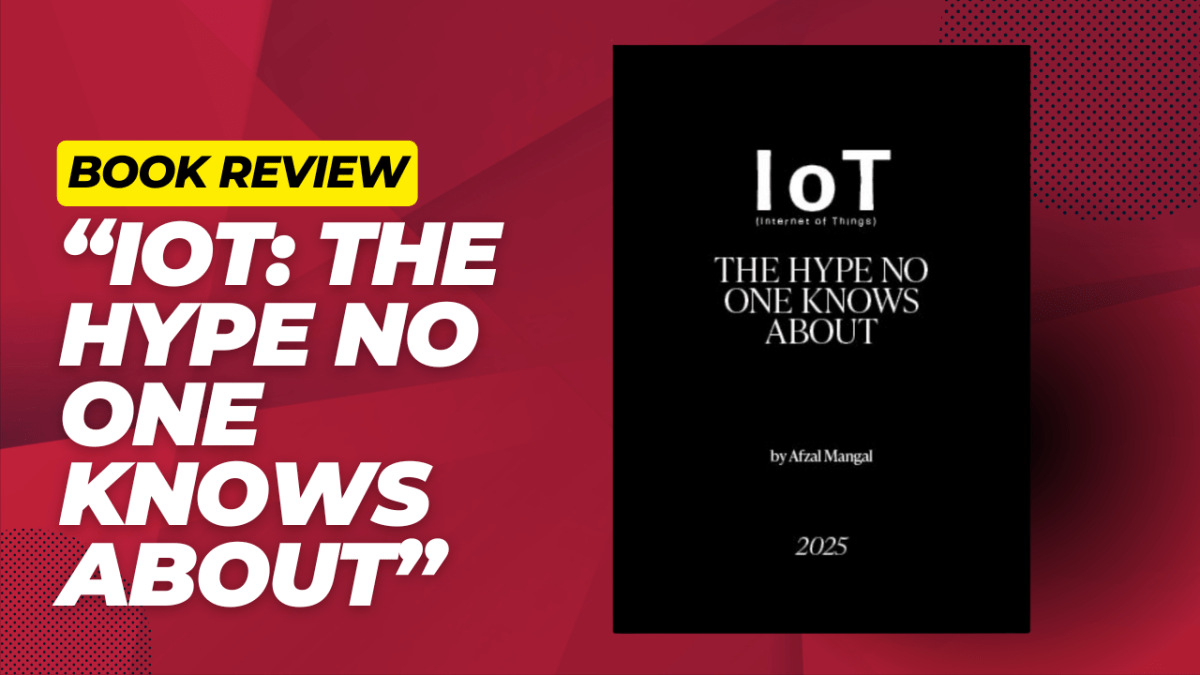
So when I read IoT: The Hype No One Knows About by Afzal Mangal, I didn’t just read it—I felt it.

This wasn’t another technical deep dive. It wasn’t a glossy case study collection either. It was something rare: an honest book written by someone who’s actually done the work, faced the resistance, and survived the grind.

It’s Not the Technology That’s Broken

The core message? IoT works. That’s not the problem. The issue is that no one knows or sees it, and often, no one asks for it.

IoT doesn’t fail in the lab. It fails in the boardroom. It fails when:

  • Decision-makers don’t know what problem IoT solves
  • Internal champions give up after the pilot
  • Sales teams can’t explain it without five slides and a PhD

This hit hard. I’ve seen excellent IoT projects—solid tech, measurable impact—die quietly because there was no momentum to take them further.

Meanwhile, AI Took the Stage

Mangal makes a bold (and fair) comparison: AI and IoT were both hyped. But only one became mainstream.

Why?

Because AI built a tribe, it became aspirational. It had influencers, evangelists, podcasts, and memes. It was everywhere. IoT, on the other hand, stayed niche. It stayed quiet. It stayed technical.

It didn’t show off its wins. It didn’t shout. And that’s where we lost the game.

The Book Offers Solutions, Not Just Complaints

The best part isn’t just the diagnosis. It’s the prescription.

Mangal outlines 70 actions—from marketing to product strategy—that are refreshingly doable. No jargon. Just real advice:

  • Put “IoT” in your product name
  • Sell small and scale later
  • Educate the market like a campaign
  • Speak in stories, not specs
  • Make IoT visible in daily life

It sounds simple, but when did we last do any of that?

My Honest Take

This book isn’t for those looking for another buzzword to pitch. It’s for those tired of being invisible. It speaks to the founders, engineers, salespeople, and educators who want IoT to finally get the recognition it deserves, technically and publicly.

It made me reflect deeply on how I present, pitch, and teach IoT.

We can keep building great tech. But until we start creating awareness, IoT will remain a background actor in a play it should lead.

My Final Thoughts

Afzal Mangal didn’t just write a book—he wrote a mirror. If you’ve ever been frustrated with the slow progress of IoT adoption, this book gives you clarity—and a plan.

I highly recommend it to anyone in the IoT space, especially:

  • Startup founders
  • Product managers
  • Policy-makers
  • Tech educators
  • Marketers are trying to position IoT solutions

The industry doesn’t need more hype. It needs truth, clarity, and action.

This book delivers all three.

Favoriot: A Marathon of Pivots, Perseverance, and Purpose

“This is going to be a game-changer!”

That was the spark that ignited our journey. In 2017, we embarked on a mission to revolutionize the Internet of Things (IoT) landscape in Malaysia. Our first stride? Raqib—a wearable device designed to ensure the safety and health of Umrah and Hajj pilgrims. It was more than just a product; it was a vision to provide peace of mind to individuals and their families during spiritual journeys.

KM 0–5: The Starting Line – Raqib’s Ambitious Launch

Launching Raqib felt like the exhilarating first kilometers of a marathon. The energy was high, the vision clear, and the team motivated. We believed in our product’s potential to make a significant impact. However, as with any long-distance race, the initial excitement soon gave way to unforeseen challenges.

KM 6–10: The First Hurdles – Technical Glitches and Market Realities

As we progressed, technical issues began to surface. The device faced unexpected glitches, and our marketing efforts didn’t yield the anticipated traction. It was a tough pill to swallow. But we weren’t ready to give up. We pivoted and introduced Favorsense, aiming to capture a different segment of the IoT market. Yet, despite our best efforts, it struggled to gain user interest.

“Where did we falter? What could we have done differently?” I often pondered during those challenging times.

KM 11–15: The Turning Point – Recognizing the Core Strength

Amidst these setbacks, a realization dawned upon us. The common thread between Raqib and Favorsense was the underlying platform that powered them. This platform, robust and versatile, had the potential to be more than just a backbone for our products. It could be the very product we needed to focus on.

I told the team, “This platform can be used by anyone who wants to develop their own IoT products. “

With renewed determination, we decided to pivot once more. We introduced the Favoriot IoT Platform to the public, offering it free to attract a broader audience. However, adoption was slower than expected. Despite creating tutorials and sharing resources, many users found it challenging to navigate the platform.

KM 16–20: Bridging the Gap – Introducing IoT Courses

Understanding the need for guidance, we launched IoT courses tailored to help users grasp the platform’s capabilities. These courses weren’t just about theory; they offered hands-on experience, enabling participants to apply their knowledge in real-world scenarios.

The response was overwhelmingly positive. Universities and polytechnics across Malaysia began integrating the Favoriot IoT Platform into their curricula. Students utilised it for their final-year projects, bringing innovative ideas to life.

“This is a significant achievement for us,” I expressed pridefully.

KM 21–30: Expanding Horizons – Building Partnerships

As we continued our journey, we recognised the importance of collaboration. We partnered with system integrators and enterprises, offering our platform’s cloud-based and enterprise-based models. This flexibility allowed clients to choose solutions that best fit their needs, further solidifying Favoriot’s position in the market.

KM 31–40: Gaining Momentum – Recognition and Growth

Our efforts began to bear fruit. Favoriot was no longer an unknown name in the IoT landscape. Out of 9,375 users (as of January 27, 2025), 80% came from our own country—a milestone that filled me with pride.

“We did it,” I told my team with a sense of accomplishment. “We’ve proven that we can compete with global platforms and carve out our own space.”

KM 41–42.195: The Final Stretch – Looking Ahead

Today, the Favoriot IoT Platform is a testament to resilience and adaptability. The journey has been a marathon from its humble beginnings with Raqib to becoming a cornerstone in IoT education and development. We’ve learned that setbacks aren’t failures but opportunities to pivot and grow.

As we look ahead, our vision is to take the Favoriot IoT Platform beyond Malaysia, reaching global audiences and empowering the next generation of IoT innovators.

“This is just the beginning,” I remind the team. The marathon continues, and we’re ready for the next leg of the race.

So, Startup or Marathon?

Startup is a marathon.

But with Favoriot, it’s not just about enduring.

It’s about leading, creating, and building something that lasts beyond the race.

And here’s the truth no one tells you:

The real finish line is when others start running because you did.