Why do Smart Cities Require an IoT Platform?

Breaking Down Barriers

From Fragmentation to Unity — The Transformative Effect of Smart City Platforms
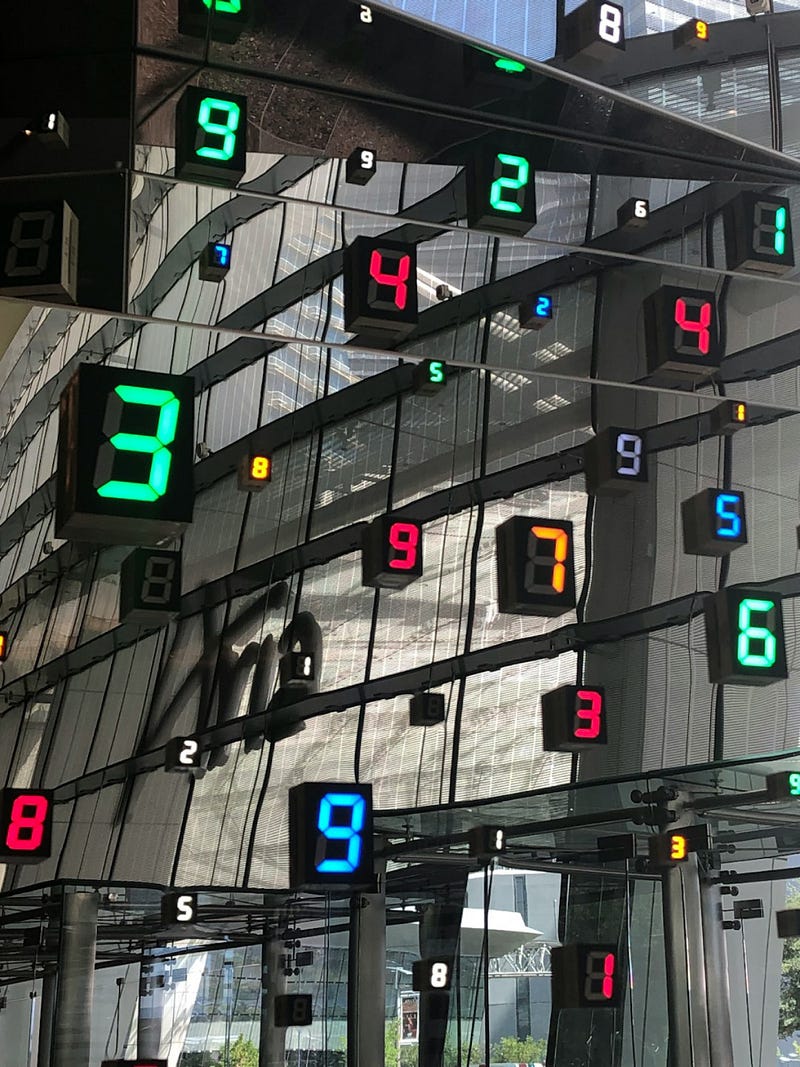
Digital Cities – Too much data? Photo by Donna Elliot on Unsplash

Not a member? Click here to read this story for free.

Local councils often grapple with an array of complex issues that impede progress.

Without integrating Smart City IoT platforms, these problems are magnified, threatening the very fabric of efficient and sustainable city management.

While diverse, I have observed that these challenges share a common root in the absence of advanced technological integration.

Integration Woes

The first area for improvement is integrating new technologies with the existing infrastructure.

In my experience, this often results in a patchwork of solutions that fail to communicate effectively with one another, leading to a fragmented system fraught with inefficiencies and disjointed services.

This stifles innovation and engenders frustration among stakeholders striving for progress.

Scalability Strains

As urban areas expand, the need for services to grow in tandem becomes evident.

Without the flexibility offered by IoT platforms, scaling up to meet the demands of urban growth becomes a Herculean task.

The strain on the existing systems can lead to a potential degradation in the quality of services provided to the community, affecting the reputation and trust in local governance.

The Great Divide — Communication Barriers

A profound challenge lies in the administrative body’s need for unified communication channels.

Siloed departments result in a fragmented flow of information, thereby crippling the coordination of city services.

This issue becomes critically pronounced in emergencies where a seamless response is crucial for the well-being of citizens.

Inefficiency in Resource Management

Another central pain point is the inefficient use of resources.

I’ve witnessed local councils battle rising operational costs and inefficiencies in service delivery due to the lack of IoT platforms.

The laborious task of maintaining disparate systems and databases independently is both time-consuming and costly.

The Data Dilemma: Inadequate Utilization

The inability to utilize the data collected effectively can be a major setback.

Without robust data integration and analysis capabilities, real-time monitoring and informed decision-making remain a far-fetched dream, leaving councils a step behind in understanding and reacting to the needs of their city.

Complexities in Device Management

Managing an increasing array of devices and sensors spread across the urban landscape is an overwhelming task when handled manually.

The complexities and time demands of such an undertaking are significant, often requiring a disproportionate allocation of resources that could be better utilized elsewhere.

IoT devices around the city. Photo by Jorge Ramirez on Unsplash

Security — The Invisible Threat

The vulnerability of a city’s infrastructure without IoT platforms is alarming.

Enforcing consistent security policies across all devices and systems becomes a daunting challenge, exposing the network to potential cyber-attacks and unauthorized access to sensitive information.

The Path to Smart City Transformation

Acknowledging these challenges is the first step toward transformation.

As we delve into the intricacies of each problem, the opportunity for technological intervention becomes increasingly apparent.

Smart City IoT platforms are a great solution, offering a pathway to a more interconnected, scalable, and secure urban environment.

Envisioning a Connected Future

As a decision-maker within a local council, envisioning a connected future is not merely aspirational; it’s essential for the progression of our city’s heartbeat.

A Smart City IoT Platform is not just a tool — it’s the bridge to this future.

It promises to bind disparate elements into streamlined services, optimized resources, and empowered decision-making.

The transition to such a platform is the catalyst for urban revitalization.

Adopting Smart Solutions

Confronted with the daunting list of challenges, our council has to take definitive action.

Implementing a Smart City IoT Platform is not a luxury — it’s a necessity.

We must leverage this technology into a cohesive and resilient network.

Crafting Cohesion through Technology

Integration no longer has to be a struggle.

With a Smart City IoT Platform, disparate systems can seamlessly mesh, improving efficiency and service delivery.

Our existing infrastructure can be augmented and made future-proof, ready to accommodate new technologies without disrupting past endeavors.

Scaling Up with Confidence

Scalability becomes manageable with IoT platforms.

These systems are designed for flexibility, enabling us to expand services as the city flourishes without compromising quality or performance.

This means keeping pace with growth and fostering an environment where innovation thrives.

Enhancing Communication for Effective Governance

Communication barriers are dismantled with the adoption of a unified platform.

Information flows freely between departments, enabling data sharing that supports coordinated efforts across all city services.

In emergencies, this could mean the difference between chaos and order.

Optimizing Resources for Sustainability

IoT platforms that optimize resource use and improve city service efficiency can address resource management inefficiencies.

Through intelligent resource utilization, not only can operational costs be reduced, but the environmental impact of our urban center can also be lessened.

Harnessing Data for Smarter Decisions

With robust data integration and analysis capabilities, we move from being reactive to proactive.

Decision-making becomes data-driven, with real-time monitoring allowing us to respond swiftly and intelligently to various urban scenarios.

Simplifying Complexity in Device Management

The complexity of device management becomes a thing of the past as we embrace remote management of an array of devices and sensors.

This saves time and resources and ensures that our city’s infrastructure remains cutting-edge and fully functional.

Fortifying Security in a Digital Age

Lastly, the heightened security vulnerability can be mitigated.

IoT platforms enforce stringent security policies across all devices and systems, safeguarding our city’s data and infrastructure from cyber threats and ensuring the privacy and trust of our citizens.


Cities of tomorrow. Photo by Tom Chen on Unsplash

Building the Cities of Tomorrow, Today

By acknowledging our shortcomings and decisively implementing a Smart City IoT Platform, the council can commit to transforming our city into a more efficient, sustainable, and secure city.

The benefits are clear, the technology is available, and the time is now.

We’re not just solving today’s challenges — we’re laying the groundwork for the cities of tomorrow.


Favoriot offers a Smart IoT Platform on the public cloud or enterprise-based (on-premise). To know more, schedule an appointment with Favoriot.



Click here for more stories about IoT and Smart Cities.

Why Managing a Smart City Command Centre is a Headache and How to Overcome This

Smart City Landscape

Plan early to avoid unnecessary costs and further investments.

Photo by Kevin Ku on Unsplash

Not a member? Click here to read this story for free.

The vision of Smart Cities has evolved from a mere concept to a strategic framework within reach.

My experience consulting for local governments has shown me their ambition to weave technology into our urban infrastructure.

Nevertheless, this path to an idealized future has its challenges.

I intend to share insights from a recent endeavor to streamline Smart City governance through a unified interface known as the Single Dashboard.

The Single Dashboard Dilemma

Local authorities embarking on the Smart City journey aim to untangle the complex web of urban management.

Anticipation is high for the Single Dashboard, envisioned as a central hub to oversee various city functions.

But this quest for simplification ironically introduces new layers of complexity.

The Challenge of Vendor Dependence

The specter of vendor dependence is a recurring stumbling block.

It’s common for local bodies to become entwined with certain technology providers unintentionally.

Far from abstract, this entanglement manifests as hefty investments in exclusive hardware and software.

Caught in this bind, the councils’ ability to maneuver and innovate is paradoxically restricted, belying the very nature of the adaptable systems they strive to deploy.

Breaking Down Data Barriers

Photo by Joshua Sortino on Unsplash

Data silos present a formidable challenge in the modern cityscape.

Data should flow freely, nourishing the urban processes, yet it often remains isolated within non-cooperative systems.

This division hampers the smooth operation of the city’s gears and deprives us of the full potential of data-informed governance.

The Quest for Cohesive Insights

“Let us break down the barriers of data silos and vendor constraints, for in unity and open standards, we find the keystones of a city that is not only smart but wise.”

Tied closely to the problem of siloed data is the struggle to gain cohesive insights.

Navigating disparate dashboards and data pools to piece together a comprehensive city view is daunting.

Without the capability to derive wide-ranging insights, strategic planning becomes a game of chance rather than a calculated endeavor.

The Promise of the Integrated IoT Platform

Photo by Christina @ wocintechchat.com on Unsplash

In the face of these challenges, I’ve discovered a new hope — the Integrated IoT Smart City Platform.

This platform is poised to act as the city’s central command, allowing diverse technologies to meld into a singular, adaptable interface.

Opening the Gateway with Open Standards

Embracing this platform means breaking free from proprietary chains.

It encourages the seamless integration of both new and existing systems through open standards.

This liberates councils from vendor constraints and clears the path for a more developer-friendly, cost-effective approach to urban management.

The Financial Upside

A welcome byproduct of this integration is a noticeable decrease in costs.

By sidestepping the need for proprietary solutions, cities conserve resources and secure their technological investments from becoming outdated.

Laying the IoT Foundation

“As we lay down the IoT foundation for our Smart Cities, we are building more than infrastructure; we are crafting a legacy of resilience, creativity, and collective intelligence for generations to come.”

The essence of the Single Dashboard lies in deploying the Internet of Things (IoT).

Far from being a trendy term, IoT is the cornerstone of this framework, offering live monitoring and governance of city infrastructure.

The IoT sensors and devices capture detailed data, fueling the Smart City Platform with actionable intelligence.

A Panoramic Perspective

Crafted atop this innovative platform, the Single Dashboard isn’t just an interface — it’s a comprehensive lens that brings the city’s pulse into focus.

This panoramic view enhances the ability to address city life’s intricate dynamics swiftly.

Harnessing AI for a Truly ‘Smart’ City

Artificial Intelligence (AI) and Machine Learning (ML) further amplify the platform’s potential.

These technologies transform raw data into predictive power and automated management, propelling us toward a future where cities think and learn.

The Cradle of Innovation

The platform also serves as a crucible for creativity.

Leveraged by open standards and cost-effectiveness, local authorities are equipped to pilot innovative projects.

Herein lies the opportunity to unlock the full creative capacities of tech specialists and city planners, giving rise to pioneering solutions tailored to the unique heartbeat of our urban environments.


To wrap up, charting the course toward a Smart City is intricate and laden with obstacles such as vendor lock-in, isolated data, and scattered insights.

Yet, the Integrated IoT Smart City Platform illuminates a path that promises to streamline urban management, spark innovation, and reshape our cities into thriving hubs of livability and resilience.

For local councils, adopting this forward-thinking blueprint is a decisive step toward a smarter, brighter urban tomorrow.


The Favoriot IoT Platform has been deployed as a Smart City Platform. Contact Favoriot to schedule an appointment for further clarification or discussion.

How IoT Projects in Universities Can Become a Commercial Success

The Current State of IoT Projects in Universities

The secret to fast-to-market commercialization

Photo by micheile henderson on Unsplash

[Note: Click here to have FREE access to this member-only story]

I’ve observed a burgeoning interest and commitment toward developing Internet of Things (IoT) projects.

These projects, emerging from various research groups and faculties, signal a promising direction in leveraging technology to solve complex problems, enhance learning, and offer innovative solutions to industry.

However, despite the evident progress and enthusiasm, a critical challenge persists the difficulty of transitioning these projects from academic exercises to commercially viable products.

Observing the Development of IoT Projects in Silos

As I engage with various teams in the Universities, I notice a familiar pattern — many IoT projects operate in isolation.

Each project progresses independently, fueled by its objectives and developmental timelines.

While this approach allows teams to dive deep into their specific challenges and innovations, it inadvertently creates silos that hinder collaboration and scalability.

In these silos, researchers and students dedicate immense efforts to developing bespoke IoT platforms and systems, often reinventing the wheel.

The division is apparent in how technology and standards vary, in the sharing of knowledge, and the use of resources.

This fragmented landscape poses significant barriers to commercialization, as transitioning a project from a university setting to the market requires a level of standardization and interoperability that these isolated projects need to improve.

The Challenge of Bringing Products to Market

Why can’t we bring these innovations to market more effectively?” I often ponder.

The crux of the issue lies in the inherent diversity and customization of the IoT solutions being developed within academic settings.

Each project, tailored to specific research goals or educational outcomes, evolves on its trajectory, leading to many unique yet incompatible systems and platforms.

While a boon for academic exploration, this diversity becomes a bottleneck for commercialization.

The path to transforming an academic project into a commercial product is fraught with challenges, including aligning with industry standards, ensuring scalability, and integrating with existing ecosystems.

The bespoke nature of university-developed IoT systems demands extensive customization and re-engineering to fit commercial contexts, escalating costs and complicating deployment.

Envisioning a Unified IoT Platform

Imagine a world where these barriers are dismantled—a single, unified IoT platform is the backbone of all university IoT projects.

Such a platform would offer a standard API, enabling seamless data collection and management across diverse projects.

Researchers and students could then focus on their core competencies: data analysis, application development, and innovation rather than the intricacies of platform maintenance.

This shared platform would facilitate knowledge exchange and collaboration and streamline the transition from research to commercialization.

By standardizing the underlying IoT infrastructure, we could reduce the need for extensive customization and ensure that projects are built on a solid, scalable foundation.

The Role of Favoriot in Shaping the Future

Favoriot On-Premise

Enter Favoriot, an enterprise-based IoT platform that promises to bridge these gaps.

Favoriot offers an on-premise solution tailored for academic and research environments. It aims to simplify IoT development, reduce costs, and foster a more collaborative ecosystem.

With Favoriot, universities can consolidate their IoT initiatives on a single platform, ensuring consistency, interoperability, and easier maintenance.

This consolidation would enable researchers to leverage shared resources and insights, accelerating innovation and enhancing the educational experience.

Furthermore, by standardizing the IoT infrastructure, Favoriot paves the way for smoother commercialization paths.

Projects developed on this common platform can transition to market with fewer hurdles, as the core technological foundation remains consistent and industry-aligned.


A Unified Path Forward

Reflecting on the potential of such a unified IoT platform, I am optimistic about the future of academic IoT projects.

By breaking down the silos and fostering a collaborative environment, we can amplify the impact of our innovations and bring them to market more efficiently.

The journey from academic research to commercial success is undoubtedly complex.

Still, initiatives like Favoriot bring us one step closer to a future in which the fruits of our academic labor can reach wider audiences and create tangible, lasting value in the world.


Contact Favoriot to schedule an appointment for further information.

Overcoming IoT Development Hurdles with Favoriot

IoT Development Made Easy

How one customer finds a better way to expedite their IoT project delivery.

How to expedite the IoT project delivery.

I was in the middle of another busy week, juggling multiple tasks, when I got a call.

On the other end is a potential client who is bursting with passion about their IoT hardware innovations but equally overwhelmed by the monumental challenges they face.

They’ve got the hardware down, but the software? That’s another story.

Many hardware-focused businesses find themselves in a predicament.

They’ve invested countless hours and resources into developing cutting-edge IoT devices, but when it comes to the software needed to collect data and manage these devices, they’re at a standstill.

They know that without the right platform, their hardware is like a car without an engine—impressive to look at but not going anywhere fast.

The Challenges in IoT Project Delivery

The client explains their situation in detail. They’re not software experts — they’re hardware innovators.

Developing a custom IoT platform from scratch would divert their focus and entail significant time and financial investments.

And in the tech world, time is of the essence.

The longer it takes to bring their products to market, the higher the risk of being outpaced by competitors.

Moreover, they’re not just looking for any software solution.

To truly unlock the potential of their hardware, they need something that can be tailored to various IoT applications and use-case scenarios.

They want to add value to their products, differentiate themselves in the market, and ultimately deliver more to their customers.

Favoriot to the Rescue

This is where our conversation takes a turn.

I introduce them to Favoriot, an IoT platform designed to bridge the gap between hardware innovation and software functionality.

I explain how Favoriot can be the missing piece in their puzzle, offering a comprehensive suite of tools to effortlessly collect, manage, and analyze IoT data.

Rapid Development and Deployment

With Favoriot, the months-long process of developing a bespoke IoT platform can be condensed into just a few days.

I detail how the platform’s user-friendly interface allows them to set up their devices quickly, define data collection parameters, and start receiving insights almost immediately.

This speed can dramatically accelerate their proof-of-concept phase, allowing them to iterate faster and swiftly bring refined products to market.

Cost-Effective Solution

We delve into the financial benefits.

By choosing Favoriot, they can avoid the hefty investments associated with custom software development.

The platform offers scalable subscription plans, meaning they only pay for what they need and can scale up as their business grows.

This cost-efficiency is music to the ears of any business, especially one that wants to allocate its resources wisely.

However, they can also opt for an on-premise, perpetual license model in which they have the option to scale, control, and own the entire management of IoT projects.

Tailored to Their Needs

I emphasize Favoriot’s versatility, explaining how the platform can support many IoT applications and use cases.

Whether they’re monitoring environmental sensors, tracking assets, or anything in between, Favoriot provides the tools to create customized dashboards, set alerts, and generate actionable insights.

This adaptability ensures that their hardware can serve various industries and applications, enhancing its market appeal.

Adding Value to Their Offerings

Finally, we discuss how Favoriot can help them in terms of technology and adding value to their products.

By leveraging the platform’s capabilities, they can offer their customers more than just hardware; they can provide comprehensive solutions that include data analysis, remote device management, and more.

This value addition can be a significant differentiator in the competitive IoT market.

Moving Forward Together

By the end of our conversation, the mood has shifted from frustration to excitement.

The client sees a clear path forward where Favoriot’s software prowess complements their hardware expertise.

The challenges of IoT platform development no longer bog them down; instead, they’re energized by the possibilities that lie ahead.

In the following days, we collaborate closely, tailoring Favoriot to their needs and setting the stage for a new chapter in their business journey.

They’re now poised to unlock the full potential of their IoT devices, bringing innovative solutions to market faster and more efficiently than ever before.

Collaborations like these can make all the difference, turning challenges into opportunities and innovative ideas into tangible successes.


Here’s how the Favoriot IoT platform can help IoT Developers bring their products to market fast:

1 — Research Projects Using Favoriot IoT Platform

View at Medium.com

2 — How Favoriot Cater to Different IoT Developer Needs

View at Medium.com

3 — Maximize Your Data Security with On-Premise Favoriot IoT Platform!

View at Medium.com

4 — How Favoriot Empowers IoT System Integrators to Deliver Rapid, Tailored IoT Solutions

View at Medium.com

5 — How Favoriot Can Help Companies and IoT Developers to Expedite Their IoT Projects From Months to Days

View at Medium.com


View at Medium.com

How a Mini Weather Station Can Serve and Benefit the Local Community

How a remarkable smart weather station can serve many things.

A mini weather station that sends data to an IoT platform (Favoriot) can transform the community.

[Note: Click here to have FREE access to this member-only story]

A small weather station, empowered by solar energy, can change how we monitor local climate.

This compact yet powerful system is designed to gather comprehensive data on rainfall, wind speed, air quality, carbon dioxide levels, atmospheric temperature, humidity, and pressure.

Its integration with solar power underscores a commitment to sustainability and ensures its autonomy and versatility in various locations, making it an invaluable asset for communities and local councils.

Below are the benefits of such a system that you can implement easily:

Collect Data for Environmental Monitoring

This weather station collects data on a wide range of environmental parameters, providing a holistic view of local climate conditions.

Rainfall measurements can aid in water resource management and flood prediction, while wind speed data is crucial for assessing storm potential and planning for wind energy projects.

Monitoring air quality, especially carbon dioxide levels, is vital for tracking pollution and implementing health and environmental protection measures.

Furthermore, insights into atmospheric temperature, humidity, and pressure contribute to a better understanding of local weather patterns, aiding in agriculture, urban planning, and disaster preparedness.

Solar-Powered Sustainability

The utilization of solar power for the weather station’s operation highlights a shift towards green technology.

Solar panels convert sunlight into electricity, ensuring the station remains operational without relying on conventional power sources.

This reduces the carbon footprint associated with its operation and ensures it can be deployed in remote or off-grid locations where electrical power may be unavailable or unreliable.

The solar-powered approach enhances the station’s sustainability and aligns with broader environmental goals.

Accessibility and Versatility

Designed for ease of installation in various settings, from urban parks to rural farmlands, the weather station’s compact and self-sufficient design makes it an accessible tool for communities and local councils.

Its ability to function independently, powered by renewable energy, means it can be strategically used to gather localized data that is more relevant to specific community needs or council initiatives.

Community and Council Benefits

Access to real-time environmental data can inform daily decisions for communities, from planning outdoor activities to understanding and mitigating health risks associated with air quality.

For local councils, the data supports informed decision-making in urban planning, environmental conservation, and emergency management.

It enables the development of targeted policies to improve local environmental conditions, enhance public health, and foster a sustainable relationship with the natural environment.

Additionally, the aggregated data over time that can be collected through the Favoriot IoT platform can contribute to global environmental databases, supporting research and policy-making at broader scales.

Video — Mini Weather Station

Educational and Engagement Opportunities

Such a weather station can also serve as an educational tool, raising awareness about environmental issues and the importance of renewable energy.

Schools and community groups can engage with the station and analyze its data to learn about weather patterns, climate change, and sustainability practices.

This hands-on learning experience can inspire future generations to pursue careers in science, technology, and environmental conservation, further amplifying the station’s long-term impact.

Universities or environmental researchers can also gather environmental data from multiple sites to gain deeper insights. They can collect all this data using an IoT platform such as Favoriot.

https://mazlanabbas.com/how-an-iot-platform-can-help-your-iot-research-7b2598cd4784


In summary, a small, solar-powered weather station offers a multifaceted approach to local environmental monitoring, combining advanced technology with sustainability and community engagement.

Its deployment can significantly benefit communities and local councils, providing valuable insights into local climate conditions, supporting informed decision-making, and fostering a culture of environmental awareness and stewardship.


Get an email whenever Mazlan Abbas publishes.

https://mazlanabbas.com/how-an-iot-platform-can-help-your-iot-research-7b2598cd4784


Contact Favoriot to schedule an appointment or if you need further information.

How an IoT Platform Can Help Your IoT Research

Use FAVORIOT as your tool to collect sensor data.

There is a lot of IoT-related research from various universities.

However, many of them are either in silos or unable to share their data quickly with their collaborators. Thus, it impacts the timely delivery of the project.

What if we can make it simpler for you?

What if Favoriot could help you collect all your IoT data from various sites for in-depth analysis?

Just imagine below — that you are doing R&D work on the Malaysian climate and its impact on various industries or the citizens.

Embarking on Your Data-Driven Journey

You stand at the forefront of environmental research, where every dataset acts as a compass guiding you through the uncharted territories of climate science.

With the climate crisis upon us, your role as a researcher is more crucial than ever.

Here’s how an IoT platform like FAVORIOT becomes not just a supportive tool but a crucial ally in your quest for data.

Setting Up Your Mini Weather Stations

Use Favoriot as your Research tool.

Imagine this — a landscape peppered with your mini weather stations, each collecting vital data.

You have rainfall, wind speed, air temperature, air humidity, atmospheric temperature, and carbon dioxide levels at your fingertips.

The data collected from sensors can provide a wide range of insights, particularly in the context of weather forecasting, climate monitoring, environmental assessment, and smart city applications.

Here’s a brief overview of what each type of data can tell us:

1 — Rainfall: Measurement of precipitation can be used for water resource management, agricultural planning, flood prediction and warning systems. It’s crucial for understanding the water cycle and for managing water supplies, especially in urban and agricultural areas.

2 — Wind Speed: Wind data is essential for meteorology, navigation, aviation, and for the operation of wind farms. It helps in predicting weather patterns and is also critical for certain sports and outdoor activities.

3 — Air Temperature: This is fundamental for weather forecasting, climate study, and agricultural planning. It can influence the energy consumption patterns in buildings and affect how cities plan for heatwaves or cold snaps.

4 — Air Humidity: Humidity levels impact human comfort, health, agriculture, and preservation of materials. They are also used to predict weather changes, like fog or dew, which can impact transportation and agriculture.

5 — Atmospheric Temperature: Different from air temperature at ground level, atmospheric temperature profiles help in understanding weather patterns and climate dynamics, as well as in modeling the dispersion of pollutants.

6 — Carbon Dioxide Levels: CO2 measurements are critical for monitoring urban air quality, greenhouse gas emissions, and for assessing the impact of human activities on global climate change.

Your stations are more than just instruments; they are your eyes and ears in the diverse canvas of our planet’s climate.

Creating Connections Across the Map

With FAVORIOT, you create a web of data points.

This network spans cities to rural expanses, offering you a detailed, panoramic view of the environmental data.

Your research thrives on the versatility of data from different landscapes, offering insights into urban heat islands or rural microclimates.

Collaboration: Your Research Catalyst

The true power of FAVORIOT lies in collaboration.

It becomes your virtual roundtable where you and researchers from various universities bring your expertise to bear.

The platform supports your collective pursuit, growing with every new sensor you add, every dataset you integrate.

The Pulse of Continuous Data

The relentless march of time is mirrored in your unceasing data collection.

Real-time data feeds into FAVORIOT, providing you with an up-to-the-minute heartbeat of the environment.

This immediacy means you’re always ready to act, whether it’s a question of alerting communities to impending floods or informing policymakers about air quality issues.

Delving Deeper with Machine Learning

Data, while indispensable, is raw.

It’s the analysis that breathes life into numbers.

Here, machine learning becomes our ally.

You can feed this colossal stream of IoT-collected data into sophisticated analytical models, deciphering complex patterns and gleaning predictions that would elude human analysis.

For instance, by analyzing the correlation between humidity and temperature, you can develop localized models that predict fog with unprecedented accuracy — a boon for transportation safety.

A Nationwide Network: The Power of Scale

Let’s consider an example of yout nationwide project.

You can deploy mini weather stations across the country, creating a tapestry of data points.

In one instance, our network unveiled a microclimate in a small valley that consistently trapped pollutants.

This revelation led to the local government updating its land-use strategies, thereby improving the air quality for the community.

From Data to Action: Real-World Applications

The insights gained have tangible impacts.

Agricultural regions use your drought predictions to manage water resources more effectively.

Urban planners are redesigning neighborhoods to mitigate the heat island effect, informed by our temperature data analysis.

Even the realm of public health has benefited, as your studies on air quality and temperature have led to better predictive models for allergy and asthma flare-ups.

Your Journey Forward

FAVORIOT is the wind beneath the wings of your research aspirations.

It’s a powerful testament to how technology can amplify the human intellect and a shared dedication to safeguarding our environment.

As you continue on this journey, wielding FAVORIOT as your tool, remember: you are not just collecting data.

You are shaping a future that’s informed by knowledge, driven by data, and committed to the Earth’s sustainability.


The easiest way to collect the data using Favoriot is by subscribing to the Favoriot Platform on-cloud. However, if you need complete control of your data and security, opt for the on-premise Favoriot platform.

Contact us and schedule an appointment to discuss further.

Why Your Voice Matters in Shaping the Smart Cities of Tomorrow

Building Smarter Cities Together

The Power of Community Involvement

Photo by Dim Hou on Unsplash

Your City, Your Say: How Engagement Shapes Smarter Urban Living

The importance of Citizen engagement in smart city projects

Through various discussions and conferences, I’ve explored and emphasized the significance of involving community members in shaping our urban environments.

Let’s understand why citizen engagement is paramount, drawing from both practical insights and broader discussions I’ve encountered.

Starting with tailored solutions, consider this analogy: you wouldn’t prepare a meal without considering the preferences of those you’re serving.

Similarly, the development of smart cities needs to reflect the community’s actual requirements and desires.

Involving residents in the planning process ensures the outcomes are relevant and beneficial, much like a well-received, customized dish.

Moving on to increased adoption, involvement in the development process fosters a sense of ownership among citizens.

This sense of investment leads to a higher likelihood of embracing and utilizing new technologies.

It’s akin to putting effort into building something: you’re naturally more inclined to value and use it.

Transparency is Key

Transparency and communication are fundamental in nurturing trust. Keeping citizens informed and valuing their input fosters a sense of respect and partnership.

This foundation of trust is essential for smooth implementation and acceptance of new initiatives within a smart city.

Next, let’s discuss the importance of better outcomes.

Avoiding Missteps

Collaborative input ensures the development of inclusive and effective solutions, avoiding missteps and maximizing benefits for the entire community. This collective intelligence approach ensures resources are allocated effectively, meeting genuine needs.

Resource optimization refers to the strategic and judicious use of available resources, guided by community feedback.

This approach not only prioritizes essential projects but also ensures efficient utilization of funds and efforts, akin to meticulous planning that maximizes the quality and impact of a project.

Empowering the Community

Community empowerment is a profound aspect of citizen engagement.

When individuals contribute to the development of their environment, they develop a sense of stewardship and engagement, motivating them to contribute positively to their community’s well-being.

Diverse perspectives fuel innovation and creativity, essential elements in the evolution of smart cities.

Bringing together varied voices and experiences fosters a creative milieu that can lead to innovative solutions and breakthroughs.

Social Inclusion

Social inclusion ensures that the benefits of smart city initiatives are equitably distributed, and that all community members have a voice in the process.

Inclusion strengthens the social fabric and ensures that the advancements benefit a broad spectrum of residents.


Citizen engagement is not merely a beneficial addition to smart city projects; it is a vital component that ensures these initiatives are successful, sustainable, and aligned with the community’s needs.

Engaging citizens transforms them from passive recipients to active contributors, enriching the development process and outcomes of smart city initiatives.


If you would like to engage with Favoriot for further discussions on the Smart Cities project, do not hesitate to contact us.

The Impact of IoT Platforms on Student Innovation

Future-Proofing Higher Education

The IoT Campus: How Universities Are Becoming Living Labs for Smart Technology

From Theory to Tech: How IoT Platforms Are Making Education More Interactive and Engaging

On-Premise IoT Platform from Favoriot — benefits all parties in the Universities.

[Note: Click here to have FREE access to member-only story]

The hype around IoT (Internet of Things) in universities gets me all fired up!

You see when we talk about integrating an on-premise IoT platform like Favoriot into university settings, we’re not just talking tech.

We’re talking about a revolution in how education is delivered, research is conducted, and students are introduced to real-world applications.

Let me break it down for you, nice and easy, why this stuff is game-changing.

Kicking Things Off in the Labs

Imagine this: you’re a student in a lab, surrounded by gadgets, sensors, and all sorts of techie goodies.

It’s not just about reading from textbooks or watching simulations.

With IoT devices at your fingertips, learning becomes a whole new ball game.

You get to tinker with real IoT applications, seeing firsthand how data is collected, analyzed, and transformed into actionable insights.

It’s one thing to learn about sensor dynamics in theory, but when you’re actually deploying these sensors, watching them interact, and analyzing the data they produce?

That’s where the magic happens.

It’s active learning on steroids, pushing students to think critically, solve problems on the fly, and get a deep, intuitive understanding of complex concepts.

And let’s be honest, it’s just way more fun.

Livening Up Lectures with Favoriot

Now, let’s wander over to the lecture hall.

Imagine a lecturer armed not just with a PowerPoint but with a live IoT platform like Favoriot.

This is where lectures come alive.

Students aren’t just passive listeners; they’re engaged observers, watching real-time data flow, seeing IoT systems in action, and getting a grasp of the nitty-gritty of IoT architecture.

Using Favoriot, educators can demonstrate live scenarios, break down the workings of IoT systems, and even allow students to interact with the platform themselves.

It’s a dynamic way to keep the curriculum fresh, relevant, and in step with the latest in tech.

Plus, it demystifies a lot of the tech jargon, making these concepts accessible and, dare I say, exciting!

Boosting R&D with IoT and AI

The research angle is where things get really juicy.

By integrating IoT into their research environment, universities can supercharge their R&D, especially in hot areas like IoT and AI.

Think about it: IoT devices churn out massive datasets, ripe for analysis, modeling, and innovation.

This opens doors for faculty and students to dive into cutting-edge research, exploring how to harness IoT data to advance AI, improve machine learning algorithms, and much more.

It’s a fertile ground for interdisciplinary work, too, bridging departments and pooling expertise to tackle complex, real-world challenges.

And when these projects bear fruit?

The implications extend far beyond academia, influencing industries, shaping tech evolution, and even informing policy.

Empowering Final Year Projects

When final year students embark on their capstone projects, having an IoT platform like Favoriot at their disposal is like hitting the jackpot.

They can design, test, and refine IoT solutions, applying everything they’ve learned to create something tangible, innovative, and potentially impactful.

Whether it’s smart home tech, urban IoT applications, or something completely out of left field, these projects are their launchpad into the tech industry.

They’re not just proving they can think critically and innovate; they’re gaining hands-on experience with the tools and technologies that will define their careers.

From PoC to Real-World Implementation on Campus

Now, imagine a campus that doesn’t just teach IoT but lives it.

Universities can use their campuses as testing grounds for IoT solutions, moving from proof of concept to actual deployment.

This not only gives students a front-row seat to the lifecycle of IoT projects but also transforms the campus into a smarter, more efficient, and more sustainable environment.

It’s one thing to talk about smart buildings or energy efficiency in the abstract. It’s quite another to see those concepts in action, reducing costs, enhancing safety, and improving campus life in real-time.

Plus, it’s a fantastic way for the university to showcase its commitment to innovation and sustainability.

A Cross-Disciplinary Bonanza

One of the things I love most about IoT is how it transcends traditional academic boundaries.

It’s not just for the tech geeks in engineering or computer science.

Whether you’re studying environmental science, health care, business, or even the arts, there’s an IoT angle relevant to your field.

By adopting an IoT platform university-wide, we’re not just equipping students with tech skills.

We’re fostering a culture of collaboration, where knowledge and ideas flow freely between disciplines, sparking innovation that’s rooted in diverse perspectives and expertise.


In summary, the case for universities to get on board with an on-premise IoT platform like Favoriot is compelling.

It’s not just about staying current with tech trends.

It’s about transforming education, energizing research, and preparing students for a future where IoT will touch nearly every aspect of our lives.

And honestly?

I think it’s one of the most exciting opportunities on the horizon for higher education.

So here’s to the universities that are ready to lead the charge, embracing IoT to educate, innovate, and inspire.

Cheers to that!

Empowering Change: The Leaders and Doers of Generation-IoT

The Rise of Generation-IoT

Generation-IoT: Pioneering New Paths in Technology and Business

Generation-IoT

[Note: Click here for FREE access to member-only story]

The Generation-IoT, are the people who are reshaping our future with some seriously smart solutions.

When I think about Generation-IoT, I picture these trailblazers in the IoT space, not afraid to roll up their sleeves, dive into new challenges, and whip up something innovative.

These aren’t your average techies; they’re the real deal, pushing boundaries and not just dreaming about the future — they’re building it.

Now, it’s not about how old they are or what fancy titles they have.

What sets them apart is their knack for crafting agile, flexible business solutions.

They’re the new breed of leaders, makers, thinkers, and doers who aren’t just going with the flow of change — they’re steering it, turning big challenges into even bigger opportunities.

These Generation-IoT stars get it: IoT isn’t just a one-off project or a buzzword.

It’s a continuous journey of adaptation, learning, and innovation.

They’re the champions within their organizations, driving the adoption of IoT-driven processes, shaking up old business models, and finding new ways to rake in revenue.

So, how do we fan the flames of this burgeoning generation?

We desperately need their fresh perspectives and bold ideas to keep the wheels of the industry turning.

But here’s the kicker: how do we prep them to dive headfirst into the IoT world?

First things first, we’ve got to arm them with the right tools.

They need to get the hang of the IoT middleware or platforms that bridge the gap between the hardware and software realms.

These platforms are the secret sauce, allowing our Gen-IoT whizzes to connect devices, crunch data, and even dabble in machine learning to create applications that can, well, transform the world.

Whether they choose to build their own IoT platforms or hop onto existing ones, there’s a whole universe of options out there.

With hundreds of platforms globally, the sky’s the limit for what they can create and how they can innovate.

So, here’s to the Generation-IoT — the pioneers who are not just living in the era of smart solutions but are actively shaping it.

They’re the ones who remind us that, with the right tools, vision, and a dash of daring, transforming the world isn’t just possible — it’s inevitable.

Let’s gear up, join the movement, and see where this incredible journey takes us!


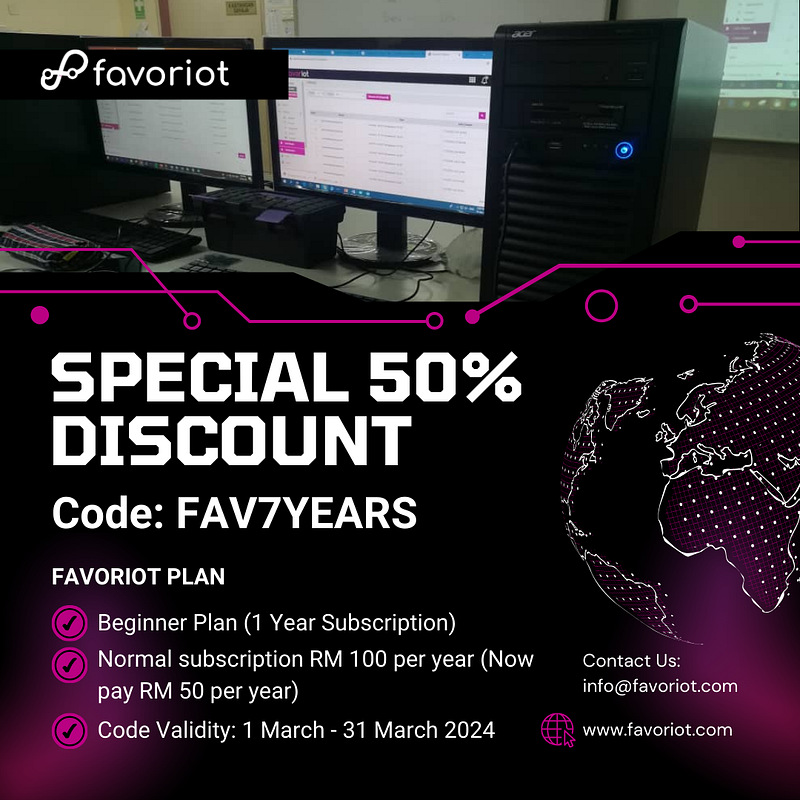
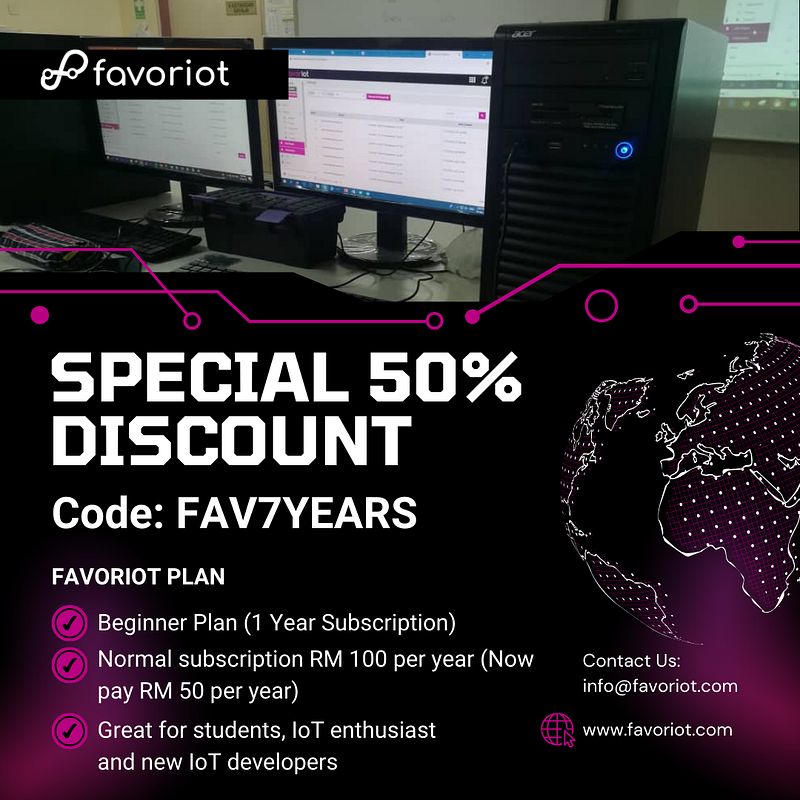
Grab Now — “FAV7YEARS” Code to get 50% Off From Subscription

For a limited period (1–31 March 2024), you can redeem 50% off your Favoriot Beginner Plan 1-Year Subscription. There is no limit to using the Code (Valid on the offer period)

Making Malaysia an IoT Hub

Happy 7th Anniversary to Favoriot!

Together, Let’s Build a Nation with Smart Solutions

[Note: Click here to have FREE access to this member-only story]

Favorite — That’s how you actually pronounce the name “Favoriot”

I’m super excited to share a bit about why my co-founders and I built Favoriot, and even more thrilled to celebrate our 7th anniversary with all of you!

It feels like just yesterday, on February 20, 2017, we all came together, buzzing with ideas and the shared dream of launching an IoT startup that could really make a difference.

Our initial spark was lit by the desire to create something meaningful for elderly people living alone.

We wanted to ensure their health and safety weren’t compromised, and that’s how “Raqib” was born.

But, oh, how the journey has unfolded since those early days!

Like many startups, we’ve navigated through various pivots — tweaking our product and exploring different market segments in search of that perfect product-market fit.

Over these seven years, we’ve learned a ton, especially about the challenges many organizations face in building their IoT solutions or leveraging IoT data for decision-making.

It’s become clear to us that nurturing talent is key.

The future of IoT hinges on our new generation of graduates being well-equipped with the necessary skills and tools.

To celebrate our journey and to gear up for the next exciting chapter, we’re rolling out something special.

From March 1 to March 31, 2024, we’re offering a whopping 50% discount on our 1-year Beginner Plan!

Just use the voucher code “FAV7YEARS” to snag this deal.

Discount Code — “FAV7YEARS” to get 50% Discount on Beginner Plan

And guess what?

You can use this code multiple times all the way through the end of March 2024.

Our Beginner Plan is pretty robust, offering unlimited devices, 10,000 API calls daily, extra dashboards, and loads more.

We’re pumped to see where your IoT journey takes you and are always here to support you.

Schedule an appointment with us if you’re looking for a Lifetime license (on-premise), which has an unlimited number of APIs per day.

Here’s to the next chapter in IoT innovation, and a huge thank you to you for being part of our story.