I still remember a time when every opportunity felt loud.
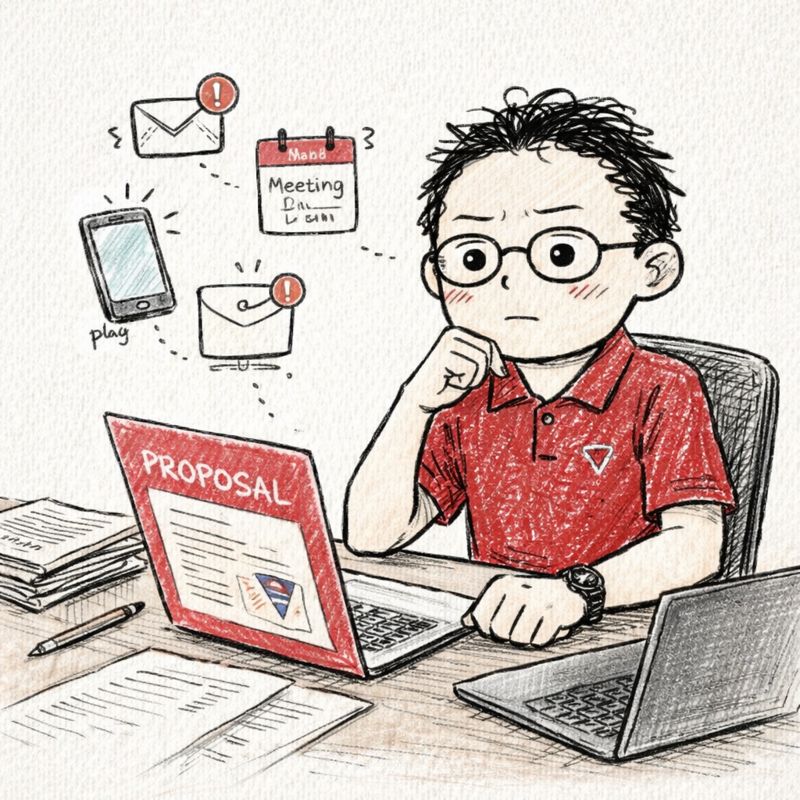
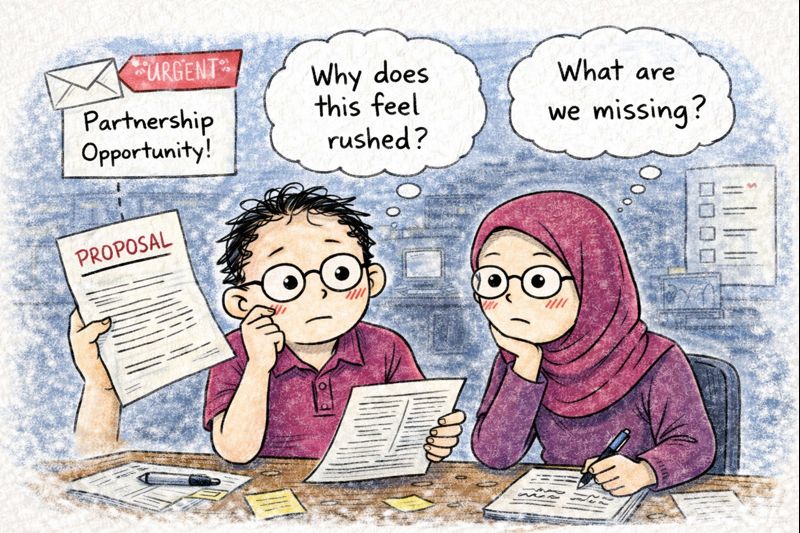
Emails with subject lines screaming “URGENT”. Invitations packed with promises. Partnerships that sounded big just because the logos looked familiar. If something moved fast, talked fast, and felt urgent, I assumed it must be important.
Back then, my instinct was simple. Say yes first. Figure it out later.
These days, my reaction is quieter.
Sometimes an opportunity lands in my inbox and I do nothing. I reread it. I sit with it. I let it breathe. And often, after a few days, the excitement fades. Or something else surfaces.
Why am I uneasy about this?
Why does this feel rushed?
Why am I being pulled, instead of invited?
That shift did not come from books or frameworks. It came from experience. From years of building, stalling, restarting, and learning the hard way.
Experience does not make you smarter.
It makes you calmer.
And calm changes the way you read opportunities.
When Everything Looks Like an Opportunity
Early in my career, opportunities looked like doors. Open doors everywhere. Each one felt like progress. Each one felt like movement.
Speaking slot? Yes.
New market? Yes.
Custom feature request? Yes.
Side project? Yes.
Saying yes felt productive. It felt brave. It felt like momentum.
But there is a hidden cost to saying yes too easily.
You spread yourself thin.
Your focus fractures.
Your core work slows down.
I did not notice it immediately. Work was happening. Meetings were full. Calendars were packed.
I told myself, this must be growth.
It was not.
It was motion without direction.
Experience teaches you that not all movement is forward. Some movement is just energy leaking out in every direction.
The Difference Between Noise and Signal
One of the biggest changes experience brings is pattern recognition.
You start noticing familiar shapes in new offers.
The vague partnership that wants commitment before clarity.
The pilot project with no real owner.
The “strategic collaboration” that quietly becomes unpaid consulting.
The customer who wants everything customised but avoids long-term commitment.
I have seen these shapes before. Many times.
So when they appear again, my body reacts before my mind does. A small pause. A slight discomfort.
This feels familiar.
Experience trains your intuition, not through talent, but through repetition. Through scars. Through outcomes you wish had gone differently.
You stop being impressed by presentation.
You start listening for intent.
Noise sounds exciting. Signal sounds simple.
Urgency Used to Excite Me. Now It Warns Me.
There was a time when urgency felt flattering.
“We need an answer by tomorrow.”
“This window won’t stay open.”
“Others are waiting.”
It felt like being chosen.
Now, urgency makes me slow down.
Real opportunities do not pressure you into rushed decisions. They respect timing. They allow questions. They survive scrutiny.
False urgency often hides uncertainty, weak planning, or someone else’s panic.
Why must this be decided now?
What happens if I say no today?
Will this still make sense next month?
Experience turns urgency into a test. Not of speed, but of substance.
Experience Teaches You to Ask Different Questions
Earlier, my questions were external.
How big is this?
Who else is involved?
What can I gain?
Now my questions are internal.
Does this strengthen what we are already building?
Does this pull us away from our core?
Do I want to be solving this problem for the next three years?
That last question matters more than people realise.
Opportunities do not just take time. They take mental space. They shape what you think about when you wake up. They decide what problems you will be carrying in your head.
Experience makes you protective of your attention.
Do I really want this problem?
The Quiet Opportunities Are Often the Real Ones
Some of the most meaningful opportunities in my journey did not arrive with fanfare.
They arrived quietly.
A conversation that kept returning.
A customer who stayed, even when things were slow.
A niche problem that refused to go away.
A small project that kept compounding.
At the time, they looked ordinary.
Experience teaches you that quiet consistency often beats loud potential.
Big promises fade.
Small traction compounds.
When you have lived through cycles, you stop chasing fireworks. You start valuing steady flames.
You Learn the Cost of “Almost Right”
Another lesson experience drills into you is the cost of misalignment.
An opportunity can be good and still be wrong for you.
Wrong timing.
Wrong focus.
Wrong energy.
Earlier, I believed any good opportunity could be bent into place. With effort. With late nights. With sacrifice.
Now I know better.
Forcing alignment costs more than walking away.
I have learned that saying no early is cheaper than fixing misalignment later.
This is interesting, but it is not us.
That sentence used to be hard to say. Now it feels respectful. To both sides.
Experience Changes How You Read People
Opportunities come through people. And experience sharpens how you listen to them.
Not just what they say, but how they say it.
Do they listen, or only wait to speak?
Do they ask about your constraints, or only their goals?
Do they talk about shared outcomes, or only personal wins?
Experience trains your ear.
You notice when someone avoids specifics.
You notice when accountability is vague.
You notice when enthusiasm disappears after the first obstacle.
These are not red flags you learn from slides. You learn them from being burned.
The Role of Timing Becomes Clearer
One thing I underestimated earlier was timing.
I thought good ideas succeed anytime.
I thought readiness could be rushed.
Experience corrects that illusion.
The same opportunity can be wrong today and right two years later.
The same partnership can fail early and thrive later.
Experience teaches patience. Not passive waiting, but active readiness.
We are not there yet.
That sentence used to feel like failure. Now it feels honest.
You Stop Confusing Opportunity With Validation
This one is subtle.
In the early days, opportunities felt like proof. Proof that we mattered. Proof that we were seen.
Every invite felt personal.
With experience, you stop outsourcing validation to external signals.
You build internal confidence. From shipping. From surviving. From solving real problems.
So when an opportunity arrives, you no longer ask, What does this say about me?
You ask, What does this ask of me?
That changes everything.
Experience Slows You Down in a Good Way
From the outside, it may look like hesitation. Or caution.
From the inside, it feels like clarity.
I still say yes. Often.
But I say yes with open eyes.
With fewer illusions.
With clearer boundaries.
Experience does not kill ambition. It sharpens it.
You stop chasing everything.
You start choosing deliberately.
And that choice is quiet. Grounded. Intentional.
Reading Between the Lines
Today, when I read an opportunity, I read the spaces between the words.
What is not being said?
What assumptions are hidden?
Who carries the real risk?
Who holds the long-term responsibility?
These questions come naturally now.
Not because I am smarter.
Because I have been there before.
Experience does not shout.
It whispers.
And if you listen closely, it usually tells you exactly what you need to know.
If you are earlier in your journey, saying yes is part of learning. It is how you collect data. It is how you build instinct.
If you are further along, discernment becomes the work.
Both phases matter.
I am curious how your relationship with opportunities has changed over time. What do you read differently now compared to before?
Share your thoughts. I would love to hear your story.



 Dr. Mazlan Abbas