Book Review by a Young Founder: How The Favoriot Way Sparked New Fire in Me

I picked up The Favoriot Way: A Life Built on Curiosity and Courage by Mazlan Abbas at a time when I felt stuck between ambition and uncertainty. The title alone sounded like something a seasoned founder might write after years of success. What I didn’t expect was how personal, honest, and relatable this book would feel from the very first page.

Right away, I could sense this wasn’t a typical business book full of polished charts and bright promises about overnight success. It felt like sitting down with someone a few steps ahead of me on a road I’m still trying to map out. I could almost hear his voice explaining how curiosity pushed him forward in ways no strategy ever could.

Curiosity as a Compass

What hit me first was how Mazlan traced his journey back to childhood curiosity, fiddling with broken radios, wanting to know how things worked. It made me reflect on my own early curiosities. For me, it was taking apart gadgets as a kid, even though I rarely put them back together. Reading that made me laugh and nod at the same time.

As a young entrepreneur, it’s easy to look at seasoned founders and assume they had some secret formula from the start. This book reminded me that the real engine behind growth is simple curiosity showing up with questions and staying with them even when answers aren’t obvious.

Real Talk About Real Challenges

The book moves through Mazlan’s life from student days to corporate leadership and into entrepreneurship with Favoriot. But it doesn’t boast or brag. What stood out most were the honest moments where he wasn’t sure what came next. That was refreshing. I often worry that not knowing the next step means I’m failing. Reading about someone I respect being uncertain and still moving forward felt like a permission slip.

There was one part where he talked about choosing entrepreneurship at an age when many people are thinking about stability. That hit me hard. I’ve always wondered if my dreams make sense in the real world. His reflections made me rethink that fear and see it as part of the journey, not a detour.

Lessons That Feel Personal

What I appreciated most about this book is that it doesn’t give you a checklist of things to do. There are no fluff headlines about “10 steps to success.” Instead, Mazlan shares what he learned about being patient, thinking clearly, and trusting that consistent effort compounds over time. As someone building something from scratch, that perspective felt grounding.

I highlighted lines about:

  • Taking time to think clearly
  • Putting curiosity ahead of shortcuts
  • Treating failure not as a dead end but as data

Every time I paused on a passage, I found myself thinking “Yes, that’s exactly how it feels.” It was like someone had put into words things I’d been feeling but couldn’t articulate.

Accessible and Encouraging

The writing style is simple but powerful. Some moments felt like candid conversations instead of formal text. If you’re like me, juggling ideas and doubts, this tone makes the content feel accessible and encouraging rather than intimidating.

I’ve read business books that left me motivated for a day, only to be forgotten. This one stayed with me at the end of each chapter. It made me reflect on why I’m building what I’m building and how I want to show up for it.

Why This Book Matters for Young Founders

As someone forging my own path, I didn’t need another blueprint. What I needed was perspective. Someone to remind me that uncertainty isn’t a flaw, but part of the startup journey. Someone to say that curiosity will keep me going long after hype fades.

The Favoriot Way gave me that.

It’s short, easy to read, and packed with real insights that feel like they came from lived experience. Whether you are just starting a venture or trying to find clarity in your direction, this book gives you something many other business books don’t: emotional resonance with your struggles.

Final Thoughts

Reading this book felt like a conversation with a mentor who doesn’t sugarcoat but still believes in your potential. For young entrepreneurs like me who sometimes doubt whether we’re on the right track, this was precisely the kind of perspective we need.

It doesn’t tell you what your next move should be. It gives you the confidence to make that move yourself.

If you’re chasing ideas, navigating doubt, or building something that matters to you, The Favoriot Way deserves a spot in your reading list.

Rating: 4.5 out of 5 stars

And if you’ve read it too, I’d love to hear which part spoke to you most. Drop a comment and let’s talk about it.

[Book review: A Young Entrepreneur in the Making]

Download eBooks from Mazlan Abbas

  1. Favoriot – The Journey of an IoT Startup
  2. The Favoriot Way – Life of Curiosity and Courage
  3. Hello IoT
  4. Mastering IoT with Favoriot: A Comprehensive Guide for Business and Educational Institutions
  5. Internet of Things (IoT): A Beginner’s Guide
  6. Startup Survival: The Journey of a Tech Entrepreneur
  7. Your IoT Journey
  8. IoT Notes

When Saying “Not Yet” Is Better Than Saying “Yes”

There was a time when I thought saying “yes” was the mark of progress.

Yes to meetings.
Yes to collaborations.
Yes to pilot projects.
Yes to opportunities that sounded exciting on paper.

I told myself this is how momentum works. You say yes, doors open, things move.

Then one quiet evening, after another long day, I stared at my notebook. It was full. Pages packed with ideas, arrows, half plans. And yet, nothing felt complete.

Why does being busy feel so hollow right now? I asked myself.

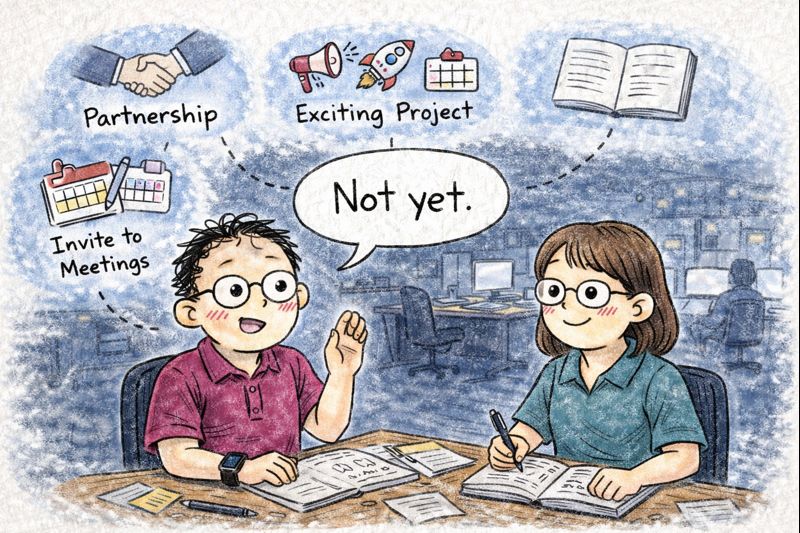
That was the moment I began to respect the power of “not yet”.

Not no.
Not rejection.
Just not yet.

The Hidden Cost of Saying Yes Too Quickly

Early in my career, and even during the early years of building Favoriot, I treated every opportunity like a rare train that might never come back. If I missed it, I feared regret.

So I boarded many trains.

Some took me forward.
Some took me sideways.
A few quietly took me backwards.

Each “yes” came with invisible baggage. Time. Energy. Attention. Emotional load. Once you say yes, you owe something. A reply. A follow-up. A delivery. A meeting. Another meeting.

One day I caught myself replying to emails at midnight, agreeing to things I barely remembered discussing.

This isn’t growth, I muttered. This is drift.

Saying yes too fast often means borrowing time from the future. And the interest rate is brutal.

Why “Not Yet” Is Not a Weak Answer

Many people hear “not yet” and assume hesitation or fear.

That couldn’t be further from the truth.

“Not yet” is clarity without arrogance.
It is patience without laziness.
It is confidence that does not need applause.

When I say “not yet” today, it usually means one of three things.

I have not thought this through deeply enough.
My current priorities would suffer.
The timing is wrong even if the idea is right.

Why rush something that deserves care? I often ask myself.

In a world addicted to speed, restraint feels radical.

Timing Is a Strategy, Not an Excuse

I have seen great ideas fail not because they were flawed, but because they arrived at the wrong time.

Too early and the ecosystem is not ready.
Too late and the window has closed.

I learned this the hard way.

There were moments when partnerships looked perfect. Strong names. Good intentions. Big promises. On paper, it all made sense.

But something inside me hesitated.

Can we execute this properly right now?
Do we have the mental space to do this well?

When I ignored that inner voice and said yes anyway, the result was often messy. Delays. Frustration. Quiet disappointment on both sides.

Now I treat timing as a first-class decision variable.

A good idea at the wrong time is still the wrong move.

The Discipline of Protecting Focus

Focus is fragile.

Once broken, it takes far longer to restore than we admit.

Every “yes” competes with what you are already building. It steals attention in small, almost polite ways. One extra call. One more document. One more thread to keep in your head.

I used to pride myself on juggling many things. Then I realised juggling means nothing ever truly rests in your hands.

What if fewer things, appropriately done, are the real advantage?

Saying “not yet” protects the work that matters most. It keeps the main thing the main thing.

Relationships Respect Honest Timing

Here is something I learned with age and a few scars.

Serious people respect honesty more than enthusiasm.

When you say yes too quickly and later underdeliver, trust erodes quietly. No drama. No argument. Just a subtle shift.

When you say “not yet” with clarity and respect, something else happens.

People listen.

They know you are not chasing noise. They sense you are playing a longer game.

I have had conversations where a simple “not yet, let me come back to this in a few months” led to stronger partnerships later.

Good relationships survive patience. Weak ones do not.

Saying “Not Yet” to Protect Your Future Self

There is a version of you six months from now who will inherit today’s decisions.

That future self will deal with the consequences. The deadlines. The stress. The regret.

I try to picture him often.

Tired? Calm? Proud? Frustrated?

When I say yes impulsively, I am often being unfair to that future version of myself.

“Not yet” is a gift to him.

It buys space.
It buys clarity.
It buys better decisions.

When “Yes” Becomes a Reflex

Reflexive yes is dangerous.

It feels polite. Productive. Cooperative.

But reflexes bypass thinking.

I noticed this pattern during periods of pressure. When things feel uncertain, the instinct is to grab everything. To say yes to feel safe.

Ironically, that is when restraint matters most.

What am I trying to compensate for? I ask myself now.

Scarcity mindset whispers lies. It tells you this is your last chance. Those opportunities are rare.

Experience teaches otherwise.

The right opportunities return. Often better prepared. Often clearer.

The Confidence to Wait

Waiting is uncomfortable.

Silence feels awkward.
Unanswered emails create tension.
Pauses invite doubt.

Yet waiting is where conviction forms.

Some of my best decisions were made slowly. They survived weeks of thinking, rewriting, second-guessing, and walking away before returning.

The bad decisions? They were fast. Exciting. Urgent.

Confidence is not loud. Sometimes it looks like waiting calmly while the world rushes.

What “Not Yet” Sounds Like in Practice

It does not need drama.

It can be simple.

“Let me revisit this after we complete our current milestone.”
“This deserves more thought. Can we talk again later?”
“I like the direction, but the timing isn’t right for us now.”

Clear. Respectful. Honest.

No long explanations. No guilt.

You do not owe the world your exhaustion.

Building Things That Last Requires Patience

Startups. Products. Careers. Even personal growth.

They all punish haste.

I have come to believe that longevity favours those who can delay gratification. Those who can sit with incomplete answers. Those who can say “not yet” without anxiety.

Am I building momentum or just motion? That question guides me now.

Motion looks busy. Momentum compounds quietly.

The Quiet Strength of Saying “Not Yet”

There is a strange calm that comes with this shift.

Fewer meetings.
Clearer priorities.
Deeper work.

And when I finally say yes, it means something.

It means I am ready.
It means I can commit fully.
It means the answer has weight.

Not yet creates space for better, yes.

A Question for You

Where in your life are you saying yes out of habit rather than intention?

What would happen if you replaced one of those yeses with a calm, honest “not yet”?

You might find that nothing collapses.
You might find respect grows.
You might find your focus returning.

I am curious to hear your thoughts.

Have you ever said “not yet” and later realised it was the right move?

Share your story in the comments.

Download eBooks from Mazlan Abbas

  1. Favoriot – The Journey of an IoT Startup
  2. The Favoriot Way – Life of Curiosity and Courage
  3. Hello IoT
  4. Mastering IoT with Favoriot: A Comprehensive Guide for Business and Educational Institutions
  5. Internet of Things (IoT): A Beginner’s Guide
  6. Startup Survival: The Journey of a Tech Entrepreneur
  7. Your IoT Journey
  8. IoT Notes

Why I Stopped Chasing Visibility and Focused on Credibility

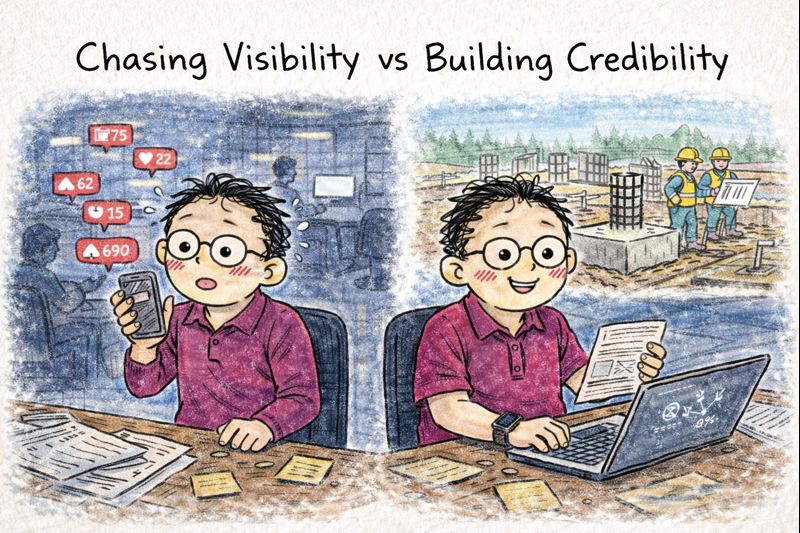
There was a time when I thought visibility was the game.

More views.
More likes.
More stages.
More mentions.

I watched founders celebrate follower counts like revenue. I saw announcements dressed up as progress. I saw loud success everywhere.

And quietly, I asked myself a question I did not say out loud.

“Is this what winning looks like?”

That question stayed with me longer than I expected.

I come from a background where results mattered more than noise. Engineering. Telecommunications. Research. Systems that break if you get one assumption wrong. You cannot bluff physics. You cannot sweet-talk a network into stability. Either it works, or it fails. Publicly. Painfully.

When I stepped into entrepreneurship and started building FAVORIOT, I carried that same mindset with me, though I did not realise how rare it would feel in a world obsessed with attention.

At the beginning, I tried to play both games.

Build quietly, but also stay visible.
Ship code and post updates.
Solve problems, but also explain myself repeatedly.

It was exhausting.

Not because visibility is bad. But because chasing it changes how you think.

The Seduction of Being Seen

Visibility feels productive. That is the danger.

You post something.
People react.
The numbers move.
Your brain rewards you instantly.

I felt it too.

A speaking invitation arrives.
A panel slot opens up.
A logo appears on a slide.

“This must mean we are doing well,” I told myself.

But late at night, when the office lights were off, and the dashboards were still open, another voice appeared.

“Would this platform survive if nobody mentioned it tomorrow?”

That question became my compass.

Because visibility without substance is fragile. The moment the spotlight shifts, so does the relevance.

I had seen this pattern before, long before startups.

In telco projects.
In smart city pilots.
In technology programs with beautiful launches and quiet endings.

Everyone remembers the launch. Few recognise the maintenance.

Credibility works the opposite way.

It grows slowly.
It compounds quietly.
It shows up when no one is clapping.

When I Noticed the Shift

The shift did not happen because I decided to be noble or disciplined.

It happened because of a simple pattern.

People started finding us without us having to chase them.

An email would come in.
A message from overseas.
A partner inquiry that started with, “We’ve been reading your work.”

And every time, I asked the same question.

“How did you hear about us?”

The answers were almost boring.

They searched.
They read.
They compared.
They waited.

No viral post.
No paid campaign.
No dramatic announcement.

Just years of writing, building, fixing, and explaining the same things again and again.

That was when it hit me.

Credibility travels further than visibility, but it moves on its own timeline.

The Cost of Chasing the Wrong Metric

Here is the uncomfortable truth.

Visibility rewards what looks good today.
Credibility rewards what holds up tomorrow.

When you chase visibility, you optimise for speed.
When you build credibility, you optimise for truth.

Speed loves shortcuts.
Truth does not forgive them.

I learned this the hard way in IoT.

You can demo anything.
You can mock data.
You can polish dashboards.

But real deployments are unforgiving.

Sensors fail.
Connectivity drops.
Edge devices behave badly.
Security holes appear where nobody looked.

If your system only works when everything is perfect, it is not a system. It is a slide deck.

So I made a quiet decision.

I stopped asking, “How do we look?”
I started asking, “Would I trust this if I were the customer?”

That question shaped everything.

The way the platform was designed.
The way documentation was written.
The way training was structured.
The way we said no to shortcuts that looked tempting.

No announcement could replace that.

Writing Without Chasing Applause

My writing changed, too.

I used to wonder why some posts did not perform.
Why do some articles feel invisible?
Why did the numbers look flat?

Then I realised something.

I was writing to be understood, not to be shared.

Those are two different goals.

Writing for shares means simplifying until nothing is left to challenge.
Writing for understanding means explaining until clarity replaces confusion.

Clarity takes time.
Understanding takes patience.

And patience does not trend.

But credibility remembers.

Months later, someone would quote an old article.
A student would reference a post I barely remembered writing.
A partner would say, “This helped us avoid a mistake.”

That mattered more than any spike.

Credibility Is Built When Nobody Is Watching

Here is the part nobody glamorises.

Credibility is built in moments that feel invisible.

Fixing a bug nobody will thank you for.
Rewriting documentation for the third time.
Saying no to a deal that feels wrong.
Admitting uncertainty instead of pretending confidence.

These moments never trend.

But they stack.

I spent years in environments where mistakes had consequences. Networks go down. Cities stall. Systems fail publicly. That background wired me to respect fundamentals.

So when trends shifted, buzzwords changed, and hype cycles rotated, I anchored myself to a simple principle.

If this disappears from the internet tomorrow, would the work still stand?

That question saved me from many distractions.

Panels, Stages, and the Quiet Filter

I still speak.
I still write.
I still show up.

But the filter is different now.

I no longer ask, “Will this increase my visibility?”
I ask, “Does this reflect what I actually believe?”

If it does not, I pass.

That choice costs opportunities.
It also protects credibility.

When I sat on panels discussing AI, IoT, and cybersecurity, I was not there because I was loud. I was there because of years of consistent work connecting systems, understanding risks, and dealing with consequences.

That is the kind of visibility credibility earns on its own.

The Long Game: Most People Quit

Here is something I wish more foundershad heard earlier.

Visibility is rented.
Credibility is owned.

Visibility disappears when platforms change.
Credibility stays when people remember.

Visibility flatters.
Credibility humbles.

One feeds the ego.
The other feeds trust.

Trust is slower to build.
It is also harder to destroy.

I chose the long game because I have seen what happens when shortcuts collapse. I have seen systems that looked impressive but could not survive reality.

I did not want to build that.

What I Focus On Now

Today, my priorities are boring in the best way.

Does the platform work when things go wrong?
Can a student learn without being overwhelmed?
Can a partner deploy without calling us every hour?
Can the system explain itself clearly?

These questions do not trend.
They endure.

I still share stories.
I still write reflections.
I still show the work.

But I no longer chase the spotlight.

If it comes, it comes.
If it does not, the work continues.

Because credibility has a strange habit.

It introduces you when you are not in the room.

A Quiet Invitation

If you are building something today and feeling invisible, let me say this gently.

You might not be behind.
You might be early.

Keep building things that last.
Keep explaining things clearly.
Keep choosing substance over speed.

The world is loud.
Credibility whispers.

And whispers travel further than we think.

I would love to hear your thoughts.

Have you felt this tension between being seen and being trusted?
Where are you placing your energy right now?

Share your reflections in the comments.

The High Price of Entrepreneurship: Understanding the Sacrifices of Founders

Becoming a startup entrepreneur is often romanticized as a journey of passion and innovation.

However, this path is paved with significant sacrifices, especially for those who embark on this venture later in life, after establishing a career.

I, too, made this leap after over 30 years in the workforce, reaching a high management position with its accompanying perks.

The transition from a secure, well-compensated job to the unpredictable world of entrepreneurship is a story shared by many founders and is worth exploring.

The Financial Rollercoaster

The most immediate and impactful sacrifice is financial. Resigning from a lucrative position meant saying goodbye to a steady, substantial salary.

In the early stages of my startup, there were periods where I couldn’t draw a salary at all.

This financial instability is a common plight for many entrepreneurs, challenging not just their business acumen but also their personal resilience.

Lifestyle Changes

With the shift in financial stability comes a change in lifestyle.

The perks I once enjoyed, like traveling in business class or staying at upscale hotels for work, became luxuries of the past.

Entrepreneurship often means cutting down on personal expenses to redirect funds towards the business.

This shift can be particularly jarring for those accustomed to a certain standard of living.

Sacrificing Personal Luxuries

Another aspect of the entrepreneurial sacrifice is the reduction in personal indulgences.

For me, this meant fewer overseas vacations, infrequent updates to personal gadgets like computers or smartphones, and a general curtailment of non-essential spending.

Every penny needed to be accounted for and justified in the context of business needs.

The Emotional Toll

Beyond the tangible sacrifices, there’s an emotional component.

The constant uncertainty, the pressure of decision-making, and the isolation that can come with entrepreneurship take a toll.

There were times I questioned if the sacrifices were worth it, a sentiment shared by many in this field.

Reflection and Resilience

Despite these challenges, many entrepreneurs, myself included, persist in their ventures.

The journey, with its highs and lows, teaches invaluable lessons about business, life, and personal strength. It’s a testament to resilience and commitment to one’s vision.

Moving Forward

The question of whether the sacrifices are worth it remains subjective and deeply personal.

Each entrepreneur must weigh their own journey’s value against what they’ve had to give up.

It’s not uncommon to feel a sense of loss or to question the path chosen.

However, it’s also important to recognize the growth and achievements that come with this challenging journey.

Shared Experiences

While my story is unique, it echoes the experiences of many startup founders.

The entrepreneurial path demands much, often more from those who have already established a career and lifestyle.

Yet, it’s these very sacrifices that shape the journey, imbuing it with meaning and depth.

Conclusion

In conclusion, the decision to become a startup entrepreneur, especially later in life, is not one to be taken lightly.

It involves significant sacrifices in financial stability, lifestyle, personal indulgences, and emotional well-being.

However, for many, the reward lies in the pursuit of a dream, the lessons learned, and the personal growth experienced. It’s a path of self-discovery, resilience, and sometimes, triumphant success.

Whether or not it’s worth it is a question only the individual entrepreneur can answer, but one thing is certain: it’s a journey that profoundly shapes those who undertake it.