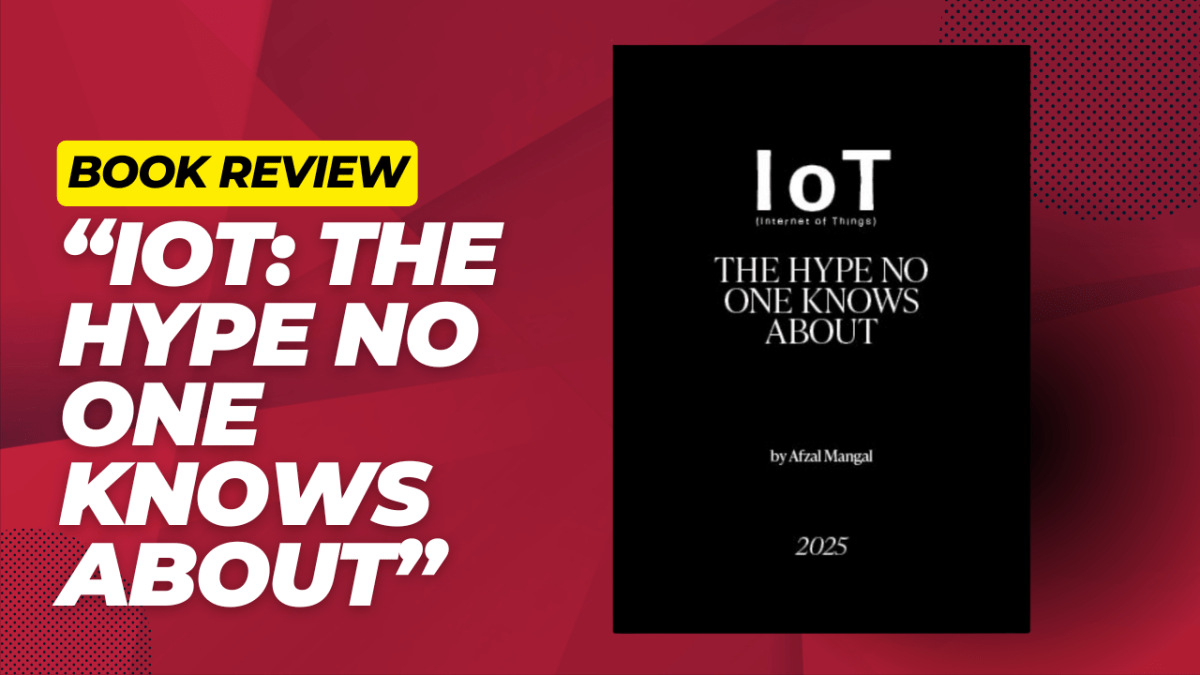
The Book That Finally Told the Truth About IoT

For years, I’ve watched the Internet of Things evolve—promises, pilots, platforms, and… silence.

We were told IoT would change everything. And yet, here we are. Smart cities still look like science projects. Predictive maintenance rarely gets past a demo. Even in conferences, IoT is the quiet cousin, while AI receives the spotlight.

So when I read IoT: The Hype No One Knows About by Afzal Mangal, I didn’t just read it—I felt it.

This wasn’t another technical deep dive. It wasn’t a glossy case study collection either. It was something rare: an honest book written by someone who’s actually done the work, faced the resistance, and survived the grind.

It’s Not the Technology That’s Broken

The core message? IoT works. That’s not the problem. The issue is that no one knows or sees it, and often, no one asks for it.

IoT doesn’t fail in the lab. It fails in the boardroom. It fails when:

  • Decision-makers don’t know what problem IoT solves
  • Internal champions give up after the pilot
  • Sales teams can’t explain it without five slides and a PhD

This hit hard. I’ve seen excellent IoT projects—solid tech, measurable impact—die quietly because there was no momentum to take them further.

Meanwhile, AI Took the Stage

Mangal makes a bold (and fair) comparison: AI and IoT were both hyped. But only one became mainstream.

Why?

Because AI built a tribe, it became aspirational. It had influencers, evangelists, podcasts, and memes. It was everywhere. IoT, on the other hand, stayed niche. It stayed quiet. It stayed technical.

It didn’t show off its wins. It didn’t shout. And that’s where we lost the game.

The Book Offers Solutions, Not Just Complaints

The best part isn’t just the diagnosis. It’s the prescription.

Mangal outlines 70 actions—from marketing to product strategy—that are refreshingly doable. No jargon. Just real advice:

  • Put “IoT” in your product name
  • Sell small and scale later
  • Educate the market like a campaign
  • Speak in stories, not specs
  • Make IoT visible in daily life

It sounds simple, but when did we last do any of that?

My Honest Take

This book isn’t for those looking for another buzzword to pitch. It’s for those tired of being invisible. It speaks to the founders, engineers, salespeople, and educators who want IoT to finally get the recognition it deserves, technically and publicly.

It made me reflect deeply on how I present, pitch, and teach IoT.

We can keep building great tech. But until we start creating awareness, IoT will remain a background actor in a play it should lead.

My Final Thoughts

Afzal Mangal didn’t just write a book—he wrote a mirror. If you’ve ever been frustrated with the slow progress of IoT adoption, this book gives you clarity—and a plan.

I highly recommend it to anyone in the IoT space, especially:

  • Startup founders
  • Product managers
  • Policy-makers
  • Tech educators
  • Marketers are trying to position IoT solutions

The industry doesn’t need more hype. It needs truth, clarity, and action.

This book delivers all three.
What Is the Legacy You Want to Leave Behind?

“Mazlan, if one day you’re gone… what do you want people to remember you for?”

That question hit me harder than I expected.

Not because I didn’t have an answer — but because I never sat down to ask myself that question. Not seriously. Not honestly.

I’ve chased titles. Built startups. Stood on stages. Collected lanyards from conferences like souvenirs from a battlefield. But when the applause fades, the lights dim, and the LinkedIn likes stop rolling in… what remains?

That’s where the legacy lies.

Legacy Isn’t a Resume. It’s a Ripple.

Most people think legacy is about achievements — the things we list proudly on our CVs, or etch on tombstones.

“Inventor of X.”

“CEO of Y.”

“First person to Z.”

But that’s not legacy. That’s history.

Legacy is the echo. The ripple. The silent change you trigger in someone else’s life — often without even knowing.

For me, legacy isn’t the IoT platform I built. It’s the student who emailed me last week saying, “Dr. Mazlan, because of your workshop, I now believe I can create something valuable.”

That.

That right there — is the real legacy.

You Don’t Have to Be Famous to Leave a Legacy

There’s this myth that legacy is reserved for the Elons, Steves, or Obamas of the world.

Nonsense.

Your legacy could be the way you raise your children to be kind in a world that often isn’t.

It could be the junior colleague you mentored, who now leads a team of 20.

It could be the way you made people feel seen, heard, respected.

The problem is, most people live on autopilot. Wake up. Work. Sleep. Repeat.

“I’ll think about legacy when I retire,” they say.

But legacy isn’t built when you’re 65. It’s built today. With every decision. Every interaction. Every “I believe in you” when someone needed to hear it most.

My Legacy? Favoriot Was Just the Beginning

I didn’t build FAVORIOT because I wanted to be known as the “IoT guy.”

I built it because I saw a future where Malaysia — and other developing nations — could own their digital destiny. Where our innovations weren’t just consumers of Western tech, but creators of solutions.

I wanted a child in Kelantan to learn IoT in their school lab… and dream of solving real problems, not just passing exams.

I wanted local councils to embrace smart cities not because it’s trendy — but because it reduces flooding, saves energy, and improves lives.

And yes — I wanted retirees like me to know it’s never too late to start your final and most meaningful career.

FAVORIOT, to me, was the vehicle. The platform. The megaphone.

But the legacy?

That’s the mindset shift. The empowerment. The belief that we — Malaysians, Southeast Asians, anyone in the so-called “developing” world — can innovate for our own and not just import from others.

What Will You Leave Behind?

If your name disappeared from your company website tomorrow, would the company feel your absence?

If social media vanished, would your voice still resonate somewhere?

If your children, students, friends, or community were asked, “What did this person stand for?” — would they know?

And if you don’t like the answer… maybe it’s time to change the story.

The 3-Legged Stool of Legacy: Impact, Influence, Intention

Here’s how I think about it now:

Impact – What tangible changes have I made? Did I build something useful? Did I fix something broken? Influence – Who have I inspired? Encouraged? Mentored? Intention – Why did I do it? Was it for ego… or for evolution?

You don’t need to tick all three boxes every day. But over a lifetime? They should start to align.

Final Thoughts (But Not the Final Chapter)

When I’m gone, I don’t want people to remember my job titles. I don’t need statues or awards.

I just want someone, somewhere — maybe a young engineer, maybe an entrepreneur on the edge of quitting — to say:

“Because of what he shared, I kept going.”

“Because of what he built, I believed it was possible.”

“Because of how he lived, I dared to do the same.”

That’s enough.

So, I’ll ask you now what I finally asked myself:

What legacy do you want to leave behind?

And more importantly…

Are you building it today?