For the last 50 years only 19% of companies are in existence today. Many did not survive or unable to sustain due to many reasons. However, one of the key reasons are due to the fact that they are unable to compete or remained competitive whereas their competitors have transformed their business by leveraging new technologies and new business models.
Digitalisation and Internet has been very key in these transformation. New products and services have been created. Their operations are becoming more agile and productive. This is the outcome when companies embraced new changes openly. Their lleaders are the risk takers and have excellent vision of the future.
Every 3 to 7 years companies need to transform themselves, reinvent their operations and business. They should look at the current and future trends of technologies and see whether they can leverage these powerful technologies and together surf the great waves of disruption.
Check out Dr. Mazlan Abbas, CEO of FAVORIOT video explaining about the great changes happening in IR 4.0.
All are willing to learn and take risks and are good at building virtual teams internally and partnering externally.
You can recognize these new winners not by their age or their titles — but by their ability to build and deploy agile, flexible business solutions.
A new generation of leaders, makers, thinkers, and doers is meeting that change with flexibility and optimism and transforming it into opportunity.
These are the people who see the transformational power of IoT-driven processes, business models, and new revenue streams.
They are eager to champion and drive these opportunities in their organizations.
These people know that IoT is not just one project, one training session, one change.
They know that in order to succeed they and their organisations need to adjust and re-learn, over and over again.
But how do we encourage the growth of this new “generation”? We need them as many as possible to help us spur the whole industry. We need more fresh and innovative ideas to transform their own business or their customers. But how do we train them and get them ready to be absorb directly into organisations?
We can provide them with the necessary tools to start their journey. One of the common layer that glue the “hardware” and the “software” is the IoT middleware or the platform. The Generation-IoT must understand what are the necessary knowledge to build the electronic devices and find the necessary connectivity to the platform. But if they wish to build innovative IoT applications or using the data for the purpose of machine learning, they need to acquire this data from the IoT platform. They have a choice either to build or subscribe to any IoT platform. And currently, there are hundreds of IoT platforms worldwide as shown below.
[This article is originally published in IoT World]
It all started with when Kevin Ashton, working as a brand manager trying to figure out and track the amount of lipstick available on the shelves. In 1999, the term “Internet of Things” was coined by Kevin Ashton utilising RFID to track such assets. Twenty more years down the road, IoT has become a key technology not only to keep track of such asset but also create new products and services which can disrupt many businesses.
It ranges from manufacturing to agriculture and to Smart Cities. In fact, it can offer better tracking and monitoring solutions for end consumers using wearables devices. What we are seeing now is just the tip of the iceberg. There are many more applications can be built. The combinations of customised hardware or sensors, different kinds of connectivity, the power of the cloud and analytics brings forth unimaginable innovative solutions for the end-users.
Check out how we can harness the power of IoT by Dr. Mazlan Abbas, CEO of FAVORIOT in the below video.
[This article was originally published in IoT World]
We are aware that earlier in 2018, Malaysia launched National Industry 4WRD Policy Framework, however, the focus is on the manufacturing sector as we know manufacturing is one the biggest contributor to Malaysia’s GDP. However, it sparked interest in other sectors and industries as well because as described in the World Economic Forum (WEF), that the emerging technologies will have a disruptive impact on jobs of the future.
Here’s my personal opinions on Malaysia 4IR Policy:
World Agenda — When Henrik Von Scheel (also known as Father and Originator of Industry 4.0) masterminded Germany’s digital agenda in 2009 with a belief that the industry will be transform by the fusion of digital, virtual and physical world, also called the cyber-physical systems, and this triggered the emergence of new era of fourth industrial revolution. This has been emphasized again by World Economic Forum in 2016. The fusion of various technologies have transformed and disrupted many businesses. And Malaysia should not be left behind.
Covid-19 the Master Enabler — It took many years for us to educate the importance of digital transformation, but Covid-19 made us realise how important it us to transform our business, education and almost everything using digital. Internet seems to be mandatary in almost every part of lives. And to move towards IR 4.0, we must have the fundamental of IR 3.0 in place i.e. digital and virtual (content in digital with good access to Internet). That’s the more reason Malaysia also launched Malaysia Digital Economy Blueprint (MyDigital) in early 2021 to encourage the usage of digital technology to transform the economic sector.
Humanizing Technology — Although 4IR can create new jobs, but it also create threats to the existing ones. Many people down the street are not aware how complex technologies of 4IR can help them in their daily lives. Thus, the aspiration of 4IR policy to ensure that it can provide quality of life by benefitting the society such as focus on happiness, healthy living, work-life balance, overcome social issues and sustainable living will help the adoption of 4IR technology to be easier and acceptable. Technology should not be seen as a threat but in fact should be seen to help them.
Budget Justification — We hoped that the 4 policy thrusts, 16 strategies and 32 National initiatives can help the relevant agencies to justify for their 2022 budget. Without sufficient funding, it’s very difficult for us to maintain our momentum. We also want that the bureaucracy of 4IR fund approval need to be reduce to avoid unnecessary delays as what we have seen in the Industry 4WRD initiatives (Some SMEs complained that even a 4IR readiness assessment can take a year to complete. This does not include the 4IR intervention programmes).
Producer-Nation Agenda — How do we increase our graduates salary if we are just being a Consumer-Nation? How do we sustain and grow our Startups if all the products and technologies are bought from overseas? How do we (i.e. the industries) share our technology or product map to Universities if we are not in control of our own product roadmap? One of the policy thrust — “Accelerate the 4IR technology innovation and adoption” is a “battle-cry” for many local Startups. Support them even if they are still small and have no reference sites to show or demonstrate. Support the innovators by being the early market adopters that are willing to take the risk to test out the new and untested local products. One day this small companies can grow and create more jobs for the country.
This can be my opinion and probably a wish list. Let’s see the actions that will be taken in the next 6–12 months. A Project Management Office (PMO) need to be setup to ensure transparency and KPIs are met.
The industry always complained that the talents that graduated from the local universities are not equipped with the latest knowledge. The industry expected the graduates that they hired can immediately start their job without sending them to further workshops or courses. The world is moving fast and thus it’s imperative to start contributing in the early part of the career. The employers are getting impatient as the competition heats up.
That’s why it’s important for the Universities to get feedback from their Industry Advisory Panel (IAP) to advice on the current technology and job trends. The lecturers too need to get involve in industry events to understand what’s the hottest job nowadays.
We know that the change the content of the syllabus or approving new programmes in the University can take months or sometimes 1–2 years. This would require the teaching staff to also equip themselves with the new knowledge. It’s a challenge nowadays to keep with the technological pace but that’s the reality.
Looking at the future technological trends and the business disruptions happening worldwide, the Universities should now anticipate what’s coming and to quickly adapt their current courses or programmes to match with the future jobs.
Check out the video below by Dr. Mazlan Abbas, CEO of FAVORIOT regarding this challenge.
I have decided to make two of my IoT eBooks available for FREE to anyone interested to download.
The first eBook is entitled “Your IoT Journey“. It is a compilation of my best and selected written articles which was published from my IoT World Blog. It’s not written in a very technical manner because the idea is to share the issues, challenges and the tips for anyone who’s interested to take the IoT journey. After several years, the topic about IR 4.0 become a hot one. But it also bring along confusion regarding the different Era of Industrial Revolutions.
The second eBook or rather eNotes entitled simply as “IoT Notes” was originally written to illustrate the complexity of IoT and IR 4.0 in a simpler way. I used GoodNotes application and my iPad Air to draw and add colours to the descriptions. Hopefully, this will become a companion notes to anyone who is learning IoT and IR 4.0.
Hope you enjoy the two eBooks and kindly share with others. Hopefully we can share the knowledge and create the next Generation-IoT.
IR 4.0 comprised of many technological building blocks. It is made of AI Block, VR/AR Block, Big Data Blocks, Blockchain Block, IoT Block and many others. However, IoT is seen one the most fundamental block for IR 4.0 is because it the source of collecting data either from people (using wearables with sensors) or things (using sensors) or environment (also sensors).
IoT — The Building Block
As many has said — “Data is King” or “Data is the New Currency”. However, I do believed, collecting raw data which is purely bits and bytes or the zeroes and ones or even numerical numbers are insufficient unless we can turn that data into something more meaningful that can answer the question of who, what, when or where. That is when the data is transformed into “knowledge”. And if it can answer the question of “how”, then it has been turned into “knowledge” and the best part is when it can answer the question of “why”, which is what we called “understanding”. And people make decision based on the understanding.
But the, how do we collect all the relevant data? Which is why it’s very important for us to begin with the right questions. The who, what, where and when can be gathered via relevant sensors such as RFID, GPS, clock, temperature, humidity, etc.
For some, IoT seems to be a very complex “technology” or rather a combination of several technologies. We need to know how sensors and the electronic devices can capture and send data through some for of connectivity. What are the various networks that can support efficiently the amount of data with an affordable cost. And how or where these data will be aggregated — will it be on a normal server with a simple database or will it be hosted on a cloud? What is the sensors came in different forms and protocols? How do we manage these devices?
And what can we do with all the data that has been collected? How should we displayed them — on simple historical or real-time graphs? Can we do more than just a dashboard and go beyond with some form of machine-learning? And how easily for us to manage the data with the never ending customer requests?
It’s important for us to know the various components in IoT and how it relates with each other so that when you embark on an IoT journey, it will be well-planned design and architecture.
IR 4.0 will lasts for 25 years (begin from 2014) Why? It takes about 100 years (IR 2.0)…. 50 years (IR 3.0)…. thus, it will take probably 25 years (IR 4.0)… emerging technologies make the new Era shorter than before
But how do we define IR 5.0?
My thoughts — if we can have 3 technological breakthroughs, we can enter IR 5.0 whereby it can create a new civilization. (1) Food (2) Energy (3) Transportation.
People have been exploring beyond the earth surface and now exploring under the sea and the our space. What if we can produce enough food and energy that can ensure a new civilisation to live there?
Couple with the breakthrough in transportation, we might be able to send people across the globe easily around the world such as Hyperloop and to the Mars using Space-X? Elon Musk seems to be in the right track when he’s involved in Energy business and transportation such as Electric Cars, Hyperloop and Space-X.
Drones or flying cars will be a reality soon. Breakthrough in energy can help this mode of transport to be feasible for longer distances. Energy can from Solar that can powered up rockets and buildings on Mars.
If food can be generated easily regardless whether its under the ocean or outer space, that will ensure the survivability of the civilisation.
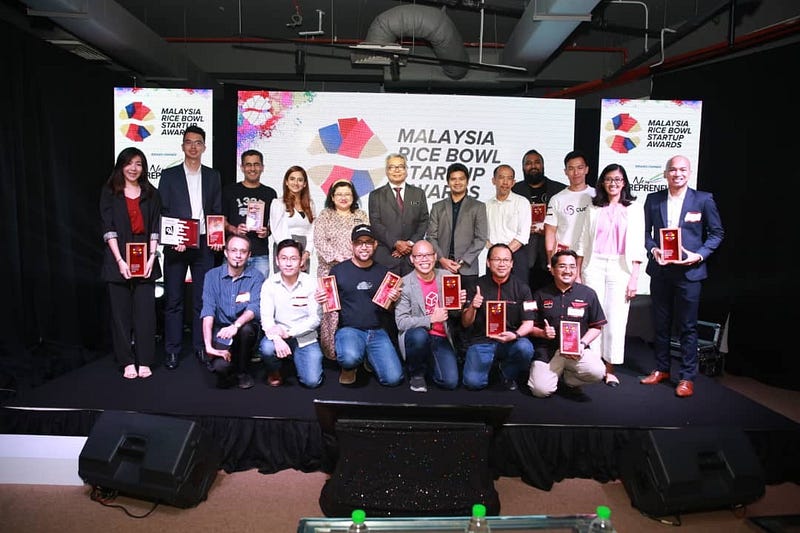
The ASEAN Rice Bowl Startup Awards (Rice Bowl), organised by New Entrepreneurs Foundation, celebrates the spirit of innovation and entrepreneurship in the Southeast Asian startup ecosystem.
The Awards reward innovation, excellence, and best practice in startups across the region. It also recognizes the excitement, risk and hard-work involved in developing a startup and the influence each person has on driving the success of their company.
Rice Bowl puts the spotlight on model entrepreneurship and inspires a dynamic community of startup enthusiasts, serial entrepreneurs, policy makers and diverse mentors in tech innovation.
For this year Award, there are 10 ASEAN Countries with 13 Categories contested spanning multiple categories that has received 3000 Nominations from ASEAN Startups.
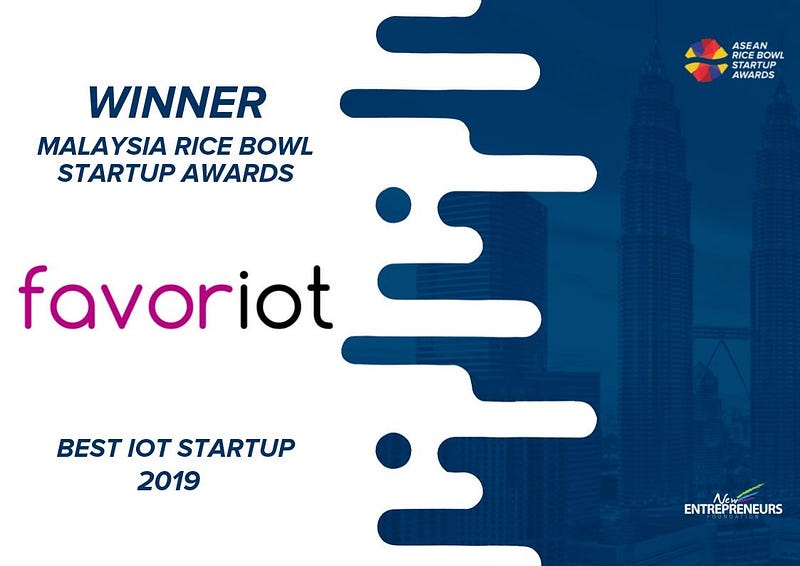
Malaysia Rice Bowl Startup Awards 2019 announced the Winners on Oct. 10, 2019. In the category of Best IoT Startup, FAVORIOT, was chosen as the winner.
Malaysia is the first country to announce its Rice Bowl Winners for 2019 and each category Winner for will receive a PR Strategy Advisory Services from Suppagood PR worth RM15,000 each.
All National Winners will get to participate in the regional finale, a cross-regional program designed for entrepreneurs. At the finale, winners will be able to meet and leverage the vast ASEAN startup community network to strike regional, vertical, or cross-commercial partnerships to accelerate their market expansion.
This year the regional grand finale of the awards will be held in Kuala Lumpur in January 2020 in Kuala Lumpur.
Favoriot aims to become the preferred partner that offers an IoT platform, tools and services to help our customers become more innovative, effective and productive.
We help IoT developers rapidly develop new and innovative IoT solutions using our IoT platform — FAVORIOT IoT Platform
We offer an effective engagement crowdsensing platform for various stakeholders to build smarter operations — FAVORSENSE
We offer a simple and effective solution to monitor the most important assets of an individual i.e. health and safety — RAQIB
We make your travel smoother and more delightful experience — D’scover
Mazlan Abbas, Keynote Speaker, ICETiA 2019 (International Conference on Emerging Technology and Innovative Applications 2019), Oct. 21–22, 2019, MaGIC, Cyberjaya, Malaysia
Mazlan Abbas, “IR 4.0 and IoT — Get Ready for Jobs of The Future”, Guest Lecture, Sept. 20, 2019, School of IT UCSI University, Malaysia
Mazlan Abbas, “Internet of Things (IoT) and Crowdsensing in AFM Industries”, Asset Management : Readiness And Challenges Towards IR 4.0, August 20, 2019, UTM, Kuala Lumpur
Mazlan Abbas, “Unleashing Your Potential — From ZERO to Thought Leader”, Adjunct Professor Lecture, Dewan Auditorium FIK, UniSZA Kampus Besut, July 8, 2018
Mazlan Abbas, “Trend and Challenges in IoT”, CIS Adjunct Professor Lecture, Universiti Teknologi Petronas (UTP), July 5, 2018, UTP
Mazlan Abbas, Guest Speaker, Industry 4.0 Implementation and Adoption Workshop, July 2 & July 17, 2018, National Instruments Academy and Innovation Nucleus, TPM, Malaysia
Mazlan Abbas, “IoT Innovation Ecosystem”, Keynote Speech, June 27–28, 2018, Smart Cities Global Technologies and Investment Summit, Algiers, Algeria
Mazlan Abbas, “Internet of Things — The Enabler for 4thIndustrial Revolution”, April 17, 2018, Seminar Revolusi Industri 4.0: Memperkasa Pendidikan, Dewan Ibnu Sina, TATI University College, Terengganu
Mazlan, Abbas, “Journey from Product-Based to Outcome-Based IoT Business Model”, One Day Seminar on ‘Smart Cities & Urban Science, Feb. 27, 2018, Wisma IEM, 01- Auditorium Tan Sri Prof. Chin Fung Kee, Third Floor, Petaling Jaya, Malaysia
Mazlan Abbas, “Journey into Monetizing Internet of Things”, IoT Kuwait 2017, Dec. 19–21, 2017, Kuwait
Mazlan Abbas, “IoT in the Cloud”, Network Week, UPM, Dec. 7, 2017
Mazlan Abbas, “Moving Up or Down the IoT Value Chain”, Keynote, 2017 International Conference on Electrical, Electronic, Communication and Control Engineering, 5–6 December 2017, UTM KL.
Mazlan Abbas,” IoT & The Anatomy of a Smart City”, Keynote, 2017 Asia Pacific Microwave Conference, 13–16 November 2017, Renaissance Kuala Lumpur Hotel.
Mazlan Abbas, “Internet of Things Journey”, Industrial Talk, 21 May 2017, Universiti Teknologi Malaysia, Skudai.
Mazlan Abbas, “Where Do Service Providers Stand in the Age of IoT?”, Digital Leadership Transformation Seminar, Hosted by Dhiraagu, Maldives, May 10, 2017
Mazlan Abbas, “IoT for Smart Cities”, Invited Talk, The 6thInternational Conference on Computing and Informatics 2017 (ICOCI 2017), 25–27 April 2017, Sama-Sama Hotel.
Mazlan Abbas, “Guide in Building Smart Cities by Profiling Them”, International Symposium on IoT Cloud Infrastructure Technology (IoT-CIT), UniKL, March 8, 2017
Mazlan Abbas, “Internet of Things”, Invited Lecture, IMechE UNITEN Student Chapter, UNITEN, 10 Jan 2017
2016
Mazlan Abbas, “Internet of Things Workshop,” Smart Cities Expo World Forum (SCEWF) 2016, Sydney, Australia, 12–13 Dec. 2016
Mazlan Abbas, “Building Smart Cities Through the Eyes of Citizens and Avoiding Citizen Engagement Pitfalls,” Smart Cities Expo World Forum (SCEWF) 2016, Sydney, Australia, 12–13 Dec. 2016
Mazlan Abbas, “The Road to Smart Cities and Connected Citizens — Are We There Yet Barriers and Tolls”, TM Forum Live! Asia 2016, 7–8 December 2016, Marina Mandarin Hotel, Singapore
Mazlan Abbas, “Developing Interconnectedness of Citizens”, Smart Cities Asia 2016, 18–19 Oct. 2016, Kuala Lumpur Convention Centre
Mazlan Abbas, “Revolutionizing FM Services through Internet of Things (IoT): Is Your Facility Ready” Building Maintenance Conference 2016, 21–22 Sept. 2016, Istana Hotel, Kuala Lumpur
Mazlan Abbas, “Smart Citizens — Power to Sense”, APAC Smart Cities Forum 2016, 26–27, Sept. 2016
Mazlan Abbas, “Internet of Things — Preparing Yourself for a Smart Nation”, 2017 Budget Discourse, Ministry of Finance, April 6, 2016
Mazlan Abbas, “Issues and Challenges of Deploying a Smart Citizen Engagement Solution”, IoT Asia 2016, Singapore Expo, 30–31 March 2016
Mazlan Abbas, “Sensing-as-a-Service — A New Business Model for IOT”, Adjunct Professor Talk, UTHM, Batu Pahat, 21 March, 2016
Mazlan Abbas, “Profiling the City with IOT”, Adjunct Professor Talk, UTHM, Batu Pahat, 21 March, 2016
Mazlan Abbas, “Smart Citizens”, UK Connected Cities, UK Trade & Investment, Kuala Lumpur, 14–16 March 2016
Mazlan Abbas, “The Connected World: Future of Possibilities”, BW Internet of Things Expo, 11th March 2016, The Leela Ambience, Gurgaon, India
Panel Session,“IoT & Smart Cities: Connected Cities. Connected Governance”, Internet of Things Expo, 11th March 2016, The Leela Ambience, Gurgaon, India
Mazlan Abbas, “IoT — The Tip of an Iceberg”, Invited Talk, MUBIN, March 6, 2016
Mazlan Abbas, “IoT for Smart Cities”, Invited Talk, UTM-KL, March 4, 2016
Mazlan Abbas, “Smart City Application for Local Authority Using CitiAct — A Case Study”, Building Local Capacity in Understanding, Analyzing and Visualizing Big Data in Malaysian Cities in Melaka, 4thMELAKA Workshop, 29 Feb — 2 March 2016
Mazlan Abbas, “Social Media & Crowdsensing for National Development”, Social Media Discourse Themed “Infinite Possibility — Where Voice is raised Anonymously”, Invited Talk, UiTM Lendu, Malacca, Feb. 23, 2016
Mazlan Abbas, “REDtone IOT Smart City Solutions — CitiAct and CitiSense”, Invited Speaker, MESCORP IoT-X, 11, 2016, MMU, Cyberjaya
2015
Mazlan, Abbas, “Sensing-as-a-Service for Smart Cities”, 2015 IEEE 12th Malaysia International Conference on Communications (MICC 2015), Hilton Kuching, 23–25 November, 2015 — http://micc2015.comvt.org
Mazlan Abbas, “Current and Future Trends in IOT”, Industrial Talk, 3rd Thundercloud Mini Symposium, MMU Melaka, 14 Dec. 2015
Mazlan Abbas, “Building Smart Cities with Smart Citizens”, GeoSmart Asia 2015, 29th Sep — 1st Oct 2015, PWTC, KL
Mazlan Abbas, “IOT — Smart City and Smart Citizens”, Invited Speaker, UTP IEEE Circuits & Systems Malaysia, 28 Oct. 2015, UTP, Malaysia
Mazlan Abbas, “Listen to the Pulse of the City Using IOT”, Adjunct Prof. Lecture, UTHM, 21 Sept. 2015
Mazlan Abbas, “IOT — Better Insights with Data Blending”, Industrial Talk, MMU, 17 Sept. 2015,
Mazlan Abbas, “Internet of Things and Big Data — The Perfect Marriage”, Invited Keynote Speaker, International Conference on Soft Computing in Data Science 2015 (SCDS2015), 2–3 Sept. 2015, Pullman, Putrajaya
Mazlan Abbas, “Empowering Smart Citizen to Sense” — ASEAN IoT Innovation Forum, 25–26 August, 2015, Hotel Istana, Malaysia
Mazlan Abbas, “Internet of Things — Connecting and Aggregating the Innovative Minds”, Invited Keynote Speaker, International Conference on Electrical and Electronic Engineering 2015 (IC3E 2015) 10–11 August, 2015, Malacca
Mazlan Abbas, “IoT is Here: Where Do Service Providers Stand in the Age of IoT?”, Invited Speaker, CommunicAsia 2015, June 2–5, 2015, Singapore
Mazlan Abbas, “M2M/IoT Success — Overcoming industry fragmentation and a lack of standards”, Invited Panelist, Asia M2M/IOT Business Platform, May 28–29, 2015, Bangkok
Mazlan Abbas, “Research Challenges — The Characteristics of a Good Researcher”, Adjunct Professor Invited Talk, May 18, 2015, UTHM
Mazlan Abbas, “Sensing-as-a-Service: Prepare for the Next Business Model for Internet of Things”, IOT Global Innovation Forum 2015, April 21–22, 2015, Dallas USA
Mazlan Abbas, “Internet of Things — Building a Smarter World”, Invited Talk, April 15, Taylor’s University, 2015
Mazlan Abbas, “Internet of Things — The Gold is in the Sensor data”, Adjunct Professor Invited Talk, Feb. 9, 2015, UTHM
2014
Mazlan Abbas, “Trends and Challenges in Delay Tolerant Network (DTN) or Mobile Opportunistic Network (OppNet)”, Adjunct Professor Invited Talk, April 2, 2014, UTHM
Mazlan Abbas, “Quantified Self & Lifelogging Meets Internet of Things”, Adjunct Professor Invited Talk, April 1, 2014, UTHM
2013
Mazlan Abbas, “Internet of Things — The Tip of the Iceberg or the Tipping Point?”, Adjunct Professor Invited Talk, Dec. 5, 2013, UTHM
Mazlan Abbas, “Future of Broadband in Malaysia”, Adjunct Professor Invited Talk, Dec. 4, 2013, UTHM
Mazlan Abbas, “Research and Commercialization Challenges”, Adjunct Professor Invited Talk, Aug. 29, 2013, UTHM
Mazlan Abbas, “Latest Trends in Wireless Technology”, Adjunct Professor Invited Talk, Aug. 28, 2013, UTHM
Mazlan Abbas, “Digital Lifestyle Malaysia — Initiatives and Challenges”, The 3rdAnnual International Congress U-World 2013, June 20–22, Dalian, China
Mazlan Abbas, Nur Husna and Norsheila Fisal, “Performance Evaluation of Binary Spray and Wait OppNet Protocol in the Context of Emergency Scenario”, PerNEM 2013, March 18–22, 2013, San Diego, USA
2012
Mazlan Abbas, “Internet of Things: Technology and Applications”, Invited Speaker, WSN Seminar, 10 Oct. 2012, UiTM
David Chieng Heng, Ting Kee Ngoh, Kwong Kae Hsiang, Mazlan Abbas, “Analysis of IEEE802.11n Dual Radio Relay Network Topologies”, ICNI 2012, 24–25 Nov 2012. Bangkok.
Lo Ka Kien, Kwong Kae Hsiang, Ting Kee Ngoh, David Chieng Heng Tze, Choong Khong Neng, Mazlan Abbas, “Bridging the Gap of Digital Divide Between Rural and Urban Areas in Malaysia with Low Cost WiMAX-WiFiMultihop Network for Rural Broadband Connectivity”, IET ICWCA, Oct 8–10, 2012, Kuala Lumpur
Seyed Dawood Sajjadi Torshizi, Lo Ka Kien, Kwong Kae Hsiang, Ting Kee Ngoh, David Chieng Heng Tze, Mazlan Abbas, Fazirulhisyam, Heng-Siong Lim, “An Investigation of Vegetation Effect on the Performance of IEEE 802.11n Technology at 5.18 GHz”, IET ICWCA, Oct 8–10, 2012, Kuala Lumpur
Ho Peng Hou, Derek, Lim, Kwong Kae Hsiang, Ting Kee Ngoh, David Chieng Heng Tze, Chien, Mazlan Abbas, “End-To-End Performance Analysis on Wireless Multi-Hop Network with Deterministic Offered Load”, IET ICWCA, Oct 8–10, 2012, Kuala Lumpur
Kwong Kae Hsiang , Lo Ka Kien, Seyed Dawood Sajjadi Torshizi, David Chieng Heng Tze and Mazlan Abbas, “Mesh Network in Tropical Rural Areas: A Feasibility Study”, ICECCS 2012, Nanning, China, 15–17 June,
Mazlan Abbas, “WiWi — the WiFi Solution for bridging the Digital Divide in Malaysia”, WiFI World Summit, 11–12 September, 2012, Barcelona
Mazlan Abbas, Invited Speaker, “WiWi — Bridging the Digital Divide Solution” at Malaysian Pavillion (CommunicAsia 2012, Singapore, 20 & 21 June, 2012)
Mazlan Abbas, Keynote Speaker, 1stUTM-MIMOS Symposium on Advanced Telecommunications Technology (USATT-2012), 25–26 April, 2012
Mazlan Abbas, “Wireless Communications”, Asian Forum on Information Communications Technology 2012 (AFICT 2012), June 7, 2012
2011
Norhidayu Shahila Abu Hassan, Sazzad Hossain, Nur Halina Abd Wahab. Sharifah Hafizah Syed Ariffin, Liza Abd Latiff, Norshiela Fisal, Mazlan Abbas and Choong Kheng Neng, “Performance Analysis of Location Tracking System for Multiple Levels”, Proceedings of the Asia Pacific Advanced Network, Apricot-APAN 2011, 15–25 Feb. 2011, Hong Kong.
Satiman, N.N.I. Maarof, A.I.A. Zamani, N. Fisal, S.K.S. Yusuf, S.H.S. Ariffin and M. Abbas, “A Route Selection Algorithm for WiMAX Mobile Multi-Hop Relay Networks”, 4thInternational Conference on Modeling, Simulation & Optimization (ICMSAO 2011), 19–21 April, 2011.
Anis Izzati A.Z., Norsheila Fisal, Sharifah K. Syed Yusof and Mazlan Abbas, “On the performance of Space-Time Cooperative Relay in Fading Channel”, 4thInternational Conference on Modeling, Simulation & Optimization (ICMSAO 2011), 19–21 April, 2011
Nurul Nazirah M.I.Mm, N. Satiman, Anis Izzati A.Z., Norsheila Fisal, Sharifah K. Syed Yusof, Sharifah H.S. Ariffin and Mazlan Abbas, “Cross-Layer Routing Approach in Highly Dynamic Networks”, 4thInternational Conference on Modeling, Simulation & Optimization (ICMSAO 2011), 19–21 April, 2011.
Anis Izzati A.Z., Norsheila Fisal, Sharifah K. Syed Yusof and Mazlan Abbas, “On the performance of Space-Time Cooperative Relay in Fading Channel”, 4thInternational Conference on Modeling, Simulation and Applied Optimization”, 19–21 April, 2011, Kuala Lumpur, Malaysia
M. Abbas, “Wireless Broadband — Building the Ecosystem for Emerging Markets”, 18–19 January 2011, Dubai.
2010
M. Abbas, “WiMAX and e-Government”, WiMAX Forum Southeast Asia Regional Focus, 23–25 November 2010, Kuala Lumpur
M. Abbas, Keynote Speech, “Wireless Broadband — Building the Ecosystem”, T&M Circle 2010, 15 July 2010, Sime Darby Convention Centre, K.Lumpur, Malaysia
M. Abbas, “Wireless Broadband Eco-System — How We Can Do Better?”, The Asia-Pacific Telecommunications and ICT Development Forum (ADF), 18–20 May 2010, Tokyo, Japan
M. Abbas, Keynote Speech, “Wireless Broadband — Building the Ecosystem”, Fourth International Symposium on Broadband Communications (ISBC’10). 11th — 14th July 2010, Hotel Equatorial, Melaka, Malaysia
2009
M. Abbas, Special Lecture on Telecommunications, “Introduction to WiMAX”, 31 Dec. 2009, UTeM, Melaka.
N. Choong, M. Abbas, O.M. Said, C.S. Lee and R.M.A.R. Mohamed, “The setup of national IP multimedia subsystem (IMS) testbed: Approach and Challenges”, International Conference on Information Networking, 20–23 January 2009, Cheng Mai, Thailand.
N. Choong and M. Abbas, “OpenFMC lab: The convergence platform for next generation applications development”, 3rdIEEE International Conference on Digital Ecosystems and Technologies, 31 May — 3 June, 2009, Istanbul, Turkey.
S. Lee, K.N. Choong, S.G. Koh, C.O. Chow and M. Abbas, “Performance study on audio codec and session transfer of open source VoIP applications”, International Conference on Mobile, Wireless and Optical Communications Networks, 25–27 December 2009, Bangkok, Thailand.
Nur Haliza Abdul Wahab, Sharifah H. S. Ariffin, Norsheila Fisal, Adel, Liza Abdul Latiff, Choong Khong Neng and Mazlan Abbas, “Location Tracking for Nearest Device in Device Switching”, Proceedings of 2009 IEEE International Conference on Antennas, Propagation and Systems (INAS 2009), 3–5 Dec. 2009, Johor, Malaysia.
M. Abbas, “Bridging the Digital Divide Using WiMAX”, Awareness Seminar on Telecommunication Standards & Practices”, Aug. 11, 2009, SKMM, Cyberjaya, Malaysia
M. Abbas, Invited Speaker at P1 Expert Net, “Enabling Technology for Connecting Communities”, Aug 14, 2009, Packet Hub, Malaysia
M. Abbas, “Can WiMAX Provides Solution for Bridging the Digital Divide?”, WiMAX World Congress Asia, Singapore, April 28–29, 2009
M. Abbas, “Connecting the Unconnected — Bridging the Digital Divide Using WiMAX”, IPCentral/Wireless World, CeBIT 2009, Hannover, Germany. March 4, 2009.
2008
M. Abbas, “Providing WiMAX Broadband Services for Underserved Areas”, Asia pacific Telecommunications and ICT Development Forum (ADF), Bangkok, Thailand, November 11–13, 2008.
Rashid A. Saeed , Hafizal Mohamad , Borhanuddin Mohd. Ali, Mazlan Abbas, “WiFi/WiMAX Heterogeneous Seamless Handover”, 2008 Third International Conference on Broadband Communications, Information Technology & Biomedical Applications, November 2008 , pp. 169–174, South Africa.
M. Abbas, “Implementing Ubiquitous Networks with IPv6”, Invited Speaker, MIMOS Technology Preview Symposium 2008, Malaysia, June 30, 2008.
2007
Abbas, “Mobile WiMax — Will it stands on its own to be successful?”, Invited Speaker, MIMOS Technology Forum 2007, Malaysia, 5 December 2007.
M. Abbas, “IMS Application Developer Eco-System — Catalyst for NGN” as an Invited Speaker at Motorola Penang Technical Symposium, Penang, Malaysia, 27 November 2007.
M. Abbas, “Building NGN Together — Towards a Regional IMS Eco-System”, Doc. 140, 36thAIC Conference, Manila, Phillipines, 19–23 November 2007.
M. Abbas, “Towards Ubiquitous Malaysia — Issues and Challenges”, Doc. 162, 35thAIC Conference, Saitama, Japan, 5–9 March 2007.
1987–2006
M. Abbas, “Harnessing the Power of Developers”, MEDC (Microsoft Mobile & Embedded DevCon) 2006, Kuala Lumpur, Malaysia, June 27, 2006 (Invited Speaker)
M. Abbas, “Implementing the Wireless Enterprise”, Mobile Asean 2005, Bangkok, Thailand, 11–14 Oct. 2005
M. Abbas, “Examining the New Value Chain in 3G”, Doc №36, 28thAIC Conference, Manila, Philippines, 11–15 November 2002 (Also presented similar paper at Mobiles Malaysia, Kuala Lumpur, Malaysia, 12–13 August 2002)
M. Abbas, “Wireless Commercial Services in Malaysia”, 26thAPECTEL, Moscow, Russia, 19 –20 August 2002
M. Abbas, “Advanced Telecommunication Technologies — An Operator’s Perspectives”, CITA’01, Kuching , Malaysia, 2001
M. Abbas, “Celcom’s Short Message Services (SMS) — The Era of Mobile Data Era in Malaysia”, Doc SS/24, 26thAIC Conference, Hanoi, Vietnam, 5–9 November 2001
M. Abbas and M.A. Ali, “Integrating Billing and Customer Care Systems for Customer Satisfaction”, Integrating eBilling & eCustomer Care, Singapore, 24–26 July 2000.
M. Abbas, “AIC Internet Video-on-Demand (I-VOD) Project Status”, 22ndAIC Conference, Tokyo, Japan, 15 -18 June 1999.
M. Abbas, “AIC Internet Video-on-Demand (I-VOD) Multimedia Service — Project Updates”, Doc 50/P, 21stAIC Conference, Tokyo, Japan, 24–28 August 1998.
M. Abbas, “TEMAN Test-bed International Inter-working”, Doc. 51/P, 21stAIC Conference, Tokyo, Japan, 24–28 August 1998.
M. Abbas and N. Mustafa, “Proposal for Experimenting and Video Hosting the Web Site for AIC Internet Video-on-Demand (I-VOD) Multimedia Service”, Doc 11/D, 20thAIC Conference, Kuala Lumpur, Malaysia, 2–6 March 1998.
M. Abbas, “ATM Developments in Malaysia — Status Updates”, Doc 13/P, 19thAIC Conference, Phuket, Thailand, 12–17 May 1997.
M. Abbas, “Performance Analysis of a Non-Preemptive Priority Scheme for ATM Multimedia Services”, SBT/IEEE International Telecommunications Symposium (ITS’94), Rio de Janeiro, Brazil, pp. 447–451, 22–25 Aug. 1994
M. Abbas and N.M. Kassim, “Design of an ISDN Mini Switching System”, Seminar Penyelidikan Fakulti Kejuruteraan Elektrik 1994, UTM, Kuala Lumpur, Malaysia, 22–23 June 1994.
M. Yusoff and M. Abbas, “Sistem Suis Kecil Luar Bandar”, Seminar Penyelidikan Fakulti Kejuruteraan Elektrik 1994, UTM, Kuala Lumpur, Malaysia, 22–23 June 1994
M. Abbas, “Modelling of Multimedia Traffic Control for ATM Networks”, Broadband Islands ’94,- Connecting with the End-User, Elsevier Science B.V., pp. 253–264, 1994 (Also appear in Proc. of the 3rdInternational Conference on Broadband Islands, Hamburg, Germany, 7–9 June 1994)
Seman and M. Abbas, “Basics of Software Technology”, Asian ISDN Council (AIC) 13thWorking Groups Meeting, Singapore, May 29-June 2, 1994
M. Abbas, “ATM Technology: The Key for Tomorrow’s Multimedia Applications”, First National Seminar on Telecommunications in Conjunction with World Telecommunications Day, Kuala Lumpur, Malaysia, 17–18 May 1994.
M. Abbas and Z. A. Ahmad, “Performance Evaluation of Selective Cell Discarding Control in ATM Networks”, Proceedings IEEE ICCS/ISITA ’92, Vol. I, Singapore, 16–20 Nov. 1992, pp. 142–146
M. Abbas and Z. A. Ahmad, “Analysis of a Partial Buffer Sharing Control with Bursty Traffic in ATM Networks”, Proceedings 1992 IEEE Region 10 International Conference (TENCON ’92), Vol. I, Melbourne, Australia, 11–13 Nov. 1992, pp. 16–20
M, Abbas, Z.A. Ahmad and D.G. Smith, “A Congestion Control Scheme for Integrated Voice and Data Multiplexer”, Proceedings XIV International Switching Symposium (ISS’92), Vol. II, Japan, 25–30 Oct. 1992, pp. 316–340.
Yahya, H. Ismail and M. Abbas, “Making Long Distance Communication for the IBM PC/Compatible More Worthy”, Proceedings EDUCOMP ’91, Malaysia, November 1991, pp. 103–109
M.A. Bakar and M. Abbas, “Integrated Services Switching System (ISSS)”, International Conference on Communications Systems (ICCS’90), 5–9 November 1990, Singapore, pp. 270–274
M. Abbas, A.R. Seliman and M.N. Dimon, “ISDN in Malaysia — A Dream Towards Reality”, First Computer Science National Conference, Kuala Lumpur, Malaysia, 24–25 January 1989
Seman and M. Abbas, “Information Technology: The Beginning of a New Era in Malaysia”, PTC’89, Hawaii, USA, 15–18 January, 1989
A. Ahmad, S. Hassan and M. Abbas, “Telecommunications Development in Malaysia”, PTC’88, Hawaii, USA, 15–18 February 1988
M. Abbas and N. Saat, “Computer Aided Video (CAV) — Video Production and Information Network System”, EDUCOMP ’87, Genting Highlands , Malaysia, 24–26 November 1987
M. Abbas, “ISDN: Prospects and Challenges for Malaysia”, National Conference on Networking and Data Communications in National Development, Telecomms ’87, Invited Paper, Kuala Lumpur, Malaysia, 12–13 October 1987
Hassan and M. Abbas, “Office Automation: Applications to the University Environment”, Recent Trends In Communications Engineering Conference, Universiti Teknologi Malaysia, Malaysia, 15–18 September 1987
M. Abbas, “ISDN: The Needs for a Transition in Malaysian Telecommunications Network”, Data Communications Symposium, MNCC’87, K. Lumpur, Malaysia, 17 August 1987
LIST of PANEL SESSIONS
Panellist on “Careers on Emerging Technology”, MyDigitalMaker Fair 2018, Sept. 30, 2018, Axiata Arena
Panellist on “Realising IR4.0 in Malaysia — Achievements and Lessons”, Selangor Smart City and Digital Economy 2018, Sept. 13, 2018 Kuala Lumpur
Panellist on “Revolusi Industri 4.0 : Isu dan Ancaman Siber”, Persidangan Pengurusan dan Profesional Kinabalu (PPPK) V 2018, Kota Kinabalu, July 23, 2018
Panellist on “The Role of Fintech in IR 4.0”, ESTCON 2018, August 13, 2018, KL
Moderator on “IoT Security”, IoT@NICE 2017, Oct. 13, 2017
Moderator on “Big Data and Smart City”, Selangor Smart City and Future Commerce Convention 2017, Sept. 7–9, 2017,
Panelist on “How Can Facility Managers Promote Employee Engagement and Productivity?”, Building Maintenance Conference 2017, August 24, 2017, Kuala Lumpur
Panelist on “IoT Dialogue”, I2E 2017, August 4, 2017, Beranang, Selangor.
Panelist on “David vs Goliath — Innovative Startups Challenging Giants”, ASEAN Technology Summit, July 28, 2017, Kuala Lumpur
Panelist on “Nurturing IoT Ecosystem and Driving IoT Innovations”, IOT Innovation Day, APU, 11 July, 2017.
Panelist on “Management Insight: Managers Need to Lead, Guide, Direct”, Building Maintenance Conference 2016, 21–22 Sept. 2016, Istana Hotel, Kuala Lumpur
Panelist on “Living Smart: The Rise of Cyberjaya (and how it compares to its regional counterparts), Property Report Congress Malaysia 2016, August 11, 2016, Intercontinental Hotel, Kuala Lumpur
Panelist on Understanding the Scope and the Infrastructure Needs for a Faster CIoT Adoption, 2 June 2016, CommunicAsia 2016, Singapore
Panelist on Monetizing Digital Services: Where’s the Profit, Telecom Asia’s — Telco Strategies Summit on May 18–19 at Grand Hyatt Kuala Lumpur, Malaysia
Panelist on “Smart Dialogue — The making of “Cities of Tomorrow”, Smart Cities Asia 2015, Oct. 20, 2015, PWTC, Malaysia
Panelist on “Living Lab to Catapult IoT Adoption”, ASEAN IoT Innovation Forum, 25 August 2015, Hotel Istana, Malaysia
Panelist on “Measuring the Impact of IoT”, CommuniAsia 2015, June 2, 2015, Singapore.
Panelist on “M2M/IoT success — Overcoming industry fragmentation and a lack of standards”, M2M/IOT Business Platform Asia 2015, 26–27 May, 2015, Bangkok, Thailand
Moderator for session “Building IOT-Friendly Infrastructure”, IOT Technical Working Group, 14–15 May, 2014.
Panelist for the Forum session entitled “Towards Developing Innovative and Creative Culture”, organized by Department of Communication and Department of Telematic & Optic Engineering, Faculty of Electrical Engineering, Universiti Teknologi Malaysia, March 24, 2010
Moderator for Session on “Rolling Out the Next Generation Network — Towards Broadband as a Basic Utility”, Asia Telecommunications Forum, 16–17 July, 2009, PWTC, KL






![[Photo source: https://www.globalconstructionreview.com/news/living-mars-nasa-reveals-winners-bim-design-compet/ ]](https://cdn-images-1.medium.com/max/800/1*neV1xwzAzikTBxhmvAFlfg.png)


 Dr. Mazlan Abbas