Why AI Must Be Fail-Safe: Ensuring Reliability and Human Oversight

PRINCIPLES OF AI

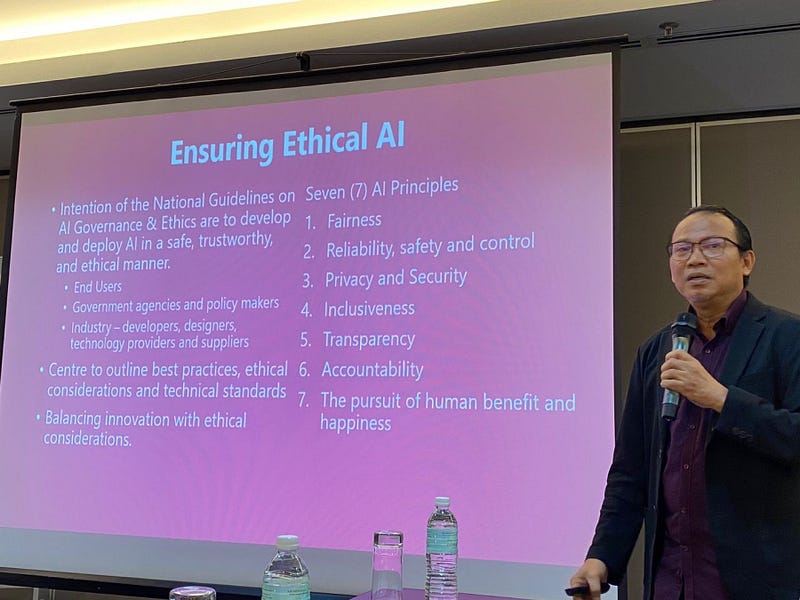
Building Trust in AI: The Power of Reliability, Safety, and Control

Image created using ChatGPT

The Importance of Reliability in AI

As someone who has worked extensively with technology, I’ve always emphasized the importance of reliability in AI systems. Reliability isn’t just a buzzword; it means that AI works as expected under normal and challenging circumstances.

Take the example of autonomous vehicles.

Imagine a self-driving car cruising down the highway on a sunny day — everything seems fine. But what happens when the weather suddenly changes? What if it starts raining heavily or if fog sets in? The car’s AI must remain reliable in identifying obstacles, following traffic rules, and ensuring passenger safety. If the system fails under these conditions, it’s not ready for real-world use.

“Would I trust this system if my safety depended on it?” Developers need to ask themselves this question. Reliability doesn’t mean perfection, but it means that the system does what it was designed to do under most circumstances.

When it encounters unexpected situations, it must still respond appropriately.

Safety in AI: More Than Just a Feature

Safety is crucial to AI, especially when human lives are at stake.

One simple yet powerful example of AI contributing to safety is found in modern vehicles — many now come equipped with AI features like automatic emergency braking.

Imagine you’re driving, and suddenly, the car in front of you stops abruptly. You might not have time to react, but the car’s AI does. It slams on the brakes to avoid a collision.

This shows how AI can enhance safety by making quick, life-saving decisions. However, this only works if the AI system has been thoroughly tested and proven to act reliably in such scenarios.

Fail-safe mechanisms are essential. If an AI system encounters an error or an unexpected situation, it must default to a state that avoids harm. A failure in high-risk environments like healthcare or transportation could lead to catastrophic outcomes. Fail-safe design ensures the system handles the situation without causing damage, even in the worst-case scenario.

I remember a colleague working on a project with industrial robots where safety was a huge concern. The question constantly on my mind was: “What happens if the robot misinterprets its task and causes an accident?”

The solution was to incorporate multiple layers of safety, including emergency stops and manual overrides. These features gave workers the confidence to operate near the robots, knowing they could intervene if necessary.

Controllability: Ensuring Human Oversight

Humans must maintain ultimate control over AI systems in high-risk areas like military applications or autonomous vehicles. While AI can make quick decisions, humans must be able to override the system if something goes wrong.

For example, AI might control drones or weapon systems in military applications. While these systems can make quick, efficient decisions, human judgment and oversight are still crucial.

I often remind myself, “Autonomy doesn’t mean lack of oversight.” AI should be autonomous but never beyond human control.

Maintaining control is not just about trusting the AI; it’s about ensuring that humans can manage and control these systems effectively. AI should work hand-in-hand with human operators, particularly in scenarios where lives are at stake.

The Role of Testing and Certification

Rigorous testing is one of the most critical steps to ensuring reliability, safety, and control in AI. This isn’t a one-time process; it must be ongoing. The real world constantly changes, and AI systems must adapt to new conditions and scenarios.

Developers and end-users should conduct regular certification and risk assessments. These assessments help identify potential weaknesses or vulnerabilities in the system, ensuring that AI meets the necessary reliability, safety, and control standards.

Without these steps, the systems we build won’t inspire trust; without trust, they can never reach their full potential.

Conclusion: Trust Through Testing

The future of AI depends on our ability to trust these systems.

Trust can only be built through robust testing, thoughtful design, and maintaining human control. As I often remind myself, “An AI system that cannot be trusted will never be used to its full potential.”

Trust comes from knowing these systems are reliable, safe, and controllable, even in critical situations.

Adhering to these core principles is essential for AI to thrive in healthcare, autonomous vehicles, or military applications.

Developers must prioritize testing, and users must be confident that they control these systems. Only then will AI be ready for widespread adoption in our everyday lives.

Protecting Your Future: Why AI Security and Privacy Matter

ABOUT ARTIFICIAL INTELLIGENCE (AI)

Security and Privacy — Principle of AI

When we talk about artificial intelligence (AI), one of the most important things to remember is that AI must be private and secure. It’s like driving a car.

You want the car to function properly, keep you safe, and always be in your control.

AI is no different.

These systems must perform as intended and resist tampering, especially by unauthorized parties.

In my experience working with IoT and smart cities, I have seen the risks and benefits of AI, and developers need to ensure that safety and security are built into every system from the beginning.

Let me explain with some simple examples.

Example 1: Self-driving Cars

One of the most exciting advancements in AI is the development of self-driving cars. Imagine a vehicle designed to drive itself from point A to point B.

The promise of these cars is enticing: fewer accidents, no need for human intervention, and efficient traffic management.

But what happens if the AI controlling the car is hacked? What if an unauthorized party can take control and steer the vehicle into danger?

This is where safety and reliability come into play.

The AI system must be designed to resist such interference. Developers must ensure that only authorized individuals can interact with the AI’s decision-making process.

If someone tries to hack into the system, the AI must be able to detect and prevent the intrusion. Without this security, the risk of accidents increases dramatically, and people may lose trust in AI technology.

In my experience with IoT and smart city solutions, we must design systems with these safeguards from the ground up.

AI systems should be tested rigorously under various scenarios to ensure they perform as intended, even in unexpected conditions.

For instance, just as we ensure an IoT device in a smart city responds safely during a power outage, a self-driving car should still behave responsibly if something goes wrong.

Example 2: AI-powered Healthcare Diagnostics

Another powerful application of AI is in healthcare.

AI systems are now being used to assist doctors in diagnosing diseases based on medical images or patient data. Consider how an AI system can analyze thousands of medical scans in seconds to identify potential problems like tumors or heart conditions.

But what if the AI system gives a wrong diagnosis? Or what if someone manipulates the data to favor certain patients while discriminating against others?

Here’s where privacy and data protection become crucial.

Developers must obtain consent before using someone’s personal health data to develop or run an AI system. Patients must know how their data is being used and should have the right to control it.

Data collected for these purposes should never be used to discriminate against patients based on race, gender, or other factors.

Incorporating security-by-design and privacy-by-design principles ensures that data is protected from misuse throughout the AI system’s entire lifecycle.

Developers should also adhere to international data protection standards so patients can trust that their health data is safe and won’t be used unlawfully. As someone who has worked with data from IoT systems, I know how easily personal data can be misused if not handled carefully.

Example 3: AI in Smart Home Devices

Now, let’s look at something more straightforward: smart home devices. Many people use AI-powered gadgets in their homes, like smart thermostats, voice-activated assistants, or security cameras.

These devices collect a lot of personal data.

Imagine if someone could access your security camera without your permission or your voice assistant recorded your conversations and shared them with companies you don’t know about.

Developers of these AI systems must obtain user consent before collecting and using this data. And once the data is collected, it must be protected.

The system should guarantee privacy, meaning the information stays confidential and cannot be accessed by unauthorized parties.

Moreover, the system must be transparent about how the data is used so that users can make informed decisions.

I often tell people that IoT and AI systems are like locks on a door. You wouldn’t leave your front door unlocked for anyone to walk in, right? In the same way, AI systems must lock down data and make sure only the right people have access.

A secure and privacy-conscious design helps build trust with users, which is essential for the widespread adoption of AI technologies.

Final Thoughts

For AI to truly succeed and be embraced by the masses, it must be trustworthy.

We can’t ignore the risks associated with it, but we can mitigate those risks by focusing on safety, security, and privacy. AI systems need to be reliable, and developers should always aim to meet the highest standards in protecting users’ data.

When AI is safe, secure, and controllable, we all stand to benefit from its incredible potential.

In every project I’ve been involved in, from IoT solutions to smart cities, this principle has been at the forefront: build systems that people can trust.

Only then can we realize AI’s full potential in transforming industries, healthcare, and our daily lives.

Understanding Fairness in AI

UNDERSTANDING ARTIFICIAL INTELLIGENCE

How to build trust in AI machines and software.

Image created using ChatGPT

As I explore Artificial Intelligence (AI), one principle resurfaces in almost every conversation: fairness. But what does fairness mean when we talk about AI?

AI systems should be designed and implemented to avoid bias and discrimination. It sounds simple, but the more I think about it, the more complex it becomes. How can we ensure that a machine, learning from data that may contain past biases, remains fair to everyone?

I’ve spent years working in technology, from telecommunications to IoT, and I’ve seen firsthand how tech can change lives.

But what happens when this powerful technology, which is supposed to serve everyone, starts favoring particular groups? That’s the real issue with biased AI. Unfortunately, it’s not just a hypothetical concern—it’s happening all around us.

Is AI fair?” I often ask myself. And the answer, unfortunately, isn’t always “yes.

Example 1: The Recruitment Algorithm

Let me start with an easy-to-grasp scenario. Imagine a company using AI to screen job applicants.

The goal is simple: the AI looks at resumes and selects the best candidates for the job.

It sounds efficient.

But what if the historical data fed into the system reflects past biases? What if, historically, the company has hired more men than women for tech roles?

The AI would begin to learn from this data, thinking that men are more likely to succeed in these roles. The result? The AI starts favoring male candidates, even if female candidates are equally or more qualified.

As I think about this, I realize the real danger isn’t just the immediate bias — it’s the fact that it can perpetuate and amplify over time.

What if this AI system continues being used for years?” I ponder. “How many qualified candidates will be unfairly rejected just because the AI absorbed a biased pattern from the past?

This is why fairness is critical in AI systems.

We need to ensure that the algorithms don’t just mimic the past but actively help us create a more equitable future.

Example 2: AI in Healthcare

Another troubling example is in healthcare.

Imagine an AI system that helps doctors decide who should receive life-saving treatment first. Ideally, it should be a neutral tool that analyzes medical data to determine who is in the most critical condition.

But what if the AI has been trained on data favoring one demographic over another, such as wealthier patients who typically have better access to healthcare?

The AI might then start recommending treatments to wealthier individuals while overlooking those from underprivileged backgrounds who may have just as critical a need.

How can we let this happen in healthcare?” I ask myself. The stakes are too high. It’s a matter of life and death, and if we can’t ensure fairness in these systems, we are failing those who need help the most.

This is why AI fairness isn’t just a technical issue — it’s a moral one.

We’re dealing with real people’s lives, and any bias, no matter how small, can have far-reaching consequences.

Example 3: Facial Recognition and Law Enforcement

Facial recognition technology is another area where fairness is crucial. Several studies have shown that facial recognition systems often struggle to identify people with darker skin tones accurately.

How is this possible?” I ask myself. With all our advancements, how can a system still make such glaring errors?

But then I realized—it all comes back to the data. If the AI were trained primarily on images of lighter-skinned individuals, identifying darker-skinned people would be less accurate. If law enforcement agencies rely on these systems, it can lead to unjust outcomes, such as wrongful arrests or misidentification.

Imagine being misidentified by an AI system just because it wasn’t trained properly,” I think.

The impact of such a failure is profound.

People’s lives can be turned upside down instantly, all because an algorithm wasn’t built with fairness in mind.

The Path Forward

So, how do we ensure fairness in AI?

It starts with the data. We need diverse and representative datasets to train these systems. But it also requires constant vigilance. Even with the best data, biases can creep in through the design or implementation of the AI system itself.

I often remind myself, “It’s not enough to trust that AI will ‘figure it out’ on its own. As developers and users, we have to be proactive in identifying and correcting biases.” It’s a responsibility that we must take seriously, especially as AI becomes more integrated into every aspect of our lives.

For me, fairness in AI is about ensuring that the technology we build serves everyone equally.

It’s about not allowing past biases to shape the future.

It’s about holding ourselves accountable to the highest ethical standards. Only then can we truly unlock AI’s potential in a way that benefits all of humanity.

What it Takes to Build a National AI Centre

This wasn’t just about building a center. It was about building Malaysia’s future.

It all started with a question. “Dr. Mazlan, do you think Malaysia needs a national AI center?

At first, I paused. It was a question I had been grappling with for some time, but hearing it from others made me realize just how urgent the conversation had become. Artificial Intelligence (AI) isn’t just a buzzword anymore; it’s a transformative technology already reshaping industries worldwide. And if we don’t act now, we risk being left behind.

The first time I was asked this question, I remember sitting at a roundtable discussion with some of Malaysia’s top tech leaders. I could feel the weight of the moment. This wasn’t just an academic debate but a call to action.

Yes,” I replied firmly. “We need a national AI center.

But the follow-up questions came quickly. “What does it take to build such a center? How do we ensure its success? What infrastructure do we need? And what about talent? Can Malaysia really compete on a global stage?

I found myself reflecting on my experience building Favoriot. There were striking similarities between the early challenges we faced with IoT and the new hurdles with AI. In both cases, it wasn’t just about the technology. It was about creating an ecosystem where innovation could thrive, talent could flourish, and industries could benefit.

Setting up a national AI center is the same. It’s about creating the right conditions for AI to impact meaningfully across sectors.

The Infrastructure Dilemma

Everyone seems to ask the first question: What infrastructure does a national AI center need?

It’s a fair question I’ve spent much time pondering. From my experience with Favoriot, I learned that infrastructure is the foundation upon which everything else is built. Without suitable systems, you’re doomed to fail before you even begin.

For AI, this means investing heavily in computational power. You can’t have AI without data, and you can’t process that data without high-performance computing. But it’s not just about raw computing power. We must consider the entire data pipeline — from storage and processing to analysis and action.

As I was explaining this to a colleague recently, I compared our early days at Favoriot. “Remember when we first started building our IoT platform?” I asked. “We underestimated how much data we’d need to handle, and we were constantly upgrading our servers. AI will be like that but on a much larger scale.

We’ll need data centers that can scale to handle current demand and future growth. The cloud will be a critical part of this, as will edge computing, particularly for real-time applications. And then there’s the question of connectivity. Malaysia’s digital infrastructure is improving, but there’s still work to be done. We’ll need 5G to ensure the high-speed, low-latency networks that AI applications depend on.

I remember thinking about the logistics of all this. “Where do we even start?” I asked myself. “How do we ensure the infrastructure we build today isn’t obsolete tomorrow?

It’s a daunting challenge but not an impossible one. With the right partnerships — local telcos and international tech companies — we can build the infrastructure an AI center needs to thrive.

Talent: The Heart of AI

As crucial as infrastructure is, it’s not the only thing that matters. The next big question is talent.

Do we have enough AI talent in Malaysia?” someone asked me recently.

I paused. “Not yet,” I admitted. “But we can get there.

Talent will be the most critical factor in determining whether or not a national AI centre succeeds. We need data scientists, machine learning engineers, AI researchers, and a host of other specialists who understand the nuances of AI.

I’ve seen this firsthand at Favoriot. Finding people who understood IoT early on was challenging, and AI is no different. We’re not just competing with local companies for this talent; we’re competing globally. Countries like the US, China, and South Korea are pouring resources into developing their AI talent pools.

But here’s where I’m optimistic. Malaysia has a young, tech-savvy population, and our universities are producing brilliant engineers and data scientists.

What we need is to create pathways for them to specialize in AI.

I remember discussing this with a professor recently. “We need to embed AI into the curriculum at all levels of education,” I said, “ from secondary schools to universities. AI can’t be a niche subject — it must be a core part of our education system.

But education alone isn’t enough.

We need to create opportunities for this talent to grow. That means internships, apprenticeships, and partnerships with the private sector. The National AI Center could act as a hub, connecting students and researchers with industry and giving them real-world problems to solve.

Imagine a place,” I told a colleague, “where students, startups, and multinational companies are all working together, learning from each other, and pushing the boundaries of what AI can do. That’s what the national AI center could be.

Collaboration: The Key to Success

This brings me to the next big question: how do we foster stakeholder collaboration?

This is where the real challenge lies. My experience at Favoriot taught me that collaboration isn’t always easy. There are so many different interests at play — government, industry, academia — and getting everyone on the same page can be challenging. But it’s essential.

Someone recently asked me, “Why do we need a national AI center?” “Why not let the private sector handle AI development?

It’s a valid question and one that I’ve heard many times.

The answer lies in AI itself. AI isn’t just another technology; it’s a general-purpose technology that will impact every sector, from healthcare and education to finance and agriculture. No single entity can build an AI ecosystem independently; it requires collaboration.

The National AI Center would be a place where different stakeholders come together. The government could set policies and regulations that ensure AI is developed and used ethically. Universities could focus on research and training. Startups could experiment with new AI applications, and large corporations could scale those innovations.

Think about it,” I told a friend recently. “If we can bring together the best minds from government, academia, and industry, we can create something truly special — a place where innovation happens at the intersection of different perspectives.”

The Benefits for Industry and Startups

One of the most exciting aspects of setting up a national AI center is the potential benefits for industry and startups.

When I first started Favoriot, I envisioned how IoT could transform industries in Malaysia. And while it took time, we now see that vision come to life. AI is poised to have a similar, if not more significant, impact.

The national AI center could provide a platform for established industries to experiment with new AI technologies without investing in expensive infrastructure. Imagine a manufacturing company collaborating with AI researchers to develop predictive maintenance algorithms or a healthcare provider working with data scientists to create personalized treatment plans using AI.

The possibilities are endless.

And for startups? The National AI Center could be a game-changer. Startups often have brilliant ideas but need more resources to bring those ideas to life. The AI center could provide them with the computational power, data, and expertise they need to scale their innovations.

I’ve seen how difficult it can be for startups to break into traditionally slow industries to adopt new technologies. However, with the support of a national AI center, those barriers could be lowered. Startups could test their ideas, get feedback from industry leaders, and scale their solutions faster.

I remember talking to a startup founder recently who was working on an AI-powered solution for agriculture. “We have the technology,” he told me, “but we need access to data and the right partners to scale.”

That’s where the National AI Centre comes in. It would act as a bridge, connecting startups with the data, infrastructure, and partnerships they need to succeed.

A Vision for the Future

As I sit here, reflecting on these conversations, I can’t help but feel a sense of urgency. The world is moving quickly, and AI will be at the heart of that change. Malaysia has the potential to lead, but only if we act now.

Can we do this?” I asked myself one evening as I sketched out ideas for the center. The answer is yes. However, it will require a concerted effort from government, industry, academia, and startups.

Setting up a national AI center is a bold vision, but it can transform Malaysia into a leader in AI innovation. With the proper infrastructure, talent, and collaborations, we can create an AI ecosystem that benefits everyone — industries, startups, and the nation.

When we look back in a few years, I believe we’ll see that this wasn’t just about building a center. It was about building Malaysia’s future.

Smart Cities: It’s the Little Things That Matter Most

Lessons learned from the short trip to Korea

On my recent trip to South Korea for the World Smart Cities Expo, I couldn’t help but reflect on how deeply ingrained the concept of a citizen-centric smart city is in urban planning.

Walking through Incheon Airport, I was struck by the simple yet thoughtful services provided for the public, tourists, and commuters.

One such service, which may seem insignificant to some but symbolizes the essence of smart cities, is the availability of free charging stations.

Everywhere I looked, from the airport to bus stops and public areas, there were convenient charging stations for everyone. I sat down at one of these stations at Incheon Airport, plugged in my phone, and thought about how something so simple could add so much value to a person’s experience in a city.

Why can’t we have something like this back home?” I mused to myself. Accessibility and convenience—these little things—are often overlooked when we think of smart cities. But in reality, they are what makes a city smart and citizen-friendly.

South Korea’s approach to smart cities goes beyond flashy technology or grand infrastructure projects. It focuses on its people’s daily needs, which struck me the most during my trip.

As I attended different sessions and panels at the expo, this notion of citizen-centric solutions continued. The emphasis was on how smart city technologies could genuinely improve the quality of life for citizens. And these charging stations were just one small but vital example of that philosophy in action.

I remember sitting there, reflecting on how these little comforts truly matter. Imagine being a tourist or a local who’s been walking all day, your phone is about to die, and just as you’re worrying about losing your connection to the world, you spot one of these free charging stations.

It’s such a relief, isn’t it? This is the kind of convenience that makes people feel taken care of in their city.

Another experience that underscored South Korea’s dedication to citizen-centric smart cities happened when I hopped on one of their public buses. Even here, in a place where you’d expect the focus to be on transportation and efficiency, they had charging ports built into the seats.

As I sat there, watching people plug in their phones and continue with their day, I couldn’t help but admire how they’ve seamlessly integrated technology into the most ordinary aspects of life.

This,” I thought, “is what a smart city is really about.” It’s not just about data, sensors, or even the Internet of Things (IoT) in their most advanced forms. It’s about understanding what people need daily and using technology to make their lives easier.

As the expo progressed, I attended a fascinating presentation on Japan’s latest trends in smart city development. The speaker highlighted something that resonated with me: Japan now focuses more on what it calls its citizens’ “happiness index.” It has realized that while important, economic growth and business opportunities are not the only measures of a prosperous city.

Happiness, well-being, and the overall quality of life are now at the forefront of its smart city initiatives.

I sat there, thinking, “That’s brilliant.” Japan and South Korea are both moving beyond the traditional goals of smart cities – growth, efficiency, and economic success – and are now centering their attention on something far more meaningful: the happiness of their people.

Back in Malaysia, we often talk about smart cities in terms of technology adoption, infrastructure, and business growth

. But where are we when it comes to this citizen-centric approach? Are we thinking about the daily lives of our people and how we can use smart technologies to make their experience in the city better, more comfortable, more enjoyable?

I believe we’re still in the early stages of this journey. In our discussions about smart cities, we must start asking how we can solve everyday problems for the average citizen.

How can we improve their commute, access to services, or even something as simple as giving them a place to charge their phone while waiting for the bus?

This trip to South Korea and the insights shared at the World Smart Cities Expo opened my eyes to how far we still have to go.

But it also filled me with optimism.

If countries like Japan and South Korea can shift their focus to something as fundamental as the happiness of their citizens, then we can, too, start thinking in that direction.

As I wandered the expo, I began to understand how Favoriot, my company, could contribute to this shift.

We’ve focused heavily on the Internet of Things (IoT) and its applications in smart cities. But what if we, too, started thinking more about the citizen experience? How can IoT help improve efficiency, productivity, happiness, comfort, and quality of life?

I started to make mental notes. Public transportation could be equipped with smart technologies that ensure timely arrivals and departures and comfort and convenience for passengers.

Public spaces could be designed with IoT-enabled services that make life easier for people, whether providing real-time information on available services or simple things like ensuring access to free charging ports.

The more I thought about it, the more it made sense. A smart city isn’t just about the technology itself; it’s about how that technology serves the people living in it. And I believe that’s the future of smart cities.

As my trip to South Korea ended, I felt a renewed sense of purpose.

The World Smart Cities Expo had given me so much food for thought, and as I boarded my flight back home, I began outlining a plan for how we at Favoriot could contribute to this citizen-centric future.

We’ve always been at the forefront of IoT innovation, but now it’s time to start thinking more deeply about how we can help make cities in Malaysia smarter and more people-focused.

The free charging stations I encountered in South Korea may have been a small detail, but they encapsulated a much larger philosophy – one that I believe is crucial for the success of any smart city.

A city genuinely cares for its people and doesn’t just focus on economic growth or technological advancements. It focuses on improving everyday life, making it simpler and more enjoyable for its citizens.

As the plane took off, I thought that was the real promise of smart cities: a future where technology serves the people, not the other way around.

A Seamless Journey Through Seoul’s Intelligent Public Transit System

Smart Cities Stories

Smart Transportation

On my recent trip to the World Smart Cities Expo in South Korea, I was deeply impressed by their public transportation system. South Korea has truly embraced the concept of a smart, citizen-centric city.

Their intelligent and integrated public transportation system is a remarkable example of how technology can enhance daily life and solve common challenges.

As I stood at a bus stop, staring at the digital monitor showing bus schedules, weather, air quality, and even the next bus’s arrival time, I couldn’t help but compare it to our system back in Malaysia.

In Seoul, everything is interconnected. The buses and subways are seamlessly linked, making it incredibly easy to move around the city.

I have been using the KakaoMap mobile app to plan my journey. This app has all the features one could hope for when navigating a bustling city. It provides real-time information about bus and train schedules and shows walking distances between locations.

The most impressive feature? The app even tells you how many seats are available on the bus you’re waiting for.

I couldn’t help but think, “Why don’t we have this level of convenience in Kuala Lumpur?

As I stood there, watching the minutes tick down on the bus monitor, I thought about the benefits of real-time updates like this. Imagine standing at a bus stop in the rain, unsure when the bus will arrive.

In Kuala Lumpur, many bus stops lack real-time information, leaving passengers guessing. Here in Seoul, the technology gives passengers peace of mind. You know exactly when the bus will arrive and how crowded it will be—no more guessing or anxiety.

As the bus approached, I glanced at the app again. It showed that there were still seats available.

The bus pulled up on time, and I tapped my Tmoney card to pay as I got on. This card is another great example of convenience in South Korea. You can use it not only for public transportation – buses and subways – but also for purchases in convenience stores.

It’s a truly integrated payment system that further streamlines daily life in the city.

Sitting on the bus, I noticed how smooth the ride was. The onboard display would show the next stop and estimated arrival time every few minutes, keeping passengers informed.

I thought back to when I’d been on buses in Kuala Lumpur, especially during peak hours, and had no idea how long the journey would take.

If we had something similar in Malaysia, it would completely change how people commute, making public transportation more attractive.

I began thinking about the infrastructure behind this smart transportation system.

It’s not just about installing digital screens or launching a mobile app. It’s about creating an ecosystem where data from different modes of transport – subways, buses, taxis – are integrated into one unified system.

In Seoul, I noticed that every part of the transportation system seemed to communicate with each other. Whether on a subway or a bus, the information is consistent and accessible.

This kind of integration is what makes a city truly smart. It’s not just about fancy technology or big infrastructure projects; it’s about making everyday life more efficient and convenient for its citizens. Seoul’s transportation system has achieved that.

The air quality display was another feature that caught my attention. South Korea’s commitment to ensuring a comfortable and safe environment for its people extends even to real-time monitoring of air quality.

Sitting on the bus, I thought about how this feature could benefit our cities. Imagine having this in Kuala Lumpur, where haze and pollution are frequent concerns.

Real-time air quality updates could help people make informed decisions about their day.

When I got off the bus, I was already thinking about how this smart transportation model could be adapted for Kuala Lumpur.

Could we create a similar experience for our commuters?

Could we have real-time bus and train schedules displayed at every stop, with integrated payment systems like the Tmoney card?

As I walked to my next destination, I couldn’t stop thinking about the future of public transportation.

In Malaysia, we often talk about upgrading our infrastructure, but we sometimes overlook the smaller yet equally important aspects – like how easy it is for a person to plan their daily commute.

In South Korea, it’s clear that they’ve thought through every detail. From real-time updates to integrated payment systems, they’ve created a public transportation network that prioritizes the needs of the people.

Reflecting on this, I realized that smart transportation is not just about technology—it’s about creating a better experience for everyone. It’s about reducing uncertainty, saving time, and making city life more convenient and enjoyable.

South Korea has shown me what’s possible when technology is used thoughtfully in the service of its citizens.

As I made my way to my final destination, I kept thinking: This is what we need—a reliable, connected, and easy-to-use transportation system where the buses and trains don’t just get you from point A to point B but also provide a seamless, stress-free experience.

Can we bring this kind of intelligent transportation to Kuala Lumpur now? Do we have the capacity to create a similarly connected system that benefits everyone?

If South Korea can do it, I believe we can too.

It’s just a matter of prioritizing the right solutions and ensuring that we focus on what matters most: the people who use these systems every day.

About Favoriot — Part 15: Experience in Giving Lectures and Pitching

ABOUT FAVORIOT SERIES

Public speaking has become a career for me throughout my life. Since I started working, I’ve often stood in front of an audience, speaking and sharing knowledge or ideas.

However, I realize that not everyone is comfortable with this. Many people view it as a nightmare—standing in front of a large group, delivering something they might already know or, more dauntingly, something new that requires their acceptance.

My journey into public speaking began when I became a lecturer. Every day, I had to stand before students, delivering lectures between one and two hours.

At first, I was pretty nervous. “What if the students don’t understand what I’m saying?” I often asked myself.

But over time, lecturing became a routine. I started learning to understand my students, grasping their learning styles, and adjusting how I delivered information to make it more effective.

Being a lecturer taught me a lot about communication.

I needed to ensure that students didn’t just listen but also understood and applied what they learned. I found that how I presented information was crucial in keeping the students engaged. “Am I too serious? Or should I be more relaxed?” I would often ask myself after each class.

After many years in academia, I received invitations to speak at conferences and seminars. This was a new level for me. Unlike in the classroom, where I was facing students familiar with me, conferences and seminars introduced me to a diverse audience – from industry experts to beginners who were just getting acquainted with my field.

Every time I was invited, I was given different amounts of time, sometimes up to 40 minutes, sometimes just 15 minutes. I had to learn to adapt quickly.

How can I convey important information in this short amount of time?” I often thought before each session.

This was challenging, but it also taught me to be more focused and concise in my delivery.

I learned that in conferences, starting with something that grabs the audience’s attention is crucial. An anecdote, a provocative question, or even a surprising fact can be a good opener.

This made me realize that how we start a speech can determine how the audience will pay attention throughout the session.

However, one of the biggest challenges in public speaking came when I began receiving invitations to speak at workshops.

Here, the time allocated for me to speak was much longer—sometimes up to one or two days—and I spoke alone. Imagine, I had to ensure the audience stayed interested the entire time.

How can I keep their attention?” This question often swirled in my mind.

I found that interaction is key in workshops. Unlike lectures or seminars, where the delivery is more one-way, workshops require more two-way discussions.

I started involving the audience in discussions, allowing them to share their opinions and experiences. This helped maintain their focus and gave me new perspectives on the issues being discussed.

Every workshop is an opportunity for me to learn something new,” I often reminded myself.

After transitioning into the corporate and technology world, my role in public speaking also changed. I was no longer just sharing knowledge but also selling products and ideas. “Product Talk” became a routine in our marketing efforts at Favoriot.

Here, I had to present the benefits of our products in a convincing but moderate manner.

Another big challenge was, “How can I make the audience believe in our products without making it feel like I’m just trying to sell them? “

I learned that in Product Talks, it’s essential to focus on how our products can solve the problems faced by the audience. I didn’t just talk about the product’s features but more about the benefits they could gain.

I also started using success stories as examples because I found them more accessible and convincing.

Recently, I’ve started transitioning to pitching to investors, which is an even more challenging level.

Unlike lectures, seminars, or Product Talks, pitching requires me to present all the important information in a very limited time—sometimes only three to five minutes.

How can I include all the important points in such a short time?” I often ask myself before each pitching session.

I found that clarity and confidence are key in pitching.

I needed to ensure that the investors understood what I was trying to convey, and I had to do it confidently.

I also learned that the slides must be simple but packed with information. There’s no room for unimportant details. “Every slide needs to have a clear purpose,” this is the principle I hold onto.

My experience in various types of public speaking has taught me that each situation requires a different approach.

The duration, type of audience, purpose of the speech, and method of delivery all play a role in determining its effectiveness. I also realized that we often criticize seminar presenters or those giving a pitch—their confusing style, boring slides, or unengaging delivery.

But when it’s our turn to stand in front, sometimes we make the same mistakes.

I learned that the most important things in public speaking are to speak confidently, convey information in a way that’s easy to understand, use an approach that engages the audience, and ensure that the slides used are not boring.

I also learned that we must constantly strive to improve because every public speaking session allows us to learn and grow.

What about you?” I often ask myself after each session.

Public speaking is a skill that can always be improved. The more we do it, the more confident we become.

Ultimately, I realize that public speaking isn’t just about what we say but how we make the audience feel it.

If we can deliver our message in a way that makes the audience feel connected, then we have succeeded in public speaking.

And that’s something I always strive to achieve.

About Favoriot — Part 14: The Acquisition Journey as a Startup Founder

ABOUT FAVORIOT SERIES

Creating Synergy: How Startups Can Prepare for the Perfect Acquisition

As a startup founder, one of the most intriguing questions that constantly lurks in my mind is: “Should we exit through an acquisition?” This question carries with it not just the weight of financial considerations but also the emotional and strategic implications for the company’s future.

As the CEO of Favoriot, I’ve been through this mental tug-of-war many times. I often find myself contemplating our embarked journey and where it might lead.

Guess what? As a startup founder, you either expand your business through investors, or you might want to find a strategic merger or acquisition. And trust me, the decision isn’t as straightforward as it might seem.

When I co-founded Favoriot, our primary goal was to create an IoT platform that could help businesses and communities integrate IoT solutions seamlessly. We were passionate about the possibilities, potential impact, and innovation that we could bring to the market.

But as we grew, so did the challenges, and the question of whether to exit through an acquisition became more pertinent.

Understanding the Potential Acquirers

One of the first steps in considering an acquisition is to understand who your potential acquirers might be. This isn’t just about identifying companies with the financial capability to buy you out. It’s about understanding their business models, strategies, and focus areas.

I remember a time when a large telecommunications company showed interest in Favoriot. Our platform seemed perfect because they were looking to expand their IoT services. However, as I dug deeper, I realized their primary focus was consumer IoT solutions, while we were more geared towards industrial applications.

Does this align with our vision? I asked myself.

Ensuring that the acquiring company’s strategy aligns with yours is crucial. Although the financial offer was tempting, the strategic misalignment was too significant to ignore. We decided to walk away, knowing that while it might have been a lucrative exit, it wasn’t suitable for us.

Aligning Your Product/Service

Aligning your products or services with their needs is essential to making your startup attractive to potential acquirers. This doesn’t mean you should change your core offerings; rather, develop them to complement the potential acquirer’s portfolio.

At Favoriot, we started focusing on creating modular solutions within our platform that could be easily integrated with other systems.

This approach made our platform more versatile and appealing to larger companies looking for quick and seamless integration.

What if our platform could fill a gap in their product line? I pondered during one of our strategy sessions.

This led to a shift in our development strategy. We began focusing on compatibility and complementarity rather than just innovating for the sake of innovation.

Targeting the Same Customer Base

Another critical consideration is whether your startup serves the same customer base as a potential acquirer. This can significantly increase your strategic fit, allowing the acquiring company to cross-sell or upsell their services to your customers and vice versa.

For us, this meant expanding our market reach into sectors that were already being served by potential acquirers.

We examined the industries that were most active in adopting IoT solutions and tailored our marketing efforts to those sectors.

Could our customers benefit from the additional services a larger company offers? I often wondered.

By targeting the same customer base, we increased our value proposition and made ourselves more attractive to companies looking to expand their market share.

Adapting to Their Technology

In today’s tech-driven world, ensuring your technology is compatible with potential acquirers is crucial. This can significantly reduce the cost and complexity of integration post-acquisition, making your startup a more attractive proposition.

At Favoriot, we invested heavily in ensuring that our platform was built on open standards, making it easier for other systems to integrate with ours.

This wasn’t just about making our platform more versatile but about positioning ourselves as a strategic acquisition target.

What if we could make the integration process as smooth as possible? This thought guided many of our technical decisions, from the choice of programming languages to the design of our APIs.

Focusing on Shared Values and Culture

One aspect of acquisitions that is often overlooked is cultural fit.

I’ve seen acquisitions fail not because the financials didn’t add up but because the merging companies had fundamentally different values and corporate cultures.

At Favoriot, we prided ourselves on our innovative and collaborative culture. We knew that any potential acquirer would need to share these values for the acquisition to be successful.

Can we thrive in a different corporate culture? I asked myself during one particularly challenging negotiation.

The answer was no, and we walked away from the deal.

It’s important to remember that being acquired shouldn’t mean losing your identity as a company. Instead, it should be about aligning your unique strengths with the needs and strategy of a potential acquirer.

Addressing Market Gaps

One of the most effective ways to position your startup for acquisition is to address a market gap that a potential acquirer cannot currently fill. This could be anything from a specific technology to a niche market segment.

For Favoriot, this meant focusing on the industrial IoT sector, where we saw a significant gap in the market.

By developing solutions that specifically addressed the needs of this sector, we made ourselves an attractive target for companies looking to expand into this space.

What if we could offer something that no one else could? This question drove much of our product development and market strategy.

Providing Strategic Advantages

Finally, to make your startup a strategic fit for acquisition, you need to offer something that gives the acquiring company a strategic advantage.

This could be unique intellectual property, a strong market presence, key partnerships, or anything else that could give them a competitive edge.

At Favoriot, we focused on building solid partnerships with key players in the IoT ecosystem.

These partnerships helped us grow our business and made us more attractive to potential acquirers.

How can we position ourselves as a must-have in their portfolio? I kept asking myself this question as we expanded our network of partners and collaborators.

The Transformative Possibilities of Acquisition

In the end, the actual value of an acquisition lies not in the transaction itself but in the transformative possibilities it creates.

A great acquisition isn’t just about combining businesses but about igniting new possibilities and empowering both companies to reach their full potential.

Can we create something bigger than ourselves? This is the ultimate question that every startup founder should ask when considering an acquisition.

It’s not just about the financials or immediate benefits but about the long-term vision and the combined entity’s impact on the market.

For Favoriot, the journey is still ongoing.

We’ve had our fair share of offers, and while none have been the right fit so far, I know that the day will come when the stars align and we find a partner who shares our vision and values.

Until then, we continue to build, innovate, and position ourselves for that perfect opportunity.

In the end, being a strategic fit isn’t about losing your identity as a business but instead aligning your unique strengths with the needs and strategy of a potential acquirer.

Acquiring a startup isn’t about taking over another company; it’s about empowering it to reach its full potential.

And that, to me, is the ultimate goal of any acquisition.

About Favoriot — Part 13: Does Winning Awards Help a Startup Succeed?

About Favoriot Series

Which is more critical — customers or awards?

The Early Days and Initial Recognition

Since Favoriot’s inception, we’ve won numerous awards. One notable example is being named Malaysia’s Best IoT Startup in 2019. I remember the excitement and pride that came with that achievement.

It felt like a validation of all the hard work and sleepless nights we had put into building the company. “This is it,” I thought. “We’re finally being recognized.

The Surge in Exposure

After winning that award, we received invitations to appear on podcasts, TV shows, and radio interviews.

The exposure was immense.

This kind of publicity was gold for a startup like ours, where getting the word out is half the battle. “Maybe this is what we needed to push us to the next level,” I mused as I prepared for another interview.

The Tough Questions Begin

But as the excitement of the award began to settle, I asked some tough questions. “Is this making a difference? Is this award going to translate into tangible results for Favoriot?” The reality, as I soon discovered, was more sobering.

Customers: The Missing Link

Did the award bring in customers? No, not really.

Despite all the exposure, we didn’t see a significant uptick in clients knocking on our door. “Surely, people have heard of us by now,” I would tell myself.

But recognition doesn’t always equate to sales.

The truth is, getting your name out there is just one piece of the puzzle. It’s not enough to be known; you must be trusted, which takes more than an award.

Investors: The Harsh Reality

What about investors? Did the award make them come running? Again, the answer was no.

How can they not see the potential in us?” I wondered, frustrated.

But investors are looking for more than just accolades.

They want a solid business model, a clear path to profitability, and, most importantly, evidence that your startup can scale.

No matter how prestigious, an award isn’t going to convince them on its own.

Big Projects: The Elusive Prize

And then there’s the question of projects.

Did we land any big contracts because of the award?

Unfortunately, no.

What’s the point of all this recognition if it doesn’t lead to real opportunities?” I found myself asking. It was a tough pill to swallow, but the fact remained: while awards are nice, they don’t necessarily open doors to significant deals.

The Importance of Merit

At Favoriot, we’ve always believed that if you’re going to give out awards, they should be based on merit.

Too often, I’ve seen awards handed out to those who can afford to pay for a fancy dinner or an editorial spot.

What’s the value of an award if it’s just bought and paid for?” I questioned. We’ve never been interested in that kind of recognition.

If we’re going to win something, we want it to be because we’ve earned it, not because we’ve paid for it.

Shifting Focus: Beyond Awards

So, where does that leave us now?

The truth is, we’re no longer chasing awards. They’ve lost their luster for us.

What’s more important,” I remind myself, “is attracting customers who believe in our product and are willing to pay for it.” That’s the real measure of success for a startup – not the trophies on the shelf but the customers who keep returning.

Aiming for Global Impact

We’ve shifted our focus to the international market.

Let the world see what we can do,” I often think. Our aim now is to be recognized globally, not just for the awards we’ve won but for our impact in the IoT space. We want the world to see the value we bring, not because we’ve won an award but because we’ve delivered real results.

The Road Ahead: Challenges and Hopes

Of course, this journey isn’t easy.

It’s filled with challenges, setbacks, and moments of doubt. But it’s also filled with hope, determination, and a belief that what we’re doing matters.

May our journey be made easier with the prayers of our friends,” I often reflect. And for those who have supported us, I can only say thank you.

Your belief in us means more than any award ever could.

The True Measure of Success

In the end, I’ve come to realize that awards are just that – awards.

They’re a nice pat on the back, but they don’t define success.

What matters more is the work we do daily, the relationships we build, and our impact on the world.

That’s the legacy I want Favoriot to leave behind, and that’s what we’re working towards, one step at a time.

About Favoriot – Part 12: The Dream of M&A Exit

About Favoriot Series

Understanding why many startups opt for an M&A exit and what factors drive this decision.

I’ve often found myself reflecting on the ultimate goal many of us have when we start a company: the dream of a grand exit, perhaps through an IPO, where our company becomes publicly listed and the rewards are beyond anything we’ve imagined.

The reality, though, is much more complex, and for most of us, reaching that point requires navigating a winding path filled with challenges, decisions, and often, compromises.

When I first started out, the vision was clear – build something valuable, scale it, and eventually take it public.

I remember the excitement of those early days, the endless discussions about Series A, B, C funding rounds, and the belief that if we just worked hard enough, smart enough, we’d be among the fortunate few to make it to an IPO.

But as time passed, I realised that this dream, while achievable, was far from guaranteed.

Many companies don’t make it to that stage, and instead, find themselves considering other options, like mergers and acquisitions (M&A).

The reality is, getting to an IPO isn’t just about having a good idea or even a great product. It’s about building a company that generates substantial revenue, has a stable income, and has operations that can scale globally.

This requires not just innovation, but consistent execution over many years, often under immense pressure from investors and competitors. And even then, the odds are still slim.

I’ve seen many founders, myself included, face the tough decision of whether to continue pushing toward an IPO or to consider selling the company.

Selling, especially to a larger corporate entity, can be a very attractive option, particularly when the pressures of scaling become overwhelming. But selling is not just about cashing out; it’s about finding the right buyer who sees value in what you’ve built – whether that’s your technology, your team, or your market presence.

One of the first things you learn when you start exploring M&A options is that the reasons companies acquire startups are varied.

Often, they’re interested in your technology because it’s something they don’t have the resources or expertise to develop in-house. Building new products, especially in cutting-edge fields, is incredibly challenging.

It requires not just technical knowledge, but the ability to iterate quickly, learn from failures, and pivot when necessary.

Large corporations, with their layers of bureaucracy, often struggle with this, and for them, acquiring a startup that’s already proven itself can be a much easier path to innovation.

I’ve also seen companies acquire startups primarily for their talent. In today’s world, finding skilled people – those who not only have the technical chops but also the startup mindset – is incredibly difficult.

Big companies know this, and sometimes the quickest way to bring in fresh talent is to acquire a startup where that talent already exists. This is often referred to as “acqui-hiring,” and while it might not be the dream exit every founder imagines, it can be a viable and profitable option.

Another reason companies might acquire a startup is to gain access to a market they’re not currently serving. Startups, by nature, are nimble. We can pivot quickly, explore niche markets, and move into spaces that larger corporations might overlook or deem too risky.

But once a startup proves that a market is viable, larger companies often want in, and buying a startup can be their fastest route.

On the darker side, there’s also the possibility that a company might acquire a startup simply to shut it down. This might sound counterintuitive, but in highly competitive industries, it’s not uncommon.

A large corporation might see a startup as a potential threat, not because it’s currently taking market share, but because it could do so in the future. By acquiring the startup and then closing it, they eliminate the competition before it becomes a real problem.

Reflecting on these possibilities, I find myself asking, “What would I do if I were in that position again? Would I hold out for the IPO, or would I sell to the highest bidder?” The answer isn’t straightforward.

It depends on so many factors – the state of the market, the strength of the company, the offers on the table, and personal circumstances.

There’s no one-size-fits-all answer, and each founder must make that decision based on their unique situation.

I remember a time when I was approached by a large corporation interested in acquiring my startup.

They were impressed by our technology and saw it as a perfect fit for their portfolio.

Was this really the right move? Would selling mean giving up control over something I had poured my heart and soul into? And would I be happy working within a large corporation, where decisions might be made by people who didn’t share my vision?

Looking back, I realise that exits, whether through an IPO or an acquisition, are just one part of the startup journey.

They’re milestones, not the end goal.

The real value lies in the experiences, the lessons learned, and the impact you make along the way.

If I had to give advice to other founders contemplating their own exit strategies, I’d say this: don’t rush the decision.

Consider all your options carefully, think about what you want not just in terms of financial rewards, but in terms of your personal and professional growth.

And most importantly, be true to your vision and your values.

The right exit will come when the time is right, and when it does, you’ll know it.

In the end, whether you exit through an IPO, an acquisition, or simply by moving on to your next venture, what matters most is that you’ve built something meaningful, something that made a difference.

And that’s something no exit strategy can ever take away from you.