Writing a Blog and Building a Startup: Two Journeys, One Spirit

I never thought I’d say this, but here it goes: writing a blog—like mine—and building a startup—like FAVORIOT—feel like two sides of the same coin. Strange, isn’t it? At first glance, they seem worlds apart. One requires you to pour your thoughts onto a blank screen, while the other demands strategic planning, pitching ideas, managing teams, and scaling businesses.

But as I look back on both journeys, I see an uncanny resemblance. It’s like déjà vu but in different dimensions.

The Blank Page vs. The Blank Canvas

I remember when writing my first blog post. The blank page felt like it was mocking me—”So, what’s your big idea, Mazlan?” No audience, no followers, just me and my thoughts.

Now, compare that to the early days of FAVORIOT. We had a big dream: to simplify IoT adoption. But dreams are just dreams until you take that terrifying first step. No customers, no revenue, just a vision and an empty business plan.

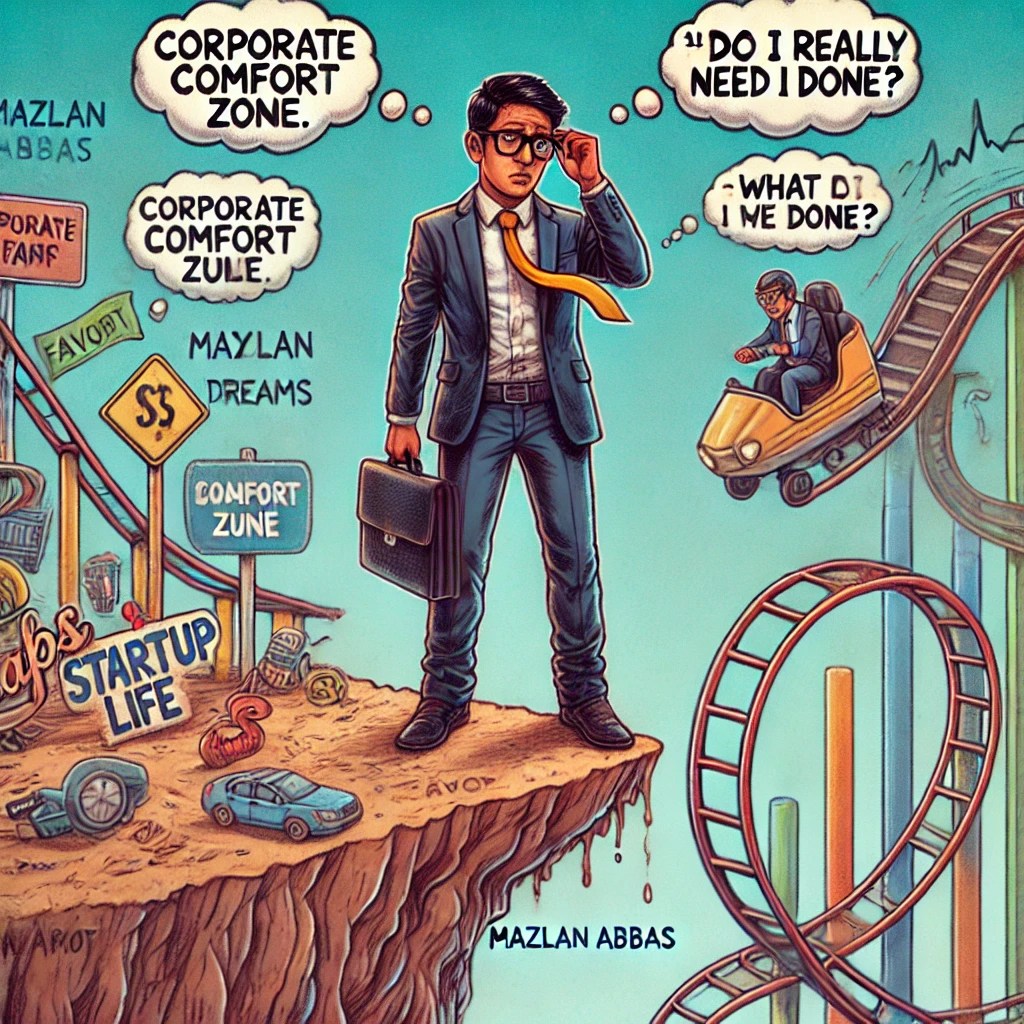
Starting both felt like standing at the edge of a cliff. Do you jump? Or do you hesitate? I jumped. Twice.

Defining Your “Why”

Here’s the thing about starting anything meaningful—you need a “why.” Without it, you’ll burn out faster than a cheap lightbulb.

For FAVORIOT, my “why” was crystal clear: help businesses and cities leverage IoT for smarter operations. For my blog, it was about sharing my journey, my thoughts, my lessons—hoping they’d resonate with someone out there.

When challenges hit—and trust me, they did—my “why” kept me grounded. It’s like having an internal GPS when the road ahead gets foggy.

The MVP (Minimum Viable Product): Perfection Can Wait

Every startup guru talks about the MVP. It’s your rough draft—a version that works but isn’t perfect. FAVORIOT’s first platform wasn’t a masterpiece. It had bugs, limited features, and a UI that would make today’s designers cringe. But it solved a problem, and that’s what mattered.

Guess what? My early blog posts were my MVPs. Not polished, not viral-worthy, but raw and honest. Some articles were barely 500 words, rushed between meetings, but filled with genuine insights.

You don’t wait for perfection. You launch, you learn, you iterate.

Audience vs. Customers: The Art of Connection

In startups, they say, “If you build it, they will come.” Lies. They won’t come unless you hustle.

At FAVORIOT, we had to identify our target market, pitch relentlessly, and prove our value. Blogging? Same game, different players. I had to find my niche—IoT, smart cities, entrepreneurship—and consistently write content that mattered.

But it wasn’t just about publishing and hoping for the best. Engagement was key. Responding to comments, sharing posts on LinkedIn, having meaningful discussions—these were my “sales calls” in the blogging world.

Consistency: The Unsung Hero

Let me be brutally honest—there were days I felt like giving up. Some months, FAVORIOT saw zero growth. Some weeks, my blog had views I could count on one hand.

But here’s the secret sauce: consistency. Not motivation. Not talent. Just showing up, day after day.

At FAVORIOT, we kept refining our platform, talking to clients, and pivoting when needed. On my blog, I kept writing—even when no one was reading. Over time, both grew. Not overnight, but gradually. Like watering a plant, wondering if it’ll ever sprout. Then one day—it does.

Feedback: The Mirror You Didn’t Ask For

Feedback can sting. Whether it’s a customer pointing out a flaw in FAVORIOT’s platform or a reader criticizing my writing style, it’s tough.

But it’s gold.

At FAVORIOT, customer feedback shaped our roadmap. What to improve, what to drop, what to double down on. My blog? Comments, shares, even silent metrics like “read time”—they told me what resonated.

Criticism isn’t an attack; it’s a compass.

Scaling: Doing More of What Works

Once FAVORIOT found its footing, it was time to scale. New markets, more features, global partnerships. But scaling isn’t just about doing more. It’s about doing more of what works.

I learned that lesson the hard way with my blog. I tried writing about everything—tech trends, personal growth, productivity hacks. Some of it flopped. I realized I needed to double down on my strengths: IoT, entrepreneurship, storytelling.

Passion: The Invisible Fuel

No passion? No progress.

I’m obsessed with IoT—not just as a technology, but as a force that’s reshaping our world. That passion fuels FAVORIOT. It also bleeds into my writing.

You can’t fake passion. Readers sense it. Customers sense it. It’s what keeps you going when logic says, “Quit.”

The Payoff: Beyond Metrics

Today, FAVORIOT has global partners. My blog reaches thousands of readers. But the real payoff? It’s not the numbers.

It’s the email from a reader who says, “Your article inspired me to start my own business.” It’s the client who says, “FAVORIOT helped us transform our operations.”

Impact. That’s the real currency.

Final Thoughts: Start. Just Start.

Whether you’re building a startup or a blog, the rules are surprisingly similar:

  • Start before you’re ready.
  • Find your ‘why.’
  • Launch imperfectly.
  • Engage with your audience.
  • Stay consistent, even when it’s hard.
  • Embrace feedback.
  • Scale smartly.
  • Fuel it with passion.

Looking back, both journeys shaped me. They taught me resilience, humility, and the art of storytelling—whether through code or words.

So, if you’re hesitating to start that blog or launch that business, let me leave you with this:

The best time to start was yesterday. The second-best time? Today.

The Story Behind Favoriot – Part 6: Expanding The Business Models

The Birth of an Idea: Favoriot’s B2C Beginning

When I first launched the Favoriot IoT platform, I had a simple vision: to create a platform that anyone could use—students, hobbyists, tinkerers—you name it. The idea was to make IoT accessible to the masses, a B2C service that would ignite curiosity and inspire innovation.

I thought, “If we can get people talking about Favoriot, the rest will follow.” That belief fueled our early strategy. We dove headfirst into social media, the digital town square where everyone seemed to gather. Facebook was buzzing, YouTube was the tutorial hub and TikTok? Well, that was the wild frontier—so, of course, I gave it a shot.

The Social Media Experiment

I became the face of our promotions, posting updates on Facebook, creating YouTube videos, writing blog articles, and yes, even attempting TikTok. It was thrilling at first—seeing those likes, shares, and comments roll in. People were curious, intrigued by what Favoriot could do.

But soon, a nagging question crept in: “Why isn’t this translating into actual platform usage?” The buzz was there, but the conversions weren’t. It hit me—generating interest is one thing, but sustaining it requires more than social media posts.

The eBook Revelation

That’s when an old passion of mine resurfaced: writing. “What if I wrote an eBook?” I wondered. It would not be just any technical manual but something that painted the bigger picture—how IoT could transform industries and shape the future, and yes, how Favoriot fits into all of this.

I poured my heart into that eBook. It wasn’t just about IoT protocols or sensor networks; it was a narrative about the power of connected technologies. Subtly, I wove Favoriot into the storyline, highlighting its features and potential. Once it was done, we decided to offer it for free.

The Breakthrough: Global Reach

And guess what? It worked. The eBook spread like wildfire. I remember staring at the download stats, thinking, “This is it. This is the breakthrough.”

But success has a way of revealing new challenges. With global interest came diverse expectations. Users wanted more—advanced features, scalability, and enterprise-grade security. It became clear: our B2C model had hit a ceiling.

Pivoting to B2B: A Bold Decision

Cue the sleepless nights. “Should we pivot to B2B? What if it doesn’t work out?” The questions were relentless. But growth demands evolution. After countless discussions with my team, we made the leap.

We transitioned Favoriot into a B2B platform, offering on-premise and private cloud installations. This shift opened doors to system integrators and organizations who handled complex IoT projects with high data demands. We even introduced a game-changing perpetual license—a one-time purchase granting lifetime access. “This could be a game-changer,” I thought. And it was.

The Impact of the B2B Model

The B2B model didn’t just diversify our revenue; it solidified our market position. We provided a ready-made, scalable IoT solution, eliminating the need for companies to build platforms from scratch.

Since 2017, Favoriot has evolved dramatically from a humble B2C platform to a versatile solution serving both individual developers and large enterprises. A defining moment? MOSTI officially recognized Favoriot as a Malaysian local product by awarding it the MySTI certification. It was more than a certification—it was validation.

Reflecting on the Journey

Looking back, I see a journey marked by resilience, adaptability, and an unwavering belief in our vision. But this isn’t the end. In Part VII, I’ll delve into the challenges we face as we aim to deepen our footprint in Malaysia.

The road ahead is long, but with the lessons we’ve learned and the incredible team by my side, I’m confident Favoriot will continue to thrive.

Stay tuned. Favoriot’s journey is far from over.

More Stories About Entrepreneurship

  1. The Story Behind Favoriot – Part 6: Expanding The Business Models
  2. The Story Behind Favoriot – Part 5: Finding the Right Fit
  3. The Story Behind Favoriot – Part 4: How Favoriot Became More Than Just an IoT Platform
  4. The Story Behind Favoriot – Part 3: Why No One Wanted Our IoT Platform—And How We Turned It Around
  5. The Story Behind Favoriot – Part 2: Turning Failures into Milestones
  6. The Story Behind Favoriot – Part I: The Humble Beginnings of Favoriot
  7. Building My Personal Brand: The Stepping Stone to Favoriot’s Success
  8. From Research Lab Critiques to Startup Pitches: My Slide Story
  9. The Illusion of RFPs in the IoT World: Managing Expectations as a Startup
  10. Favoriot’s Odyssey: Navigating the Rough Waters of Early Revenue

The Story Behind Favoriot – Part 5: Finding the Right Product Market Fit (PMF)

The Struggles No One Sees

I still remember how challenging it was to secure our first ten customers. Ironically, even though we initially offered the Favoriot Platform for free, it wasn’t easy to attract interest. Free should be irresistible, right? But it wasn’t.

I often sat at my desk, staring at my laptop late into the night, asking myself questions that gnawed at my confidence:

“Is all this effort going to be in vain?”
“What if the market doesn’t embrace the product we’ve poured our hearts into?”

These thoughts weren’t fleeting. They lingered, casting shadows over my team’s tireless days and nights dedicated to building Favoriot. I knew I couldn’t let them down. Their belief in this mission was unwavering, and as their leader, failure felt personal.

The Search for Traction

Market traction — a simple phrase with monumental weight. For startups, it’s the lifeline. Without it, even the most brilliant products fade into obscurity.

Our first strategy was to target individuals—university students, freelancers, and tech enthusiasts. I thought, “Surely, they’d be eager to experiment with our platform.” But reality hit hard. The response was underwhelming, to say the least.

So, we pivoted. “Maybe university lecturers will see the value,” I thought. They supervise students working on IoT projects; surely, Favoriot could be an asset in their toolkit.

Again, disappointment. The traction we hoped for didn’t materialize. That nagging anxiety crept back in. “What else can we do?” I kept asking myself.

Shifting Focus: From Individuals to Enterprises

Determined not to give up, we shifted our strategy. Instead of individuals, we approached companies and organizations directly. Businesses must see the potential, right?

Wrong.

Another hurdle emerged — most companies didn’t know how to utilize the platform effectively. It was as if we were speaking a language they hadn’t learned yet. “Are we too early to the market?” I wondered. Maybe the IoT landscape wasn’t mature enough in Malaysia at that time.

In the startup world, there’s a term: Product-Market Fit (PMF). It’s the sweet spot where your product perfectly aligns with market needs. Without PMF, even the best ideas crumble.

I knew this. And the pressure was immense.

The Breakthrough: Finding Our True Customers

But giving up wasn’t an option. We kept refining our approach, learning from every failed pitch and cold response.

Eventually, the breakthrough came.

We discovered that IoT System Integrators were our ideal customers. These were companies and individuals already offering IoT solutions to their clients. They didn’t just understand the value of our platform; they needed it to build scalable, customized IoT applications.

It felt like finding the missing piece of a puzzle. Suddenly, the conversations flowed more naturally, the demonstrations clicked, and the value proposition was crystal clear.

Tailoring the Offering: Cloud vs. Enterprise Models

With clarity came strategy. We introduced two models for the Favoriot Platform:

  1. Cloud-Based Model
    • Perfect for customers seeking flexibility and remote accessibility.
  2. Enterprise-Based Model
    • Designed for System Integrators wanting full control over their platforms, this model comes with a perpetual license and unlimited API access, eliminating the worry of high API costs that platforms like AWS or Azure often impose.

This dual approach worked. Favoriot finally carved out its space in the IoT ecosystem.

A Glimpse of Relief, A Promise to Evolve

I’d be lying if I said I didn’t feel relieved. But this wasn’t the finish line — far from it. The tech landscape evolves rapidly, and staying relevant requires continuous innovation.

Yet, this breakthrough gave me something invaluable: confidence. I felt confident that Favoriot had a future and that our journey, filled with detours and lessons, was leading somewhere meaningful.

What’s Next?

This isn’t the end of the story. Not even close.

In the next part, I’ll share how we expanded our customer base, the unexpected sectors that embraced Favoriot, and the strategies we used to win their hearts.

So, stay with me on this journey. Every step we take has a story—a story that might inspire those who are walking the challenging path of building something from nothing.

See you in the next chapter.

More Stories About Entrepreneurship

  1. The Story Behind Favoriot – Part 6: Expanding The Business Models
  2. The Story Behind Favoriot – Part 5: Finding the Right Fit
  3. The Story Behind Favoriot – Part 4: How Favoriot Became More Than Just an IoT Platform
  4. The Story Behind Favoriot – Part 3: Why No One Wanted Our IoT Platform—And How We Turned It Around
  5. The Story Behind Favoriot – Part 2: Turning Failures into Milestones
  6. The Story Behind Favoriot – Part I: The Humble Beginnings of Favoriot
  7. Building My Personal Brand: The Stepping Stone to Favoriot’s Success
  8. From Research Lab Critiques to Startup Pitches: My Slide Story
  9. The Illusion of RFPs in the IoT World: Managing Expectations as a Startup
  10. Favoriot’s Odyssey: Navigating the Rough Waters of Early Revenue

The Story Behind Favoriot – Part 4: How Favoriot Became More Than Just an IoT Platform

I never planned for Favoriot to be more than just an internal tool.

Back when we first started developing the platform, it was purely out of necessity. We weren’t thinking about commercializing it. We just needed a reliable way to manage IoT data, and the existing platforms? They just didn’t cut it. Too rigid, too limited, and definitely not built with our specific needs in mind.

So, we decided to build our own.

I still remember that moment vividly—one of those late-night discussions with my team, fueled by frustration and too much coffee.

“Why are we wasting time forcing a square peg into a round hole?” I said. “Let’s just create something that actually works for us.”

And just like that, Favoriot was born.

At first, it was just for us—a solution to our own headaches. We never imagined it would one day be used by universities, students, or businesses. That wasn’t even on our radar. But then, something kept bothering me.

The Eye-Opener: Why Are We Using Foreign Platforms?

Every time I gave an IoT lecture at a university, I saw the same thing. Students were using foreign platforms like ThingSpeak and Blynk.

At first, I brushed it off. But then, it hit me—why were we relying so much on platforms from outside Malaysia? Didn’t we have something just as good, if not better?

That thought gnawed at me for weeks.

“We have this amazing platform,” I told my team. “Why aren’t we making it available to students and researchers here?”

The more I thought about it, the more sense it made. If we could offer Favoriot as a local alternative, students wouldn’t have to rely on foreign tools. So, I started introducing it in my lectures, offering free access to encourage students to use it in their projects.

I was optimistic. Maybe a little too optimistic.

The Harsh Reality: No One Was Interested

Despite our efforts, students weren’t biting. They continued using ThingSpeak and Blynk. I couldn’t figure it out.

“What are we doing wrong?” I asked myself.

Then it hit me—content.

Those platforms had an overwhelming amount of learning resources. Tutorials, YouTube videos, step-by-step guides. Everything a beginner needed was right at their fingertips.

Favoriot? Not so much.

It wasn’t that students didn’t want to use our platform; they just didn’t know how. Without accessible tutorials, they naturally gravitated toward platforms with a smoother learning curve.

That realization stung.

Taking Matters Into My Own Hands

At first, I thought, Maybe I can get students to create tutorial videos.

Wrong.

Most weren’t comfortable putting themselves out there as content creators. And honestly, I understood. It’s not easy to create educational content, especially when you’re just starting.

So, I made a decision.

“If no one else is going to do it, then I will.”

We started producing our own YouTube tutorials, pushing Favoriot on TikTok, and making the platform more accessible. It wasn’t easy, and it took time, but I knew it was the only way forward.

At first, progress was slow.

I had my doubts.

Is this even worth it? Are we just shouting into the void?

But I held on. If I’ve learned anything from this journey, it’s that persistence pays off.

The Turning Point: From Struggle to Recognition

Bit by bit, Favoriot started gaining traction. More students began using it, and word started to spread. But the real breakthrough? That came when external organizations started noticing us.

Suddenly, Favoriot wasn’t just an educational tool—it was being used in agriculture, industry, smart cities, and security systems.

I remember watching it all unfold, feeling both humbled and proud.

“Alhamdulillah,” I whispered. But deep down, I knew—this was just the beginning.

We didn’t stop there. We worked on differentiating Favoriot, adding unique features that platforms like ThingSpeak and Blynk didn’t offer. We weren’t just another IoT platform anymore. We were a better IoT platform.

What’s Next?

The journey hasn’t been easy. We’ve faced rejection, setbacks, and moments of self-doubt. But every challenge has taught us something valuable.

And this story? It’s far from over.

In Part 5, I’ll dive deeper into the specific challenges we faced, the roadblocks we overcame, and the key moments that shaped Favoriot into what it is today.

The best is yet to come.

More Stories About Entrepreneurship

  1. The Story Behind Favoriot – Part 6: Expanding The Business Models
  2. The Story Behind Favoriot – Part 5: Finding the Right Fit
  3. The Story Behind Favoriot – Part 4: How Favoriot Became More Than Just an IoT Platform
  4. The Story Behind Favoriot – Part 3: Why No One Wanted Our IoT Platform—And How We Turned It Around
  5. The Story Behind Favoriot – Part 2: Turning Failures into Milestones
  6. The Story Behind Favoriot – Part I: The Humble Beginnings of Favoriot
  7. Building My Personal Brand: The Stepping Stone to Favoriot’s Success
  8. From Research Lab Critiques to Startup Pitches: My Slide Story
  9. The Illusion of RFPs in the IoT World: Managing Expectations as a Startup
  10. Favoriot’s Odyssey: Navigating the Rough Waters of Early Revenue

Why IoT and AI Are the Backbone of a Nation’s Technological Sovereignty

I often wonder what truly defines a nation’s strength in today’s digital world. Is it the size of its economy, its military prowess, or the natural resources it possesses? While all these play a role, I believe that a country’s real power lies in its ability to control and innovate its own technology. At the heart of this technological sovereignty are two game-changing forces: the Internet of Things (IoT) and Artificial Intelligence (AI).

We are entering an era where data is the new oil and intelligence is the new currency. Nations that fail to embrace AI and IoT risk becoming mere consumers rather than leaders in the global tech race. The question is: Will we take charge of our technological destiny, or will we remain dependent on foreign players for our critical infrastructure? Let’s explore why IoT and AI are not just smart devices and automation but also securing our future.

1. The Battle for Data Control and National Security

Technology is no longer just about convenience; it’s about sovereignty. The more we rely on foreign AI models and IoT infrastructures, the more we expose our data, businesses, and government operations to external threats.

Owning Our Data: The First Step to Sovereignty

I’ve always believed that data is a nation’s most valuable resource. Just like oil fueled the Industrial Revolution, data is fueling the digital revolution. But imagine if a country had to depend on foreign companies to extract, refine, and distribute its oil. It would be at the mercy of external forces. The same applies to data.

With AI and IoT, we can take charge of our data. Local data centres, secure cloud computing infrastructures, and homegrown AI models ensure that our national data stays within our borders and is protected from cyber threats and foreign surveillance.

Preventing Foreign Surveillance and Cyber Threats

Cybersecurity threats are real. We risk exposing sensitive information to external parties whenever we use a foreign AI-powered application or cloud-based IoT system. Governments, businesses, and even individuals can become targets of cyber espionage. Malaysia’s Cyber Security Act 2024 is a step in the right direction, ensuring our digital assets remain protected. But laws alone are insufficient—we need the technological infrastructure to support these policies.

Investing in sovereign AI and IoT solutions ensures that our government, military, and critical industries are shielded from external interference.

2. Economic Growth and Global Competitiveness

Technological sovereignty is not just about security—it’s about economic independence. The nations that control their AI and IoT ecosystems will shape the future of global industries.

Job Creation and Economic Empowerment

One of the most inspiring developments in Malaysia has been the influx of tech investments to build local AI and IoT capabilities. Companies like Google and Oracle are pumping billions into Malaysia’s digital economy. Google’s $2 billion investment in a new cloud and AI region will create over 26,500 jobs and contribute $3.2 billion to the country’s GDP by 2030. On the other hand, Oracle is investing $6.5 billion to establish its cloud region in Malaysia.

These aren’t just numbers. They represent real opportunities—high-paying jobs for our youth, local innovation hubs, and a digital economy that doesn’t rely on foreign tech dominance.

Building Our Own Technology Ecosystem

Relying on foreign technologies means giving control of our economic future to external entities. But when we develop our AI-powered IoT systems, we create an ecosystem that is resilient, self-sustaining, and globally competitive.

Take the example of Malaysia’s AI Park—a $1 billion investment by India’s Eros Investments. It’s not just about developing AI models; it’s about setting up an entire industry that will support local entrepreneurs, researchers, and businesses in the AI and IoT space.

3. AI-Driven National Decision-Making

AI isn’t just about robots and automation—it’s about making intelligent decisions at a national level. From predicting economic trends to managing city infrastructures, AI allows governments to plan with precision.

Smart Governance and Public Services

Imagine a government where AI can predict and manage traffic congestion, optimize public transport, and even analyze healthcare trends to prevent disease outbreaks before they happen. With IoT sensors collecting real-time data and AI models processing it, governments can make data-driven, efficient, and responsive policies.

Malaysia’s National AI Office is a significant step in this direction. By creating an AI-first policy framework, we are moving towards an intelligent, proactive, and future-ready governance model.

4. Strategic Autonomy in Emerging Technologies

AI and IoT in Smart Cities and Agriculture

One of the most exciting applications of IoT and AI is in smart cities and agriculture. A self-reliant nation must feed itself, sustain itself, and protect itself. IoT-driven precision farming can help Malaysia ensure food security by monitoring soil quality, automating irrigation, and predicting weather patterns to maximize crop yields.

Smart city projects powered by AI can reduce energy consumption, improve waste management, and even prevent crime through intelligent surveillance systems. The less we depend on foreign companies to build these infrastructures, the more control we have over our cities and resources.

5. Resilience Against Geopolitical Risks

Avoiding Foreign Tech Restrictions

What happens when a country suddenly loses access to a critical technology because of geopolitical tensions? We’ve seen how trade restrictions can cripple industries overnight. Countries that are overly dependent on foreign technologies risk sudden disruptions in essential services and infrastructure.

Take AI chips, for example. The US-China tech war has shown us how a simple export restriction can paralyze entire industries. If Malaysia or any other country wants to future-proof its technological capabilities, it must invest in developing its own AI chips, cloud services, and IoT ecosystems.

A Self-Reliant Digital Economy

A nation’s strength is measured by its ability to stand independently. AI and IoT empower countries to build a self-reliant digital economy not easily shaken by external forces. By controlling our own cloud platforms, AI models, and IoT networks, we reduce our vulnerability to external trade wars and policy shifts.

Final Thoughts: The Road to True Digital Independence

The future belongs to those who control their own technology. AI and IoT are not just tools but the foundation of a nation’s economic, security, and governance infrastructure.

If Malaysia continues on this path—investing in local AI research, securing its IoT infrastructure, and building sovereign digital policies—we will not only compete in the global tech race but also lead it.

We are at a crossroads. Should we take charge of our future or allow others to dictate our technological destiny? The choice is ours.

DeepSeek vs NVDIA: How China Build Their AI Sovereignty

The recent developments in the global technology landscape highlight a pressing need for countries and organisations to rethink their dependency on external technologies. NVIDIA’s staggering loss of $432 billion in market value in just a single day, driven by the rise of the Chinese AI startup DeepSeek, serves as a cautionary tale. DeepSeek’s disruptive advancements have shaken the foundations of major American tech companies and caused ripples across the global market, wiping out over $2 trillion in value.

But what does this mean for us as a society? These events are not just numbers—they are lessons that underline the importance of building our own technology capabilities.

The Reality of Dependency

When nations or industries heavily rely on external technologies, they place themselves vulnerable. The case of NVIDIA illustrates how a single external factor—a competitor with disruptive innovations—can lead to catastrophic consequences.

DeepSeek’s ability to replicate advanced AI technologies like ChatGPT with just a fraction of the cost and resources is a prime example of what can happen when a new player enters the game.

The dominance of companies like OpenAI, which spends over $100 million to train an AI model, has been disrupted by DeepSeek’s efficient model, built for just $6 million.

This highlights a glaring issue: while reliance on established tech giants may seem convenient, it can be detrimental in the long term if alternatives arise or access is restricted.

The Geopolitical Factor

Geopolitics often plays a significant role in accessing technology. Restrictions, sanctions, and bans are too common in the tech industry as countries compete to maintain dominance.

Relying solely on foreign technology means being at the mercy of these geopolitical dynamics. A single ban can halt progress, cripple industries, and leave entire sectors scrambling for alternatives.

The Lesson from DeepSeek

DeepSeek’s rise is an excellent example of how investing in local talent and resources can lead to groundbreaking achievements. By developing their technology independently, they have challenged global leaders and shown the world that innovation does not require exorbitant budgets.

This should inspire others to invest in homegrown talent and create ecosystems that encourage innovation.

The Role of Governments and Businesses

To avoid over-reliance on external technologies, governments and businesses must:

  1. Invest in R&D: Encourage research and development in cutting-edge technologies, providing grants and incentives to innovators.
  2. Build Talent Pipelines: Develop educational programmes focusing on future technologies like AI, IoT, and robotics.
  3. Collaborate Locally: Foster collaborations between universities, startups, and industries to drive innovation.
  4. Strengthen Infrastructure: Create an ecosystem that supports tech development, from affordable cloud services to secure data centres.

A Call for Technological Sovereignty

Technological sovereignty is not about isolating oneself from global advancements but about ensuring resilience and independence.

By reducing dependency on external technologies, we can safeguard against disruptions caused by bans, restrictions, or competitive threats.

Conclusion

The world is changing rapidly, and the recent events surrounding NVIDIA, DeepSeek, and the broader tech market highlight an essential truth: relying solely on external technologies is a risk we cannot afford to take.

The solution lies in fostering a culture of innovation, investing in local talent, and building resilient ecosystems that can withstand global disruptions.

The future belongs to those who can adapt, innovate, and lead.

It’s time to take control of our technological destiny.

The question is: are we ready?

The Story Behind Favoriot – Part 3: Why No One Wanted Our IoT Platform—And How We Turned It Around

The Beginning of a Daunting Journey

In 2019, we officially launched our self-developed IoT services with high hopes. The FAVORIOT IoT platform was our pride and joy—a product we believed could transform how data is collected, processed, and visualized. Yet, reality hit us hard. No one wanted to use it.

I still remember the sting of those early days. We offered our platform for free to the first ten customers to gain traction, but even that didn’t work. “Why doesn’t anyone want to use our platform?” I would ask myself almost every night.

It wasn’t just a passing thought but an all-consuming question that kept me awake. Was our product flawed? Did we miss something crucial?

The truth was more complicated to accept than I imagined. The issue wasn’t with our product’s functionality or potential—it was the lack of understanding about IoT itself. People didn’t know how to use an IoT platform because they didn’t know what IoT could do for them. This was not just a technical problem but a knowledge gap that needed bridging.

Planting Seeds of IoT Awareness in Universities

I’ve always believed that education is the foundation of progress. As an Industry Advisory Panel member at several universities, I saw an opportunity to address this knowledge gap. In meetings with lecturers and deans, I passionately advocated for curriculum changes.

We need to teach students how to use IoT technology more systematically,” I said repeatedly. “It’s not just about theory; it’s about hands-on experience.”

Slowly, my efforts began to bear fruit. Universities started incorporating IoT-focused courses into their programs, and students were introduced to connected devices. Knowing that a new generation of tech-savvy individuals was emerging was a proud moment for me.

But just when I thought the tides were turning, I encountered another challenge.

Why Not Favoriot?

Despite the growing interest in IoT, many students opted for platforms like Blynk and ThingSpeak for their final-year projects. It was disheartening to see them bypass Favoriot. I couldn’t help but wonder, “Why aren’t they choosing us? What does our platform lack compared to these alternatives?

It wasn’t just about competition—it was about understanding what made those platforms more appealing. I realized that we needed to work harder to showcase Favoriot’s value, unique features, and potential to become the preferred IoT platform for students and professionals.

Introducing Favoriot to the World

Determined to make a change, I began organizing seminars and workshops to introduce the Favoriot IoT Platform to the public. Each event allowed me to share my vision and educate participants about the platform’s capabilities.

I would stand in front of the audience, often a mix of students, lecturers, and industry professionals, and speak with passion:

This platform is not just for students. It’s for professionals and large companies, too. It’s designed to support larger R&D projects and commercial applications.”

The road wasn’t easy, but gradually, people started paying attention. They saw the potential in Favoriot—not just as another IoT platform but as a solution tailored to meet diverse needs.

The Turning Point

By 2024, our persistence began to pay off. Favoriot was no longer an unknown name in the IoT landscape. Out of 9,375 users (as of January 27, 2025), 80% came from our own country—a milestone that filled me with pride.

We did it,” I told my team with a sense of accomplishment. “We’ve proven that we can compete with global platforms and carve out our own space.

The Favoriot IoT Platform is now widely used for collecting data in larger R&D projects and commercial applications. It has become a trusted tool for those who see the power of IoT in solving real-world challenges.

Reflections and Looking Ahead

As I reflect on this journey, I can’t help but feel grateful for the challenges we faced. They taught us resilience, creativity, and the importance of education in driving technological adoption.

But our story doesn’t end here. Favoriot is still evolving, and we’re just scratching the surface of what’s possible. We aim to expand beyond Malaysia, reach users worldwide, and continue empowering individuals and organizations with IoT solutions.

This journey is a testament to the power of perseverance and the impact of believing in your vision. I say to anyone facing challenges in their entrepreneurial journey, don’t give up.

Every obstacle is an opportunity to learn, grow, and return stronger.

Stay tuned for the next chapter of our story, where I’ll share how Favoriot continues to innovate and expand its reach.

More Stories About Entrepreneurship

  1. The Story Behind Favoriot – Part 6: Expanding The Business Models
  2. The Story Behind Favoriot – Part 5: Finding the Right Fit
  3. The Story Behind Favoriot – Part 4: How Favoriot Became More Than Just an IoT Platform
  4. The Story Behind Favoriot – Part 3: Why No One Wanted Our IoT Platform—And How We Turned It Around
  5. The Story Behind Favoriot – Part 2: Turning Failures into Milestones
  6. The Story Behind Favoriot – Part I: The Humble Beginnings of Favoriot
  7. Building My Personal Brand: The Stepping Stone to Favoriot’s Success
  8. From Research Lab Critiques to Startup Pitches: My Slide Story
  9. The Illusion of RFPs in the IoT World: Managing Expectations as a Startup
  10. Favoriot’s Odyssey: Navigating the Rough Waters of Early Revenue

The Story Behind Favoriot – Part 2: Turning Failures into Milestones

The Journey Before Favoriot

If you’ve been following my journey, you already know that the Favoriot IoT Platform wasn’t our first attempt in the IoT world. Before we arrived at this point, my team and I worked tirelessly on two earlier products: Raqib and Favorsense. Despite our best intentions and efforts, neither venture has gained traction in the market.

The Launch of Raqib

I still vividly remember the day we launched Raqib. I looked at my team and said, “This is going to be a game-changer!” The enthusiasm in the room was electric. But reality had its own plans. We faced unexpected technical challenges, and our marketing efforts fell short. It was a tough pill to swallow, but we kept pushing forward.

Lessons from Favorsense

Then came Favorsense, a product built on a promising idea. This time, I thought, “Surely, we’ve learned from our mistakes.” And while the concept was strong, it struggled to capture user interest. I’d often sit at my desk late at night, reflecting on what went wrong. “Where did we falter? What could we have done differently?” I asked myself over and over again. Two products, two failures—it was a sobering experience.

A Silver Lining

But even amidst these setbacks, there was a silver lining. One element stood firm throughout the ups and downs: the Favoriot IoT Platform. I began to realize its potential. “This could be a tool for anyone wanting to build their own IoT solutions,” I told my team. With renewed determination, we made a bold decision—to pivot. We offered the Favoriot IoT Platform for free, hoping this move would attract a broader audience.

The Challenges of Adoption

However, even that wasn’t the end of our challenges. Offering the platform at no cost didn’t automatically translate into widespread adoption. I often asked, “Why aren’t people using it?” Despite creating tutorials and sharing resources, the uptake remained slow. It was frustrating and disheartening.

Bridging the Gap

But giving up wasn’t an option. I knew we had to dig deeper to address the gap. “We need to guide them more effectively,” I told my team. That’s when the idea of offering IoT courses took shape. These courses weren’t just about teaching theory; they were designed to provide hands-on experience with the Favoriot IoT Platform.

A Breakthrough in Education

And it worked. Today, over 16 universities and polytechnics in Malaysia use the Favoriot IoT Platform for their students’ final-year projects. I still remember the pride I felt when we hit that milestone. “This is a significant achievement for us,” I said to my team, filled with gratitude. Seeing students learning about IoT and applying it to real-world projects has been incredibly fulfilling.

Inspiring the Next Generation

I’m blown away by the students’ creativity whenever I visit these universities. I’ll ask them, “How are you integrating Favoriot into your project?” Their passion and excitement remind me why we started this journey in the first place. These moments make all the struggles worth it.

Expanding Beyond Malaysia

Looking ahead, our vision is to take the Favoriot IoT Platform beyond Malaysia. “The global stage is where we’re heading next,” I shared with my team. We’re already in talks with international institutions, and I’m hopeful that students worldwide will soon have access to our platform.

Innovating for the Future

Of course, the path forward won’t be without its challenges. I often ask myself, “How can we continue to innovate and improve?” In the fast-paced world of technology, standing still is not an option. Every evening, as I reflect on the day’s work, I remind myself, “We’ve come this far because of the lessons we learned from failure.”

Turning Failure into Success

Those early failures with Raqib and Favorsense weren’t the end of our story—they were the beginning of something greater. The Favoriot IoT Platform has become the cornerstone of IoT education in Malaysia, and it’s all thanks to the unwavering dedication of my team. I always make it a point to say, “Thank you,” because this success is as much theirs as it is mine.

The Journey Ahead

This journey is far from over. “This is just the beginning,” I tell my team. We’ll keep pushing boundaries, overcoming challenges, and reaching new heights together. Our story proves that failure isn’t the end—it’s an opportunity to rise stronger.

The Favoriot IoT Platform stands as a testament to perseverance and the belief that with hard work, even the most challenging setbacks can lead to incredible success.

More Stories

My Startup Journey

The Story Behind Favoriot – Part I: The Humble Beginnings of Favoriot

When I look back to 2017, I vividly recall the early days of building the Favoriot IoT Platform. We started small, working in a modest room with only a few dedicated staff members. It was a humble beginning, but our vision was anything but small.

The Idea Behind the Platform

The idea for the platform arose from a simple but pressing need—to support our first IoT product, Raqib. At the time, we realised there was a significant gap in the market for an IoT platform that could cater to businesses and developers in a user-friendly and accessible way. But as the idea began to take shape, doubts crept in.

Can we really compete with giants like AWS and Azure?” I often asked myself. The thought was daunting. Competing against well-established platforms felt like an insurmountable challenge. We knew that many people didn’t know who we were, and there were plenty who doubted the capabilities of a small team attempting something so ambitious. But despite the naysayers, we pressed on. Deep down, we were confident in our technology’s potential and our ability to deliver something meaningful.

A Bold Move: Offering the Platform for Free

By 2019, we decided to take a bold step—offering the Favoriot IoT Platform to the public for free. “Maybe this will be the best way to attract attention and build an early user base,” I thought. It seemed like a logical approach. But the reality didn’t match our expectations. The response was underwhelming, to say the least. Only a handful of people showed interest, and our efforts didn’t yield the results we hoped for.

Finding a New Strategy: Education

Sitting down with the team, I voiced my concerns. “We need to do more. This isn’t enough. We must find a better way to introduce our platform.” The team brainstormed tirelessly, and that’s when the idea of offering IoT courses emerged. It was a lightbulb moment. We realised that one of the best ways to attract users was through education—teaching people about IoT while simultaneously showcasing the capabilities of our platform.

But what if no one registers for the courses?” The doubt lingered. Investing time and resources into something that might not succeed was nerve-wracking. Still, we decided to take the plunge. We structured the courses so that participants could learn the fundamentals of IoT and get hands-on experience with the Favoriot IoT Platform.

Success Through IoT Education

Alhamdulillah, the effort paid off. The response to the courses was beyond encouraging. Participants appreciated the knowledge they gained and began to explore our platform in more significant numbers. It was a turning point for us. From those early courses, word began to spread, and the Favoriot IoT Platform started gaining traction. The numbers grew steadily; today, I’m proud to say that we have over 9,343 users from 111 countries. Seeing the global reach of something we built from scratch fills me with immense pride.

I can’t believe we’ve come this far,” I shared with the team during our discussions. “But this is just the beginning. We still have so much more to achieve.

Expanding to New Horizons

With the foundation now solid, we set our sights on the future. Our next goal is to expand our presence to neighbouring countries. The team and I are confident that the Favoriot IoT Platform can achieve even greater success beyond Malaysia. This journey has taught us that with effort and dedication, even the boldest dreams are within reach.

Ready for the next phase?” I asked the team one day, knowing full well that the challenges ahead would be just as demanding as the ones we’ve overcome. Their answer was clear and resolute. We are ready to take on the IoT world.

Reflecting on the Journey

Looking back, I see how every step we took was filled with challenges and uncertainties, but it was also marked by resilience and an unrelenting drive to succeed. No matter how small, each decision was crucial in shaping where we are today. The journey has been extraordinary, from a tiny room with a handful of staff to a global platform with thousands of users.

A Glimpse of What’s Next

This is only part of the story behind the development of the Favoriot IoT Platform. There’s much more to share—the challenges we faced, the lessons we learned, and the milestones we celebrated. Stay tuned for Part II, where I’ll delve deeper into the obstacles we’ve encountered and how we’ve navigated them to reach where we are now.

This journey is a testament to what can be achieved with a clear vision, unwavering determination, and a great team by your side. I hope our story inspires others to pursue their big or small dreams. After all, every outstanding achievement starts with a single step and the willingness to take it.

More Stories

My Startup Journey

How IoT Impacts the 7 M’s of Business

Today, we’ll explore how the Internet of Things (IoT) transforms the 7 M’s of business — key elements that drive an organisation’s operations and strategy.

These 7 M’s are Manpower, Material, Method, Machine, Market, Money, and Management. Let’s break down each one and see how IoT impacts them.

Based on the eBook — IoT Notes by Mazlan Abbas

1. Manpower

IoT helps businesses optimise human resources by reducing costs, improving safety, and increasing productivity.

Impact of IoT:

  • Cost Reduction: Automating repetitive tasks reduces the need for manual labour.
  • Worker Safety: IoT devices, such as wearables, can monitor health and alert workers to potential hazards.
  • Productivity: By enabling remote work and real-time communication, IoT allows employees to focus on high-value tasks.

Example: A construction company using wearables to monitor worker fatigue and ensure safety.

2. Material

IoT ensures better management of materials, improving supply chain efficiency and reducing waste.

Impact of IoT:

  • Just-In-Time Delivery: Sensors track inventory levels and automatically reorder materials when needed.
  • Asset Condition Monitoring: IoT devices monitor the condition of materials, ensuring quality and preventing spoilage.

Example: A warehouse using IoT sensors to track stock levels and ensure optimal storage conditions.

3. Method

IoT makes business processes more agile and efficient by simplifying methods.

Impact of IoT:

  • Reduce Red Tape: Automating workflows eliminates unnecessary administrative steps.
  • Agility: IoT enables businesses to respond quickly to changing conditions.
  • Efficiency: Processes become faster and more streamlined with IoT integration.

Example: A manufacturing plant automating quality checks with IoT sensors to speed up production.

4. Machine

IoT maximises the performance of machines, ensuring reliability and reducing downtime.

Impact of IoT:

  • Uptime: Predictive maintenance ensures machines are operational when needed.
  • Predictive Maintenance: IoT sensors detect issues before they become critical, preventing failures.
  • Error Reduction: Machines can self-correct or alert operators when errors occur.

Example: A factory using IoT-enabled machinery to monitor performance and schedule maintenance.

5. Market

IoT helps businesses expand into new markets and improve their customer reach.

Impact of IoT:

  • New Market Segments: IoT enables innovative products and services, opening new revenue streams.
  • Global Reach: Businesses can monitor and manage operations worldwide through IoT platforms.

Example: An IoT-enabled home security company entering international markets with smart security systems.

6. Money

IoT creates new revenue opportunities and reduces costs.

Impact of IoT:

  • New Revenue Streams: IoT drives innovation, leading to new services and products.
  • Cost Savings: Automating processes and improving efficiency reduces expenses.

Example: A logistics company saving fuel costs by using IoT to optimise delivery routes.

7. Management

IoT improves decision-making through data-driven insights.

  • Impact of IoT:
  • Data-Driven Decisions: Real-time data helps managers make informed choices.
  • Transparency: IoT provides visibility into all areas of the business.
  • Better Decision-Making: Analytics from IoT systems offer actionable insights.

Example: A retail chain using IoT to monitor sales trends and optimise inventory.

Key Takeaways

IoT has a transformative impact on the 7 M’s of business:

  1. Manpower: Reduces costs and improves safety.
  2. Material: Ensures quality and efficiency.
  3. Method: Simplifies workflows and increases agility.
  4. Machine: Enhances reliability and performance.
  5. Market: Expands opportunities globally.
  6. Money: Generates new revenue and reduces costs.
  7. Management: Improves decisions with real-time insights.

Discussion Question: Which of the 7 M’s most benefits from IoT in your industry? Let’s share ideas and examples!

{You can download the FREE eBook IoT Notes by Mazlan Abbas]