Transform with purpose, reshape industries. Transform continuously, lead change. Transform boldly, reinvent the status quo. Transform collaboratively, merge diverse perspectives. Transform with empathy, address societal challenges. Transform through innovation, find breakthrough solutions. Transform responsibly, consider ethical impact. Transform for sustainability, create lasting value. Transform with agility, adapt to market dynamics. Transform inclusively, embrace diversity. Transform with resilience, overcome adversity. Transform for scalability, expand your influence. Transform with foresight, anticipate future disruptions. Transform with passion, drive entrepreneurial success. Transform with gratitude, appreciate the transformative journey.
About Author:
Remember to Subscribe to receive email updates on every post I publish.
In this digital era, where memories are often encapsulated in quick snaps and fleeting video clips, I am increasingly drawn to the timeless art of writing.
It’s not just a medium for me; it’s a sanctuary where I can express, explore, and connect in a way no snapshot or clip ever could.
Let me explain why writing isn’t just a hobby for me but a journey of the heart.
1. Crafting Memories Beyond Images
There’s something about a photo that captures a moment, but only writing can breathe life into it.
When I write about sunset, I don’t just describe the hues of orange and pink; I take you through the feel of the evening breeze, the scent in the air, and the emotions swirling within me.
Writing transforms a static image into a dynamic experience, inviting you to live the moment with me.
2. Leaving Footprints for the Future
Reflecting on a career filled with unexpected twists and turns, I feel compelled to document these experiences.
I imagine a future where my descendants thumb through my pages, getting a glimpse of who I was.
My writing isn’t just a record of my life; it’s a legacy, a way for future generations to connect with me long after I’m gone.
3. Guiding the Next Generation of Dreamers
As an entrepreneur, I’ve ridden the unpredictable waves of success and failure.
Through my writing, I aim to be a mentor from afar.
If my words can offer comfort, inspiration, or wisdom to someone at the start of their entrepreneurial journey, then every letter I type carries its weight in gold.
4. Conversations with My Inner Self
Writing is akin to a deep, reflective conversation with my soul.
It’s a journey through memories, a reflection of current states, and sometimes, a debate about future choices.
Translating thoughts into words often brings clarity and insight, offering a new perspective on my life experiences.
5. Sharing the Light of Knowledge
I firmly believe in the power of shared knowledge.
Writing allows me to pass on the lessons I’ve learned, the wisdom I’ve gained, and the insights I’ve gathered.
Each story I share is an open invitation: “Come, walk a mile in my shoes. Maybe it will lighten your path.”
A Symphony of Words
In conclusion, while a photograph captures a moment in time and a video brings back a past event, writing allows me to delve deeper.
It’s not just about recording events; it’s about baring my soul, sharing my journey, and forming connections.
I aim to reach out to others through my words, offering a piece of myself and finding a kindred spirit.
This magical connection, forged through the power of writing, is something no photo or video could ever replicate.
Writing is more than a mere expression; it’s a celebration of life, a bridge between past and future, and a beacon for those seeking to find their path.
In the world of fleeting images and momentary clips, my writing is a testament to the human experience’s depth and richness.
And in this, I find my most genuine joy and fulfillment.
How about you? Does writing resonate with you?
Remember to Subscribe to receive email updates on every post I publish.
The world of conferences and seminars has shaped my professional life.
It’s been thrilling, filled with memorable moments and valuable lessons.
There are days full of excitement and engagement, but there are also times when the audience is lukewarm and bland.
The Electric Atmosphere of the Stage
Imagine stepping onto a stage, the spotlight hitting you, and a sea of eager faces awaiting your words.
That’s the world I’ve lived in.
There’s something indescribably electrifying about presenting your research, a project that’s consumed years of your life.
As a regular speaker and moderator at technical conferences, including those by IEEE, I’ve experienced this rush firsthand.
Each time I present, I feel a potent mix of excitement and responsibility. It’s not just about sharing my work; it’s about contributing to a more extensive conversation in my field.
There’s a unique adrenaline in engaging with an audience, fielding questions, and sparking discussions.
The Curious Case of the Disappearing Audience
However, it’s not always a bed of roses.
I’ve observed a curious phenomenon, particularly at international conferences.
Many fellow speakers, after their sessions, seem to vanish. Drawn, perhaps, by the allure of a new city, they skip other sessions for sightseeing or shopping.
This trend hits hard when you’re scheduled to present on the last day.
You’ve poured everything into your research, only to be greeted by a half-empty room.
It’s a disheartening sight and can take the wind out of the sails of even the most passionate speakers.
The Digital Revolution in Conferencing
Then came COVID-19, a game-changer for the conference world. Suddenly, we were thrust into the era of virtual meetings.
Initially, it seemed like a blessing — no travel hassles, lower costs, and the chance to connect with a global audience from our living rooms.
But the cracks soon appeared.
Presenting to a screen full of tiny icons feels vastly different.
How do you gauge engagement or read the room when all you see are muted profiles?
The lack of immediate feedback, the absence of those non-verbal cues we rely on, leaves a void.
A significant casualty of this digital shift has been networking.
The spontaneous conversations over coffee, the exchange of ideas over lunch, and those serendipitous encounters that lead to collaborations are all lost in the transition to online formats.
Embracing the New Normal
Despite these challenges, virtual conferences have been a lifeline.
They’ve kept the spirit of knowledge exchange alive in these unprecedented times.
But as we edge out of the pandemic’s shadow, there’s a collective longing to return to in-person interactions.
The online world offers convenience and reach but can’t replicate the experience of physically sharing a space with like-minded individuals.
However, the energy and the dynamics of face-to-face interactions are irreplaceable.
Reflecting on the Journey
Reflecting on my journey through various conferences and seminars, I realize how much these experiences have enriched me.
Yes, the landscape has changed dramatically, but the essence remains the same — exchanging knowledge and creating connections.
Whether online or offline, the world of conferences continues to be a vibrant, dynamic space.
It’s where ideas are shared, relationships are forged, and innovations are sparked. As we adapt to new modes and overcome challenges, this spirit of exploration and excellence continues to drive us.
In Conclusion
We’ve seen the highs, navigated the lows, and adapted to the digital transformation.
But through it all, the core purpose remains unchanged.
It’s about sharing knowledge, connecting with others, and continuously pushing the boundaries of our fields.
With all its twists and turns, this journey continues to be an exhilarating and enriching part of my professional life.
You can also check out my personal Blog here or the latest eBooks I have recently published — here.
Never in my wildest dreams did I think I’d become an author of multiple eBooks, let alone publish three in just a month. My latest journey in writing has been nothing short of a whirlwind, and I’m here to tell you how I managed it — and how you can follow suit.
Let me pull back the curtain on my writing process. It’s surprisingly straightforward and something you can replicate. My strategy was simple: I curated the best articles from my blog and transformed them into eBooks. No magic, just a bit of hard work and smart repurposing of content I already had.
The first eBook I launched was “My Startup Survival,” a personal narrative about my foray into entrepreneurship. The cover was a simple Canva creation, but it conveyed the essence of my startup journey. This book was a labor of love, a reflection on the trials and triumphs of building something from the ground up.
The second was “IoT: A Beginner’s Guide,” initially titled “IoT Frontier.” It took me two years to overcome my procrastination and finally get it out there. This eBook was a deep dive into the Internet of Things, written to demystify the field for newcomers.
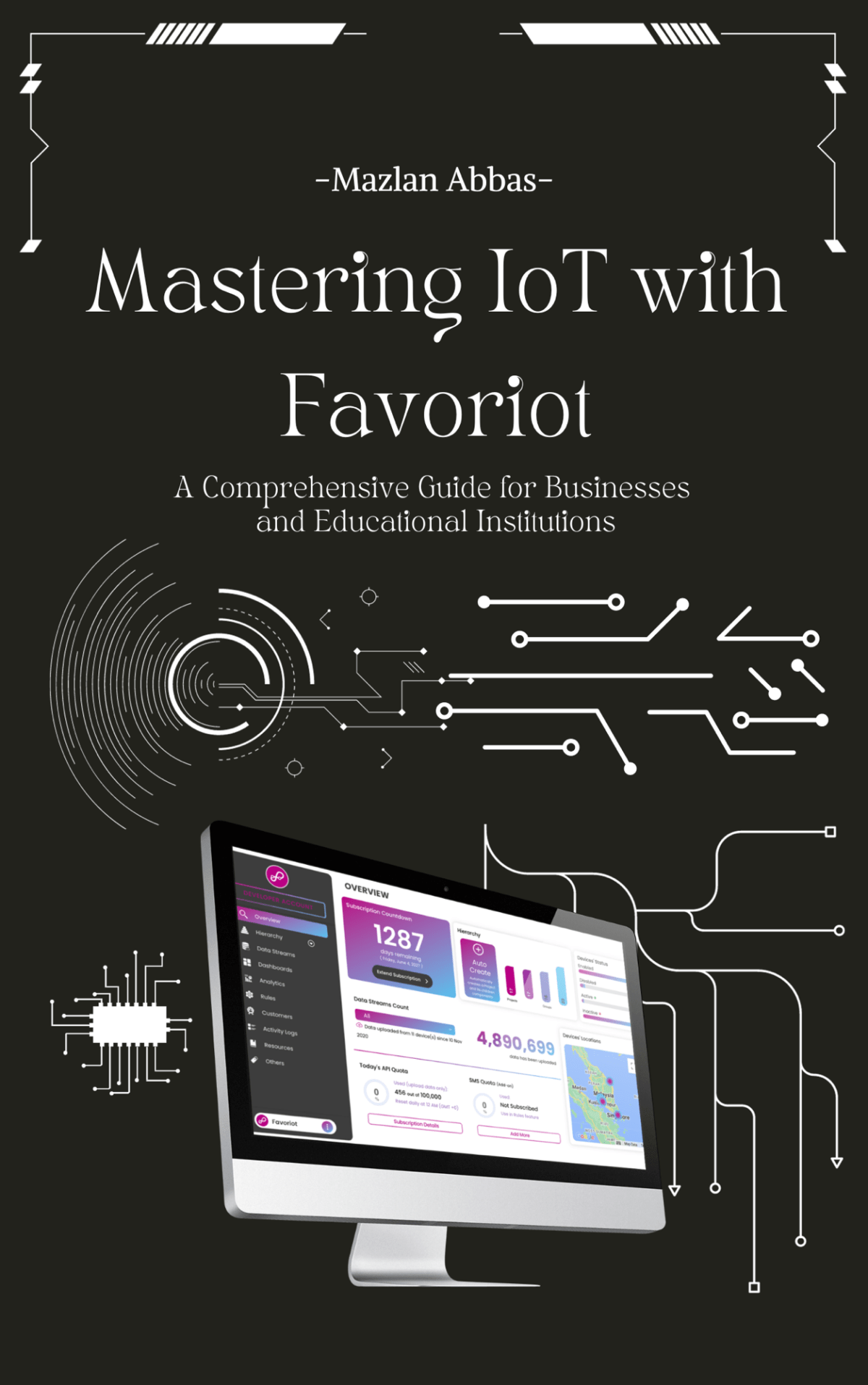
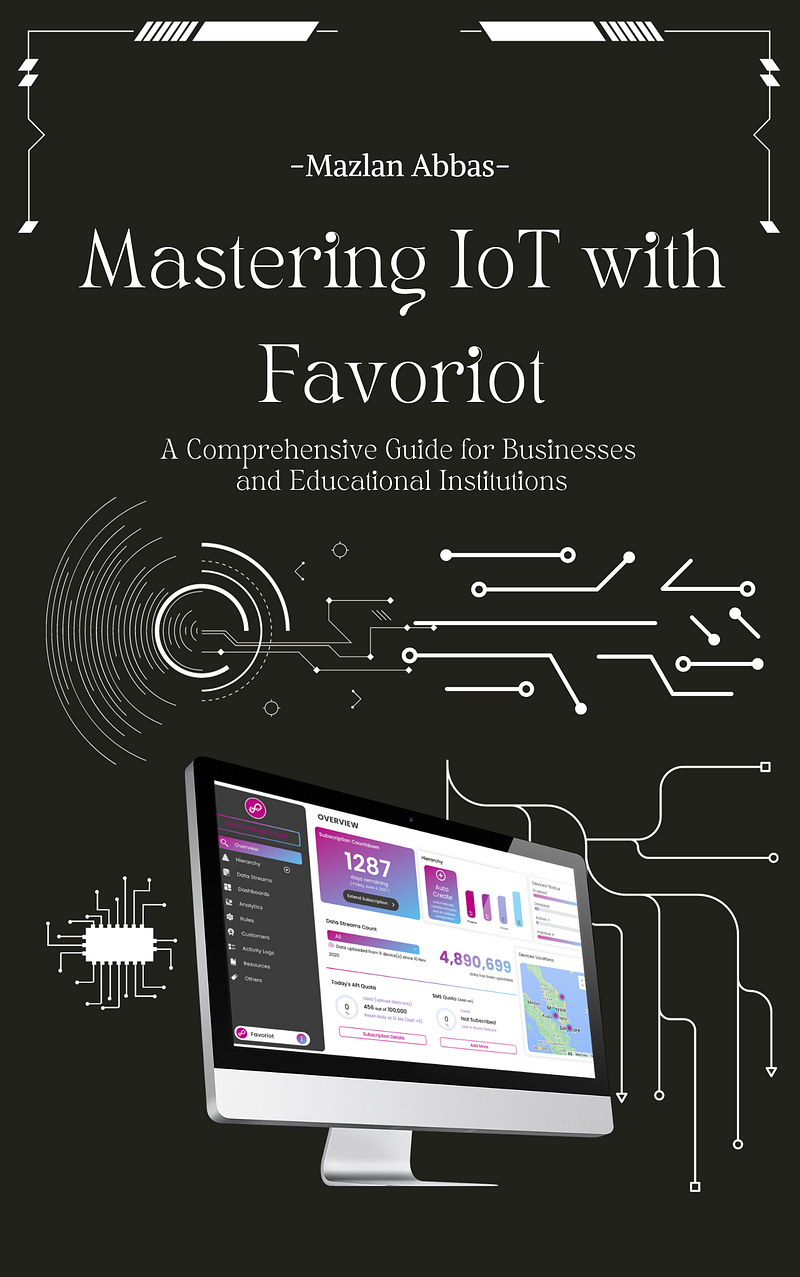
This book isn’t just a guide; it’s an expedition into the world of IoT platforms. It starts with the basics, explaining why on-premise IoT platforms are critical for deployments. Then, it compares various IoT platforms to help decision-makers choose the right one for their needs.
The heart of the book is the in-depth exploration of the Favoriot IoT Platform. I break down its plans, capabilities, and how businesses and developers can leverage it for their IoT projects. But I don’t stop there. The book also offers practical guidance on crafting IoT solutions, reducing development time, and tailoring platforms to specific verticals.
I delve into the role of IoT in education, arguing for its integration into university curriculums to prepare future developers. Case studies sprinkle the book, bringing the theories to life with real-world applications.
By the end, I hope to leave readers with a clear understanding of IoT’s transformative power across various sectors, championed by platforms like Favoriot.
So, if you’re a business leader, an IoT developer, or an educator, “Mastering IoT with Favoriot” is penned for you. It’s a blend of theoretical insights and actionable advice, all aimed at harnessing the potential of IoT.
And there you have it, the story of how I published three eBooks in a month. If I’ve sparked a curiosity in you about IoT or writing, I invite you to read my guide. It’s more than just a book; it’s a blueprint for innovation in the IoT landscape.
Innovate with purpose, solve real problems. Innovate continuously, stay ahead of the curve. Innovate boldly, disrupt traditional industries. Innovate collaboratively, harness diverse ideas. Innovate with empathy, understand customer needs. Innovate through challenges, find unique solutions. Innovate responsibly, consider ethical implications. Innovate for sustainability, create lasting impact. Innovate with agility, adapt to changing markets. Innovate inclusively, empower all voices. Innovate with resilience, bounce back from setbacks. Innovate for scalability, plan for growth. Innovate with foresight, anticipate future trends. Innovate with passion, fuel your entrepreneurial spirit. Innovate with gratitude, appreciate the journey.
You can also check out my personal Blog here or the latest eBooks I have recently published — here.
I have never imagined in my life that I would be able to publish as many eBooks within a short timeframe.
For the past month, I have published three eBooks (including the third one today).
So, what’s the secret?
There’s no big secret at all. In fact — it’s an open secret.
I used the same formula as others. Using the published articles in our blogs, select the best ones and turn them into an eBook.
Even though I have published several before this, these three eBooks were published in a concise time frame (one month), it’s faster since I have work out the format and to make it into a good-looking eBook.
The first of the three books is “My Startup Survival,” which details my entrepreneurial journey.
The latest eBook, which I published today. Get it from HERE.
What You’ll Learn:
Foundational Understanding of IoT Platforms: The introduction and first part lay a strong foundation, enlightening readers about the significance and mechanics of IoT platforms. It skillfully explains the necessity of on-premise IoT platforms for efficient deployments and why universities should incorporate IoT platforms on campus.
Comprehensive Analysis of IoT Platforms: The book provides a detailed comparative analysis of various IoT platforms, including Favoriot, AWS IoT, Microsoft Azure IoT, and others. This segment is invaluable for decision-makers contemplating the best fit for their needs.
In-Depth Exploration of Favoriot IoT Platform: Part II is a deep dive into the Favoriot IoT Platform, detailing its various plans and capabilities. This section particularly benefits businesses and developers looking to leverage the Favoriot platform for their IoT projects.
Practical Guidance on IoT Solutions: The third part addresses the practical aspects of building and tailoring IoT solutions. From converting a horizontal platform to a vertical solution to reducing build time, this section is rich with helpful advice and strategies.
IoT in Education: Perhaps one of the most compelling sections, Part IV focuses on integrating IoT in higher education. It discusses how IoT can revolutionize learning and teaching and prepare the next generation of developers.
Case Studies and Real-World Applications: Throughout the book, case studies and real-world applications are used effectively to illustrate the concepts, making the content relatable and more accessible.
Concluding Insights: The conclusion does an excellent job of summarizing the impacts of IoT across various sectors, emphasizing the transformative power of the Favoriot platform.
The book’s strength lies in its clarity and comprehensive approach. Whether you’re a business leader, an IoT developer, or an educator, this guide offers valuable insights and practical knowledge. Its structured approach makes navigating complex topics easy, and the focus on Favoriot provides a unique perspective not found in other IoT literature.
In conclusion, “Mastering IoT with Favoriot” is a must-read for anyone interested in understanding and harnessing the power of IoT. Its blend of theoretical knowledge, practical guidance, and real-world applications makes it a standout resource in IoT.
You can also check out my personal Blog here or the latest eBooks I have recently published — here.
Throughout my journey of delivering hundreds of presentations, I’ve developed a deep understanding of what makes a presentation memorable versus what renders it forgettable.
In this blog, I’ll share my top tips and personal experiences to help you transform your presentations from mundane to magnificent.
1. A Strong Opening: The Gateway to Engagement
In my early days, I realized the importance of an impactful start.
Once, I opened with a surprising fact related to my topic, and the immediate attention from the audience was palpable.
It taught me that a thought-provoking question or an unexpected statistic can be powerful tools to hook your audience from the outset.
2. The Magic of Visual Aids
Visual aids are not just embellishments; they’re the essence of a great presentation.
I learned to use images and charts not as slide-fillers but as narrative enhancers.
For instance, a well-placed infographic can explain complex data more effectively than paragraphs of text.
3. Humor: The Universal Language
Humor has been my secret weapon.
It’s not about cracking jokes but about bringing a light-hearted touch to the presentation.
Once, a humorous anecdote related to my topic had the audience both laughing and thinking, striking the perfect balance.
4. Interactive Elements: A Two-Way Street
Audience interaction can transform a monologue into a dialogue.
I’ve used live polls and Q&A sessions to make my audience feel involved, turning passive listeners into active participants.
5. Storytelling: The Heart of Connection
People connect with stories, not just facts.
I’ve interspersed personal anecdotes and relevant stories throughout my presentations, which has helped in making complex ideas more relatable and memorable.
6. Mixing Media: A Symphony of Engagement
Diversifying the types of media in a presentation can cater to different learning styles.
I’ve successfully used a mix of videos, graphics, and text, making each presentation a rich, multi-sensory experience.
7. Simplicity: The Ultimate Sophistication
One of my key learnings has been the power of simplicity.
I avoid jargon and complex terminology, opting for clear, concise language.
This approach ensures that my message is accessible to all audience members, regardless of their background.
8. Clean Slides: Less is More
Early in my career, I overloaded slides with information.
Over time, I learned that less is more.
A minimalistic slide with a powerful image and a few key words often has more impact than a crowded, text-heavy slide.
9. Storytelling (Revisited): Crafting a Narrative
I’ve found that embedding a central story in my presentation creates a narrative that audiences follow with interest.
This approach not only makes the presentation more engaging but also helps in reinforcing the key message.
10. The Art of Practice
Finally, practice is non-negotiable.
I rehearse rigorously, sometimes in front of a small audience, to refine my delivery and iron out any issues.
This preparation builds confidence and ensures a smooth, professional presentation.
Transforming presentations from boring to captivating is an art and a skill honed over time.
These tips, derived from my personal experiences, can be your toolkit to create engaging, impactful presentations that resonate with your audience.
Remember, every presentation is an opportunity to connect, inspire, and inform.
You can also check out my personal Blog here or the latest eBooks I have recently published — here.












 Dr. Mazlan Abbas