The phrases below emphasize that failure is not a negative outcome but a valuable opportunity for growth, learning, and development. They encourage individuals to embrace failure as an essential part of their journey toward success.
To fail is to learn, not to lose.
To fail is to grow, not to stagnate.
To fail is to discover, not to remain ignorant.
To fail is to adapt, not to resist change.
To fail is to innovate, not to conform.
To fail is to persevere, not to quit.
To fail is to build resilience, not to weaken.
To fail is to gain experience, not to lack it.
To fail is to challenge yourself, not to settle. To fail is to progress, not to regress.
To fail is to embrace opportunity, not to fear it.
To fail is to succeed eventually, not to be defeated.
To fail is to evolve, not to remain static.
To fail is to find new paths, not to be stuck in old ones.
To fail is to create, not to destroy.
Further Information
Remember to Subscribe to receive email updates on every post I publish.
Universities globally are racing to stay abreast of the latest advancements in tech education.
A critical focal point in this pursuit is the Internet of Things (IoT), a revolutionary field reshaping industries and everyday life.
Yet, there’s a burgeoning challenge in IoT education in many academic institutions.
Let’s delve into the complexities of this issue and the unique struggles students and lecturers face and introduce Favoriot — a cutting-edge IoT platform poised to transform IoT learning.
The Challenge in IoT Learning
Imagine a world where IoT education is no longer confined to textbooks and lectures but is a hands-on, interactive experience.
Unfortunately, this is not the reality in many universities.
The core of the problem lies in inadequate IoT lab setups, particularly the absence of an IoT middleware or platform.
This gap severely limits students’ ability to effectively comprehend and apply IoT concepts.
Student Struggles Without Proper Tools
Students, the primary learners of IoT, are often left navigating a maze of theoretical knowledge with no practical outlet to apply these concepts.
Their curriculum’s lack of a dedicated IoT platform leads to a superficial understanding of IoT’s potential and applications.
They face the challenge of accessing suitable project platforms, which is crucial for a more profound, experiential learning process.
Lecturers’ Dilemmas with Incomplete Syllabi
Conversely, lecturers grapple with delivering comprehensive IoT education without the proper infrastructure.
An incomplete IoT syllabus, lacking practical tools, hampers their ability to provide a holistic learning experience.
This shortfall affects the quality of teaching and stifles innovation and research in the IoT field within academic circles.
The Conundrum of External IoT Platforms
Many students turn to free versions of external IoT platforms to bridge this gap.
However, these platforms often need improved features, and the advanced functionalities crucial for in-depth projects are locked behind paywalls.
This arrangement could be better, especially for students working on Capstone projects or those exploring IoT as a career path.
The Role of Universities in IoT Infrastructure
Universities have a crucial role in addressing these challenges.
They can significantly enhance the learning experience by implementing on-campus IoT platforms.
These platforms, hosted within the university’s IT center or IoT labs, could offer students comprehensive features necessary for diverse IoT projects, ranging from lab exercises to commercial IoT initiatives.
Introducing Favoriot: A Tailored IoT Solution
Recognizing this educational gap, Favoriot has developed an on-premise IoT platform solution specifically designed for academic institutions.
This platform circumvents the need for students to rely on external, often inadequate, services.
Favoriot’s IoT platform offers a robust, feature-rich middleware that students and lecturers can access throughout the campus.
The Comprehensive Benefits of Favoriot
Hands-on Experience: Favoriot provides a real-world IoT platform, giving students hands-on experience with the tools and technologies prevalent in the industry.
Empowering Educators: Lecturers can offer a more comprehensive syllabus incorporating practical IoT skills and theoretical knowledge.
Innovation and Research: With Favoriot, universities can foster an environment conducive to IoT innovation and research, enabling students and faculty to undertake groundbreaking projects.
Campus-wide Implementation: The platform can be used for educational purposes and for implementing smart IoT solutions across the campus, serving as a live testbed for IoT applications.
Cost-Effective Learning: By using an on-campus platform like Favoriot, universities eliminate the need for costly subscriptions to external platforms, making IoT education more accessible.
Empowering Students with the Right Tools
By integrating Favoriot’s IoT platform into its infrastructure, universities can significantly elevate the quality of their IoT education.
Students access comprehensive tools necessary for in-depth learning and project development.
This practical experience prepares them for real-world IoT challenges and opportunities.
A New Era of IoT Education
Integrating Favoriot’s platform in university labs marks a pivotal step towards future-ready IoT education.
It bridges the gap between theoretical learning and practical application, equipping students with the tools and experience needed to excel in IoT.
Conclusion: Shaping the Future of IoT Learning
In summary, introducing a dedicated IoT platform like Favoriot in academic settings is a game-changer for IoT education.
It enhances students’ learning experience and empowers lecturers to deliver a more rounded curriculum.
This approach is essential for preparing the next generation of IoT professionals and researchers.
For universities looking to advance their IoT education and infrastructure, Favoriot offers a tailored, comprehensive solution.
To explore how Favoriot can transform your IoT education and campus projects, contact info@favoriot.com.
Let’s embark on a journey to reshape IoT learning and make it more accessible, practical, and impactful for students and educators.
Remember to Subscribe to receive email updates on every post I publish.
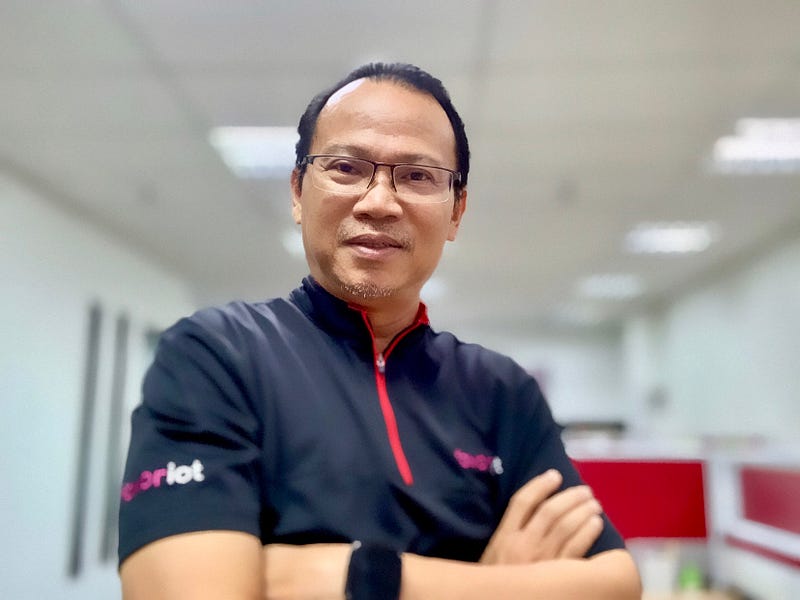
Dr. Mazlan is the co-founder and CEO of FAVORIOT Sdn Bhd. He is ranked among the Top 50 Global Thought Leaders on the Internet of Things (February 2019) and Digital Disruption (October 2019) by Thinkers360, Top 50 Most Impactful Smart Cities Leaders by World CSR Congress 2017, ranked Top 10 in IoT Top 100 Influencers by Postscapes 2017 & 2018, ranked №20th Thought Leader in IOT by 2014 Onalytics Report — “The Internet of Things — Top 100 Thought Leaders” and UTM Alumni Industry Personality 2016.
Before FAVORIOT, he spent 2.5 years as CEO of REDtone IOT and eight years in MIMOS Berhad as Senior Director of the Wireless Communications Cluster. He also spent 13 years in CELCOM (mobile operator), handling many senior management positions. Before Celcom, he spent ten years as an Assoc. Professor at Universiti Teknologi Malaysia.
He was the Adjunct Professor for UTM from 2008 to 2013, UTHM (2004–2005, 2013–2016), Universiti Teknologi Petronas (2018–2019), and Universiti Sultan Zainal Abidin (UniSZA) (2017–2018), and Universiti Malaysia (UniMY) (2017–2019), MJIIT, UTM (2020–2022) and MMU (2022–2024).
Dr.Mazlan is a frequent speaker at many major & established IOT, IR 4.0, Smart Cities, and telco conferences locally and globally. He sits on several local universities’ Industry Advisory Panel (IAP).
He graduated from Universiti Teknologi Malaysia with a BEE (1984), University of Essex (UK) with an MSc. in Telematics (1986), and Universiti Teknologi Malaysia with a Ph.D. in Telecommunications (1993).
He also received an Honorary Doctorate in Electrical Engineering from UTHM (2017) and is a TEDx Speaker.
Dr. Mazlan Abbas, CEO and Co-Founder, FAVORIOT. He is recognized globally in the areas of IoT and Smart Cities. He is an IoT thought leader who continues influencing the tech world through speaking engagements, publications, academic contributions, and membership in various industry advisory panels.
3. Mazlan Abbas, “IoT and IR 4.0 — Revolutionising the Energy Sector”, Distributed Network Technical Conference, DCON 2023, Nov. 7, 2023
4. Mazlan Abbas, “ESG in Manufacturing and the Role of Technology”, Smart Factory & Industrial IoT Conference 2023, Penang, Oct. 30–31, 2023
5. Mazlan Abbas, “Integration of IoT in Financial Services”, Seminar Kewangan RISDA, Hotel Tenera, Oct. 25, 2023
6. Mazlan Abbas, “Beyond Connectivity- The Art of Smart Measurement with IoT”, ICSIMA 2023, Tamu Hotel & Suite17 Oct. 2023
7. Mazlan Abbas, “10 Ways How IoT Can Drive ESG Compliance”, WCIT 2023, Oct.4–6, 2023
8. Mazlan Abbas, “IoT- The Game-Changer in Modern TVET Education”, Mesyuarat Penyelarasan Bersama Panel Tripartite Zon Selatan, Sept. 26, 2023
9. Mazlan Abbas, “Smart Digital Infrastructure — The Backbone of Future Smart Cities”, Smart Cities Conference, Sept.22, 2023
10. Mazlan Abbas, “Creating and Deploying IoT Solutions Using Favoriot IoT Platform”, Tech Talk, Smart Nation, Sept. 19, 2023, MITEC
11. Mazlan Abbas, “Harnessing the Power of IoT-Digital Innovations in the Public Sector”, INTAN Talk, 7 Sept. 2023
12. Mazlan Abbas, “ Humanizing IoT — Placing People at the Centre of Technology “, Keynote Speech, 11th International Conference on Information and Communication Technology (ICoICT 2023), 23 August, 2023
13. Mazlan Abbas. “Industry Dialogue: Enabling the Smart World of Tomorrow: Innovations and Challenges in Engineering and Technology”, MECON 2023, 28 July 2023
14. Mazlan Abbas, “IoT in Action- How Smart City IoT Platform Drive Data-Driven Decision-Making”, Smart Cities and Sustainable Development 2023, July 26–27, 2023, St. Giles, The Gardens Hotel, KL
15. Mazlan Abbas, “IoT in Action- How Smart City Observatories Drive Data-Driven Decision-Making”, National Technology Sensor Forum 2023, 18 July 2023
16. Mazlan Abbas, “IoT for Business Professionals”, 1-Day Training, 6 June 2023
17. Mazlan Abbas, “Smart City IoT Platforms — Benefits and Challenges”, Digitech ASEAN Thailand, April 25, 2023
18. Mazlan Abbas, Develop IoT Project Using IoT Platform in the Era IR 4.0”, April 19, 2023, KYPJ Webinar
19. Mazlan Abbas, “Smart City Concept in Real World Case”, SEKOPI UKM, March 15, 2023
20. Mazlan Abbas, “IoT Analytics From Data to Decision Making”, Keynote Speech, SCDS 2023, Jan. 24–25, 2023
21. Mazlan Abbas, “Developing a Digital Framework for Manufacturing in Malaysia”, Manufacturing Seminar — Aspire to Action: Demystifying ESG, Jan. 17, 2023
22. Mazlan Abbas, “Riding the Waves of Industrial Revolutions”, UiTM-FIRST 2022 (HPTN 2022), Dewan Tan Sri Mahfuz, Kementerian Kerja Raya, Dec. 21, 2022
23. Mazlan Abbas, “Learn, Teach, Build and Deploy IoT”, BENU 4131, FKEKK, UTeM, December 19, 2022
24. Mazlan Abbas, “Issues and Challenges of Deploying a Smart City IoT Platform”, APT Regional Workshop on Smart City, Palm Garden Hotel, 30 Nov. 1 Dec. 2022
26. Mazlan Abbas, “Optimizing Malaysia’s Public Service Productivity with IoT Technology and IR 4.0”, Johor Bahru, Oct. 20, 2022
27. Mazlan Abbas, “Smart Environment”, Pelan Tindakan “Blueprint” Bandar Pintar, Bangi Resort Hotel, 4–5 Oct. 2022
28. Mazlan Abbas, “Harnessing the Power of IoT & IR 4.0”, Keynote Speech, ICOAIMS 2022, August 24, 2022
29. Mazlan Abbas, “How Internet of Things Will Transform Our Live”, Webinar Robogals, Monash, July 23, 2022
30. Mazlan Abbas, “IoT Innovation in Education”, Persidangan Kurikulum Kebangsaan 2022, Glenmarie Hotel & Golf Resort, July 20, 2022
31. Mazlan Abbas, “Digital Transformation — Are Your Ready? How Technologies Impact Your Industry”, Digital Tourism, Webinar, April 28, 2022
32. Mazlan Abbas, “Taking a big Leap into Smart Cities”, Smart Cities Training — Melaka, Webinar, April 25, 2022
33. Mazlan Abbas, “IIoT — Opportunities and Challenges (How-To Start Your IoT Project)”, Webinar, Taylor’s College IIoT Talk, April 22, 2022
34. Mazlan Abbas, “How to Start Building Your IoT Application”, UPM EC3904, Webinar, April, 2022
35. Mazlan Abbas, “Taking the Big LEAP into Smart Cities”, City LEAP Summit 2022, Geo Hotel, Genting Highlands, March 21, 2022
36. Mazlan Abbas, “Internet of Things (IoT) Applications and Trends in Malaysia”, OrientTechTalk 2022, Kuala Lumpur, Feb. 16, 2022
37. Mazlan Abbas, “Driving Digital Transformation and IR 4.0 in Malaysia”, LEAP 2022, Riyadh, Saudi Arabia, 1–3 Feb. 2022
38. Mazlan Abbas, “IoT Analytics from Data to Decision — Trends and Challenges”, UMK IoT Webinar, Jan. 19, 2022
39. Mazlan Abbas, “Harnessing the Power of IR 4.0”, Keynote Speech, MUCET 2021, November 16, 2021
40. Mazlan Abbas, “The Need for IoT Ecosystem to Become Producer Nation”, Industry-Institution Engagement & Education Summit (I2Es) 2021, Oct. 28, 2021
41. Mazlan Abbas., “Breaking the Barriers of IoT”, Keynote Address, NCIoT 2021, Oct 25, 2021
42. Mazlan Abbas, “Digitalisation for SME”, Training, Oct. 13–14, 2021
43. Mazlan Abbas, “Awareness on IoT Adoption for SMES and Business Intelligence”, KLSICCI, Oct. 11, 2021
44. Mazlan Abbas, “Ultimate Things About IoT”, BENU 4131 Industrial Talk, UTEM, Oct. 11, 2021
48. Mazlan Abbas, “Introduction to IoT”, Webinar MAIWP, August 24, 2021
49. Mazlan Abbas, “Harnessing the Power of IoT”, LENSA Digital USIM, August 18, 2021
50. Mazlan Abbas, “Fundamentals of IoT — Your IoT Journey “, IR 4.0 (Foundation) Course, ADTEC, August 17, 2021
51. Mazlan Abbas, “Embedding IoT Elements in Student’s Project”, Politeknik Mersing, August 2, 2021
52. Mazlan Abbas, “Challenges in the New Era of IR 4.0”, Keynote Speech, IPSIR 4.0, UKM, July 8, 2021
53. Mazlan Abbas, “Innovations in the Era of IR 4.0”, i-ria 2021, July 5, 2021
54. Mazlan Abbas, “IoT Middleware — The Critical Missing Component in the IoT Value Chain”, INTI International University’s Online Research Symposium on Internet of Things, June 30, 2021
55. Mazlan Abbas, “Technology and Digitalisation”, MPC, June 24, 2021
56. Mazlan Abbas, “IoT & IR 4.0 — Disruptive Era”, UTHM IAP Talk, June 13, 2021
57. Mazlan Abbas, “Way Forward — Industry Revolution 4.0”, UiTM Cawangan Kelantan Kampus Machang Talk, June 5, 2021
58. Mazlan Abbas, “Introduction to IoT”, Mini Teater STEM Kelantan, June 2, 2021
59. Mazlan Abbas, “Embedding 4IR Pillars in Student’s Projects”, Seminar IT, Politeknik Ungku Omar, June 2, 2021
60. Mazlan Abbas, “IoT and Society 5.0”, FMA Talk Series — TIS 4.0 & S5.0, May 21, 2021
61. Mazlan Abbas, “Expert Advice for the Generation-IoT”, IoT Talk UTHM, May 6, 2021
62. Mazlan Abbas, “Smart City Technology”, i-KPKT Urban Talk, April 28, 2021
63. Mazlan Abbas, “Realizing Society 5.0 and Its Relation to Industry 4.0”, MAFM-UTMSPACE Talk, April 27, 2021
64. Mazlan Abbas, “IoT — The Building Block of IR 4.0”, CPN Productive 2021, MPC Chemical Productivity Nexus, April 22, 2021
65. Mazlan Abbas, “IoT and IR 4.0 — Get Ready for Jobs That Don’t Exist Yet”, CPN Productive 2021, MPC Chemical Productivity Nexus, April 20, 2021
66. Mazlan Abbas, “Harnessing the Power of IoT”, Invited Lecture, Kursus ECC3904 Seminar, Fakulti Kejuruteraan, UPM, April 17, 2021
67. Mazlan Abbas, “Harnessing the Power of IoT”, CPN Productive 2021, MPC Chemical Productivity Nexus, April 15, 2021
68. Mazlan Abbas, “IR 4.0 — Embrace or Become Obsolete”, CPN Productive 2021, MPC Chemical Productivity Nexus, April 13, 2021
69. Mazlan Abbas, “IoT in the New Norm”, Webinar ICAN Series 1, UiTM Cawangan Terengganu, April 12, 2021
70. Mazlan Abbas, “IoT Middleware”, IR 4.0 Training, Sharp, April 10, 2021
71. Mazlan Abbas, “To IoTise Every Business”, MTDC Techweek, April 6, 2021
72. Mazlan Abbas, “IoT — The Core Technology for IR 4.0 and How It Benefits SMEs”, CPN Productive 2021, MPC Chemical Productivity Nexus , March 25, 2021
73. Mazlan Abbas, “The Entrepreneurship Journey of Pre & Post Covid-19, Humanizing Innovation @MMU Webinar Series, March 25, 2021
74. Mazlan Abbas, “Increase Your Chances of Success When Applying R&D Grant”, Invited Talk, March 9, 2021
75. Mazlan Abbas, “IoT and Favoriot Platform”, Online DAQ Webinar (DAQ with IoT), March 9, 2021
76. Mazlan Abbas, “Career Path as an IoT Specialist”, UniKL BMI, Jan. 12, 2021
77. Mazlan Abbas, “What is IR 4.0”, Instagram Live, Islamic Banking Finance Club (IBFC), Dec. 28, 2020
78. Mazlan Abbas, “IoT Applications in Agriculture”, Digital Agriculture Conference 2020 (DigiAC 2020), Dec. 20, 2020
79. Mazlan Abbas, “The Ups and Downs of an IoT Entrepreneur”, UTMXCITE Entrepreneurship Webinar, Nov. 30, 2020
80. Mazlan Abbas, “Career Path as an IoT Specialist in Developing Country”, Industrial Lecture (Webinar), FKEE, UTHM, Nov. 19, 2020
81. Mazlan Abbas, “Maximise Your Research Potential with Relevant Industry”, Invited Talk (Webinar), FKEE, UTHM, Nov. 19, 2020
82. Mazlan Abbas, “Ultimate Things About IoT”, BENU 4131 Course, FKEK, UTeM, Nov. 16, 2020
83. Mazlan Abbas, “Mobility Using IoT and IR 4.0”, Tech Introduction — AI and IoT in Mobility, MaGIC Webinar, Nov. 11, 2020
84. Mazlan Abbas, “Challenges in IR 4.0”, Keynote Talk, 2020 IEEE 5th International Symposium on Telecommunication Technologies (ISTT), Nov. 11, 2020
85. Mazlan Abbas, “Intro to IoT and Healthcare for Ageing Society”, Tech Introduction — AI and IoT in Healthcare, MaGIC Webinar, Nov. 2, 2020
86. Mazlan Abbas, “Your First IoT Journey — Taking the Right Steps”, Chemical Productivity Nexus, MPC Webinar, Oct. 28, 2020
87. Mazlan Abbas, “Importance of IR 4.0 in Businesses”, Dynamic Entrepreneur Development Association (DEDAS) Webinar, Oct. 24, 2020
88. Mazlan Abbas, “IoT — A New Frontier in IR 4.0”, Keynote Talk, International Conference in Computational Intelligence (ICCI2020), Oct. 8, 2020
89. Mazlan Abbas, “Taking the Proactive Roles Through Smart Technologies”, Cyberview Webinar, August 28, 2020
90. Mazlan Abbas, “IR 4.0 and IoT — A New Frontier”, Learning Pal Webinar, July 14, 2020
91. Mazlan Abbas, “IR 4.0 — Embrace or Risk Becoming Obsolete”, I4RC 2020, June 29, 2020
92. Mazlan Abbas, “IoT — The Key Technology for IR 4.0”, Silaturahmi Digital GoFM Pagi, 23 April, 2020
93. Mazlan Abbas, “IR 4.0 — Embrace or Become Obsolete”, April 7–9, 2020
94. Mazlan Abbas, “IoT — The Building Block of IR 4.0”, POWERCOIN 2020, Sona College, India, 12–13 March 2020
95. Mazlan Abbas, “Thrive Into The Future with Industrial Revolution 4.0”, UniMY Trailblazing 5.0, Dec. 4, 2019
96. Mazlan Abbas, “Empowering the Nation Through IoT”, BMI SME CEO FORUM, Nov. 26, 2019
97. Mazlan Abbas, “Making Things Talk”, 5th Engineering Conference, Movenpick Hotel, Malaysia Airport Holdings, Nov. 20–21, 2019
98. Mazlan Abbas, “IoT-based Technology in the Era of IR 4.0”, ConFIG 2019, Nov. 7, 2019, Kuala Lumpur
99. Mazlan Abbas, “IoT in Project Management”, Keynote Speaker, IPM Day, Nov. 5, 2019 Kuala Lumpur
101. Mazlan Abbas, “IR 4.0 and IoT — The Need for a Wake Up Call”, 7th IEEE International Conference on Mechatronics Engineering (ICOM 2019),IIUM Engineering Congress, PICC, Oct. 30, 2019
102. Mazlan Abbas, “IoT — The Building Block for IR 4.0”, ICETiA 2019 (International Conference on Emerging Technology and Innovative Applications 2019), Oct. 21–22, 2019, MaGIC, Cyberjaya, Malaysia
103. Mazlan Abbas, “What it Takes to Become a Digital Leader — Journey, Experience and Scenarios”, SME Meetups: 7 Principles for Digital Transformation, Oct. 15, 2019, Kuala Lumpur
104. Mazlan Abbas, “IR 4.0 — Surf or Not to Surf”, Invited Lecture, Oct. 11, 2019, UiTM
105. Mazlan Abbas, “IR and IoT — Get Ready for Jobs That Don’t Exist Yet”, Invited Lecture, Oct. 8, 2019, UTeM
106. Mazlan Abbas, “Exploring Internet of Things and IR 4.0”, Invited Talk, Borneo International DroboTex 2019, Oct. 5, 2019, Kuching, Sarawak
107. Mazlan Abbas, “IoT for Construction Industry”, Seminar Construction Evolution 2019, Oct. 2, 2019
108. Mazlan Abbas, “IR 4.0 and IoT — Get Ready for Jobs of The Future”, Guest Lecture, Sept. 20, 2019, School of IT UCSI University, Malaysia
109. Mazlan Abbas, “Challenges of IoT Towards Career Development”, Invited Lecture, Politeknik Sultan Salehuddin Abdul Aziz Shah, Sept. 12, 2019, Shah Alam
110. Mazlan Abbas, “Internet of Things (IoT) and Crowdsensing in AFM Industries”, Asset Management : Readiness And Challenges Towards IR 4.0, UTM, Kuala Lumpur, August 20, 2019
111. Mazlan Abbas, “Impact of IoT in Your Future Career”, MOE-MTDC Ge I4.0, August 6, 2019, Malaysia
112. Mazlan Abbas, “IoT Solutions for Societal Well-Being”, APAN 48, July 22, 2019, UPM, Malaysia
113. Mazlan Abbas, “Where Are We in the Era of Industrial Revolution”, CITA 2019, July 16, 2019, Kuching
114. Mazlan Abbas, “New Talents for New IoT Ecosystems in Malaysia”, TVET Conference 2019, 8 July, 2019, Malaysia
115. Mazlan Abbas, “IoT and 4IR”, Invited Talk MRSM Ulul Albab Kepala Batas, July 6, 2019, Malaysia
116. Mazlan Abbas, “Internet of Things (IoT)”, Fintech for Banks and Development Finance Institutions”, 17–19 June, 2019, Istanbul, Turkey
117. Mazlan Abbas, “Ageing in Smart Cities”, Smart Convention — 2nd Annual Smart Cities Conference, April 22, 2019, Kuala Lumpur
118. Mazlan Abbas, “IR 4.0 — To Surf or Not to Surf”, Keynote Talk, 14th Postgraduate Annual Research Seminar 2019 (PARS 2019), 10–11 April, 2019, UTM Skudai
119. Mazlan Abbas, “Journey Towards Fourth Industrial Revolution and IoT”, SEDC, 8–9 April, 2019, Kuching
120. Mazlan Abbas, “Entrepreneurship in the Digital World”, SEDC, 8–9 April, 2019, Kuching
121. Mazlan Abbas, “The RAQIB Journey — Real World Problem Meets IoT — How Solutioning is Done in the Wild”, IoT Asia 2019, Singapore
122. Mazlan Abbas, “Building a Career in IoT Industry”, Executive Talk, Politeknik Ungku Omar, March 21, 2019, Ipoh
123. Mazlan Abbas, “IR 4.0 — To Surf or To Drown”, Academic Afternoon Discourse, March 20, 2019, UiTM
124. Mazlan Abbas, “Military in the Era of Fourth Industrial Revolution”, Digital Revolution Conference — Today is the Future, March 20, 2019, MINDEF
125. Mazlan Abbas, “Business Disruptions in the Era of 4th Industrial Revolution”, UniKL Business School, Dec. 8, 2018
126. Mazlan Abbas, “Business Disruptions in the Era of 4th Industrial Revolution”, Keynote Address, RAMA University, India, Nov. 30, 2018
127. Mazlan Abbas, “Living in the Era of 4th Industrial Revolution”, TEDx Kenyalang, November 17, 2018, Kuching
128. Mazlan Abbas, “The Potential of IoT in Agriculture”, Agrobank Knowledge Sharing Series, Oct. 26, 2018
129. Mazlan Abbas. “RAQIB — For Elderly Care and Pilgrims”, Technomart IoT: Social Healthcare Services, MIGHT, Oct. 22, 2018
130. Mazlan Abbas, “Your Journey Towards Fourth Industrial Revolution”, Time to Talk, Digital Media, IUMW, Oct 25, 2018
131. Mazlan Abbas, “Your First IoT Journey”, Majlis Kolaborasi Hubungan Industri Binaan & Senibina, UKM, 24 October 2018
132. Mazlan Abbas, “The Next Big Wave — How IoT Will Shape the Future of Projects”, PMIMY 2018, Sept. 25, 2018
133. Mazlan Abbas, “Smart Cities and IoT: The Opportunities and Challenges Ahead”, Khazanah ICT Day 2018, August 29, 2018, Kuala Lumpur
134. Mazlan Abbas, “IR4.0 Transitional Stage — Where Are We Now?”, Pos Aviation Innoviation 2018 , July 26, 2018
135. Mazlan Abbas, “Unleashing Your Potential — From ZERO to Thought Leader”, Adjunct Professor Lecture, Dewan Auditorium FIK, UniSZA Kampus Besut, July 8, 2018
136. Mazlan Abbas, “Trend and Challenges in IoT”, CIS Adjunct Professor Lecture, Universiti Teknologi Petronas (UTP), July 5, 2018, UTP
137. Mazlan Abbas, “IoT Innovation Ecosystem”, Keynote Speech, June 27–28, 2018, Smart Cities Global Technologies and Investment Summit, Algiers, Algeria
138. Mazlan Abbas, “Industry Revolution 4.0 — How Disruptive Technology Affects Business Globally”, Invited Talk, Arshad Ayub Graduate Business School (AAGBS), UiTM SHAH ALAM, June 9, 2018, Malaysia.
140. Mazlan Abbas, “Internet of Things — The Enabler for 4th Industrial Revolution”, April 17, 2018, Seminar Revolusi Industri 4.0: Memperkasa Pendidikan, Dewan Ibnu Sina, TATI University College, Terengganu
141. Mazlan Abbas, “Digital Revolution 4.0 is Here Today”, Purwadekha Tech Wave 2018, March 14–15, 2018, Jakarta, Indonesia
142. Mazlan Abbas, “Industry 4.0 — Riding the Waves”, TVET Malaysia Engagement Towards Industry 4.0, March 22, 2018, PWTC, Malaysia
143. Mazlan Abbas, Guest Speaker, Industry 4.0 Implementation and Adoption Workshop, July 2 & July 17, 2018, National Instruments Academy and Innovation Nucleus, TPM, Malaysia
144. Mazlan, Abbas, “Journey from Product-Based to Outcome-Based IoT Business Model”, One Day Seminar on ‘Smart Cities & Urban Science, Feb. 27, 2018, Wisma IEM, 01- Auditorium Tan Sri Prof. Chin Fung Kee, Third Floor, Petaling Jaya, Malaysia
145. Mazlan Abbas, “Journey into Monetizing Internet of Things”, IoT Kuwait, Dec. 19–21, 2017, Kuwait
146. Mazlan Abbas, “IoT in the Cloud”, Network Week, UPM, Dec. 7, 2017
147. Mazlan Abbas, “Moving Up or Down the IoT Value Chain”, Keynote, 2017 International Conference on Electrical, Electronic, Communication and Control Engineering”, 4–5 December 2017, UTM KL.
148. Mazlan Abbas, “The Journey of an IoT Entrepreneur”, Industrial Talk, Dec. 4, 2017, UPM
150. Mazlan Abbas, “Challenges of Making IoT a Ubiquitous Service”, World Access Interconnect Forum (WAIF) 2017, Nov. 21–23, 2017, Kuala Lumpur
151. Mazlan Abbas, “Journey Towards IoT 4.0 With IoT”, IoT Open Day, UTM, Nov. 21, 2017
152. Mazlan Abbas,” IOT & The Anatomy of a Smart City”, Keynote, 2017 Asia Pacific Microwave Conference, 13–16 November 2017, Renaissance Kuala Lumpur Hotel.
153. Mazlan Abbas, “Industry 4.0 and Smart City — The “Energy Pill” for IoT in Malaysia”, SIRIM Symposium on Manufacturing with Nanotechnology — Towards Industry 4.0, November 6–7, 2017
154. Mazlan Abbas, “Driving Towards an IoT Payoff: Keep It Simple — It’s Not Just About the Technology”, Indonesia Digital Economic Summit 2017, Oct. 25–26, 2017, Jakarta
155. Mazlan Abbas, “IoT — The Third Internet Tsunami Is Here”, Oct. 9, 2017, EPF IT Day
156. Mazlan Abbas, “Are We Ready for IoT Now? Or Risk Being Left Behind”, Sept. 29, 2017, IIUM
157. Mazlan Abbas, “Awareness of IoT Platforms and Applications”, German-Malaysia Institute, GMI Auditorium, Sept. 27, 2017
158. Mazlan Abbas, “Generation-IoT: The Key to Business Survival in 21st Century”, Sept. 14, 2017, WOU, Penang
159. Mazlan Abbas, “Challenging the Giants”, Asean Technology Summit, July 27–28, 2017, Kuala Lumpur
160. Mazlan Abbas, “The Facility Manager of Tomorrow”, Building Maintenance 2017, August 23–24, 2017, Kuala Lumpur
161. Mazlan Abbas, “The Internet of Things (IoT) Journey”, August 10, 2017, UTP
162. Mazlan Abbas, “IoT — The Third Wave of Tsunami is Here”, MYSEC 2017, August 7, 2017, Universiti Malaysia Terengganu (UMT)
163. Mazlan Abbas, “Ride the Wave of IoT to Survive the 21st Century”, Industry and Institution Engagement (I2E) Summit, August 4, 2017, MJII, Beranang
164. Mazlan Abbas. “Global Economic Trend — How Internet of Things and Big Data Shape Better Outlook for Your Business”, INSKEN, July 27, Kuala Lumpur
165. Mazlan Abbas, “Building a Sustainable Citizen-Centric Smart City Approach”, Tech trend 2017, 17 July 2017, APU, Kuala Lumpur
166. Mazlan Abbas, “Your Next IoT Journey is NOW”, IoT Innovation Day, APU, July 11, 2017, Kuala Lumpur
167. Mazlan Abbas, “Internet of Things — Trends, Challenges and Opportunities”, Industrial Talk, 21 June 2017, UiTM Shah Alam.
168. Mazlan Abbas, “Your Next IoT Journey”, Industrial Talk, 29 May 2017, UniMAP, Perlis.
169. Mazlan Abbas, “Internet of Things — We Are at The Tip of An Iceberg”, Industrial Talk, 24 May 2017, UTeM, Melaka.
170. Mazlan Abbas, “Internet of Things Journey”, Industrial Talk, 21 May 2017, Universiti Teknologi Malaysia, Skudai.
171. Mazlan Abbas, “Where Do Service Providers Stand in the Age of Iot?”, Digital Leadership Transformation Seminar, Hosted by Dhiraagu, Maldives, May 10, 2017
172. Mazlan Abbas, “IoT for Smart Cities”, Invited Talk, The 6th International Conference on Computing and Informatics 2017 (ICOCI 2017), 25–27 April 2017, Sama-Sama Hotel.
173. Mazlan Abbas, “Guide in Building Smart Cities by Profiling Them”, International Symposium of IoT Cloud Infrastructure Technology (IoT-CIT), UniKL, March 8, 2017
174. Mazlan Abbas, “Internet of Things”, Invited Lecture, IMechE UNITEN Student Chapter, UNITEN, 10 Jan 2017
175. Mazlan Abbas, “Internet of Things Workshop,” Smart Cities Expo World Forum (SCEWF) 2016, Sydney, Australia, 12–13 Dec. 2016
176. Mazlan Abbas, “Building Smart Cities Through the Eyes of Citizens and Avoiding Citizen Engagement Pitfalls,” Smart Cities Expo World Forum (SCEWF) 2016, Sydney, Australia, 12–13 Dec. 2016
177. Mazlan Abbas, “The Road to Smart Cities and Connected Citizens — Are We There Yet Barriers and Tolls”, TM Forum Live! Asia 2016, 7–8 December 2016, Marina Mandarin Hotel, Singapore
178. Mazlan Abbas, “Developing Interconnectedness of Citizens”, Smart Cities Asia 2016, 18–19 Oct. 2016, Kuala Lumpur Convention Centre
179. Mazlan Abbas, “Revolutionizing FM Services through Internet of Things (IoT): Is Your Facility Ready” Building Maintenance Conference 2016, 21–22 Sept. 2016, Istana Hotel, Kuala Lumpur
180. Mazlan Abbas, “Smart Citizens — Power to Sense”, APAC Smart Cities Forum 2016, 26–27, Sept. 2016
181. Mazlan Abbas, “Internet of Things — Preparing Yourself for a Smart Nation”, 2017 Budget Discourse, Ministry of Finance, April 6, 2016
182. Mazlan Abbas, “Issues and Challenges of Deploying a Smart Citizen Engagement Solution”, IoT Asia 2016, Singapore Expo, 30–31 March 2016
183. Mazlan Abbas, “Sensing-as-a-Service — A New Business Model for IOT”, Adjunct Professor Talk, UTHM, Batu Pahat, 21 March, 2016
184. Mazlan Abbas, “Profiling the City with IOT”, Adjunct Professor Talk, UTHM, Batu Pahat, 21 March, 2016
185. Mazlan Abbas, “Smart Citizens”, UK Connected Cities, UK Trade & Investment, Kuala Lumpur, 14–16 March 2016
186. Mazlan Abbas, “The Connected World: Future of Possibilities” BW Internet of Things Expo, 11th March 2016, The Leela Ambience, Gurgaon, India
187. Panel Session, “IoT & Smart Cities: Connected Cities. Connected Governance”, Internet of Things Expo, 11th March 2016, The Leela Ambience, Gurgaon, India
188. Mazlan Abbas, “IoT — The Tip of an Iceberg”, Invited Talk, MUBIN, March 6, 2016
189. Mazlan Abbas, “IoT for Smart Cities”, Invited Talk, UTM-KL, March 4, 2016
190. Mazlan Abbas, “Smart City Application for Local Authority Using CitiAct — A Case Study”, Building Local Capacity in Understanding, Analyzing and Visualizing Big Data in Malaysian Cities in Melaka, 4th MELAKA Workshop, 29 Feb — 2 March 2016
191. Mazlan Abbas, “Social Media & Crowdsensing for National Development”, Social Media Discourse Themed “Infinite Possibility — Where Voice is raised Anonymously”, Invited Talk, UiTM Lendu, Malacca, Feb. 23, 2016
193. Mazlan, Abbas, “Sensing-as-a-Service for Smart Cities”, 2015 IEEE 12th Malaysia International Conference on Communications (MICC 2015), Hilton Kuching, 23–25 November, 2015 — http://micc2015.comvt.org
194. Mazlan Abbas, “Current and Future Trends in IOT”, Industrial Talk, 3rd Thundercloud Mini Symposium, MMU Melaka, 14 Dec. 2015
195. Mazlan Abbas, “Building Smart Cities with Smart Citizens”, GeoSmart Asia 2015, 29th Sep — 1st Oct 2015, PWTC, KL
196. Mazlan Abbas, “IOT — Smart City and Smart Citizens”, Invited Speaker, UTP IEEE Circuits & Systems Malaysia, 28 Oct. 2015, UTP, Malaysia
197. Mazlan Abbas, “Listen to the Pulse of the City Using IOT”, Adjunct Prof. Lecture, UTHM, 21 Sept. 2015
198. Mazlan Abbas, “IOT — Better Insights with Data Blending”, Industrial Talk, MMU, 17 Sept. 2015,
199. Mazlan Abbas, “Internet of Things and Big Data — The Perfect Marriage”, Invited keynote Speaker, International Conference on Soft Computing in Data Science 2015 (SCDS2015), 2–3 Sept. 2015, Pullman, Putrajaya
200. Mazlan Abbas, “Empowering Smart Citizen to Sense” — ASEAN IoT Innovation Forum, 25–26 August, 2015, Hotel Istana, Malaysia
201. Mazlan Abbas, “Internet of Things — Connecting and Aggregating the Innovative Minds”, Invited Keynote Speaker, International Conference on Electrical and Electronic Engineering 2015 (IC3E 2015) 10–11 August, 2015, Malacca
202. Mazlan Abbas, “IoT is Here: Where Do Service Providers Stand in the Age of IoT?”, Invited Speaker, CommunicAsia 2015, June 2–5, 2015, Singapore
203. Mazlan Abbas, “M2M/IoT Success — Overcoming industry fragmentation and a lack of standards”, Invited Panelist, Asia M2M/IOT Business Platform, May 28–29, 2015, Bangkok
204. Mazlan Abbas, “Research Challenges — The Characteristics of a Good Researcher”, Adjunct Professor Invited Talk, May 18, 2015, UTHM
205. Mazlan Abbas, “Sensing-as-a-Service: Prepare for the Next Business Model for Internet of Things”, IOT Global Innovation Forum 2015, April 21–22, 2015, Dallas USA
206. Mazlan Abbas, “Internet of Things — Building a Smarter World”, Invited Talk, April 15,2015, Taylor’s University.
207. Mazlan Abbas, “Internet of Things — The Gold is in the Sensor data”, Adjunct Professor Invited Talk, Feb. 9, 2015, UTHM
208. Mazlan Abbas, “Trends and Challenges in Delay Tolerant Network (DTN) or Mobile Opportunistic Network (OppNet)”, Adjuct Professor Invited Talk, April 2, 2014, UTHM
209. Mazlan Abbas, “Quantified Self & Lifelogging Meets Internet of Things”, Adjunct Professor Invited Talk, April 1, 2014, UTHM
210. Mazlan Abbas, “Internet of Things — The Tip of the Iceberg or the Tipping Point?”, Adjunct Professor Invited Talk, Dec. 5, 2013, UTHM
211. Mazlan Abbas, “Future of Broadband in Malaysia”, Adjunct Professor Invited Talk, Dec. 4, 2013, UTHM
212. Mazlan Abbas, “Research and Commercialization Challenges”, Adjunct Professor Invited Talk, Aug. 29, 2013, UTHM
213. Mazlan Abbas, “Latest Trends in Wireless Technology”, Adjunct Professor Invited Talk, Aug. 28, 2013, UTHM
214. Mazlan Abbas, “Digital Lifestyle Malaysia — Initiatives and Challenges”, The 3rd Annual International Congress U-World 2013, June 20–22, Dalian, China
215. Mazlan Abbas, Nur Husna and Norsheila Fisal, “Performance Evaluation of Binary Spray and Wait OppNet Protocol in the Context of Emergency Scenario”, PerNEM 2013, March 18–22, 2013, San Diego, USA
216. Mazlan Abbas, “Internet of Things: Technology and Applications”, Invited Speaker, WSN Seminar, 10 Oct. 2012, UiTM
217. David Chieng Heng, Ting Kee Ngoh, Kwong Kae Hsiang, Mazlan Abbas, “Analysis of IEEE802.11n Dual Radio Relay Network Topologies”, ICNI 2012, 24–25 Nov 2012. Bangkok.
218. Lo Ka Kien, Kwong Kae Hsiang, Ting Kee Ngoh, David Chieng Heng Tze, Choong Khong Neng, Mazlan Abbas, “Bridging the Gap of Digital Divide Between Rural and Urban Areas in Malaysia with Low Cost WiMAX-WiFiMultihop Network for Rural Broadband Connectivity”, IET ICWCA, Oct 8–10, 2012, Kuala Lumpur
219. Seyed Dawood Sajjadi Torshizi, Lo Ka Kien, Kwong Kae Hsiang, Ting Kee Ngoh, David Chieng Heng Tze, Mazlan Abbas, Fazirulhisyam, Heng-Siong Lim, “An Investigation of Vegetation Effect on the Performance of IEEE 802.11n Technology at 5.18 GHz”, IET ICWCA, Oct 8–10, 2012, Kuala Lumpur
220. Ho Peng Hou, Derek, Lim, Kwong Kae Hsiang, Ting Kee Ngoh, David Chieng Heng Tze, Chien, Mazlan Abbas, “End-To-End Performance Analysis on Wireless Multi-Hop Network with Deterministic Offered Load”, IET ICWCA, Oct 8–10, 2012, Kuala Lumpur
221. Kwong Kae Hsiang , Lo Ka Kien, Seyed Dawood Sajjadi Torshizi, David Chieng Heng Tze and Mazlan Abbas, “Mesh Network in Tropical Rural Areas: A Feasibility Study”, ICECCS 2012, Nanning, China, 15–17 June,
222. Mazlan Abbas, “WiWi — the WiFi Solution for bridging the Digital Divide in Malaysia”, WiFI World Summit, 11–12 September, 2012, Barcelona
223. Mazlan Abbas, Invited Speaker, “WiWi — Bridging the Digital Divide Solution” at Malaysian Pavillion (CommunicAsia 2012, Singapore, 20 & 21 June, 2012)
225. Mazlan Abbas, Keynote Speaker, 1st UTM-MIMOS Symposium on Advanced Telecommunications Technology (USATT-2012), 25–26 April, 2012
226. Mazlan Abbas, “Wireless Communications”, Asian Forum on Information Communications Technology 2012 (AFICT 2012), June 7, 2012
227. Norhidayu Shahila Abu Hassa, Sazzad Hossain, Nur Halina Abd Wahab. Sharifah Hafizah Syed Ariffin, Liza Abd Latiff, Norshiela Fisal, Mazlan Abbas and Choong Kheng Neng, “Performance Analysis of Location Tracking System for Multiple Levels”, Proceedings of the Asia Pacific Advanced Network, Apricot-APAN 2011, 15–25 Feb. 2011, Hong Kong.
228. N. Satiman, N.N.I. Maarof, A.I.A. Zamani, N. Fisal, S.K.S. Yusuf, S.H.S. Ariffin and M. Abbas, “A Route Selection Algorithm for WiMAX Mobile Multi-Hop Relay Networks”, 4th International Conference on Modeling, Simulation & Optimization (ICMSAO 2011), 19–21 April, 2011.
229. Anis Izzati A.Z., Norsheila Fisal, Sharifah K. Syed Yusof and Mazlan Abbas, “On the performance of Space-Time Cooperative Relay in Fading Channel”, 4th International Conference on Modeling, Simulation & Optimization (ICMSAO 2011), 19–21 April, 2011
230. Nurul Nazirah M.I.Mm, N. Satiman, Anis Izzati A.Z., Norsheila Fisal, Sharifah K. Syed Yusof, Sharifah H.S. Ariffin and Mazlan Abbas, “Cross-Layer Routing Approach in Highly Dynamic Networks”, 4th International Conference on Modeling, Simulation & Optimization (ICMSAO 2011), 19–21 April, 2011.
231. Anis Izzati A.Z., Norsheila Fisal, Sharifah K. Syed Yusof and Mazlan Abbas, “On the performance of Space-Time Cooperative Relay in Fading Channel, 4th International Conference on Modeling, Simulation and Applied Optimization”, 19–21 April, 2011, Kuala Lumpur, Malaysia
232. M. Abbas, “Wireless Broadband — Building the Ecosystem for Emerging Markets”, 18–19 January 2011, Dubai.
233. M. Abbas, “WiMAX and e-Government”, WiMAX Forum Southeast Asia Regional Focus, 23–25 November 2010, Kuala Lumpur
234. M. Abbas, Keynote Speech, “Wireless Broadband — Building the Eco-system”, T&M Circle 2010, 15 July 2010, Sime Darby Convention Centre, K.Lumpur, Malaysia
235. M. Abbas, “Wireless Broadband Eco-System — How We Can Do Better?”, The Asia-Pacific Telecommunications and ICT Development Forum (ADF), 18–20 May 2010, Tokyo, Japan
236. M. Abbas, Keynote Speech, “Wireless Broadband — Building the Eco-system”, Fourth International Symposium on Broadband Communications (ISBC’10). 11th — 14th July 2010, Hotel Equatorial, Melaka, Malaysia
237. M. Abbas, Special Lecture on Telecommunications, “Introduction to WiMAX”, 31 Dec. 2009, UTeM, Melaka.
238. K.N. Choong, M. Abbas, O.M. Said, C.S. Lee and R.M.A.R. Mohamed, “The setup of national IP multimedia subsystem (IMS) testbed: Approach and challenges”, International Conference on Information Networking, 20–23 January 2009, Cheng Mai, Thailand.
239. K.N. Choong and M. Abbas, “OpenFMC lab: The convergence platform for next generation applications development”, 3rd IEEE International Conference on Digital Ecosystems and Technologies, 31 May — 3 June, 2009, Istanbul, Turkey.
240. C.S. Lee, K.N. Choong, S.G. Koh, C.O. Chow and M. Abbas, “Performance study on audio codec and session transfer of open source VoIP applications”, International Conference on Mobile, Wireless and Optical Communications Networks, 25–27 December 2009, Bangkok, Thailand.
241. Nur Haliza Abdul Wahab, Sharifah H. S. Ariffin, Norsheila Fisal, Adel, Liza Abdul Latiff, Choong Khong Neng and Mazlan Abbas, “Location Tracking for Nearest Device in Device Switching”, Proceedings of 2009 IEEE International Conference on Antennas, Propagation and Systems (INAS 2009), 3–5 Dec. 2009, Johor, Malaysia.
242. M. Abbas, “Bridging the Digital Divide Using WiMAX”, Awareness Seminar on Telecommunication Standards & Practices”, Aug. 11, 2009, SKMM, Cyberjaya, Malaysia
243. M. Abbas, Invited Speaker at P1 Expert Net, “Enabling Technology for Connecting Communities”, Aug 14, 2009, Packet Hub, Malaysia
244. M. Abbas, “Can WiMAX Provides Solution for Bridging the Digital Divide?”, WiMAX World Congress Asia, Singapore, April 28–29, 2009
245. M. Abbas, “Connecting the Unconnected — Bridging the Digital Divide Using WiMAX”, IPCentral/Wireless World, CeBIT 2009, Hannover, Germany. March 4, 2009.
246. M. Abbas, “Providing WiMAX Broadband Services for Underserved Areas”, Asia pacific Telecommunications and ICT Development Forum (ADF), Bangkok, Thailand, November 11–13, 2008.
247. Rashid A. Saeed , Hafizal Mohamad , Borhanuddin Mohd. Ali, Mazlan Abbas, “WiFi/WiMAX Heterogeneous Seamless Handover”, 2008 Third International Conference on Broadband Communications, Information Technology & Biomedical Applications, November 2008 , pp. 169–174, South Africa.
248. M. Abbas, “Implementing Ubiquitous Networks with IPv6”, Invited Speaker, MIMOS Technology Preview Symposium 2008, Malaysia, June 30, 2008.
249. M. Abbas, “Mobile WiMax — Will it stands on its own to be successful?”, Invited Speaker, MIMOS Technology Forum 2007, Malaysia, 5 December 2007.
250. M. Abbas, “IMS Application Developer Eco-System — Catalyst for NGN” as an Invited Speaker at Motorola Penang Technical Symposium, Penang, Malaysia, 27 November 2007.
251. M. Abbas, “Building NGN Together — Towards a Regional IMS Eco-System”, Doc. 140, 36th AIC Conference, Manila, Phillipines, 19–23 November 2007.
252. M. Abbas, “Towards Ubiquitous Malaysia — Issues and Challenges”, Doc. 162, 35th AIC Conference, Saitama, Japan, 5–9 March 2007.
253. M. Abbas, “Harnessing the Power of Developers”, MEDC (Microsoft Mobile & Embedded DevCon) 2006, Kuala Lumpur, Malaysia, June 27, 2006 (Invited Speaker)
254. M. Abbas, “Implementing the Wireless Enterprise”, Mobile Asean 2005, Bangkok, Thailand, 11–14 Oct. 2005
255. M. Abbas, “Examining the New Value Chain in 3G”, Doc №36, 28th AIC Conference, Manila, Philippines, 11–15 November 2002 (Also presented similar paper at Mobiles Malaysia, Kuala Lumpur, Malaysia, 12–13 August 2002)
256. M. Abbas, “Wireless Commercial Services in Malaysia”, 26th APECTEL, Moscow, Russia, 19 –20 August 2002
257. M. Abbas, “Advanced Telecommunication Technologies — An Operator’s Perspectives”, CITA’01, Kuching , Malaysia, 2001
258. M. Abbas, “Celcom’s Short Message Services (SMS) — The Era of Mobile Data Era in Malaysia”, Doc SS/24, 26th AIC Conference, Hanoi, Vietnam, 5–9 November 2001
259. M. Abbas and M.A. Ali, “Integrating Billing and Customer Care Systems for Customer Satisfaction”, Integrating eBilling & eCustomer Care, Singapore, 24–26 July, 2000.
260. M. Abbas, “AIC Internet Video-on-Demand (I-VOD) Project Status”, 22nd AIC Conference, Tokyo, Japan, 15 -18 June 1999.
261. M. Abbas, “AIC Internet Video-on-Demand (I-VOD) Multimedia Service — Project Updates”, Doc 50/P, 21st AIC Conference, Tokyo, Japan, 24–28 August 1998.
262. M. Abbas, “TEMAN Test-bed International Inter-working”, Doc. 51/P, 21st AIC Conference, Tokyo, Japan, 24–28 August 1998.
263. M. Abbas and N. Mustafa, “Proposal for Experimenting and Video Hosting the Web Site for AIC Internet Video-on-Demand (I-VOD) Multimedia Service”, Doc 11/D, 20th AIC Conference, Kuala Lumpur, Malaysia, 2–6 March1998.
264. M. Abbas, “ATM Developments in Malaysia — Status Updates”, Doc 13/P, 19th AIC Conference, Phuket, Thailand, 12–17 May 1997.
265. M. Abbas, “Performance Analysis of a Non-Preemptive Priority Scheme for ATM Multimedia Services”, SBT/IEEE International Telecommunications Symposium (ITS’94), Rio de Janeiro, Brazil, pp. 447–451, 22–25 Aug. 1994
266. F. Mazlan, M. Abbas and N.M. Kassim, “Design of an ISDN Mini Switching System”, Seminar Penyelidikan Fakulti Kejuruteraan Elektrik 1994, UTM, Kuala Lumpur, Malaysia, 22–23 June 1994.
267. I.M. Yusoff and M. Abbas, “Sistem Suis Kecil Luar Bandar”, Seminar Penyelidikan Fakulti Kejuruteraan Elektrik 1994, UTM, Kuala Lumpur, Malaysia, 22–23 June 1994
268. M. Abbas, “Modelling of Multimedia Traffic Control for ATM Networks”, Broadband Islands ’94,- Connecting with the End-User, Elsevier Science B.V., pp. 253–264, 1994 (Also appear in Proc. of the 3rd International Conference on Broadband Islands, Hamburg, Germany, 7–9 June, 1994)
269. K.Seman and M. Abbas, “Basics of Software Technology”, Asian ISDN Council (AIC) 13th Working Groups Meeting, Singapore, May 29-June 2, 1994
270. M. Abbas, “ATM Technology: The Key for Tomorrow’s Multimedia Applications”, First National Seminar on Telecommunications in Conjunction with World Telecommunications Day, Kuala Lumpur, Malaysia, 17–18 May 1994.
271. M. Abbas and Z. A. Ahmad, “Performance Evaluation of Selective Cell Discarding Control in ATM Networks”, Proceedings IEEE ICCS/ISITA ’92, Vol. I, Singapore, 16–20 Nov. 1992, pp. 142–146
272. M. Abbas and Z. A. Ahmad, “Analysis of a Partial Buffer Sharing Control with Bursty Traffic in ATM Networks”, Proceedings 1992 IEEE Region 10 International Conference (TENCON ’92), Vol. I, Melbourne, Australia, 11–13 Nov. 1992, pp. 16–20
273. M. Abbas, Z.A. Ahmad and D.G. Smith, “A Congestion Control Scheme for Integrated Voice and Data Multiplexer”, Proceedings XIV International Switching Symposium (ISS’92), Vol. II, Japan, 25–30 Oct. 1992, pp. 316–340.
274. Z. Yahya, H. Ismail and M. Abbas, “Making Long Distance Communication for the IBM PC/Compatible More Worthy”, Proceedings EDUCOMP ’91, Malaysia, November 1991, pp. 103–109
275. J.M.A. Bakar and M. Abbas, “Integrated Services Switching System (ISSS)”, International Conference on Communications Systems (ICCS’90), 5–9 November 1990, Singapore, pp. 270–274
276. M. Abbas, A.R. Seliman and M.N. Dimon, “ISDN in Malaysia — A Dream Towards Reality”, First Computer Science National Conference, Kuala Lumpur, Malaysia, 24–25 January 1989
277. K. Seman and M. Abbas, “Information Technology: The Beginning of a New Era in Malaysia”, PTC’89, Hawaii, USA, 15–18 January, 1989
278. Z.A. Ahmad, S. Hassan and M. Abbas, “Telecommunications Development in Malaysia”, PTC’88, Hawaii, USA, 15–18 February 1988
279. M. Abbas and N. Saat, “Computer Aided Video (CAV) — Video Production and Information Network System”, EDUCOMP ’87, Genting Highlands , Malaysia, 24–26 November 1987
280. M. Abbas, “ISDN: Prospects and Challenges for Malaysia”, National Conference on Networking and Data Communications in National Development, Telecomms ’87, Invited Paper, Kuala Lumpur, Malaysia, 12–13 October 1987
281. S. Hassan and M. Abbas, “Office Automation: Applications to the University Environment”, Recent Trends In Communications Engineering Conference, Universiti Teknologi Malaysia, Malaysia, 15–18 September 1987
282. M. Abbas, “ISDN: The Needs for a Transition in Malaysian Telecommunications Network”, Data Communications Symposium, MNCC’87, K. Lumpur, Malaysia, 17 August 1987
Further Information
Remember to Subscribe to receive email updates on every post I publish.
In Medium, that’s how long you must ensure your readers don’t wander away.
Captivating your audience within the first 30 seconds is crucial, but retaining their attention beyond this point truly sets apart successful content.
Writers who master this art not only see increased readership but also build a loyal following and finally get their articles monetised.
This article dives into the experiences and strategies of top Medium writers, offering insights into how you can enhance your reader engagement significantly beyond those critical first 30 seconds.
Understanding the Medium Audience
Know Your Readers:
Medium is a unique melting pot of readers, ranging from casual browsers to industry experts.
This diversity demands a clear understanding of who your target audience is.
Are they looking for quick insights, in-depth analysis, or personal stories? Tailoring your content to meet the expectations of your chosen audience segment is critical.
For instance, tech enthusiasts might appreciate detailed tutorials, while lifestyle readers prefer personal narratives and relatable experiences.
Niche Matters:
Focusing on a specific niche helps create targeted content and build a dedicated reader base.
Writers who consistently deliver content in a particular domain establish themselves as thought leaders, attracting interested readers.
Crafting a Compelling Headline
First Impressions Count:
Your headline is the first and possibly the only chance to grab a reader’s attention.
A compelling headline acts like a magnet, pulling the reader into the rest of your article.
It should be intriguing, transparent, and reflective of the content.
Examples of Effective Headlines:
Consider headlines that pose a question offer a solution, or create intrigue.
For example, “How I Tripled My Medium Readership in a Month” or “The Untold Secret of Successful Entrepreneurs” are headlines that instantly pique interest.
They promise value and insight, compelling the reader to delve deeper into the article.
The Power of a Strong Opening
Setting the Stage:
After a captivating headline, your opening lines are crucial in securing the reader’s interest.
The opening should provide a glimpse of what the reader can expect, setting the tone and premise of the article.
It’s your chance to promise the reader that the content ahead is worth their time.
Engagement from the Start:
Start with a fascinating fact, a thought-provoking question, or a compelling story.
For instance, an article about productivity might begin with, “Last year, I discovered a productivity hack that transformed my life…”
This approach not only intrigues the reader but also establishes a personal connection.
Content Structuring for Engagement
Organize for Readability:
Online readers often scan content.
Hence, structuring your article with subheadings, bullet points, and short paragraphs makes it more digestible.
Each section should ideally stand independently yet seamlessly connect with the rest of the content.
Balance Depth with Readability:
While providing valuable and in-depth content is essential, keeping the reader engaged is equally crucial.
Break complex ideas into understandable chunks. Use analogies, examples, and stories to explain complicated concepts.
This not only aids in comprehension but also keeps the reader interested in the subject matter.
Incorporating Visuals and Media
Enhance with Visuals:
In a text-heavy platform like Medium, visuals can be fresh air for the reader.
Including relevant images, videos, or infographics can break the monotony of text, providing a visual rest while enhancing the understanding of the content.
An article on ‘The Future of Renewable Energy’ could be enriched with infographics showing statistical trends, making the data more accessible and engaging.
Visual Storytelling:
Remember, every visual should add value and complement your narrative.
A well-placed image or chart can communicate more effectively than paragraphs of text.
This not only aids in retaining the reader’s attention but also makes your article more shareable.
Interactive and Relatable Writing Style
Conversational Tone:
One of the hallmarks of successful Medium writers is their ability to write as if conversing with the reader.
This style makes the content more relatable and engaging.
A personal, conversational tone, like sharing stories with a friend, can make complex topics more approachable and less intimidating.
Encourage Reader Interaction:
Pose questions, invite opinions, or encourage readers to share their experiences.
This interaction makes the reader feel more involved and increases their chances of staying engaged with your content.
For example, concluding a section with “Have you experienced something similar? I’d love to hear about it in the comments!” can prompt active participation from readers.
Consistency and Timing of Posts
Regular Posting:
Consistency is vital on Medium. Regularly publishing content keeps your audience engaged and coming back for more. It shows commitment and helps in building a reliable presence on the platform. Whether weekly, bi-weekly, or daily, find a rhythm that works for you and stick to it.
Optimal Publishing Times:
Timing can significantly impact the visibility and reach of your posts.
While there’s no one-size-fits-all answer, many successful Medium writers suggest publishing during weekdays, particularly in the mornings when readers are most active.
Experiment with different times and analyze your post engagement to find the sweet spot for your audience.
Mastering the art of engaging readers beyond the first 30 seconds on Medium is a blend of understanding your audience, crafting compelling headlines and openings, structuring content for readability, incorporating visuals, and maintaining a relatable writing style.
Consistency in posting and strategic timing are also crucial elements in this mix.
However, remember that every audience is unique. What works for one writer might not work for another.
The key is experimenting, learning from your analytics, and continuously adapting your strategy.
By applying these insights from top Medium writers, you’re well on your way to increasing your readership and making a lasting impact on your audience.
High Views on Free Articles: Articles without a paywall, particularly those published in the “IoT World” publication, tend to attract more views. This is attributed to their public accessibility and broader reach.
Articles that resonate with the broader Medium writing community, especially those offering experiences and tips on improving reach, earnings, and engagement, are more likely to be monetized effectively.
This article best shows how you want to get excellent traction and earnings:
Join me on Buy Me a Coffee and buy me a coffee (or two). Your support fuels my creativity, and we’ll continue this incredible adventure together! Just click here:https://buymeacoffee.com/mazlan.
Despite the launch of Malaysia’s Industry4wrd initiatives in 2018, the growth of Industry 4.0 (IR 4.0) deployments remains slow, particularly in the context of technologies like the Internet of Things (IoT).
The complexity of these technologies often leads to a lack of understanding regarding what it takes to build and deploy IoT solutions within the industry.
Furthermore, there is a need for more skills in the workforce, and graduates from colleges and universities often need more comprehensive skills for both theory and hands-on practice in IoT.
The challenges extend to educational institutions as well. Many universities are in the process of updating their curriculum and need more facilities for IoT labs.
Successful IoT project development and deployment require essential hardware such as electronic devices, IoT kits, network infrastructure, an IoT platform, and coding skills, including the ability to develop applications and perform big data analytics.
Favoriot offers an IoT platform that simplifies the learning process, enabling lecturers and students to understand how to build IoT projects effectively.
This approach helps produce graduates who are well-prepared for the demands of the industry, aligning with the efforts of universities worldwide to stay current with the latest advancements.
The Importance of IoT Education
The Internet of Things (IoT) is becoming more critical in transforming various industries and daily life. However, many universities need help with how IoT is taught.
The Missing Element: IoT Middleware or Platform
Ideally, IoT education should encompass both theoretical knowledge and hands-on experience with the essential tools and technologies involved in IoT projects.
A critical component often absent in university IoT labs is an IoT middleware or platform.
This element is vital in efficiently storing, managing, and displaying IoT data. Unfortunately, many students face challenges when selecting or accessing a suitable IoT platform for their projects.
The Challenge of Platform Selection and Limitations
Students frequently use free versions of overseas IoT platforms, which may seem convenient.
However, these free versions often have limited features, requiring a paid subscription to access advanced functionalities.
This situation could be better for students exploring the field or working on short-term projects.
The Role of Universities in Providing IoT Infrastructure
Universities and faculties must address this issue by establishing on-campus IoT platforms.
These platforms, ideally hosted within the IoT lab or the faculty’s IT center, offer students access to various features necessary for their projects.
Individual access to the platform can benefit students in lab exercises, final-year projects, and even commercial IoT projects on campus.
Recognizing the need, Favoriot offers an on-premise IoT platform tailored to educational institutions.
This platform eliminates the need for students to search for external services or subscriptions.
Favoriot’s IoT platform allows universities to establish a permanent, feature-rich middleware that can be accessed conveniently across campus.
This facility serves various purposes, including lab work, teaching, final-year projects, and the commercialization of IoT projects.
Empowering Students with the Right Tools
By integrating Favoriot’s IoT platform into its infrastructure, universities can significantly enhance the quality of IoT education.
Students gain access to a forum that offers comprehensive features for in-depth learning and project development, providing invaluable hands-on experience that prepares them for real-world IoT applications.
Imagine you are a student at a university enrolled in an IoT course.
In this course, you must learn about IoT concepts, develop practical skills, and complete IoT projects.
However, your university faces some common challenges:
Lack of IoT Lab Infrastructure: The university needs a dedicated IoT lab with hardware, software, and tools for hands-on learning.
Limited Access to IoT Platforms: Students need help finding suitable IoT platforms for their projects, often relying on free versions of overseas media, which come with limitations.
Now, let’s see how Favoriot’s on-premise IoT platform can address these challenges:
Scenario with Favoriot’s On-Premise IoT Platform:
IoT Lab Setup: The university integrates Favoriot’s on-premise IoT platform into its infrastructure. They install it within the IoT lab, making it easily accessible to all students.
Comprehensive Features: Favoriot’s platform offers many features, including data storage, device management, and analytics tools. This allows students to experiment with IoT concepts more comprehensively.
Hands-on Learning: Students can access the platform remotely or from any lab computer. They use it to connect IoT devices, collect and analyze data, and create IoT applications as part of their coursework.
Final Year Projects: When it’s time for final-year projects, students have a robust IoT platform. They can develop innovative projects and showcase their skills using Favoriot’s platform.
Commercialization Opportunities: The university encourages students to explore commercial IoT projects on campus using Favoriot’s platform. This can lead to the creation of startup ventures right at the university.
Student Benefits:
Comprehensive Learning: Students gain a deeper understanding of IoT technology by working on a feature-rich platform that mimics real-world scenarios.
Easy Access: They no longer need to search for external platforms or deal with the limitations of free versions.
Practical Experience: With access to a fully equipped IoT platform, they develop practical skills that prepare them for industry demands.
University Benefits:
Enhanced Education: The university’s IoT education improves, attracting more students interested in IoT.
Research and Innovation: Favoriot’s platform facilitates research and innovation within the university, benefiting students and faculty.
Industry Readiness: Graduates are better prepared for IoT-related careers, making them more competitive in the job market.
In this exemplified scenario, Favoriot’s on-premise IoT platform transforms the university’s IoT education, providing students with the necessary tools and experiences for success in the rapidly evolving field of IoT.
Advancing IoT Education
In conclusion, incorporating a dedicated IoT platform like Favoriot into university labs represents a pivotal step toward modernizing and enriching IoT education.
It equips students with the essential tools and experience, bridging the gap between theoretical knowledge and practical application.
For more information about Favoriot’s on-premise IoT platform and how it can transform your university’s IoT education, don’t hesitate to contact us at info@favoriot.com.
Remember to Subscribe to receive email updates on every post I publish.
Many missed sharing their thoughts and knowledge when given the chance to talk on stage.
Embarking from an introverted individual to a confident public speaker can be challenging and exhilarating.
My experiences across various career paths have honed my speaking skills and led to profound personal development.
Let me share ten key insights that facilitated my transformation and could guide others needing more clarification about public speaking.
1. Know Your Audience
Understanding your audience is the cornerstone of effective communication.
Determine if your listeners are students, educators, professionals, or businesspeople.
It is crucial to tailor your content, language, and presentation style to suit their background, knowledge, and interests.
This tailored approach ensures that your message resonates and is valued by your audience.
2. Plan Your Structure
A well-organized presentation is essential.
Adopting a clear structure with an introduction, main body, and conclusion lets your audience quickly follow and remember your points.
Think of it as guiding them on an enlightening journey, ensuring they stay engaged.
3. Keep it Simple and Clear
Embrace simplicity.
Overloading slides with excessive information can overwhelm your audience.
Use straightforward language, bullet points, and clear visuals.
Also, avoid distracting animations which can detract from your message.
This streamlined approach makes your content more accessible and impactful.
4. Engage With Your Audience
Engagement transforms a presentation.
Involve your audience with questions, encourage participation, and use interactive tools to maintain their interest.
Direct eye contact, like engaging with them, allows you to gauge their reactions and adjust accordingly.
Avoid fixating on your slides or hiding behind a podium; confidently move around the stage to create a dynamic and approachable presence.
5. Use Visual Aids Wisely
Visual aids, when used judiciously, can significantly bolster your message.
Ensure that charts, graphs, and infographics are relevant, clear, and visually appealing.
They should complement, not overshadow, your verbal communication.
6. Practice, Practice, Practice
Regular practice builds confidence and smoothens your delivery.
The more you rehearse, the more natural and fluent your presentation will become.
This preparation reduces anxiety and enhances your overall performance.
7. Be Authentic
Authenticity creates a genuine connection.
Showing your true personality and passion for the subject can strengthen your bond with the audience.
People are drawn to authenticity, so let your unique traits and enthusiasm shine through.
8. Manage Your Time
Effective time management is crucial.
Arrive early to interact casually with other speakers or audience members.
Keeping your presentation within the allotted time shows respect for your audience and ensures you cover all critical points without rushing.
9. Tell a Story
Storytelling is a powerful tool.
Incorporating relevant anecdotes or examples makes your points more engaging and memorable.
Stories evoke emotions and transform your presentation into an enjoyable and enlightening experience.
10. Handle Questions Professionally
Conclude with strength.
Encourage and address questions confidently and respectfully.
If uncertain about an answer, acknowledge it honestly and offer to find out.
This approach demonstrates your commitment to accuracy and builds trust.
Conclusion
Transforming from an introvert into a public speaker involves more than just learning to speak effectively; it’s a journey of self-discovery and growth.
Every step offers valuable lessons about yourself and equips you with skills that extend beyond the podium.
Remember that it’s an attainable skill for those intimidated by public speaking.
Embrace this journey with openness, and you’ll be surprised at the progress you can make.
One of the main challenges in deploying IoT (Internet of Things) solutions is the time required for development without proper tools.
Given the intricacies of managing IoT devices and applications, this complexity is compounded for System Integrators who manage multiple customer projects.
The Favoriot Developer Plan aims to address these challenges by facilitating more effortless and more manageable development and deployment of IoT projects.
Businesses today are increasingly looking for efficient ways to monitor and manage assets across various domains such as warehouses, logistics, buildings, factories, and agriculture.
The Favoriot Developer Plan offers IoT solution providers an opportunity to meet these needs. This plan mainly benefits developers creating customized IoT solutions for multiple clients.
Key Features of the Favoriot Developer Plan:
Simplifying IoT Development: The Developer Plan is ideal for creating straightforward, powerful IoT dashboards. It supports up to 100,000 data points daily, which is suitable for most applications that do not require extensive data processing.
Customizable Dashboards: The plan allows for the creation of diverse dashboard views tailored to each client’s specific monitoring requirements, whether it’s for warehouses, logistics, or agricultural health monitoring.
Cost-Effective and Profitable: With an annual subscription of RM 1.2K and the potential to service multiple clients, the plan offers significant ROI potential. This pricing model is especially attractive to small and medium-sized enterprises entering the IoT space.
On-Premise Model for Extensive Data Handling: For solutions requiring more comprehensive data management, Favoriot also offers an on-premise model supporting unlimited data points, which is ideal for complex IoT solutions.
Streamlined Development and Deployment: The Developer Plan simplifies the entire IoT solution development process, allowing a focus on innovation rather than technical complexities.
Consider a practical example of how the Favoriot Developer Plan can effectively be utilized in a real-world IoT solution scenario.
Scenario: Smart Warehouse Monitoring
Background: A logistics company wants to optimize its warehouse operations. They need a real-time system to monitor temperature, humidity, and inventory levels to ensure the quality of stored goods and efficient inventory management.
How the Favoriot Developer Plan is Utilized:
Custom Dashboard Creation:
Using Favoriot’s customizable dashboards, you develop a user-friendly interface that displays real-time warehouse conditions and inventory-level data.
Separate widgets or sections are created for temperature, humidity, and inventory data.
Data Point Integration:
You integrate IoT sensors throughout the warehouse that measure temperature and humidity and connect them to the Favoriot platform.
RFID tags attached to inventory items send data to the system, allowing for real-time tracking of stock levels.
Alert System:
You set up alert notifications within the Favoriot system. For example, the system immediately alerts the warehouse manager if the temperature or humidity exceeds the set thresholds.
Similarly, alerts for low inventory levels ensure timely replenishment.
Data Handling:
The system handles up to 100,000 data points daily, covering the extensive data generated by the warehouse sensors.
This ensures comprehensive monitoring without the need for extensive data processing resources.
Cost-Effectiveness:
The low annual subscription cost of the Favoriot Developer Plan makes the solution affordable for the logistics company.
The return on investment is realized through improved efficiency and reduced losses due to spoilage or inventory mismanagement.
Scalability:
As the logistics company grows, the Favoriot system can be scaled to accommodate more data points or additional warehouses.
The on-premise model can be adopted for more complex operations or when data handling needs exceed the standard plan.
Ease of Deployment:
The straightforward setup and deployment process facilitated by the Favoriot Developer Plan allows for quick implementation and minimal disruption to warehouse operations.
In this scenario, the Favoriot Developer Plan enables the logistics company to achieve its goal of smart warehouse monitoring.
The plan’s customizable dashboards, efficient data handling, and cost-effective subscription model make it an ideal solution for the company’s IoT needs.
As a developer, you can replicate this model across multiple clients with varying requirements, demonstrating the versatility and business potential of the Favoriot Developer Plan.
The Favoriot Developer Plan is a potent tool for IoT solution providers, offering high-quality, customizable solutions for a diverse client base. Its affordability, customization potential, and scalability make it an excellent choice for businesses venturing into IoT. For those interested, it’s advisable to subscribe to the developer plan and explore the accompanying video for further insights.
Today (January 11, 2024), I set the custom domain on Medium.
When I set up my personal Blog (Mazlan Abbas — http://mazlanabbas.com), I bought the domain name and hosted it on the WordPress site.
I started to blog a couple of years back. Topics that covered my personal and career life, entrepreneurship, thought leadership, and many more.
In the case of Medium, I started much earlier (July 2016). However, I am less active in the early days.
However, I decided to join the Medium Partner at the end of Sept. 2023, and that’s when I became more active.
There are three main reasons why I migrated my Domain (http://mazlanabbas.com) to be hosted at Medium:
I don’t think I can handle multiple blogs. It’s too much for me to handle. Furthermore, the contents of my blog are the same as those of Medium.
WordPress has a mobile app called “Jetpack,” which makes it easier to view our stats and engage with other WordPress users. However, I don’t get much engagement with the other bloggers there. Not sure what happened, but I failed to connect with them. Unlike WordPress, the community at Medium is so much closer and helpful in leaving comments and encouragement.
It’s not easy to build a Blog using WordPress. There are so many tools to use. However, Medium is so “clean’ and easy to use. No hassle or frills. It’s purely for writers. I can write much easier at Medium using desktop and mobile app versions.
There are many more reasons that I might be able to share later, which most of the users have claimed — for example, the Domain Authority (DA) of Medium is much higher and thus makes our articles higher in Google search. I had to see and experience this before I could comment further.
Another reason would be that WordPress has so many Plug-ins, which some must purchase while others are free. Thus, maintaining the theme and plug-ins can be tiring and costly after a while.
About Author:
Remember to Subscribe to receive email updates on every post I publish.











 Dr. Mazlan Abbas