The Tech Entrepreneur’s Survival Guide by Bernd Schoner — Book Review

BOOK REVIEWS BY MAZLAN ABBAS

It is more than a book; it’s a companion for the tech entrepreneur’s journey.

Not a member? Click here to read the full book review for free.

Embarking on the journey of building a startup in the volatile tech industry is like navigating through stormy seas. As the co-founder and CEO of FAVORIOT Sdn Bhd, I truly resonate with this metaphor, as our journey has seen its share of highs and lows.

Bernd Schoner’s “The Tech Entrepreneur’s Survival Guide” resonated deeply with me. It offered a mirror to reflect on past experiences and a map to navigate upcoming challenges.

Photo by Austin Distel on Unsplash

The book begins with a grounding reality: most technology startups will not reach the funding stage, and even fewer will provide returns or reach a successful exit.

This sobering reminder parallels my initial days at FAVORIOT, where the daunting statistics against startup success tempered the excitement of pioneering in IoT and smart cities.

Schoner, having himself navigated a tech startup from inception through to a lucrative exit, provides not just advice but lived experiences, imbuing the text with authenticity and relevance.

Photo by Austin Distel on Unsplash

Schoner delves into the crucial early stages of a startup, emphasizing team building, asset assembly, and legal and financial groundwork.

His advice on these foundational activities echoes my early focus at FAVORIOT, where assembling a team aligned with our mission was paramount.

The emphasis on securing intellectual property and establishing robust legal frameworks mirrored our approach, ensuring our innovative solutions were protected and our business was built on solid ground.

Photo by Pepi Stojanovski on Unsplash

Venture capital (VC) financing is another critical area Schoner addresses.

His insights into navigating term sheets, pitching to investors, and the inevitable pursuit of additional funding were particularly pertinent.

Though unique, my journey with FAVORIOT had parallels in the relentless quest for capital to fuel growth and sustain innovation. Schoner’s pragmatic advice and candid recounting of his experiences provided a cautionary tale and a strategy guide for engaging with VCs.

Perhaps most resonant for me was the discussion on exits.

Photo by Zac Durant on Unsplash

While FAVORIOT is still navigating its path, understanding the intricacies of a successful exit — whether through acquisition or other means — is invaluable.

Schoner’s detailed account of preparing for and executing an exit strategy offers guidance and frames such outcomes as a transition rather than an end, a perspective that aligns with my view of entrepreneurial ventures as stages in a more significant journey.

Schoner’s style — direct, candid, and occasionally humorous — makes the book not just an educational resource but also an engaging read.

His ability to distill complex situations into actionable advice is commendable, and his inclusion of diverse scenarios ensures the book’s relevance to a broad spectrum of tech entrepreneurs.


In conclusion, “The Tech Entrepreneur’s Survival Guide” is more than a book; it’s a companion for the tech entrepreneur’s journey.

It validated past decisions, offered insights into current challenges, and prepared me for future obstacles.

Its lessons are theoretical and grounded in the real-world trials and triumphs of someone who has walked the path.

For any tech entrepreneur, whether leading a nascent startup or steering a more established venture through turbulent waters, Schoner’s guide is an indispensable resource, providing wisdom, caution, and encouragement in equal measure.

Reflecting on my path with FAVORIOT and considering the journey ahead, I am grateful for Schoner’s guideposts and cautionary tales.

His book affirms the resilience required in the tech sector and celebrates the entrepreneurial spirit, encouraging perseverance, adaptability, and a steadfast commitment to innovation and excellence.
You can use my affiliate link to get this book, “The Tech Entrepreneur’s Survival Guide,” from Amazon.

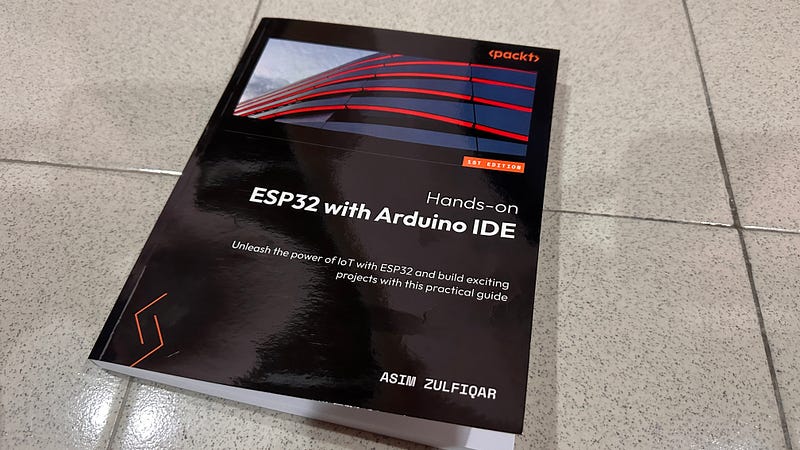
Hands-on ESP32 with Arduino IDE— Book Review

BOOK REVIEWS BY MAZLAN ABBAS

A comprehensive guide that facilitates a deep understanding of IoT concepts and their application.

Hands-on ESP32 with Arduino IDE

Not a paid member yet? Click here to read the full review for free.

As we enter the world of the Internet of Things (IoT), a robust educational resource can profoundly illuminate the journey of learning and application.

Hands-on ESP32 with Arduino IDE: Unleash the power of IoT with ESP32 and build exciting projects with this practical guide,” by Asim Zulfiqar proves to be a resource. It offers a practical, insightful guide that you, as an educator, can leverage to illuminate the path for your students.

Here’s an in-depth exploration of why this book is a guiding light for those keen to venture into the IoT realm.

Foundation Building: Grasping the Basics

Right from the outset, the book establishes a firm foundation in IoT development by introducing you to the ESP32 microcontroller and the Arduino IDE 2.0.

This initial grounding is crucial whether you guide students through their first IoT project or advance your knowledge.

Zulfiqar’s clarity in addressing these basics ensures you’re well-equipped to tackle more complex topics, laying a robust groundwork for further exploration.

Hands-on Learning: Interfacing and Integration

One of the book’s standout features is its focus on practical, hands-on learning, mainly through interfacing ESP32 with various components.

These sections not only elucidate the ‘how’ but also delve into the ‘why,’ enabling you to understand the underlying principles and their real-world applications.

The book provides step-by-step guidance for interfacing sensors and incorporating ESP32 camera and display modules, making complex procedures accessible and engaging.

Exploring IoT Protocols: Deepening Your Understanding

As you progress further, the book offers an in-depth look at IoT protocols, a critical aspect for anyone looking to design robust IoT systems.

Understanding these protocols is essential for ensuring effective communication and data exchange in IoT devices.

Zulfiqar’s explanations help you grasp these concepts thoroughly, equipping you to choose the proper protocol for your specific project needs, an invaluable skill in the practical IoT landscape.

Project Implementation: Applying What You’ve Learned

The application is the actual test of understanding, and “Hands-on ESP32 with Arduino IDE” excels at transitioning from theory to practice.

The book presents a series of projects that gradually increase complexity, allowing you to apply your newly acquired knowledge in real-world scenarios.

These projects reinforce learning and inspire innovation, encouraging you to think creatively and solve practical problems.

Empowering Your IoT Adventure

What sets this book apart is its ability to empower.

As readers immerse themselves in its contents, they will experience a boost in confidence, not only in mastering the intricacies of ESP32 and Arduino IDE 2.0 but also in conceptualizing and executing their IoT projects.

This book is a comprehensive guide for educators, facilitating student learning and providing an engaging, effective, structured approach to teaching IoT.

Accessibility and Inclusivity: A Book for All

While “Hands-on ESP32 with Arduino IDE” is technically detailed, its structured and clear presentation makes it accessible to a broad audience.

Whether you are a beginner taking your first steps in IoT or an advanced learner seeking to enhance your skills, the book offers informative and engaging content.

Hands-on ESP32 with Arduino IDE

A Cornerstone for IoT Learning

In conclusion, “Hands-on ESP32 with Arduino IDE” by Asim Zulfiqar is more than just a textbook; it’s a comprehensive guide that facilitates a deep understanding of IoT concepts and their application.

Whether you are an educator seeking to enhance your curriculum or a student embarking on your IoT journey, this book equips you with the tools, insights, and inspiration needed to navigate the world of IoT with confidence.

Through its practical examples, in-depth discussions, and accessible content, it stands out as an essential resource for anyone keen on delving into the exciting world of IoT with ESP32.


Get this book, “Hands-on ESP32 with Arduino IDE,” by Asim Zulfiqar from Packt.

Or use my affiliate link to get this book from Amazon.


More book reviews from Packt by Mazlan Abbas:

1 — Arduino IoT Cloud for Developers — Book Review

View at Medium.com

2 — Internet of Things from Scratch — Book Review

View at Medium.com

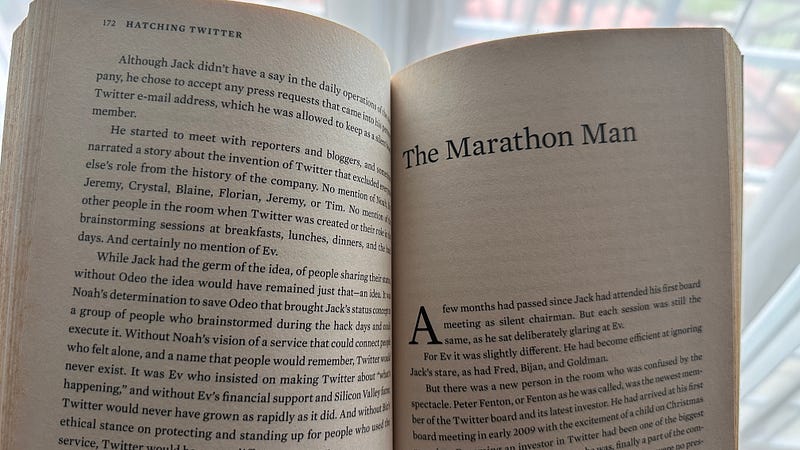
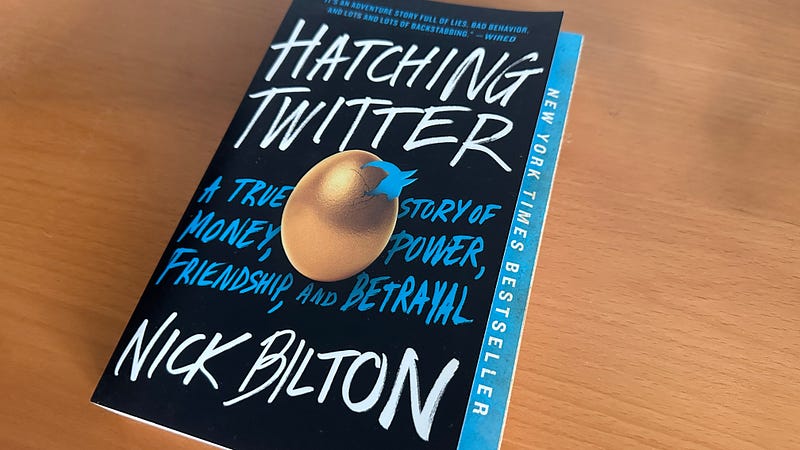
Hatching Twitter: A True Story of Money, Power, Friendship, and Betrayal — Book Review

BOOK REVIEWS BY MAZLAN ABBAS

The book outlines the origins of Twitter, a company that became a global phenomenon.

Hatching Twitter

Not a member? Click here to read the full story for free.

Reading Nick Bilton’s “Hatching Twitter” was an enlightening experience that resonated deeply with my entrepreneurial journey and the growth of FAVORIOT.

Bilton’s captivating narrative on Twitter’s inception and tumultuous rise offers invaluable insights into the volatile nature of tech startups, which I found particularly relevant given my background in IoT and smart cities.

The book outlines the origins of Twitter, a company that became a global phenomenon, but not without its share of internal strife and external challenges.

Photo by Alexander Shatov on Unsplash

The founders, Ev Williams, Jack Dorsey, Biz Stone, and Noah Glass, are portrayed with all their genius and flaws, navigating through a labyrinth of personal and professional obstacles.

Their experiences are a testament to innovation seldom being a smooth journey.

One of the book’s key takeaways was the importance of clear vision and leadership.

In my early days at FAVORIOT, defining and adhering to our core mission was crucial despite rapid technological changes and market demands.

Photo by Yucel Moran on Unsplash

The story of Twitter’s leadership struggles, especially the shifting roles of Dorsey and Williams, underscored how essential steadfast leadership is to a startup’s survival and growth.

Furthermore, the book delves into the complexities of friendship and business, a theme that resonates with me.

In the tech industry, where collaborations and partnerships are pivotal, it is vital to maintain a balance between personal relationships and professional responsibilities.

The founders’ interpersonal dynamics and eventual fallout serve as poignant reminders of the fragility of business relationships and the necessity of establishing clear boundaries and communication channels.

Bilton’s detailed account of Twitter’s internal conflicts over money, influence, and control resonated with me.

In the competitive IoT and smart cities world, ensuring equitable and transparent stakeholder engagement is paramount.

Photo by Brett Jordan on Unsplash

Learning from Twitter’s early governance challenges, I have strived to cultivate a culture of transparency and accountability at FAVORIOT.

Additionally, the book’s exploration of Silicon Valley’s venture capital ecosystem provided me with a broader context of the intricacies of tech financing.

Having navigated through different funding stages at REDtone IOT and FAVORIOT, I appreciated Bilton’s portrayal of the high-stakes environment that startups operate in, where rapid growth often comes with significant risks and pressures.


In conclusion, “Hatching Twitter” is not just a book about founding a tech company; it’s a narrative rich with lessons on leadership, innovation, and resilience.

As an entrepreneur and educator deeply entrenched in the tech world, I found the story both a cautionary tale and a source of inspiration.

It reminded me of the relentless pursuit of innovation, the importance of ethical leadership, and the enduring value of human connections in the digital age.

This book is an absolute must-read for anyone diving into the tech industry or starting their entrepreneurial journey.

The lessons gleaned from Twitter’s story are universally applicable, offering guidance and perspective that transcend the specifics of any single company or sector.

In sharing this review, I hope to inspire fellow entrepreneurs and innovators to embrace the challenges and opportunities of building something truly transformative, just as I continue to do with FAVORIOT.

Hatching Twitter

Click my affiliate link to purchase this book, “Hatching Twitter,” from Amazon.

About Me (Part-6) — Mazlan Abbas

ABOUT MAZLAN ABBAS SERIES

A glance at my career growth.

Author during the school kid days

Not a paid member? Click here to read the full story for free.

In my career now, there are two things I never envisioned or aspired to: (1) becoming a CEO and (2) starting my own business. Yet, life took me on an unexpected journey.

As a student, my only dream was to become a scientist who could invent robots. That dream remains unfulfilled. Back then, I hardly knew what being a “scientist” entailed.

Author in the teens.

I started my career as a lecturer. At that point, I couldn’t imagine pursuing any other career. I was dedicated to education, evolving from an Assistant Lecturer to a Lecturer and then to an Associate Professor.

Because I didn’t want to relocate to UTM Skudai, I took a bold step to leave academia for the private sector, joining Celcom. Over 13 years, I learned much about various aspects of the business, from R&D and billing to technology and network management. I was fortunate to experience such diversity in my roles.

Author during the young years.

When I moved to Mimos, I aimed to elevate the nation’s R&D standards. Working for a government agency fueled high hopes and ambitions, but my role remained unchanged after eight years. It felt as though my previous experiences were underutilized, a stark realization of potential wasted.

In my 31-year career, my resume only listed my aspiration to become a CTO until REDtone offered me a CEO position to establish a new IoT-focused subsidiary. That’s where I truly understood the nuances of running a business, especially in dealings with government entities.

After 2.5 years, I ventured into my own business with colleagues, which is a story for another time, focusing on my journey with FAVORIOT.

Author during the University’s days.

So, what have I learned through all this?

  1. Even if our dreams don’t materialize, the path life takes us on is a blessing in itself.
  2. We must excel in any task given to us, understanding that challenges will elevate us and lead to better opportunities.
  3. Our career journey teaches us lessons no book can offer. Facing real challenges helps us apply our knowledge to overcome adversities.
  4. Who says a career in academia can’t transition into the corporate world?
  5. Who says technical background folks can’t excel in business?
  6. Who says you can’t become a CEO one day?
  7. Who says bitter experiences can’t turn sweet eventually?
  8. Who says corporate professionals can’t be effective educators?
  9. Who says early retirement is necessary?
  10. Who says we can’t create something that shakes up the industry or the world?
  11. Diverse work experiences are invaluable and unique, whether in academia, private or government sectors, business, technical, operations, research, or product development.
  12. This doesn’t mean I’ve reached the end of my career or aspirations. There’s much more to achieve. I’m keen on giving back to the community and the younger generation, and there’s still so much more I want to learn. Learning never ends.

Each career phase has taught me that our aspirations evolve with our experiences and the roles we undertake.

What seemed unattainable at one point becomes just a step in our journey.

Whether transitioning from academia to the corporate world, embracing technical roles, or stepping into leadership positions, each transition brings its own set of lessons and opportunities for growth.

My journey from a passionate educator to a CEO and entrepreneur reflects the unpredictable yet rewarding nature of a career that embraces change, lifelong learning, and the pursuit of giving back.


View at Medium.comView at Medium.comView at Medium.comView at Medium.comView at Medium.com

My Domain Hosted on Medium Performed 200X Better Compared to WordPress

MEDIUM VS WORDPRESS

This is what I learned…

Photo by Campaign Creators on Unsplash

Not a paid member? Click here to read the full story for free.

I first created my blog using mazlanabbas.com to capture my journey as a Startup founder, Thought Leader, and Social Media Influencer.

Little did I realize how hard it was to make this website known to others. I found it very difficult to get traffic to my blog.

I struggled for nearly two years until I decided to do something drastic.

When I moved my domain from WordPress to Medium, I wanted to reduce the time and effort I spent managing multiple blogs. I have been active on Medium, and the topics I posted there are almost the same as those on my old blog on WordPress.

It was a bold move, but since hosting a domain on Medium is considered “free” because I already subscribe to the Medium Partner Program, I don’t have to pay for a separate host subscription.

Photo by Bench Accounting on Unsplash

Let me share why it’s good to host on WordPress:

  • There are many themes, plugins, and widgets that you can customize.
  • There are great tools to manage and view our traffic stats.
  • We can customize our website to our liking.
  • We can generate income via Google Ads (only if you have tons of traffic)

And let me share why Medium is a great host for personal domains:

  • If we are writers, it’s easy for us to write our stories. The UI/UX is meant for writers.
  • The community of writers is very supportive and engaging.
  • The possibility of earning with every article that we published.

But why do I say Medium is 200X better than WordPress?

I earned zero cents from all the articles I published, but I earned more than $200 for the last six months on Medium. That’s compared to the last two years hosted on WordPress, which didn’t earn me anything.

On WordPress, I only managed to get less than 200 followers, compared to 1.93K followers on Medium. WordPress has a community on the Jetpack mobile app, but the people are diverse and have different interests.

In Medium, we engaged much more in conversations and support with claps, highlights, and comments.

Photo by David Iskander on Unsplash

From my experience transitioning my domain hosting from WordPress to Medium, I’ve learned several key lessons and insights:

  1. Platform Ease-of-Use Matters: Medium’s user-friendly UI/UX, explicitly designed for writers, made creating and publishing content simpler for me. This starkly contrasts WordPress, which, although flexible, requires more time and effort to manage.
  2. Community Engagement is Crucial: Medium’s built-in community of writers and readers fostered more interaction through features like claps, highlights, and comments. This level of engagement significantly increased my visibility and follower count compared to platforms where the community is less integrated.
  3. Cost-Effectiveness: Hosting my domain on Medium was more cost-effective, especially since I was already subscribed to the Medium Partner Program. Conversely, maintaining a site on WordPress would have incurred additional costs for hosting, themes, and plugins.
  4. Monetization Opportunities: I found Medium’s monetization opportunities far more favorable. While I didn’t earn anything from my articles on WordPress, I managed to earn a significant amount on Medium, demonstrating its potential for revenue generation for dedicated content creators.
  5. Platform-Specific Audience: Medium’s audience is more aligned with content creators, particularly writers and thought leaders, resulting in a more engaged and supportive follower base. WordPress caters to a more diverse audience, which might resonate less strongly with specific content types.
  6. Focus on Core Competencies: By shifting to Medium, I could concentrate more on my writing and thought leader strengths instead of getting bogged down with website management and technical issues on WordPress.
  7. Strategic Platform Choice: Medium and WordPress depended heavily on my goals and preferences. Medium’s alignment with my content creation style and objectives made it the better choice, highlighting the importance of selecting a platform that supports one’s goals and workflow.

I invite you to follow my publications — Aspiring Writer’s Journey and Influencer’s Journey.

Photo by Aaron Burden on Unsplash

About my blogging journey:

1 — You Will No Longer Look at Personal Blogging the Same Way

View at Medium.com

2 — How I Created Online Money Making Machines

View at Medium.com

3–10 Tips in Creating a Successful Blog: Simple Steps and Key Insights

View at Medium.com

4 — Lifechanging Benefits of Lifeblogging

View at Medium.com

5 — From Medium Reader to Earner — If I Can, You Can Too!

View at Medium.com

6 — Monetizing Your Way Via Blogging — Simple Tips

View at Medium.com

7–10 Killer Topics That Makes a Blog Go Viral

View at Medium.com

8 — My Most Important Milestone in Medium — How I Planned to Earn $100K with My First Dollar

View at Medium.com

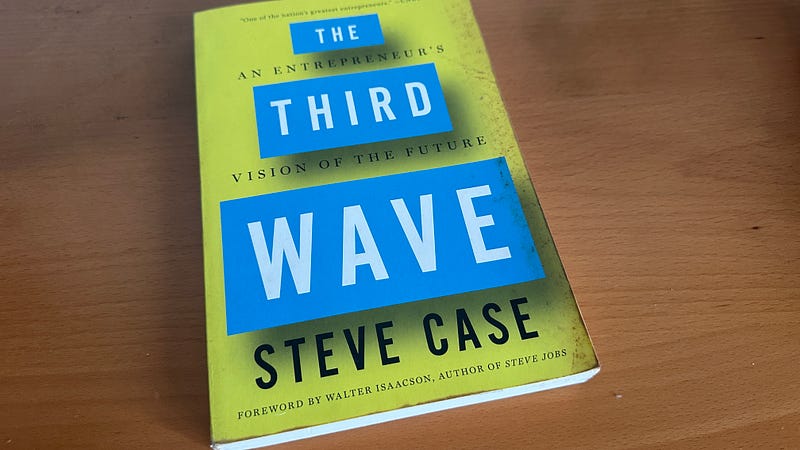
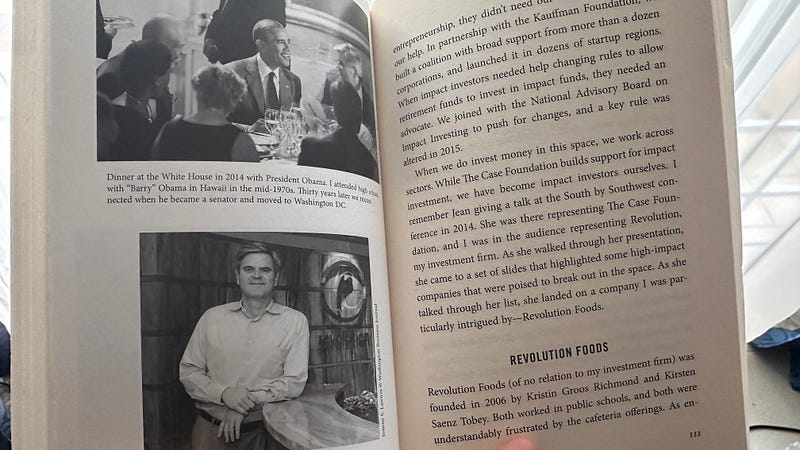
The Third Wave: An Entrepreneur’s Vision of the Future — Book Review

BOOK REVIEWS BY MAZLAN ABBAS

Narrative of the Internet’s Revolution.

The Third Wave: An Entrepreneur’s Vision of the Future

Not a member? Click here to read the full review for free.

As someone who has navigated the ebbs and flows of the tech industry for decades, my journey from academia to entrepreneurship parallels the broader narrative of the internet’s evolution.

This path has endowed me with a perspective deeply attuned to the seismic shifts that have defined our digital age, making Steve Case’s “The Third Wave: An Entrepreneur’s Vision of the Future” not just a compelling read but a resonant one.

Photo by John Schnobrich on Unsplash

Case’s recounting of the internet’s ascent from an arcane network to a societal cornerstone mirrors my experiences at Favoriot, where the promise and challenges of connectivity have been ever-present themes.

The book delineates the internet’s evolution through its ‘waves,’ a framework that provides a lucid backdrop against which I have charted my professional odyssey.

As Case delineates, the first wave was about building the infrastructure for online connectivity—a realm where AOL emerged as a pioneering force under Case’s stewardship.

Photo by Thomas Jensen on Unsplash

This era resonates with my early academic pursuits in telecommunications, where the theoretical underpinnings of connectivity were taking tangible shape in labs and scholarly papers.

Just as AOL laid down the digital roads and highways, I was immersed in unraveling the technical enabling such connectivity.

Transitioning into the second wave, characterized by platforms like Google and Facebook, which built atop the foundational internet to create rich, interactive experiences, I witnessed the transformation of my endeavors.

At this time, my transition from academia to entrepreneurship with Favoriot involved harnessing the internet’s burgeoning capabilities to forge IoT solutions that transcended traditional boundaries, much like how social media redefined human interaction.

Photo by Leon Seibert on Unsplash

Case’s third-wave concept aligns with Favoriot’s vision of the internet deeply intersecting with real-world sectors.

Just as Case predicts the internet’s indelible impact on sectors like health, education, and transportation, Favoriot sought to intertwine IoT within the fabric of urban living, healthcare, and more, pushing for a future where connectivity empowers unprecedented improvements in quality of life.

The Third Wave” is as much a memoir and a manifesto as it is a strategic blueprint for navigating the impending fusion of the internet with everyday life.

Photo by Compare Fibre on Unsplash

Case’s insights, derived from his storied career, offer a guiding light for entrepreneurs like myself who are steering ventures in a world brimming with digital promise and peril.

His emphasis on entrepreneurs’ need to foster relationships with customers, competitors, and governments in the third wave speaks to the holistic approach required to thrive in the forthcoming internet epoch.

Moreover, the book’s portrayal of emerging technology companies venturing beyond Silicon Valley’s confines mirrors my belief in the democratization of innovation.

Photo by LinkedIn Sales Solutions on Unsplash

At Favoriot, the ethos of breaking new ground outside traditional tech epicenters aligns with Case’s vision, reinforcing my advocacy for a geographically inclusive tech landscape.

In rendering the third wave, Case articulates a future where technology and life are interwoven and delineates the competencies and strategies entrepreneurs must cultivate.

The book has been a source of inspiration and a strategic compass, offering foresight and frameworks that will undoubtedly influence my decisions and directions at Favoriot.

The Third Wave: An Entrepreneur’s Vision of the Future

In conclusion, “The Third Wave” transcends its role as a literary exposition of Steve Case’s experiences to serve as a pivotal discourse on the future of technology and entrepreneurship.

It has affirmed and expanded my understanding of the interplay between technology and society, providing a wellspring of insights that will continue to inform my journey in shaping a connected smarter world.

For anyone invested in the future of technology, entrepreneurship, or society at large, this book is an indispensable read.

It offers profound reflections on our shared digital destiny.


Use my affiliate link to purchase The Third Wave: An Entrepreneur’s Vision of the Future from Amazon.


Other book reviews by Mazlan Abbas:

View at Medium.comView at Medium.comView at Medium.com

My Medium Followers Are 3X Lower but Earned 200X Than My TikTok.

HIGH NUMBER OF TIKTOK FOLLOWERS — MEAN ANYTHING TO YOU?

I learned something that I wish to share.

Photo by Franck on Unsplash

Not a member? Click here to read the full story for free.

I have tried many social media channels, including YouTube, Facebook, Instagram, X, Threads, Pinterest, and TikTok.

Sometimes, I get “Social media fatigue” from managing and posting on these channels.

These channels are meant to create personal or my company’s branding.

In my last story — “I Earned 200X More on Medium Than on YouTube”, I compared how writing is far more worthwhile than creating YouTube videos.

Photo by Harry Cunningham on Unsplash

When TikTok started trending, I joined the rest, trying to figure out how to make the most of this channel.

I am not into dancing or doing crazy things on TikTok. That’s not my style.

I created multiple TikTok accounts to test different niches and find out which ones I am more comfortable creating videos in.

Finally, I decided to focus only on one TikTok channel related to my passion and my Startup—the Internet of Things (IoT).

Photo by Josh Rose on Unsplash

However, I am having challenges figuring out what kind of IoT videos I should create—will these be hands-on, tips, news, or just knowledge sharing?

Below is my first video, which tries to give IoT tips. I tried in English and Malay but finally decided to deliver mainly in Malay because most of my followers are from Malaysia.

TikTok attracts a younger audience; thus, more “serious” topics did not resonate with them.

I also observed that giving topics on Final Year Projects gained popularity among youngsters or university students.

The below is the highest in terms of view:

After a few years, I gained over 6,280 followers (compared to 1,980 Medium followers) — 3X higher than Medium.

However, I need help monetizing my TikTok channel. I earned zero cents!

Compare the earnings below to the medium earnings for the last six months.

Author’s earnings for the last six months.

That’s a total of $202.42! 200 times more than TikTok!


Here’s what I learned when trying to earn money from TikTok vs Medium.

1—Find the right niche, and you will attract the right audience. However, you can’t satisfy all the audiences.
2 — It’s possible to gain followers without dancing or doing crazy things. Just give something of value.
3 — Do not spread your effort in multiple social media channels. Focus only on one channel.
4—Set your objectives and purpose for using social media—is it for fun, gaining followers, sharing knowledge, or monetizing?
5—Finally, Medium is still the best channel for a person like me to earn at least a small amount while doing it for fun and passion.


Remember to Subscribe to receive email updates on every post I publish.

Buy Me a Coffee (or two). Your support fuels my creativity, and we’ll continue this incredible adventure together! Just click here:https://buymeacoffee.com/mazlan.

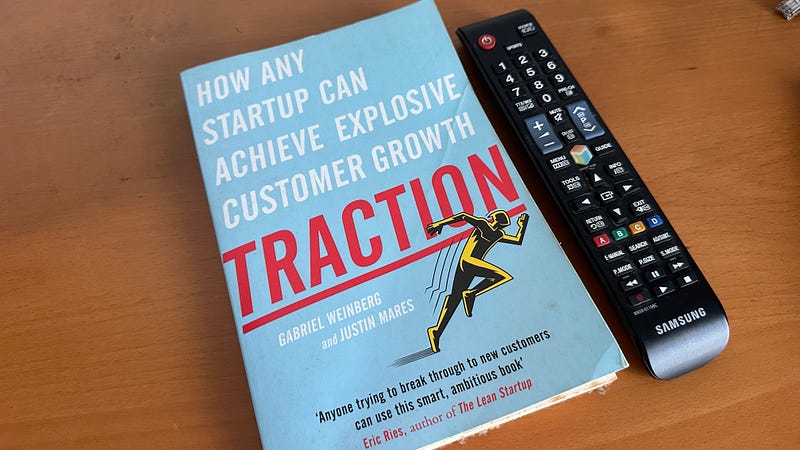
Traction: How Any Startup Can Achieve Explosive Customer Growth — Book Review

BOOK REVIEWS BY MAZLAN ABBAS

How this book helps our Startup.

Traction: How Any Startup Can Achieve Explosive Customer Growth

Not a member? Click here to read the whole story for free.

For startups, the path to success is filled with challenges and fierce competition.

“Embarking on my entrepreneurial adventure with Favoriot has been a journey I know all too well.” — Author

My quest for sustainable growth and an impactful market presence led me to Gabriel Weinberg and Justin Mares’s book Traction: How Any Startup Can Achieve Explosive Customer Growth.

This book promises to illuminate the path to gaining the much-coveted customer traction.

The premise of “Traction” resonates deeply with me, echoing the trials and tribulations we faced at Favoriot.

Like many startups, we were initially consumed with perfecting our product, believing that a stellar offering would naturally attract customers.

Photo by Jason Goodman on Unsplash

However, the harsh reality set in quickly: without a clear and effective strategy to gain traction, even the most innovative products can languish in obscurity.

Weinberg and Mares challenge the conventional startup wisdom that obsesses over the product at the expense of customer acquisition.

Their argument is compelling and backed by hard-earned insights: most startups fail not because of product issues but because of their inability to gain traction.

This revelation was a wake-up call for me, underscoring the necessity of pivoting our focus toward building a solid customer base.

The book outlines nineteen different traction channels, ranging from traditional advertising to more unconventional methods, such as engineering as marketing.

Traction

What I appreciate most is the authors’ acknowledgment that there is no one-size-fits-all approach.

Each startup’s journey is unique, influenced by industry, target audience, and the specific nuances of the product or service offered.

Our journey with Favoriot mirrored this sentiment.

We experimented with several channels, experiencing varying degrees of success.

Photo by Proxyclick Visitor Management System on Unsplash

The Bullseye framework proposed by Weinberg and Mares proved invaluable in this process.

It guided us to methodically test different channels, evaluate their effectiveness, and focus our energies on the ones that yielded the best results.

This systematic approach demystified gaining traction, transforming it from a daunting challenge into a series of structured, manageable steps.

The book’s real-world examples and case studies add a layer of credibility and reliability.

Photo by Annie Spratt on Unsplash

Reading about founders’ experiences like Jimmy Wales and Alexis Ohanian, who navigated similar challenges and emerged victorious, was inspiring and enlightening.

It provided a sense of camaraderie, a reminder that even the most successful ventures had to confront and overcome the hurdle of gaining traction.

In implementing the strategies from “Traction,” we learned the importance of adaptability and persistence.

Photo by Annie Spratt on Unsplash

Only some channels worked for us, and some strategies required fine-tuning and patience.

The book emphasizes the need for continuous testing and iteration, a principle that became our mantra at Favoriot.

As we refined our approaches, based on the book’s guidance and our own experiences, we saw a tangible increase in our customer base and, consequently, our market presence.

However, “Traction” is not just a manual for gaining customers.

It’s a broader treatise on the mindset and approach required for startup success.

The authors advocate for a culture of experimentation, data-driven decision-making, and relentless focus on growth.

These lessons transcended the specific context of customer acquisition, influencing our company’s culture and ethos.

Photo by Per Lööv on Unsplash

In conclusion, “Traction” by Gabriel Weinberg and Justin Mares is a roadmap for startups to succeed in the business landscape.

Favoriot and I found the tools, frameworks, and inspiration to navigate our growth journey.

The lessons from this book have been integral to our successes and will undoubtedly continue to influence our strategies as we forge ahead.

For any entrepreneur grappling with the challenge of gaining traction, this book offers guidance and hope — a testament to the power of strategic thinking and perseverance in the face of daunting odds.


Grab the book Traction: How Any Startup Can Achieve Explosive Customer Growth from Amazon.

(Note: This article comprised of Affiliate links)


More book reviews by Mazlan Abbas:

https://mazlanabbas.com/get-backed-book-review-fb91fd20f88fhttps://mazlanabbas.com/get-backed-book-review-fb91fd20f88fhttps://mazlanabbas.com/get-backed-book-review-fb91fd20f88f

About Me (Part-5) — Mazlan Abbas

WIKIPEDIA STYLE

I asked AI to rewrite my biodata using Wikipedia. Here’s what AI has to say.

Dr. Mazlan Abbas

Not a member? Click here to read the whole story for free.

If you have enough information about your career life on the Internet, sooner or later, you will be able to get AI discover your name and make an article about yourself.

Below is what has been discovered by ChatGPT.

Dr. Mazlan Abbas

Dr. Mazlan Abbas is a distinguished Malaysian engineer, academic, and entrepreneur known for his extensive work in the Internet of Things (IoT) and telecommunications. He is the co-founder and CEO of FAVORIOT Sdn Bhd, a company specializing in IoT solutions.

Early Life and Education

Born on January 23, 1961, in Malaysia, Dr. Abbas pursued his passion for technology and engineering from an early age. He obtained his Bachelor of Electrical Engineering (BEE) with First Class Honours from Universiti Teknologi Malaysia (UTM) in 1984, followed by a Master of Science (MSc) in Telematics from the University of Essex, UK, in 1986. He later earned his Ph.D. in Telecommunications from UTM in 1993.

Career

Academia

Dr. Abbas’s career began in academia, where he spent over a decade at UTM, holding various positions from Assistant Lecturer to Associate Professor in the Faculty of Electrical Engineering. His work during this period laid the groundwork for future IoT and wireless communications endeavors.

Industry

Transitioning from academic to the corporate world, Dr. Abbas took on several leadership roles at CELCOM Axiata, contributing significantly to the development of Malaysia’s telecommunications infrastructure. His tenure at MIMOS Berhad as the Senior Director of the Wireless Communications Cluster further exemplified his commitment to innovation, leading to the development of numerous research prototypes and patents.

In April 2017, Dr. Abbas co-founded FAVORIOT Sdn Bhd, aiming to offer comprehensive IoT solutions for businesses seeking digital transformation.

Awards and Recognitions

Dr. Abbas has been recognized globally for his contributions to IoT and smart cities. Notably, he has been listed in Onalytica’s “Who’s Who in IoT,” ranked among the Top 50 Global Thought Leaders on IoT by Thinkers360, and awarded the title “Most Impactful Smart Cities Leaders” by the World CSR Congress.

Contributions to Academia and Industry

Beyond his corporate achievements, Dr. Abbas is an adjunct professor and sits on several universities’ Industry Advisory Panel (IAP), blending academic insight with industrial pragmatism. His commitment to education and innovation is evident in his numerous patents, publications, and active participation in technology and IoT conferences worldwide.

Personal Life

Dr. Mazlan Abbas is married and resides in Ampang, Selangor, Malaysia. He is fluent in Malay and English, allowing him to engage with various individuals across academia and industry.

Legacy

Dr. Abbas’s legacy is characterized by his tireless dedication to fostering a knowledge-based economy, mentoring future leaders, and advocating for IoT-driven solutions. His work advances technological innovation and contributes to societal well-being, making him a pivotal figure in Malaysia’s journey towards becoming a smart, connected nation.


About Me — Mazlan Abbas:

View at Medium.comView at Medium.comView at Medium.comView at Medium.com


Remember to Subscribe to receive email updates on every post I publish.

You can also follow my Medium Publications:

I have also published several eBooks, such as:

Or, if you prefer, check my bookstore at Gumroad — https://mazlanabbas.gumroad.com

I Earned 200X More on Medium Than on YouTube

6 MONTHS ON MEDIUM vs 13 MONTHS ON YOUTUBE

I learned the hard way and how you can avoid it too.

Photo by Alexander Grey on Unsplash

Not a member? Click here to read the full story for free.

It’s easier to make money on Medium than YouTube — Here’s why.

I have been on YouTube for the last 13 years, making videos.

Starting with pure entertainment and travel videos and moving to serious gadget reviews.

Just imagine that 13 years ago, making YouTube videos was more challenging than using smartphones today.

Editing is becoming so simple and easy to include any special effects.

Producing videos has changed, and the competition to get eyeballs is becoming more challenging.

Just take a look at some of the videos (the old ones) which was created more than ten years ago:

1 — First video, “How to reduce PDF file size using Mac OS Preview,” 13 years ago.

How to reduce PDF file size using Mac OS Preview

2 — First appeared on TV when iPad was introduced “Segmen Gizmo TV9 — iPad

Segmen Gizmo TV9 — iPad

3 — Then, I started to create travel videos — “A Walk from from Dubai Creek to Riviera Hotel — (with Fireworks Song)

A Walk from from Dubai Creek to Riviera Hotel — (with Fireworks Song)

4 — I also love to review the unboxing of items I purchased, such as “Review — Portable Muzetto from Waterfield Designs (for iPad and iPad Mini)

Review — Portable Muzetto from Waterfield Designs (for iPad and iPad Mini)

5 — Later, I started to use some editing techniques and introduced a new segment on gadget review such as “[How-To] — To Improve YouTube Quality Using Sony Wireless Bluetooth Microphone ECM-AW3

[How-To] — To Improve YouTube Quality Using Sony Wireless Bluetooth Microphone ECM-AW3

6 — Lately, I began to get more comfortable recording myself talking in front of a camera, such as giving some tips “Tip Startup #9 — Rahsia Mendapat Tontonan Video Yang Tinggi di Facebook

Tip Startup #9 — Rahsia Mendapat Tontonan Video Yang Tinggi di Facebook

I have created over 292 YouTube videos but only got a measly 583 subscribers.

My Gadget Channel

However, to monetize my YouTube channel, I have to comply with YouTube’s policy: “Users must have watched your content for at least 4,000 hours over the past 12 months. You need at least 1,000 subscribers,” which is impossible to achieve.

Overall — I earned zero cents from YouTube (for the last 13 years!)

Compared to Medium, when I joined the Medium Partner Program and started to write stories seriously, I saw a big difference in the earnings.

6 months earnings stats (Author)

That’s a total of $202.42! 200 times more than YouTube!


Here’s what I learned when trying to earn money from Social Media.

1—Monetizing on YouTube is not easy. It takes a lot of effort and consistency.
2—Enjoy the moment! Don’t get frustrated if your YouTube channel doesn’t gain much traction. Just capture the moments of your life or share your stories.
3—Focus on your strengths and find the right platform. The Medium platform is suitable for writers who are good at writing.
4—Pivot if you can’t gain the proper traction. Don’t wait too long to see your efforts go down the drain. Please find a new platform when one doesn’t favor you.


Remember to Subscribe to receive email updates on every post I publish.

You can also follow my Medium Publications:

I have also published several eBooks, such as: