
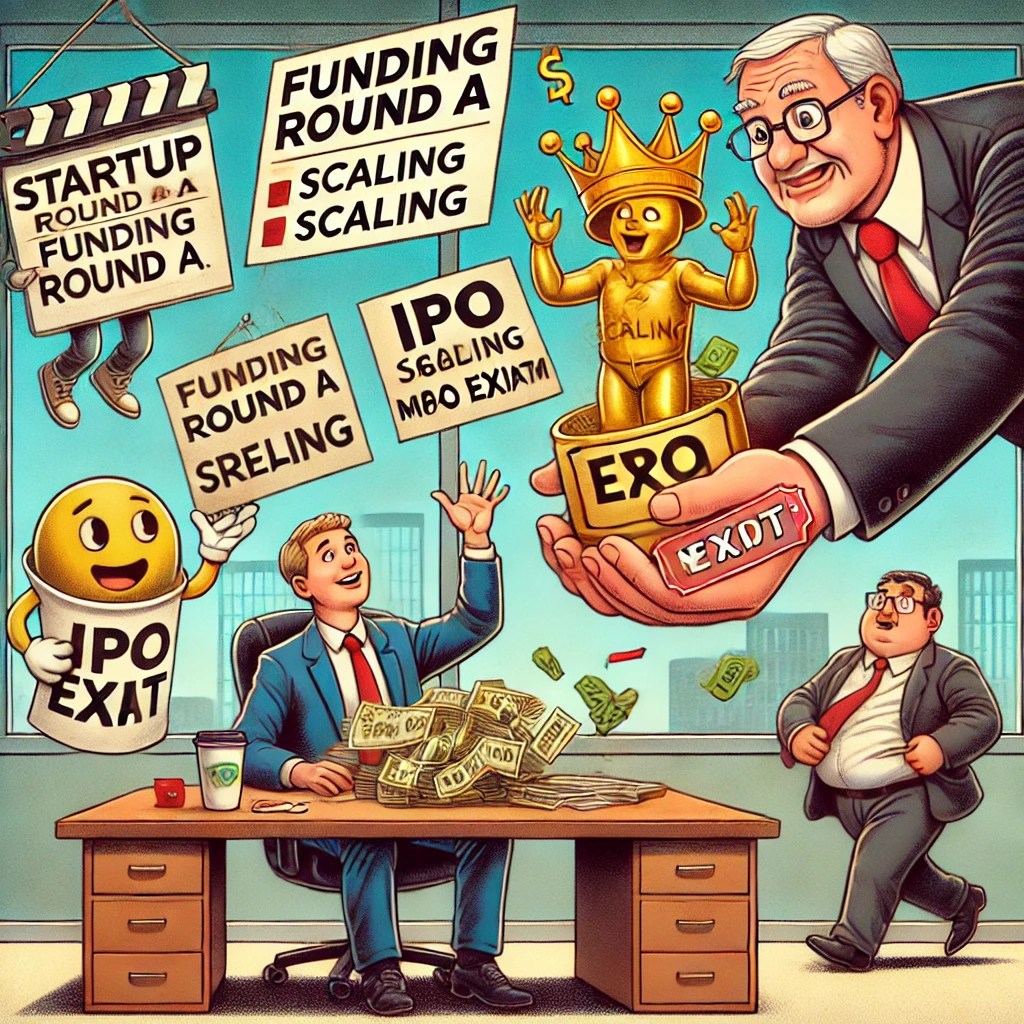
I had this ultimate dream that many of us have when we start a company: that grand exit.
Why Startups Opt for This Path
The idea of an IPO—the pinnacle where our company becomes publicly listed, and the rewards are far beyond what we’ve ever imagined—can feel like the ultimate destination.
The dream is intoxicating.
But the reality is far more complex. The path to an IPO isn’t a straight highway; it’s a winding trail filled with unexpected challenges, tough decisions, and occasional compromises.
When I started, the vision seemed crystal clear—build something valuable, scale it, and eventually take it public.
Sounds simple, right? Well, that was naïve Mazlan talking.
I remember those early days vividly. The excitement was palpable.
We had endless discussions about Pre-Seed, Seed, Series A funding rounds. The belief was strong: If we just worked hard enough and stayed smart, we’d be among the chosen few to make it to an IPO.
But as time passed, reality caught up with me. That dream, while not impossible, was far from guaranteed.
The Harsh Reality of IPOs
Achieving an IPO isn’t just about having a good idea or even a great product. It’s about building a business with substantial revenue, stable income, and scalable global operations.
And that’s not something you accomplish overnight—or even in a few years.
It requires relentless innovation and flawless execution over a long period, often under the unforgiving scrutiny of investors and competitors.
Even then, the odds remain slim. Many founders, myself included, have faced the tough decision: Do we keep pushing toward the elusive IPO, or do we consider an alternative exit like a merger or acquisition (M&A)?
The Case for M&A: When the Alternative Makes Sense
Selling the company—especially to a larger corporate entity—can seem attractive when scaling becomes overwhelming. But here’s the thing: selling is not just about cashing out.
It’s about finding the right buyer who sees the real value in what you’ve built. Sometimes, that value lies in your technology, team, or even your foothold in a specific market.
When I started exploring M&A options, I quickly learned that companies acquire startups for various reasons. Let’s break it down.
1. Technology Acquisition
One of the most common reasons large corporations acquire startups is to gain access to cutting-edge technology. Developing something innovative in-house takes time, resources, and risk. Bureaucratic layers in big companies make it hard to iterate quickly or pivot when things go wrong.
Acquiring a startup that has already proven its worth is often the fastest route to innovation.
I’ve seen firsthand how some startups became prime targets because they had unique technology that a larger company couldn’t replicate. It’s faster—and often cheaper—for the big players to buy a startup than to build it from scratch.
2. Talent Acquisition or “Acqui-Hiring”
Talent is the lifeblood of innovation. However, finding skilled people with a startup mindset is incredibly difficult in today’s market, and large corporations know this all too well.
Sometimes, the quickest way to bring fresh talent into the organization is to acquire a startup outright.
I’ve seen startups being acquired just for their talent. This process, known as “acqui-hiring,” may not be the dream exit for every founder, but it can be a viable and profitable option. It also allows team members to take on more prominent roles within the acquiring company, often with more resources at their disposal.
3. Market Access
Startups are nimble. We can pivot quickly, explore niche markets, and enter spaces that larger corporations might overlook or deem too risky.
Larger companies often want in once a startup proves that a market is viable. Acquiring the startup becomes their fastest way to capture that market without starting from scratch.
I’ve experienced this scenario personally. Big companies aren’t constantly chasing technology alone; sometimes, they’re after the customer base and market positioning that the startup has painstakingly built.
4. Killing the Competition
Here’s the darker side of M&A.
In highly competitive industries, some companies acquire startups just to shut them down. It sounds counterintuitive, right?
But it happens. A large corporation might see a startup as a potential threat—not because it’s taking market share now, but because it could in the future. By acquiring and dismantling the startup, they eliminate a competitor before it becomes a problem.
Reflecting on Personal Experiences
I was once approached by a large corporation interested in acquiring my startup. They were impressed with our technology and saw it as a perfect fit for their portfolio. I remember sitting down and thinking, “Is this the right move? “Would selling mean giving up control of something I’ve poured my heart and soul into? “
These decisions aren’t easy. You start questioning everything:
- Am I ready to let go?
- Will my team thrive in a corporate environment?
- What happens to my vision once I step away?
Looking back, I realize that exits—whether through an IPO or an acquisition—are just milestones, not the end goal. The real value lies in the experiences, lessons learned, and impact you make.
Advice to Founders Contemplating an Exit
If I had to offer advice to fellow founders considering their exit strategy, it would be this:
- Don’t rush the decision. Take your time to evaluate all your options.
- Think beyond the financials. Consider what’s best for your personal and professional growth.
- Stay true to your vision and values. The right exit will come when the timing is right.
Ultimately, whether you exit through an IPO, an acquisition, or by moving on to your next venture, what matters most is that you’ve built something meaningful. Something that made a difference.
And that’s a legacy no exit strategy can ever take away.
Final Thoughts: Building for the Journey, Not Just the Exit
The dream of a grand exit might be what fuels many of us in the early days, but as the journey unfolds, you realize it’s about much more than that.
It’s about the people you meet, the obstacles you overcome, and the solutions you bring to life. It’s about the lives you touch and the legacy you leave behind.
If you’re building a startup, remember this:
Don’t just build for the exit. Build for the journey.
The exit will take care of itself when the time is right.
More Favoriot Entrepreneurship Stories
- The Story Behind Favoriot – Part 11: The Rocky Road of Smart Cities
- The Story Behind Favoriot — Part 10: Age Does Not Matter in Business
- The Story Behind Favoriot — Part 9: Leaving the Comfort Zone
- The Story Behind Favoriot – Part 8: The Frustration of Unanswered Emails and Missed Opportunities
- The Story Behind Favoriot – Part 7: The Task of Finding Favoriot’s First 10 Customers
- The Story Behind Favoriot – Part 6: Expanding The Business Models
- The Story Behind Favoriot – Part 5: Finding the Right Fit
- The Story Behind Favoriot – Part 4: How Favoriot Became More Than Just an IoT Platform
- The Story Behind Favoriot – Part 3: Why No One Wanted Our IoT Platform—And How We Turned It Around
- The Story Behind Favoriot – Part 2: Turning Failures into Milestones
- The Story Behind Favoriot – Part I: The Humble Beginnings of Favoriot
Discover more from Dr. Mazlan Abbas
Subscribe to get the latest posts sent to your email.

 Dr. Mazlan Abbas
3 thoughts on “The Story Behind Favoriot – Part 12: The Dream of M&A Exit”