How I Finally Earned My First $100 After Six Months on Medium

WRITER’S STORIES

Seven (7) tips that you can follow.

Photo by Omid Armin on Unsplash

When I first joined Medium, I remember reading somewhere that only about 5% of writers make $100 or more monthly. This statistic stuck with me and became a personal milestone. “Can I be part of that 5%?” I often wondered.

After several months on the platform, my stories started gaining traction, but I hadn’t earned more than $65 in any given month. My initial goal was relatively modest — to earn around $100 per month.
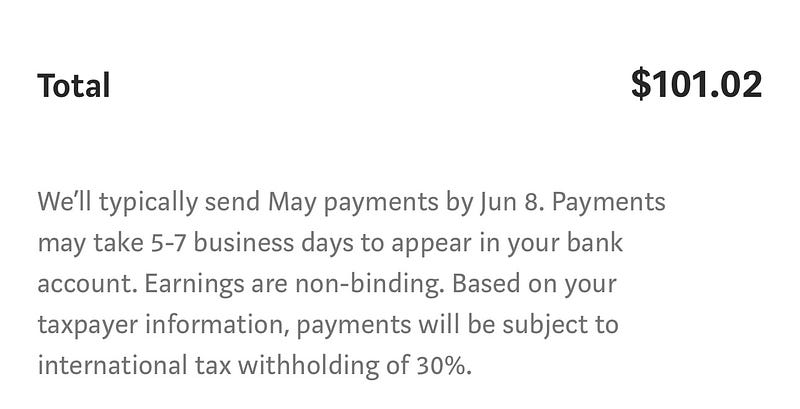
Now that I’ve finally achieved this goal, I’m setting my sights higher, aiming for $200 next. It feels similar to my journey with followers; my goal started at 500, then 1000, 1500, and now 2000.

This journey has taught me persistence pays off,” I reminded myself.

If you stay on Medium long enough and continue to write, you will eventually meet your goals.

This has certainly been my experience. Reflecting on my recent success, I realize I did a few things differently this past month that contributed significantly to my earnings surpassing $100.

I want to share these strategies with you in the hope that they will also help you increase your earnings.

1 — Increasing Article Output

Photo by rivage on Unsplash

One of the most significant changes I made was increasing the number of articles I wrote each week.

Previously, I wrote one or two articles per week, but I noticed a remarkable shift when I started writing four to five articles weekly.

Writing every day seemed too ambitious and unsustainable, but four to five weekly articles struck the right balance.

There’s something transformative about writing more frequently on Medium,” I thought.

Some days, the words flow effortlessly; on others, it’s a struggle.

On days when inspiration strikes, I write as much as possible without worrying too much about editing.

I focus on getting the ideas out of my head and onto the page.

Later, when I’m not feeling as creative or have less time, I go back and edit these articles, refining and polishing them for publication.

This approach has increased my output and improved my consistency, keeping my readers engaged with regular content.

2 — Writing Longer, Engaging Content

Photo by Patrick Tomasso on Unsplash

Another pivotal change was making my articles longer.

I learned that the longer someone reads your story, the more you earn. However, writing longer content alone isn’t enough; it must be engaging.

If your article is lengthy but fails to hold the reader’s attention, they’ll likely leave before finishing, which won’t help your earnings or reader retention.

Initially, I resisted writing longer articles because I personally prefer shorter reads,” I admitted.

However, observing successful Medium writers who often write lengthy articles inspired me to experiment with longer content.

The key is ensuring every part of your article is engaging and adds value to the reader.

3 — Growing Your Follower Base

Photo by Free Walking Tour Salzburg on Unsplash

Followers play a crucial role in your success on Medium. “When I started actively following other writers, many followed me back,” I noted, which helped increase my visibility on the platform.

Having a larger follower base doesn’t guarantee they will read all your stories, but it does put you on their radar.

I’ve noticed that writers with a substantial following often have more credibility,” I reflected.

They’ve either been on Medium for a long time or have consistently produced quality content.

This credibility can attract more readers to your stories, increasing your chances of higher earnings.

4 — Repurposing Old Articles

Photo by Sergiu Vălenaș on Unsplash

After being on Medium for a while, you’ll notice that some of your older articles aren’t performing well.

Instead of deleting these underperforming stories, I considered repurposing them.

Change the title, restructure the content, and tweak anything that could use improvement,” I reminded myself.

Sometimes, a simple title change can bring new life into an article.

Recently, I learned how to embed links in my stories,” I said excitedly.

I revisited some of my older articles and added links to related content.

This strategy revived those articles and encouraged readers to explore more of my work, increasing overall engagement.

5 — Utilizing Popular Keywords

Photo by NisonCo PR and SEO on Unsplash

Writing frequently within a niche and using relevant keywords is another effective strategy.

For instance, I write a lot about IoT and entrepreneurship — these are my keywords, and they have a substantial following.

Incorporate these keywords in your titles and headings within the articles,” I advised myself.

Keywords help your stories get found on Medium and through search engines like Google.

They tell search engines what your story is about, which is crucial for getting more views.

6 — Writing for Your Audience

Photo by Nicholas Green on Unsplash

Understanding and writing for your audience is paramount. “Consider who your readers are and what they are looking for,” I constantly reminded myself.

Are you teaching them something new or sharing a personal story?

Tailoring your content to meet your audience’s expectations and needs will help you connect with them better and keep them coming back for more.

7 — Writing Because You Love It

Photo by Belinda Fewings on Unsplash

Today, I can confidently say that I have become a much better writer thanks to the practice and feedback I’ve received on this platform.

Writing frequently has improved my skills and solidified my identity as a writer.

Reaching the $100 mark is a significant milestone,” I thought with satisfaction, but the love for writing will keep you going in the long run.

By focusing on your passion and continuously honing your craft, the financial rewards and recognition will follow.


My journey to earning $100 monthly on Medium has been one of persistence, strategic adjustments, and much learning.

By increasing my output, writing longer and more engaging articles, growing my follower base, repurposing old content, using popular keywords, and writing with my audience in mind, I’ve been able to achieve this milestone.

And above all, writing because I love it has made the journey worthwhile.

If you’re on a similar path, I hope these insights will help you reach and surpass your goals on Medium.

This experience has reaffirmed my belief in perseverance and adaptability,” I concluded.

As I look forward to new goals and challenges, I remain committed to sharing my journey and insights with fellow writers and readers on Medium.


Together, we can continue to grow, learn, and succeed.


My Top Three (3) Stories in May 2024 — You Should Read This!

View at Medium.comView at Medium.comView at Medium.com

How I Turned Dry Tech Topics into Must-Read Articles

WRITER’S STORIES

My Journey from Academic Papers to Engaging Blogs: 6 Essential Tips

Photo by Shaurya Sagar on Unsplash

Writing articles that captivate and engage readers is an art form I’ve had to master over the years through trial and error.

When I first started sharing my thoughts on gadgets and technology, I didn’t realize how important it was to make my content informative and engaging.

This journey has taken me from academic papers to blogs and now to a broader audience interested in the Internet of Things (IoT) and smart cities.

I remember the early days of my blogging journey.

I was sitting at my desk, staring at a blank screen. “How do I make this interesting?” I would ask myself.

Who is going to read this?” Over time, I discovered that writing articles people want to read involves a mix of storytelling, practicality, and a touch of personality.

1. Understand Your Audience

Photo by Melanie Deziel on Unsplash

One of my first lessons was the importance of knowing who you’re writing for. It might sound obvious, but this step is often overlooked.

I used to write purely from my perspective, focusing on what I found interesting.

But as I dig deeper into blogging, I realized that my audience had different needs and interests.

One evening, while reviewing my blog statistics, I asked myself, “Who are my readers?” “What are they looking for?

I started paying attention to the comments, the most-read articles, and the feedback I received.

It became clear that my audience was not just tech enthusiasts but also professionals looking for practical applications of IoT and insights into smart city developments.

Understanding my audience meant I had to shift my focus.

Instead of discussing the latest gadgets, I explored how these technologies could be applied in real-world scenarios.

This approach made my content more relevant and helped establish a connection with my readers.

2. Start with a Hook

Photo by Steve Johnson on Unsplash

Getting someone’s attention in the first few seconds is crucial.

In today’s fast-paced world, people have short attention spans.

If your article doesn’t grab them immediately, they’ll move on to something else.

I recall an article I wrote about the future of IoT in healthcare. “How do I begin this?” I pondered, knowing the importance of a strong opening.

I decided to start with a personal story — a visit to a hospital where I saw IoT devices in action. “Imagine walking into a hospital where every device is connected, providing real-time data to doctors and nurses,” I wrote.

This hook was engaging and set the stage for the detailed analysis that followed.

3. Use a Conversational Tone

Photo by LinkedIn Sales Solutions on Unsplash

One of the most significant shifts in my writing style was adopting a conversational tone.

I was used to formal writing in the academic world.

However, blogging and writing for a broader audience required a different approach.

How would I explain this to a friend over coffee?” I often asked myself.

This mindset helped me simplify complex topics and make my writing more accessible.

Using a conversational tone made my articles feel like dialogue rather than lectures, which resonated well with my readers.

4. Make it Practical

Photo by Joel Rohland on Unsplash

People love articles that offer practical advice they can apply in their lives.

This realization came to me after I wrote several articles that dug deep into the theoretical aspects of technology but received lukewarm responses.

While writing about IoT deployment strategies, I wondered, “How can I make this more useful?

I began to include step-by-step guides, tips, and case studies.

For example, I didn’t just talk about the benefits in an article about smart city implementation.

I provided a roadmap for city planners on how to get started, from conducting feasibility studies to choosing the right technology partners.

5. Incorporate Visuals

Photo by Alex Litvin on Unsplash

A picture is worth a thousand words, and in the digital age, visuals are more important than ever.

This was a harsh lesson for me.

As someone who loves words, I initially resisted incorporating too many images or infographics.

One day, while revising an article on IoT sensors, I realized how text-heavy it was. “Would I read this if I wasn’t so passionate about the topic?” I asked myself honestly.

The answer was no.

I started adding diagrams, charts, and photos to break up the text and illustrate my points.

The feedback was overwhelmingly positive.

Readers appreciated the visual aids, and they made the information more accessible and digestible.

6. Keep It Concise

Photo by Hamish Duncan on Unsplash

While my articles are now more comprehensive, I’ve learned the importance of conciseness.

This may seem contradictory, but even in longer pieces, being concise is about making every word count.

I used to write long-winded explanations, thinking that more words equaled more value.

However, readers often need help to skim through or lose interest. “How can I say this more succinctly?” became a constant question during my writing process.

Trimming unnecessary words and focusing on clarity made my articles more engaging and effective.


Finding My Unique Voice

Photo by Etienne Girardet on Unsplash

Beyond these six strategies, finding my unique voice was a crucial part of my journey.

As a professional in IoT and smart cities, I wanted my expertise to shine through and be relatable.

While working late in my office one evening, I reflected on my journey. “What makes my perspective unique?” I asked myself.

The answer lay in my diverse experiences — from academia to industry, local projects to international collaborations.

Embracing these aspects, I started sharing personal anecdotes, challenges, and successes.

For instance, I shared a story from my time at CELCOM Axiata in an article about overcoming obstacles in Billing System migration implementation.

We faced a significant hurdle in integrating a new technology with our existing infrastructure.

By narrating this experience, including the sleepless nights and the eventual breakthrough, I connected with my readers on a deeper level.

They saw not just the expert but a person who had faced and overcome challenges similar to their own.

Building a Community

Photo by mauro mora on Unsplash

Writing is not just about creating content; it’s about building a community.

Over time, I realized the value of engaging with my readers beyond the articles.

Responding to comments, participating in discussions, and being active on social media platforms like LinkedIn and Twitter helped me build a loyal readership.

How can I foster a sense of community?” I often asked myself.

I started hosting webinars and live Q&A sessions where readers could interact with me directly.

This boosted my engagement and provided valuable insights into what my audience cared about.

Their feedback became a crucial part of my content strategy.

Embracing Feedback

Photo by Jon Tyson on Unsplash

Feedback, both positive and negative, is a powerful tool for growth.

In the early days, negative comments would discourage me. “Am I not good enough?” I would wonder.

But over time, I learned to see feedback as an opportunity to improve.

Constructive criticism helped me identify areas for improvement. For instance, after receiving feedback that some of my articles were too jargon-heavy, I consciously tried to simplify my language.

How can I explain this in a way everyone can understand?” became a guiding principle.

Positive feedback, on the other hand, reinforced what I was doing right.

Knowing that my articles had helped someone or sparked a new idea was incredibly rewarding and motivated me to keep writing.

Continuous Learning

Photo by Dmitry Ratushny on Unsplash

The world of technology is fast moving, and so is the world of writing.

Staying updated with the latest trends in both fields is essential.

I dedicate time to reading other thought leaders, attending conferences, and participating in workshops.

How can I stay relevant?” I frequently ask myself.

By continuously learning and adapting, I ensure that my content remains fresh and insightful.

This commitment to growth is about staying ahead in my field and providing the best value to my readers.

The Journey Ahead

Photo by Mantas Hesthaven on Unsplash

Reflecting on my writing journey, I’m grateful for the lessons learned and the community I’ve built.

Writing articles that people want to read is not a destination but an ongoing journey.

It requires patience, persistence, and a willingness to evolve.

Every article I write is an opportunity to connect, inspire, and make a difference.

Whether it’s a piece on the latest IoT innovation or a personal reflection on my experiences, my goal remains to provide value to my readers.

What’s next?” I often wonder.

The possibilities are endless, and the journey continues.

With each article, I strive to refine my craft, learn from my audience, and contribute to the ever-growing world of knowledge.


In conclusion, writing articles people want to read is about understanding your audience, starting with a hook, using a conversational tone, making it practical, incorporating visuals, and keeping it concise.

It’s also about finding your unique voice, building a community, embracing feedback, and committing to continuous learning.

This experience has been enriching, and I’m excited about what lies ahead.

The Dilemma of Publishing an Article During Weekends

WRITER’S DILEMMA

You never know until you try.

Photo by Hansjörg Keller on Unsplash

When I first stumbled upon the article “Should I Publish an Article During the Weekend?” on Medium, it struck a chord with me.

As someone who has been navigating the waters of writing and publishing for quite some time, the question of timing has often perplexed me.

Does it matter when I hit ‘publish’?” I wondered, staring at my draft on the screen.

My journey through the tech world, academia, and entrepreneurship had taught me many lessons, but the nuances of content publishing were a new frontier.

Photo by Christina @ wocintechchat.com on Unsplash

Should I write on weekdays or weekends?” This question stayed with me as I remembered my first experience on Medium.

It was a leap into the unknown, driven by a desire to share my insights on IoT, smart cities, and the myriad experiences that shaped my career.

But timing?

That seemed like a trivial detail at first, yet the more I delved into it, the more I realized its potential impact.

I began reflecting on my routine. ”Weekdays are hectic,” I thought, considering the endless stream of meetings, emails, and the constant juggling act that defined my professional life.

On the other hand, weekends offered a semblance of calm – a time to unwind and reflect.

Photo by Haley Phelps on Unsplash

Isn’t that when most people have time to read?” I pondered, but the article seemed to indicate otherwise.

The author mentioned the importance of understanding your audience.

Who am I writing for?” I asked myself.

My readers were diverse – tech enthusiasts, entrepreneurs, academics, and students.

What are they doing on weekends?” I pondered, realizing that their routines might be as varied as mine.

Some might catch up on industry trends, while others might seek inspiration or practical advice for the week ahead.

Photo by Markus Winkler on Unsplash

I analyzed the performance of my past articles, pulling up the analytics to look at the numbers.

Interestingly, I noticed that the articles I published on weekdays seemed to garner more immediate attention.

I speculated whether it was because people were in work mode, thinking about how my own reading habits shifted depending on the day.

I remembered a conversation I had with a fellow entrepreneur.

Timing is everything,” he had said, referring to product launches and marketing campaigns.

Could the same apply to articles?” I wondered, seeing a parallel.

In the corporate world, we meticulously planned the timing of announcements to maximize impact.

Photo by Jaelynn Castillo on Unsplash

Maybe I should adopt a similar strategy here,” I thought, feeling a new sense of purpose.

Reflecting on my time at CELCOM Axiata and later at FAVORIOT, I realized how crucial timing had been in different contexts.

Whether it was launching a new product or rolling out an update, we always considered the timing to ensure maximum reach and engagement.

Why should publishing articles be any different?” I asked myself, drawing on these experiences.

Photo by Emma Simpson on Unsplash

The article suggested that weekdays, particularly mornings, were optimal for publishing.

Mornings, huh?” I wondered, thinking about my morning routine. Mornings were a time of high energy and focus, ideal for absorbing new information.

Could this be the sweet spot for my readers too?” I considered planning my next move.

But then, the weekends held a certain charm.

What about the readers who prefer leisurely reading?” I wondered.

I often enjoyed diving into long reads on weekends, with a cup of coffee and no pressing deadlines.

Surely, there are others like me,” I reasoned, contemplating a balanced approach.

I decided to experiment. ”Let’s test this theory,” I thought, planning to publish similar articles at different times and track the results.

Photo by Sonja Langford on Unsplash

This data-driven approach felt familiar, akin to the analytics we used at FAVORIOT to refine our IoT solutions.

It’s all about learning and adapting,” I reminded myself, a principle that had guided me through various phases of my career.

In the following weeks, I meticulously tracked the performance of my articles.

Interesting,” I noted, observing a pattern.

Weekday mornings indeed saw higher engagement, but there was a significant, albeit smaller, spike on weekends.

Maybe it’s more about consistency and quality than timing, I pondered, considering the bigger picture.

Photo by Manja Vitolic on Unsplash

This experiment reminded me of the early days of FAVORIOT.

Every decision was a hypothesis,” I recalled, from product features to market strategies.

We tested, learned, and iterated. The same applied to my writing journey.

Keep experimenting,” I told myself, knowing each article was a step towards better understanding my audience.

Engagement was another crucial factor mentioned in the article.

How do I keep readers hooked?” I asked, reflecting on my content.

It wasn’t just about the timing but also about creating value.

What do my readers want to read?” I wondered as I delved into comments and feedback.

One piece of feedback stood out.

Photo by Maegan Martin on Unsplash

A reader appreciated the blend of technical insights and personal anecdotes in one of my articles.

Stories resonate,” I realized, drawing from my experience as a public speaker.

Whenever I shared personal stories in my talks, the audience connected more deeply.

Let’s bring more of that into my writing,” I decided, planning to weave in more personal narratives.

I remembered a particular talk I gave at an international conference.

It was the story of my transition from academia to entrepreneurship that captivated the audience,” I reflected.

Photo by Matthew Osborn on Unsplash

Sharing the challenges, the uncertainties, and the triumphs made the message relatable and impactful.

Authenticity is key,” I noted, committing to more honest and open writing.

The article also touched on the importance of headlines.

Headlines are the first impression,” I thought, considering the countless articles I had skimmed through just because the headline didn’t grab me.

Crafting compelling headlines became a new focus. ”How do I make it irresistible?” I asked, experimenting with different styles.

I remembered the marketing campaigns we ran at FAVORIOT.

A catchy tagline can make all the difference,” I recalled.

Applying this to my writing, I spent more time crafting headlines that piqued curiosity and promised value.

Photo by Jack Hunter on Unsplash

It’s an art,” I realized, feeling a renewed sense of creativity.

As weeks turned into months, my understanding of Medium’s dynamics deepened.

It’s a continuous learning process,” I acknowledged, embracing the journey.

I noticed that articles published with thoughtful timing, compelling headlines, and rich narratives consistently performed better.

It’s about the whole package,” I concluded, seeing the interplay of various elements.

I also paid attention to the feedback loop.

Engage with your readers,” the article had advised.

This resonated with me deeply.

Engaging with stakeholders has always been crucial in my professional life. I have also been very actively engaged on my social media channels.

Photo by Brooke Cagle on Unsplash

Why should it be any different here?” I wondered, responding to comments and messages with genuine interest.

One particular interaction stood out.

A young entrepreneur from another part of the world had reached out, inspired by my story.

Your journey gave me the courage to start my venture,” he wrote.

This touched me profoundly.

This is why I write,” I realized, to inspire and connect.

Reflecting on my career, I saw how each phase had its own set of challenges and learning curves.

From academia to the corporate world, and then to entrepreneurship, each transition required adaptation and growth.

Photo by israel palacio on Unsplash

Writing is another chapter,” I told myself, an extension of my journey.

The article also mentioned the importance of self-promotion.

”Don’t be shy about sharing your work,” it advised.

This was something I had struggled with initially.

”Is it too self-promotional?” I often wondered.

But I realized that if I believed in the value of my content, sharing it was not just about promoting myself but about reaching those who could benefit from it.

I remembered the early days of FAVORIOT, pitching to investors and partners.

You have to believe in your vision,” I reminded myself.

Photo by Randy Tarampi on Unsplash

The same applied to my writing.

I began sharing my articles more confidently on social media, leveraging my network to amplify my reach.

It’s about spreading knowledge,” I told myself, seeing the positive responses.

As I continued writing and publishing, I also focused on improving my craft.

There’s always room for growth,” I reminded myself, seeking feedback from peers and readers.

I read extensively and analyzed successful articles to understand what made them work.

Learning never stops,” I noted, a principle that had guided me throughout my career.

The article also emphasized the importance of resilience.

Not every article will be a hit,” it cautioned.

This was a lesson I knew well from my entrepreneurial journey.

Photo by photonblast on Unsplash

Failures are stepping stones,” I reminded myself, recalling the numerous setbacks and rejections I had faced.

Each one had taught me something valuable, shaping the path forward.

I remember a particularly challenging project at MIMOS, where we faced numerous technical hurdles.

Persistence paid off,” I reflected, seeing the parallels with my writing journey.

Some articles might not perform as expected, but each was an opportunity to learn and improve.

Keep going,” I encouraged myself, embracing the process.

Photo by Anthony Tori on Unsplash

As I sat down to write each day, I felt a sense of purpose and fulfillment.

This is part of my legacy,” I realized, a way to share my journey and insights with a broader audience.

Each article reflected my experiences, a blend of technical knowledge, and personal stories.

It’s about making a difference,” I told myself, feeling renewed motivation.

Looking back, the article “Should I Publish an Article During the Weekend?” had been a catalyst for deeper reflection and growth.

After hours of contemplation, I leaned back in my chair and sighed.

There’s no perfect answer, is there?” I concluded.

Sometimes, you just have to go with your gut.” I decided to take the plunge.

I’ll publish this weekend and see what happens,” I said with newfound determination.

After all, life is about taking risks and learning from them.

As I hit the publish button, I felt a mix of excitement and apprehension. “Here’s to hoping it resonates,” I thought.

Regardless of the outcome, I knew I was staying true to my voice and my passion for sharing knowledge.

That’s what matters most, doesn’t it?” I smiled, confident in my decision.


What about you? Did you publish on weekends too?

Storytelling Can Quadruple Your Medium Earnings by Four (4) Times

To find your unique voices, turning your struggles into stories, your fears into lessons, and your lives into legacies.

Photo by Lesly Juarez on Unsplash

May has always been a significant month for me, marking both the onset of spring and a season of change.

But this year, May turned out to be extraordinarily transformative.

In my journey as a writer, I’ve often faced the fluctuating tides of creativity and financial stability.

Yet, this May, something incredible happened – my earnings jumped to four times their usual rate each day.

Reflecting on this sudden change, I realize it came when I decided to embrace a storytelling approach in my writings, a change that not only altered my income but also deeply influenced my connection with my audience.

The Struggle That Was

Photo by DJ Johnson on Unsplash

Is this really worth it?” I often found myself pondering over this question, as I sat in front of my laptop, staring at a blank screen, the cursor blinking back at me mockingly.

The life of a writer, or any creative professional for that matter, is riddled with uncertainties.

Some days are prolific, while others are barren, with not a single word worthy of the digital paper.

These fluctuations are not just in creativity but in income too, making the financial stability of a freelance writer an oxymoron.

Why can’t this be easier?” I’d mutter to myself, sipping the third cup of coffee, barely tasting it.

My bank statements were as dry as my bouts of writer’s block, and the pressure to consistently create compelling content weighed heavily on me.

The struggles were real, grappling with self-doubt, financial instability, and the perpetual fear of irrelevance.

A Spark in the Dark

Photo by Bhushan Sadani on Unsplash

It was during one of these low ebbs that I stumbled upon an article about the power of storytelling in modern writing.

The idea wasn’t new to me, but the article highlighted its impact on reader engagement and emotional connection in a way that struck a different chord.

What if I infused more personal stories into my writing?” I thought aloud, intrigued by the possibility of transforming my style to forge a deeper connection with my readers.

This thought sparked a new kind of enthusiasm in me.

I began weaving narratives that were more personal, more evocative, and richer in the human experience. Instead of merely informing, I started telling stories.

The Transformation Begins

Photo by Alfred Schrock on Unsplash

May arrived with its usual splash of floral hues and a fresh vibrancy in the air.

Inspired, I published my first piece in the storytelling format, a personal narrative about overcoming the challenges of maintaining creativity during the pandemic.

It was a story many found relatable, reflective of their own isolated struggles.

The response was overwhelming.

My usual readership numbers doubled overnight. Comments poured in, and emails from readers sharing their own stories filled my inbox.

This is what they needed to hear,” I realized, a smile spreading across my face as I read through each message.

Encouraged, I continued.

With each story, I delved deeper into the emotional layers, exploring themes of resilience, hope, and redemption.

These weren’t just articles; they were pieces of my soul dressed in words, and they resonated.

The Surprising Outcome

Photo by Thomas Park on Unsplash

Then came the notification that changed everything.

I logged into my earnings dashboard to find that my daily income had quadrupled.

I blinked several times, ensuring I wasn’t dreaming.

The figures stared back at me, as real as the spring sun streaming through my window.

How did this happen?” I asked myself, stunned.

It was clear that my shift to storytelling didn’t just improve my engagement; it significantly boosted my earnings.

This wasn’t mere coincidence; it was a direct result of connecting more authentically with my audience.

They didn’t just want stories; they craved real, raw, relatable narratives that mirrored their experiences, hopes, and fears.

Reflection and Realization

Photo by José M. Reyes on Unsplash

Sitting back, I realized the power of authenticity in storytelling.

It was not just about crafting beautiful sentences or using complex vocabulary; it was about truth – my truth, and the universal truths that bind us all.

This revelation was profound. “I was not just a writer; I was a storyteller,” I whispered to myself, a newfound identity taking shape within me.

The struggles I faced were no longer just obstacles; they were integral parts of my narrative, essential for the authenticity that my readers valued.

Each challenge I wrote about, each failure I shared, made me more approachable, more human.

Looking Forward

Photo by Joshua Earle on Unsplash

As May transitions into June, I carry with me not just a significant increase in earnings but a renewed sense of purpose.

My journey has taught me that embracing one’s authentic voice isn’t just beneficial – it’s transformative.

I am excited about the stories yet to be told, the lives yet to touch, and the personal growth yet to be experienced.

In embracing storytelling, I didn’t just change my writing; I changed my life.

And as I share this journey, I hope it inspires others to find their unique voices, turning their struggles into stories, their fears into lessons, and their lives into legacies.


Have you seen any changes in your monthly earnings recently?

How Do You Find A Home For Your Words

WRITER’S JOURNEY

I have found a true home at Medium — a platform where I found my voice.

Photo by Scott Webb on Unsplash

As the CEO of a Startup, my days are often filled with the structured chaos of managing projects and innovations in the Internet of Things (IoT). I am immersed in the world of telecommunications, where technical jargon and concrete results reign supreme. Hidden beneath my technological facade lies a budding passion for writing – my escape and creative outlet.

Discovering My Voice on a New Stage

Photo by Matthias Wagner on Unsplash

My journey into the world of writing began timidly.

English is not my first language, and this fact always loomed large in my mind, presenting itself as a formidable barrier.

Each sentence pushed me beyond my comfort zone as I strove to translate technical precision into nuanced prose.

In my early days on Medium, my articles felt clumsy and shallow.

They were technical reports rather than stories, lacking the depth and flair I admired in the works of seasoned writers.

My words seemed like faint echoes in an empty chamber — quickly written, quickly forgotten.

My initial lack of engagement on my posts made me question, “Will anyone even notice?

Despite these challenges, a resilient spark within me refused to be extinguished.

I persisted despite doubts and language barriers.

A Community That Nurtures

Photo by Vonecia Carswell on Unsplash

It was the community on Medium that began to change everything for me.

This platform is a melting pot of ideas and expressions where novice and experienced writers gather to share and grow.

As I interacted more within this community, I realized that writing, much like technology, thrives on constant learning and exchanging ideas.

The encouragement and feedback from fellow writers were instrumental.

They went beyond critiquing my writing and engaged with my ideas, urging me to refine my arguments.

Collaborative writing contrasted with my solitary IoT work.

Mastering the Craft

Photo by Elisa Calvet B. on Unsplash

As I grew more comfortable on Medium, my approach to writing evolved.

I learned the importance of crafting captivating headlines, engaging introductions, and powerful conclusions — elements that are crucial in holding a reader’s attention in the fast-paced digital world.

I began to view each article as a small project, where thorough research, drafting, and revisions were necessary steps towards a polished final piece.

This meticulousness, something I honed through years in technology development, found a new application in my writing.

From Timidity to Confidence

Photo by Blake Weyland on Unsplash

With each published article, I could feel my confidence building.

My followers on Medium grew, and the engagement on my posts — comments, claps, and shares — started to increase.

This feedback loop was exhilarating; it was tangible evidence that my words were resonating with others.

This newfound confidence was transformative.

I moved from being a timid, uncertain writer to one who could assertively claim his space within the community.

Medium became more than just a platform for sharing thoughts; it was a crucible where my identity as a writer was forged.

Embracing My Unique Voice

Photo by Stephen Harlan on Unsplash

Today, I look back on my journey with a sense of accomplishment.

Medium has taught me that my unique perspective as a technologist can enrich my writing.

The analytical skills and systematic thinking that define my professional life have become assets in my creative endeavors.

My narrative is no longer just about overcoming a language barrier; it’s about embracing my background in technology to offer fresh insights on familiar topics.

Each article is a blend of precision and creativity, reflecting the dual aspects of my professional expertise and personal passion.

A Home Among Words

Photo by Amanda Jones on Unsplash

I have found a true home at Medium — a platform where every voice, including those that start as hesitant whispers, can find strength and resonance.

Here, in this vibrant community of writers and readers, I belong.

In the heart of Medium, amidst its myriad voices and stories, I continue to write, share, and dream.

This is more than a platform; it’s a stage where my once uncertain voice now sings clearly and confidently. Here, on this vast and endless stage, I’ve discovered not just my way, but also my heart and my resonance.

And here, I will stay. For in this space, I have not only found my voice but have also connected with a community that continues to inspire and propel me forward.

Let this account of my journey be a testament to the power of perseverance and the transformative potential of embracing one’s unique voice in the world of writing.

The Art of Consistency for an Entrepreneur

STARTUP STORIES

The lessons for all entrepreneurs.

Photo by krakenimages on Unsplash

As an entrepreneur, consistent engagement in your ventures teaches you:

  • what strategies resonate most with your target market
  • the art of refining your products or services
  • the importance of innovation and adaptation
  • how to enhance your creativity
  • to perfect your entrepreneurial skills

Many are preoccupied with seeking instant success, often at the cost of their ethics and values.

However, by dedicating time to understand and develop your business processes, you enhance not just your professional abilities but also your mindset and mastery.

These improvements are invaluable and equip you to achieve any goals you set in your entrepreneurial journey.

Photo by Redd F on Unsplash

This gradual approach fosters resilience and insight, crucial for navigating the ups and downs of entrepreneurship.

It allows you to build a solid foundation, ensuring that your business can withstand challenges and capitalize on opportunities as they arise.

Moreover, by focusing on continuous learning and skill development, you establish a culture of excellence within your organization.

This commitment to quality and innovation will set you apart in a competitive market.

Remember, true entrepreneurial success comes from a deep understanding of your business, your market, and yourself.

It’s about making informed decisions that align with your long-term vision.

By investing in your growth and staying true to your values, you not only achieve your business goals but also contribute positively to your community and industry.

Stay patient, stay persistent, and keep pushing the boundaries of what you can achieve.

Your entrepreneurial journey is as much about the path you take as it is about the destination.

Photo by Marc Najera on Unsplash

What is your perspective on consistency?

How to Stay Motivated and Inspired to Write Each Day

WRITER’S STORIES

Tips on how to remain consistent as a writer.

Photo by Omar Prestwich on Unsplash

As a technology entrepreneur deeply involved in IoT and smart cities, my days are often filled with writing: crafting blog posts, preparing speeches, or detailing the latest in tech advancements.

The process of turning ideas into written words is essential, not just for sharing knowledge but for clarifying my own thoughts.

However, finding the motivation to write daily can be a monumental task.

Here, I’ll share a more personal view of how I faced these challenges.

Discovering My Purpose

Photo by Kylo on Unsplash

“Why am I doing this?” This question surfaces frequently, especially on days filled with myriad responsibilities.

Writing isn’t just part of my job – it’s my primary method for sharing insights and educating others about emerging tech.

Realizing that my writing has the power to demystify complex technologies for many rejuvenates my purpose and fuels my drive.

It’s about making a difference, one article at a time.

Setting Small, Achievable Goals

Photo by Afif Ramdhasuma on Unsplash

“Let’s break this down.” When the prospect of writing something extensive looms over me, I remind myself to take it one step at a time.

Setting small goals – like drafting a few hundred words before lunch – seems more manageable. Each small victory not only propels me forward but builds up to larger accomplishments without the overwhelm.

“Just start with one paragraph, Mazlan,” I often mutter to myself, and before I know it, I’m several pages in.

Minimizing Distractions

Photo by Nick Fewings on Unsplash

“Focus, Mazlan.” In a world where notifications never cease, finding focus is crucial.

I strategize to combat distractions by creating a physical and digital environment conducive to writing.

This means silencing my phone and using apps to block off the digital noise.

Establishing specific times to write also compartmentalizes my day effectively, allowing uninterrupted stretches for writing amidst my other tasks.

Developing Good Writing Habits

Photo by Drew Beamer on Unsplash

“Plan first, edit later.” I’ve learned to streamline my writing process over the years.

Outlining is the first step, helping me organize my thoughts and structure my piece.

I avoid editing as I write to keep the flow going. “Leave the editing for later, focus on getting your thoughts out now,” is a mantra I repeat.

Breaks are also part of my routine – essential pauses that refresh my mind. “Time for a walk,” I’ll say, stepping away to clear my head.

Creating a Publishing Schedule

Photo by Jazmin Quaynor on Unsplash

“What’s on the schedule?” Having a clear publishing plan each week keeps me accountable.

It’s not just about maintaining productivity but also about satisfying the reader’s expectations.

I lay out what needs to be written and when, adjusting as needed but always keeping the rhythm.

“Monday for the blog, Wednesday for the white paper,” I plan, ensuring each project gets its due time.

Continuously Seeking Inspiration

Photo by Martin Shreder on Unsplash

“Need new ideas.” Staying inspired is critical.

I seek fresh perspectives through reading, conversations, or industry events.

Each new piece of information is a potential spark for writing.

“This could be a great topic for my next piece,” I think as I note down ideas that can be expanded into full articles.

Reflecting on Achievements and Setting New Targets

Photo by Salonagility.com Daniel on Unsplash

“Look how far you’ve come, Mazlan.” Reflecting on past writings and the milestones achieved is incredibly motivating.

It reminds me of the journey and the impact of my work. Setting new goals based on past successes pushes me to keep going.

“What’s the next challenge?” I ask myself, aiming always to contribute more meaningfully.

Engaging With My Audience

Photo by Melanie Deziel on Unsplash

“What do they think?” Finally, interacting with my readers brings me direct motivation.

The feedback I receive shapes my future writings and keeps me connected to my audience’s needs.

“This suggestion is great; I should cover this topic next,” I consider, making note of reader inputs.


Writing daily is a complex interplay of discipline, passion, and purpose.

Through manageable goals, structured schedules, and ongoing dialogues with myself, I stay motivated, making every piece a stepping stone to broader impacts in the tech world.

Each day is a new chance to influence through words, and I am here for it, one sentence at a time.

Feel free to leave any feedback and share what works best for you as a writer!

19 Signs You’re Becoming a Better Writer Than You Think

WRITER’S STORIES

Stop being your own harshest critic; your writing is improving beautifully!

Photo by Jodie Cook on Unsplash

Take a deep breath and let this article be a peaceful moment for reflection. Here are 19 signs to remind you of your growth as a writer, some obvious and others more nuanced, all worth your consideration. Let’s get right into it.

  1. You doubt your writing
    Self-doubt in writing isn’t always negative. It means you’re open to improving and can critically assess your work. The best writers often question their work, pondering if there might be a better way to express their thoughts.
  2. You’ve completed writing projects
    Whether it’s an article, a blog post, or even a book, finishing a writing project is a milestone. Celebrate the completion, regardless of the outcome.
  3. You’ve evolved in your writing style
    Over time, your writing style has developed and matured. You can see a difference in your voice and technique compared to last year, which is a sign of growth.
  4. You read regularly
    Writers are readers. If you find yourself reading a lot — whether books, articles, or anything else — it’s helping you absorb different styles and expand your vocabulary.
  5. You write regularly 
    The more you write, the better you get. Consistency is key in writing, and if you’re managing to write on a regular basis, you’re on the right track.
  6. You’ve faced writer’s block and overcome it 
    Experiencing and overcoming writer’s block shows resilience and dedication to your craft.
  7. You receive feedback on your writing 
    Getting feedback, whether positive or constructive, is invaluable. It means people are reading your work and engaging with it, and that you’re open to improvement.
  8. You’ve been published
    If your work has been published somewhere — anywhere — it’s an achievement. Each publication is a step forward in your writing career.
  9. You’re part of writing communities
    Engaging with other writers for support, critique, and sharing experiences is a strong indicator of professional growth and integration.
  10. You have favorite writing tools and resources
    Developing preferences for certain tools or resources means you’re fine-tuning your writing process.
  11. You understand your strengths and weaknesses
    Recognizing what you’re good at and what you need to improve is crucial for personal development in writing.
  12. You’re proud of some of your pieces
    Having work that you’re proud to show others is a sign that you’re achieving quality in your writing.
  13. You have a dedicated writing space
    A personal space for writing helps you focus and take your craft seriously.
  14. You’ve let go of pieces that don’t work
    Being able to scrap or revise work that isn’t working is an important skill that saves time and energy for better projects.
  15. You find joy in the writing process
    Enjoying the act of writing, not just the results, is a true marker of a passionate writer.
  16. You know how to recover from criticism
    If you can receive criticism and use it constructively without letting it discourage you, your mindset is aligned for success.
  17. You see writing as a lifelong journey
    Understanding that writing is a continuous learning process shows maturity and commitment.
  18. You experiment with different genres and formats
    Experimenting with your writing shows that you’re not afraid to explore and innovate.
  19. You feel that writing is part of your identity
    When writing becomes a core part of who you are, it means you’re deeply connected to your craft.
Photo by Brad Neathery on Unsplash

This is the story of my Startup journey — Startup Survival.

I Earned 107X After a Year on Medium: When I Implement These Four Amazing Things

WRITER’S STORIES

The not-so-secret things that go a long way!

Photo by Denis Agati on Unsplash

What a year it has been! From the highs of success to the lows of unexpected hurdles, the journey of my earnings on Medium in April 2024 has been nothing short of a rollercoaster ride — 107 times more exhilarating than last April, to be precise!

So, grab your favorite cup of coffee and settle in as I describe the twists and turns of this incredible story from my personal perspective.

Let’s start with a bit of background.

Last year, I remember staring at my earnings report in disbelief. The numbers were dismal, barely a blip on the financial radar.

April 2023 — Only 52 cents!

I pondered, “How can this be? I’ve been pouring my heart and soul into every post!

It was frustrating, to say the least.

But then, as I often remind myself in moments of doubt, necessity really is the mother of invention.

I needed a game changer, and I needed it fast.

Here’s where the magic began.

I revamped my entire approach.

No stone was left unturned — strategy, engagement, content.

You name it, I tweaked it.

But more than anything, it was about connecting on a deeper level with my readers and fellow writers.

1 — Building a Vibrant Network

First up, I decided to build a more vibrant network.

It wasn’t just about increasing numbers, but about fostering meaningful interactions.

I targeted active Medium writers who were not just contributors but engaged community members.

I liken it to joining a buzzing hive of activity and positioning myself right at the center.

The energy was contagious, and it paid off in spades.

2 — Engaging on a Deeper Level

Then, I took engagement up a notch.

Instead of generic comments, I initiated genuine conversations.

Imagine this: you comment on a post and the author dives deep into a discussion with you.

It’s thrilling, right?

That’s what I aimed for — real connections that went beyond the surface.

This wasn’t just about increasing my visibility; it was about building a community, a place where everyone felt heard and valued.

I often found myself deep in thought, pondering, “What makes an interaction truly meaningful?

It’s the personal touch, the effort to engage on a human level, not just as a writer but as a fellow enthusiast of life’s myriad stories.

3 — A Gesture of Appreciation: Clapping for Comments

Appreciation goes a long way.

On Medium, claps are more than just applause — they’re a show of gratitude.

I made it a point to clap for comments, acknowledging each person’s contribution.

This small gesture helped transform casual readers into loyal followers. It felt like every clap sent a ripple of positivity across my network.

4 — Continuous Improvement and Crafting Catchy Headlines

But let’s not forget the backbone of any writing endeavor — content.

I experimented with styles, explored different genres, and sharpened my voice.

Each article was a new journey.

And headlines? They were my secret weapon.

Crafting an irresistible headline became an art form in itself, one that could captivate and intrigue with just a few words.

So, what was the result of all these efforts?

My Medium profile didn’t just grow; it soared.

107 times more in April 2024

Followers multiplied, views skyrocketed, and, yes, earnings increased — a whopping 107 times the previous April! It felt like striking digital gold.

Now, you might wonder, “Is there a secret recipe to this success?” Honestly, it’s about more than just strategies and techniques.

It’s about connecting authentically, engaging sincerely, and never stopping the quest for improvement.

As I wrap up this tale of transformation, I can’t help but reflect on the broader implications.

It’s not just about boosting numbers or earning more — it’s about the journey, the connections made, and the growth experienced along the way.

If you’re looking to amplify your presence on any platform, not just Medium, why not try these strategies?

Dive into the deep end of engagement, cherish every interaction, and always, always keep your content dynamic.

You never know — you might find yourself penning your own success story.

Remember, in the world of content creation, it’s not just the destination that counts — it’s the vibrant, sometimes challenging, but always enriching journey.

So, embrace it fully, with all its ups and downs, because that’s where the real magic happens.

Happy writing, and here’s to a journey filled with discovery and success!

Write From The Heart

A short poem

Photo by Pin Adventure Map on Unsplash

Write when you feel it,
When ideas surge and swirl.
Don’t put off the moment,
Let your thoughts unfurl.

Write in your style,
Be it scribbled or pristine.
Your words hold value,
Make sure they’re seen.

Write if you’re compelled,
Or pause when life’s too much.
Flow with your emotions,
Let them be your crutch.

Write what rings true to you,
Stand apart from the throng.
Pour out your heart on paper,
And let your words be strong.

Don’t wait for perfection,
The ‘right time’ doesn’t exist.
Write amidst chaos or calm,
Let misty doubts be dismissed.

Write with joy, write with pain,
Capture shades of your heart.
In the silence of the night,
Or morning’s fresh start.

Write to express, not to impress,
Share the beats of your core.
Each sentence a breath,
Each paragraph an open door.

Write because you must,
Because your heart knows no bounds.
In the sea of many,
Let your unique voice resound.

Write to create worlds,
Or to navigate your own.
Through the maze of thoughts,
Where seeds of insight are sown.

Write to laugh, write to cry,
Each emotion a hue.
Paint with your words,
Show the world your view.

Write for the past, whisper to the future,
Hold conversations with the soul.
Let each word heal, each phrase nurture,
In every story, play your role.

Write because it matters,
To you more than anyone else.
Let your innermost whispers,
Jump right off the shelf.

Write from the heart, unabashed,
Fueled by passion, untamed and raw.
In the quiet or the chaos,
Let writing be your law.


Other Poems:

https://mazlanabbas.com/echoes-from-the-silent-stars-a-poem-d9fa54d86439https://mazlanabbas.com/echoes-from-the-silent-stars-a-poem-d9fa54d86439https://mazlanabbas.com/echoes-from-the-silent-stars-a-poem-d9fa54d86439