How To Ease The Pain of Writing Tech Articles

WRITER’S STORIES

Seven (7) Tips to Ease That Pain

Not a member? Click here to read the full story for free.

“The pain of explaining tech subjects” – Photo by Sander Sammy on Unsplash

“How to explain something that is too complex into something simple,” I pondered. Every time I explained about what is Internet of Things, I will try to see the reaction of the person. If he still feels blank, I can try to rephrase or explain a a different way.

But what if you don’t have the chance to explain face-to-face and you can’t get that reaction? What if you tried to explain in the form of an article. And most of the times, tech articles will not receive much comments or reactions.

Reflecting on my writing experience via blogging, I’ve gathered a treasure trove of insights on how to tackle these complex subjects with finesse.

I’m not claiming guru status yet, but let me pull back the curtain on some of my misadventures and breakthroughs that might just light the way for fellow aspiring writers.

Photo by Apollo Reyes on Unsplash

1 – Write Consistently

“Write consistently,” they say.

Easier said than done, right? When I first started, my thoughts were like a bunch of unruly wires — needed some serious untangling.

Establishing a writing routine was like programming my brain — set the schedule, debug the laziness, and run the creativity script.

It’s like coaxing a Wi-Fi signal out of a two-bar scenario — it’s frustrating but oh-so-satisfying when you finally get full bars.

If you want to keep your ideas fresh and your style crisp, you’ve got to keep at it — daily, bi-weekly, whatever fits your circuit board!

2 – Craft Compelling Headlines

Ah, headlines. Those elusive creatures that can make or break your article.

Early on, my headlines could have put a caffeinated techie to sleep.

Then it clicked — headlines are like the sleek, sexy exterior of a high-tech gadget. They need to draw eyes in a crowded room (or page). So, I began to craft them with the precision of an engineer designing the next big IoT device.

Think less “How to Turn On Your IoT Device” and more “Unlocking the Power of IoT: Transform Your Everyday Gadgets into Smart Tech Marvels!” A good headline zaps the reader’s attention and keeps them hooked.

“Compelling headlines” – Photo by Aidan Bartos on Unsplash

3 – Select a Core Topic

Dabbling in everything tech was like trying to specialize in, well, everything.

Jack of all trades, master of none, right?

So, I zeroed in on IoT — my true techy love. It’s like finding your favorite coding language and sticking to it. This focus not only sharpened my expertise but also magnetized a dedicated tribe of readers.

Specializing helps you carve out your niche in the vast digital cosmos. It’s about being the big fish in your own tech pond.

4 – Engage with Effective Formatting

Remember my early articles?

If this is your first time, just check out my IoT World Blog. Picture a dense block of code without comments or line breaks. Yeah, not very user-friendly.

Learning to break up my text with subheaders, bullet points, and visuals was like discovering the joy of whitespace in programming.

It turns a daunting wall of text into a welcoming gateway of information.

Each piece of the article is a stepping stone that guides the reader through the complex world of IoT without them getting lost in the jargon jungle.

“Stepping stone to success” – Photo by photonblast on Unsplash

5 – Avoid Begging for Attention

Oh, the cringe-worthy days of “Please like and share my post!”

Imagine a startup begging for investors without showing any prototype — it just feels desperate, right?

I learned that the strength of your content, like the robustness of a well-designed app, should naturally engage your audience.

Make your articles so compelling that readers can’t help but share them. You want your content to be the app everyone recommends to their friends because it’s just that good.

6 – Connect and Converse

Writing doesn’t end when you hit ‘publish’. Engaging with readers is like the customer service of writing — you’ve got to keep the users happy.

I started interacting in the comments and on social media, turning feedback into a goldmine for improvements and new ideas.

It’s like debugging in real-time; you find out what works, what doesn’t, and how to enhance your next update.

“Connect” – Photo by Toa Heftiba on Unsplash

7 – Reflect and Adapt

Receiving tough feedback is like getting your code reviewed — it stings a bit but it’s crucial for growth.

I treat every piece of feedback like a kernel of knowledge that can refine my writing algorithm.

Regularly revisiting my old work, I’m often surprised by how far I’ve come and how much further I can go. It’s an iterative process, much like software development.

Keep refining, keep learning, and stay agile.

Navigating the complex terrain of IoT in writing has been a whirlwind of trials, errors, and triumphs.

By executing these strategies into your writing practice, you can not only enhance your skills but also deeply engage your readership, making the journey as rewarding as the destination.

Remember, each article is not just a publication but a stepping stone towards mastering the art of writing about the ever-changing world of technology.

Keep plugging away, keep your circuits firing, and let every word you write connect you closer to your audience.

Internet of Things from Scratch – Book Review

Practical Way to Learn Building IoT Solutions – A Book Review by Mazlan Abbas

Develop the skills essential for building IoT solutions.

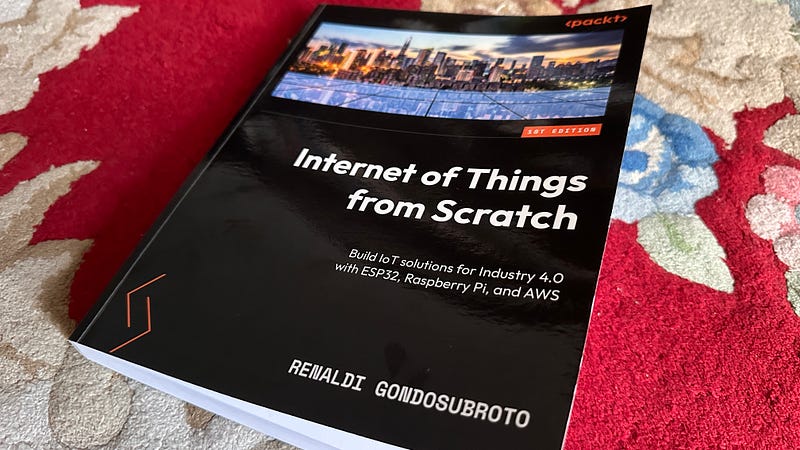
As someone keenly interested in technological advancements, I was naturally drawn to “Internet of Things From Scratch” by Renaldi Gondosubroto.

Far from being just another textbook, this work offers a clear and engaging introduction to the Internet of Things (IoT) for teachers, students, and hobbyists keen to explore this field through practical engagement.

Beyond the Surface

The title may suggest introductory content, but this book is a valuable resource for novices and experienced developers alike.

It thoroughly explores the IoT ecosystem, introducing fundamental ideas before progressing to more complex topics.

Renaldi’s engaging and narrative style makes the potentially daunting subject matter accessible and enjoyable, reminiscent of learning from an experienced guide.

Emphasis on Application

Practical and hands-on type of book.

What struck me most was the book’s focus on real-world usage.

The blend of theory and hands-on coding examples encourages a proactive learning approach, allowing readers to apply what they learn effectively.

This method clarifies the complexities of IoT, enabling readers to apply their knowledge practically — an approach I firmly believe in for solid learning.

A Tool for Everyone

This book is an excellent resource for educators, offering a structured way to introduce IoT concepts to students.

Learners will appreciate the clear and insightful guidance, and enthusiasts will find a wealth of information and practical tips to deepen their engagement with the field.

Welcoming Readers to the IoT World

Includes software coding.

The book succeeds in demystifying IoT, encouraging readers to explore and innovate.

Renaldi doesn’t merely share knowledge; he motivates active participation in the IoT domain, preparing readers to make substantive contributions.

Final Reflections

Internet of Things From Scratch” is more than just educational material; it’s an inspirational guide and a portal to technological advancement.

It provides direction, insight, and motivation for anyone determined to excel in IoT.

I highly recommend it and look forward to referencing it in my ongoing engagement with IoT.

Essential Insights for IoT Enthusiasts

Immerse yourself in an in-depth journey through IoT, advancing from basic concepts to intricate implementations.

Learn actively with practical exercises that bridge theory and application.

Access a versatile educational tool suitable for various audiences, from educators to hobbyists.

Navigate through complex information with the book’s organized, systematic approach.

Join the IoT community, equipped with the comprehensive understanding and skills acquired from this informative book.

Final Assessment

Internet of Things From Scratch” is an essential read for those eager to thoroughly explore IoT.

It offers a solid foundation as well as profound insights through applied learning, aiming not just to inform but to inspire and empower its readers.

This book is a vital addition to any tech enthusiast’s library.


Get this “Internet of Things From Scratch” book from Amazon.


https://mazlanabbas.com/subscribehttps://mazlanabbas.com/subscribe

From Analog Whispers to Digital Roars (A Poem)

A Poem

Mobile Phone Evolution

From analog to digital era

In the whispered hush of history’s page,

I’ve journeyed through the mobile age,

From the analog calls of yesteryear,

To digital voices crystal clear.

My first embrace, a tender touch,

With signals weak, yet meant so much.

The 1G era, a humble start,

Carried conversations, heart to heart.

Then 2G came, a digital dawn,

Text messages across the lawn.

A leap to clarity, a step to bind,

Voices and texts intertwined.

Through GSM’s embrace we found,

A world connected, profound.

With each small beep and gentle ring,

More closely did our hearts cling.

But evolution did not pause or wait,

3G arrived, opening the gate.

To data speeds never seen before,

Internet, email, and so much more.

A leap into the world wide web,

In pockets rest, no need to ebb.

Smartphones emerged, a brilliant scene,

Touchscreens replaced the keys once keen.

Then 4G’s lightning struck the sky,

Streaming video on demand, oh my!

High definition on a small screen,

A visual feast, previously unseen.

Social media, apps galore,

The world shrunk, yet offered more.

Each moment captured, shared, and lived,

The power of connection, truly vivid.

And now we stand at 5G’s door,

Wondering what it has in store.

Faster than our wildest dreams,

A stream of endless data beams.

Foldable screens, a novel sight,

Technology’s never-ending flight.

From bulky bricks to sleek designs,

Each era’s phone, a sign of times.

As I reflect on this journey vast,

I marvel at the shadows cast.

By each generation, each leap and bound,

In this mobile world, we are profound.

For though the tech will age and fade,

The memories and connections stay.

Through every text, call, and shared scene,

We weave the fabric of a human dream.

So here’s to the phones in our hands,

Links in an ever-changing land.

From analog to the 5G sphere,

I cherish every connection, every year.

How Smart City Solutions Elevate Living and Cut Costs

City Life, Upgraded

Smarter Cities, Leaner Budgets

“Smart city solutions aren’t just the glitter of modern living; they’re the gears of efficiency, fine-tuning the rhythm of urban life while playing a symphony of savings and sustainability for us all to enjoy.”

Smart Cities solutions make life a breeze for city dwellers. Photo from Unsplash.

[Note: Click here to have FREE access to member-only story]

We often rave about how these Smart Cities solutions make life a breeze for city dwellers, but hey, there’s another side to the coin.

These tech-savvy innovations aren’t just about jazzing up our urban experience; they’re also about trimming the fat off city budgets and revving up efficiency.

Let’s unravel this together.

1 — Smart Energy Management Systems

Imagine the city as a giant organism, and these systems are like its brain, making sure it doesn’t waste any precious energy.

By hooking up IoT devices across the urban landscape — think public buildings, streetlights, you name it — these systems keep a watchful eye on energy use.

It’s midnight, and the streets are empty.

Does every streetlight need to be on full blast?

Of course not!

That’s where smart energy management kicks in, dimming those lights and saving a ton of power (and cash) in the process.

Plus, this isn’t just about cutting costs; it’s about extending the life of our city’s infrastructure, which means fewer bucks spent on maintenance and replacements down the line.

2 — Intelligent Transportation Systems (ITS)

If you’ve ever been stuck in traffic, you know it’s no picnic.

But here’s where ITS comes to the rescue, using data and tech to smooth out those traffic snarls and make public transit a slick operation.

With real-time updates and some smart algorithms, these systems can tweak traffic signals and plan bus routes so efficiently that it makes the daily commute less of a headache for everyone.

Fewer traffic jams mean less pollution and wear-and-tear on our roads, which translates to saving money on road upkeep and healthcare costs down the road.

Plus, who doesn’t love getting home faster at the end of the day?

3 — Smart Water Management

Water, water everywhere, but not a drop to waste.

By deploying sensors and smart meters, cities can keep tabs on every drop, spotting leaks and predicting pipe troubles before they turn into costly catastrophes.

It’s like having a crystal ball for your city’s waterworks, ensuring we conserve water (a resource that’s getting pricier by the minute) and dodge the expenses tied to leaks and emergency fixes.

Efficient water use also means our urban centers are more resilient and sustainable, especially when facing droughts or other water woes.

4 — Waste Management Optimization

Ever notice how some trash bins are overflowing while others are barely used?

Smart waste management uses sensors to figure out which bins really need a pick-up, optimizing the whole collection shebang.

This means garbage trucks aren’t just roaming the streets on a set schedule; they’re hitting the spots that genuinely need attention.

The result?

Cities can cut back on fuel costs, vehicle wear-and-tear, and even the number of trips needed, all while keeping our streets cleaner and greener.

Plus, better recycling and less landfill use? That’s a win for the planet and our wallets.

5 — Digital Public Services

In an era where you can do almost anything from your smartphone, why should interacting with city services be any different?

Moving permits, bill payments, and feedback online not only makes life easier for folks like you and me but also means city staff can focus on the big stuff instead of drowning in paperwork.

This digital leap can lead to nimbler public service, quicker fixes, and happier citizens, all while saving the city some serious cash in reduced operational costs.


Smart Cities Secret Sauce

So there you have it — smart city solutions are the secret sauce for making urban life better, not just for us city slickers but also for the folks holding the city’s purse strings.

By investing in these technologies, cities aren’t just splurging on fancy gadgets; they’re making savvy choices that will save money, boost efficiency, and make our urban spaces more livable for everyone.

And who knows?

The next time you marvel at a smoothly running public transit system or enjoy a well-lit park at night, remember there’s a whole lot of smart tech working its magic behind the scenes, making our cities better and our lives a bit easier.


Read more stories about Smart Cities:

How Chief Smart City Officers Transform Urban Landscapes

What Slows Down the Smart Cities Implementations in Malaysia?

MSCA — The Answer to Smart Cities in Malaysia?

Maximize Your Data Security with On-Premise Favoriot IoT Platform!

New Arrival from Favoriot

No annual subscription — Lifetime license!

Why settle for less when you can have the best in IoT technology right at your premises?

Contact us or schedule an appointment.

[Note: Click here to have FREE access to this member-only story]

Secure your enterprise’s data by keeping it on-site. With our on-premise Favoriot IoT platform, you maintain full control over your data, ensuring unparalleled security and privacy.

Contact us or schedule an appointment and let Favoriot help you in your IoT journey!

Why Malaysia Takes Almost 10 Years To Gain Traction in IoT

When New Technology Emerged

There must be a leading factor missing — this is what I found out.

Image created using Canva by Author

[Note: Click here to have FREE access to this member-only story]

Here I am, lounging in my office chair, a cup of my favorite tea in hand, staring out into the vastness of my thoughts.

It’s one of those moments where the world seems to slow down, and you’re left with nothing but your reflections.

Today, my mind wanders to a question that’s been bugging me for years: Why is the adoption of technology, specifically the Internet of Things (IoT), taking so much longer than expected?

I remember when Kevin Ashton coined the term IoT back in 1999.

It was a concept that promised to revolutionize the way we interact with the world around us.

Fast forward to 2014, Malaysia launched its National IoT Strategic Framework, and the buzz was electric. Yet, the excitement quickly fizzled out, and I couldn’t wrap my head around why.

Then came 2017, the year we launched our IoT platform at Favoriot.

We were pumped, ready to change the game, only to be met with a lukewarm response.

It was disheartening.

I spent countless nights looking at the stats, trying to figure out where we went wrong. It wasn’t until I hit the streets, talking to people, that it clicked.

The issue wasn’t with the technology itself but with the understanding of it.

Most people didn’t even grasp what IoT was, let alone why it was necessary. And if they were clueless about the ‘what’ and ‘why,’ the ‘how’ was even more of a mystery.

That’s when it hit me — the lukewarm response to our platform wasn’t about its functionality but about the lack of knowledge and understanding.

Fast forward a few more years, and the landscape started to change.

We realized that if we wanted to jumpstart IoT adoption, we needed to go back to the basics.

We needed to build awareness and nurture talent through IoT training.

It was a slow process, but with the push towards Industry 4.0 and AI, IoT began to gain prominence.

The need to collect data was undeniable, and how could you do that without IoT?

Image from Pixabay

Now, as I sit here in 2024, sipping my tea and looking over the latest stats, I can’t help but feel a sense of accomplishment.

The journey hasn’t been easy, but the growing IoT awareness and adoption is a testament to our efforts.

It’s a reminder that sometimes, to move forward, you have to take a step back and educate.

As I muse over this thought, I realize that the key to technology adoption isn’t just about creating cutting-edge solutions but also about bridging the gap in understanding.

And as the world slowly but surely embraces IoT, I can’t help but think, “We’re finally getting there.

Image from Pixabay

IoT Trainings Offered by Favoriot:

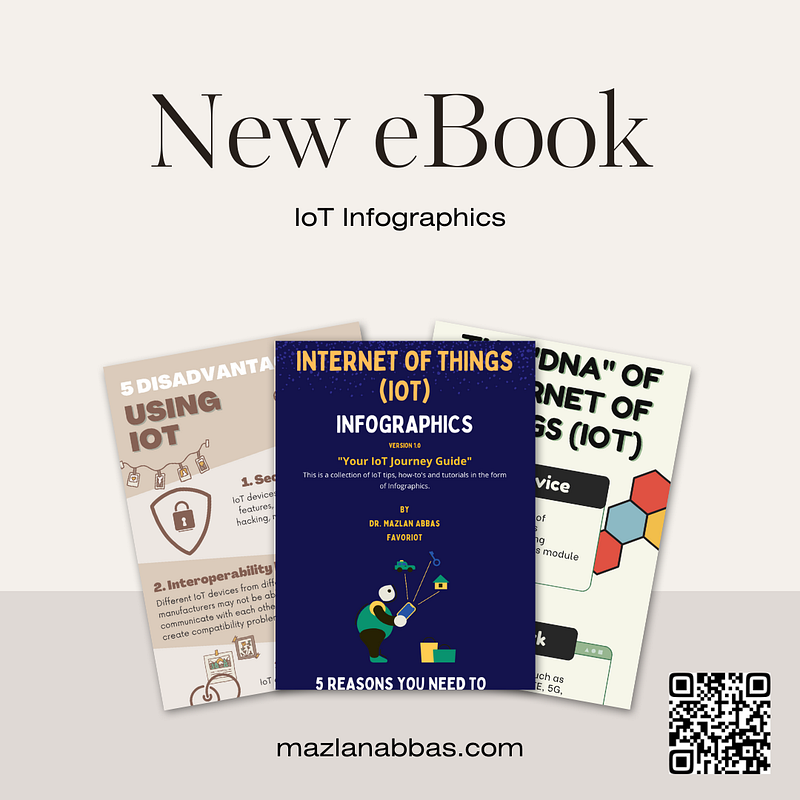
IoT Infographics

Why You Need to Read This eBook (Infographics)

IoT Infographics — FREE to Download

[Note: Click here to have a FREE access to this member-only story]

With IoT devices and solutions becoming increasingly prevalent, professionals and enthusiasts must stay up-to-date with the latest developments and trends.

This e-book focuses on IoT infographics and provides a comprehensive overview of various aspects of IoT, from its benefits to its challenges and the skills required to be an IoT expert to the steps involved in building an IoT business.

Whether you’re a beginner or an experienced IoT professional, this e-book will provide valuable insights into the world of IoT and help you stay ahead of the curve.

The contents are:

  1. IoT Infographics — 5 Reasons You Need to Learn IoT
  2. The DNA of IoT
  3. 5 Disadvantages of Using IoT
  4. 8 Essential Skills in IoT
  5. 10 Best Practices for Teaching IoT in the Universities
  6. 7 Steps to Build an IoT Business
  7. 7 Marketing Strategies for Your IoT Products and Solutions
  8. 8 Steps to Become an IoT System Integrator
  9. 5 Steps to Setup a Centre of Excellence for IoT
  10. 10 Benefits of Using an IoT Platform
  11. 4 Reasons to Choose FAVORIOT
  12. 10 Benefits of IoT Analytic
  13. 5 Reasons You Should Use Arduino in Your IoT Projects
  14. 5 Benefits Why You Should Use Raspberry Pi in Your IoT Projects
  15. 5 Reasons Why node-RED are Important in IoT Projects
  16. 8 Reasons Why IoT Platforms are Important for IoT Developers
  17. 7 Reasons to Outsource IoT Projects
  18. 7 Reasons to Do In-House Development
  19. 8 Benefits of Toxic Gas Monitoring Using IoT
  20. 7 Ways to Build Smart Township Using IoT
  21. 8 Reasons Why Smart Cities Failed
  22. 11 Biggest Mistakes in Implementing IoT

Download here.

https://mazlanabbas.gumroad.com/l/iotinfographics

How Favoriot Caters to Different IoT Developer Needs

The flexibility of the Favoriot Subscription Plan can cater to different user needs.

Image created using Canva by Author

[Note: Click here to have a FREE access to this member-only story]

Comparing different IoT development plans using the Favoriot platform and determining which segment of users each plan may benefit.

When evaluating articles that compare IoT development plans, consider the following aspects:

  1. Features and Limitations: Look at what each plan offers regarding data points, device management, API calls, and any other tools or services crucial for IoT development. Limitations like data storage, number of devices, and rate limits are also significant. Different user segments have varying needs regarding these features based on the complexity and scale of their IoT projects.
  2. Pricing and Scalability: Consider how the pricing of each plan aligns with the budget and scalability requirements of different users. Startups or individual developers may prefer low-cost or free plans with the option to scale up. At the same time, larger enterprises or advanced projects might need more comprehensive features with higher-priced plans.
  3. Support and Community Access: Some plans may offer enhanced support, including direct access to technical support, forums, or community resources. Beginners might value plans that provide more guidance and support, whereas experienced developers could prioritize advanced features over support.
  4. Customization and Integration Capabilities: Advanced users or enterprises may need plans that offer greater customization options and integrations with other tools or platforms. In contrast, beginners or hobbyists might be satisfied with more basic functionality.

Based on these considerations, here’s how you might assess who benefits from different plans:

  • Free Plan: Ideal for individuals who would like to check out the features of Favoriot or students doing small IoT projects.
  • Beginner Plan: Ideal for individual hobbyists, students, or small startups just getting started with IoT development. These users typically need essential features, lower costs, and more supportive resources to learn and experiment.
  • Developer Plan: Suited for developers with experience in IoT projects that require more advanced features than what’s offered in beginner plans but are not yet at the level of needing enterprise-grade solutions. These users look for a balance between functionality, scalability, and cost.
  • On-Premise Plan: Designed for large-scale industrial applications, advanced projects, or businesses needing extensive customization, integration capabilities, and the highest levels of support and security. These plans target users with complex needs and the budget to match.

To specifically analyze which segment of users will benefit from the “Free,” “Beginner,” and “Developer“ plans for IoT development using the Favoriot platform, you would need to examine the articles’ details on features, limitations, support levels, and pricing of each plan.

This analysis will help match each plan’s offerings to the appropriate user segment’s needs and expectations.


How to Compare:


Contact Favoriot to schedule an appointment or for further details.


“Favoriot isn’t just a platform; it’s a bridge to the future. Embark on a journey where your IoT projects leap from imagination to impact, creating solutions that speak the language of tomorrow.”

Why You Should Read this “IoT Notes” eBook

Download the FREE eBook “IoT Notes.”

Why You Must Read This Book

IoT Notes” is an indispensable guide for anyone eager to grasp the essence of the Internet of Things (IoT) and its escalating role in shaping our modern world, especially in the context of the Fourth Industrial Revolution.

This enlightening book provides foundational knowledge for beginners and in-depth insights for those looking to deepen their understanding.

It is tailored to demystify IoT systems’ intricate components and operations, making the subject approachable to a broad audience, regardless of their technical expertise.

The book delves into the transformative power of IoT in the backdrop of the Fourth Industrial Revolution, offering a nuanced exploration of how it differs from and enhances Industry 4.0.

It extends beyond theoretical concepts, offers practical guidance on implementing IoT solutions, and explores the significant impact of IoT technologies in combating global challenges like the pandemic.

Additionally, it provides a forward-looking perspective on the future of IoT, covering essential topics from the technicalities of protocols and architectures to practical applications in various industries.

With a promise of continually updated content for subscribers, “IoT Notes” is a comprehensive compilation resource essential for lecturers, students, business leaders, tech enthusiasts, and anyone intrigued by the digital evolution of our society.

https://mazlanabbas.gumroad.com/l/iotnotes


Other IoT Books for Download

https://mazlanabbas.gumroad.com/l/iotnoteshttps://mazlanabbas.gumroad.com/l/iotnotes


Further information about the Author

Remember to Subscribe to receive email updates on every post I publish.

Maximize ROI in IoT: How Favoriot’s Developer Plan Offers Cost-Effective Solutions for Every…

The image was created using Midjourney by the Author of Startup Journey

One of the main challenges in deploying IoT (Internet of Things) solutions is the time required for development without proper tools.

Given the intricacies of managing IoT devices and applications, this complexity is compounded for System Integrators who manage multiple customer projects.

The Favoriot Developer Plan aims to address these challenges by facilitating more effortless and more manageable development and deployment of IoT projects.

Businesses today are increasingly looking for efficient ways to monitor and manage assets across various domains such as warehouses, logistics, buildings, factories, and agriculture.

The Favoriot Developer Plan offers IoT solution providers an opportunity to meet these needs. This plan mainly benefits developers creating customized IoT solutions for multiple clients.

Key Features of the Favoriot Developer Plan:

  1. Simplifying IoT Development: The Developer Plan is ideal for creating straightforward, powerful IoT dashboards. It supports up to 100,000 data points daily, which is suitable for most applications that do not require extensive data processing.
  2. Customizable Dashboards: The plan allows for the creation of diverse dashboard views tailored to each client’s specific monitoring requirements, whether it’s for warehouses, logistics, or agricultural health monitoring.
  3. Cost-Effective and Profitable: With an annual subscription of RM 1.2K and the potential to service multiple clients, the plan offers significant ROI potential. This pricing model is especially attractive to small and medium-sized enterprises entering the IoT space.
  4. On-Premise Model for Extensive Data Handling: For solutions requiring more comprehensive data management, Favoriot also offers an on-premise model supporting unlimited data points, which is ideal for complex IoT solutions.
  5. Streamlined Development and Deployment: The Developer Plan simplifies the entire IoT solution development process, allowing a focus on innovation rather than technical complexities.

Consider a practical example of how the Favoriot Developer Plan can effectively be utilized in a real-world IoT solution scenario.

Scenario: Smart Warehouse Monitoring

Background: A logistics company wants to optimize its warehouse operations. They need a real-time system to monitor temperature, humidity, and inventory levels to ensure the quality of stored goods and efficient inventory management.

How the Favoriot Developer Plan is Utilized:

Custom Dashboard Creation:

  • Using Favoriot’s customizable dashboards, you develop a user-friendly interface that displays real-time warehouse conditions and inventory-level data.
  • Separate widgets or sections are created for temperature, humidity, and inventory data.

Data Point Integration:

  • You integrate IoT sensors throughout the warehouse that measure temperature and humidity and connect them to the Favoriot platform.
  • RFID tags attached to inventory items send data to the system, allowing for real-time tracking of stock levels.

Alert System:

  • You set up alert notifications within the Favoriot system. For example, the system immediately alerts the warehouse manager if the temperature or humidity exceeds the set thresholds.
  • Similarly, alerts for low inventory levels ensure timely replenishment.

Data Handling:

  • The system handles up to 100,000 data points daily, covering the extensive data generated by the warehouse sensors.
  • This ensures comprehensive monitoring without the need for extensive data processing resources.

Cost-Effectiveness:

  • The low annual subscription cost of the Favoriot Developer Plan makes the solution affordable for the logistics company.
  • The return on investment is realized through improved efficiency and reduced losses due to spoilage or inventory mismanagement.

Scalability:

  • As the logistics company grows, the Favoriot system can be scaled to accommodate more data points or additional warehouses.
  • The on-premise model can be adopted for more complex operations or when data handling needs exceed the standard plan.

Ease of Deployment:

  • The straightforward setup and deployment process facilitated by the Favoriot Developer Plan allows for quick implementation and minimal disruption to warehouse operations.

In this scenario, the Favoriot Developer Plan enables the logistics company to achieve its goal of smart warehouse monitoring.

The plan’s customizable dashboards, efficient data handling, and cost-effective subscription model make it an ideal solution for the company’s IoT needs.

As a developer, you can replicate this model across multiple clients with varying requirements, demonstrating the versatility and business potential of the Favoriot Developer Plan.


The Favoriot Developer Plan is a potent tool for IoT solution providers, offering high-quality, customizable solutions for a diverse client base. Its affordability, customization potential, and scalability make it an excellent choice for businesses venturing into IoT. For those interested, it’s advisable to subscribe to the developer plan and explore the accompanying video for further insights.

For detailed technical information and the latest updates, refer to Favoriot’s official resources.


Remember to Subscribe to receive email updates on every post I publish.

You can also follow my Medium Publications Aspiring Writer’s Journey, Influencer’s Journey, Startup Survival Journey, and IoT World.

I have also published several eBooks such as IoT Notes, IoT: Beginner’s Guide, Startup Survival, Mastering IoT with Favoriot, Your IoT Journey, and IoT Infographics — Your IoT Journey Guide.