About Favoriot — Part 15: Experience in Giving Lectures and Pitching

ABOUT FAVORIOT SERIES
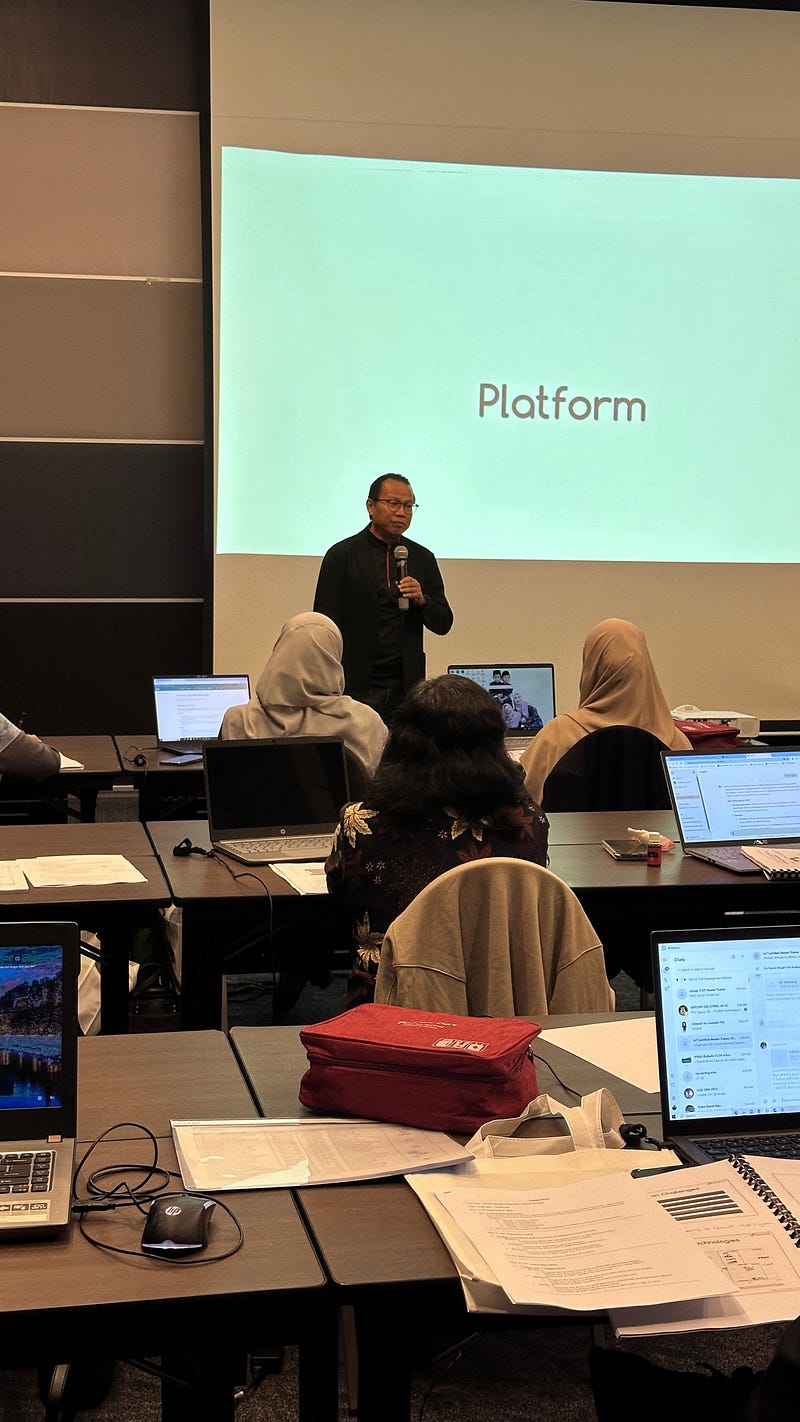
Public speaking has become a career for me throughout my life. Since I started working, I’ve often stood in front of an audience, speaking and sharing knowledge or ideas.

However, I realize that not everyone is comfortable with this. Many people view it as a nightmare—standing in front of a large group, delivering something they might already know or, more dauntingly, something new that requires their acceptance.

My journey into public speaking began when I became a lecturer. Every day, I had to stand before students, delivering lectures between one and two hours.

At first, I was pretty nervous. “What if the students don’t understand what I’m saying?” I often asked myself.

But over time, lecturing became a routine. I started learning to understand my students, grasping their learning styles, and adjusting how I delivered information to make it more effective.

Being a lecturer taught me a lot about communication.

I needed to ensure that students didn’t just listen but also understood and applied what they learned. I found that how I presented information was crucial in keeping the students engaged. “Am I too serious? Or should I be more relaxed?” I would often ask myself after each class.
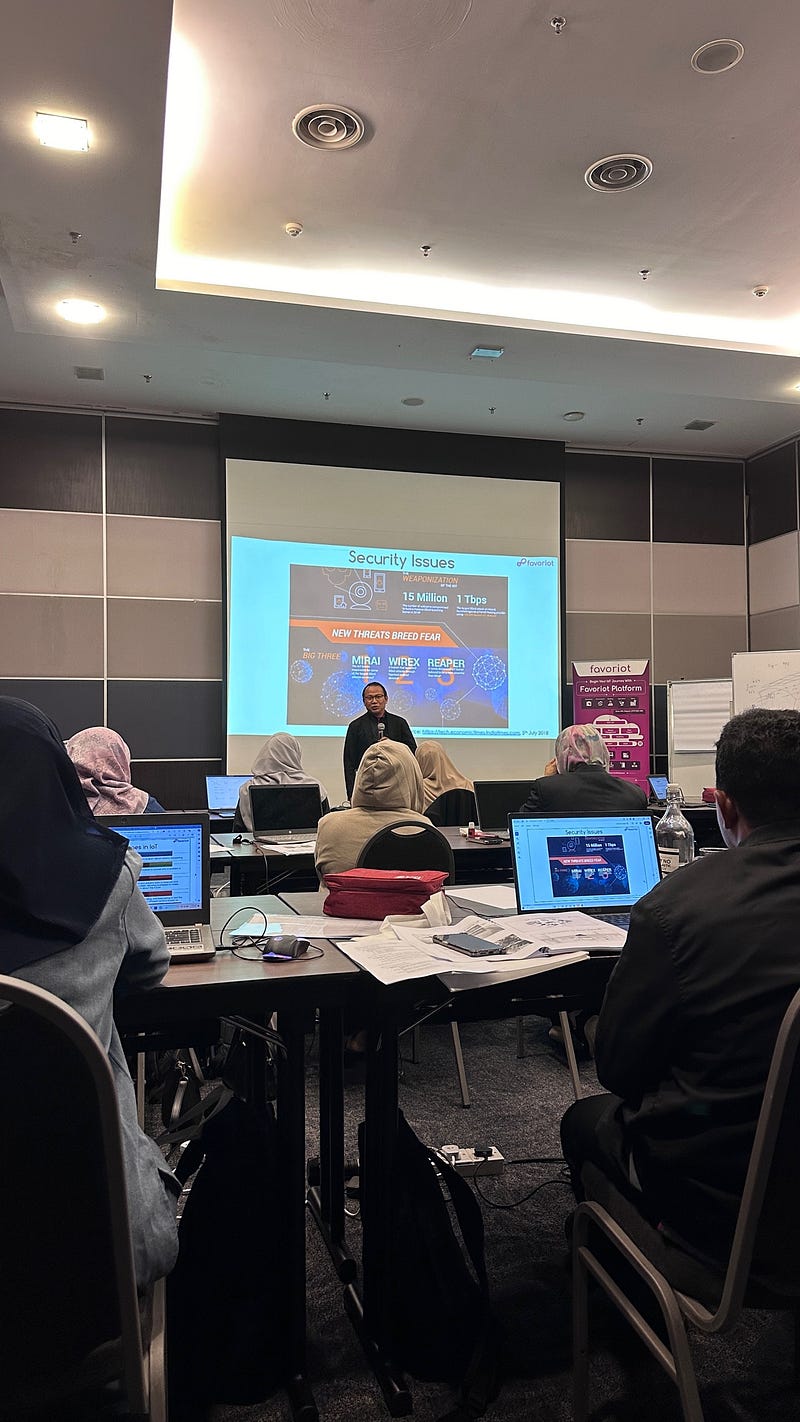
After many years in academia, I received invitations to speak at conferences and seminars. This was a new level for me. Unlike in the classroom, where I was facing students familiar with me, conferences and seminars introduced me to a diverse audience – from industry experts to beginners who were just getting acquainted with my field.

Every time I was invited, I was given different amounts of time, sometimes up to 40 minutes, sometimes just 15 minutes. I had to learn to adapt quickly.

How can I convey important information in this short amount of time?” I often thought before each session.

This was challenging, but it also taught me to be more focused and concise in my delivery.

I learned that in conferences, starting with something that grabs the audience’s attention is crucial. An anecdote, a provocative question, or even a surprising fact can be a good opener.

This made me realize that how we start a speech can determine how the audience will pay attention throughout the session.

However, one of the biggest challenges in public speaking came when I began receiving invitations to speak at workshops.
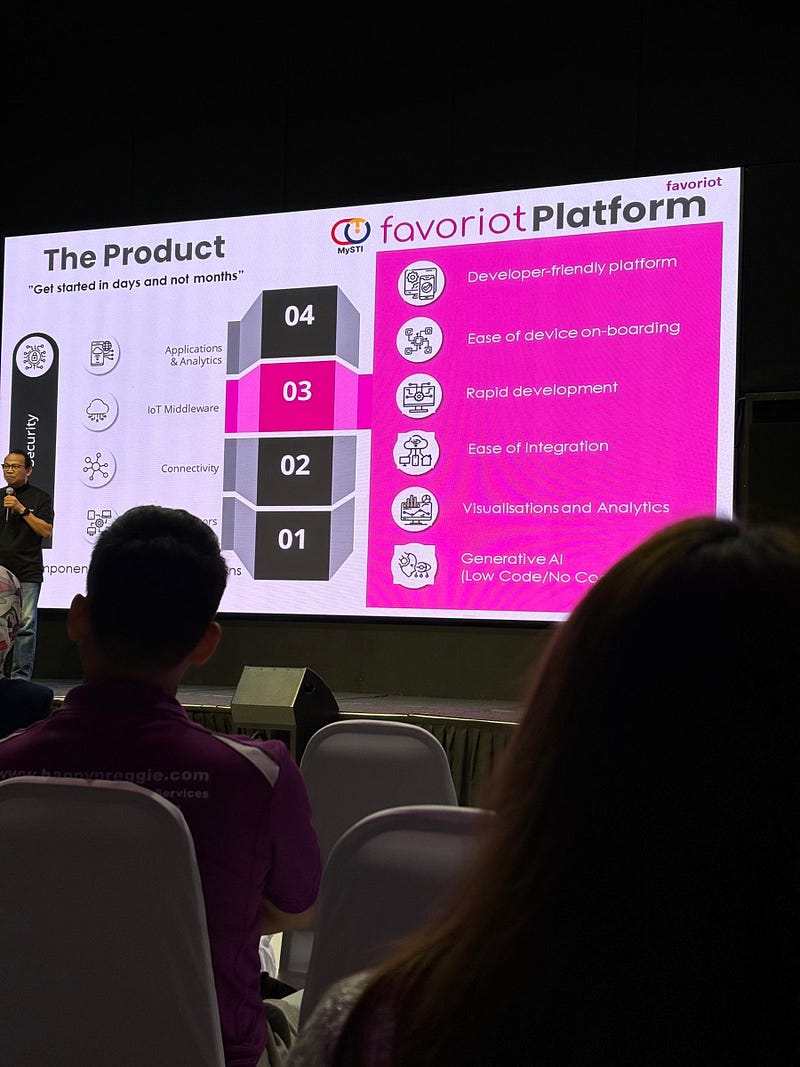
Here, the time allocated for me to speak was much longer—sometimes up to one or two days—and I spoke alone. Imagine, I had to ensure the audience stayed interested the entire time.

How can I keep their attention?” This question often swirled in my mind.

I found that interaction is key in workshops. Unlike lectures or seminars, where the delivery is more one-way, workshops require more two-way discussions.

I started involving the audience in discussions, allowing them to share their opinions and experiences. This helped maintain their focus and gave me new perspectives on the issues being discussed.

Every workshop is an opportunity for me to learn something new,” I often reminded myself.

After transitioning into the corporate and technology world, my role in public speaking also changed. I was no longer just sharing knowledge but also selling products and ideas. “Product Talk” became a routine in our marketing efforts at Favoriot.

Here, I had to present the benefits of our products in a convincing but moderate manner.

Another big challenge was, “How can I make the audience believe in our products without making it feel like I’m just trying to sell them? “

I learned that in Product Talks, it’s essential to focus on how our products can solve the problems faced by the audience. I didn’t just talk about the product’s features but more about the benefits they could gain.

I also started using success stories as examples because I found them more accessible and convincing.

Recently, I’ve started transitioning to pitching to investors, which is an even more challenging level.

Unlike lectures, seminars, or Product Talks, pitching requires me to present all the important information in a very limited time—sometimes only three to five minutes.

How can I include all the important points in such a short time?” I often ask myself before each pitching session.

I found that clarity and confidence are key in pitching.

I needed to ensure that the investors understood what I was trying to convey, and I had to do it confidently.

I also learned that the slides must be simple but packed with information. There’s no room for unimportant details. “Every slide needs to have a clear purpose,” this is the principle I hold onto.

My experience in various types of public speaking has taught me that each situation requires a different approach.

The duration, type of audience, purpose of the speech, and method of delivery all play a role in determining its effectiveness. I also realized that we often criticize seminar presenters or those giving a pitch—their confusing style, boring slides, or unengaging delivery.

But when it’s our turn to stand in front, sometimes we make the same mistakes.

I learned that the most important things in public speaking are to speak confidently, convey information in a way that’s easy to understand, use an approach that engages the audience, and ensure that the slides used are not boring.

I also learned that we must constantly strive to improve because every public speaking session allows us to learn and grow.

What about you?” I often ask myself after each session.

Public speaking is a skill that can always be improved. The more we do it, the more confident we become.

Ultimately, I realize that public speaking isn’t just about what we say but how we make the audience feel it.

If we can deliver our message in a way that makes the audience feel connected, then we have succeeded in public speaking.

And that’s something I always strive to achieve.

The Ups and Downs of Presenting at Conferences That All of Us Have Experienced

The image was created using Midjourney by the Author of Startup Journey

The world of conferences and seminars has shaped my professional life.

It’s been thrilling, filled with memorable moments and valuable lessons.

There are days full of excitement and engagement, but there are also times when the audience is lukewarm and bland.

The Electric Atmosphere of the Stage

Imagine stepping onto a stage, the spotlight hitting you, and a sea of eager faces awaiting your words.

That’s the world I’ve lived in.

There’s something indescribably electrifying about presenting your research, a project that’s consumed years of your life.

As a regular speaker and moderator at technical conferences, including those by IEEE, I’ve experienced this rush firsthand.

Each time I present, I feel a potent mix of excitement and responsibility. It’s not just about sharing my work; it’s about contributing to a more extensive conversation in my field.

There’s a unique adrenaline in engaging with an audience, fielding questions, and sparking discussions.

The Curious Case of the Disappearing Audience

However, it’s not always a bed of roses.

I’ve observed a curious phenomenon, particularly at international conferences.

Many fellow speakers, after their sessions, seem to vanish. Drawn, perhaps, by the allure of a new city, they skip other sessions for sightseeing or shopping.

This trend hits hard when you’re scheduled to present on the last day.

You’ve poured everything into your research, only to be greeted by a half-empty room.

It’s a disheartening sight and can take the wind out of the sails of even the most passionate speakers.

The Digital Revolution in Conferencing

Then came COVID-19, a game-changer for the conference world. Suddenly, we were thrust into the era of virtual meetings.

Initially, it seemed like a blessing — no travel hassles, lower costs, and the chance to connect with a global audience from our living rooms.

But the cracks soon appeared.

Presenting to a screen full of tiny icons feels vastly different.

How do you gauge engagement or read the room when all you see are muted profiles?

The lack of immediate feedback, the absence of those non-verbal cues we rely on, leaves a void.

A significant casualty of this digital shift has been networking.

The spontaneous conversations over coffee, the exchange of ideas over lunch, and those serendipitous encounters that lead to collaborations are all lost in the transition to online formats.

Embracing the New Normal

Despite these challenges, virtual conferences have been a lifeline.

They’ve kept the spirit of knowledge exchange alive in these unprecedented times.

But as we edge out of the pandemic’s shadow, there’s a collective longing to return to in-person interactions.

The online world offers convenience and reach but can’t replicate the experience of physically sharing a space with like-minded individuals.

However, the energy and the dynamics of face-to-face interactions are irreplaceable.

Reflecting on the Journey

Reflecting on my journey through various conferences and seminars, I realize how much these experiences have enriched me.

Yes, the landscape has changed dramatically, but the essence remains the same — exchanging knowledge and creating connections.

Whether online or offline, the world of conferences continues to be a vibrant, dynamic space.

It’s where ideas are shared, relationships are forged, and innovations are sparked. As we adapt to new modes and overcome challenges, this spirit of exploration and excellence continues to drive us.

In Conclusion

We’ve seen the highs, navigated the lows, and adapted to the digital transformation.

But through it all, the core purpose remains unchanged.

It’s about sharing knowledge, connecting with others, and continuously pushing the boundaries of our fields.

With all its twists and turns, this journey continues to be an exhilarating and enriching part of my professional life.


You can also check out my personal Blog here or the latest eBooks I have recently published — here.

How My Presentation Survived When My Powerpoint Slides Get Corrupted

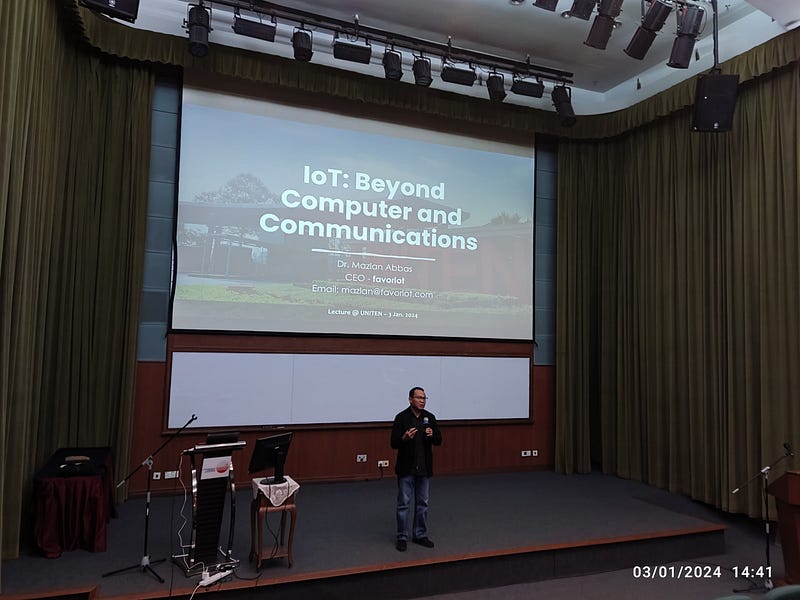
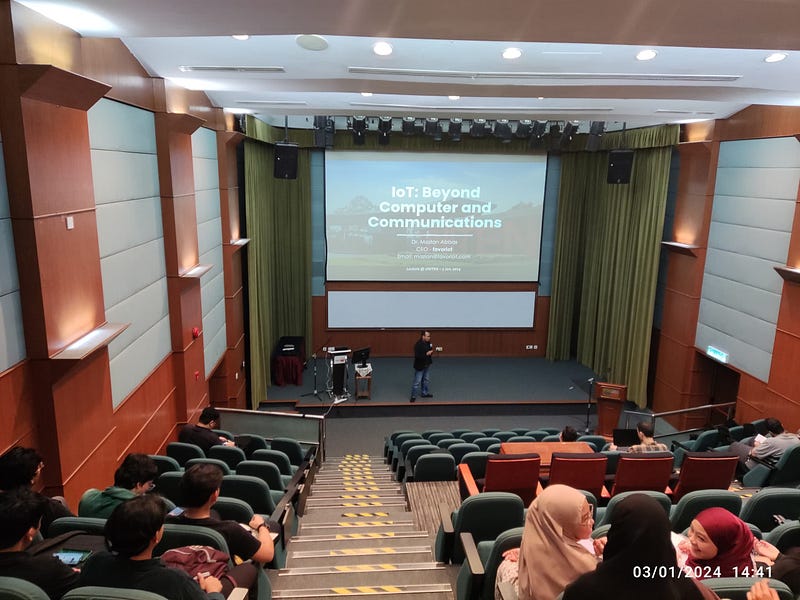
The Author was standing in front of the lecture theatre.

Imagine spending days meticulously crafting a presentation, only to face a presenter’s worst nightmare: corrupted slides.

This was the scenario I encountered before a recent lecture at a local University (UNITEN).

The Discovery

The chaos unfolded just as I was setting up for the big day.

It was the third day of 2024!

My laptop was hooked up, the projector was ready, and I was about to dazzle the audience with my well-prepared slides.

But fate had other plans.

To my horror, I discovered several of my slides were blank, devoid of the crucial information I had painstakingly compiled.

The timing couldn’t have been worse!

The Warning Ignored

Reflecting on this mishap, I recalled a critical moment from the previous day.

As I was packing up, my computer, running PowerPoint, flashed a warning about a problem with the file’s save process.

In my haste, I dismissed this. The issue stemmed from my decision to rename the slides folder.

Unaware of the impending disaster, I saved the file under a different name and thought nothing more of it.

My fault!

This is the lesson for being too complacent and overconfident!

I have previously made hundreds of presentations, and everything ran smoothly… until that day!

The Improvised Solution

There I was, in front of an eager audience, grappling with the reality of my situation.

Time was ticking, and I needed a quick fix. Scrambling through my digital archives, I found old slides from past presentations.

It wasn’t ideal, but it was a start.

The process was cumbersome, having to merge and present two separate files.

The seamless flow I had envisioned was now a patchwork of old and new, with some of the freshly prepared slides tragically lost to corruption.

The Silver Lining

Despite these unexpected events, the lecture was a partial disaster.

I navigated through the improvised presentation, covering as much material as possible.

Admittedly, key points needed to be addressed due to the missing slides.

However, the experience became an impromptu lesson in adaptability and problem-solving – valuable skills in any professional setting.

Reflections and Lessons Learned

As I reflect on this incident, backing up work and heeding software warnings stands out starkly.

In the world of digital presentations, such mishaps are not uncommon.

The key takeaway for me, and one I hope to impart to others, is the significance of being prepared for the unexpected. Always have a backup plan, and maybe a backup for the backup!

The Author managed to recover back the old slides and continue with the presentation.

This experience, though fraught with challenges, was a memorable start to my lecturing endeavors in 2024.

It served as a reminder that the best lessons are sometimes learned outside the confines of meticulously prepared slides.

I must not be complacent and overconfident.


You can also check out my personal Blog here or the latest eBooks I have recently published — here.