19 Signs Your Startup is More Successful Than You Think

STARTUP STORIES

Stop being too hard on yourself; your startup journey is on the right track!

Photo by Mario Gogh on Unsplash

This article is a chance to pause and reflect. Take a deep breath and allow yourself a moment to appreciate your progress and what you’ve achieved in your startup so far.

Here are 19 indicators, some clear and others more subtle, that suggest you’re doing better than you might think:

  1. You frequently second-guess decisions. 
    Doubt isn’t a sign of weakness; it indicates you’re open to growth and self-improvement. Reevaluating decisions means you’re thoughtful and forward-thinking.
  2. You’ve secured some funding.
    Whether it’s from savings, angel investors, or a venture capital round, securing funding means someone believes in your vision. Celebrate that vote of confidence.
  3. Your team is growing.
    Even if it’s just hiring your first employee or a co-founder joining you, growth in your team is a sure sign of startup success.
  4. You’ve evolved from your original idea.
    Pivoting doesn’t mean failure; it shows you’re learning from interactions with the market and adjusting accordingly. That’s innovation at work.
  5. You’ve experienced failure.
    Each failure is a lesson that refines your business model. If you’ve failed but kept going, you’re in the resilient minority.
  6. You don’t worry about immediate shutdown.
    Having enough runway to plan beyond the next few months is a small luxury in the startup world. If you’re not in survival mode every day, you’re doing something right.
  7. You have loyal customers.
    Even if it’s just a handful of loyal customers who love what you do, their continued support is a sign you’re adding real value.
  8. You’ve received unsolicited customer feedback.
    Whether it’s praise or constructive criticism, feedback means customers care about your product enough to want to see it improve.
  9. You’ve declined opportunities.
    Saying no to wrong fits, whether potential clients, hires, or partnerships, means you’re focusing on what truly aligns with your mission.
  10. Your product has iterated several times.
    Each iteration means you’re closer to finding the best market fit. Continuous improvement is a cornerstone of successful startups.
  11. You understand your market better than when you started Insight into your market is invaluable.
    If you know your customer well, you’re leaps ahead of many startups.
  12. You’ve survived more than one “make-or-break” scenario.
    Getting through tough challenges means your startup has the resilience to face the ups and downs of the business world.
  13. You have a dedicated workspace.
    Having a specific place where your team can focus and collaborate is a sign of establishing a solid foundation.
  14. You’ve let go of what doesn’t work.
    Knowing when to cut losses is as important as knowing when to push forward. This ability to adapt is crucial for long-term success.
  15. You’re excited by challenges.
    Seeing challenges as opportunities rather than obstacles is a sign of a positive mindset, crucial for entrepreneurial success.
  16. You know how to manage stress
    Balancing the high pressures of startup life is no small feat. If you’ve developed coping mechanisms, you’re setting yourself up for sustained effort.
  17. You’re thinking about scaling.
    Planning for growth, even if it’s just preliminary, means looking towards the future with optimism.
  18. You’ve established a brand identity.
    Having a clear brand identity helps in making your startup memorable and recognizable. This is key in crowded markets.
  19. You’re still passionate.
    Continuing to have passion for your venture is perhaps the most telling sign that you’re on the right path. Many lose this spark, but if you’ve still got it, you’re more than on track.

You’re laying down the tracks for future success, so keep pushing forward and stay grounded in your own progress, not someone else’s.

Your journey is unique, and you’re doing better than you think!

Photo by Israel Andrade on Unsplash

This is the story of my Startup journey — Startup Survival.

The Fourth IoT Product — A Venture to Consumer Market

ENTREPRENEURSHIP STORIES

Consumer IoT is not an easy game — that’s what we discover.

Photo by Rami Al-zayat on Unsplash

Not a member? Click here to read the full story for free.

Each IoT product development journey is an odyssey filled with insights, challenges, and evolution. Today, I share the narrative of our fourth IoT venture, Dscover, and how it became a transformative segment of our IoT suite.

The Genesis of Dscover

The seeds for Dscover were sown amid the successful launch of our first IoT product, Raqib, in 2018. At this crossroads, feedback was not just a guide but a compass that pointed us toward innovation.

While Raqib was making strides, and as we progressed with Favorsense and the Favoriot IoT platform, there was a budding notion that it was time to chart a new path.

That’s when Dscover started to take shape.

Photo by Pathum Danthanarayana on Unsplash

Understanding the Underlying Need

With Raqib, we ventured into tracking solutions beyond the Bluetooth smartwatch and smartphone. Yet, it became clear that our users’ interests lay elsewhere.

They needed a different kind of tracking — one that provided safety and connectivity, especially while traveling. The market demanded a solution that prioritized security without compromising the freedom of the individual or group.

This was the crux that led to the ideation of Dscover.

Embracing Market Realities

Initially, our eyes were set on the bustling Travel and Tourism market. However, the onset of the pandemic in 2020 drastically altered the landscape and our strategies.

We had to pivot quickly, transforming Dscover into a tool for families and friends to stay connected despite global travel restrictions.

Photo by Felix Rostig on Unsplash

The Decision for an App-Centric Approach

Selecting a mobile application as the vessel for Dscover was strategic.

It was a nod to cost-effectiveness, leveraging existing smartphone technology, and aligning with the ease of deployment through app stores.

The aim was to create an unobtrusive yet powerful tool that users could integrate into their daily lives.

Tackling Go-to-Market Hurdles

The B2C model presented unique challenges, particularly in understanding and targeting user demographics through social media.

One stumbling block we encountered was the app’s initial name, “D’scover.” It proved problematic for searchability, leading us to the pivotal decision to rename it “Dscover.” (Note: Later, we observed that the spelling “Dscover” and how we pronounce it as “Discover” became a big misunderstanding in searching in the App store)

The initial B2B strategy targeted travel agencies and governments, but we widened our scope as the pandemic reshaped the world.

We even considered using Dscover for monitoring quarantined patients, an idea that, despite its potential, did not gain official traction.

Photo by Joan Gamell on Unsplash

Introspective Moments

This juncture compelled us to reflect — did we invest enough in marketing and sales for our existing products before venturing into another? It was a solemn reminder of the complexities inherent in product development within the IoT space.

Gleaning Lessons Along the Way

Adaptability Emerged as Key

The development of Dscover underscored the significance of market adaptability. The global changes of 2020 necessitated a shift from a travel-centric application to one that served families and friends, illustrating our ability to respond to macro-environmental shifts.

Valuing User Feedback

The feedback from our users was paramount. Their insights directly influenced the trajectory of Dscover, underscoring the need to align our product closely with the user’s desires and expectations.

Photo by Jay-Pee Peña 🇵🇭 on Unsplash

The Art of Naming

A name is more than a label; it’s the first touchpoint with the user. The transition to “Dscover” was a calculated move to facilitate ease of search and foster brand recall. It was a lesson in the subtleties of product naming and its impact on visibility and accessibility.

The Need for Continuous Evaluation

Before plunging into new product waters, a thorough assessment of our existing products’ presence in the market became an evident necessity. Such evaluations and robust marketing and sales strategies are the bedrock of successful product evolution.

Carrying Forward the Insights

These lessons from Dscover are part of our collective wisdom as we forge ahead. They act as a direction that guides our product development, ensuring that our creations resonate with the market’s pulse and enrich our users’ lives.

Reflecting on this journey, I am reminded that each step, whether forward or backward, is a learning opportunity.

Through these experiences, we chart a course for success, navigating the intricate waters of IoT development with a keener sense of direction and a more refined vision for the future.

The story of Dscover is more than a chapter in our history; it’s a catalyst that propels us towards innovative horizons, ever ready to adapt, grow, and excel.

The Art and Agony of Crafting eBooks

WRITER’S STORIES

Blank screen and cursor blinking — what do you do?

Photo by Adrian Swancar on Unsplash

Not a member? Click here to read the full story for free.

Have you ever felt the frustration of wanting to write but being unable to translate your thoughts into words? It’s as though the blank screen before you is mocking you with its emptiness while the cursor blinks away, reminding you of your creative stagnation.

In such moments, your mind is a whirlwind of conflicting ideas, and you find yourself struggling to put even a single coherent sentence together.

That’s been me more times than I can count.

Today, I want to share my journey of writing and creating eBooks on startups and the Internet of Things (IoT) — a path filled with as much inspiration as frustration.

Writing, they say, clarifies your thoughts.

I beg to differ sometimes; it often makes me want to smash my computer.

Photo by DANIEL BECERRA on Unsplash

Yes, I’m one of those who, despite having successfully published several pieces and stories on startups with technology, often finds the writing process nothing short of torturous.

Yet, here I am, continually drawn back to the keyboard, driven by the impact these writings might have.

Ernest Hemingway once described writing as sitting down at a typewriter and bleeding.

Trust me, it’s not as glamorous as Hollywood makes it out to be with its tales of tortured geniuses finding their muse after a life-changing epiphany.

It’s hard. It’s gritty.

And it’s anything but a flurry of spontaneous brilliance.

Really? Again?” I often mutter to myself when words refuse to flow, a reminder of the countless times I’ve faced the daunting task of translating complex IoT concepts into accessible insights.

Popular culture might have you believe that creativity is a spontaneous burst of brilliance, but the truth is far more mundane.

It’s about persistence.

Photo by Matteo Rimoldi on Unsplash

It’s about sitting down, day after day, and committing to your message, even when self-doubt whispers persistently in your ear.

And that’s why I’m here, blogging for the first time.

Although I’m more at ease expressing ideas verbally, the discipline of writing demands a different kind of rigor.

It’s about structuring thoughts that are otherwise scattered by the relentless onslaught of digital noise — tweets, emails, the endless stream of content that demands our attention.

So bear with me.

As I venture through this digital dialogue, I’m not just trying to share tips on IoT or startup strategies, I’m also navigating my way through personal barriers and doubts, learning to embrace imperfection in my narrative.

You see, writing isn’t just about sharing knowledge — it’s a process of self-discovery.

It forces you to confront your ideas, to refine them, and, perhaps most importantly, to challenge the echo chamber of your own mind.

Am I making sense, or am I just filling pages?” This question often haunts me late at night, a reminder of the ongoing struggle between expressing thoughtfully and simply filling space.

Photo by Spencer on Unsplash

Through my eBooks, I’ve aimed to distill years of experience in the tech industry into practical guides.

From my days at academic tenure to my venture at REDtone IoT, each phase of my career has contributed a chapter to my story.

These writings aren’t just reflections of past achievements; they are a continuation of my dialogue with the world, an attempt to contribute meaningfully to the ever-evolving discourse of technology and innovation.

Writing these books has been a journey of facing my perfectionism head-on — a tendency to overthink that can kill creativity.

But I’ve learned to navigate this, to keep pushing through the self-doubt and the frustration because the reward is the connection made with readers, the sharing of insights that might spark someone else’s breakthrough.

Thank you for joining me on this ride.

It’s not just about the destination but the insights we gather and the stories we tell along the way.

I look forward to your thoughts, your feedback, and yes, even your critiques.

Together, let’s keep the conversation going.

How an IoT Startup Overcomes the Entrepreneurship Hardships

STARTUP FOUNDER — INTERVIEW

Questions and answers regarding Favoriot’s entrepreneurship journey.

Photo by Road Trip with Raj on Unsplash

Not a paid member? Click here to read the full story for free.

Venturing into the fast-evolving Internet of Things (IoT) industry demands a clear vision and unwavering commitment to transformation and innovation. As a co-founder and CEO of an IoT startup, I have faced my fair share of challenges and breakthroughs.

In this article, I want to share my experiences with FAVORIOT and how we navigated the trials of monetizing our business in the dynamic field of IoT.

This is based on the interview questions posed to me.

Embracing Change as a Dynamic Leader

Question: What, according to you, makes one a dynamic leader? How do you integrate the same thought into your leadership?

Dynamic leadership is about adaptability and resilience. Being dynamic means understanding that change is the only constant in technology and business. In my leadership role, I strive to embody flexibility, continuously seeking to learn and unlearn, thus ensuring that FAVORIOT stays ahead of the curve. It’s about nurturing a culture where innovation is encouraged and ideas can flourish without fearing failure. — Mazlan Abbas

Photo by Andrew Neel on Unsplash

The Birth of FAVORIOT and Lessons Learned

Question: What led to the formation of FAVORIOT? What role do you play in the company’s day-to-day operations?

The spark that led to FAVORIOT’s creation was ignited during an inspiring trip to Silicon Valley. Experiencing the hub of innovation firsthand in 2016 showed me the potential for transformation through technology. Initially, we wanted to revolutionize how we monitor senior citizens with IoT wearable devices and mobile apps. My role in FAVORIOT’s daily activities involves strategic planning and ensuring that every team member is aligned with our vision and has the resources to innovate. — Mazlan Abbas

Overcoming Challenges and Ensuring Client Satisfaction

Question: What has Mazlan Abbas’ journey been like over the years? Looking back, what would you have done differently when starting?

The journey has been exhilarating and challenging. The greatest obstacle wasn’t the technology itself but convincing clients of the transformative power of IoT. In retrospect, I would have directed our focus to the education sector much earlier, laying a foundation of understanding before targeting business and corporate customers. Educating the market is critical, and I believe in aligning our goals with our clients for mutual success. — Mazlan Abbas

Photo by Marek Piwnicki on Unsplash

Advice for Aspiring Leaders and Entrepreneurs

Question: What would your advice be for aspiring young leaders or entrepreneurs?

To the entrepreneurs of tomorrow, my advice is to be brave enough to test your ideas in the real world. Embrace feedback and use it to iterate your product. Product-market fit is crucial, so don’t be disheartened if success isn’t immediate. Be patient and persistent, and remember that every setback is a lesson in disguise. — Mazlan Abbas

The Roadblock and Learning Opportunity

Question: What has been the biggest roadblock during your journey? What has been your most significant learning?

Gaining the trust of our first customers was a significant roadblock. Our perception of the product’s value had to align with what the customer truly needed. The most significant lesson from this was the importance of swiftly and effectively reaching product-market fit. This requires understanding the market’s needs deeply and adapting our offerings accordingly. — Mazlan Abbas

FAVORIOT’s Vision for the Future

Question: What does the future look like for you and FAVORIOT?

Looking ahead, I see a future where FAVORIOT’s IoT platform is the backbone of businesses worldwide. Since our humble beginnings, we’ve grown to reach 115 countries. The rapid growth in IoT is not just about technology but also about raising awareness and combining various technologies to create comprehensive solutions. We’re committed to leading the way in IoTization across all sectors. — Mazlan Abbas

Photo by Charlotte Karlsen on Unsplash

Final Reflections

This journey of transforming business with IoT teaches us the importance of dynamic leadership and adaptability.

Starting FAVORIOT wasn’t merely about bringing a new product to the market; it was about initiating change in how industries operate.

The road to monetization and business success in IoT is paved with constant learning, embracing change, and the relentless pursuit of aligning products with market needs.

FAVORIOT’s story illustrates that any business can make a substantial impact in the IoT world with perseverance, a spirit of innovation, and a willingness to evolve with technology.

Our mission is clear: to continue IoTizing, innovating, and transforming the businesses and lives of people around the globe.

Our Third IoT Creation That Will Become Our Core Business — The IoT Platform

ENTREPRENEURSHIP SERIES

The birth of the Favoriot IoT platform.

Photo by Christina @ wocintechchat.com on Unsplash

Not a paid member? Click here to read the full story for free.

When we started the Favoriot journey, we were not merely looking to create another product in the Internet of Things (IoT) space. We want to find something revolutionary — a journey that would anchor us firmly within the heart of the IoT ecosystem for years to come.

This is the odyssey of our third IoT creation, an IoT platform that would define us.

Embarking on the Favoriot Journey

It wasn’t just about launching a product; it was about the dream of weaving IoT into the very fabric of business operations.

Our first product, Raqib, was the culmination of two years of hard graft, steep learning curves, and the unwavering spirit of innovation.

Crafting Raqib was an exercise in patience and persistence. It required finding the right partners, ensuring seamless integration between the device, the data platform, the mobile application, and customer relationship management.

Photo by Alexas_Fotos on Unsplash

Pivot, Rapid Execution, Valuable Insights

Favorsense followed, benefitting from the lessons Raqib taught us. It reached the market in just a year, showing how far we had come.

Each piece of feedback was a nugget of gold, offering us insights that we would use to refine and enhance the product to meet our users’ needs better.

The Unplanned Masterpiece: Favoriot

Favoriot began as an undercurrent, a middleware solution developed during our other projects. It became clear that we had more than just middleware; it was a platform with the potential to stand independently.

The introduction of a pricing model in March 2019, following a period of free trials that provided invaluable user insights, was a pivotal moment in Favoriot’s story.

Photo by Jorge Ramirez on Unsplash

Navigating Through Challenges

Each product brought its own trials and tribulations. Despite our strong ties with the academic world, finding the right talent proved more difficult than anticipated.

While students showed enthusiasm for IoT, the absence of a structured IoT curriculum and a shortage of skilled professionals were barriers we needed to overcome.

A Market of Untapped Potential

The potential was undeniable, with the IoT market expected to grow exponentially. In Malaysia, a country that officially stepped into the IoT arena only a few years back, Favoriot could be the cornerstone for commercial IoT deployment and education.

Favoriot: More Than Just a Product

Favoriot was envisaged as more than a product — a gateway for innovation. Accessible to students and professionals alike, Favoriot promised security, ease of use, and support for various protocols.

It was designed to foster innovation while ensuring data ownership remained with the users.

Our platform, offered as a Platform-as-a-Service (PaaS), was complemented by different subscription plans, a community for shared learning, and a wealth of documentation and tutorials.

Photo by Louis Reed on Unsplash

Learning, Adapting, Growing

At first, the uptake was slow, with users naturally gravitating towards more familiar platforms. However, our user base expanded dramatically as we increased our library of use cases and tutorials and promoted Favoriot across different channels.

Unleashing a New Wave of Talent

We are now seeing the fruits of our labor in the form of university graduates equipped with practical knowledge of Favoriot, ready to drive the IoT revolution in Malaysia and beyond.

Five Startup Tips from Our Journey

  1. Persistence: The entrepreneurial path is strewn with obstacles. Those who persist will eventually break through.
  2. Continuous Learning: The feedback loop is critical. It’s what allows you to refine and enhance your offerings continuously.
  3. Invest in Talent: The people you bring on board will form the bedrock of your success. Invest in them wisely.
  4. Spot Opportunities Amidst Challenges: Problems are just opportunities in disguise. Learn to recognize them and to make the most of them.
  5. Foster a Community: The support and engagement of a community can be transformative. Shared successes and collective learning are powerful forces.

Use these insights to guide your entrepreneurial journey in IoT innovation. May your venture inspire others in the industry.

Challenges Building a Citizen Engagement App for Smart Cities

ENTREPRENEURSHIP SERIES

Three (3) lessons learned building the second Favoriot’s product

Photo by ROBIN WORRALL on Unsplash

Not a paid member? Click here to read the full story for free.

At Favoriot, we start to develop Favorsense – our latest solution designed to cater to the needs of smart cities. Our unwavering commitment to crafting solutions that resonate with urban living has culminated in the creation of Favorsense. This innovative product offers seamless integration into the fabric of urban life.

With Favorsense, we’re raising the bar for smart city living and are excited to continue pushing the envelope of IoT technology.

This platform isn’t just a progression from our first product, Raqib; it’s a leap toward realizing a connected urban future.

Favorsense, an integrated suite with a mobile app, a management platform, and a field response module, embodies our vision of streamlined city living. It’s a tool designed by citizens for citizens, ensuring their voices are heard and acted upon.

Photo by ben o’bro on Unsplash

Enhancing Urban Engagement Through Technology

Understanding the plights of urban living, we’ve designed Favorsense to make reporting civic issues as simple as taking a photo. Each report is timestamped and geolocated, ensuring transparency and authenticity.

The backend system of the Crowdsensing Management Platform acts as the operational core, sorting and escalating issues, while our Field-Force module mobilizes teams on the ground with efficiency.

This ecosystem enhances civic engagement, bridging the gap between the community and the city council and ensuring that every complaint is an opportunity for improvement.

Photo by Yong Chuan Tan on Unsplash

Navigating the Market with Insight and Agility

Favorsense’s global potential resonates with the need for responsive governance in over 10,000 cities worldwide. Our market strategy is as adaptive as our technology; we have learned to navigate the intricacies of public sector engagement through direct dialogue, strategic presence at industry conferences, and alliances like the one with the Malaysia Smart City Alliance.

Through this journey, we’ve learned the importance of truly understanding our audience, remaining agile in product development, and strategically flexible.

As we look forward, Favoriot remains committed to contributing to smart city development, ensuring that our solutions pave the way for cities that are not only connected but also conscious and community-centric.

For startups venturing into the realm of IoT and smart cities, let Favoriot’s journey illuminate the path. Understand your audience, iterate relentlessly and remain adaptable to steer through the complexities and towards your vision.

Photo by Jesus Kiteque on Unsplash

Creating Favorsense has been an exhilarating yet challenging journey. We faced several hurdles in bringing our vision for more intelligent urban living to life.

Here are the three main challenges we encountered while building Favorsense:

  1. Technological Integration into Existing Systems: One of the primary obstacles we faced was integrating Favorsense with city councils’ current technological infrastructure. The platform had to be robust enough to handle the influx of data from the mobile application and ensure seamless communication with the existing systems for managing urban issues.
  2. User Adoption and Engagement: It’s one thing to develop an innovative product; it’s another to ensure it is adopted and utilized effectively by its intended users. We had to devise strategies that would encourage city residents to use Favorsense and ensure they found it to be a more effective solution than traditional complaint mechanisms.
  3. Navigating Public Sector Sales Cycles: Engaging with public sector entities presented a unique set of challenges, primarily due to the extended decision-making processes and procurement cycles. It required us to refine our go-to-market strategy continually and develop patience and understanding to align our product launch with the pace of government operations.

Overcoming these challenges has been a testament to Favoriot’s resilience and innovation.

We’ve learned to iterate our product based on real-world feedback, fine-tune our approach to engaging with government bodies, and ensure we deliver a user-friendly experience that makes civic participation accessible to all.

This path has shaped Favorsense into the platform it is today and has prepared us to pave the way forward for connected, responsive, and inclusive smart cities.


Stories about Favoriot’s journey:

View at Medium.comView at Medium.com

IoT Solution for Senior Citizens — The First Big Challenge as An Entrepreneur

THE ENTREPRENEURSHIP STORIES

The quest for being an entrepreneur begins — three (3) takeaways.

Photo by Natalie Pedigo on Unsplash

Not a paid member? Click here to read the full story for free.

The trip to Silicon Valley was not just a visit; it was a pilgrimage to the heart of technological innovation. As I stepped off the plane, back from the land of giants, the buzz of inspiration was palpable in my veins.

I pondered, “If those in Silicon Valley could turn dreams into reality, why couldn’t I?

Amidst the relentless pace of progress, the seed of an idea began to germinate—an idea that would not only cater to an aspiration but also address a pressing social need.

Photo by Mika Baumeister on Unsplash

Idea Generation

I remember the dialogue within me:

“Why not create something meaningful?”
“How can we ensure the well-being of seniors living alone?” 
“The answer lies in IoT — the nexus of care and technology.”

These questions and affirmations became the mantras of my newfound quest.

The Genesis of a Vision

In April 2017, with a vision of empowering senior citizens, I fused a team to embark on a two-year entrepreneurial odyssey. The goal was to harness the potential of the Internet of Things (IoT) to foster a safer, healthier living environment for the elderly.

Photo by Philippe Leone on Unsplash

Confronting the Challenges

The reality was stark; seniors were battling health issues, from heart conditions to dementia, while their busy offspring grappled with the guilt and strain of being unable to provide constant support. Traditional caregiving was no longer sufficient — there had to be a more proactive way to ensure safety and provide swift assistance when needed.

Identifying the Opportunity

Our research uncovered a burgeoning market. The aging population was rising, with Malaysia housing a 7% senior demographic. This was more than a business opportunity; it was our chance to impact society substantially.

Designing the IoT Innovation

The blueprint of our product was clear — a wearable akin to a smartwatch, encapsulating features for health monitoring, GPS tracking, and two-way communication. Simplicity and efficiency were the cornerstones; the device had to be as unobtrusive as effective.

Photo by Onur Binay on Unsplash

Market Exploration and Realizations

Our initial market approach focused on B2B collaborations with Senior Citizen Care Centres, only to discover the mismatch in demographic needs. We recalibrated, focusing on direct-to-consumer channels and even the Hajj pilgrimage market. Each pivot taught us invaluable lessons about our product and its market position.

A Look Back and Ahead

Looking back, the journey from Silicon Valley to our first IoT product has been enlightening. The entrepreneurial path is fraught with obstacles and learnings, but the drive to innovate for the betterment of our elders fuels our persistent march forward.

Crystallizing the Entrepreneurial Spirit: Three Takeaways

  1. Immerse Yourself in the Problem: Understanding is the bedrock of innovation.
  2. Embrace Flexibility: The ability to pivot is the entrepreneur’s greatest asset.
  3. Community is Key: Feedback and engagement are the lifeblood of a successful product.

How The Silicon Valley Trip Transform Me Into An Entrepreneur

ENTREPRENEURSHIP SERIES

From Techie to Entrepreneur

Photo by Greg Bulla on Unsplash

Not a paid member? Click here to read the full story for free.

The air of Silicon Valley is thick with dreams and the electric buzz of ideas sparking to life. When I first stepped onto the storied grounds of this technological mecca in 2016 as part of the MDEC delegation, I was struck by the place’s profound sense of possibility.

This is where giants like Apple and Facebook stand tall, monuments to innovation and human ingenuity.

Back then, my ambitions were relatively modest — I aspired to be a CTO. But Silicon Valley has a way of expanding your horizons and reshaping your dreams.

A Change of Heart

The realization struck me as I walked through the campuses of Google and Facebook and mingled with the visionaries who tread those paths: each of these legendary companies began with nothing more than a simple yet powerful idea.

In that moment of clarity, I felt my direction pivot. The seed that would grow into FAVORIOT, my dream IoT startup, was sown.

Photo by Carles Rabada on Unsplash

A Trip Down Memory Lane

The Computer History Museum offered a tangible narrative of our technological evolution, from bulky vacuum valves to the sleek smartphones of today.

It was a pilgrimage through history, standing face-to-face with the milestones of progress, including the very first Apple computers.

Each artifact echoed with stories of challenges overcome and milestones achieved, and I absorbed it all.

Where Unicorns Are Born

My visit to the Plug and Play Tech Center further catalyzed my shifting aspirations. It’s a place that has incubated startups like Dropbox, a reminder that unicorns are not just mythical creatures in this valley — they are real, and they started small.

“Why not me?” became a mantra that carried me forward.

Photo by Greg Bulla on Unsplash

Pitching and Learning

In Silicon Valley, the lifeblood is not just in its behemoths of tech, but in the thriving culture of sharing and collaboration. Pitching at Hero City was as nerve-wracking as it was exhilarating, offering feedback and camaraderie in equal measure.

It was in the casual collisions — in cafes, in parks, across the sprawling campuses of tech giants — that potential collaborations sparked.

The Ultimate Lesson

What I learned from my Silicon Valley experience was the limitless nature of ambition. Age and background do not matter if an idea and a passion drive you forward.

In Silicon Valley’s nurturing ecosystem, everyone is rooting for your success.

Photo by Lala Azizli on Unsplash

Golden Nuggets for Aspiring Startups

For those who dream of their own startup success stories, here are a few golden nuggets:

1 — Stay Inspired: Surround yourself with stories of success and failure. They are the fuel for your entrepreneurial journey.

2 — Collaborate and Share: Embrace feedback and join forces with others. Giants like Apple and Microsoft sprang from partnerships.

3 — Dream Big: Let your imagination be your guide. The sky is not the limit — it’s just the beginning.

As I continue on my journey, fueled by the transformative power of IoT, I invite you to stay tuned for more insights and reflections.


View at Medium.com

Pivot: The Art and Science of Reinventing Your Career and Life — Book Review

Book Reviews by Mazlan Abbas

Pivot: The Art and Science of Reinventing Your Career and Life

Not a member? Click here to read the full story for free.

In the book Pivot: The Art and Science of Reinventing Your Career and Life, Adam Markel offers a nuanced exploration of personal and professional reinvention.

Drawing on his extensive experience as a transformational teacher and former CEO, Markel imparts practical wisdom and inspirational advice to those seeking meaningful change in their careers or lives.

This review delves into the book’s core themes, methodologies, and potential impact on readers.

Context and Premise

Pivot emerges at a time when career change and personal evolution are not merely desirable but often essential.

Markel addresses a broad audience, including professionals facing career transitions, individuals feeling unfulfilled in their current roles, and anyone aspiring to unlock their latent potential.

The book’s premise hinges on a powerful question: What would you do if you knew you could not fail?

It is this inquiry that propels the book’s narrative and its strategic guidance.

Pivot: The Art and Science of Reinventing Your Career and Life

Theoretical Framework and Practical Application

Markel adeptly blends motivational elements with actionable strategies, grounding his advice in a robust theoretical framework while ensuring applicability.

The book’s structure is meticulously designed to facilitate step-by-step transformation, with each chapter building on the previous one to create a comprehensive roadmap for change.

Critical components of Markel’s approach include:

  • Creating a Vision: Markel emphasizes the importance of a clear, compelling vision for the future, encouraging readers to envision their ideal outcomes precisely and passionately.
  • Clearing Space for Change: Acknowledging the physical and mental clutter that can impede progress, the author guides readers in preparing their environments and mindsets for transformation.
  • Building a Supportive Environment: Understanding the influence of one’s surroundings, Markel advocates for cultivating relationships and networks that foster growth and provide encouragement.
  • Establishing Regenerative Rituals: Stressing the significance of daily practices, the book outlines rituals that nourish the soul and reinforce commitment to one’s new path.

Assessment and Critique

Pivot is distinguished by its balanced approach, offering inspiration alongside pragmatic guidance.

Markel’s expertise as a transformational teacher is evident in his nuanced understanding of human behavior and his ability to translate this into effective, empathetic coaching.

However, readers seeking quick fixes may find the book’s emphasis on introspection and gradual development challenging.

The processes outlined in Pivot require time, effort, and self-reflection, which are essential but may not appeal to those looking for immediate results.

Moreover, while the book is comprehensive in scope, individuals with highly specialized or niche career goals might need supplementary resources to address specific industry or role-related nuances.

Conclusion

Pivot: The Art and Science of Reinventing Your Career and Life is a valuable resource for anyone contemplating significant change in their professional or personal spheres.

Adam Markel skillfully navigates the complexities of transformation, providing a guide that is both thought-provoking and accessible.

While the journey to reinvention that Markel proposes is quick and challenging, his systematic approach offers a path to profound and lasting change.

For readers willing to engage deeply with the process, Pivot promises career advancement and a renewed sense of purpose and fulfillment.


Get this book “Pivot: The Art and Science of Reinventing Your Career and Life,” from Amazon (Note: This article contained Affiliate links)


Join more than 8,000 subscribers to receive email notifications whenever Mazlan Abbas publishes.

https://amzn.to/4cvSYwC


https://amzn.to/4cvSYwC

Business Model You — Book Review

Best Startup Books — A Book Review by Mazlan Abbas

A One Page Method for Reinventing Your Career.

Business Model You: The One-Page Way to Reinvent Your Work at Any Life Stage

[Note: Click here to have FREE access to this member-only story]

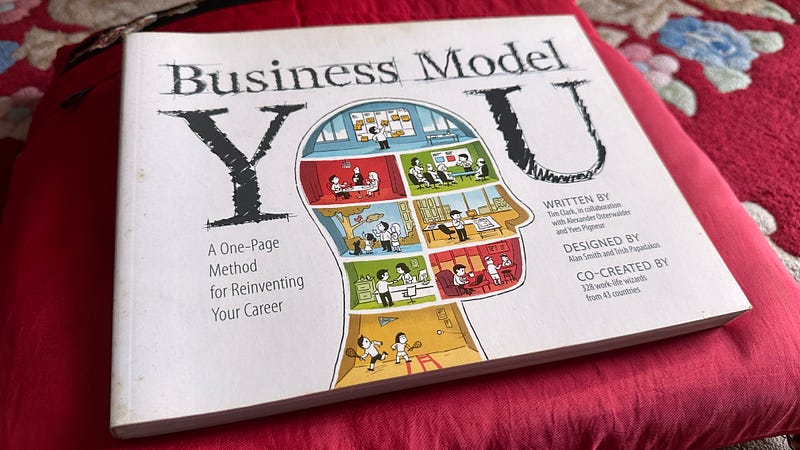
I recently got my hands on a fascinating book titled “Business Model You: The One-Page Way to Reinvent Your Work at Any Life Stage,” and it was an eye-opener!

This book is not just another career guide; it’s a transformative tool that encourages you to rethink your professional life on a single page. Yes, you heard that right — one page!

The core concept of the book is built around the idea of personal business modeling.

We’re all familiar with business models in the corporate world, but applying this framework to one’s career is both innovative and incredibly powerful.

The book is structured to help you understand, deconstruct, and rebuild your career aspirations using the Business Model Canvas, a strategic management tool adapted for personal use.

The authors break down the traditional employment mindset, challenging you to view your career as a personal business.

This perspective shift alone was worth the dive into the book.

It nudges you to consider yourself a service provider and your employers or clients as customers.

This approach forces you to clarify your value proposition, understand your market, and articulate how you differentiate yourself from others.

What really stands out is the book’s practicality.

It’s filled with exercises, real-life examples, and step-by-step guides that will help you create your own personal business model.

I found the exercises to be introspective and sometimes challenging but always enlightening.

They pushed me to reflect on my career path, identify my skills and passions, and think critically about how I can align my work with my personal values and goals.

Business Model You” is also visually appealing, which I didn’t expect from a career development book.

The use of diagrams, charts, and illustrations makes the content accessible and engaging, which is a huge plus when you’re tackling complex ideas like personal business models.

Business Model You: The One-Page Way to Reinvent Your Work at Any Life Stage

One of the most valuable sections, for me, was the one that dealt with reinvention.

The book acknowledges that our careers are not static and that we evolve as individuals.

The idea that you can revisit and revise your business model as you grow and as the market changes is empowering.

It reminds us that we are not stuck in one trajectory and that we have the agency to change course.

Another aspect of the book I appreciated was the focus on community and networking.

The authors emphasize the importance of external relationships in your business model, suggesting that who you know and collaborate with can be as important as your individual skills and experiences.

This holistic approach to career planning feels particularly relevant in today’s interconnected world.

By the end of the book, I felt equipped with a new framework for thinking about my career.

Creating my own one-page business model was a clarifying experience, helping me articulate what I want from my work and how to achieve it.

The book demystifies career development, making it feel more like a creative project than a daunting task.

In conclusion, “Business Model You” is a must-read for anyone looking to understand and reinvent their career.

Whether you’re just starting out, contemplating a career change, or looking to inject new life into your current path, this book offers valuable insights and tools.

It’s more than just career advice; it’s a blueprint for a more fulfilling professional life tailored entirely to you.

If you’re feeling stuck, uncertain, or just curious about what your career could be like, read this book.

It’s a refreshing departure from the one-size-fits-all career advice out there, offering a personalized approach to work and success.

I plan to revisit my business model in a few months to see how it evolves.

With “Business Model You,” your career is a dynamic, ever-evolving project, and that’s an exciting proposition.


Grab this book “Business Model You” from Amazon


Other Startup Books Review by Mazlan Abbas:

1 — The Lean Startup

https://mazlanabbas.com/the-lean-startup-a-book-review-91b457b1a4ce

2 — The Science of Growth

https://mazlanabbas.com/the-lean-startup-a-book-review-91b457b1a4ce

3 — The Samsung Way

https://mazlanabbas.com/the-lean-startup-a-book-review-91b457b1a4ce