Lessons Learned as a First-Time CEO in an IoT Company

The image was created using Midjourney by the Author of Startup Journey.

Embarking on a journey as the CEO of an IoT company, especially when one has never envisioned reaching such a pinnacle, is an experience filled with unique challenges and valuable lessons.

My path to becoming a CEO was unconventional, as my career goal was always to become a CTO.

However, life had other plans, and I found myself at the helm of a new IoT company, a subsidiary of a publicly listed company.

This 2.5-year tenure was eye-opening and instrumental in shaping my professional insights.

Lesson 1: Understanding the Multifaceted Role of a CEO

My first revelation was the expansive scope of a CEO’s responsibilities.

Furthermore, this is a new subsidiary responsible for a new business venture.

And the business area is very new – the Internet of Things (IoT).

Unlike my previous technical-focused roles, being a CEO required a holistic approach, managing product development and technology and steering the business’s strategic direction.

Building a team of experienced professionals, we created Smart City Solutions, a venture that demanded a blend of technical understanding and business savvy.

Lesson 2: Navigating the Complexities of Selling IoT Solutions

One significant challenge was underestimating the complexity of selling IoT solutions to local councils.

Unlike typical products, IoT solutions involve navigating bureaucracy and complex decision-making processes.

The sales cycle was excruciatingly long, a factor I had initially overlooked.

Lesson 3: The Pitfall of a Singular Market Focus

Our strategy initially focused on a single market with a singular product line.

This approach was a miscalculation due to the lengthy sales cycle and the need for extensive customer validation.

In hindsight, pivoting earlier to a different product or a more competitive market segment would have been more effective.

Lesson 4: Establishing a Brand in a Nascent Industry

A silver lining in our journey was the ease of establishing ourselves as an IoT brand in Malaysia, one of the industry’s early players.

This positioning opened doors to numerous opportunities, including invitations to conferences globally, enhancing our brand visibility.

Lesson 5: Overlooking Synergies Within the Parent Company

A missed opportunity was not leveraging the strengths and networks of our parent company’s group.

Instead of venturing out to find new markets and customers, tapping into the existing network within the group would have been a strategic advantage.

Lesson 6: The Imbalance between Product Development and Market Outreach

Our focus leaned heavily toward product development, overshadowing the need for effective marketing and customer engagement.

This imbalance led to a lack of real-world feedback and potential partnerships, which could have significantly influenced our market presence.


Though my tenure as a CEO was brief, the lessons learned are invaluable.

They have enriched my professional outlook and laid a strong foundation for my future endeavors, particularly in building my own startup.

The journey taught me the importance of flexibility, understanding market dynamics, and the power of strategic partnerships, insights I eagerly carry forward into my next chapter.


View at Medium.comView at Medium.comView at Medium.com


You can also check out my personal Blog here or the latest eBooks I have recently published — here.

My Top 5 Medium Articles on Startup Tips for November 2023

Photo by Maddi Bazzocco on Unsplash

Here is a compilation of the top 5 Startup Tips articles, which I considered my November month favorite:

(1) How much should you pay yourself?

Christoph Janz’s article in “Point Nine Land,” titled “How much should you pay yourself? Introducing the Founder Salary Calculator 2023,” offers an insightful update to his previous model on founder compensation.

Having partnered with Figures, a leading compensation benchmarking platform in Europe, Janz enriches his model with data from over 1000 startups and tech companies. Using 728 data points, this updated calculator provides a nuanced view of founder salaries across stages and locations in Europe, factoring in aspects like cost of living and market costs.

Additionally, it addresses the gender pay gap, albeit with limited data for female founders. The article stands out for its practical approach and data-driven insights, making it a valuable resource for founders seeking guidance on compensation.

View at Medium.com

(2) Apparently, Most Entrepreneurs Don’t Understand the Real Purpose of Venture Capital

Aaron Dinin’s article in “The Startup,” titled “Apparently, Most Entrepreneurs Don’t Understand the Real Purpose of Venture Capital,” offers a profound insight into entrepreneurs’ misconceptions about fundraising.

Dinin, through a conversation with a founder, illustrates the critical difference between linear and exponential growth, emphasizing that venture capitalists seek exponential (‘hockey stick’) growth due to its higher returns on investment.

He elucidates that venture capital is not a one-size-fits-all solution and should be sought only when necessary. The article is a stark reminder that venture capital is a means to an end, not the end itself, and should be approached with a clear understanding of its purpose and implications.

View at Medium.com

(3) What I Look for in Founders and Startups as an Angel Investor

Paul Zhao’s article in “The Startup,” titled “What I Look for in Founders and Startups as an Angel Investor,” provides a rich, insightful look into the mind of an experienced investor.

Drawing from his own entrepreneurial journey and extensive experience in evaluating startups, Zhao emphasizes the importance of clear, concise communication from founders, the necessity of defining what a startup will not do, the value of showing the practical movement of ideas, and the importance of learning from what didn’t work.

His approach is pragmatic and deeply rooted in the real-world demands of startup success. Zhao’s perspective is precious for founders in the B2B space, offering them a detailed guide on how to impress potential investors and secure funding.

His advice underscores the importance of strategic planning, efficient communication, and the ability to adapt based on feedback, making it a must-read for any aspiring entrepreneur.

View at Medium.com

(4) The Real Reason Why Starting a Company is Harder Than You Think

Aaron Dinin’s “Entrepreneur’s Handbook” article titled “The Real Reason Why Starting a Company is Harder Than You Think” delves into the complexities and mental barriers budding entrepreneurs face. Through a conversation with a young founder, Dinin explores the dichotomy of naivety in entrepreneurship — how being too naive can propel and hinder a startup’s journey.

He argues that naivety can be a driving force, allowing entrepreneurs to pursue ventures that more experienced individuals might overlook. However, this naivety diminishes with experience, leading to more calculated decisions in future ventures.

Dinin’s perspective offers a nuanced understanding of the entrepreneurial mindset, emphasizing the importance of embracing naivety and recognizing its eventual decline. This article is insightful for aspiring entrepreneurs, highlighting the psychological challenges of starting a company and the evolution of entrepreneurial thinking.

View at Medium.com

(5) The pitch deck template is dead. Introducing — The Pitch Cycle.

In “The Pitch Cycle,” Moti Elkaim challenges the conventional wisdom of using a standard pitch deck template for startups seeking investment. Elkaim argues that a more dynamic approach is necessary to capture and maintain investor interest in a market where assets are scarcer.

He introduces the four-part pitch cycle, emphasizing the importance of storytelling and creating a personal connection with investors. This cycle includes capturing the imagination, raising the opportunity, driving the business argument, and tactfully asking for investment.

Elkaim’s approach prioritizes engaging the investor’s attention and interest over traditional presentation methods. His insights are particularly relevant in today’s competitive and uncertain investment landscape, making this a valuable read for entrepreneurs looking to stand out in their fundraising efforts.

View at Medium.com

Building a Startup is Like Sailing a Ship – Lessons You Can Learn Too

Photo by Joseph Barrientos on Unsplash

Launching a dream is like setting sail; you will never know the strength of your ship until it leaves the shore.

Dawn of a Dream

As the founder of Favoriot, I set out with a vision as vast and promising as the sea at dawn.

Charged with the excitement of innovation and the prospect of discovery, we hoisted our sails to capture business winds.

This was more than a job; it was a quest; the horizon was our starting line.

You will only know whether your ship will sail after it leaves the shores.

This is my story, and it can be yours too.

View at Medium.com

The Launch: A Moment of Triumph and Truth

A lighthouse doesn’t make the waves calm, but it offers guidance; our launch was that beacon amidst the storm of reality.

The launch of our product was a beacon lighting up our collective aspirations.

We were poised to deliver a solution we believed the market would embrace with open arms.

However, reality painted a different picture.

The expected flood of revenue was, in truth, a meager stream, barely enough to sustain our crew’s livelihood.

It was a humbling experience that brought introspection and a reevaluation of our journey.

Navigating the Depths of R&D

The greatest ships are built with sturdy engineering, but without a map, they wander aimlessly; innovation needs direction to thrive.

Engineers built our ship, which was engineered to perfection, or so we thought.

We were so engrossed in the sea of Research and development that we needed to chart a parallel course for commercial strategy.

Our oversight taught us that even the most innovative product needs a map for its journey through the marketplace.

View at Medium.com

Charting Uncharted Markets

As we began to navigate the market, our advancements felt like a mirage.

Potential customers would express interest only to fade away like a distant shoreline.

We seemed to sail in circles, catching glimpses of land but never reaching it.

Sailing uncharted markets requires not just a compass but the persistence to pursue the horizon even when it fades.

Catching the Trade Winds

Persistence fills the sails of innovation, turning the faintest breeze of interest into the gales of success.

Persistence, like the relentless wind, eventually filled our sales.

The tide began to turn as serious inquiries and requests for quotations materialized into sales.

These first few purchase orders were our North Star, guiding us to believe our path had merit.

Our first sale was the North Star, a sign that even in the vastness of the market, we were charting a course true.

View at Medium.com

The Currents of Confidence

With revenue streaming in, our ship steadied.

We now sailed with renewed purpose; our previous trials transformed into valuable experiences.

Our lessons in resilience, adaptability, and determination became our compass.

Reflections on the Voyage

Every hardship faced at sea is a crucible, forging the iron will of an enterprise; our journey has been the anvil of our resolve

Looking back on the turbulent beginnings of Favoriot, I see a journey that has been as rewarding as it was challenging.

The hardships we faced were the crucibles that forged our enterprise and spirit.

View at Medium.com

Photo by Raimond Klavins on Unsplash

Navigational Beacons for New Entrepreneurs

  1. Charting the Unexpected: Revenue streams may not be immediate; set your sails for endurance.
  2. Balancing the Ship: Steer with a keen eye on R&D but maintain a course toward sound business and marketing strategies.
  3. Steadfast Sailing: Maintain course despite the cold winds of market indifference.
  4. Navigational Adjustments: Be willing to correct your course based on the winds of market feedback.
  5. The Captain’s Resolve: The storms will test you, but it’s the captain’s resolve that reaches the shore.
  6. The Quest for Market Fit: It’s a voyage, not a sprint; aligning your product with the market’s currents is an adventure.

Remember to Subscribe to receive email updates on every post I publish.

You can also follow my Medium Publications:

I have also published several eBooks, such as:

Or, if you prefer, check my bookstore at Gumroad — https://mazlanabbas.gumroad.com

Understanding the True Value of Recognition for Entrepreneurs

Photo by Uwe Conrad on Unsplash

As a Startup founder, do you chase for awards?

Do you think it’s important to hang all those awards and give impressions of your success?

Will it bring more customers?

The Chase for Accolades

Entrepreneurs work tirelessly and often seek acknowledgment through awards and certificates.

While it’s nice to win and be recognized, it’s important to ask if these awards really help our businesses grow.

Do Awards Really Help?

We might enter competitions and win titles like “Best Startup in IoT,” which feel great at the moment.

We can hang certificates on the wall, but do they actually attract more customers or help our business thrive?

The truth is, their impact is often short-lived.

The Fleeting Spotlight

When we win awards, we might get to appear on radio shows or podcasts.

This exposure is exciting and can spark interest in our startup, but it’s usually temporary.

The buzz from winning an award doesn’t last long.

Questionable Awards

There are countless online magazines handing out titles easily, without much scrutiny.

As entrepreneurs, we start to wonder if these awards are even real or just a way to flatter us into parting with our money.

Paying for Prestige

Sometimes, you can buy awards at fancy dinners. But for those of us who value real achievement, buying awards feels wrong.

We want to earn our recognition honestly.

Building Authentic Recognition

True success comes from being recognized organically.

Achievements, hard work, and making a real difference are what earn respect.

Being known for our merits creates trust and a genuine reputation.

Real Recognition Lasts

Being mentioned in the news, featured in the media, and recommended by others are signs of true acknowledgment.

A good reputation and a history of real achievements are what establish us as leaders in our field.

Conclusion: The Substance Over Symbols

Accolades can temporarily boost our visibility, but they aren’t what ultimately define our success.

It’s our relentless pursuit of excellence, our commitment to our vision, and our tangible contributions that make the real difference.


As entrepreneurs, we should focus on:

  1. Delivering real value to our customers.
  2. Building meaningful relationships.
  3. Leaving a lasting impact in our industry.

In the end, it’s not the trophies and titles that count, but the legacy we build and the change we create through our entrepreneurial journey.


Photo by krakenimages on Unsplash

Remember to Subscribe to receive email updates on every post I publish.

Crafting Dscover: Our Fourth IoT Venture

Photo by Alvaro Reyes on Unsplash

The Backstory

Here’s how our fourth IoT product, Dscover, came to life. After the commercial launch of our first IoT product, Raqib, in 2018, feedback began pouring in, leading us to a crucial decision: Should we refine Raqib or innovate anew?

At the same time, work was underway on Favorsense and the Favoriot IoT platform — our second and third products, respectively. Trusting our instincts, we embarked on developing Dscover.

Addressing a Need

With Raqib, designed as a unique tracking solution sans Bluetooth smartwatch and smartphone, we noted users weren’t interested in the vital health signs monitoring feature.

This made us reevaluate: Which market needed tracking, and why was individual monitoring necessary?

It turned out that tracking was pivotal for safety during travel, offering freedom while ensuring connection and safety for individual travelers and their groups.

Market Realities

Our initial focus was on the thriving pre-2020 Travel and Tourism market.

However, as the sector took a hit during the pandemic with restrictions imposed worldwide, we tactically shifted our target, repurposing Dscover as a family and friends app.

Opting for a Mobile Solution

A mobile application was chosen for Dscover for its cost-effectiveness — utilizing the user’s device and GPS — and ease of deployment and management through online app stores.

Overcoming Go-to-Market Challenges

Navigating through the B2C model was challenging.

With social media as our primary outreach tool, understanding user demographics was crucial for conducting targeted promotions.

An initial naming challenge occurred with “D’scover,” prompting a name change to “Dscover” for easier user search and app store navigation.

While our initial approach was B2B, reaching out to travel agencies and the government, the pandemic-induced downturn in travel necessitated a market segment expansion, including a focus on monitoring quarantined patients — a solution that, unfortunately, didn’t receive official endorsement for unknown reasons.

Time for Reflection

We pondered: Did we allocate sufficient resources to marketing and sales before leaping into developing another product?

Creating a new product is undoubtedly a demanding journey, with each of our four IoT products showcasing distinct strengths and weaknesses.

Lessons Learned

The Importance of Adaptability

Reflecting on Dscover’s development, the crucial lessons learned revolve around market dynamics understanding and adaptability.

The necessity to pivot from a travel-centric app to one for family and friends was a crucial decision in response to the global changes in 2020.

Valuing Feedback

Feedback is invaluable.

The responses and insights from our users significantly influenced our product development trajectory, emphasizing the importance of aligning product features closely with user needs and expectations.

Mindful Naming

Product naming requires careful consideration for ease of search and brand recall.

The name change to Dscover was not just a whimsical decision but a strategic one to ensure greater visibility and ease of access for potential users on various platforms.

Continuous Evaluation

Before diving into a new product, conducting a thorough evaluation of the current product’s market performance is crucial.

Such evaluations and robust marketing and sales strategies form the foundation for successful product development.

Forward-Looking Insights

Armed with these lessons, we’re better prepared for future ventures.

These insights will guide us in crafting products that meet market demands and deliver value to users, ensuring a smoother and more successful journey in the intricate world of IoT product development.

Each lesson learned lights up the path ahead, helping us navigate away from potential mistakes and toward sustainable success.


Remember to Subscribe to receive email updates on every post I publish.

You can also follow my Medium Publications Aspiring Writer’s Journey, Influencer’s Journey, Startup Survival Journey, and IoT World.

How We Monetise Our IoT Product: The Odyssey of Our Third IoT Creation

Embarking on the Favoriot journey wasn’t just about developing another IoT product; it was a pivotal moment, a turning point steering us towards our dream: embedding IoT into every business’s essence.

The Birth of Raqib: A Learning Curve

Raqib, our first IoT product, didn’t come easy. It was two years of relentless work, learning, and adapting to the entrepreneurial challenges of the IoT space.

Raqib was envisioned as a comprehensive solution; hence, we meticulously searched for the perfect hardware partner, as manufacturing wearables wasn’t our forte.

This end-to-end solution also demanded a robust IoT platform for data communication, a user-friendly mobile app, and a CRM system to manage customer relationships smoothly.

Favorsense: Rapid Execution, Valuable Insights

Then came Favorsense, our second brainchild.

The market witnessed its arrival within a year, a testament to our evolved skills and understanding of the IoT terrain. The feedback was invaluable, serving as the cornerstone for refining and enhancing Favorsense to meet user expectations better.

Favorsense

The Unplanned Masterpiece: Favoriot

In the grand tapestry of product development, Favoriot emerged almost stealthily. Initially conceptualized as middleware while developing other products, it soon dawned upon us that Favoriot held immense potential as a standalone solution.

A free trial period provided crucial user insights until we introduced a pricing model in March 2019.

Navigating Through Challenges

Every product brought challenges, draining resources, time, and capital.

The country, we presumed, had abundant IoT talent to collaborate with, but reality painted a different picture.

With my association with local universities as an advisory member, it was evident that while students were eager to explore IoT, the lack of structured IoT education and an acute talent shortage hindered progress.

A Market of Untapped Potential

In the shadows of challenges, opportunities often hide.

With the IoT market expected to burgeon to a whopping $1.39 trillion by 2026 and Malaysia just beginning to embrace IoT since its official introduction in 2014, Favoriot could be the critical enabler for commercial IoT deployment and education.

Favoriot: More Than Just a Product

With every IoT deployment requiring a platform component, Favoriot was positioned as a cost-effective, cloud-based solution accessible to students for their projects and feasible for lab experiments.

It promised security, user-friendly APIs, and protocol support, offered as a Platform-as-a-Service to encourage innovation while ensuring user data ownership.

Different subscription plans, a cohesive community for shared learning, and extensive documentation and tutorials completed the package.

Learning, Adapting, Growing

However, initial responses were lukewarm, with many users gravitating towards more familiar platforms.

The tide turned as we compiled use cases and tutorials and actively promoted Favoriot through various channels, widening our user base to over 5300 across 115 countries.

Unleashing a New Wave of Talent

Now, universities are producing graduates well-versed in building IoT projects, with practical knowledge of Favoriot, ready to be the torchbearers of IoT growth in Malaysia and beyond.

Five Startup Tips from Our Journey

  1. Persistence: The entrepreneurial journey is arduous; brace yourself and persist through challenges.
  2. Continuous Learning: Absorb feedback and learn continually to refine your product and services.
  3. Invest in Talent: Recognize and nurture talent; they are the building blocks of your startup’s success.
  4. Spot Opportunities Amidst Challenges: Every problem presents an opportunity; it’s imperative to identify and leverage it.
  5. Foster a Community: Building a supportive and engaged community can be a game-changer; shared success and collective learning are invaluable.

Embark on your journey armed with these insights, and may your startup thrive and inspire!


Remember to Subscribe to receive email updates on every post I publish.

You can also follow my Medium Publications Aspiring Writer’s Journey, Influencer’s Journey, Startup Survival Journey, and IoT World.

Charting a New Course: Amplifying Readership & Monetizing My Blog

Photo by Domenico Loia on Unsplash

Setting the Scene for Growth

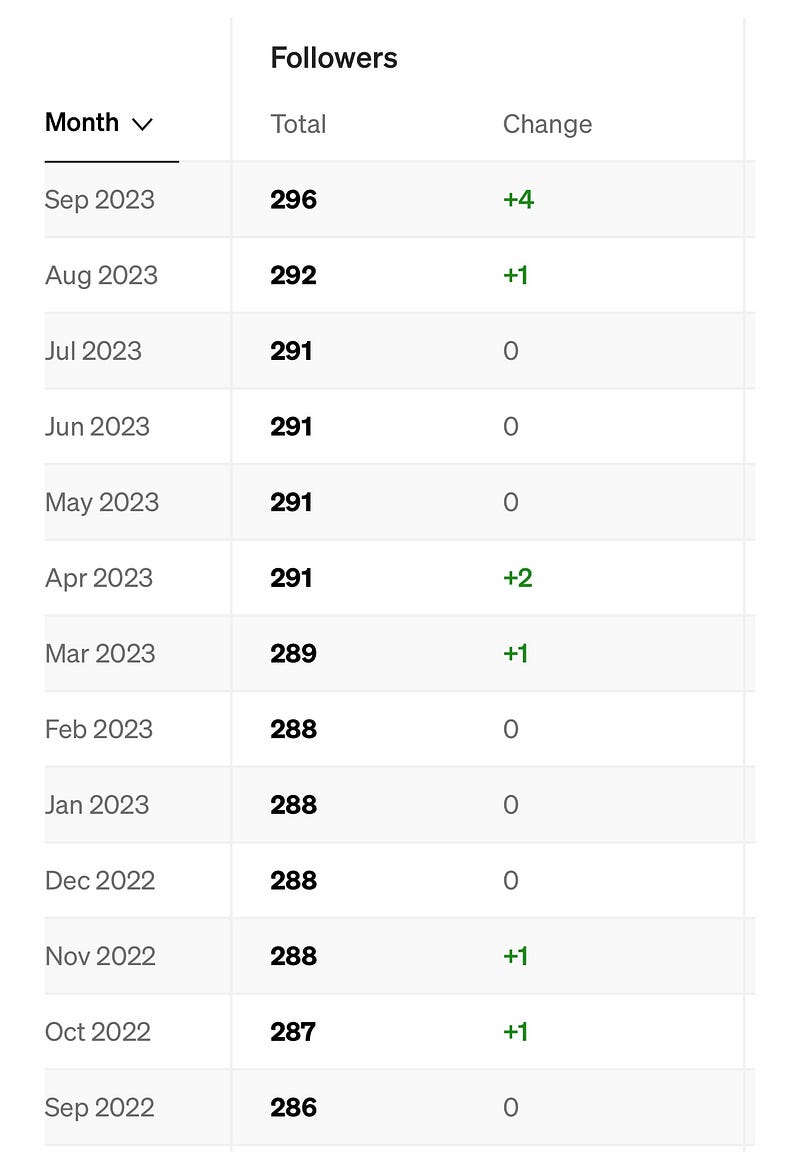
In the silent corridors of the blogging world, my digital space has witnessed a humble increase of six readers over the past year. While it’s a climb, it’s subtle – too subtle. This realization led me to consciously decide on September 25, 2023, to transform this whisper into a symphony of engaging dialogues and growing readership.

Taking the Premium Plunge

To catalyze this transformation, I’ve taken a leap of faith and upgraded to a premium membership on Medium. This step is more than a commitment; it’s a mission – a mission to not just grow, but to thrive, share, and connect. With the premium canvas, every day will paint a new story, a fresh article designed not just to speak but to converse with you.

A Journey Begins With a Single Step

And steps have been taken. In the soft glow of beginnings, the past days have seen four new readers join our journey. Each one is not just a statistic but a partner in this exciting expedition of words and wisdom. It’s a small yet significant victory, marking the promise of what lies ahead.

Beyond the ‘Followers’ Facade

It’s easy to stumble upon articles flashing the success of gaining followers, tales woven with the threads of monetization strategies and follower magnetism. Such stories undoubtedly attract a flock of readers. But, my pen aims to ink a different narrative, not because I lack expertise in the ‘follower magnet’ genre, but because there’s a deeper, more personal tale to narrate.

Tales of Entrepreneurship: The Rollercoaster Ride

The canvas of my blog will unfold the chronicles of a seven-year-long entrepreneurship journey, meticulously detailing the peaks of triumph and the valleys of challenges. Every founder’s journey is a rollercoaster, and mine is no different – a tapestry of highs and lows, of lessons learned and battles won.

As we navigate through the undulating terrains of entrepreneurship, each article will aim to be a beacon of insight, a mirror reflecting the multifaceted life of founding, failing, learning, and succeeding.

Stay Tuned: The Journey Has Just Begun

So, here’s my invitation to you: stay with me. Walk with me through the archives of experience and the live chronicles of an entrepreneur’s journey. With a story unfolding each day, your company will not just be valued but cherished.

Let’s embark on this expedition together, exploring tales untold and paths untraveled. Your readership is not just a number; it’s a valued partnership in this odyssey of words, wisdom, and the wired world of entrepreneurship. Together, let’s see where this journey takes us!

Crafting Favorsense: Our Second IoT Endeavor Aimed at Smart Cities

Photo by Artem Beliaikin on Unsplash

Introduction

In this reflection, we’ll delve into the journey of crafting Favorsense, the second IoT product by Favoriot, designed with Smart Cities in mind.

Favorsense is a successor to our inaugural IoT product, Raqib (originally named Favorwatch), which we explored in a prior article.

The Inception: Addressing Urban Challenges

Living in the city, one must recognize the daily challenges urban infrastructure and services pose.

These range from the commonplace, like unattended garbage and potholes, to critical issues, like burst pipes and fallen trees.

Often, citizens resort to traditional complaint mechanisms — phone calls or emails to the local councils — but these reports sometimes vanish into administrative black holes, leaving the complainants frustrated and in the dark about the status of their concerns.

The Solution: Empowering Citizens Through Favorsense

Favorsense is a mobile application that is somewhat divergent from conventional IoT products as it incorporates human interaction.

It leverages the capabilities of smartphones, utilizing the camera, GPS, and sensors to gather and transmit data.

We drew inspiration from our previous experience crafting similar solutions but decided to seize this opportunity to develop an enhanced version.

Favorsense at a Glance

The application is user-friendly.

Once a city resident identifies an issue, they open Favorsense and capture a photo, which is then automatically geotagged and time-stamped, providing an accurate report of the problem’s location and time of occurrence.

This process not only facilitates ease of reporting but also aids in maintaining the integrity of the reports by preventing fraudulent complaints.

However, the app isn’t the only player in this innovative solution; it’s part of a trio. The other components include a Crowdsensing Management Platform (CMP) and a Field-Force module.

The CMP is where the appointed admin handles and escalates complaints, tracking the status and timeline of each report.

Meanwhile, the Field-Force module is where assignments are dispatched to contractors or internal teams for resolution, providing them with crucial information like the location and image of the reported issue.

The Market Potential

With over 150 councils across Malaysia, a population nearing 32.37 million, and some cities boasting populations over 500,000, the potential for Favorsense is substantial in our home country alone.

This potential is even more pronounced globally, considering there are over 10,000 cities worldwide, many of which lack a streamlined platform for citizen complaints.

Go-to-Market Strategy

Engaging the councils directly, we pitched Favorsense through presentations and proposals, making our presence felt at Smart City conferences.

However, we adjusted our approach due to the extended sales cycles and procurement processes encountered with councils. Currently, we collaborate with the Malaysia Smart City Alliance (MSCA), sharing our proposals for various Smart City initiatives.

Valuable Lessons for Startups

Launching a product like Favorsense has been a journey filled with insights and lessons. For other startups looking to navigate the intricate IoT landscape, here are three key takeaways from our experience:

  1. Understand Your Audience: Identify and understand your target audience. Knowing the councils’ needs and pain points helped us design a product offering genuine solutions, making pitching and selling Favorsense easier.
  2. Iterate and Improve: Drawing from past experiences and products is invaluable. However, always be open to enhancing and iterating your products to meet the market’s needs better. The creation of Favorsense was grounded in our past work, but we didn’t hesitate to innovate and improve where necessary.
  3. Flexibility in Approach: Sometimes, the initial go-to-market strategy won’t yield the expected results due to unforeseen challenges. Being flexible and willing to adjust your approach, like our engagement strategy pivot is crucial to overcoming hurdles and ultimately achieving success.

Conclusion

Favorsense is a testament to Favoriot’s commitment to creating innovative IoT products and contributing positively to the functioning and management of Smart Cities.

Through this application, we envision a future where city councils and citizens collaborate efficiently, fostering urban environments that are responsive, accountable, and truly smart.

For startups embarking on a similar journey, understanding your audience, iterating, and being flexible are cardinal rules to guide your way to success.


Remember to Subscribe to receive email updates on every post I publish.

You can also follow my Medium Publications Aspiring Writer’s Journey, Influencer’s Journey, Startup Survival Journey, and IoT World.

The Power of Personal Connection

In our modern, digital-centric era, many believe that the key to connecting with customers lies mostly in virtual platforms. While online channels like social media have indeed transformed the way businesses engage with their audience, there’s an enduring magic in the traditional face-to-face interactions at events and exhibitions. Favoriot’s experience is a testament to this belief, and here’s a deeper dive into the reasons.

The Magic of Direct Interaction

Despite the leaps and bounds in technological advancements, there’s something irreplaceable about the genuineness of face-to-face conversations. Personal interactions foster a unique depth of trust and understanding, facilitating off-the-cuff questions, on-the-spot demonstrations, and authentic responses.

Establishing Authority Beyond the Podium

Being on the dais at a conference is both an honor and a platform to project expertise. It showcases an individual or a company as a pioneer in their field. However, away from the confines of the lecture hall, the dynamic environment of the expo floor allows for a more spontaneous, widespread interaction, reaching an even wider spectrum of attendees.

Show, Don’t Just Tell

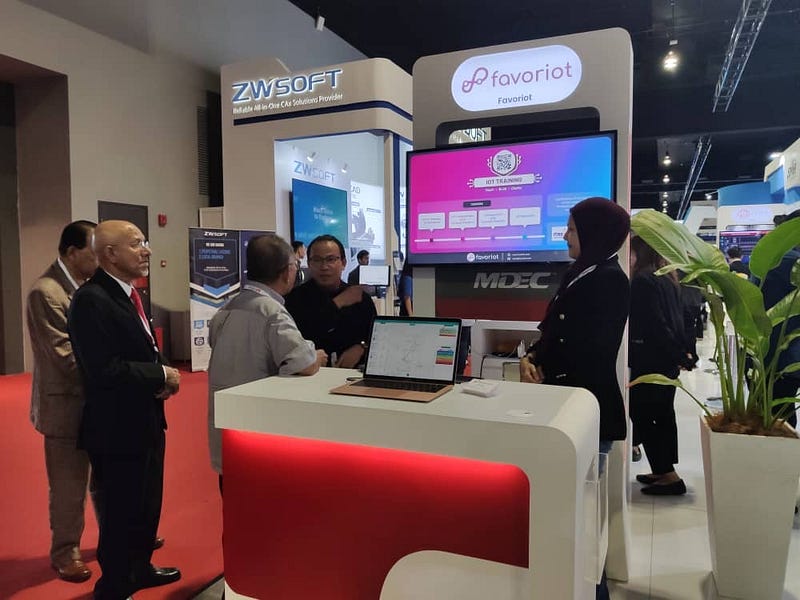
The age-old adage, “seeing is believing,” holds especially true in a business context. An expo stand gives companies like Favoriot the perfect stage to bring their products to life. These real-time showcases don’t just catch the eye; they often sway decisions for prospective clients.

Connections That Count

The intensity of a 3-day expo brings together a plethora of potential clients, all under one roof. Visitors to such events come with purpose — to find solutions, forge partnerships, and scout for opportunities. Each chat at the stand isn’t just small talk; it’s a potential business opportunity.

Teaming Up with MDEC

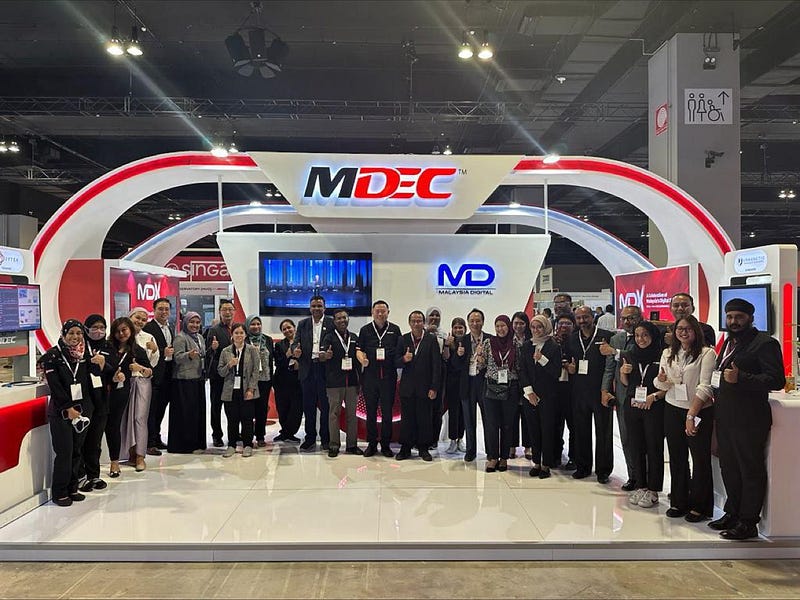
Our presence at the Smart Nation Expo 2023 (from 19th to 21st September) wasn’t just as a standalone entity. We were proudly stationed under the MDEC Pavilion. This partnership with MDEC, a brand of significant repute, acted as a beacon, pulling attendees our way and setting the stage for Favoriot to be in the limelight.

The Ripple Effect Post-Expo

The buzz of an expo doesn’t die down once the stalls are dismantled. The real magic unfolds in the days and weeks that follow. Every expression of interest, each business card handed over, morphs into potential collaborations, partnerships, or client relationships.

To wrap it up, even as the digital world offers a sprawling canvas of opportunities, events like trade expos are like a goldmine of focused potential. For us at Favoriot, these events have been nothing short of transformative, with our recent stint at Smart Nation Expo 2023 as a shining example. We remain committed to tapping into the unmatched power of in-person connections, engaging heart-to-heart with our audience.

The Power of Public Speaking: From Thought Leadership to Business Opportunities

In the bustling landscape of startups, public speaking is often perceived as just another marketing strategy. However, my journey with my startup, Favoriot, taught me that it’s much more than that. Here’s how public speaking not only established me as a thought leader in IoT, Smart Cities, and IR 4.0 but also subtly paved the way for business opportunities.

The Early Days: Building a Personal Brand

When I started out, I was often invited to share my knowledge on various tech topics. And I did, wholeheartedly. These engagements were purely knowledge-based, leaving out any mention of Favoriot. This approach was intentional, aiming to build trust and credibility without appearing overly promotional. Over time, these efforts earned me a reputation as an IoT thought leader. But while this title brought recognition and esteem, it failed to translate into tangible business leads for Favoriot.

The Pivot: Injecting Favoriot into the Narrative

I soon realized that while being recognized as an expert is rewarding, it wasn’t fulfilling my ultimate goal – to get Favoriot known in the industry. I needed a new strategy.

Instead of keeping my talks strictly academic, I began to subtly incorporate elements of Favoriot’s products and services. I showcased real-world examples of how IoT platforms, especially like ours, can build effective IoT solutions. A couple of slides bearing the Favoriot product logo turned out to be enough to sow the seeds of brand awareness.

The Impact: From Awareness to Business

Gradually, the narrative began to shift. The moment of epiphany would often come during networking sessions or casual interactions when someone would say, “Oh, you’re from Favoriot? We’ve heard of you.” That statement epitomized the change.

While turning awareness into paying customers wasn’t instantaneous, it certainly laid the groundwork. Over time, some of those who had a mere awareness of Favoriot became interested parties, and eventually, paying customers.

Conclusion: A Strategy Worth Investing In

Public speaking is a long game, especially when it’s used as a business promotion tool. However, its effects can be long-lasting and profound. By transitioning from pure knowledge-sharing to subtle brand promotion, I found a sweet spot that not only solidified my position as a thought leader but also carved out a niche for Favoriot in a crowded market.

So, to all startup enthusiasts and entrepreneurs, remember: Public speaking is not just about sharing what you know; it’s also about weaving in who you are and what you offer. That blend can be a game-changer.