Five (5) Best Reasons Why I Chose Gumroad to Sell My eBooks

WRITER’S STORIES

How I earned extra money online.
Check out Mazlan Abbas Gumroad Store

Although I can earn money from writing stories on Medium, I am able to earn extra by converting my articles into eBooks and selling them on Gumroad.

This is my Gumroad store — HERE.

Selling eBooks can be a fulfilling and profitable venture, especially when you find the right platform that aligns with your goals and needs as an author.

After experimenting with various options, I chose Gumroad as my platform of choice for distributing my eBooks. Here, I’ll share my personal journey and the five main reasons why Gumroad became my go-to for eBook sales.

Photo by Markus Spiske on Unsplash

Introduction to Gumroad

Before diving into the specifics, it’s essential to understand what Gumroad is.

Gumroad is a straightforward, user-friendly e-commerce platform designed for creators of all types — from filmmakers and musicians to writers like myself.

It simplifies the process of selling directly to consumers, bypassing many of the hurdles that traditional or more complex platforms present.

Reason 1: Ease of Use

The primary reason I gravitated towards Gumroad is its incredible ease of use. When I first decided to sell my eBooks, I was looking for a platform that wouldn’t require a steep learning curve.

I wanted to focus on writing and content creation, not on navigating complicated software.

Setting up my Gumroad account was a breeze. Within a few clicks, I was able to upload my first eBook, set a price, and prepare it for sale. The interface is intuitive, clean, and direct. There’s no clutter or unnecessary features to wade through, which made it incredibly easy for someone like me, who prioritizes simplicity in digital tools.

Reason 2: Customer Connection

Another significant factor in my decision was the ability to connect directly with my customers. Gumroad offers tools that allow creators to engage with their audience in a more personal way.

Through Gumroad, I can send updates, discounts, and newsletters directly to the people who have purchased my eBooks.

This direct line of communication is invaluable. It helps me build a community around my work and receive immediate feedback from my readers. Such interactions are crucial for improving my eBooks and tailoring future content to meet the needs and interests of my audience.

Reason 3: Flexibility in Pricing

Gumroad provides remarkable flexibility in how I price my products, which is not as prevalent on other platforms. I can set standard prices, or I can use a “pay what you want” model, which has been incredibly effective for reaching a broader audience.

This model allows buyers to pay more than the base price if they feel the content is worth more, which some of my readers appreciate and take advantage of.

Moreover, running promotions and discounts is straightforward on Gumroad. These strategies are essential for driving sales during specific periods, such as holidays or the launch of a new eBook.

Gumroad’s flexible pricing capabilities enable me to experiment with different strategies to see what works best for my market and genre.

Reason 4: Analytics and Insights

Understanding who buys your eBooks and how they find them is key to growing your sales. Gumroad offers a comprehensive set of analytics tools that help me track sales, visitor traffic, and conversion rates. These insights are critical for refining my marketing strategies.

With Gumroad’s analytics, I can see which of my marketing efforts are working and which aren’t, allowing me to invest more wisely in ads and promotional activities.

This data-driven approach helps me maximize my return on investment and continuously grow my reader base.

Reason 5: Minimal Fees and Transparent Policies

Finally, the fee structure and transparency of Gumroad are crucial reasons why I stick with the platform. Gumroad charges a reasonable fee for each sale, and there are no hidden costs or unexpected charges.

This transparency allows me to plan my finances and understand exactly how much I will earn from each sale.

In comparison to other platforms that might charge monthly fees or have complex fee structures that vary by product type or sales volume, Gumroad’s straightforward approach is refreshingly simple and economical.

Conclusion

Choosing where to sell your eBooks is as significant as writing them. For me, Gumroad has proven to be the best platform due to its ease of use, direct customer connection, flexible pricing options, valuable analytics, and clear fee structure.

It has not only facilitated the sales of my eBooks but also helped me grow as a writer and marketer.

Whether you’re just starting or looking to switch platforms, consider what aspects of eBook selling are most important to you and see how Gumroad might meet those needs.

In my experience, it has been an indispensable tool for connecting with readers and building a sustainable writing career.

Photo by Antonio Scalogna on Unsplash

If you are interested in downloading my eBooks on Startups, IoT, and Entrepreneurship, kindly check out my Gumroad store.

Mazlan Abbas Gumroad Bookstore

Your Vision and Purpose Were Larger Than Any Obstacle

INFLUENCER’S JOURNEY

Several years ago, I made a pivotal decision to transform my mindset and actions.

Photo by Katrina Wright on Unsplash

I stopped:

  • complaining
  • hoping
  • wishing

Instead, I began to:

  • innovate
  • construct
  • realize

I committed to being consistent, persistent, and patient.

No matter how tough the journey got, how many heartaches I endured, or how daunting the challenges appeared.

Even in moments when it seemed there was no end in sight, when the storms outnumbered the sunny days, and the setbacks outnumbered the victories, I persevered.

My vision and purpose were larger than any obstacle.

Remember, no one understands your vision better than you.

No one else can construct it as effectively as you can.

Only you can turn it into reality.

Stay resilient on your entrepreneurial path.

The journey is not meant to be easy; if it were, everyone would succeed at it.

You are on the right path, and in time, you will reach your destination.

Photo by Nik on Unsplash

Never Stop. Never Give Up.

THOUGHT LEADER’S STORIES

One day you will achieve your dreams.

Photo by Alexander Grey on Unsplash

Never stop searching for those who can truly appreciate your insights and contributions in IoT.

I’ve been in places where my ideas were dismissed.

My strategies were criticized.

My views were overlooked.

Perhaps it’s just me. Maybe I wasn’t clear enough. Yes, perhaps it’s just me.

But what matters most is that you don’t give up.

First, you must have faith in yourself.

Your knowledge. Your expertise. Your innovative potential.

Then, leverage social media to display your prowess to the world.

(yes, it’s an incredibly powerful tool that only a fraction are utilizing effectively).

Through engaging content and my educational videos, the team at Asia IoT noticed my efforts.

They invited me to speak at the Asia IoT 2019 in Singapore, alongside industry pioneers from Germany, Japan, and Canada.

This event is about IoT innovation globally.

The brightest minds in technology and digital transformation gather here to exchange ideas and forge partnerships.

From then onwards, I have received many invitations as Keynote and Invited Speakers.

Now, turning back to you…

Never undervalue your capabilities.

Yet, always remain humble.

Recognize that you don’t know everything.

Continue to learn.

Never stop pushing forward. Your opportunity is just around the corner.

Photo by Fernando Brasil on Unsplash

How to Focus Your Writing for Maximum Reader Engagement

WRITER’S STORIES

Follow the six (6) steps to become a better writer.

Photo by Chase Clark on Unsplash

As a writer who has penned hundreds of articles through blogging and writing technical journals, I’ve had my fair share of learning curves when crafting engaging content.

The journey from a novice scribbler to an adept wordsmith has been both challenging and rewarding. Through it, I’ve gathered some insights that I believe can benefit any aspiring writer.

Today, I’d like to share my personal experience and the tips I’ve developed for writing more focused and engaging articles.

When I first started writing, I was overwhelmed by the desire to say everything at once.

My drafts were often a jumble of thoughts, anecdotes, and data that, while individually interesting, did not cohesively support a single point. This lack of focus not only diluted the impact of my writing but also confused my readers.

Photo by Stephen Kraakmo on Unsplash

I remember one particular instance where an editor told me, “You’ve lost track of what you’re saying. This could be two or three articles.

That feedback was a turning point for me. It made me realize the importance of narrowing my focus and sticking to one subject at a time to avoid turning my articles into mazes filled with dead ends.

Here’s how I started refining my approach:

Step 1: Structuring My Writing

Initially, revisiting the basic structure of essays and articles felt like a step backward.

But I quickly realized that even a casual piece needs a skeleton to support it. Each article starts with an introduction, in which I introduce the topic and explain why it matters.

This is followed by the body, where I delve into the details, using subheadings and paragraphs to organize my thoughts and make the content digestible.

Finally, I conclude by tying all my points together, referring back to the introduction, and leaving the reader with a final thought. This structure organizes my writing and helps the reader follow along easily.

Step 2: Knowing My Audience

One of the key lessons I learned early on was the importance of understanding my audience.

Who are they? What do they care about? How can my article add value to their lives?

Answering these questions before I start writing helps me tailor my content to the people most likely to read it.

Step 3: Paring Down My Ideas

Having too many ideas is more problematic than having too few.

I learned to be ruthless in cutting out or setting aside ideas that don’t directly support my main topic.

This streamlines the article and saves those “extra” ideas for future pieces, effectively building up a stockpile of content to draw from.

Step 4: Adding Personal Touches

While structure and focus are crucial, injecting personal anecdotes and emotions into my writing makes it resonate on a human level.

Whether it’s a touching moment shared with a grandchild or a frustrating day trying to master verb conjugations, these snippets bring my narrative to life and engage readers on a deeper level.

Step 5: Research and Validation

As much as personal stories enrich an article, facts, data, and expert opinions bolster credibility. I always take the time to research my topics thoroughly, ensuring that every claim I make can be backed up.

This is particularly important when writing about topics like health, finance, or technology, where misinformation can have real-world consequences.

Step 6: Editing with Precision

Finally, no article is ready for publication without a thorough edit.

This process involves proofreading for grammar and spelling and revising sentences and paragraphs for clarity and impact. I read my drafts aloud to catch awkward phrasings and ensure natural flow.

After consistently implementing these steps, I noticed a significant improvement in the engagement and clarity of my articles.

Seeing readers respond positively is gratifying, especially when an editor sends a piece through with few or no revisions.

Photo by Slim Emcee on Unsplash

To encapsulate, here are the essential tips for writing focused and engaging articles that I’ve shared:

  1. Structure Your Writing: Use a clear introduction, body, and conclusion.
  2. Understand Your Audience: Tailor your content to their interests and needs.
  3. Focus Your Topic: Limit your scope to maintain clarity and depth.
  4. Inject Personal Stories: Make your writing resonate more deeply with readers.
  5. Back-Up Claims: Use research and data to lend credibility to your article.
  6. Edit Thoroughly: Never underestimate the power of revision for enhancing readability and impact.

Writing is more than a mechanical task; it’s a form of communication that requires empathy, clarity, and, most importantly, a connection with your reader.

As writers, our goal is to share information and invite our audience into an enriching and enlightening conversation.

By continually honing our craft and focusing on these principles, we improve our skills and enhance the reader’s experience.

While the process can sometimes feel daunting, creating a well-received article is immensely rewarding.

Each piece is a learning experience, an opportunity to connect with others and share a part of ourselves.

This iterative process of writing and feedback makes a writer’s journey so uniquely fulfilling.

Remember, the art of writing is not just about adhering to techniques; it’s about evolving and adapting.

The more we write, the more we learn about ourselves and our audience, and the better we communicate our thoughts and ideas effectively. This beautiful growth cycle fuels personal and professional development.

I encourage you to embrace the process, cherish your unique voice, and continue to share your insights with the world.

The path may be lined with challenges but also rich with rewards.

Keep writing, keep learning, and most importantly, keep engaging your readers with every word you write.

Writing vs Blogging — Two Different Worlds

WRITER’S STORIES

Blogger in the Tech-Infused World of IoT

Photo by Afif Ramdhasuma on Unsplash

Not a member? Click here to read the full story for free.

Despite my long-held aversion to writing—rooted deeply in my belief that I was a “terrible writer” — I couldn’t ignore the blogosphere’s magnetic pull.

Could someone like me, riddled with self-doubt, carve a niche in this ever-expanding universe?” I pondered.

When this question crossed my mind, I felt an uncontainable curiosity growing, pushing me to delve deeper into the blogging world.

This curiosity led me on a transformative journey, especially within my niche of interest, the Internet of Things (IoT).

The more I explored, the more I realized the vast potential that blogging held for me to share my ideas, insights, and experiences with the world.

The Spark of Curiosity

It all started with a simple yet daring thought: “If everyone else can blog, why can’t I?

With that, I ventured into what would become an eye-opening adventure. Soon enough, I realized blogging was a different beast, unlike any traditional form of writing I had previously shied away from.

Photo by Ben White on Unsplash

The Craft of Blogging vs. Traditional Writing

Initially, I was confident that my modest writing abilities would be enough to become a successful blogger.

I believed that blogging was merely about expressing my thoughts through words, which I was already good at.

However, when I started blogging about the Internet of Things (IoT), I soon realized this was not the case.

I had to create content that was not only well-written but also engaging, accessible, and, most importantly, easily discoverable.

In other words, I needed to sculpt my writing to be easily found by search engines, interesting to readers, and relevant to the topic.

It was a unique challenge that required me to develop new skills and approaches to writing.

Understanding the Audience

When I started writing about IoT, I quickly realized I needed to adjust my writing style to reach a broader audience.

Unlike academic or literary writing, which is often targeted toward specialized audiences, blogging about IoT demanded a conversational tone that could explain complex technologies in a way that everyday users, hobbyists, and tech enthusiasts could easily understand.

To achieve this, I used informative and inclusive language, converting complicated concepts into engaging, easy-to-follow stories that would keep my readers’ attention.

This required me to be creative in simplifying complex ideas into easily digestible narratives that would appeal to many readers.

Photo by Joel Muniz on Unsplash

The SEO Learning Curve

When I encountered the Search Engine Optimization (SEO) challenge, I was overwhelmed by the thought of how people could even discover my blog amongst the millions of blogs out there.

Until then, my focus had mainly been on the narrative, but now I realized the importance of using keywords, meta descriptions, and mobile-friendly formats to ensure that my content reached the right audience.

These tools bridged the gap between crafting compelling content and making sure it was discoverable by the people who would benefit most.

The Relentless Pace

One of the biggest obstacles I faced when transitioning to blogging was adjusting to the fast pace of the medium.

I was astonished at how frequently bloggers had to publish new content to keep their readers engaged. In contrast to traditional writing, where writers might spend weeks refining a piece, bloggers need to produce new and timely content regularly.

This demand was both thrilling and challenging, as it pushed me to continuously generate fresh ideas and translate them into engaging articles that would capture my audience’s attention.

Photo by Yuri Efremov on Unsplash

Networking and Visibility

I soon learned that blogging was not just about writing but about engaging. “Am I ready to step into the spotlight?” Unlike traditional publishing, successful blogging requires active self-promotion and networking.

Engaging with readers, collaborating with other bloggers, and participating in IoT communities became part of my routine.

Each post wasn’t just a publication but an invitation to explore deeper into the smart, interconnected world.

Authenticity and Vulnerability

As I delved further into blogging, I discovered it was more than just writing words on a page.

It required a certain level of openness and vulnerability that I hadn’t anticipated.

I questioned whether I would share more about my journey and whether I was comfortable discussing my innermost thoughts and feelings.

However, I realized that sharing personal insights and experiences, both the good and the bad, was essential to creating a more meaningful and authentic blog.

By exploring my doubts and sharing my successes and failures, I created a unique voice and perspective that set my blog apart from the multitude of sterile and information-driven tech blogs.

Photo by Aaron Burden on Unsplash

A Continuous Learning Experience

Reflecting on this journey, I realized the essence of continuous learning in technology.

What’s next for me and my readers?” As I navigate the complex interplay of writing and blogging, I invite you to join me.

Whether you’re a tech enthusiast, a fellow blogger, or simply curious about digital transformation through IoT, your perspectives and experiences enrich this journey.

This narrative is not just about blogging or IoT; it’s about overcoming fears, embracing change, and pursuing relentless growth.

In the world of IoT and beyond, let’s continue to learn, share, and connect.

The stories and experiences we share help us understand how technology and human interaction intersect in today’s interconnected world.

By sharing perspectives, we gain a deeper insight into how technology affects our lives and those around us.

Our stories can help us navigate the complex landscape of modern technology and create a more empathetic and connected society.

About Me (Part-6) — Mazlan Abbas

ABOUT MAZLAN ABBAS SERIES

A glance at my career growth.

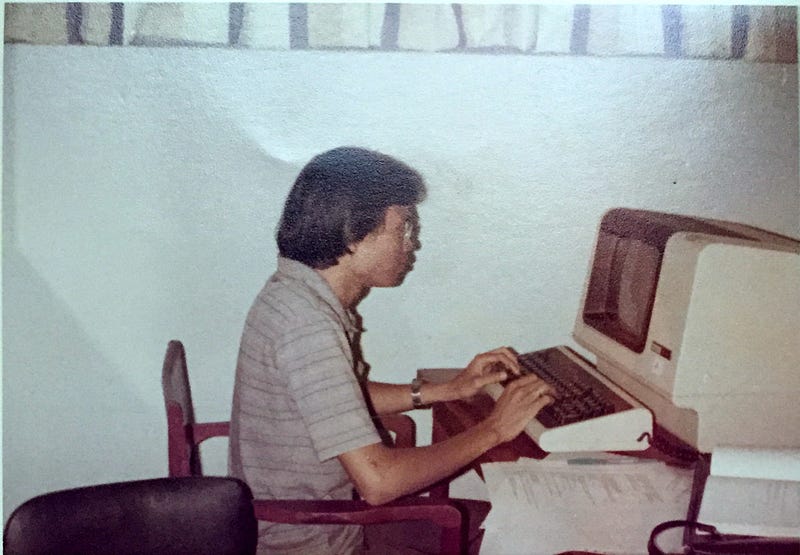
Author during the school kid days

Not a paid member? Click here to read the full story for free.

In my career now, there are two things I never envisioned or aspired to: (1) becoming a CEO and (2) starting my own business. Yet, life took me on an unexpected journey.

As a student, my only dream was to become a scientist who could invent robots. That dream remains unfulfilled. Back then, I hardly knew what being a “scientist” entailed.

Author in the teens.

I started my career as a lecturer. At that point, I couldn’t imagine pursuing any other career. I was dedicated to education, evolving from an Assistant Lecturer to a Lecturer and then to an Associate Professor.

Because I didn’t want to relocate to UTM Skudai, I took a bold step to leave academia for the private sector, joining Celcom. Over 13 years, I learned much about various aspects of the business, from R&D and billing to technology and network management. I was fortunate to experience such diversity in my roles.

Author during the young years.

When I moved to Mimos, I aimed to elevate the nation’s R&D standards. Working for a government agency fueled high hopes and ambitions, but my role remained unchanged after eight years. It felt as though my previous experiences were underutilized, a stark realization of potential wasted.

In my 31-year career, my resume only listed my aspiration to become a CTO until REDtone offered me a CEO position to establish a new IoT-focused subsidiary. That’s where I truly understood the nuances of running a business, especially in dealings with government entities.

After 2.5 years, I ventured into my own business with colleagues, which is a story for another time, focusing on my journey with FAVORIOT.

Author during the University’s days.

So, what have I learned through all this?

  1. Even if our dreams don’t materialize, the path life takes us on is a blessing in itself.
  2. We must excel in any task given to us, understanding that challenges will elevate us and lead to better opportunities.
  3. Our career journey teaches us lessons no book can offer. Facing real challenges helps us apply our knowledge to overcome adversities.
  4. Who says a career in academia can’t transition into the corporate world?
  5. Who says technical background folks can’t excel in business?
  6. Who says you can’t become a CEO one day?
  7. Who says bitter experiences can’t turn sweet eventually?
  8. Who says corporate professionals can’t be effective educators?
  9. Who says early retirement is necessary?
  10. Who says we can’t create something that shakes up the industry or the world?
  11. Diverse work experiences are invaluable and unique, whether in academia, private or government sectors, business, technical, operations, research, or product development.
  12. This doesn’t mean I’ve reached the end of my career or aspirations. There’s much more to achieve. I’m keen on giving back to the community and the younger generation, and there’s still so much more I want to learn. Learning never ends.

Each career phase has taught me that our aspirations evolve with our experiences and the roles we undertake.

What seemed unattainable at one point becomes just a step in our journey.

Whether transitioning from academia to the corporate world, embracing technical roles, or stepping into leadership positions, each transition brings its own set of lessons and opportunities for growth.

My journey from a passionate educator to a CEO and entrepreneur reflects the unpredictable yet rewarding nature of a career that embraces change, lifelong learning, and the pursuit of giving back.


View at Medium.comView at Medium.comView at Medium.comView at Medium.comView at Medium.com

The 4-Hour Work Week — Book Review

BOOK REVIEWS BY MAZLAN ABBAS

A Radical lifestyle overhaul.

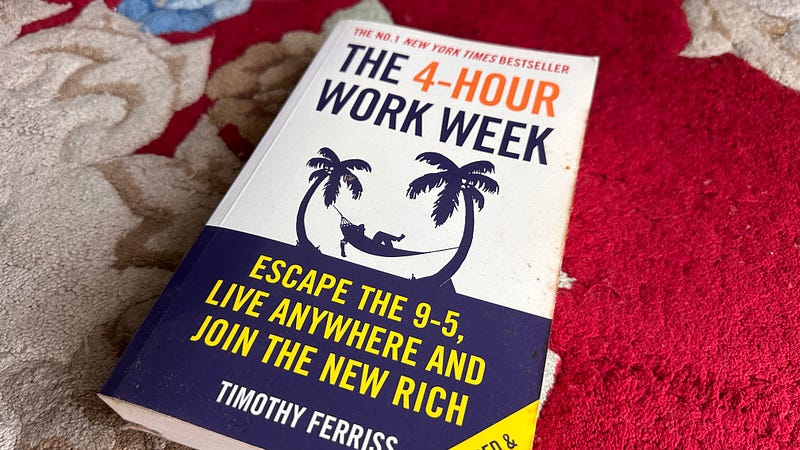
The 4-Hour Workweek

Not a member? Click here to read the whole story for free.

The quest for a balanced life seems almost impossible, especially for an overworked employee or an entrepreneur caught in the never-ending cycle of business demands.

Yet Timothy Ferriss’s “The 4-Hour Workweek” presents a compelling narrative that challenges the traditional work paradigm and offers a tantalizing glimpse into a lifestyle that prioritizes freedom, efficiency, and fulfillment.

As I read through the pages of this book, I found myself absorbed in a philosophy that seemed almost too good to be true yet undeniably alluring.

Ferriss’s book is not just a manual for restructuring one’s work life but a manifesto for a radical lifestyle overhaul.

The premise is audacious yet simple: reconfigure your life’s work into a four-hour week, leveraging the dividends of time and mobility to live a more prosperous life, both figuratively and literally.

The idea of joining the “New Rich” (NR), a group that embodies the pursuit of lifestyle design over the traditional earn-and-retire scheme, is at the heart of this narrative.

As an overworked entrepreneur myself, the prospect of escaping the 9–5 grind, living anywhere, and reclaiming time as my own resonated deeply.

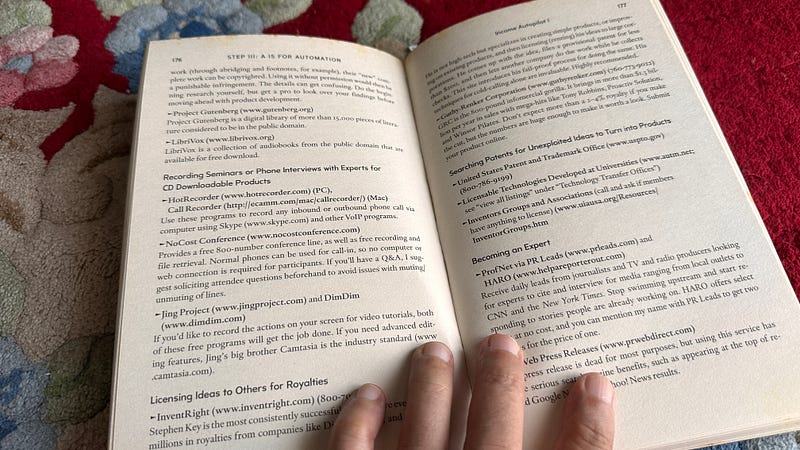
Ferriss provides a step-by-step guide to achieving this seemingly elusive goal, emphasizing eliminating inefficiencies, delegating tasks (notably through virtual assistants), and automating business processes.

The 4-Hour Workweek

The concept of outsourcing life tasks to focus on what truly matters was revolutionary and profoundly impactful.

One of the most enlightening sections of the book discusses the principle of a forgotten Italian economist, which advocates for focusing on the 20% of tasks that contribute to 80% of the results.

Applying this principle promises to reduce work hours and increase productivity and personal satisfaction dramatically.

The idea of achieving more with less is a principle that I found both applicable and transformative in my personal and professional life.

The narrative of Ferriss’s experiences, from tango dancing in Buenos Aires to skiing in the Andes, serves as a testament to the viability of this unconventional lifestyle.

These anecdotes are not mere boasting but illustrative examples of what becomes possible when we unshackle ourselves from the constraints of traditional employment.

Moreover, the book delves into the psychological barriers that often impede our willingness to embrace such radical change.

Fear, uncertainty, and the inertia of comfort are dissected, providing readers with a mental toolkit to overcome these obstacles.

The sections on cultivating selective ignorance and adopting a low-information diet were particularly transformative, offering strategies to reduce noise and focus on what is essential.

Yet, it is more than just about working less.

Ferriss also addresses the void that may arise when traditional work is absent, suggesting ways to infuse life with purpose and meaning beyond the workplace.

The book underscores the importance of creating a efficient and richly fulfilling life, whether through learning new skills, engaging in philanthropy, or pursuing passions.

However, it is crucial to acknowledge that “The 4-Hour Workweek” is not a one-size-fits-all solution.

The feasibility of Ferriss’s strategies can vary widely depending on individual circumstances, industry constraints, and personal responsibilities.

Nevertheless, questioning norms, challenging inefficiencies, and daring to live differently provide valuable insights for anyone entrapped by their work.

In conclusion, “The 4-Hour Workweek” is more than a book; it is a provocative challenge to the status quo and a blueprint for those daring enough to seek a different path.

It advocates for a life where work serves as a means to an end, not the end itself, promoting a lifestyle where freedom, passion, and productivity coexist.

Ferriss’s teachings offer hope and a call to action for overworked individuals seeking respite or entrepreneurs yearning for a new paradigm.

Whether fully embracing the “4-Hour” lifestyle or incorporating select principles, readers will find invaluable lessons in this transformative text.


Get this book, “The 4-Hour Workweek,” from Amazon. (Note: Affiliate links applicable)

Medium vs. Affiliate Marketing – Which is Better?

A Comparative Analysis of Earnings

Which Platform gives better income?

Medium vs Affiliate Earnings – Photo by Nick Morrison on Unsplash

I began my digital writing journey full of optimism, aiming to leverage affiliate marketing through book review articles.

My goal was clear — establish a passive income stream.

However, the outcome of this venture led me to a surprising discovery.

Despite my strategic efforts in affiliate marketing, my engagement with Medium proved more financially fruitful.

This revelation surprised me and prompted a thorough reassessment of my online monetization strategies, shedding light on the varied dynamics of digital content earnings.

Passive Income through Affiliate Marketing

My initial dive into affiliate marketing was motivated by its potential for passive income generation.

The premise was enticing — create engaging content, embed affiliate links, draw in readers, and earn commissions.

Yet, the reality was more complex and nuanced.

Despite my meticulous approach to crafting and placing affiliate links within my book reviews, the resulting earnings were disappointing — a mere $2.23, accounting for only 39% of my total income from these efforts.

More Lucrative Path on Medium

In contrast to my affiliate marketing outcomes, my endeavors on Medium revealed a more promising avenue for revenue.

The platform’s vast readership and supportive environment translated into $3.52 earnings from the same 14 articles, representing about 61% of my total income.

Though seemingly modest, these figures highlighted Medium’s key advantage—its potential to offer a more reliable and direct income source compared to the indirect and fluctuating nature of affiliate marketing.

Analyzing Platform Dynamics and Earnings Potential

Diving deeper into Medium and affiliate marketing details, I noted significant differences in their revenue models.

Medium rewards writers based on reader engagement and time spent on articles, establishing a link between content quality and earnings.

This contrasts with the uncertain and sporadic income from affiliate marketing, which relies heavily on consumer purchasing decisions.

Over two months, I observed that my Medium articles earned variably yet demonstrated the platform’s capacity to reward well-received content consistently.

Reflecting on Lessons Learned and Looking Ahead

Reflecting on this comparative analysis, I recognize that while I was initially drawn to affiliate marketing’s passive income promise, my experiences underline Medium’s superior stability and reliability as an income source for digital content creators.

Although affiliate marketing remains a potential income avenue, its success is less predictable and more influenced by external factors.

In contrast, Medium’s transparent and engagement-based revenue model offers a more stable and predictable earning path.


Photo by Myriam Jessier on Unsplash

This experience with Medium and affiliate marketing has been eye-opening, emphasizing the importance of platform choice in content monetization.

Medium’s model, predicated on direct engagement, offers more transparent and sustainable financial returns.

The insights gained from this experience will be instrumental in guiding my future strategies, reinforcing platform selection’s critical role in achieving success in online writing.


My Top Book Reviews:
1 — Get Backed — Book Review
2 — Starting a Tech Business — Book Review
3 — The Samsung Way — A Book Review


https://mazlanabbas.com/subscribe

Medium Uninvited Guests – Crypto Spammers

SPAM OR FAKE?

Have you received notifications of such followers lately?

Photo by Jievani Weerasinghe on Unsplash

I was very frustrated!

There I was, the little notification bell ringing cheerfully on my social media account, signaling new followers – yay, right?

The thrill of connecting, the anticipation of engaging conversations, and the excitement of expanding my digital footprint.

I mean, who doesn’t love that ping of validation? But then, the disappointment set in.

It started subtly.

At first, a couple of new followers here and there, their profiles gleaming with blockchain buzzwords and crypto catchphrases.

I thought, “Okay, diversity in my follower base, that’s cool.”

But soon, the trickle became a flood.

My notifications were no longer about genuine connections or people interested in my content.

Instead, they were dominated by these crypto enthusiasts, or should I say, evangelists?

Don’t get me wrong – I understand that cryptocurrency is a hot topic.

It’s revolutionary, it’s reshaping finance, it’s… everywhere.

But when I checked these profiles, my heart sank a bit.

They were void of personality, mere shells pushing the latest in digital currency dogma.

No personal photos, no biographies, just a relentless stream of crypto content.

It felt like every notification was an invitation not to connect but to be converted.

To what, you ask? A believer in the unstoppable march of cryptocurrency, apparently.

What’s more, there seemed to be an unspoken expectation that I should follow back.

As if my digital endorsement was a given, just because they clicked ‘follow’ on my profile.

But follow back whom, exactly?

A faceless, impersonal account that offered me no glimpse of the person behind the crypto curtain? It felt like the social media equivalent of a cold call, and it left me cold indeed.

I began to miss the days when a new follower meant a potential new friend or at least someone genuinely interested in what I had to say.

I missed the diversity of content, the heartfelt personal story, the passionate hobbyist sharing their latest project.

Instead, my followers notification feed started to look like a ticker tape of the crypto stock exchange.

And the irony?

InMedium to escape the constant bombardment of impersonal marketing and targeted ads, seeking instead a semblance of genuine human connection.

Yet here I was, facing an onslaught of faceless, fervent crypto crusaders, all expecting me to join their ranks, read their gospel, and perhaps, invest my hard-earned money into their digital dream.

It’s not that I’m anti-crypto.

I’m not.

I respect innovation and the drive to create new paradigms.

But when the line between connection and marketing blurs, when every new follower is just another sales pitch in disguise, it’s hard not to feel a bit disillusioned.

It’s becoming an annoyance.

I yearn for the days when my follower list was a tapestry of diverse, colorful threads, each representing a unique individual with their own stories, interests, and perspectives.

Not just a sea of sameness, awash with the cold, hard sheen of cryptocurrency.

But here’s the thing – I still believe in the power of social media to forge genuine connections, to bridge divides, and to foster community.

So I won’t be deterred.

I’ll keep sifting through the crypto chaff, looking for those golden grains of true engagement.

Because at the end of the day, it’s those real, human connections that matter most to me.

And who knows?

Maybe some of those crypto enthusiasts are real people seeking genuine interaction, too.

How about you? Do you receive the same kind of followers too?

What Medium Writers and Musicians Have in Common That You Should Know

Both musicians and writers are all about connecting with their audience.

Photo by Luwadlin Bosman on Unsplash

Not a member? Click here to read this full story for free.

Did you know that being a writer on Medium is a lot like being a musician?

It’s a pretty cool comparison because both gigs involve getting creative, putting in the work, and connecting with people.

Here are the common reasons why Medium writers are like the rock stars or indie artists of the writing world.

1. Getting Creative

So, whether you’re strumming a guitar or typing away, it’s all about letting your creativity flow.

Musicians mix melodies and lyrics to hit us right in the feels or get us thinking.

Medium writers?

They’re doing their thing with words, painting pictures in our minds, stirring up emotions, or dropping some knowledge.

Every note or word is like a little piece of a bigger masterpiece, making us sit up and pay attention.

2. Skills Matter Too

Alright, having a wild imagination is great, but you’ve got to have the skills to back it up.

Musicians need to know their way around their instruments, get the theory down, and keep their ears sharp.

Writers on Medium?

They have to nail their grammar, structure their stories correctly, and do their homework to ensure their writing is on point.

Being able to blend all that technical know-how with your creative side is what sets the real pros apart.

3. Practice Makes Perfect

Photo by Chase Yi on Unsplash

Whether you’re aiming to be the next big thing in music or writing, you’ve gotta put in the time.

Musicians live and breathe their tunes, practicing for hours and consistently trying to up their game.

Writers on Medium are in the same boat, constantly drafting, editing, and fine-tuning their pieces.

Plus, reading helps them stay sharp and in tune with what’s hot.

It’s all about that grind to get better.

4. It’s Showtime

Here’s where it gets real.

Both musicians and writers are all about connecting with their audience.

Musicians hit the stage, pouring their hearts out and hoping to make a lasting impression.

Medium writers?

They hit ‘publish,’ sharing their thoughts or stories and looking to spark conversations or share new perspectives.

Getting feedback is key in both scenes, helping artists grow and vibe with their fans.

5. Better Together

Photo by Austin Loveing on Unsplash

Even though writing and making music can feel like solo journeys, they’re pretty communal.

Musicians jam with other artists or work with producers to find their sound.

On Medium, writers can collaborate with editors or bounce ideas off other writers.

Plus, there’s this whole community vibe where everyone shares the highs and lows and roots for each other.

6. Keeping It Real

At the end of the day, it’s all about being true to yourself.

Musicians use their tunes to share their stories or take a stand.

Medium writers?

They pour their experiences, opinions, and life lessons into their articles.

This real talk strikes a chord with folks and makes the work stand out.

7. Always Evolving

Both music and writing never stand still—they’re always morphing, with artists trying out new styles or exploring fresh ideas.

Musicians might mix genres or play with new sounds, while Medium writers could experiment with different kinds of articles, mix in some multimedia, or tackle the latest hot topics.

It keeps things exciting and forward-moving.

8. Leaving a Mark

Photo by Kobe Subramaniam on Unsplash

Lastly, both musicians and writers on Medium have this chance to leave a mark, to create something that will last and make a difference.

Music has the magical power to transcend time and cultures, and great writing can shift views, kickstart conversations, or just stay with someone long after they’ve read it.

It’s all about making stuff that matters and lasts.

So, to wrap this up, seeing Medium writing as a kind of musicianship highlights how both paths involve pouring out one’s heart, honing one’s craft, and touching lives.

Whether you belt out a tune or craft a killer article, you’re making art that resonates and sticks with people.

And that’s pretty awesome, right?


https://mazlanabbas.com/subscribe