Throughout 2023, I diligently crafted over 100 articles, yet disappointingly, more than 80% garnered fewer than ten views each.
This was disheartening and exhausting.
The purpose of writing is to communicate our thoughts and insights to our audience, yet, for a significant part of the year, my follower count stagnated.
Reflecting on this, I realized several errors in my approach.
Below are the crucial mistakes I identified and my resolve to rectify them in the upcoming year.
Personal Reflections on My Writing Shortcomings in 2023
Embracing Emotional Resonance:I acknowledge that my previous writings lacked emotional engagement, often feeling mechanical and distant. Moving forward, I am committed to writing with authenticity and passion, aiming to connect genuinely with my readers.
Prioritizing Problem-Solving: I recognize my past focus on imparting knowledge without addressing real-life applications or solutions. In 2024, I will strive to provide actionable insights and solve pertinent issues, thereby adding substantial value for my readers.
Engaging With My Audience:I realize the importance of selecting topics that resonate with my audience. In this 2024 year, I pledge to tune into their interests and needs, fostering a stronger connection through relevant and impactful content.
Mastering Headlines and SEO:I’ve learned the significance of compelling headlines and search engine optimization. By enhancing these aspects, I aim to broaden my reach and ensure my writings are easily discoverable and engaging.
Simplifying My Language:Reflecting on my past work, I see the necessity of avoiding overly complex sentences. I will focus on clarity and accessibility, making my articles easier to read and understand.
Building Genuine Connections:I intend to deepen my engagement with fellow writers, moving beyond superficial interactions. By fostering sincere relationships, I can learn, grow, and contribute to a supportive writing community.
Strategizing Content Republishing: I acknowledge the ineffectiveness of republishing old content without a clear strategy or updates. I plan to rejuvenate my previous articles thoughtfully, ensuring they offer fresh insights and remain relevant.
Staying Abreast of Trends:I have realized my oversight in not leveraging trending topics within my field. In 2024, I aim to stay informed and capitalize on current discussions, attracting a broader audience through timely and pertinent content.
Offering Practical Guides: I see the value in providing practical, step-by-step guidance in my writings. I will incorporate more “How-To” articles, offering readers clear, actionable advice that they can readily implement.
Sharing My Writing Journey: I have not consistently shared my personal writing experiences, triumphs, and setbacks. By opening up about my journey, I hope to inspire and connect with others on a more personal level.
These reflections are a condensed version of my learnings, guiding my path to improved writing in 2024.
Why I Now Prefer Panel Discussions Over Solo Presentations
Throughout my career, I’ve had the privilege of being invited to speak at various conferences, a role I initially cherished for the autonomy and control it afforded me.
As a speaker, I could meticulously plan my presentation, control the flow of my talk, and ensure that every slide was a perfect reflection of the points I wanted to convey.
This level of preparation provided me a comfort zone, a safe harbor in the sometimes unpredictable sea of public speaking.
Transitioning from Speaker to Panelist
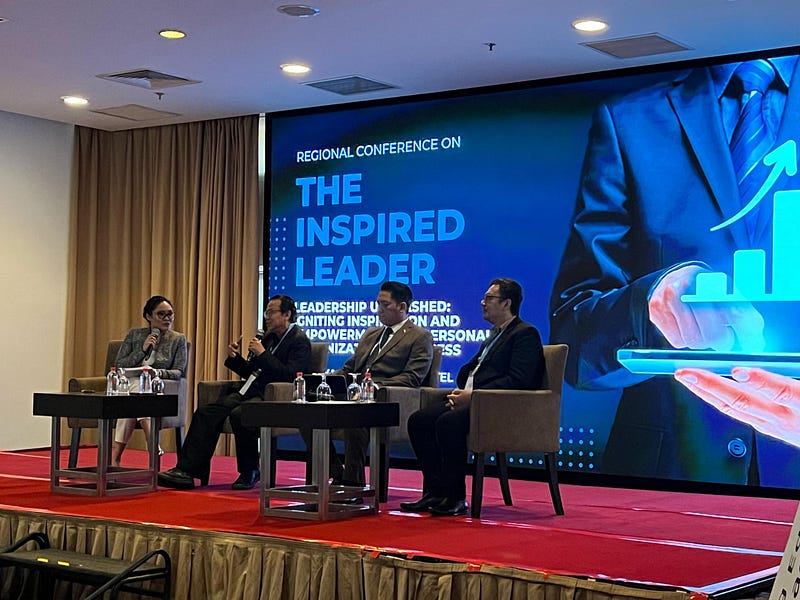
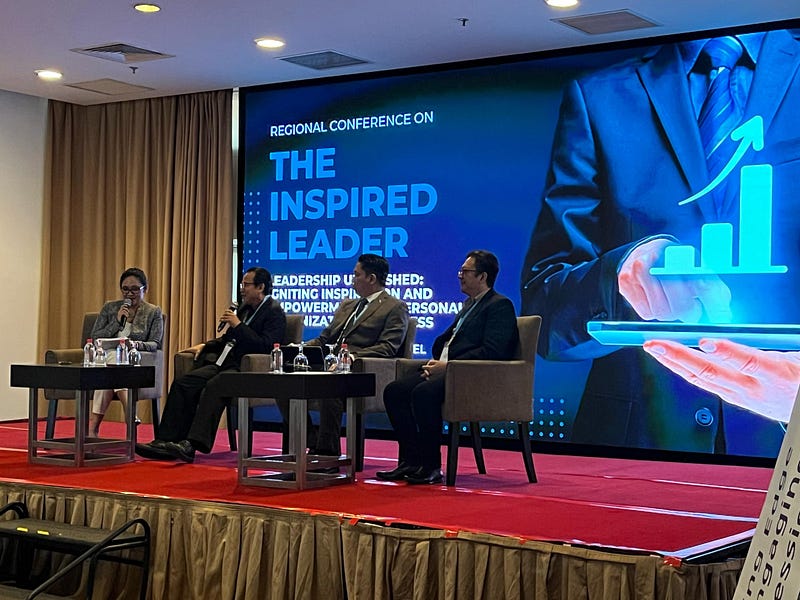
However, my experiences took an interesting turn when I began receiving invitations not as a sole speaker but as a panelist.
The dynamics of panel discussions are inherently different: instead of a monologue, it’s a dialogue – not just between the panelists but with the audience as well.
Suddenly, I found myself on stage with two or three other experts, each with their unique perspectives and areas of expertise, all under the guidance of a moderator whose job was to weave our individual narratives into a cohesive, engaging session.
Initially, this new role was a source of anxiety.
Sitting on stage, not knowing exactly what question would come next, I worried about whether I would be able to respond with the right mix of fact, insight, and eloquence.
Would I be able to hold the audience’s attention? Could I contribute meaningfully to the discussion and hold my own alongside my fellow panelists?
Over time, however, I discovered that most panels are less daunting than they seem.
Panelists often receive a set of questions in advance, allowing us to prepare our thoughts and consider our responses.
Some organizers even allow panelists to suggest questions, providing an opportunity to steer the conversation toward areas of our expertise or interest.
Facing Uncertainty on Stage
But even the best preparations can’t cover everything, and there are always moments when the moderator goes off-script or delves deeper into a topic than the prepared questions had anticipated.
In these situations, I learned the value of active listening, staying fully engaged not just when it was my turn to speak but throughout the entire session.
This attentiveness helped me respond more thoughtfully and dynamically, weaving my responses into the ongoing narrative of the discussion rather than delivering pre-packaged answers.
Preparation Meets Improvisation
In my early days as a panelist, I considered bringing notes on stage, a safety net of bullet points and facts. Yet, this approach soon felt contrived, more like a performance than a genuine conversation.
I realized that true professionalism in this context meant showing up authentically, ready to engage with the topic and the audience without the crutch of scripted responses.
To navigate these live, unscripted moments, I developed a technique akin to a mental mind map.
When listening to a question or another panelist’s response, I’d quickly organize my thoughts, connecting the dots between the discussion points and my own knowledge and experiences.
This mental mapping allowed me to respond more fluidly, adding depth and context to the conversation.
The Power of Humor and Storytelling
Humor became another tool in my arsenal, a way to lighten the mood and connect more personally with the audience.
Even in serious discussions, a well-placed joke or anecdote can humanize the panelists, breaking down barriers and fostering a more engaging, relatable session.
Building on Collective Insights
I also learned the value of building on my fellow panelists’ points, weaving their insights into my responses to create a richer, more interconnected dialogue.
This collaborative approach not only enriched the content of the discussion but also highlighted the collective expertise of the panel, creating a more compelling and informative experience for the audience.
Over time, my perspective on panel discussions has transformed.
What once felt like a daunting challenge has become a preferred format, offering a dynamic and interactive forum that forgoes the rigidity of prepared slides for the spontaneity of real conversation.
Today, I embrace these opportunities, confident in my ability to contribute thoughtfully and authentically, no matter where the discussion may lead.
Unintended Consequences: When Medium’s Guard Against Bots Backfires. Photo by Fabien TWB on Unsplash
A Writer’s Worst Nightmare – The Day My Followers Vanished
Did you notice this curious situation with Medium and its recent follower fiasco, which, honestly, has more twists and turns than a high-speed chase scene in an action movie.
So here I was, minding my own business, when I started noticing a dip in my Medium follower count.
At first, I thought, “Maybe my last article wasn’t a hit?”
But when I saw other writers voicing the same concern (for example DeryaSefer mentioned in her “Is The “Great Medium Purge” Over?” article recently), I realized it wasn’t just me. Something bigger was happening.
After poking around a bit, I discovered that Medium had launched a crackdown on scammers and fake accounts.
On paper, that sounds fantastic, right?
No one wants their feed cluttered with spam or to be duped by some bot.
But as the numbers dwindled, it became clear that some genuine accounts were also getting axed in the process. That’s where things got messy.
Now, losing followers is a bummer for anyone trying to build a presence or a brand.
But for genuine writers and creators who’ve poured their soul into their work, watching their follower count drop for no fault of their own? That’s heartbreaking.
And it begs the question: How did the real accounts get mistaken for fake ones?
One theory is that some users might have mistakenly reported genuine accounts.
But this feels like a tech-savvy platform like Medium should have safeguards against such mishaps, right?
Unfortunately, even the best systems aren’t foolproof, and it seems like some genuine creators got caught in the net meant for the bad guys.
My Nightmare with Instagram
This whole debacle reminds me of a personal nightmare I had with Instagram.
I find out there’s an imposter account out there, parading around with my identity, using my profile photo, and my personal album.
Creepy, right?
Naturally, I reported it, expecting Instagram to leap into action and take down the fraudster.
But here’s the kicker: Instead of targeting the imposter, Instagram blocked my account.
My genuine, real-deal, this-is-me account. I reached out to their customer service, tried every avenue available to plead my case, but hit wall after wall.
In the end, I couldn’t get my account back.
This experience was frustrating, to say the least.
It showed me firsthand how these well-intentioned measures to protect users can backfire spectacularly.
Medium is purging the Bots?
And now, seeing something similar unfold on Medium, it feels like déjà vu.
The impact of such blunders isn’t just a number game.
It’s about the trust and connection between platforms and creators.
Every time a genuine account gets unfairly penalized, it chips away at that trust.
For emerging writers and creators, building an audience is tough enough without these hurdles.
And when they see their hard-earned followers vanish overnight, it can be a major setback, not just numerically but also mentally and emotionally.
So, what can be done?
First off, platforms need to refine their detection mechanisms. They need to ensure that their nets catch the right fish, so to speak.
Second, there should be a more transparent and efficient process for appealing wrongful actions. No one should be left shouting into the void, like I was with Instagram.
Moreover, this situation highlights the importance of not putting all your eggs in one basket.
Relying solely on one platform for your audience and reach is risky, as these incidents show.
Diversifying your presence across multiple platforms can provide a safety net if one goes haywire.
While the intent behind cleaning up platforms is commendable, it’s vital that these actions don’t penalize the very users they aim to protect.
The balance between security and fairness is a delicate one, and as these platforms evolve, one can only hope that they find better ways to distinguish the good guys from the bad.
To all my fellow creators feeling the pinch of lost followers, I feel you.
It’s a frustrating ordeal, but it’s also a reminder of the resilience needed in the digital age.
We adapt, we reach out, we diversify, and above all, we keep creating, no matter what the follower count says.
After all, our true value isn’t just a number on a screen — it’s in the content we create and the impact we make.
“Letting go of meticulous tracking was not a step back, but a leap forward into a more intuitive and fulfilling way of connecting with my audience.”
It’s been a wild ride with ups and downs, but I learned a lot along the way. Photo from Unsplash.
I want to share my little adventure into the world of self-discipline and organization, particularly focusing on my writing and publishing journey on Medium.
It’s been a wild ride with ups and downs, but I learned a lot along the way.
It all started when I noticed that my writing and publishing were all over the place.
Some days I felt like a content-producing machine, while on others, I couldn’t even muster up the energy to type a single word.
My posts were random, my thoughts scattered, and my audience engagement was as unpredictable as the weather.
I knew I needed a change, a structure to bring some order to my chaos.
So, with a burst of motivation, I decided to discipline myself and structure my writing and publishing process.
The plan was simple: track everything in an Excel spreadsheet.
I wanted to record data that captured the date and time of my postings, whether the article was behind a paywall or not, if I needed to notify my email subscribers, and whether the article was ready to publish.
It sounded like a foolproof plan, right?
For about 1.5 weeks, I was on it.
I meticulously entered data into my spreadsheet after each post. It felt good at first, like I was in control of my content.
I could see patterns emerging and thought I was onto something big.
I had visions of optimizing my posting schedule to the minute, maximizing my audience engagement, and perhaps even predicting the future!
But let me tell you, it was exhausting.
The initial thrill of organization quickly gave way to the tedium of data entry.
Every post became a chore, another row to fill, another set of cells to format. The joy of writing and sharing my thoughts was overshadowed by the mechanical process of tracking everything.
And so, after almost 1.5 weeks, I gave up. I just couldn’t keep up with the self-imposed bureaucracy.
Now, I’ve adopted a simpler approach to scheduling my posts.
Instead of getting bogged down in the minutiae, I focus on a broader strategy.
I discovered that posting just before midnight (Malaysian time) yields the best engagement for my audience.
This revelation was quite a surprise and highlighted the importance of timing in content publishing.
The difference between my old random posting and my current semi-structured schedule is night and day.
My audience knows when to expect new content, and I can prepare my posts in advance, ensuring they’re of higher quality and better thought out.
It’s a more relaxed approach, but it’s far more sustainable and enjoyable for me.
Through this experience, I learned a valuable lesson: balance is key.
While it’s important to have some structure and discipline in your work, especially when you’re aiming to build an audience and engage with them regularly, it’s equally important not to get lost in the details.
The essence of writing — sharing ideas, expressing thoughts, connecting with others — should always come first.
In the end, I’ve found a rhythm that works for me.
It’s not as strict as my initial plan, but it’s effective.
My posts are more consistent, my audience engagement has improved, and, most importantly, I enjoy the process.
Writing is a passion, and while discipline is necessary to harness it, it should never extinguish the joy it brings.
So, to anyone struggling to find their footing in the world of online content creation, remember this: find your balance.
Don’t be afraid to try different methods to find what works best for you, but always keep your love for writing at the forefront.
It’s a journey, with its share of trials and errors, but it’s worth every step.
Remember to Subscribe to receive email updates on every post I publish.
The Truth Behind Fake Videos: Influencers’ Quest for Instant Fame.
Photo by Markus Winkler on Unsplash
I’ve been mulling over this whole hoo-hah with influencers churning out fake videos, and it’s really crazy, let me tell ya.
Have you noticed it too?
It’s like everywhere I look, there’s some new drama or another unfolding, all because someone decided to cut corners for a quick fame fix.
So, here’s the deal: Influencers, right?
They’re the folks we look up to (or love to hate-watch, no judgment here), expecting them to be our guides in this ever-mystifying digital world. But then, bam!
We get hit with the reality that some of them are just putting on a show.
It’s like, “Hey, remember that hilarious prank video? Totally staged!” or “That glow-up tutorial? Yeah, more like a Photoshop tutorial.”
It makes you wonder what’s real anymore.
I remember scrolling through my feed one day, thinking, “Wow, these people have such perfect lives!”
But then I stumbled upon a behind-the-scenes exposé. It was eye-opening.
Like, those “candid” shots? Staged.
Those spontaneous beach day laughs? Scripted.
It was a whole Truman Show vibe, and not in a cool, philosophical way.
It got me thinking, “Why do they do it?” Well, it’s the chase for likes, comments, and that sweet, sweet influencer status.
They stage pranks, create fake scenarios, and man, the drama – it’s like a reality TV show, but you’re not always in on the joke.
And then there’s the dark art of buying followers and engagement.
Have you seen someone sitting in a dimly lit room, credit card in hand, buying their way to internet fame.
It’s kind of sad when you think about it, right?
Here’s a dialogue that runs through my mind:
Me:“Why bother with all the hard work when you can just buy your fame?”
Inner Voice:“Because, my dear, real respect and admiration are earned, not bought.”
But it gets worse.
They don’t just stop at faux fans; they go all out with manipulated photos, videos, and even fake reviews.
Ever seen a product online with rave reviews, bought it, and then wondered if you got the wrong item because it was nothing like what was promised?
Yeah, that’s the magic of fake endorsements.
Imagine being so desperate to stay relevant that you’d lie about who you are or what you’ve achieved.
It’s one thing to share your highlights, but fabricating your life story? That’s a whole new level of insecurity.
Now, you might be thinking, “What’s the big deal? It’s just the internet.”
But here’s the kicker: once you’re caught in a lie, it’s game over, buddy.
Trust, once broken, is like fixing a mirror – you might piece it back together, but the cracks are always there.
Me:“So what if they lose a few followers? They can always buy more, right?”
Inner Voice:“Ah, but can you buy genuine respect or credibility? I think not.”
And it’s not just about losing face.
There are legal consequences, too. Like, hello, false advertising, much?
And don’t even get me started on the mental toll it takes on these influencers.
Maintaining a facade is exhausting, and for what?
A fleeting sense of validation?
Let’s chat about why it’s so toxic for their reputation.
When the truth comes out – and it always does – those influencers are left with nothing but a tarnished name and a bunch of “I told you so” comments.
Me:“But surely, they can just start over, right? Apologize and move on?”
Inner Voice:“True, people love a good redemption story. But the internet never forgets. That stain on their reputation? It lingers.”
While faking it till you make it might seem tempting, the fallout just isn’t worth it.
Influencers have the power to inspire, entertain, and even educate.
But when they choose deception over authenticity, they’re not just betraying their audience; they’re sabotaging their own chance at genuine success.
Remember – in a world full of filters and fakery, being real is your best asset.
Don’t trade your authenticity for approval. It’s a price too high to pay, and that, my friends, is the real tea.
Writing transition. Photo by Yannick Pulver on Unsplash
You see, for the past four months, I’ve been grinding away at my keyboard, churning out content like there’s no tomorrow.
Entrepreneurship, thought leadership, IoT – these were my jam.
I poured my heart and soul into dissecting these topics, sharing my insights on Medium, and connecting with an audience that seemed to dig what I had to say.
But here’s the thing: after a while, the well of inspiration started to run dry.
It’s not that I fell out of love with these subjects per se, but the excitement, the spark that fueled my late-night writing marathons, began to flicker.
I found myself staring blankly at the screen, the cursor blinking mockingly as if to say, “What’s next, genius?”
In a moment of desperation – or maybe it was inspiration – I decided to shake things up.
I ventured into the uncharted territories of poetry and travelogues.
Quite the leap, right?
Poetry, with its rhythm and raw emotion, offered a refreshing escape from the structured, analytical writing I was used to.
And travelogues?
They allowed me to relive my adventures across the globe, sharing not just the sights and sounds but the feelings and revelations that came with them.
Now, I won’t lie: this pivot gave me the jitters.
What would my followers think?
Would they stick around for this new, unpredictable journey, or would they hit the ‘unsubscribe’ button faster than you can say “existential crisis”?
And what about potential new followers?
Could my tales of wanderlust and verses of introspection lure in a crowd that shares these new passions?
Despite the uncertainty, I knew I had to follow my gut.
Writing, at least for me, is an extension of who I am.
If my interests evolve, shouldn’t my writing reflect that?
Sticking to the same old topics, even if they were once my bread and butter, would feel disingenuous.
And honestly, without passion, what’s the point? I didn’t start writing on Medium to become a robot, mechanically pumping out content devoid of any real connection or emotion.
Of course, with change comes sacrifice.
My daily earnings took a hit – a significant one, to be honest.
Watching those numbers dwindle was like a punch to the gut, a tangible reminder of the risks I was taking.
But here’s how I see it: life’s too short to spend it doing something that no longer lights a fire in your soul.
Money, while necessary, isn’t everything.
Fulfillment, joy, authenticity – these are the things that matter in the long run.
So, here I am, navigating this new chapter with a mix of trepidation and excitement.
Some days, I question my sanity, wondering if I’ve made a colossal mistake.
Other days, I feel more alive than ever, invigorated by the freedom to explore and express myself in new ways.
To those who’ve stuck around, I’m endlessly grateful. Your support means the world to me, truly.
And to those who’ve moved on, I hold no grudges.
We’re all on our own journeys, seeking content that resonates, that speaks to our souls.
As for future followers, I welcome you with open arms.
Whether you’re here for the poetry, the travel tales, or something in between, I hope you find a bit of magic in my words, a spark that lights up even the darkest of days.
This shift may not be easy, and there’s no telling where it’ll lead, but one thing’s for sure: I’m committed to staying true to myself, to writing with passion and purpose.
After all, isn’t that what life’s all about?
Taking risks, embracing change, and finding joy in the journey, wherever it may lead.
So here’s to the next chapter, to new adventures in writing and beyond.
Cheers!
Travelogue and Poetry. Photo by Aman Shrivastava on Unsplash
Although I didn’t achieve my target and none of my articles earned beyond the $10 mark, I can still analyze what works and what doesn’t.
Here are the top three things that I discovered and the lessons I learned:
1 — Audience Engagement is Everything
Whether it’s understanding what my readers prefer through AI analysis or recognizing the shift in social media metrics from follower count to engagement, it’s crystal clear that what truly matters is how my audience interacts with my content.
This engagement — be it through claps, comments, or shares — drives visibility, fosters community, and ultimately, spells success more than any vanity metric could.
2 — Authenticity and Value Trump Volume
Across these articles, whether discussing content creation on Medium or rethinking my follower strategy, the underlying theme is authenticity.
Creating content that’s genuinely valuable, that speaks to personal experiences, and offers real insights or assistance is far more rewarding and impactful than merely playing the numbers game.
It’s about resonating with readers or followers on a meaningful level, not just broadcasting to the masses.
3 — Strategic Reflection and Adaptation are Key
Be it leveraging AI for content analysis, reassessing social media strategies, or finding clarity in solitude, these top articles underscore the importance of strategic reflection.
It’s not just about churning out content or mindlessly following growth hacks.
It’s about pausing, analyzing, and adapting strategies based on introspection and insights — whether those come from data, expert advice, or personal reflection.
I utilized AI to analyze my top 28 Medium articles to uncover the themes that truly engage my audience and enhance my financial success.
This exploration showed that my readers prefer content that emphasizes writing enhancement, personal development, stories of success on Medium, perseverance, insightful strategies, and the clever integration of technology into writing.
The articles that earned the most offered practical guidance, motivational stories, and valuable insights on how to leverage Medium for growth and revenue.
Pieces that were reflective and analytical, particularly those that shared personal journeys and strategic tips, attracted considerable interest.
This suggests a clear preference among my audience for content that melds inspirational and pragmatic elements, all within the context of writing and earning on Medium.
In my journey as an influencer, I’ve learned that follower count is no longer the benchmark of success on social media, a revelation supported by insights from digital marketing expert Neil Patel.
Despite having millions of followers, the real success metric has shifted towards engagement — how much interaction your content receives through likes, comments, and shares.
The transformation in social media algorithms now favors content engagement over sheer follower numbers, allowing those with fewer followers but high engagement to achieve greater visibility.
This evolution underscores the importance of creating valuable, engaging content rather than fixating on increasing follower count.
In essence, the focus should be on fostering community and connection, providing meaningful stories and experiences that resonate with and captivate your audience.
I often immerse myself in Medium, dedicating numerous hours that some might view as ‘wasted.’ However, this time is a strategic investment that significantly benefits my personal and professional growth.
My engagement with Medium allows me to monetize my passion for writing through its partner program, creating a valuable income source.
It’s also a platform where I’ve built a vibrant community, connecting with individuals who share my interests and can potentially collaborate or support my ventures.
Additionally, Medium helps me expand my email list and drive traffic to my eBook stores, enhancing my revenue and online presence.
By sharing my expertise, particularly in the Internet of Things (IoT), I establish myself as a thought leader, which opens up further opportunities. My startup, Favoriot, gains visibility and credibility through my posts, fostering trust and unveiling new business possibilities.
Moreover, Medium’s robust SEO boosts my articles’ online reach, enhancing my visibility and personal brand.
In essence, Medium is an invaluable resource that propels my professional endeavors, far from being a mere pastime.
When I face tough challenges, I often find solace and clarity in solitude, particularly in a tranquil garden spot outside my office.
It’s there, amidst the gentle breeze and the morning sun, that my mind begins to unravel, allowing me to delve deep into introspection.
I question, analyze, and reflect on my entrepreneurial journey, considering the hurdles and the triumphs. This quiet moment alone is vital for me to maintain perspective, to appreciate the dedication of my team unknowingly supporting the weight of my concerns.
Writing, then, becomes an extension of this solitude — a means to articulate and share my experiences, to connect with others, and perhaps to find a semblance of therapy in expressing myself.
My articles are not just narratives; they are fragments of my essence, aiming to inspire or assist others while inviting them into my world.
This cycle of contemplation and expression in my solitary retreat is crucial, grounding me and equipping me to face another day with renewed vigor and clarity.
I’ve always been perplexed by the dynamics of gaining followers on Medium until I discovered a strategy suggesting that following people back could boost my own follower count.
So, I embarked on a selective following spree, targeting users who actively clapped for articles I enjoyed, under the impression that we shared similar interests.
This approach indeed escalated my follower numbers to over 1,700, but at the cost of following more than 4,400 people, which skewed my followers-to-following ratio unfavorably. Recognizing the need for authenticity and balance, I’ve decided to halt the aggressive following strategy.
Now, I will only reciprocate follows from those genuinely interested in my content, aiming for a more organic and meaningful connection with my audience.
Here’s to finding a harmonious balance in my social media presence and forging genuine connections without the numbers game overshadowing my true intent.
[Note: Click here to have FREE access to this member-only story]
I’ve got a gem for you!
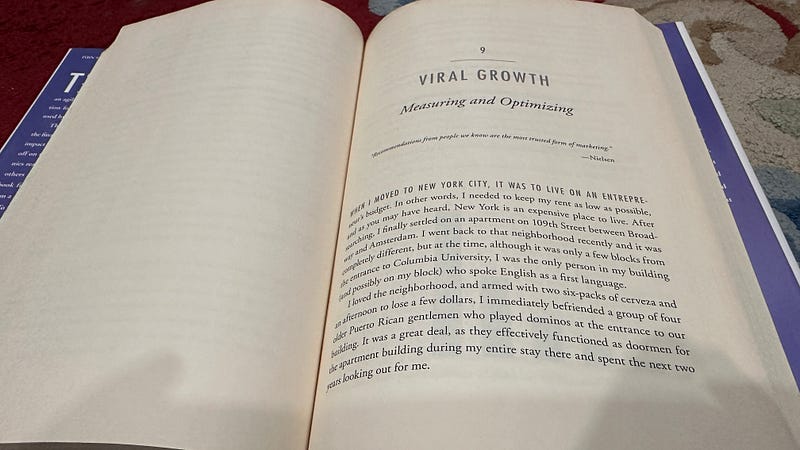
“The Science of Growth” by Sean Ammirati is like the GPS for scaling your business, and let me tell you, it’s spot-on and timely.
Now, I know we’ve all been bombarded with advice on growth, and you might be wondering, “Why this book?”
Well, for starters, Ammirati isn’t just throwing theories at you.
He’s walked the walk as a venture capitalist and educator, and this book is packed with real-world insights that get down to the nitty-gritty of scaling.
What really hooked me were the case studies – oh, the case studies! Imagine getting a behind-the-scenes look at why one company rockets to success while its counterpart stumbles.
It’s like being a fly on the wall in the boardrooms of LinkedIn, Facebook, and McDonald’s, witnessing the decisions that propelled them to stardom or doomed them to obscurity.
But it’s not just about the stories.
Ammirati digs into the “why” and “how” with a fine-tooth comb. He pinpoints the crucial decisions and strategies that can make or break your growth phase.
We’re talking partnerships, financing, data utilization – all the stuff that, let’s be honest, can get overwhelming.
This book breaks it down into digestible, actionable insights.
For me, the biggest takeaway was understanding that growth isn’t just about hustling harder; it’s about making smart, strategic choices.
And what’s more empowering than learning from those who’ve already played the game and won… or lost?
So, whether you’re knee-deep in your startup journey or just plotting your course, “The Science of Growth” should be on your reading list.
It’s not just a book; it’s a roadmap to scaling your business with intelligence and insight.
Trust me, you don’t want to miss out on this one.
It’s a read that could very well shape the future of your venture. Happy scaling!
The last couple of months have been a rollercoaster for me, at least when it comes to my Medium earnings.
December 2023 and January 2024 were phenomenal – I mean, I was on cloud nine, seeing those numbers go up. “This is it,” I thought, “I’m finally making a breakthrough!”
But then, February rolled around, and let’s just say, the excitement started to wear off.
The results were… underwhelming, to say the least.
Some days, I’d log in, eager to see my progress, only to find a few cents added to my account.
“What’s going on?” I’d mutter to myself, staring blankly at the screen.
It was like someone had popped my happy bubble with a sharp needle.
I’ve been publishing like a machine – daily, sometimes even twice a day. So, what went wrong?
As I sat there, staring at my laptop, I started to ponder over my recent Medium activities.
A lightbulb went off – “Ah-ha!” It dawned on me that I’d been less engaged with other writers.
My interaction levels had plummeted.
Sure, the claps were still coming in, but when was the last time I left a meaningful comment on someone else’s work? “Hmm, can’t remember,” I whispered to myself.
The truth is, I’ve been so caught up in churning out content that I forgot the essence of being part of a community.
Reading others’ posts and engaging with them wasn’t just a chore; it was what made the platform special.
Perhaps my articles weren’t hitting the mark anymore.
I’ve been writing a lot about Medium tips and stories, but let’s face it – those topics are becoming as stale as last week’s bread.
“Do people even find these interesting anymore?” I questioned, tapping my pen against the notebook.
It’s not just the content, though.
Could it be writer’s block, or am I just tired?
The thought of taking a break crossed my mind. “Maybe I need to step back, recharge, and find inspiration elsewhere,”
I mused, staring out the window.
The idea of reading for fun, without the pressure of monetizing every word, suddenly seemed appealing.
So, what do you think?
Should I give myself the permission to take a step back and just enjoy being a reader for a while?
Maybe that’s the reset button I need to hit. After all, writing should bring joy, not just cents and dollars.
The Challenges in Building University’s IoT Projects
Use this method to demonstrate a great IoT project.
Collect, Aggregate, and Visualise the IoT Project in a Rapid Manner
[Note: Click here to have FREE access to this member-only story]
Let me share a bit about my experience listening to the struggles faced by university students who have to tackle an IoT project for their final year.
It’s fascinating and a bit daunting, to be honest.
Most students get the gist of what IoT is capable of, but when it comes down to actually building their projects, they hit some real roadblocks.
The challenges of building an IoT project
First off, there’s the hardware side of things.
It’s not just about slapping together some components; it requires genuine electrical and electronics know-how, which not everyone has.
Then, there’s the programming aspect — getting the IoT device to do what you want, or setting up an app to make sense of the data.
And speaking of data, the third hurdle is figuring out how to collect it from the sensors, store it properly, and then pull it out again for useful stuff like dashboard visualizations or app functions.
These steps can eat up a ton of time, especially if you’re trying to do it all solo.
From what I’ve seen, a student working alone often ends up with a simpler demo, not because they lack ideas, but because of resource and skill limitations.
Funding and team projects
While some universities don’t provide any funding for these projects, others might give just enough to cobble together a basic IoT setup.
In contrast, when students work in teams, they can pool their resources and skills, often leading to a more sophisticated project outcome.
That’s why I think it’s smarter for students to play to their strengths.
If you’re good with hardware, focus on that; if you’re a whiz at coding or data analysis, make that your centerpiece.
And here’s a bit of advice: don’t sweat the middleware or setting up a server from scratch.
Platforms like Favoriot can be a real game-changer.
They simplify device onboarding, streamline data collection, and offer ready-made dashboard widgets for customization.
This approach can free students up to concentrate on what they do best, whether that’s engineering a neat piece of hardware or developing killer app functionality, leading to a more polished and impressive final project.










 Dr. Mazlan Abbas