The Dilemma of Publishing an Article During Weekends

WRITER’S DILEMMA

You never know until you try.
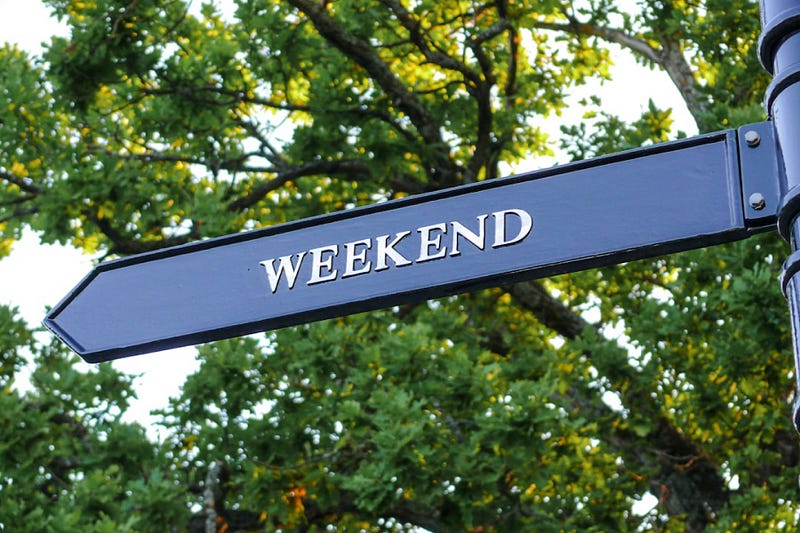
Photo by Hansjörg Keller on Unsplash

When I first stumbled upon the article “Should I Publish an Article During the Weekend?” on Medium, it struck a chord with me.

As someone who has been navigating the waters of writing and publishing for quite some time, the question of timing has often perplexed me.

Does it matter when I hit ‘publish’?” I wondered, staring at my draft on the screen.

My journey through the tech world, academia, and entrepreneurship had taught me many lessons, but the nuances of content publishing were a new frontier.

Photo by Christina @ wocintechchat.com on Unsplash

Should I write on weekdays or weekends?” This question stayed with me as I remembered my first experience on Medium.

It was a leap into the unknown, driven by a desire to share my insights on IoT, smart cities, and the myriad experiences that shaped my career.

But timing?

That seemed like a trivial detail at first, yet the more I delved into it, the more I realized its potential impact.

I began reflecting on my routine. ”Weekdays are hectic,” I thought, considering the endless stream of meetings, emails, and the constant juggling act that defined my professional life.

On the other hand, weekends offered a semblance of calm – a time to unwind and reflect.

Photo by Haley Phelps on Unsplash

Isn’t that when most people have time to read?” I pondered, but the article seemed to indicate otherwise.

The author mentioned the importance of understanding your audience.

Who am I writing for?” I asked myself.

My readers were diverse – tech enthusiasts, entrepreneurs, academics, and students.

What are they doing on weekends?” I pondered, realizing that their routines might be as varied as mine.

Some might catch up on industry trends, while others might seek inspiration or practical advice for the week ahead.

Photo by Markus Winkler on Unsplash

I analyzed the performance of my past articles, pulling up the analytics to look at the numbers.

Interestingly, I noticed that the articles I published on weekdays seemed to garner more immediate attention.

I speculated whether it was because people were in work mode, thinking about how my own reading habits shifted depending on the day.

I remembered a conversation I had with a fellow entrepreneur.

Timing is everything,” he had said, referring to product launches and marketing campaigns.

Could the same apply to articles?” I wondered, seeing a parallel.

In the corporate world, we meticulously planned the timing of announcements to maximize impact.

Photo by Jaelynn Castillo on Unsplash

Maybe I should adopt a similar strategy here,” I thought, feeling a new sense of purpose.

Reflecting on my time at CELCOM Axiata and later at FAVORIOT, I realized how crucial timing had been in different contexts.

Whether it was launching a new product or rolling out an update, we always considered the timing to ensure maximum reach and engagement.

Why should publishing articles be any different?” I asked myself, drawing on these experiences.

Photo by Emma Simpson on Unsplash

The article suggested that weekdays, particularly mornings, were optimal for publishing.

Mornings, huh?” I wondered, thinking about my morning routine. Mornings were a time of high energy and focus, ideal for absorbing new information.

Could this be the sweet spot for my readers too?” I considered planning my next move.

But then, the weekends held a certain charm.

What about the readers who prefer leisurely reading?” I wondered.

I often enjoyed diving into long reads on weekends, with a cup of coffee and no pressing deadlines.

Surely, there are others like me,” I reasoned, contemplating a balanced approach.

I decided to experiment. ”Let’s test this theory,” I thought, planning to publish similar articles at different times and track the results.

Photo by Sonja Langford on Unsplash

This data-driven approach felt familiar, akin to the analytics we used at FAVORIOT to refine our IoT solutions.

It’s all about learning and adapting,” I reminded myself, a principle that had guided me through various phases of my career.

In the following weeks, I meticulously tracked the performance of my articles.

Interesting,” I noted, observing a pattern.

Weekday mornings indeed saw higher engagement, but there was a significant, albeit smaller, spike on weekends.

Maybe it’s more about consistency and quality than timing, I pondered, considering the bigger picture.

Photo by Manja Vitolic on Unsplash

This experiment reminded me of the early days of FAVORIOT.

Every decision was a hypothesis,” I recalled, from product features to market strategies.

We tested, learned, and iterated. The same applied to my writing journey.

Keep experimenting,” I told myself, knowing each article was a step towards better understanding my audience.

Engagement was another crucial factor mentioned in the article.

How do I keep readers hooked?” I asked, reflecting on my content.

It wasn’t just about the timing but also about creating value.

What do my readers want to read?” I wondered as I delved into comments and feedback.

One piece of feedback stood out.
Photo by Maegan Martin on Unsplash

A reader appreciated the blend of technical insights and personal anecdotes in one of my articles.

Stories resonate,” I realized, drawing from my experience as a public speaker.

Whenever I shared personal stories in my talks, the audience connected more deeply.

Let’s bring more of that into my writing,” I decided, planning to weave in more personal narratives.

I remembered a particular talk I gave at an international conference.

It was the story of my transition from academia to entrepreneurship that captivated the audience,” I reflected.
Photo by Matthew Osborn on Unsplash

Sharing the challenges, the uncertainties, and the triumphs made the message relatable and impactful.

Authenticity is key,” I noted, committing to more honest and open writing.

The article also touched on the importance of headlines.

Headlines are the first impression,” I thought, considering the countless articles I had skimmed through just because the headline didn’t grab me.

Crafting compelling headlines became a new focus. ”How do I make it irresistible?” I asked, experimenting with different styles.

I remembered the marketing campaigns we ran at FAVORIOT.

A catchy tagline can make all the difference,” I recalled.

Applying this to my writing, I spent more time crafting headlines that piqued curiosity and promised value.

Photo by Jack Hunter on Unsplash

It’s an art,” I realized, feeling a renewed sense of creativity.

As weeks turned into months, my understanding of Medium’s dynamics deepened.

It’s a continuous learning process,” I acknowledged, embracing the journey.

I noticed that articles published with thoughtful timing, compelling headlines, and rich narratives consistently performed better.

It’s about the whole package,” I concluded, seeing the interplay of various elements.

I also paid attention to the feedback loop.

Engage with your readers,” the article had advised.

This resonated with me deeply.

Engaging with stakeholders has always been crucial in my professional life. I have also been very actively engaged on my social media channels.

Photo by Brooke Cagle on Unsplash

Why should it be any different here?” I wondered, responding to comments and messages with genuine interest.

One particular interaction stood out.

A young entrepreneur from another part of the world had reached out, inspired by my story.

Your journey gave me the courage to start my venture,” he wrote.

This touched me profoundly.

This is why I write,” I realized, to inspire and connect.

Reflecting on my career, I saw how each phase had its own set of challenges and learning curves.

From academia to the corporate world, and then to entrepreneurship, each transition required adaptation and growth.

Photo by israel palacio on Unsplash

Writing is another chapter,” I told myself, an extension of my journey.

The article also mentioned the importance of self-promotion.

”Don’t be shy about sharing your work,” it advised.

This was something I had struggled with initially.

”Is it too self-promotional?” I often wondered.

But I realized that if I believed in the value of my content, sharing it was not just about promoting myself but about reaching those who could benefit from it.

I remembered the early days of FAVORIOT, pitching to investors and partners.

You have to believe in your vision,” I reminded myself.
Photo by Randy Tarampi on Unsplash

The same applied to my writing.

I began sharing my articles more confidently on social media, leveraging my network to amplify my reach.

It’s about spreading knowledge,” I told myself, seeing the positive responses.

As I continued writing and publishing, I also focused on improving my craft.

There’s always room for growth,” I reminded myself, seeking feedback from peers and readers.

I read extensively and analyzed successful articles to understand what made them work.

Learning never stops,” I noted, a principle that had guided me throughout my career.

The article also emphasized the importance of resilience.

Not every article will be a hit,” it cautioned.

This was a lesson I knew well from my entrepreneurial journey.

Photo by photonblast on Unsplash

Failures are stepping stones,” I reminded myself, recalling the numerous setbacks and rejections I had faced.

Each one had taught me something valuable, shaping the path forward.

I remember a particularly challenging project at MIMOS, where we faced numerous technical hurdles.

Persistence paid off,” I reflected, seeing the parallels with my writing journey.

Some articles might not perform as expected, but each was an opportunity to learn and improve.

Keep going,” I encouraged myself, embracing the process.

Photo by Anthony Tori on Unsplash

As I sat down to write each day, I felt a sense of purpose and fulfillment.

This is part of my legacy,” I realized, a way to share my journey and insights with a broader audience.

Each article reflected my experiences, a blend of technical knowledge, and personal stories.

It’s about making a difference,” I told myself, feeling renewed motivation.

Looking back, the article “Should I Publish an Article During the Weekend?” had been a catalyst for deeper reflection and growth.

After hours of contemplation, I leaned back in my chair and sighed.

There’s no perfect answer, is there?” I concluded.

Sometimes, you just have to go with your gut.” I decided to take the plunge.

I’ll publish this weekend and see what happens,” I said with newfound determination.

After all, life is about taking risks and learning from them.

As I hit the publish button, I felt a mix of excitement and apprehension. “Here’s to hoping it resonates,” I thought.

Regardless of the outcome, I knew I was staying true to my voice and my passion for sharing knowledge.

That’s what matters most, doesn’t it?” I smiled, confident in my decision.


What about you? Did you publish on weekends too?

Storytelling Can Quadruple Your Medium Earnings by Four (4) Times

To find your unique voices, turning your struggles into stories, your fears into lessons, and your lives into legacies.

Photo by Lesly Juarez on Unsplash

May has always been a significant month for me, marking both the onset of spring and a season of change.

But this year, May turned out to be extraordinarily transformative.

In my journey as a writer, I’ve often faced the fluctuating tides of creativity and financial stability.

Yet, this May, something incredible happened – my earnings jumped to four times their usual rate each day.

Reflecting on this sudden change, I realize it came when I decided to embrace a storytelling approach in my writings, a change that not only altered my income but also deeply influenced my connection with my audience.

The Struggle That Was

Photo by DJ Johnson on Unsplash

Is this really worth it?” I often found myself pondering over this question, as I sat in front of my laptop, staring at a blank screen, the cursor blinking back at me mockingly.

The life of a writer, or any creative professional for that matter, is riddled with uncertainties.

Some days are prolific, while others are barren, with not a single word worthy of the digital paper.

These fluctuations are not just in creativity but in income too, making the financial stability of a freelance writer an oxymoron.

Why can’t this be easier?” I’d mutter to myself, sipping the third cup of coffee, barely tasting it.

My bank statements were as dry as my bouts of writer’s block, and the pressure to consistently create compelling content weighed heavily on me.

The struggles were real, grappling with self-doubt, financial instability, and the perpetual fear of irrelevance.

A Spark in the Dark

Photo by Bhushan Sadani on Unsplash

It was during one of these low ebbs that I stumbled upon an article about the power of storytelling in modern writing.

The idea wasn’t new to me, but the article highlighted its impact on reader engagement and emotional connection in a way that struck a different chord.

What if I infused more personal stories into my writing?” I thought aloud, intrigued by the possibility of transforming my style to forge a deeper connection with my readers.

This thought sparked a new kind of enthusiasm in me.

I began weaving narratives that were more personal, more evocative, and richer in the human experience. Instead of merely informing, I started telling stories.

The Transformation Begins

Photo by Alfred Schrock on Unsplash

May arrived with its usual splash of floral hues and a fresh vibrancy in the air.

Inspired, I published my first piece in the storytelling format, a personal narrative about overcoming the challenges of maintaining creativity during the pandemic.

It was a story many found relatable, reflective of their own isolated struggles.

The response was overwhelming.

My usual readership numbers doubled overnight. Comments poured in, and emails from readers sharing their own stories filled my inbox.

This is what they needed to hear,” I realized, a smile spreading across my face as I read through each message.

Encouraged, I continued.

With each story, I delved deeper into the emotional layers, exploring themes of resilience, hope, and redemption.

These weren’t just articles; they were pieces of my soul dressed in words, and they resonated.

The Surprising Outcome

Photo by Thomas Park on Unsplash

Then came the notification that changed everything.

I logged into my earnings dashboard to find that my daily income had quadrupled.

I blinked several times, ensuring I wasn’t dreaming.

The figures stared back at me, as real as the spring sun streaming through my window.

How did this happen?” I asked myself, stunned.

It was clear that my shift to storytelling didn’t just improve my engagement; it significantly boosted my earnings.

This wasn’t mere coincidence; it was a direct result of connecting more authentically with my audience.

They didn’t just want stories; they craved real, raw, relatable narratives that mirrored their experiences, hopes, and fears.

Reflection and Realization

Photo by José M. Reyes on Unsplash

Sitting back, I realized the power of authenticity in storytelling.

It was not just about crafting beautiful sentences or using complex vocabulary; it was about truth – my truth, and the universal truths that bind us all.

This revelation was profound. “I was not just a writer; I was a storyteller,” I whispered to myself, a newfound identity taking shape within me.

The struggles I faced were no longer just obstacles; they were integral parts of my narrative, essential for the authenticity that my readers valued.

Each challenge I wrote about, each failure I shared, made me more approachable, more human.

Looking Forward

Photo by Joshua Earle on Unsplash

As May transitions into June, I carry with me not just a significant increase in earnings but a renewed sense of purpose.

My journey has taught me that embracing one’s authentic voice isn’t just beneficial – it’s transformative.

I am excited about the stories yet to be told, the lives yet to touch, and the personal growth yet to be experienced.

In embracing storytelling, I didn’t just change my writing; I changed my life.

And as I share this journey, I hope it inspires others to find their unique voices, turning their struggles into stories, their fears into lessons, and their lives into legacies.


Have you seen any changes in your monthly earnings recently?

How Do You Find A Home For Your Words

WRITER’S JOURNEY

I have found a true home at Medium — a platform where I found my voice.

Photo by Scott Webb on Unsplash

As the CEO of a Startup, my days are often filled with the structured chaos of managing projects and innovations in the Internet of Things (IoT). I am immersed in the world of telecommunications, where technical jargon and concrete results reign supreme. Hidden beneath my technological facade lies a budding passion for writing – my escape and creative outlet.

Discovering My Voice on a New Stage

Photo by Matthias Wagner on Unsplash

My journey into the world of writing began timidly.

English is not my first language, and this fact always loomed large in my mind, presenting itself as a formidable barrier.

Each sentence pushed me beyond my comfort zone as I strove to translate technical precision into nuanced prose.

In my early days on Medium, my articles felt clumsy and shallow.

They were technical reports rather than stories, lacking the depth and flair I admired in the works of seasoned writers.

My words seemed like faint echoes in an empty chamber — quickly written, quickly forgotten.

My initial lack of engagement on my posts made me question, “Will anyone even notice?

Despite these challenges, a resilient spark within me refused to be extinguished.

I persisted despite doubts and language barriers.

A Community That Nurtures

Photo by Vonecia Carswell on Unsplash

It was the community on Medium that began to change everything for me.

This platform is a melting pot of ideas and expressions where novice and experienced writers gather to share and grow.

As I interacted more within this community, I realized that writing, much like technology, thrives on constant learning and exchanging ideas.

The encouragement and feedback from fellow writers were instrumental.

They went beyond critiquing my writing and engaged with my ideas, urging me to refine my arguments.

Collaborative writing contrasted with my solitary IoT work.

Mastering the Craft

Photo by Elisa Calvet B. on Unsplash

As I grew more comfortable on Medium, my approach to writing evolved.

I learned the importance of crafting captivating headlines, engaging introductions, and powerful conclusions — elements that are crucial in holding a reader’s attention in the fast-paced digital world.

I began to view each article as a small project, where thorough research, drafting, and revisions were necessary steps towards a polished final piece.

This meticulousness, something I honed through years in technology development, found a new application in my writing.

From Timidity to Confidence

Photo by Blake Weyland on Unsplash

With each published article, I could feel my confidence building.

My followers on Medium grew, and the engagement on my posts — comments, claps, and shares — started to increase.

This feedback loop was exhilarating; it was tangible evidence that my words were resonating with others.

This newfound confidence was transformative.

I moved from being a timid, uncertain writer to one who could assertively claim his space within the community.

Medium became more than just a platform for sharing thoughts; it was a crucible where my identity as a writer was forged.

Embracing My Unique Voice

Photo by Stephen Harlan on Unsplash

Today, I look back on my journey with a sense of accomplishment.

Medium has taught me that my unique perspective as a technologist can enrich my writing.

The analytical skills and systematic thinking that define my professional life have become assets in my creative endeavors.

My narrative is no longer just about overcoming a language barrier; it’s about embracing my background in technology to offer fresh insights on familiar topics.

Each article is a blend of precision and creativity, reflecting the dual aspects of my professional expertise and personal passion.

A Home Among Words

Photo by Amanda Jones on Unsplash

I have found a true home at Medium — a platform where every voice, including those that start as hesitant whispers, can find strength and resonance.

Here, in this vibrant community of writers and readers, I belong.

In the heart of Medium, amidst its myriad voices and stories, I continue to write, share, and dream.

This is more than a platform; it’s a stage where my once uncertain voice now sings clearly and confidently. Here, on this vast and endless stage, I’ve discovered not just my way, but also my heart and my resonance.

And here, I will stay. For in this space, I have not only found my voice but have also connected with a community that continues to inspire and propel me forward.

Let this account of my journey be a testament to the power of perseverance and the transformative potential of embracing one’s unique voice in the world of writing.

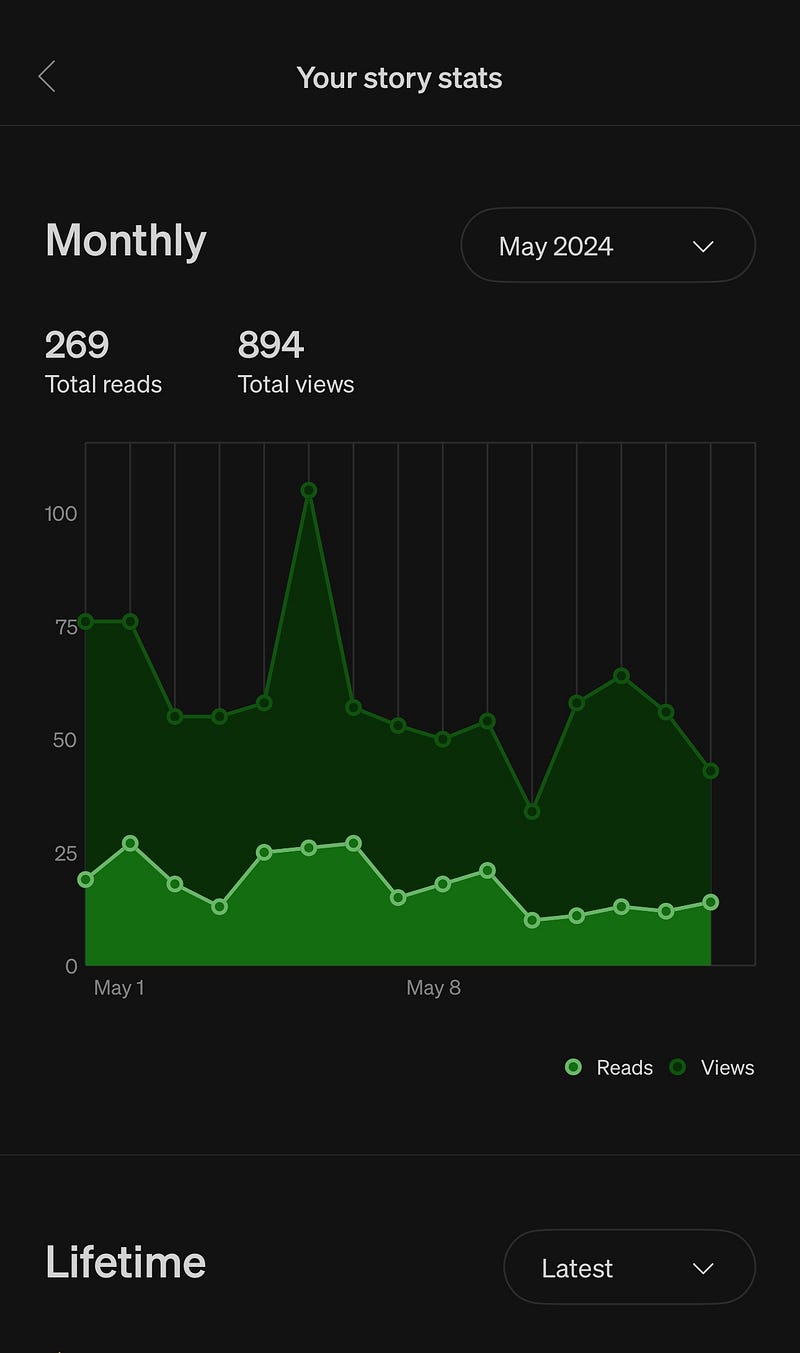
I Can No Longer See My Earnings Report? Why Medium?

Today when I clicked “View Stats”, I can no longer see my Partner Earning…. What happened?

At first I thought it’s a new UI (see screenshot below). After scrolling up and down, I still cannot find the buttons.

My Premium Membership still active. And yet… gone!

There’s two button gone – Partner’s Program and Audience Stats

I have submitted a report to Medium. Let’s see how long this will resolve.

Has anyone encountered a similar issue?

Medium


Update: 8.27 pm (16 May 2024)

I just realized that the desktop Medium version has no problem. However, it only has issues on Mobile (iPhone and iPad) Medium app version.

Why You Should Write From the Heart

WRITER’S JOURNEY

Let not the fear of imperfection or judgment deter you. Your voice is unique, and your stories are necessary.

Photo by Jamie Street on Unsplash

As I sit to pen down my thoughts in this tranquil corner of my study, surrounded by books and artifacts that tell tales of my past ventures, I am transported back to the beginning of my journey—the journey from being a techie, a CEO, and a thought leader to embracing the unpredictable path of writing.

It’s a world apart — yet strangely, it feels like coming home.

The Spark

Photo by Jez Timms on Unsplash

The idea of writing came to me not in a moment of epiphany but as a gradual awakening.

Over the years, leading initiatives on IoT and engaging with smart city technologies, I have always felt the undercurrent of stories waiting to be told.

These were not just narratives of technology but of people, dreams, and the future.

The more I spoke at conferences, discussing the complexities of our digital world, the clearer it became — these experiences deserved a life beyond the fleeting moments of a speech.

“Could I?” I would often muse silently after my sessions. “Could I translate these dialogues into written words that might inspire, inform, and touch a reader’s heart as profoundly as they have touched mine?”

The First Steps

Photo by Jordan Christian on Unsplash

Taking the first steps was like entering a new city.

The paths were unfamiliar, and the language was nuanced.

But the essence, the pulse of writing, was like any technology I had mastered—it needed understanding, patience, and practice.

I began with short pieces, reflections, really, on my day-to-day encounters in the tech world. What started as a trickle — posts on LinkedIn and blogs on my company’s website — soon gained momentum.

The feedback was encouraging and often heartening.

It wasn’t just about sharing knowledge anymore; it was about sharing a part of my soul.

The Challenges

Photo by Jaco Pretorius on Unsplash

Transitioning from corporate presentations and technical dissertations to personal and engaging narratives was no small feat.

I grappled with voice, structure, and style. Each sentence posed a question: Was this Mazlan the CEO talking, or Mazlan the individual?

“Keep it simple, keep it sincere,” I would remind myself, my pen hovering over a notebook filled with crossed-out lines and arrows.

It was a dialogue, not with an audience this time, but with myself.

The Revelation

Photo by Aaron Burden on Unsplash

It was during one such session of self-dialogue that I penned a short poem — a simple set of verses that encapsulated my thoughts on writing:

Write when you feel it,
When ideas surge and swirl.
Don’t put off the moment,
Let your thoughts unfurl.

This poem became my manifesto, my guide.

It reminded me that writing, much like technology, isn’t just about the mechanics and the human connection. It’s about touching lives, sparking ideas, and nurturing thoughts.

Embracing the Journey

Photo by Dmitrii Vaccinium on Unsplash

Now, as I continue on this path, each word I write strengthens my resolve. Writing is no longer just an activity; it’s a journey of exploration and self-discovery.

It’s about painting pictures with words, about seeing the world through a different lens.

“Where will this journey take me?” I often wonder.

The destination remains unknown, and perhaps, that is the beauty of it. In writing, just as in life and technology, the journey itself is the destination.


To those who stand where I once stood, at the edge of a new venture, unsure and tentative — write.

Write from the heart.

Let not the fear of imperfection or judgment deter you.

Your voice is unique, and your stories are necessary.

As I close this chapter of reflections, ready to open another, the lines of the poem echo back, a gentle reminder of why I began:

Write because it matters,
To you more than anyone else.
Let your innermost whispers,
Jump right off the shelf.

Writing, for me, is no longer just about sharing expertise but about baring my soul.

It is daunting, yes, but exhilarating.

And as long as the heart speaks, I will write.

How Medium Shaped My Voice

WRITER’S JOURNEY

I’ve found not just my way but also my heart and my resonance.

Photo by Giu Vicente on Unsplash

The Novice on a Vast Stage

I must confessed, I was a novice, standing timidly at the edge of an immense, unexplored stage. “English isn’t my first language,” I would often mutter to myself, seeing it as a formidable barrier. Despite this, I had an intense yearning to express my burgeoning passion for writing. Initially, my words stumbled and fell flat, unrefined and tentative as the steps of a child learning to walk.

Will anyone even notice?” I often wondered. My early articles were brief and shallow, lacking the depth and flair I admired in the works of others. They felt like echoes in an empty square, hardly noticed, quickly forgotten.

Photo by Soundtrap on Unsplash

A Lone Voice in the Digital Wind

In those early days, my digital presence was akin to a lone voice caught in the wind—no readers lingered on my page, and no followers eagerly awaited my next post. “Is anyone out there?” The silence was disheartening. The much-coveted signs of engagement, such as comments and claps, were conspicuously absent. I was an invisible entity in Medium’s vast writers’ world, yet to spark any noticeable interest or impact.

But I must keep going,” I told myself. Within me, a resilient spark refused to be extinguished. I was determined not to let my initial failures define my capabilities. Thus began my arduous journey against the currents of doubt and linguistic challenges.

Chipping Away Doubts

I noticed a gradual improvement with each new article and every line I penned. “This is getting better,” I’d think, feeling a small surge of pride. It was as if I was sculpting my statue from a rough block of marble, chipping away the excess until my true potential emerged.

The community of writers on Medium, with their open arms and open minds, played a crucial role in this transformative journey. “Welcome, we’re glad you’re here!” they said. They welcomed me into their fold, generously sharing their knowledge, art, and souls.

From them, I learned not just the mechanics of writing but also its artistry. I knew the importance of crafting captivating headlines, the skill of weaving words that could engage readers, and the ability to purify my voice to resonate clearly through my prose.

Photo by Soundtrap on Unsplash

Embracing Shakespeare’s Language

I immersed myself in “Shakespeare’s language,” which was both a challenge and a revelation. “To be or not to be,” I would joke during moments of frustration with my grammar, which strengthened over time, as did my vocabulary.

Slowly but surely, my followers began to increase, and claps—the Medium community’s show of appreciation—started to rain upon my work. “They like it!” I realized one day that my writing was no longer a vain pursuit; I was finally making my mark.

From Timidity to Confidence

This newfound confidence and recognition were exhilarating. With each new piece, my spirit roared louder, and my voice grew more assertive. I had moved from being a timid, uncertain writer to one who could claim his space confidently within the community. Medium had become more than just a platform; it was a nurturing ground where I could grow and contribute.

Look how far you’ve come,” I often reflect, amazed at my journey. It is a testament to perseverance and the transformative power of community support and self-belief. My narrative is no longer just about overcoming the language barrier; it’s about embracing it as a powerful tool for expression and connection.

Photo by Kenny Eliason on Unsplash

A Home Among Words

I have found my place in this vibrant crowd of writers and readers. “I belong here,” I say with certainty, in this community that values every voice, including those that start as mere whispers in the wind. Each word I write now paints part of my dream, a vivid splash on the vast canvas of Medium.

I write not just to express but to connect and to resonate with others across this digital expanse. Let this account of my journey be my song of gratitude, a tribute to every stumble that taught me to rise and every fellow writer who helped me find my footing.

Here to Stay

In the heart of Medium, amidst its diverse voices and stories, I have found more than just my footing – I have discovered a home. In this confluence of ideas and inspirations, I continue to write, share, and dream.

Here, on this vast and endless stage, I have learned that my voice, once unsure and faltering, can now sing clearly and firmly. “This is where I was meant to be,” I often think, filled with a sense of belonging and purpose.

And here, I will stay, for in this space, I’ve found not just my way, but also my heart and my resonance.


Remember to Subscribe to receive email updates on every post I publish.

Why These Stories Are My Top 10 Stories in April 2024

WRITER’S STORIES

I discovered six (6) reasons.

Photo by ahmad gunnaivi on Unsplash

I always wonder what kind of stories resonate with my audience.

When I first started, my stories mainly didn’t attract anyone’s attention; worse still, I haven’t had a single engagement.

But there are times when the stories resonate well with the audience.

This is what I have analyzed for April month.

Here’s the list of the top 10 stories in April 2024.

1 — Drowned by Repetitive Medium Advice Stories

2 — I Earned 200X More on Medium Than on YouTube

3 — The Day I Overcome the Fear of Public Speaking and Become a Keynote Speaker

4 — The First Quarter of 2024 Medium Earnings Report — This is What I Found Out

5 — My Domain Hosted on Medium Performed 200X Better Compared to WordPress

6 — My Medium Followers Are 3X Lower but Earned 200X Than My TikTok.

7 — The Day I Stopped My Podcasts

8 — The Day I Decided to Move My IoT World Publication (Medium) Back to WordPress

9 — About Me (Part-6) — Mazlan Abbas

10 — Unveiling the Mystery of Claps and Comments on Medium

Photo by Jeremy McKnight on Unsplash

This is what I found out:

The stories I listed generally revolve around personal achievements, career advancements, insights into earnings on different platforms, and significant decisions impacting professional direction.

These topics tend to resonate with readers for a few specific reasons:

  1. Relatable Themes: Many people aspire to achieve personal and professional success. Articles that discuss overcoming fears, achieving financial success, or making significant career moves offer inspiration and relatable scenarios that many readers may find themselves aspiring to or empathizing with.
  2. Authority and Expertise: Articles written by individuals who have achieved notable success or recognition carry weight because they come from a place of authority and experience. Readers will likely trust and value insights from someone considered a thought leader, especially given his extensive background and recognition in IoT and telecommunications.
  3. Actionable Insights and Results: Stories that include specific outcomes, such as “I Earned 200X More on Medium Than on YouTube,” provide tangible results that can motivate readers. They offer a sense of potential financial or personal gains that can be achieved by following similar paths or methods, making these articles appealing to those looking for success stories or blueprints.
  4. Transitions and Transformations: Readers are often drawn to stories of change and growth, such as moving from fear to confidence in public speaking or shifting a publication back to WordPress from Medium. These stories encapsulate journeys many find inspiring and can learn from, especially when contemplating similar changes in their lives or careers.
  5. Engagement Mechanisms: One of the titles mentions claps and comments, suggesting a focus on Medium’s interactive aspects. Articles that explain or demystify platform-specific features tend to engage readers looking to optimize their use of these platforms.
  6. Personal Stories: Personal narratives like “About Me (Part-6) — Mazlan Abbas” provide a human element that helps readers connect more personally. These stories often share challenges, insights, and personal milestones that add depth to the professional achievements and advice being presented.
Photo by Afif Ramdhasuma on Unsplash

Common Traits of these articles include:

  • Utility: They provide practical advice or insights that readers can apply in their contexts.
  • Inspiration: They offer motivational content encouraging readers to pursue their goals or make significant changes.
  • Authority: The author’s expertise and background lend credibility to the content.
  • Personal Connection: They often include personal anecdotes or experiences, making them more relatable and engaging.

These factors combined make these articles likely to be top-performing pieces on platforms like Medium, where readers often look for inspiration and practical advice to boost their personal and professional lives.


Check out my Mazlan Abbas Gumroad Store to download eBooks.

How to Focus Your Writing for Maximum Reader Engagement

WRITER’S STORIES

Follow the six (6) steps to become a better writer.

Photo by Chase Clark on Unsplash

As a writer who has penned hundreds of articles through blogging and writing technical journals, I’ve had my fair share of learning curves when crafting engaging content.

The journey from a novice scribbler to an adept wordsmith has been both challenging and rewarding. Through it, I’ve gathered some insights that I believe can benefit any aspiring writer.

Today, I’d like to share my personal experience and the tips I’ve developed for writing more focused and engaging articles.

When I first started writing, I was overwhelmed by the desire to say everything at once.

My drafts were often a jumble of thoughts, anecdotes, and data that, while individually interesting, did not cohesively support a single point. This lack of focus not only diluted the impact of my writing but also confused my readers.

Photo by Stephen Kraakmo on Unsplash

I remember one particular instance where an editor told me, “You’ve lost track of what you’re saying. This could be two or three articles.

That feedback was a turning point for me. It made me realize the importance of narrowing my focus and sticking to one subject at a time to avoid turning my articles into mazes filled with dead ends.

Here’s how I started refining my approach:

Step 1: Structuring My Writing

Initially, revisiting the basic structure of essays and articles felt like a step backward.

But I quickly realized that even a casual piece needs a skeleton to support it. Each article starts with an introduction, in which I introduce the topic and explain why it matters.

This is followed by the body, where I delve into the details, using subheadings and paragraphs to organize my thoughts and make the content digestible.

Finally, I conclude by tying all my points together, referring back to the introduction, and leaving the reader with a final thought. This structure organizes my writing and helps the reader follow along easily.

Step 2: Knowing My Audience

One of the key lessons I learned early on was the importance of understanding my audience.

Who are they? What do they care about? How can my article add value to their lives?

Answering these questions before I start writing helps me tailor my content to the people most likely to read it.

Step 3: Paring Down My Ideas

Having too many ideas is more problematic than having too few.

I learned to be ruthless in cutting out or setting aside ideas that don’t directly support my main topic.

This streamlines the article and saves those “extra” ideas for future pieces, effectively building up a stockpile of content to draw from.

Step 4: Adding Personal Touches

While structure and focus are crucial, injecting personal anecdotes and emotions into my writing makes it resonate on a human level.

Whether it’s a touching moment shared with a grandchild or a frustrating day trying to master verb conjugations, these snippets bring my narrative to life and engage readers on a deeper level.

Step 5: Research and Validation

As much as personal stories enrich an article, facts, data, and expert opinions bolster credibility. I always take the time to research my topics thoroughly, ensuring that every claim I make can be backed up.

This is particularly important when writing about topics like health, finance, or technology, where misinformation can have real-world consequences.

Step 6: Editing with Precision

Finally, no article is ready for publication without a thorough edit.

This process involves proofreading for grammar and spelling and revising sentences and paragraphs for clarity and impact. I read my drafts aloud to catch awkward phrasings and ensure natural flow.

After consistently implementing these steps, I noticed a significant improvement in the engagement and clarity of my articles.

Seeing readers respond positively is gratifying, especially when an editor sends a piece through with few or no revisions.

Photo by Slim Emcee on Unsplash

To encapsulate, here are the essential tips for writing focused and engaging articles that I’ve shared:

  1. Structure Your Writing: Use a clear introduction, body, and conclusion.
  2. Understand Your Audience: Tailor your content to their interests and needs.
  3. Focus Your Topic: Limit your scope to maintain clarity and depth.
  4. Inject Personal Stories: Make your writing resonate more deeply with readers.
  5. Back-Up Claims: Use research and data to lend credibility to your article.
  6. Edit Thoroughly: Never underestimate the power of revision for enhancing readability and impact.

Writing is more than a mechanical task; it’s a form of communication that requires empathy, clarity, and, most importantly, a connection with your reader.

As writers, our goal is to share information and invite our audience into an enriching and enlightening conversation.

By continually honing our craft and focusing on these principles, we improve our skills and enhance the reader’s experience.

While the process can sometimes feel daunting, creating a well-received article is immensely rewarding.

Each piece is a learning experience, an opportunity to connect with others and share a part of ourselves.

This iterative process of writing and feedback makes a writer’s journey so uniquely fulfilling.

Remember, the art of writing is not just about adhering to techniques; it’s about evolving and adapting.

The more we write, the more we learn about ourselves and our audience, and the better we communicate our thoughts and ideas effectively. This beautiful growth cycle fuels personal and professional development.

I encourage you to embrace the process, cherish your unique voice, and continue to share your insights with the world.

The path may be lined with challenges but also rich with rewards.

Keep writing, keep learning, and most importantly, keep engaging your readers with every word you write.

Becoming a Better Writer by Avoiding These 9 Mistakes

WRITER’S JOURNEY

I’ve identified nine critical mistakes that were holding me back from becoming the writer I aspire to be.

Photo by krakenimages on Unsplash

Writing has always been a part of who I am. Reflecting on the past year, I realize that I penned over 100 articles in 2023, yet astonishingly, more than 80% of those garnered a mere ten views or fewer.

This statistic isn’t just a number – it’s a stark reminder of the disconnect between my efforts and the impact I hoped to achieve.

As writers, our primary aim is to disseminate our ideas and knowledge, to reach an audience that finds value in our words.

The realization that I wasn’t reaching my readers as effectively as I wanted was both saddening and exhausting.

In confronting this reality, I aimed to refine my craft and better connect with my audience.

Through this process, I’ve identified nine critical mistakes that were holding me back from becoming the writer I aspire to be.

As I share these insights, I hope you’ll join me in transforming our writing endeavors.

Photo by Santa Barbara on Unsplash

Mistake 1: Ignoring the Audience

One of the fundamental errors I realised was writing without a clear understanding of who my audience is. “Who am I writing for?” I often asked myself during my reflections.

Without knowing who the readers are, what they like, or what information they seek, my articles often missed the mark.

Moving forward, I’ve learned the importance of tailoring my content to the interests, needs, and preferences of my target audience, ensuring that each piece resonates and engages.

Mistake 2: Skimping on Research

Initially, I prided myself on speed – how quickly I could churn out an article.

However, this often came at the expense of depth and accuracy. “Am I providing real value?” I would wonder, as I hastily wrapped up another piece.

I’ve come to realize that thorough research not only enhances the quality of the content but also builds credibility with my readers.

Investing time in research is non-negotiable for producing informative and reliable content.

Mistake 3: Overlooking SEO

In today’s digital age, understanding and implementing Search Engine Optimization (SEO) is crucial.

I used to write purely from a creative perspective, neglecting how search engines understand and prioritize content. “Why aren’t people finding my articles?” I frequently pondered, unaware that I was invisible to search engines.

Learning about keywords, meta descriptions, and how to structure content for SEO has become a cornerstone of my writing process, helping my articles gain the visibility they deserve.

Mistake 4: Neglecting the Power of Editing

I confess, I was often so eager to hit ‘publish’ that I bypassed rigorous editing. “Is this really my best work?” I’d reluctantly think, knowing deep down I could improve it.

Editing is not just about correcting grammar or spelling; it’s about refining thoughts, strengthening arguments, and enhancing clarity.

Now, I dedicate ample time to revise and polish each article, recognizing that great writing is as much about revision as it is about creation.

Mistake 5: Failing to Engage with the Community

Writing is not a one-way street.

Initially, I neglected the social aspect of writing online – engaging with readers and other writers. “Why am I feeling so isolated?” I often lamented, not realizing that I wasn’t participating in the community.

Engaging in conversations, responding to comments, and connecting with others in the field are practices I now embrace enthusiastically.

These interactions enrich my understanding and expand my reach.

Mistake 6: Inconsistent Publishing

My publishing schedule was erratic at best.

There were bursts of activity followed by periods of silence. “How can I expect to build a following?” I questioned, seeing the effects of my inconsistency.

Establishing and sticking to a regular publishing schedule ensures that readers know when to expect new content, fostering a loyal and engaged audience.

Mistake 7: Not Diversifying Content Formats

I stuck rigidly to traditional article formats, missing out on the diverse ways people consume content. “Could I be more creative in my presentation?” I wondered, exploring different content types.

Now, I experiment with videos, infographics, and images, adapting my message to suit various preferences and platforms, thus reaching a broader audience.

Mistake 8: Underestimating the Title’s Impact

The importance of an article’s title cannot be overstated.

Initially, my titles were often vague or uninspiring. “Why isn’t this attracting more attention?” I would brood, not realizing the title’s potential to pull readers in.

Crafting compelling, clear, and curiosity-provoking titles is now a priority for me, as it significantly influences whether someone decides to read the piece.

Mistake 9: Ignoring Feedback

Earlier on, I viewed feedback as a personal critique rather than an opportunity to improve.

“Are they just being critical?” I defensively pondered, missing the constructive elements.

Now, I actively seek out and embrace feedback, understanding that it is vital for growth and improvement.

Moving Forward

Avoiding these 9 mistakes have improved the quality of my writing multiple times.

I managed to get better engagement, audience and certainly the earnings.

Thanks to the continuous encouragement and tips I learned from this Medium community.

Why Writing on Medium is Similar to Mountain Hiking

WRITER’S STORIES

Each journey challenges me, changes me, and ultimately rewards me in ways I could not have anticipated.

“Hiking boots” – Photo by Wes Hicks on Unsplash

Every time I lace up my hiking boots and set out for the mountains, I feel a surge of anticipation, much like when I open a new document on Medium. There’s something about standing at the base of a towering mountain or facing a blank page that fills me with a mixture of excitement and apprehension.

Each journey, whether it be on rocky paths or through lines of text, begins with a simple step forward accompanied by a simple thought: “Let’s see where this takes me.”

As I begin my hike, the path before me is often shrouded in mist, the peak nowhere in sight – similar to the initial stages of writing, where my ideas are muddled and my end goal unclear. “Is this really a good idea?” I ask myself as I face the steep inclines and the daunting task of organizing my thoughts into a coherent narrative.

Photo by Brad Barmore on Unsplash

“What if I don’t find anything new to say?” The self-doubt is as real as the rugged terrain under my feet.

However, as I persist, the path gradually becomes clearer. With each step uphill, I find my rhythm, and similarly, each sentence crafted brings me closer to clarity in my writing.

“Just focus on the next line, the next step,” I tell myself, pushing through the initial resistance.

This mantra helps me overcome the toughest parts of both my hike and my drafts. It’s all about momentum, about pushing forward even when the peak seems unreachable.

The solitude of hiking allows me to delve deeper into my thoughts, much like the solitary nature of writing.

As I ascend, surrounded by nothing but the sound of my breath and the rustle of leaves, I enter into a dialogue with myself. “Why am I here? What am I hoping to discover?” These questions echo in my mind, guiding my hiking and writing journeys. In both scenarios, it’s a quest for discovery – of the self and of the world around me.

“Catching a breath” – Photo by Simon English on Unsplash

Occasionally, I stop to catch my breath and look back at how far I’ve come, taking in the view. In writing, these moments occur when I pause to read over what I’ve written. I assess the structure, refine the flow, and ensure that each paragraph leads logically to the next.

“Does this piece convey what I feel? Is the emotion palpable?” Just as I gauge the stability of the trail behind me, I ensure the stability of my narrative structure.

Nature’s unpredictability is another element that hiking and writing share. Just as a sudden change in weather can force me to alter my hiking route, unexpected insights or feedback can shift the direction of my article.

“This isn’t working. Maybe I should approach this from a different angle,” I think when a particular section feels as insurmountable as a steep, slick rock face.

Flexibility and adaptability are key in both arenas; they are the skills that help me navigate through unexpected challenges.

“Mountain summit” – Photo by Gaurav K on Unsplash

The summit of the hike is not unlike the conclusion of an article. There’s a profound sense of accomplishment in reaching the top of a mountain, just as there is in concluding a piece of writing.

The journey’s end provides a moment of reflection. “What have I learned? How have I changed?” These reflective questions are crucial.

In writing, they help me understand the deeper significance of my narrative, while in hiking, they connect me to the larger journey of life.

Yet, reaching the summit or the end of an article isn’t the end of the journey – it’s preparation for the next.

Each hike and each piece written sharpens my skills, making me more prepared for the next challenge.

“Next time, I’ll start stronger,” or, “I’ll take a different path,” are thoughts that propel me forward, eager for new adventures.

Moreover, sharing the experience is part of both journeys. Just as I might share tales of my hike with friends, publishing on Medium allows me to share my stories with a wider audience.

The feedback, whether it comes in the form of comments from fellow hikers about a hidden trail or readers discussing a point I made, enriches the experience.

It’s about community, learning from each other, and growing together.

In retrospect, both hiking and writing are about exploration and expression. They are about setting out with a goal, facing difficulties, adapting to them, and emerging stronger and more insightful. They demand resilience, perseverance, and a constant curiosity about what lies around the next bend or in the next paragraph.

“Mountain hiking” – Photo by KAL VISUALS on Unsplash

So, why is writing on Medium like mountain hiking?

Because each is a journey of discovery that challenges me, changes me, and ultimately rewards me in ways I could not have anticipated.

Both are journeys I undertake with a deep breath and a bold step forward, knowing that the path will be anything but straight, the views will be worth the climb, and the stories I bring back will be worth every step.

Each word I write, like each step I take, brings me closer to understanding the landscapes of the world and of my own inner mind.

It’s an ongoing process of mapping uncharted territory, where every finished piece or conquered trail marks a point on my personal map, but also a starting point for new explorations.

The parallels between hiking and writing extend into the experiences themselves.

In both, there are moments of sheer joy, like finding a breathtaking vista or the perfect metaphor, alongside periods of struggle, like battling through a difficult climb or a complex argument.

Each element contributes equally to the richness of the experience.

On the trail, the environment constantly shifts – a serene forest path opens up to a rugged, rocky ascent. Similarly, in writing, the tone and style can shift from reflective and introspective to critical and analytical.

Photo by Ansgar Scheffold on Unsplash

“Adapt and overcome,” I remind myself when the terrain or the topic gets tough.

This flexibility is not just a skill but a necessity, allowing me to navigate through varied landscapes and literary challenges.

Companionship is another aspect that brings both experiences closer.

Just as a hiking buddy can offer support, share the load, or boost morale, fellow writers and readers on Medium provide similar companionship.

They offer encouragement, share insights, and challenge my perspectives, enriching my journey.

“Look at this view! Have you seen this angle before?” Whether discussing a physical landscape or an ideological viewpoint, the exchange is invaluable.

Moreover, both hiking and writing are forms of personal expression that connect me to others who share similar passions.

They are ways to communicate not just ideas, but emotions and experiences, bridging gaps between people of different backgrounds and cultures.

Through sharing my hikes and my writings, I invite others into my world, just as I step into theirs through their shared stories and trails.

Each hike ends with a descent, a return to the familiar, yet I am not the same person who started the climb.

Similarly, each article I publish marks a return to the beginning, to another blank page, but I am richer for what I have written, changed by what I have expressed and learned through the process.

“What’s next?” isn’t just a question but a call to action, an invitation to begin again, to explore anew.

“Mountain summit” – Photo by Alessandro Erbetta on Unsplash

The satisfaction derived from both writing and hiking does not just stem from reaching a physical or metaphorical peak, but from the journey itself.

The act of moving forward, of creating and expressing, is as fulfilling as the achievements that punctuate these efforts. It is a continuous cycle of striving, achieving, reflecting, and striving again.

And so, as I unlace my boots or hit the ‘publish’ button, I feel a sense of completion coupled with anticipation for the next adventure.

The trails I’ve hiked and the articles I’ve written are part of a larger journey – one that stretches out invitingly, filled with unknown challenges and untold stories.

In the end, whether I am tying my hiking boots or sitting down to write, I am embarking on a quest not just to explore the physical and intellectual landscapes but also to understand and articulate my place within them.

Each step, each word, is a testament to the journey – a journey of constant learning, discovery, and expression.

And just like the mountain trails, the paths of words are infinite; there are always higher peaks to scale and deeper truths to uncover.

This parallel journey of hiking and writing on Medium is a profound reminder of the endless potential for growth and the enduring joy of exploration.