The Struggle Between TikTok and Medium

INFLUENCER’S STRUGGLE

The choice between TikTok or Medium — Which one?

This question kept nagging: why am I splitting my time between TikTok and Medium?
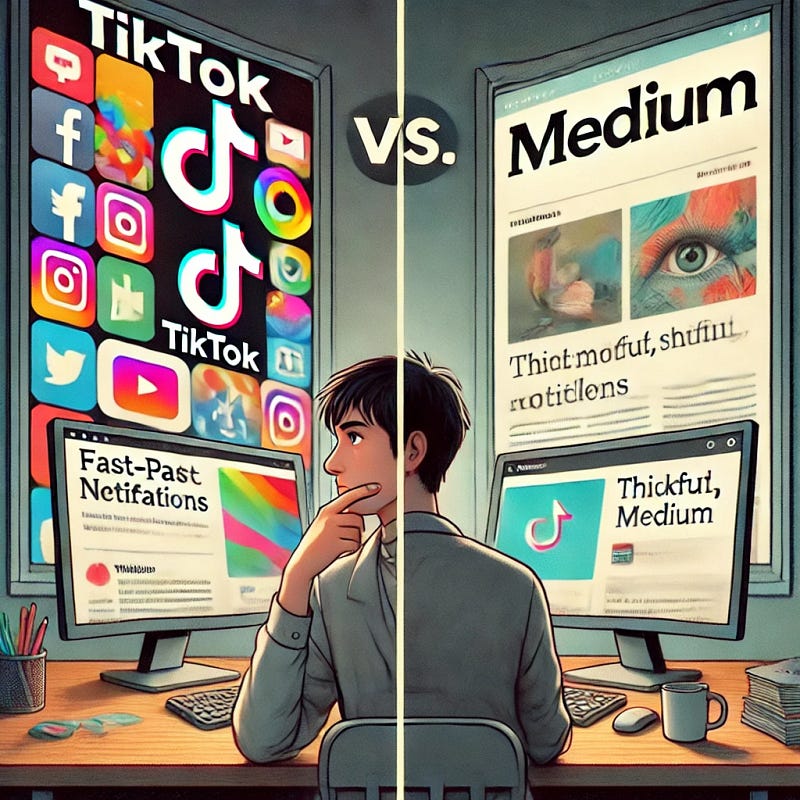
Image created using ChatGPT

The platforms couldn’t be more different, yet both significantly shaped my voice online. This duality, balancing TikTok’s fast-paced allure with Medium’s more reflective, thoughtful environment, has been an exciting challenge.

It’s a constant juggle, but each brings out a different side of my creativity, and I’m starting to embrace both worlds in ways I hadn’t anticipated.

The Allure of TikTok: Fast-Paced and Instant Feedback

It all started when I ventured into TikTok as @iotman2030, exploring short, snappy videos about the Internet of Things (IoT). I didn’t expect much at first — after all, I’m not strictly part of the younger generation that dominates the platform.

But to my surprise, TikTok has been an exhilarating ride, rapidly growing to 6,729 followers. My videos get hundreds, sometimes thousands, of views in hours. It’s instant feedback, and something is thrilling about seeing the numbers climb in real time.

TikTok is a platform that thrives on speed and spectacle. Often, I can craft a video in under a minute. It’s about capturing attention quickly, keeping it visually engaging, and riding the wave of trends.

Every like and every view comes almost instantly, which can be addictive, to be honest. But there’s a catch — monetizing that success isn’t as straightforward as you’d expect. While TikTok offers a burst of engagement, it doesn’t always translate into financial rewards as easily as Medium does.

The Depth of Medium: Slower but More Meaningful

Despite TikTok’s fast success, something keeps pulling me back to Medium. On Medium, things are quieter. My audience is smaller — around 2,531 followers — and my articles rarely pull in big numbers.

At most, I’m seeing about ten reads a day. But here’s the thing: I’m okay with that. I’ve started to appreciate the slower, more thoughtful pace that Medium demands.

Writing on Medium feels like a slow burn. Sometimes, I’ll spend hours, even days, drafting and refining an article. It’s more than just putting words on a page — it’s about crafting something that resonates on a deeper level.

Medium readers are different.

They’re not there for quick entertainment; they want depth, insight, and value. These readers appreciate the time and effort that goes into creating a meaningful article, and in turn, they engage with me in a much more thoughtful way.

Different Audiences, Different Expectations

It’s fascinating to see how the audiences on TikTok and Medium are polar opposites. TikTok is fast, fun, and full of energy.

Most of my viewers are younger and drawn to the edutainment-style content I produce. They come for quick, digestible clips that deliver information playfully and engagingly. It’s a rush to see their reactions within minutes of posting.

Medium, however, attracts a more mature crowd. These readers are looking for depth — they enjoy sinking their teeth into well-researched articles.

My audience on Medium appreciates thoughtful pieces that go beyond surface-level insights, and they expect a higher level of engagement from me as a writer.

My discussions in the comments section often dive deeper into the topics, leading to rich, meaningful exchanges. Knowing I’m connecting with people on a more intellectual level gives me a different kind of satisfaction.

Why Not Both? Embracing the Balance

After reflecting on these differences, I asked myself: Why should I choose between TikTok and Medium? Why not embrace both?

It’s like catering to two different creative appetites—TikTok satisfies my need for instant engagement and creativity, while Medium allows me to connect on a deeper level. Each platform offers something unique, and together, they help me grow as a content creator.

By embracing both platforms, I’ve found a balance that works for me.

On TikTok, I get to experiment with fast-paced, visually engaging content, which fuels my creative energy. Meanwhile, Medium allows me to slow down, reflect, and dive deep into the topics I’m passionate about.

It’s not about choosing one over the other; it’s about leveraging the strengths to reach different audiences and explore different sides of my creativity.

Beyond TikTok and Medium

But my content creation journey doesn’t stop there.

I’ve also dipped my toes into other formats like podcasting and YouTube. Podcasting has been an exciting adventure, allowing me to explore long-form discussions that wouldn’t fit into a TikTok or Medium post.

I can dive into complex topics in a more relaxed, conversational format. In a way, YouTube combines the visual appeal of TikTok with the substance of Medium. It’s another experiment where I’m still figuring out what works best.

But that’s the beauty of content creation; it’s constantly evolving, and I get to try new things, see what sticks, and adjust along the way.

Lessons for Budding Medium Writers

For anyone thinking of jumping into Medium, I have a few takeaways from my experience so far:

  • Know Your Audience: Medium readers aren’t looking for fluff. They crave well-thought-out, insightful content. Take your time to craft pieces that offer value.
  • Engage with Your Readers: Medium thrives on interaction, and the conversations you start in the comments section can be as meaningful as the article.
  • Be Patient: Building a following on Medium takes time. It’s a marathon, not a sprint, but if you stick with it, the personal and financial rewards are worth it.
  • Create Meaningful Content: Unlike TikTok’s quick-hit content, Medium is about depth. Focus on creating articles that stand out and resonate with your audience.
  • Diversify Your Platforms: Don’t limit yourself to one platform. Like I juggle TikTok, Medium, podcasting, and YouTube, explore different formats and reach out to varied audiences.

The Art of Juggling Platforms

Ultimately, I’ve seen my presence across TikTok, Medium, podcasting, and YouTube as a diversified portfolio.

Each channel brings something different to the table, allowing me to connect with various kinds of audiences uniquely.

As I continue this journey, I’m learning that content creation is not about chasing numbers but finding the right balance between speed, depth, and authenticity.

This journey is far from over, but I’m enjoying the ride, juggling different platforms, and discovering more about myself as a creator.

Different strokes for different folks, as they say, and I’m learning to embrace that fully.

The Power of Personal Stories

WRITER’S DILEMMA

Engaging Readers Through Authenticity

Photo by Brett Jordan on Unsplash

This transformation wasn’t magic but rather a result of intentional changes and strategies.

Here’s how I did it.

Capturing Attention: The Three-Second Rule

In the digital world, attention is a scarce commodity.

You have about three seconds to grab someone’s attention before they scroll right past your post to the next. I learned this the hard way.

My initial articles were lengthy, with long-winded introductions that didn’t captivate readers.

I had to rethink my approach.

I recall a specific moment of realization while reading an article by one of my favorite writers. Their opening line was a punchy, thought-provoking statement that hooked me immediately.

Why couldn’t I do that?” I thought.

So, I started experimenting with catchy hooks and concise introductions. It was a game-changer.

The shorter and sweeter my openings, the more engagement I received.

The Power of Personal Stories

Photo by Austin Chan on Unsplash

People connect with people.

This simple truth became my guiding principle. Instead of hiding behind dry, factual content, I began sharing my personal experiences and anecdotes. It was intimidating at first — exposing my vulnerabilities and failures.

But it was necessary.

I remember writing about my early days in the tech industry, filled with uncertainties and challenges.

The response was overwhelming.

Readers resonated with my story, finding comfort and inspiration in my journey.

Letting my personality shine through wasn’t just about being relatable but about being authentic.

Leaving Readers with a Takeaway

Photo by Clem Onojeghuo on Unsplash

What’s the point of a story if it doesn’t leave the reader with something to ponder? This was another critical lesson I learned.

Early on, my articles often ended abruptly, without offering any significant insight or takeaway.

I realized that every piece needed a conclusion that provided value.

One of my breakthrough articles was about the future of IoT and its impact on everyday life. Instead of just presenting information, I concluded with actionable insights and questions that encouraged readers to think about how they could integrate IoT solutions into their lives.

This approach didn’t just inform; it engaged and empowered my readers.

Finding My Authentic Voice

Photo by Brett Jordan on Unsplash

In the beginning, I struggled with my writing style.

I tried to emulate the voices of other successful writers, thinking that was the key to success.

It wasn’t.

Authenticity is your ticket to success. It’s what sets you apart in a crowded space.

I remember a particularly enlightening conversation with a fellow writer. We were discussing our favorite authors and what made their writing unique.

They sound like themselves,” my friend said. It struck me that my attempts to mimic others were diluting my unique perspective.

I began writing more naturally, using my voice, and it resonated more with my audience.

Empowering the Reader

Photo by Guille Álvarez on Unsplash

Writing is not about showcasing your knowledge but empowering your readers.

Early on, my articles were laden with technical jargon and complex concepts, which, in hindsight, was more about proving my expertise than providing value.

This was a mistake.

A turning point came when I wrote an article to demystify IoT for beginners. I stripped away the jargon and focused on simple, relatable explanations.

The feedback was incredible.

Readers appreciated the clarity and felt more confident in their understanding.

Making readers feel competent became my new mantra rather than showcasing my intelligence.

Learning from the Best

Photo by Jon Tyson on Unsplash

To improve, you need to learn from the best.

I started paying close attention to the work of my favorite writers, analyzing their style, structure, and content. I noticed patterns — how they crafted compelling narratives, their use of metaphors, and their ability to connect with readers on an emotional level.

One of my favorite writers had a knack for seamlessly weaving personal anecdotes with profound insights.

I noted three things they did exceptionally well: engaging hooks, relatable stories, and thought-provoking conclusions.

I began incorporating these elements into my writing. It wasn’t about copying but understanding what worked and adapting it to my style.

Consistency and Persistence

Photo by Rosie Kerr on Unsplash

Success didn’t come overnight.

It required consistency and persistence.

I set a goal to write regularly, even when I felt uninspired. Some of my best articles emerged from moments when I pushed through writer’s block. The key was to keep writing, learning, and adapting.

In conclusion, my journey to becoming a top writer on Medium was marked by trial and error, introspection, and a willingness to learn and adapt.

I grew my account by capturing attention quickly, sharing personal stories, providing valuable takeaways, finding my authentic voice, empowering my readers, and learning from the best.

Anyone can undertake this journey with the right mindset and strategies.

So, if you’re struggling, remember that success is just a few intentional changes away.

How Badminton Taught Me to Write with Passion

MASTERING THE SERVE

Drawing Parallels Between Badminton and Writing

Photo by Mahmur Marganti on Unsplash

When I think about my journey as a writer on Medium, I can’t help but draw parallels to my experience playing badminton.

It’s a comparison that might seem odd at first, but stick with me, and you’ll see the connections I’ve made.

I remember the first time I picked up a badminton racket.

I was just a kid, filled with excitement and nervousness.

I had no idea how to play, but the thrill of learning something new was enough to keep me going.

Writing, especially on Medium, felt the same way.

The first time I published an article, my heart raced with anticipation and fear.

Would people read it? Would they like it?

These questions swirled in my mind, just as they did when I stepped onto the badminton court for the first time.

The Serve: Starting with an Idea

Photo by Saif71.com on Unsplash

In badminton, the serve is the starting point of every match.

Getting it right is crucial because it sets the tone for the game.

Similarly, every article begins with an idea.

I often find myself staring at a blank page, much like I used to stand at the edge of the court, ready to serve.

What should I write about?” I ask myself. “Will this topic resonate with my readers?

One day, while reminiscing about my childhood badminton matches, I had an epiphany.

Writing and badminton are not so different after all.

Both require strategy, practice, and a deep understanding of the basics.

Practice and Patience

Photo by Jackie Hutchinson on Unsplash

When I first started playing badminton, I wasn’t perfect.

I missed shots, fumbled my serves, and lost more matches than I care to admit.

But with each game, I learned.

I practiced tirelessly, honing my skills, and gradually, I improved.

Writing on Medium is no different.

My early articles could have been better.

I made mistakes, struggled with writer’s block, and sometimes doubted my abilities.

But I kept writing. Each article was a lesson, each comment a piece of feedback that helped me grow.

I recall one evening when I was particularly frustrated with my writing.

I had spent hours crafting an article, only to receive minimal engagement.

Why am I even doing this?” After a tough loss, I asked myself the same question I had asked countless times on the badminton court.

But then I remembered why I started playing badminton in the first place: for the love of the game.

Writing, too, was something I loved.

The process, the challenge, and the joy of expressing my thoughts were my reasons for writing, just as the thrill of a well-placed shot was my reason for playing badminton.

Strategy and Adaptability

Photo by Siora Photography on Unsplash

In badminton, strategy is vital.

You have to anticipate your opponent’s moves, adapt your playstyle, and sometimes, take risks.

Writing is no different.

Each article is a game, requiring a strategy tailored to the topic and the audience.

I often think, “How can I uniquely approach this subject? What angle will capture my readers’ attention?

There was a time when I wrote an article about IoT (Internet of Things), a topic I’m deeply passionate about.

I had written extensively on the subject before, but I wanted to try something different this time.

I incorporated personal anecdotes and self-dialogues to make the article more relatable.

It was a risk, much like attempting a tricky shot in badminton.

But to my surprise, the article resonated with my readers.

The feedback was overwhelmingly positive and reminded me of a victorious moment on the badminton court.

Overcoming Challenges

Photo by Vinh Thang on Unsplash

Both writing and badminton come with their fair share of challenges.

There are days when my writing feels stagnant, much like a losing streak in badminton.

I remember a particularly rough patch when I struggled to develop new ideas.

Every topic seemed mundane, every sentence forced.

It was a frustrating time, and I felt like giving up.

One evening, as I sat staring at the blue skies, I thought about my badminton training.

My coach once told me, “Focus on the basics during a difficult period. When things get tough, return to what you know best.”

This advice had helped me countless times on the court, and I decided to apply it to my writing.

I returned to the basics: writing about what I knew and loved. I wrote about my experiences, journey, and passion for IoT. Slowly, the words started to flow again, and I found my rhythm.

The Importance of Feedback

Photo by Muktasim Azlan on Unsplash

In badminton, feedback is crucial.

Coaches, teammates, and even opponents provide insights that help you improve.

Writing is no different.

Comments, likes, and shares are forms of feedback that guide my writing journey. I remember when a reader’s comment changed my perspective on a topic I had written about. It was a simple comment, but it made me see things differently and inspired me to write a follow-up article.

Engaging with my readers has been one of the most rewarding aspects of writing on Medium.

Their feedback has been invaluable, much like the advice of a coach. It’s helped me grow as a writer and motivated me to keep improving.

Finding Joy in the Process

Photo by ochimax studio on Unsplash

Ultimately, the most important lesson I’ve learned from writing and badminton is to find joy.

It’s easy to get caught up in the numbers — the views, the likes, the comments. But true fulfillment comes from writing, just as the joy of badminton comes from playing the game, not just winning matches.

I often remind myself of this when I sit down to write. “Enjoy the process,” I tell myself. “Focus on the writing, not the outcome.

This mindset has helped me stay motivated and passionate, even when the results aren’t what I hoped for.


Conclusion

Reflecting on my journey as a Medium writer, I realize how much it mirrors my experience as a badminton player.

Both have taught me the value of practice, patience, strategy, and resilience.

They’ve shown me the importance of feedback and the joy of the process. And most importantly, they’ve reminded me that success is not just about the destination but the journey itself.

So, the next time I pick up my racket or write, I’ll remember my lessons and continue to find joy.

After all, whether on the court or on the keyboard, the love of the game truly matters.

What 90% of Successful Medium Writers Do Differently

WRITER’S JOURNEY

3 Tips for New Authors

Photo by Santa Barbara on Unsplash

While reviewing some of the most successful articles on Medium the other day, I stumbled upon an intriguing piece titled “What 90% of the Successful Medium Writers Do Differently.

It made me think about my journey and what has worked for me. I want to share my experiences and insights, especially for new authors.

When I first started writing, I didn’t know what to expect. The world of Medium was vast, and I was just another voice among millions. But over time, I found my footing.

Three essential tips can make a significant difference in your writing journey.


1 — Find Your Niche and Stick to It

Photo by Liam Read on Unsplash

“Mazlan, you need to focus,” I often told myself.

In the early days, I wrote about everything under the sun—technology, personal development, business, you name it. But then something clicked. I realized that my true passion was IoT and smart cities. This was my niche.

Finding a niche doesn’t mean you can’t write about other topics, but having a primary focus helps establish your authority in a particular area. For me, it was IoT. I started to share my insights, experiences, and knowledge about IoT, and gradually, people began to notice.

“Stick to what you know best, Mazlan,” I reminded myself.

Consistency is key.

By consistently writing about IoT, I built a following of readers who were genuinely interested in the topic.

They knew what to expect from me, and that’s crucial in building a loyal audience.

2 — Engage with Your Readers

Photo by freestocks on Unsplash

I still remember the first comment I received on my article. It was a simple question about a concept I had explained, and that interaction was a turning point for me.

“Engage with your readers, Mazlan,” I told myself. “They’re your community.”

Responding to comments, answering questions, and acknowledging criticisms helped me connect with my audience more deeply.

It showed them that I valued their opinions and was open to discussions.

Engagement goes beyond just replying to comments.

It’s about creating a dialogue.

I started asking questions at the end of my articles, encouraging readers to share their thoughts. This boosted engagement and gave me new perspectives and ideas for future articles.

“Every reader is a potential friend,” I reminded myself.

Building relationships with your readers fosters a sense of community.

It makes them feel valued and more likely to return to your future writings.

3 — Be Authentic and Vulnerable

Photo by Brett Jordan on Unsplash

Writing isn’t just about sharing information; it’s about sharing yourself. Some of my most successful articles were the ones where I was open about my struggles and failures.

“Be real, Mazlan. Share your story,” I often reminded myself.

I wrote about my challenges while building FAVORIOT, my mistakes, and the lessons I learned.

These personal stories resonated with readers because they were relatable. People appreciate authenticity. They want to know that the person behind the words is natural and human.

Vulnerability is a strength in writing.

It allows you to connect with your readers on an emotional level.

When I shared my journey, including the setbacks and triumphs, readers could see themselves in my stories, making my articles more impactful and memorable.

“Your experiences are your greatest asset,” I told myself.


Reflecting on my journey, these three tips have been instrumental in my success on Medium.

They helped me grow as a writer and build a dedicated readership.

But more importantly, they reminded me why I started writing in the first place — to share my passion and connect with others.

Writing is a journey, and every writer’s path is unique.

But by finding your niche, engaging with your readers, and being authentic, you can create a meaningful and impactful presence on Medium.

How to Keep Readers Engaged on Your Medium Stories for Over 30 Seconds

WRITER’S STORIES

The core principles of engagement remain the same: deliver value, invoke curiosity, and foster interaction.

Photo by Manish Upadhyay on Unsplash

As someone deeply involved in the intersection of technology and communication, I’ve dedicated a significant portion of my career to understanding how digital platforms can enhance interaction and engagement.

My journey as an academic and now a CEO specializing in IoT has taught me the nuances of capturing and maintaining an audience’s attention.

Today, I want to share my insights tailored explicitly to writers on Medium, focusing on how you can get readers to not just click on your articles but stay engaged beyond the crucial 30-second mark.

Understanding the Medium Landscape

Photo by Mark Harpur on Unsplash

Medium is a platform rich with diverse content and an equally varied audience.

To capture the attention of these readers, it’s essential to understand the platform’s core mechanics.

Medium measures engagement through ‘reads,’ not just clicks, which means a reader has to stay on your page for a significant amount of time, usually over 30 seconds, for a visit to count as a read.

Achieving this isn’t just about improving your earnings; it’s about making a meaningful impact with your content.

Selecting a Topic

Photo by Dare Artworks on Unsplash

Choosing the right topic is your first critical decision.

It must resonate with a broad audience unless you target a specific niche.

As Mazlan Abbas, I often draw from my experiences in IoT and smart city innovations.

However, when I write, I aim to find a universal angle – perhaps focusing on how technology can improve everyday life, which appeals to a broader audience.

The goal is to find a topic that interests you and will spark curiosity among your readers.

Crafting the Headline

Photo by AbsolutVision on Unsplash

Your headline is your first impression.

Make it count.

It should be intriguing enough to draw readers in and reflective of the content they’re about to read.

Avoid clickbait.

Today’s readers are savvy and can feel betrayed by headlines that don’t deliver, leading them to bounce quickly off the page.

Engaging Introductions

Photo by Ozgu Ozden on Unsplash

The opening of your article should immediately engage the reader.

I like to start with a personal anecdote or an insightful observation that sets the tone for the discussion.

This approach humanizes the content and establishes a connection with the reader.

Here’s how I might begin an article on IoT:

Last week, as I walked along the bustling streets of Kuala Lumpur, I was struck by the seamless interaction between diverse IoT applications and urban life. Integrating technology and daily activities is no longer futuristic – it’s our reality.

Delivering Value Through Content

Photo by Alexander Grey on Unsplash

Once you’ve hooked your readers, the challenge is to keep them.

This is where the quality of your content plays a vital role.

It should be informative, well-researched, and, most importantly, offer a new perspective.

Even in fields as complex as telecommunications or IoT, the key is simplifying concepts without dumbing them down.

Ask yourself, “What new information or perspective am I offering?” This is what will keep your readers engaged.

Personal Opinions and Authentic Voice

Photo by Jason Rosewell on Unsplash

People connect with people, not just words on a screen.

Sharing your personal opinions can make your articles more relatable.

However, remember to use facts and experiences to maintain credibility.

Encouraging dialogue by addressing potential counterpoints can also increase engagement, as readers may stick around to ponder their views or craft a response.

Interactive Conclusions

Photo by Fab Lentz on Unsplash

Ending your article with a question or a call to action can be effective.

It invites readers to reflect on the topic and engage directly by leaving comments.

This increases the time they spend on your article and builds a community around your work.

For example, after discussing the impact of IoT on urban living, I might conclude with, “How do you see IoT technology playing a role in your city? Are there areas in your daily life where it could be beneficial?

Continual Learning and Adaptation

Photo by Conny Schneider on Unsplash

Lastly, engaging readers is an ongoing learning experience.

Use the analytics tools provided by Medium to see what works and what doesn’t.

Which articles have higher engagement?

What topics resonate most with your audience?

Based on this feedback, adapt and refine your strategies.


By following these strategies, you can significantly increase the time readers spend on your articles on Medium.

Remember, the goal is not just to get readers but to make an impact, to share knowledge, and to initiate conversations that matter.

As a technologist and an academic, I’ve learned that whether it’s through IoT or interactive articles, the core principles of engagement remain the same: deliver value, invoke curiosity, and foster interaction.

How I Finally Earned My First $100 After Six Months on Medium

WRITER’S STORIES

Seven (7) tips that you can follow.

Photo by Omid Armin on Unsplash

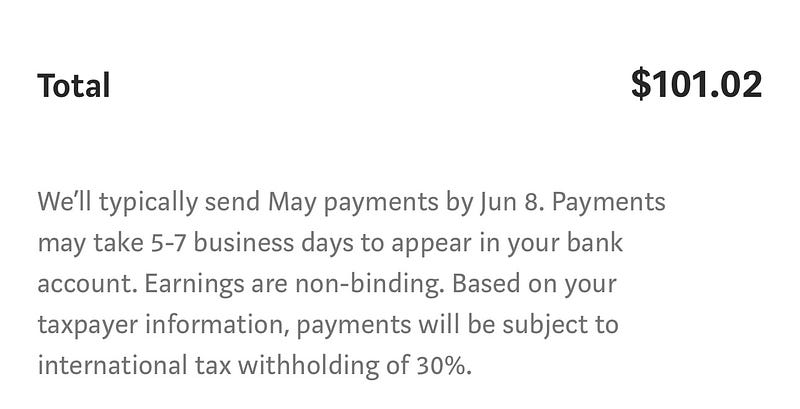
When I first joined Medium, I remember reading somewhere that only about 5% of writers make $100 or more monthly. This statistic stuck with me and became a personal milestone. “Can I be part of that 5%?” I often wondered.

After several months on the platform, my stories started gaining traction, but I hadn’t earned more than $65 in any given month. My initial goal was relatively modest — to earn around $100 per month.

Now that I’ve finally achieved this goal, I’m setting my sights higher, aiming for $200 next. It feels similar to my journey with followers; my goal started at 500, then 1000, 1500, and now 2000.

This journey has taught me persistence pays off,” I reminded myself.

If you stay on Medium long enough and continue to write, you will eventually meet your goals.

This has certainly been my experience. Reflecting on my recent success, I realize I did a few things differently this past month that contributed significantly to my earnings surpassing $100.

I want to share these strategies with you in the hope that they will also help you increase your earnings.

1 — Increasing Article Output

Photo by rivage on Unsplash

One of the most significant changes I made was increasing the number of articles I wrote each week.

Previously, I wrote one or two articles per week, but I noticed a remarkable shift when I started writing four to five articles weekly.

Writing every day seemed too ambitious and unsustainable, but four to five weekly articles struck the right balance.

There’s something transformative about writing more frequently on Medium,” I thought.

Some days, the words flow effortlessly; on others, it’s a struggle.

On days when inspiration strikes, I write as much as possible without worrying too much about editing.

I focus on getting the ideas out of my head and onto the page.

Later, when I’m not feeling as creative or have less time, I go back and edit these articles, refining and polishing them for publication.

This approach has increased my output and improved my consistency, keeping my readers engaged with regular content.

2 — Writing Longer, Engaging Content

Photo by Patrick Tomasso on Unsplash

Another pivotal change was making my articles longer.

I learned that the longer someone reads your story, the more you earn. However, writing longer content alone isn’t enough; it must be engaging.

If your article is lengthy but fails to hold the reader’s attention, they’ll likely leave before finishing, which won’t help your earnings or reader retention.

Initially, I resisted writing longer articles because I personally prefer shorter reads,” I admitted.

However, observing successful Medium writers who often write lengthy articles inspired me to experiment with longer content.

The key is ensuring every part of your article is engaging and adds value to the reader.

3 — Growing Your Follower Base

Photo by Free Walking Tour Salzburg on Unsplash

Followers play a crucial role in your success on Medium. “When I started actively following other writers, many followed me back,” I noted, which helped increase my visibility on the platform.

Having a larger follower base doesn’t guarantee they will read all your stories, but it does put you on their radar.

I’ve noticed that writers with a substantial following often have more credibility,” I reflected.

They’ve either been on Medium for a long time or have consistently produced quality content.

This credibility can attract more readers to your stories, increasing your chances of higher earnings.

4 — Repurposing Old Articles

Photo by Sergiu Vălenaș on Unsplash

After being on Medium for a while, you’ll notice that some of your older articles aren’t performing well.

Instead of deleting these underperforming stories, I considered repurposing them.

Change the title, restructure the content, and tweak anything that could use improvement,” I reminded myself.

Sometimes, a simple title change can bring new life into an article.

Recently, I learned how to embed links in my stories,” I said excitedly.

I revisited some of my older articles and added links to related content.

This strategy revived those articles and encouraged readers to explore more of my work, increasing overall engagement.

5 — Utilizing Popular Keywords

Photo by NisonCo PR and SEO on Unsplash

Writing frequently within a niche and using relevant keywords is another effective strategy.

For instance, I write a lot about IoT and entrepreneurship — these are my keywords, and they have a substantial following.

Incorporate these keywords in your titles and headings within the articles,” I advised myself.

Keywords help your stories get found on Medium and through search engines like Google.

They tell search engines what your story is about, which is crucial for getting more views.

6 — Writing for Your Audience

Photo by Nicholas Green on Unsplash

Understanding and writing for your audience is paramount. “Consider who your readers are and what they are looking for,” I constantly reminded myself.

Are you teaching them something new or sharing a personal story?

Tailoring your content to meet your audience’s expectations and needs will help you connect with them better and keep them coming back for more.

7 — Writing Because You Love It

Photo by Belinda Fewings on Unsplash

Today, I can confidently say that I have become a much better writer thanks to the practice and feedback I’ve received on this platform.

Writing frequently has improved my skills and solidified my identity as a writer.

Reaching the $100 mark is a significant milestone,” I thought with satisfaction, but the love for writing will keep you going in the long run.

By focusing on your passion and continuously honing your craft, the financial rewards and recognition will follow.


My journey to earning $100 monthly on Medium has been one of persistence, strategic adjustments, and much learning.

By increasing my output, writing longer and more engaging articles, growing my follower base, repurposing old content, using popular keywords, and writing with my audience in mind, I’ve been able to achieve this milestone.

And above all, writing because I love it has made the journey worthwhile.

If you’re on a similar path, I hope these insights will help you reach and surpass your goals on Medium.

This experience has reaffirmed my belief in perseverance and adaptability,” I concluded.

As I look forward to new goals and challenges, I remain committed to sharing my journey and insights with fellow writers and readers on Medium.

Together, we can continue to grow, learn, and succeed.


My Top Three (3) Stories in May 2024 — You Should Read This!

View at Medium.comView at Medium.comView at Medium.com

About Me (Part-9) — Mazlan Abbas

ABOUT ME SERIES

Why I Changed the Style of My Writing

The author’s photo was converted to Anime using the “Glam” mobile app.

A familiar doubt crept into my mind as I sat at my desk, staring at the windows beside my room. “Mazlan, who are you kidding? Do you think anyone cares about what you have to say?” I shook my head, trying to dismiss the negative voice, but it lingered, casting a shadow over my thoughts.

This wasn’t the first time I had faced this inner critic, and it certainly wouldn’t be the last.

I’ve always believed in the power of storytelling.

From my early days of reading science fiction novels and DC comics to my recent blogging and public speaking endeavors, I’ve seen how stories can inspire, educate, and transform.

Yet, despite my passion for writing, I often grappled with self-doubt.

I remember vividly the day this all began to change.

It was a rainy afternoon, and I was scrolling through Medium, searching for inspiration.

My eyes landed on an article titled “Once I Stopped Believing This Lie, My Writing Improved 100x.

Intrigued, I clicked on it, not knowing that the words I was about to read would resonate deeply with me.

The author discussed a common lie many writers believe: “You need to be perfect to be successful.

As I read those words, I felt a sense of familiarity wash over me.

Mazlan, isn’t this exactly what you’ve been struggling with?” I thought to myself.

For years, I had been caught in the perfectionism trap, believing every piece of writing had to be flawless before sharing it with the world.

This mindset paralyzed me, preventing me from expressing my true voice and connecting with my audience.

The article explained how this belief in perfectionism was holding writers back.

It encouraged embracing imperfection and viewing writing as a journey rather than a destination.

Why don’t you try this, Mazlan?” I pondered. “What if you allowed yourself to be vulnerable, to make mistakes, and to grow from them?

Determined to break free from the chains of perfectionism, I decided to take a leap of faith.

I began writing with a new mindset, focusing on progress rather than perfection. At first, it was challenging.

The inner critic would often rear its head, whispering, “This isn’t good enough. You should start over.” But I persisted, reminding myself that growth comes from pushing through discomfort.

I started sharing my drafts with a small group of trusted friends and colleagues, seeking their feedback and support.

Their responses were encouraging and constructive, helping me see my writing from different perspectives.

Mazlan, this is a great idea, but maybe you could elaborate more on this point,” one friend suggested. Another added, “I love your storytelling, but try to connect it more with your main argument.

With each piece of feedback, I felt my confidence grow.

I realized that my fear of imperfection had been unfounded.

People appreciated my authentic voice and the insights I shared, even if they weren’t perfectly polished.

My imperfections made my writing more relatable and human.

One of the most significant breakthroughs came when I wrote an article about my journey in the IoT industry.

I shared my successes, but more importantly, I opened up about my struggles and failures.

Mazlan, are you sure you want to share this?” I questioned myself. “What if people judge you?” But I pushed through the doubt and published the article.

To my surprise, the response was overwhelmingly positive.

Readers reached out to me, thanking me for my honesty and sharing their own experiences.

Mazlan, your story resonated with me. I’ve faced similar challenges, and it’s comforting to know I’m not alone,” one reader commented. Another wrote, “Your article inspired me to keep going, even when things get tough.

This experience taught me a valuable lesson: authenticity and vulnerability are potent tools in writing.

We create deeper connections with our audience when we allow ourselves to be seen as imperfect.

Our stories become more relatable, and our messages resonate more profoundly.

As I continued to embrace this new approach to writing, I noticed a significant improvement in my work.

I felt more liberated, creative, and confident.

The words flowed more easily, and I found joy in the writing process again.

Mazlan, this is what writing should feel like,” I reminded myself. “It’s about expressing your truth and connecting with others, not about achieving perfection.

I also began to apply this mindset to other areas of my life.

In my role as the CEO of FAVORIOT, I encouraged my team to embrace imperfection and view challenges as opportunities for growth.

Let’s focus on progress, not perfection,” I often reminded them during our meetings. “Innovation comes from taking risks, learning from our mistakes, and constantly improving.

This shift in mindset had a positive ripple effect throughout the organization.

We became more agile, open to experimentation, and willing to take bold steps toward our vision.

Our projects flourished, and we built stronger relationships with our clients and partners.

Reflecting on my journey, I realize how crucial it is to challenge the lies we tell ourselves.

The belief in perfectionism had held me back for so long, but I unlocked my true potential once I let go of that lie.

Mazlan, if you could go back in time, what would you tell your younger self?” I often ponder. “I would tell him to embrace imperfection, be courageous, and believe in his voice’s power.

Writing is not just about putting words on a page; it’s about sharing a part of ourselves with the world.

It’s about being vulnerable, authentic, and human.

Allowing ourselves to be imperfect opens the door to growth, creativity, and connection.

So, to all the aspiring writers and storytellers, I offer this advice:

Stop believing the lie that you need to be perfect.

Embrace your imperfections, share your unique voice, and trust that your story matters.

Your journey is valuable, and your experiences can inspire and transform others.

As I continue my writing journey, I carry these lessons with me.

Every word I write and every story I share is an opportunity to connect with others and make a positive impact.

Mazlan, keep pushing forward. Your voice is needed in this world,” I tell myself. And with each piece I write, I strive to inspire others to believe in their potential and embrace the beauty of imperfection.


My journey of overcoming the lie of perfectionism has been transformative.

It has allowed me to grow as a writer, a leader, and an individual. By embracing imperfection,

I’ve discovered the true power of storytelling and the profound connections it can create.

I encourage you to embark on this journey with me, to let go of the need for perfection, and to embrace the joy of authentic expression.

Together, we can inspire, connect, and make a difference.


This article captures the essence of my journey as Mazlan Abbas, blending personal anecdotes, self-dialogues, and reflections to convey the transformative power of embracing imperfection in writing and beyond.


About Me — Mazlan Abbas

About Me (Part-2) — Mazlan Abbas

About Me (Part-3) — Mazlan Abbas

About Me (Part-4) — Mazlan Abbas

About Me (Part-5) — Mazlan Abbas

About Me (Part-6) — Mazlan Abbas

About Me (Part-7) — Mazan Abbas

About Me (Part-8) — Mazlan Abbas

As a Writer — How Will Others Find Our Voice in the Crowdest Room

WRITER’S JOURNEY

You don’t need to be the loudest in the room, just the one who touches the heart.

Photo by Alena Jarrett on Unsplash

Every creator seeks that golden moment of viral success, but for most of us, the reality is a relentless hustle — a constant battle to distinguish ourselves amid the digital noise.

In the first week of May, a subtle shift began to unfold. My articles started to gain traction, a sign that I was finally breaking through the formidable barrier of obscurity. It wasn’t dramatic, yet it was significant enough to fuel my confidence.

Is this it? Am I finally getting somewhere?” I pondered, my heart fluttering with a mix of excitement and skepticism.

Photo by Manki Kim on Unsplash

The internet is a crowded marketplace, filled with voices clamoring to be heard. When I first began, my words seemed to dissolve into the abyss of content that fills the web.

It was disheartening.

My writing journey was driven by a desire to share my insights as a tech entrepreneur and to make sense of the rapidly evolving world of IoT. However, understanding the craft of captivating an audience required more than just knowledge; it required heart.

Perhaps it’s not just about informing but connecting,” I realized one evening as I watched the digital stats slowly tick upward.

Storytelling, an art as ancient as time, became my focus. It wasn’t just about delivering facts but weaving them into the human experience.

Photo by saeed karimi on Unsplash

Let me share a secret with you: even in technology, where logic reigns supreme, the human element — the story — is what truly engages.

Why do simple videos of daily activities capture immense attention?

Because they narrate a journey, a transformation from chaos to order, from nothing to something. “Could the mundane details of tech innovation be woven into narratives that resonate on a personal level?” I wondered, my mind racing with possibilities.

I was never a natural storyteller.

My inclination has always been towards data, towards the tangible and quantifiable.

But the digital landscape taught me that the personal touch, the slight vulnerability in sharing successes and stumbles, draws people in.

Photo by DJ Johnson on Unsplash

Mazlan, it’s okay to show the struggles behind the success,” I had to repeatedly remind myself, the internal dialogue pushing me to be more open and genuine.

Here are some strategies that helped me carve out my space in the crowded world of online writing:

  1. Know Your Audience and Yourself: Before you type that first word, think deeply about who you are writing for and what unique perspective you bring. You can’t be everything to everyone, and that’s okay.
  2. Share Relatable Experiences: Even if you think your life or work might not be exhilarating, there’s power in the relatable simplicity of everyday experiences.
  3. Engage from the Get-Go: Your opening lines are crucial. Start with something that hooks your reader — humor, a question, or an intriguing statement.
  4. Create Characters: Even in non-fiction, the people in your stories are your characters. Let your readers see the world through their eyes.
  5. Build Tension with Conflicts: Introduce challenges or conflicts in your narratives. These don’t have to be dramatic; even small hurdles can engage your audience as they await resolutions.
  6. Immerse Your Readers: Use descriptive language to make your readers feel present in the story. Let them hear, see, and feel the environment you’re describing.
  7. Emotion Over Information: While facts are important, the emotional journey keeps readers coming back. Share your triumphs and failures to create a deeper connection.
  8. Be Consistently Present: Growth takes time. Post regularly and maintain a presence that your readers can rely on.
  9. Listen and Respond: Writing online is not a monologue but a dialogue. Engage with your audience, listen to their feedback, and tell them they are heard.
  10. Learn from Every Setback: Not every piece will be a hit. Learn from what doesn’t work and refine your approach.
Photo by Alexander Grey on Unsplash

In writing, just as in technology, adaptation and learning are keys to success.

Every story and article written is a step towards understanding what resonates.

As I celebrate small victories and prepare for the many challenges ahead, I am reminded why I started.

It’s about building something bigger than myself — a bridge between technology and daily life crafted not just with data but with the very essence of our shared human experiences.

So, here’s to the stories yet to be told and to find our voices in the crowdest room.

Remember, you don’t need to be the loudest in the room, just the one who touches the heart.

How I Turned Dry Tech Topics into Must-Read Articles

WRITER’S STORIES

My Journey from Academic Papers to Engaging Blogs: 6 Essential Tips

Photo by Shaurya Sagar on Unsplash

Writing articles that captivate and engage readers is an art form I’ve had to master over the years through trial and error.

When I first started sharing my thoughts on gadgets and technology, I didn’t realize how important it was to make my content informative and engaging.

This journey has taken me from academic papers to blogs and now to a broader audience interested in the Internet of Things (IoT) and smart cities.

I remember the early days of my blogging journey.

I was sitting at my desk, staring at a blank screen. “How do I make this interesting?” I would ask myself.

Who is going to read this?” Over time, I discovered that writing articles people want to read involves a mix of storytelling, practicality, and a touch of personality.

1. Understand Your Audience

Photo by Melanie Deziel on Unsplash

One of my first lessons was the importance of knowing who you’re writing for. It might sound obvious, but this step is often overlooked.

I used to write purely from my perspective, focusing on what I found interesting.

But as I dig deeper into blogging, I realized that my audience had different needs and interests.

One evening, while reviewing my blog statistics, I asked myself, “Who are my readers?” “What are they looking for?

I started paying attention to the comments, the most-read articles, and the feedback I received.

It became clear that my audience was not just tech enthusiasts but also professionals looking for practical applications of IoT and insights into smart city developments.

Understanding my audience meant I had to shift my focus.

Instead of discussing the latest gadgets, I explored how these technologies could be applied in real-world scenarios.

This approach made my content more relevant and helped establish a connection with my readers.

2. Start with a Hook

Photo by Steve Johnson on Unsplash

Getting someone’s attention in the first few seconds is crucial.

In today’s fast-paced world, people have short attention spans.

If your article doesn’t grab them immediately, they’ll move on to something else.

I recall an article I wrote about the future of IoT in healthcare. “How do I begin this?” I pondered, knowing the importance of a strong opening.

I decided to start with a personal story — a visit to a hospital where I saw IoT devices in action. “Imagine walking into a hospital where every device is connected, providing real-time data to doctors and nurses,” I wrote.

This hook was engaging and set the stage for the detailed analysis that followed.

3. Use a Conversational Tone

Photo by LinkedIn Sales Solutions on Unsplash

One of the most significant shifts in my writing style was adopting a conversational tone.

I was used to formal writing in the academic world.

However, blogging and writing for a broader audience required a different approach.

How would I explain this to a friend over coffee?” I often asked myself.

This mindset helped me simplify complex topics and make my writing more accessible.

Using a conversational tone made my articles feel like dialogue rather than lectures, which resonated well with my readers.

4. Make it Practical

Photo by Joel Rohland on Unsplash

People love articles that offer practical advice they can apply in their lives.

This realization came to me after I wrote several articles that dug deep into the theoretical aspects of technology but received lukewarm responses.

While writing about IoT deployment strategies, I wondered, “How can I make this more useful?

I began to include step-by-step guides, tips, and case studies.

For example, I didn’t just talk about the benefits in an article about smart city implementation.

I provided a roadmap for city planners on how to get started, from conducting feasibility studies to choosing the right technology partners.

5. Incorporate Visuals

Photo by Alex Litvin on Unsplash

A picture is worth a thousand words, and in the digital age, visuals are more important than ever.

This was a harsh lesson for me.

As someone who loves words, I initially resisted incorporating too many images or infographics.

One day, while revising an article on IoT sensors, I realized how text-heavy it was. “Would I read this if I wasn’t so passionate about the topic?” I asked myself honestly.

The answer was no.

I started adding diagrams, charts, and photos to break up the text and illustrate my points.

The feedback was overwhelmingly positive.

Readers appreciated the visual aids, and they made the information more accessible and digestible.

6. Keep It Concise

Photo by Hamish Duncan on Unsplash

While my articles are now more comprehensive, I’ve learned the importance of conciseness.

This may seem contradictory, but even in longer pieces, being concise is about making every word count.

I used to write long-winded explanations, thinking that more words equaled more value.

However, readers often need help to skim through or lose interest. “How can I say this more succinctly?” became a constant question during my writing process.

Trimming unnecessary words and focusing on clarity made my articles more engaging and effective.


Finding My Unique Voice

Photo by Etienne Girardet on Unsplash

Beyond these six strategies, finding my unique voice was a crucial part of my journey.

As a professional in IoT and smart cities, I wanted my expertise to shine through and be relatable.

While working late in my office one evening, I reflected on my journey. “What makes my perspective unique?” I asked myself.

The answer lay in my diverse experiences — from academia to industry, local projects to international collaborations.

Embracing these aspects, I started sharing personal anecdotes, challenges, and successes.

For instance, I shared a story from my time at CELCOM Axiata in an article about overcoming obstacles in Billing System migration implementation.

We faced a significant hurdle in integrating a new technology with our existing infrastructure.

By narrating this experience, including the sleepless nights and the eventual breakthrough, I connected with my readers on a deeper level.

They saw not just the expert but a person who had faced and overcome challenges similar to their own.

Building a Community

Photo by mauro mora on Unsplash

Writing is not just about creating content; it’s about building a community.

Over time, I realized the value of engaging with my readers beyond the articles.

Responding to comments, participating in discussions, and being active on social media platforms like LinkedIn and Twitter helped me build a loyal readership.

How can I foster a sense of community?” I often asked myself.

I started hosting webinars and live Q&A sessions where readers could interact with me directly.

This boosted my engagement and provided valuable insights into what my audience cared about.

Their feedback became a crucial part of my content strategy.

Embracing Feedback

Photo by Jon Tyson on Unsplash

Feedback, both positive and negative, is a powerful tool for growth.

In the early days, negative comments would discourage me. “Am I not good enough?” I would wonder.

But over time, I learned to see feedback as an opportunity to improve.

Constructive criticism helped me identify areas for improvement. For instance, after receiving feedback that some of my articles were too jargon-heavy, I consciously tried to simplify my language.

How can I explain this in a way everyone can understand?” became a guiding principle.

Positive feedback, on the other hand, reinforced what I was doing right.

Knowing that my articles had helped someone or sparked a new idea was incredibly rewarding and motivated me to keep writing.

Continuous Learning

Photo by Dmitry Ratushny on Unsplash

The world of technology is fast moving, and so is the world of writing.

Staying updated with the latest trends in both fields is essential.

I dedicate time to reading other thought leaders, attending conferences, and participating in workshops.

How can I stay relevant?” I frequently ask myself.

By continuously learning and adapting, I ensure that my content remains fresh and insightful.

This commitment to growth is about staying ahead in my field and providing the best value to my readers.

The Journey Ahead

Photo by Mantas Hesthaven on Unsplash

Reflecting on my writing journey, I’m grateful for the lessons learned and the community I’ve built.

Writing articles that people want to read is not a destination but an ongoing journey.

It requires patience, persistence, and a willingness to evolve.

Every article I write is an opportunity to connect, inspire, and make a difference.

Whether it’s a piece on the latest IoT innovation or a personal reflection on my experiences, my goal remains to provide value to my readers.

What’s next?” I often wonder.

The possibilities are endless, and the journey continues.

With each article, I strive to refine my craft, learn from my audience, and contribute to the ever-growing world of knowledge.


In conclusion, writing articles people want to read is about understanding your audience, starting with a hook, using a conversational tone, making it practical, incorporating visuals, and keeping it concise.

It’s also about finding your unique voice, building a community, embracing feedback, and committing to continuous learning.

This experience has been enriching, and I’m excited about what lies ahead.