Echoes From The Silent Stars – A Poem

Photo by Greg Rakozy on Unsplash

In the heart of youth, where dreams ignite,

Beneath the stars’ ever-watchful light,

Eyes cast upwards, full of wonder,

Tiny souls with dreams asunder.

Gazing at the mountains, vast and steep,

Promising a climb that’s far from cheap,

By the seas, they stand, eyes wide,

Dreaming of a victorious tide.

With ambition sown in tender minds,

Through the maze of time, each wanders and finds,

Failures aplenty on this quest for worth,

Testing the mettle that they bring forth.

Photo by Johannes Plenio on Unsplash

Many a night, their spirits wane,

Under the weight of recurring pain,

Yet within their hearts, a flame persists,

Urging them to climb through mists.

Dawn breaks, and with it, new resolve,

Determined now their dreams to solve,

With grit and grace, they rise and strive,

In their pursuit, they feel alive.

Years pass, and struggles take their toll,

Yet what emerges is a steadfast soul,

With every fall, they’ve risen again,

Learning, growing, through each pain.

Photo by Dipqi Ghozali on Unsplash

One day awakens, bright and clear,

Filled with a power, devoid of fear,

They step forth, their essence revived,

To grasp the success for which they’ve strived.

Now, among peers, they stand tall,

Their youthful dreams realized, after all,

Scaling heights once deemed too steep,

Conquering seas, vast and deep.

Their journey, marked by steadfast hope,

Shows others on the brink how to cope,

For in each heart that dares to dream,

Lies the potential to redeem.

Photo by Rad Pozniakov on Unsplash

So let the youth gaze at the stars,

And dream of healing old scars,

For within them lies the power so grand,

To hold the future in their hand.

In their ambition, let them find,

The strength to be resilient, kind,

For they are the ones who’ll shape our tales,

Sailing forth with wind-filled sails.

In every child who dreams tonight,

Lies a future oh so bright,

For within their hearts, pure and true,

Resides the power to renew.

So here’s to the youth, with eyes aglow,

May their ambitions flourish and grow,

For within their dreams, as they ascend,

Lies our hope, our journey’s end.

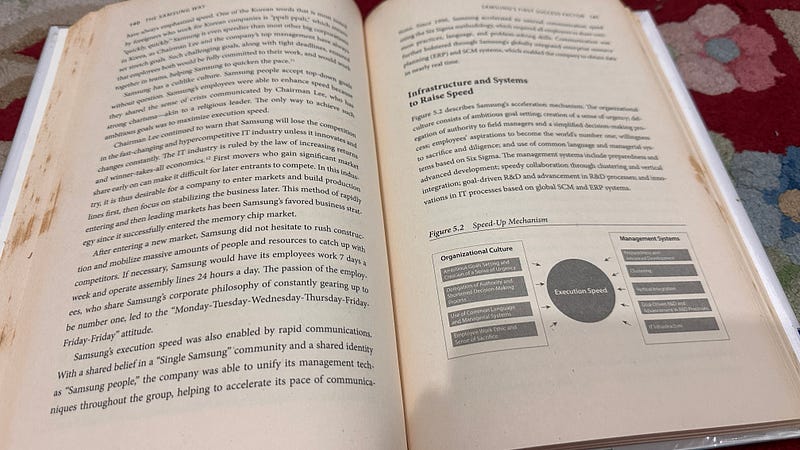
The Samsung Way — A Book Review

Learn from the best company— Book Review by Mazlan Abbas

Unlocking Corporate Success

The Samsung Way.

“‘The Samsung Way’ is not just a roadmap to success; it’s a testament to how visionary leadership and strategic innovation can elevate any enterprise.”

Immersing myself in “The Samsung Way,” authored by Jaeyong Song and Kyungmook Lee, was a revelatory experience that shed light on the foundational principles propelling Samsung from an underperforming electronics firm to a global colossus.

This book, underpinned by a decade of rigorous research and enriched by insights from over 80 top Samsung executives, serves as a compelling narrative and a blueprint for business excellence.

My fascination with Samsung’s transformative journey stems from its dramatic overhaul, a metamorphosis that not only reshaped its own destiny but also set a benchmark for organizational success worldwide.

The Samsung Way” transcends being a mere publication; it is a profound elucidation of strategic acumen, a manual deciphering how Samsung harnessed nuanced decision-making, innovation, and cross-cultural integration.

Central to Samsung’s renaissance was Chairman Lee Kun-Hee’s visionary New Management Initiative, a cornerstone for the company’s revival.

Song and Lee meticulously unpack the “Three Paradoxes of Management,” strategic pillars that appear contradictory yet interlace to forge success.

“By harmonizing innovation with tradition, ‘The Samsung Way’ showcases how to achieve sustainable growth and a competitive edge in today’s dynamic business landscape.”

These include accelerating decision-making and execution, harmonizing convergence with competitive prowess in core domains, and blending Western and Eastern management philosophies — each a testament to practical wisdom validated through Samsung’s ascent.

The book compellingly navigates the dichotomy between Eastern and Western management paradigms, presenting Samsung’s model as an exemplary fusion that leverages global best practices.

This synthesis is especially resonant today, amidst the relentless pace of technological evolution and fierce international competition.

For leaders and business professionals across spectrums, “The Samsung Way” is a reservoir of actionable insights. It delineates strategies for streamlining decision processes, fostering interdisciplinary synergy, and embedding a culture of innovation.

The narrative provides a framework for realizing economies of scale while maintaining agility, a dual mandate vital for thriving in today’s hyper-competitive landscape.

For individuals like me, who seek wisdom from successful paradigms, the book is an affirmation of the enduring value of learning, adaptation, and visionary leadership.

It illustrates how to imbue every organizational stratum with innovation, ensuring that strategic thinking and creativity are not confined to the executive echelons.

In conclusion, “The Samsung Way” is not just a treatise on business strategy; it is an inspirational guide for those aiming to excel in the modern corporate milieu.

It champions a balanced approach, intertwining strategic foresight, operational excellence, and cultural depth.

The Samsung Way.

For anyone eager to grasp the mechanics of Samsung’s success or to incorporate its tenets into their leadership repertoire, Song and Lee’s work is an essential compendium.

Reflecting on the insights shared by Song and Lee, I am invigorated with a renewed sense of purpose and determination. Samsung’s story, as articulated in this book, exemplifies the power of strategic clarity, relentless innovation, and purposeful leadership.

It’s an invigorating narrative that not only instructs but also inspires, prompting us to chart our courses to success, inspired by the pioneering ethos encapsulated in “The Samsung Way.

“‘The Samsung Way’ is more than a book; it’s a manifesto for those who dare to dream big and are committed to turning those dreams into reality through relentless pursuit and strategic acumen.”


Get this book “The Samsung Way” from Amazon. (Note: Affiliate link)

Try Audible Premium Plus and Get Up to Two Free Audiobooks

From Monologue to Dialogue: Transitioning to Engaging Panel Discussions

FROM STAGE FRIGHT TO SPOTLIGHT

My Journey as a Conference Panelist

Why I Now Prefer Panel Discussions Over Solo Presentations

Throughout my career, I’ve had the privilege of being invited to speak at various conferences, a role I initially cherished for the autonomy and control it afforded me.

As a speaker, I could meticulously plan my presentation, control the flow of my talk, and ensure that every slide was a perfect reflection of the points I wanted to convey.

This level of preparation provided me a comfort zone, a safe harbor in the sometimes unpredictable sea of public speaking.

Transitioning from Speaker to Panelist

However, my experiences took an interesting turn when I began receiving invitations not as a sole speaker but as a panelist.

The dynamics of panel discussions are inherently different: instead of a monologue, it’s a dialogue – not just between the panelists but with the audience as well.

Suddenly, I found myself on stage with two or three other experts, each with their unique perspectives and areas of expertise, all under the guidance of a moderator whose job was to weave our individual narratives into a cohesive, engaging session.

Initially, this new role was a source of anxiety.

Sitting on stage, not knowing exactly what question would come next, I worried about whether I would be able to respond with the right mix of fact, insight, and eloquence.

Would I be able to hold the audience’s attention? Could I contribute meaningfully to the discussion and hold my own alongside my fellow panelists?

Over time, however, I discovered that most panels are less daunting than they seem.

Panelists often receive a set of questions in advance, allowing us to prepare our thoughts and consider our responses.

Some organizers even allow panelists to suggest questions, providing an opportunity to steer the conversation toward areas of our expertise or interest.

Facing Uncertainty on Stage

But even the best preparations can’t cover everything, and there are always moments when the moderator goes off-script or delves deeper into a topic than the prepared questions had anticipated.

In these situations, I learned the value of active listening, staying fully engaged not just when it was my turn to speak but throughout the entire session.

This attentiveness helped me respond more thoughtfully and dynamically, weaving my responses into the ongoing narrative of the discussion rather than delivering pre-packaged answers.

Preparation Meets Improvisation

In my early days as a panelist, I considered bringing notes on stage, a safety net of bullet points and facts. Yet, this approach soon felt contrived, more like a performance than a genuine conversation.

I realized that true professionalism in this context meant showing up authentically, ready to engage with the topic and the audience without the crutch of scripted responses.

To navigate these live, unscripted moments, I developed a technique akin to a mental mind map.

When listening to a question or another panelist’s response, I’d quickly organize my thoughts, connecting the dots between the discussion points and my own knowledge and experiences.

This mental mapping allowed me to respond more fluidly, adding depth and context to the conversation.

The Power of Humor and Storytelling

Humor became another tool in my arsenal, a way to lighten the mood and connect more personally with the audience.

Even in serious discussions, a well-placed joke or anecdote can humanize the panelists, breaking down barriers and fostering a more engaging, relatable session.

Building on Collective Insights

I also learned the value of building on my fellow panelists’ points, weaving their insights into my responses to create a richer, more interconnected dialogue.

This collaborative approach not only enriched the content of the discussion but also highlighted the collective expertise of the panel, creating a more compelling and informative experience for the audience.

Over time, my perspective on panel discussions has transformed.

What once felt like a daunting challenge has become a preferred format, offering a dynamic and interactive forum that forgoes the rigidity of prepared slides for the spontaneity of real conversation.

Today, I embrace these opportunities, confident in my ability to contribute thoughtfully and authentically, no matter where the discussion may lead.

An Istanbul Story of Timeless Splendor

The Blue Mosque Diaries

From Breakfast Views to Blue Tiles: Discovering the Wonders of the Blue Mosque

Istanbul — My Travelogue

Istanbul, a city that straddles two continents, has always been a melting pot of civilizations, a blend of the ancient and the modern, the tranquil and the chaotic.

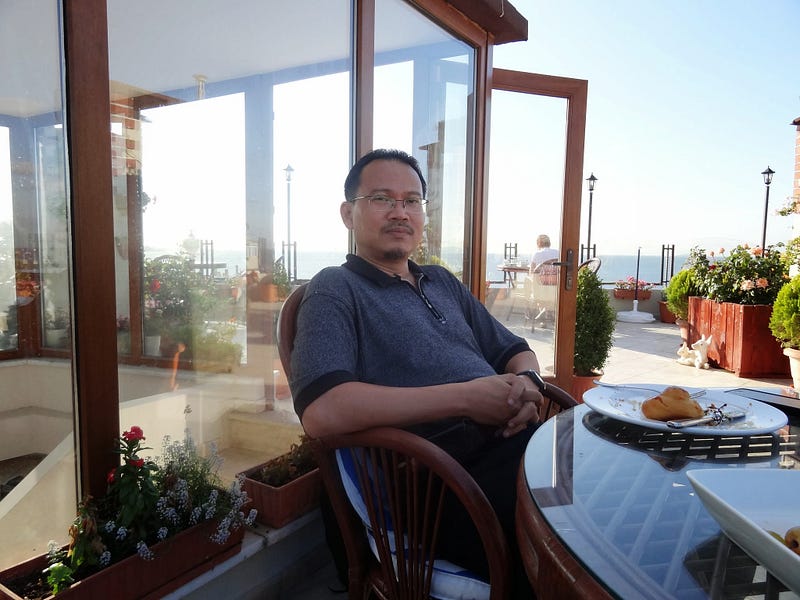
It was on a crisp, sunny morning in this historic metropolis that I found myself perched atop my hotel, looking out over a skyline that’s been a backdrop to history for thousands of years.

The view was breathtaking, and the minarets of the Blue Mosque punctured the horizon, commanding my attention even from a distance.

The view was breathtaking, and the minarets of the Blue Mosque punctured the horizon, commanding my attention even from a distance.

With a generous spread of Turkish delights laid out before me, the flavors of the city began to unfold with every bite.

Olives, cheese, and cucumbers paired with a warm, flaky börek filled with spinach and feta — the quintessential Turkish breakfast.

It was more than just a meal; it was a celebration of culture, a sensory introduction to a land that’s been the crossroads of empires.

I lingered over my Turkish tea, the glass cup delicate in my hands, and gazed out at the city waking up.

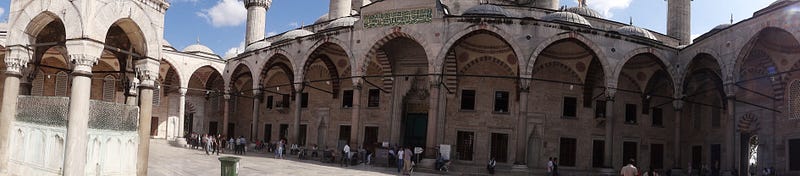
The mosque’s six minarets reached skyward as if in competition with the nearby Hagia Sophia.

With the taste of honey still on my tongue, I set out for the Sultan Ahmed Mosque, known to many as the Blue Mosque.

The streets of Istanbul are an open-air museum, and every step towards the mosque was a walk through time.

The city’s tram clanged by, a reminder that while Istanbul is a guardian of history, it’s also a vibrant, living city.

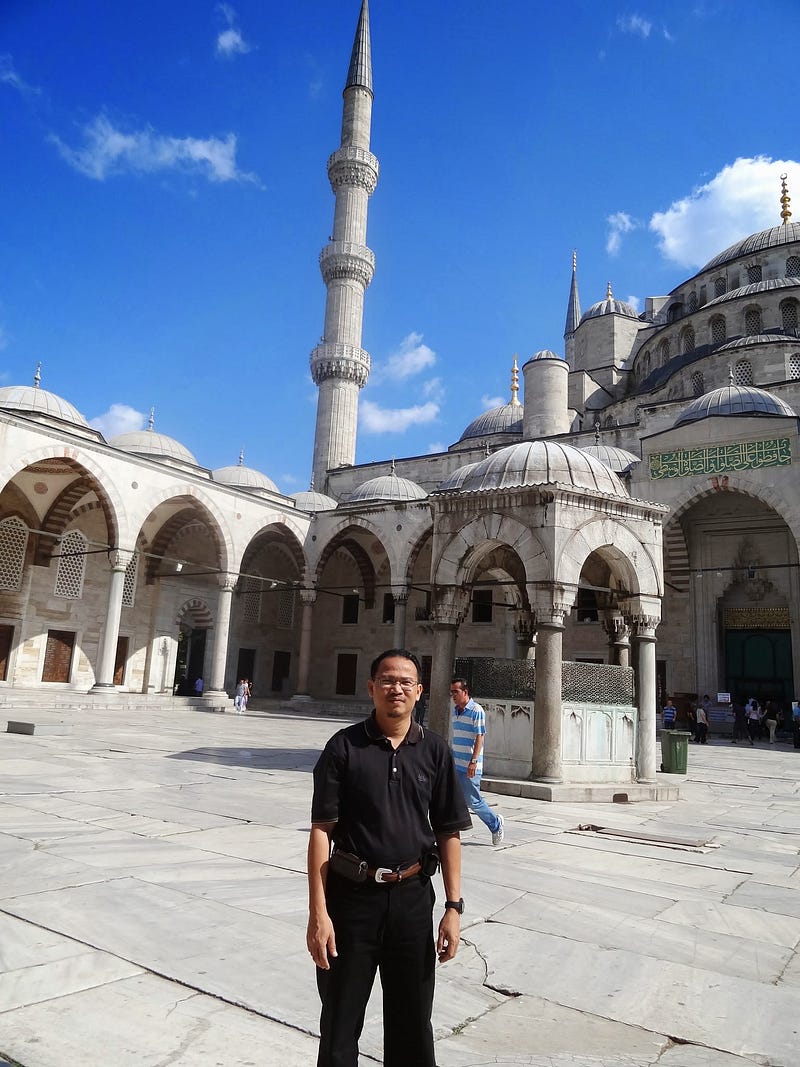
The mosque’s six minarets reached skyward as if in competition with the nearby Hagia Sophia, yet there was no sense of rivalry here — only harmonious coexistence.

The space was filled with the sound of water from the ablution fountains, a reminder of the mosque’s spiritual purpose.

As I entered the courtyard, I was struck by its sheer size — the biggest of all the Ottoman mosques, they said, and I could well believe it.

The space was filled with the sound of water from the ablution fountains, a reminder of the mosque’s spiritual purpose.

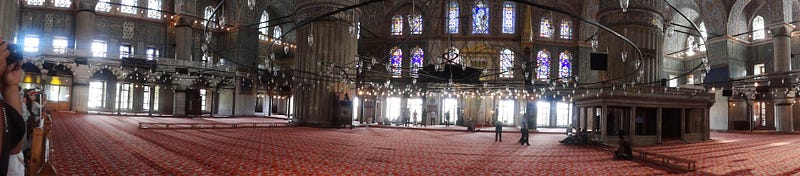
Slipping off my shoes, I stepped inside and was enveloped by a cool, serene atmosphere that contrasted with the city’s hustle and bustle.

The nickname ‘Blue Mosque’ became immediately apparent.

The nickname ‘Blue Mosque’ became immediately apparent.

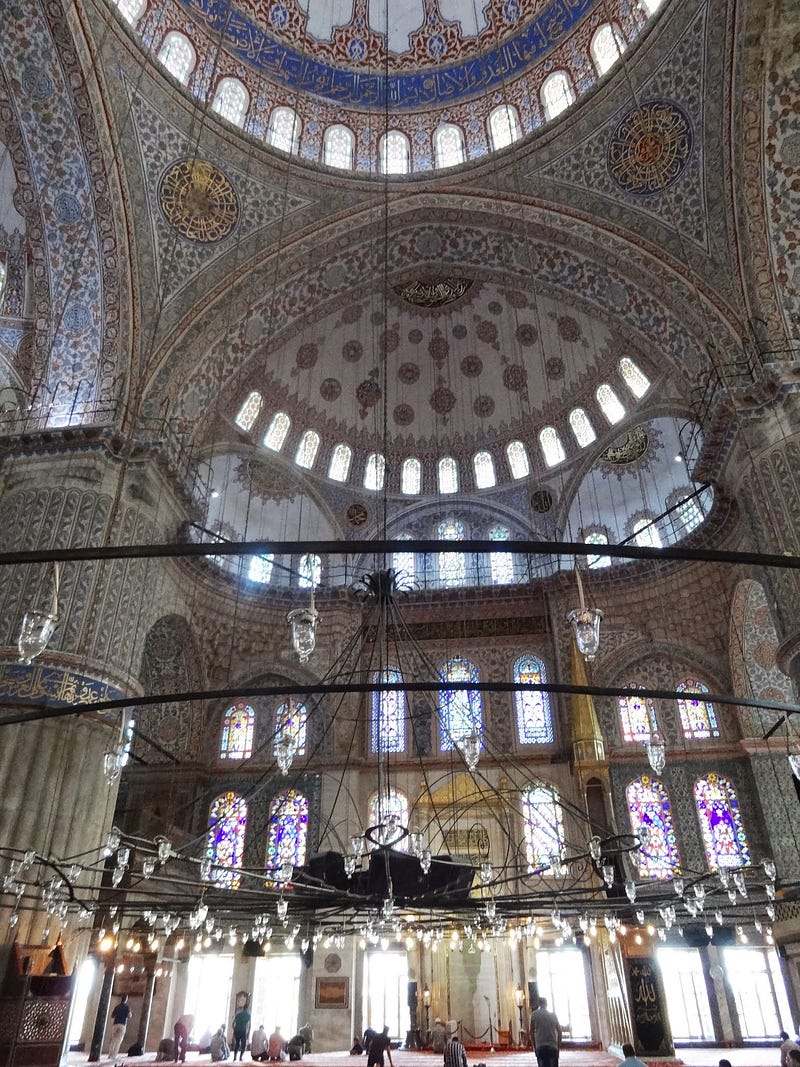
The blue Iznik tiles, each telling a story of its own, climbed the enormous interior walls, and the sunlight filtered through more than 200 stained glass windows, bathing the space in a kaleidoscope of color.

It was a quiet moment of awe, standing there among the pillars that held up the grand dome.

I was a mere visitor, but the mosque didn’t differentiate. It stood as a sanctuary to all — a symbol of peace in a world too often divided.

The intricate designs on the carpet, the soft light, and the hushed tones of visitors from around the globe created a tapestry of human connection.

The intricate designs on the carpet, the soft light, and the hushed tones of visitors from around the globe created a tapestry of human connection.

The Blue Mosque wasn’t just a monument to visit; it was an experience to be lived — a moment where time stood still and the past and present merged into one.

I spent hours inside, sitting in corners, watching the play of light on the walls, listening to the gentle murmurs of prayers.

In that vastness, I found a profound sense of peace, a deep connection to the millions who had come before me, each with their own stories, their own hopes and dreams.

I looked back at the grand structure, thinking of the sultans and architects, the worshippers and tourists, and the many sunsets it had seen.

As the day began to wane, I made my way out, the call to prayer once again resonating across the courtyard.

I looked back at the grand structure, thinking of the sultans and architects, the worshippers and tourists, and the many sunsets it had seen.

The Blue Mosque, with its domes and minarets, was more than just the pride of a skyline; it was a testament to humanity’s quest for beauty and meaning.

Leaving the mosque, the city’s energy enveloped me once more.

The scent of roasting chestnuts filled the air, and the sound of seagulls blended with the buzz of conversation.

Leaving the mosque, the city’s energy enveloped me once more.

Istanbul was alive, a city that never truly rests, yet within its heart, there was a haven of tranquility in the Blue Mosque.

As night fell and the mosque lit up against the darkening sky, I carried with me the memory of its blue tiles and silent prayers.

Istanbul is many things to many people, but to me, it will always be a place where history breathes, where every stone tells a story, and where the Blue Mosque stands as a gentle giant, whispering tales of the past to those who take the time to listen.


Video — My Travelogue — Istanbul

Climbing the Dragon’s Back

My Travelogue

My Journey to the Top of the Great Wall

Author at the bottom of the Great Wall of China many years ago.

Years ago, I had the unforgettable opportunity to visit the Great Wall of China, a journey that remains etched in my memory for many reasons.

It’s not every day you get to walk along a structure that has stood the test of time, embodying centuries of history and human endeavor.

My trip to the Great Wall was more than just a tick on the bucket list; it was a profound experience that connected me to the past in a way I’d never felt before.

As far as the eye can see.

As I approached the Wall for the first time, its sheer magnitude struck me.

Stretching as far as the eye could see, the Great Wall wound like a dragon across mountains and valleys, an architectural marvel that spoke of ancient China’s grandeur and ingenuity.

I remember thinking, “Here I am, about to walk on a structure that’s been standing for over two millennia, a structure that has witnessed the rise and fall of dynasties, the invasions, and the peace times. What stories it could tell!

Tiring climb — Not many reach to the top.

The climb was no easy feat.

As I started my ascent, a series of dialogues ran through my mind. “Can I actually do this? This is steeper than I thought!

With each step, the history of the Wall seemed to seep into my bones.

I imagined the soldiers who once patrolled this very structure, vigilant against invasions, enduring harsh weather, and the loneliness of remote outposts.

What determination they must have had,” I mused, pushing myself forward, inspired by their perseverance.

Magnificient view from the top (almost)

The Wall’s construction itself is a testament to human will.

As I huffed and puffed up the uneven stairs, I thought about the immense effort it took to build this fortification, stretching over 13,000 miles.

Every stone here was touched by ancient hands, every path laid with purpose. How many stories are buried beneath these bricks?” I wondered, running my hand along the weathered stones, feeling a connection across time.

You can see less people climbing the steps to the top.

The higher I climbed, the more the beauty of the surrounding landscape unfolded.

The view was breathtaking, with lush mountains rolling into the distance, dotted with colorful wildflowers and punctuated by the snaking Wall.

This is why they built it here,” I realized, “not just for strategic defense, but because this place holds the heart of nature’s beauty.

It was a perfect fusion of human achievement and natural splendor, a harmony that only magnified my awe for this ancient wonder.

Imagine how they defend the walls.

Reaching the top was an emotional moment. I was out of breath, my legs were shaky, but my spirit soared.

The dialogue in my mind shifted from doubt to triumph. “I did it! I’m standing at the top of the Great Wall of China!

The sense of achievement was overwhelming, not just for the physical feat but for the spiritual journey. I was awarded a “hero card,” a simple token that symbolized my accomplishment.

But it meant so much more to me.

It was a tangible connection to the countless souls who had stood where I stood, who had gazed upon these same vistas and felt that same indomitable spirit.

Hero Card

The hero card wasn’t just a piece of paper; it was a reminder of the enduring strength of the human spirit, a tribute to the builders, guardians, and visitors of the Wall who, across different eras, shared a common thread of resilience and aspiration.

Holding it in my hands, I felt a surge of gratitude and a profound sense of belonging to a larger story, a narrative woven through time, culture, and the collective human experience.

A cherished memory of my encounter with one of humanity’s greatest treasures.

The Great Wall of China is not just a wall; it’s a symbol of human achievement, a bearer of historical legacy, and an emblem of cultural endurance.

My journey there taught me the true value of perseverance, the beauty of human-nature harmony, and the depth of our connection to history.

These lessons, symbolized by the hero card, remain with me long after the trip ended, a cherished memory of my encounter with one of humanity’s greatest treasures.

The Science of Growth – A Book Review

Entrepreneurship — Book Review by Mazlan Abbas

Grow your business — learn from the best.

[Note: Click here to have FREE access to this member-only story]

I’ve got a gem for you!

The Science of Growth” by Sean Ammirati is like the GPS for scaling your business, and let me tell you, it’s spot-on and timely.

Now, I know we’ve all been bombarded with advice on growth, and you might be wondering, “Why this book?”

Well, for starters, Ammirati isn’t just throwing theories at you.

He’s walked the walk as a venture capitalist and educator, and this book is packed with real-world insights that get down to the nitty-gritty of scaling.

What really hooked me were the case studies – oh, the case studies! Imagine getting a behind-the-scenes look at why one company rockets to success while its counterpart stumbles.

It’s like being a fly on the wall in the boardrooms of LinkedIn, Facebook, and McDonald’s, witnessing the decisions that propelled them to stardom or doomed them to obscurity.

But it’s not just about the stories.

Ammirati digs into the “why” and “how” with a fine-tooth comb. He pinpoints the crucial decisions and strategies that can make or break your growth phase.

We’re talking partnerships, financing, data utilization – all the stuff that, let’s be honest, can get overwhelming.

This book breaks it down into digestible, actionable insights.

For me, the biggest takeaway was understanding that growth isn’t just about hustling harder; it’s about making smart, strategic choices.

And what’s more empowering than learning from those who’ve already played the game and won… or lost?

So, whether you’re knee-deep in your startup journey or just plotting your course, “The Science of Growth” should be on your reading list.

It’s not just a book; it’s a roadmap to scaling your business with intelligence and insight.

Trust me, you don’t want to miss out on this one.

It’s a read that could very well shape the future of your venture. Happy scaling!

Get this “The Science of Growth” book from Amazon. (This is an affiliate link)

Making Malaysia an IoT Hub

Happy 7th Anniversary to Favoriot!

Together, Let’s Build a Nation with Smart Solutions

[Note: Click here to have FREE access to this member-only story]

Favorite — That’s how you actually pronounce the name “Favoriot”

I’m super excited to share a bit about why my co-founders and I built Favoriot, and even more thrilled to celebrate our 7th anniversary with all of you!

It feels like just yesterday, on February 20, 2017, we all came together, buzzing with ideas and the shared dream of launching an IoT startup that could really make a difference.

Our initial spark was lit by the desire to create something meaningful for elderly people living alone.

We wanted to ensure their health and safety weren’t compromised, and that’s how “Raqib” was born.

But, oh, how the journey has unfolded since those early days!

Like many startups, we’ve navigated through various pivots — tweaking our product and exploring different market segments in search of that perfect product-market fit.

Over these seven years, we’ve learned a ton, especially about the challenges many organizations face in building their IoT solutions or leveraging IoT data for decision-making.

It’s become clear to us that nurturing talent is key.

The future of IoT hinges on our new generation of graduates being well-equipped with the necessary skills and tools.

To celebrate our journey and to gear up for the next exciting chapter, we’re rolling out something special.

From March 1 to March 31, 2024, we’re offering a whopping 50% discount on our 1-year Beginner Plan!

Just use the voucher code “FAV7YEARS” to snag this deal.

Discount Code — “FAV7YEARS” to get 50% Discount on Beginner Plan

And guess what?

You can use this code multiple times all the way through the end of March 2024.

Our Beginner Plan is pretty robust, offering unlimited devices, 10,000 API calls daily, extra dashboards, and loads more.

We’re pumped to see where your IoT journey takes you and are always here to support you.

Schedule an appointment with us if you’re looking for a Lifetime license (on-premise), which has an unlimited number of APIs per day.

Here’s to the next chapter in IoT innovation, and a huge thank you to you for being part of our story.

From Golden Gate Grandeur to Pier 39 Playfulness

My Travelogue

Engineering Marvels and Marine Delights: A San Francisco Journey

My trip to San Francisco was an absolute blast!

From Majestic Spans to Playful Clans – Discovering San Francisco’s Charms

Author at Golden Gate Bridge, San Fran

First up, the Golden Gate Bridge.

Wow, just wow.

Seeing it in person is a whole different ball game compared to the pictures.

That iconic International Orange color popping against the blue sky is something else.

From far — the iconic bridge

Walking across it, I was in awe of not just the view but the sheer scale of it all.

You really get why it’s such a big deal — the history, the architecture, it all hits you at once.

And those views? Unreal! I could see Alcatraz, the city skyline, the whole bay area laid out in front of me.

It’s not just a bridge; it’s a masterpiece that tells a story.

Pier 39 — San Francisco

Now, onto the seals at Pier 39.

They’re hilarious!

Just lounging around, barking, and playing without a care in the world.

It’s such a quirky and fun part of San Francisco that you wouldn’t expect to find in the middle of a bustling city.

Learning about their conservation success story was pretty cool too.

It’s amazing how they’ve become such stars, drawing crowds every day.

And the best part? It’s totally free.

You just show up, hang out, and enjoy the show.

The seals of Pier 39

Both spots are just dripping with that San Francisco charm.

The bridge gives you this grand, historic vibe, while the seals add a laid-back, playful touch.

It’s like getting a taste of two very different sides of the city, and I loved every bit of it.

If you’re ever in San Fran, these are the must-visit spots, hands down.

They’re not just tourist attractions; they’re experiences that stick with you.

Check out my other posts regarding my travelogue:

View at Medium.comView at Medium.comView at Medium.com

Every Corner of Petra Seems Like a Movie Set

My Travelogue

A trip to ancient times

Petra – It’s like stepping back in time!

Author at Petra

It’s this mind-blowingly beautiful place in Jordan that you’ve probably seen in pictures but trust me, they don’t do it justice.

Being there, in the flesh, walking through those ancient paths, was like stepping back in time.

First up, the historical vibes at Petra are just unreal.

It was the capital of the Nabataean Kingdom back in the day, and wandering around, you can really feel the weight of centuries on your shoulders.

It’s not just some old ruins; it’s a place where you can touch, feel, and experience history.

Back to ancient times — Photo by Author

Then there’s the architecture – oh boy, the architecture! The Treasury, Al-Khazneh, is this massive, intricately carved facade right out of a sandstone cliff.

Standing in front of it, I was just awestruck, thinking about how they managed to create something so detailed and grand with the tools they had back then.

And it’s not just about the buildings and tombs; the whole setting of Petra is dramatic.

You walk through this narrow gorge called the Siq to get there, and it’s like the world outside just disappears.

Photo by Author

The cliffs tower over you, and then suddenly, you’re in this open space, and there’s the Treasury, just like in the movies.

Speaking of movies, yeah, Petra’s been in a bunch, like “Indiana Jones and the Last Crusade.

Walking around, I half expected Indy to come racing around a corner, being chased by bad guys.

The cinematic fame is well-deserved because every corner of Petra feels like a movie set.

But it’s not just a place for tourists and movie buffs.

Scholars and historians flock to Petra too, trying to unravel its secrets and understand more about the people who lived there.

It’s a live classroom for anyone interested in history, architecture, or archaeology.

For me, though, beyond all the history and architecture and movie fame, it was just the sheer, raw beauty of the place that struck me.

The colors of the rock, the vastness of the landscape, the quiet – it’s a place that stays with you long after you’ve left.

If I had to sum it up, I’d say Petra is more than just a travel destination; it’s an experience, a journey back in time, and an absolute feast for the senses.

You’ve got to see it to believe it.

Photo by Author

Check out my other travel stories:

View at Medium.comView at Medium.comView at Medium.com

Internet of Things (IoT) — Book Review by Mazlan Abbas

Internet of Things (IoT) — Book Review by Mazlan Abbas

Excellent IoT book for business professionals

Not a member? Click here to read this story for free.

Where do I start with “Building the Internet of Things” by Maciej Kranz?

This book landed in my hands at a time when IoT was more of a buzzword to me than a clear-cut concept.

It was like finding a treasure map that promised to guide me through the maze of the Internet of Things.

Right off the bat, Kranz dives into the meat of IoT, not just skimming the surface with technical jargon that would fly over the heads of mere mortals like myself.

He’s talking business, strategy, and implementation, and my inner voice is like, “Finally, someone who gets it!

The book isn’t just a handbook; it’s a narrative that spins around the potential of IoT in a language that speaks directly to business decision-makers.

You know, the ones who nod along in meetings but are secretly wondering how IoT fits into their quarterly plans.

Kranz has this way of breaking it down, making you realize the vast opportunities IoT brings to the table.

And there I was, thinking, “This is it. This is the blueprint to revolutionize our business.

Kranz doesn’t stop at just selling you the dream.

He walks you through crafting a tangible IoT strategy that aligns with your company’s goals.

It’s not about jumping on the bandwagon; it’s about steering your ship with precision in the IoT sea.

The book made me pause and reflect, “Is my organization ready to embrace this? How can we not just participate but lead in this new frontier?

The use-cases sprinkled throughout the book are like mini lightbulb moments. T

hey’re not just hypothetical scenarios but real-world applications that show the ripple effect of IoT.

It’s as if Kranz is saying, “See, this isn’t just theory. It’s happening, and here’s how you can be a part of it.

And let’s talk about the security aspect.

In an era where data breaches are more common than I’d like to admit, Kranz doesn’t shy away from the nitty-gritty of securing your IoT infrastructure.

It’s reassuring, to say the least.

My inner skeptic was like, “Ah, finally someone who’s not glossing over the potential pitfalls.

Reading this book felt like having a mentor guiding me through the IoT landscape.

It’s not just about understanding IoT but about leveraging it to drive tangible business outcomes.

Building the Internet of Things” isn’t just a read; it’s an action plan that prompts you to get up and start integrating IoT into your strategy now, not tomorrow.

To anyone hovering on the edges of IoT, wondering how to dive in, or even the seasoned professional looking to deepen their understanding, this book is a beacon.

It’s like Kranz is right there, cheering you on, saying, “You’ve got this. Here’s how you can turn disruption into profit.

In conclusion, “Building the Internet of Things” is not just another book on my shelf. It’s a playbook that I find myself returning to, each time uncovering new insights.

It has shaped my approach to IoT in business, and I can’t help but think,

What would I have done without this gem?

If you’re in IoT or considering it, do yourself a favor and give this book a read. Trust me, your future self will thank you.

Get this book “Building the Internet of Things” from Amazon (Note: Affiliate link)

Book reviewed by Mazlan Abbas.