Favoriot: AI Agents Not Needed Now

Do Favoriot need to develop an AI Agent feature?

Short answer? No, Favoriot does not need full AI Agent automation right now.

And yes, what you have today is more than enough for the market you are serving.

Let me explain this the way I usually reason with myself.

I asked myself this quietly

“Do customers really want systems that act on their own…

or do they want systems they can trust?”

When I sit with city operators, facility managers, engineers, or even researchers, one thing keeps coming up.

They are not asking for autonomy.

They are asking for clarity.

They want fewer surprises.

They want earlier signals.

They want confidence before taking action.

That matters.

What Favoriot already does well

Right now, Favoriot Intelligence does something very important and very rare.

It learns patterns from real operational data

It surfaces what looks unusual

It feeds those insights into a Rule Engine

And then… it stops

That stopping point is not a weakness.

It is a design choice.

The system says,

“Here is what changed.

Here is why it matters.

You decide what to do next.”

That is precisely where trust is built.

Rule Engine + ML is not a compromise

Some people frame this as:

“Rule Engine now, AI Agents later.”

I don’t see it that way.

I see it as:

ML decides what deserves attention

Rules decide what action is allowed

This separation is powerful.

Why?

Because rules are:

  • Auditable
  • Explainable
  • Governable
  • Aligned with SOPs and regulations

And ML is:

  • Adaptive
  • Pattern-driven
  • Good at spotting drift and anomalies

Together, they form a human-in-the-loop intelligence system, not a black box.

That is exactly what enterprises and public sector teams are comfortable with today.

Do customers actually want AI Agents?

Here’s the uncomfortable truth.

Most organisations say they want AI to “automate everything”.

But when you ask one more question…

“Are you okay if the system shuts down equipment on its own?”

“Are you okay if it triggers evacuation automatically?”

“Are you okay if it changes operating parameters without approval?”

The room goes quiet.

What they really want is:

  • Earlier warnings
  • Better recommendations
  • Fewer false alarms
  • Less manual rule tuning

Favoriot Intelligence already delivers that.

Where AI Agents actually make sense later

I’m not against AI Agents. Not at all.

But their place is conditional, not universal.

AI Agents make sense when:

  • Policies are mature
  • Actions are reversible
  • Risk is low
  • Trust has been earned over time

For example:

  • Automated report generation
  • Recommendation ranking
  • Suggesting rule adjustments
  • Proposing actions for approval

Notice the word: suggesting, not executing.

That is a natural evolution path.

Not a starting point.

Strategically, Favoriot is in the right place.

By keeping:

  • ML for learning and insight
  • Rules for control and action

Favoriot positions itself as:

  • Reliable
  • Safe
  • Deployable today
  • Acceptable to conservative sectors

Smart cities.

Utilities.

Campuses.

Critical infrastructure.

These sectors do not reward “full autonomy” first.

They reward predictability and confidence.

My honest conclusion

If I had to answer this as simply as possible:

Favoriot does not need AI Agents to be valuable.

Favoriot Intelligence with ML-driven rules is already the right solution for today.

AI Agents can come later, carefully, selectively, and with guardrails.

Right now, Favoriot is doing something more important than automation.

It is helping people think earlier, not react later.

And that, in my book, is real intelligence.

Why Universities Should Focus on Data Analytics Rather Than DIY IoT Hardware

Use Industrial Grade, Reliable, and Robust Hardware for Real IoT Projects and Research

Image created using Canva by Author

[Note: Click here to have FREE access to this member-only story]

The focus of IoT subjects in academic institutions, particularly universities, is at a pivotal juncture.

While it’s beneficial for students to delve into IoT projects, utilizing affordable sensors and microcontrollers to grasp the basics of IoT hardware design and development, this approach only scratches the surface of what the industry demands.

As educational institutions aim to prepare students for the realities of the professional world, the emphasis should shift towards data analytics rather than constructing IoT hardware.

Bridging the Gap Between Academic Projects and Industry Standards

The hands-on experience gained from building IoT projects with cost-effective tools like Arduino or Raspberry Pi is invaluable for understanding the fundamental concepts of IoT.

However, this experience is markedly different from the challenges faced in the commercial sector.

Commercially viable and robust IoT hardware development transcends the capabilities of the affordable sensors used in academic projects.

Prototypes crafted in university labs often need more durability and accuracy when deployed in real-world conditions, frequently yielding unreliable data.

The Essential Role of Data Analytics

In the professional realm, commercial and industrial-grade IoT hardware is the norm.

These high-quality devices are designed to endure rigorous conditions and provide precise, consistent data.

Robust and reliable hardware provides a trusted and continuous data stream.

The crux of IoT’s value in the industry lies not in the hardware itself but in the insights derived from the data it collects.

This is where the focus on data analytics becomes crucial.

Data analytics in the context of IoT extends beyond simple visualization to encompass predictive modeling and decision-making.

It requires a robust skill set in coding, artificial intelligence (AI), and machine learning (ML). The data harvested from diverse IoT devices across various scenarios present unique challenges in interpretation and application.

The ability to transform raw data into compelling narratives and actionable insights — a skill known as data storytelling — is increasingly recognized as pivotal in unlocking the full potential of IoT implementations.

Cultivating Future-Ready Skills

Universities have the opportunity to equip students with the skills necessary to thrive in a data-driven IoT landscape.

This entails a curriculum emphasizing data analysis, AI, and ML, in conjunction with an understanding of leveraging IoT platforms such as the Favoriot IoT platform for data collection, visualization, and analysis.

Ensuring students are adept in these areas prepares them to make meaningful contributions to their organizations from the outset, enabling them to handle industry-grade hardware and, more importantly, to extract and interpret the valuable data it provides.

Conclusion

The shift towards a data-centric approach in IoT education is not just a response to industry trends; it’s a forward-looking strategy to empower the next generation of technologists.

By focusing on data analytics, universities can bridge the gap between academic exercises and the real-world demands of IoT, fostering a workforce capable of leveraging IoT technologies to their fullest potential.

As we continue to navigate the complexities of digital transformation, the ability to understand and act upon data insights will be paramount, underscoring the need for an educational paradigm that prioritizes data analytics in the realm of IoT.

“With Favoriot, your vision doesn’t have to fit the mold — the platform bends to your innovation, making custom IoT solutions not just possible, but seamless.”


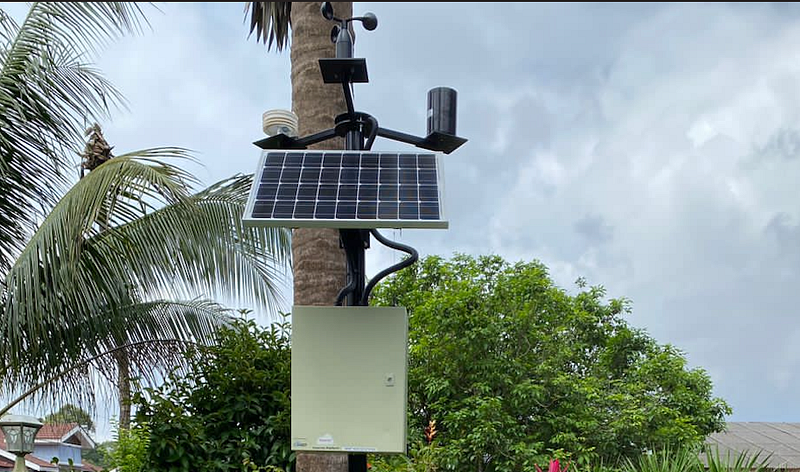
Check out industrial-grade commercially ready sensors that help to collect your data for further insights:


Contact Favoriot to schedule an appointment or check out Favoriot IoT Professional Courses.


Learn IoT using this FREE IoT Notes eBook.

https://mazlanabbas.gumroad.com/l/iotnotes