Why System Integrators Should Embrace the Favoriot Platform for IoT Solutions
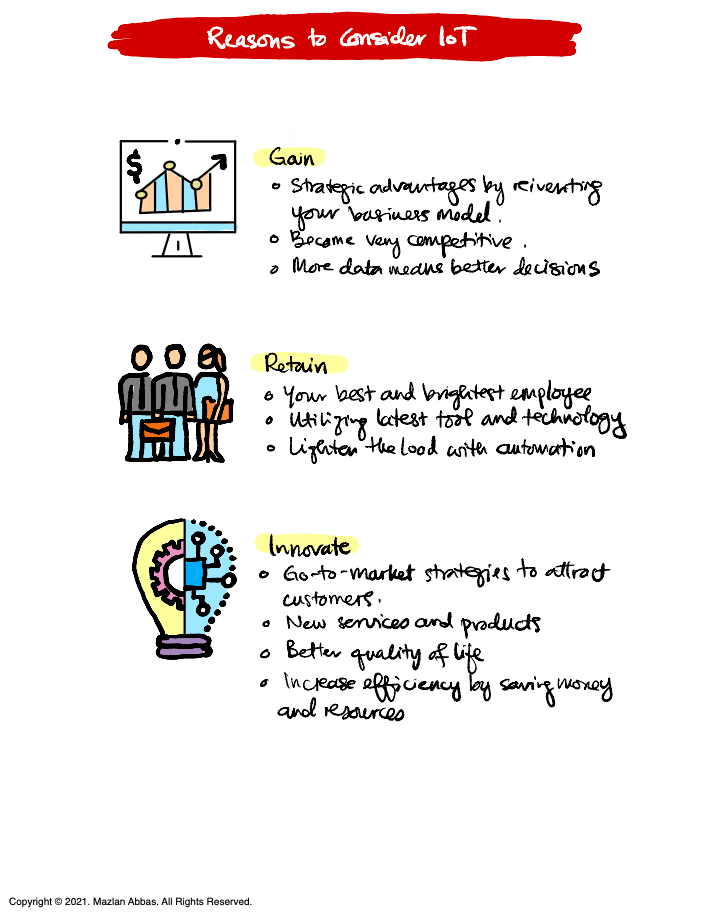
Businesses increasingly leverage the Internet of Things (IoT) to enhance efficiency and unlock new revenue opportunities.
At the heart of these initiatives are system integrators (SIs), whose expertise in connecting diverse devices, protocols, and systems is vital to the success of IoT deployments.
Despite their pivotal role, SIs often face challenges that hinder their progress and complicate projects.
Challenges in Building IoT Solutions
Developing IoT solutions is far from straightforward.
System integrators must juggle various device protocols, manage massive volumes of real-time data, ensure robust security, and scale projects as they grow.
These complexities can lead to prolonged development cycles, labour-intensive custom coding, and fragmented implementations.
As a result, SIs often find it challenging to innovate and meet evolving customer demands.
The Need for Streamlined IoT Deployments
How can system integrators overcome these hurdles and deliver reliable, scalable IoT solutions more efficiently?
Adopting a platform that simplifies and accelerates IoT project development and management is the answer.
Introducing the Favoriot Platform
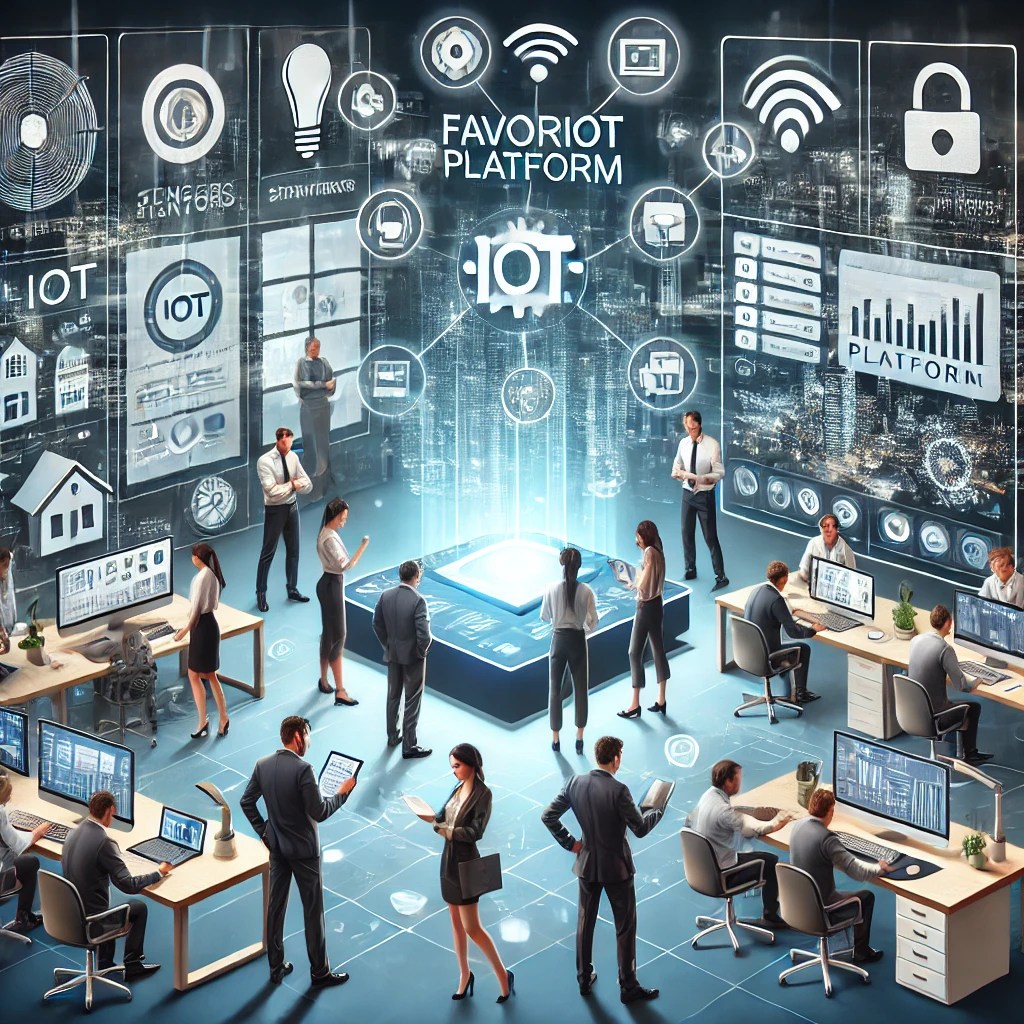
Favoriot offers a comprehensive solution tailored to the needs of system integrators.
Its secure, scalable cloud environment supports multiple communication protocols, enabling seamless connectivity for diverse IoT devices.
With real-time data ingestion and analytics capabilities, the platform reduces the complexity of managing large-scale deployments.
Favoriot also provides customisable dashboards and API integrations, allowing SIs to effortlessly transform raw data into actionable insights.
Security and Scalability for Confidence
Security and scalability are at the core of the Favoriot platform.
System integrators can confidently deploy solutions that meet industry standards while ensuring their projects can grow alongside their customers’ needs.
By minimising the need for time-consuming custom integrations, Favoriot frees up SIs to focus on delivering value-added services that differentiate them in the market.
Faster Time-to-Market with Favoriot
By leveraging Favoriot, system integrators can significantly reduce project timelines.
The platform’s unified approach eliminates many technical challenges, enabling SIs to bring solutions to market faster.
This efficiency enhances productivity and strengthens customer relationships by delivering reliable results.
Empowering Innovation in IoT
Favoriot equips system integrators with the tools to excel in a competitive IoT landscape.
By simplifying the complexities of IoT projects, the platform allows SIs to concentrate on driving innovation and meeting customer expectations.
With Favoriot, system integrators can unlock the full potential of IoT, creating scalable solutions that deliver lasting impact.
Today, look at some real-world examples of IoT applications and their benefits.
This diagram focuses on two industries—transportation and logistics and Oil and gas —to illustrate how IoT solutions can reduce costs and improve efficiency. Let’s examine each example in detail.
In this industry, IoT solutions are used to improve the management of vehicles and delivery systems.
IoT Solution:
Sensors are installed in vehicles to provide real-time data on their state and performance.
These sensors report on engine health, location, and delivery progress.
Benefits (Payback):
Cost Savings:
Reduces truck operation and delivery costs by identifying and addressing maintenance issues early.
Minimises fuel consumption by optimising delivery routes.
Improved Efficiency:
Reduces delivery disruptions and delays.
Ensures on-time deliveries and improves overall logistics system performance.
Example in Action: A logistics company uses IoT-enabled fleet management to track delivery vehicles and proactively schedule maintenance, avoiding breakdowns and saving costs.
2. Oil & Gas
The Oil & Gas industry faces unique challenges that IoT can address by enhancing safety and efficiency.
IoT Solution:
Sensors are deployed throughout an oil rig to monitor critical components.
These sensors detect potential issues and provide operators with real-time alerts.
Benefits (Payback):
Cost Savings:
Increases safety by providing early and reliable warnings of potential equipment failures.
Prevents costly shutdowns by identifying problems before they escalate.
Improved Efficiency:
Real-time alerts enable quicker responses, reducing downtime and improving time-to-revenue.
Enhances asset utilisation by ensuring equipment operates optimally (4x improvement).
Complete data analysis allows for near real-time decision-making and operational adjustments.
Example in Action: An oil rig uses IoT sensors to monitor drill performance and prevent malfunctions, ensuring smoother operations and faster oil extraction.
Key Takeaways
IoT in Transportation & Logistics:
Reduces costs and enhances delivery efficiency through real-time monitoring of vehicles.
IoT in Oil & Gas:
Improves safety, reduces downtime, and maximises asset utilisation with real-time alerts and analysis.
Final Thought: IoT transforms industries by providing actionable data that saves money and improves efficiency. These examples show how IoT can adapt to specific industry needs and bring measurable benefits.
Discussion Question: Which other industries do you think can benefit from similar IoT solutions? Let’s brainstorm together!
The IoT Revolution: Shaping the Future with Enablers, Engagers, and Enhancers
The Internet of Things (IoT) has always been a fascinating space for me.
It’s incredible how a concept that seemed futuristic not too long ago has become a driving force in the tech industry.
IoT has opened up a world of opportunities, with market projections ranging from $2 trillion to $14 trillion. That’s mind-boggling! But here’s the thing – jumping into IoT without understanding your role in the ecosystem is like trying to build a house without knowing which part you’re responsible for.
Let me walk you through this ecosystem as I see it, breaking it into three leading roles: Enablers, Engagers, and Enhancers.
Enablers: The Builders of IoT
Think of Enablers as the architects and construction workers of the IoT world.
They’re laying the groundwork – developing the technologies, hardware, and infrastructure that make IoT possible. Without them, there’s no IoT, period.
When I worked at MIMOS Berhad, Malaysia’s national R&D centre, I saw how challenging this role can be. You’re not just building products; you’re creating the tools others will use to develop their solutions.
Companies like Cisco and Intel are perfect examples. They design the chips, the communication protocols, and the platforms that allow data to flow between devices.
At FAVORIOT, our platform plays a similar role.
It’s a foundation for developers to connect devices and scale their applications. Being an Enabler means thinking about scalability, security, and reliability ahead of time.
It’s demanding but also incredibly rewarding because you’re shaping the future of IoT.
Engagers: Bringing IoT to Life
If Enablers are the builders, Engagers are the storytellers.
They take the raw capabilities provided by Enablers and turn them into solutions that make sense to the everyday user. This is where IoT comes alive for people.
I love this role because it’s all about creativity and problem-solving.
Engagers design and deliver IoT services that address real-world needs. For instance, Nest’s smart thermostats made IoT relatable and accessible to millions of households.
While leading REDtone IOT, I saw how challenging it is to balance innovation with practicality.
You have to create solutions that are not only cutting-edge but also easy to use and affordable.
Whether it’s developing intelligent farming systems, health monitoring devices, or city-wide solutions, Engagers connect IoT to its audience.
At FAVORIOT, we stepped into this role with projects like RAQIB, a health monitoring system for Hajj pilgrims.
The idea was simple: make it easier for caregivers to monitor pilgrims’ health remotely. It’s about identifying and meeting a need with IoT tools.
Enhancers: Turning Data into Action
Here’s where things get exciting.
Enhancers take all the data IoT devices collect and turn it into something meaningful.
They’re the analysts, the data scientists, and the visionaries who uncover patterns and insights that help people make better decisions.
This role is close to my heart because it’s where IoT’s actual value is unlocked.
For example, RAQIB isn’t just about collecting health data – it’s about analysing it to predict potential issues and alert caregivers. Without that intelligence layer, the data would be numbers on a screen.
Enhancers rely on AI and machine learning technologies to transform raw data into actionable insights.
Companies like Palantir and Splunk are masters at this.
They build platforms that help businesses make sense of complex data. It’s a challenging role but incredibly impactful, especially as IoT continues to generate more and more data daily.
At Favoriot, we are now enhancing our IoT platform with Agentic AI, making it an “AIoT”.
Where Do You Fit In?
So, how do you decide where you belong in this ecosystem?
Should you build the infrastructure as an Enabler, create applications as an Engager, or analyse the data as an Enhancer?
Here’s my advice: start with what you’re good at.
If you’re a tech wizard with a hardware and software development knack, the Enabler role might be for you.
If you understand market needs and enjoy creating user-centric solutions, focus on being an Engager. And if data is your thing, Enhancers have plenty of opportunities for innovation.
At FAVORIOT, we started as Enablers, building our IoT platform. Over time, we expanded into the Engager and Enhancer roles by creating solutions like Favorsense, a crowdsensing platform, RAQIB and now become AIoT platform.
It’s a natural progression, but it all began with identifying and focusing on our strengths.
The Real Power of IoT
At its core, IoT isn’t just about connecting devices; it’s about connecting insights.
The more devices you have collecting data, the more opportunities there are to make meaningful discoveries. But here’s the catch – you need the right tools and expertise to turn that data into something valuable.
That’s why Enhancers are so crucial.
With advanced analytics, they can predict equipment failures, improve operational efficiency, or even save lives.
It’s about more than just technology; it’s about creating solutions that make a difference.
Let’s Shape the Future Together
The IoT landscape is vast, and the opportunities are endless.
But success comes down to understanding your role – whether you’re an Enabler, an Engager, or an Enhancer – and playing to your strengths.
Don’t try to do everything.
Focus on where to add the most value, and the rest will follow.
For me, IoT is more than just a field of work – it’s a mission to create smarter, more connected communities.
Whether you’re building the infrastructure, designing the applications, or analysing the data, you’re contributing to something bigger: a future where technology works seamlessly to improve lives.
So, let’s get out there and make it happen.
The IoT revolution is just starting, and there’s plenty of room for us to make our mark.
As I get ready to start my day, I think about something I often ask myself: “What exactly is an AI agent?” It’s not just another complicated tech term; it’s an idea changing how we use technology and go about our daily lives.
An AI agent is like a super-smart assistant that can understand its surroundings, make decisions, and take actions to meet specific goals— all without needing constant instructions.
But what does “understand its surroundings” actually mean?
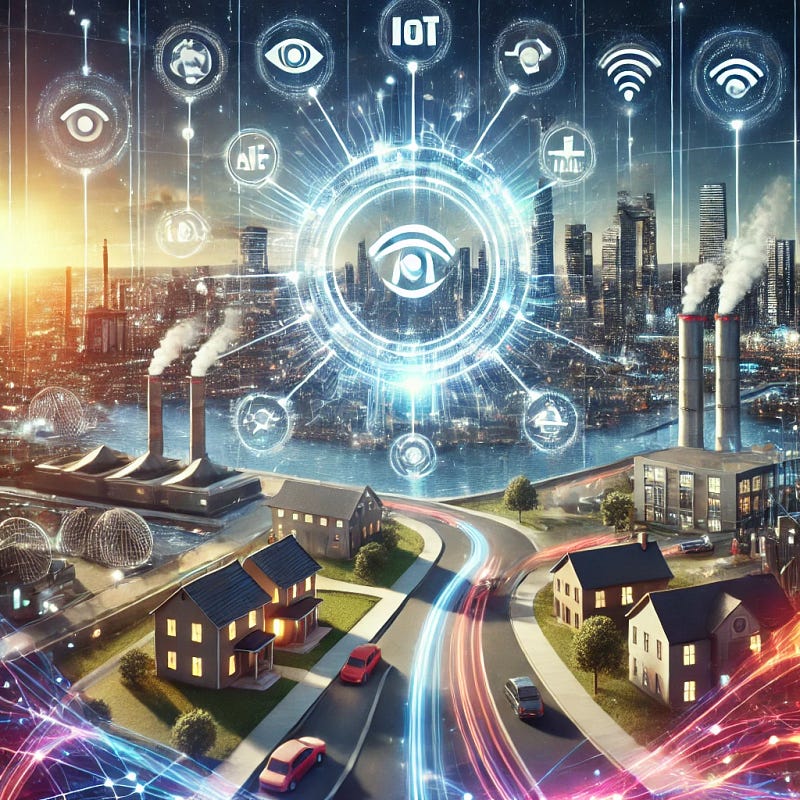
Picture a world where IoT sensors are like the eyes and ears of an AI agent. These sensors are embedded everywhere: in your home, your car, factories, farms, and even in your city.
They collect real-time data about everything — temperature, motion, air quality, energy use, etc.
An AI agent processes this data to get a clear picture of what’s happening and decides what to do next.
For example, a smart thermostat uses temperature sensors to learn when to heat or cool your home based on your habits.
On a larger scale, in a smart city, IoT sensors on traffic lights help an AI agent manage traffic flow, reducing congestion during rush hour.
Why AI Agents Matter
Picture a day when your assistant reminds you about meetings, plans your route to avoid traffic, and even orders your favourite snacks when you’re running low.
It’s not just about making life easier; it’s about being smarter with your time and energy.
Here are some reasons why AI agents are so helpful:
Getting Things Done Faster: AI agents handle repetitive tasks like summarizing emails or making reports, leaving you free to focus on more significant ideas. Imagine never having to waste time on tedious chores again.
Making Life Personal: AI agents learn about you — what you like and need — and give you tailored suggestions. Whether finding a new show to watch or giving health advice, they make things feel just right for you.
Handling Big Loads: AI agents can manage a ton of work without slowing down in businesses. From answering customer questions to keeping track of supplies, they handle it all smoothly.
Getting Smarter Over Time: Unlike regular systems that don’t change, AI agents learn from every interaction and improve continuously. They adapt to new challenges and keep getting better at helping you.
As I think about these benefits, I wonder: “Why is 2025 the year for AI agents?” The answer lies in how technology advances, businesses are ready, and people are trusting AI more.
Why 2025 Will Be the Year for AI Agents
There are several reasons why 2025 is shaping up to be a big year for AI agents:
More Companies Using Them: Businesses realise how helpful AI agents can be. From helping customers to improving healthcare, these agents are becoming a must-have tool.
Better Technology: AI agents are more intelligent than ever, thanks to language understanding and decision-making improvements. They can now handle complex tasks and make real-time choices.
People Trust Them More: More and more people are comfortable using AI tools. For example, in 2024, the number of people using chatbots during the holiday shopping season skyrocketed — a clear sign that consumers are embracing AI.
Industry Innovation: New AI tools designed for specific tasks make it easier for businesses and individuals to adopt these technologies. For example, personal virtual assistants are now more competent and more accessible than ever.
“It’s not just about cool gadgets,” I remind myself. “It’s about creating a system that works for everyone.” That’s why things like data security and ethical AI are so important.
IoT and AI Agents: A Perfect Team
As someone who works closely with IoT (Internet of Things), I often think about how it fits with AI agents. IoT connects devices — like your smartwatch, fridge, or car — creating a network that collects loads of data.
But data alone isn’t valuable. AI agents are like the brain that makes sense of everything and acts on it.
Here’s how they work together:
Making Data Useful: IoT devices collect information, but AI agents turn it into insights you can use. For example, a smart home can learn your daily habits and automatically adjust the lights or temperature to save energy.
Deciding on Their Own: IoT sensors check the soil in agriculture, and AI agents choose when and how much to water crops. In healthcare, wearable devices monitor your health, and AI agents alert your doctor if something looks off.
Simple and Easy to Use: Instead of confusing dashboards, you can just ask your AI agent questions like, “How much energy did we save this month?” and get clear answers.
Managing Big Systems: Managing IoT networks can be a headache as they grow. AI agents make it simple by adapting to new devices and managing everything efficiently. In smart cities, they can control traffic lights to ease congestion.
Improving Shopping Experiences: IoT sensors track what’s on the shelves in stores, and AI agents reorder items before they run out. It’s all about making sure customers get what they need without waiting.
Helping the Environment: AI agents and IoT can reduce waste and save energy. Smart grids distribute electricity more efficiently, and AI agents optimize energy use at home and in factories.
“Imagine this,” I think, “Your car tells your home’s AI agent you’re on your way. The garage door opens, the lights turn on, and the air conditioning adjusts to your preferred temperature. That’s the future — where everything works together seamlessly.”
The Road Ahead
Of course, there are challenges. People worry about privacy and security. “How do we ensure AI agents work for us and not against us?” That’s a question I often come back to.
But the potential is enormous.
AI agents combined with IoT can change industries, simplify life, and solve problems in ways we’ve never seen before.
From improving healthcare to creating smarter cities, the possibilities are endless.
As I wrap up my thoughts, I feel excited about what’s to come. The year 2025 will be a turning point for AI agents and how we live and work.
It’s a year that could redefine everything.
So, let’s get ready to embrace this change. Let’s use AI agents to create a more imaginative, more connected world.
The future isn’t something we wait for — it’s something we build together.
When I started exploring the world of IoT, one of the first things I noticed was how fragmented the ecosystem seemed.
Every project required a different set of tools, and connecting the dots — devices, platforms, and data — felt like piecing together a jigsaw puzzle without knowing what the final picture would look like.
I didn’t want to create just another IoT platform; I tried to solve real problems that educators, students, and developers face daily.
Let me take you through it in my own words.
The Real Problem with IoT Education
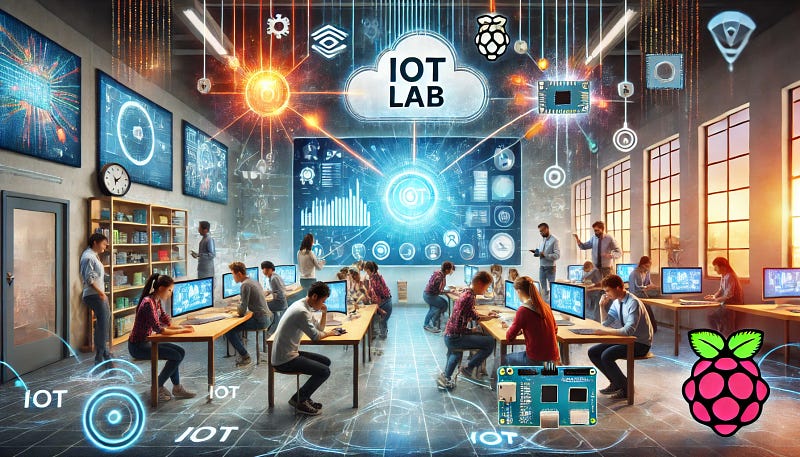
During one of my visits to a university, I candidly chatted with an educator who shared their frustrations about their IoT lab.
“We have the hardware,” they said, pointing at a table full of Arduino boards and sensors. “But the students never get the complete picture. They build projects, but these projects live in isolation, never really demonstrating what IoT is capable of in the real world.” That conversation stayed with me.
I started asking others in the field; the story was the same everywhere. Students spend more time figuring out middleware and less time learning how IoT could transform industries.
And worse, most of their projects died after submission — no data continuity, no way to scale, and no means to manage the work if they wanted to revisit it later.
That’s when I realised we needed to bridge this gap.
Enter FAVORIOT: Built with Real Challenges in Mind
When we designed the FAVORIOT IoT Ecosystem, we didn’t start with features — we started with problems.
Could we make it effortless for students and developers to integrate their devices into an IoT platform? What if educators could easily create a complete IoT lab experience without assembling a dozen tools? These questions drove our design.
I remember thinking, “It’s not about cramming features into a platform; it’s about solving headaches.”
Take, for example, the issue of middleware. I’ve seen students spend weeks deciding which middleware to use, only to hit a wall regarding implementation.
FAVORIOT eliminates this by offering a ready-to-use IoT platform that handles device management, data ingestion, and visualisation — all in one place.
What Does This Mean for Educators and Students?
Let’s go back to that IoT lab I visited.
Imagine if those Arduino boards and sensors were connected to FAVORIOT. Suddenly, students wouldn’t just be building isolated projects; they’d be building scalable IoT solutions.
They’d learn how to send real-time data from their devices to the cloud, process and analyse it, and visualise it for meaningful insights. Isn’t that what IoT is all about?
And for educators, the value is clear. “How do I make IoT exciting for my students?” an instructor asked me. FAVORIOT gives them the tools to answer that question.
Providing a complete ecosystem lets them focus on teaching concepts rather than troubleshooting technical hurdles.
Students get hands-on experience with a real-world IoT platform, and educators see their students’ potential fully realised.
Solving the Continuity Problem
One of the most significant pain points I’ve heard is the lack of project continuity. Students build something impressive, present it, and then… it’s gone.
There’s no scalable database to store the data, no device management to maintain the system, and no way to build upon the project later. FAVORIOT changes that.
Features like data storage and device scalability ensure that every project has a future. “What if your final-year project could become the foundation for your startup?” I often ask students, and their eyes light up at the possibility.
Real Impact, Not Just Buzzwords
Sometimes, I ask, “What’s the difference with FAVORIOT?”
For me, it’s the focus on solving practical problems. It’s not just another IoT platform; it’s a tool designed to empower users.
One educator shared how FAVORIOT transformed their teaching approach. “Before this, our IoT projects were disconnected. We have a complete ecosystem that lets students see the bigger picture,” they told me.
Hearing that kind of feedback reinforces why we do what we do.
Preparing Students for the 4IR
As we move deeper into the Fourth Industrial Revolution (4IR), IoT skills are no longer optional but essential.
FAVORIOT helps students develop these skills in a meaningful way.
They learn not just how to connect devices but also how to create solutions that can scale and adapt.
And because the platform is affordable, it’s accessible to institutions that might otherwise struggle to provide such opportunities.
A Personal Vision
Creating FAVORIOT wasn’t just about building a product and making an impact.
I often reflect on how my technological journey began with curiosity and access to the right tools.
I wanted to give today’s students the same chance to explore, innovate, and excel. FAVORIOT is more than an IoT ecosystem; it bridges education and industry, ideas and implementation.
Wrapping Up
If there’s one thing I’ve learned, technology is only as good as the problems it solves.
FAVORIOT solves real problems in IoT education and development, empowering users to build solutions that matter.
And for me, that’s what makes all the effort worthwhile.
So, the next time you think about IoT, ask yourself: Are you just building devices, or are you building solutions?
Today, we will explore a structured way to implement IoT projects called the 3-Question Approach (W-W-H). This approach revolves around asking three key questions: What? Why? How?
Let’s review each step to understand how this framework ensures clarity and direction for IoT solutions.
The first question is What? which helps us identify the problem we’re trying to solve.
Purpose: To uncover the actual pain points or gaps in current processes.
Steps:
Look for inefficiencies or challenges in operations.
Identify areas where IoT can provide value.
Examples:
Low production rates in a factory.
Increasing operational costs.
Poor quality control leads to defects.
Safety incidents in a workplace.
Intermittent services in logistics or delivery.
Understanding the problem is the foundation of any successful IoT project.
2. Why? (Objective & End Goal)
Next, we ask Why?, which focuses on the objective and the end goal of the IoT implementation.
Purpose: Clearly define what you want to achieve and align everyone toward that goal.
Steps:
Get buy-in from stakeholders by explaining the benefits.
Ensure the outcome can be monitored and measured effectively.
Examples of Objectives:
Improve logistics and delivery efficiency.
Reduce operational costs.
Enhance asset utilisation and reduce errors.
Boost overall safety and performance.
Defining the “why” ensures a clear purpose behind the IoT deployment.
3. How? (Solutions)
The final question is How? which focuses on the solutions to address the problem and achieve the goals.
Steps:
Use the DNA approach:
D — Device: Identify the right sensors to collect the required data.
N — Network: Choose a suitable network for connectivity (e.g., Wi-Fi, LoRa, 5G).
A — Applications: Develop platforms (mobile or web) to process and display the data.
Decide on an implementation strategy:
Build in-house.
Operate internally.
Outsource to a third party.
Collaborate with partners.
Examples of Solutions:
Install sensors to monitor production lines in real time.
Ensure the network has sufficient coverage and can handle the amount of data.
Develop mobile or web applications to provide actionable insights.
The “how” ensures the project is feasible and actionable.
Key Takeaway
The 3-Question Approach provides a clear path for implementing IoT solutions:
What? — Define the problem.
Why? — Establish the objective.
How? — Develop the solution.
This framework ensures every IoT project is focused, aligned, and effective. Think big, but start small.
Let’s discuss: Can you think of an example where this approach could be applied in your industry or daily life? What “What-Why-How” steps would you take? Share your thoughts!
When I look back on how far IoT has come, I can’t help but feel both amazed and excited. In the early days, IoT was just a concept – a dream of connecting things to improve lives.
But here we are, entering the year 2025, and IoT is no longer just an idea; it’s becoming the backbone of how we live, work, and play.
Let me walk you through what IoT will look like in 2025.
These are not just random guesses but predictions rooted in years of working in this space and observing its evolution.
My answer would be: Not yet, but we’re getting there.
By 2025, IoT will become integral to manufacturing, agriculture, healthcare, energy, and even retail industries.
Factories will use IoT sensors to monitor machinery in real-time, predicting maintenance needs before breakdowns occur.
Farmers will optimise irrigation and fertiliser use through IoT-connected systems, maximising yields while conserving resources.
It’s not just about saving money; it’s about making better decisions.
IoT will help businesses operate more efficiently, reduce waste, and, most importantly, stay competitive in an increasingly digital world.
2. AI-Driven IoT Solutions (AIoT)
When discussing IoT, people often ask, “What about artificial intelligence?”
The truth is that IoT and AI are like two sides of the same coin.
By 2025, the fusion of these technologies – what we call AIoT – will redefine what’s possible.
Imagine traffic lights that adapt to real-time traffic conditions or healthcare devices that predict potential health risks based on continuous monitoring.
This integration will make systems smarter and more autonomous.
Instead of just collecting data, IoT devices will analyse and act on it. It’s not just IoT anymore; it’s intelligent IoT.
3. Sustainability Through IoT
Sustainability is no longer a buzzword – it’s a necessity.
Companies and governments increasingly turn to IoT to tackle environmental challenges.
In 2025, I expect IoT to play a central role in achieving sustainability goals.
For example, IoT-enabled smart grids will help us manage energy consumption more efficiently.
Sensors will monitor air and water quality in real time, allowing us to respond to environmental issues faster.
The idea of a “smart city” is not just about convenience; it’s about creating sustainable and liveable cities. IoT will help us achieve that vision.
4. Proliferation of Edge Computing
Edge computing is something I often talk about when discussing the future of IoT.
It’s a game-changer. Instead of sending all the data to the cloud for processing, edge computing allows devices to process data locally.
This reduces latency and ensures faster responses.
In 2025, edge computing will become indispensable, especially for applications like autonomous vehicles and industrial automation.
Imagine a self-driving car needing to make a split-second decision – there’s no time to send data to a cloud server and wait for a response.
That’s where edge computing comes in.
5. IoT in Healthcare
The healthcare sector is where I see IoT making the most profound impact.
By 2025, wearable devices will go beyond tracking steps or heart rates. They’ll become essential tools for remote patient monitoring.
I envision a world where doctors can receive real-time data about their patients, enabling early intervention and better outcomes.
This is personal because I’ve always believed technology should serve humanity.
IoT in healthcare isn’t just about gadgets; it’s about saving lives and improving the quality of care.
6. Smart Cities Moving Beyond Pilots
If you’ve followed my work, you know I’m passionate about smart cities.
But here’s the thing – many smart city projects are still stuck in the pilot phase.
By 2025, that will change. We’ll see full-scale implementation of IoT solutions for traffic management, utilities, waste management, and public safety.
I often tell people that a smart city isn’t about fancy gadgets; it’s about using technology to make cities more efficient and liveable. IoT will be at the heart of this transformation.
7. IoT Security as a Priority
Let me share a concern that keeps me up at night: IoT security.
As IoT devices become more widespread, they become more vulnerable to cyberattacks.
In 2025, IoT security will take centre stage.
Companies will invest heavily in secure-by-design devices, and blockchain technology may play a role in enhancing protection.
We can’t afford to ignore this. If we want IoT to succeed, security must be a priority.
8. Democratisation of IoT
Here’s an exciting trend: IoT is becoming more accessible.
Low-code and no-code platforms make it easier for small businesses and startups to develop IoT solutions without extensive technical expertise. B
y 2025, I see this trend accelerating, democratising IoT and enabling innovation from unexpected places.
9. IoT for Disaster Management
Climate change is making natural disasters more frequent and severe.
IoT can be a powerful tool for disaster management.
Imagine early warning systems that use IoT sensors to monitor weather conditions in real-time.
In 2025, IoT will play a critical role in disaster preparedness and response especially in cases of flood.
10. Growth of IoT Ecosystems in Emerging Markets
One of the things I’m most excited about is the growth of IoT in emerging markets like Southeast Asia.
By 2025, countries like Malaysia will see a surge in IoT adoption driven by government support and affordable devices.
This will create opportunities for innovation and economic growth.
11. Advanced IoT Analytics
IoT isn’t just about collecting data; it’s about making sense of it.
By 2025, advanced analytics will become a standard part of IoT solutions.
Businesses will use descriptive, diagnostic, predictive, and prescriptive analytics to extract actionable insights, improving decision-making and operational efficiency.
12. National IoT Technology Roadmaps
In Malaysia, we’ve already launched several technology roadmaps focusing on IoT, AI, and blockchain.
By 2025, these roadmaps will guide the development of IoT ecosystems, creating opportunities for local talent and businesses.
13. IoT in Energy and Utilities
Energy efficiency will be a significant focus in 2025.
IoT-enabled smart meters and predictive maintenance systems will help optimise energy usage and reduce waste.
This is not just good for the environment but also for businesses and consumers.
14. Personalised Consumer Experiences
IoT is also transforming retail and marketing.
By 2025, IoT will enable hyper-personalised consumer experiences, using real-time data to predict and meet individual needs.
15. IoT in Education
Lastly, I see IoT transforming education.
Smart classrooms equipped with IoT devices will provide real-time feedback on student engagement and learning outcomes.
This will help educators tailor their approaches to meet the needs of individual students.
Conclusion
These are my predictions for IoT in 2025.
Some may seem ambitious, but I firmly believe we’re heading in this direction.
IoT has the potential to transform industries, improve lives, and create a more sustainable world.
The question is: Are we ready to embrace it?
As someone deeply passionate about IoT, I’m committed to helping make this vision a reality.
The Right Time for Favoriot to Go Global with Its Global Partner Program
Since its inception in 2017, Favoriot has tried empowering IoT developers with a seamless and user-friendly platform.
The Favoriot platform, offered as a B2C solution, has steadily gained traction among developers worldwide, enabling individuals from around the globe to subscribe easily.
By the end of December 2024, the platform had reached an impressive milestone — 111 countries and over 9,200 developers actively leveraging its capabilities.
However, as the IoT ecosystem grew and diversified, it became evident that this was only scratching the surface of Favoriot’s potential.
The question was no longer about whether Favoriot could expand globally but how to scale effectively and make a more significant impact.
While the numbers reflect an inspiring reach, the challenge lies in converting these individual users into broader enterprise implementations. This realisation set the stage for a transformative strategy to take Favoriot’s vision to the next level.
Understanding the Challenges of Going Global
Reaching users overseas is no simple task.
It’s not just about having a great product; it’s about ensuring that the product resonates with the specific needs, regulations, and challenges of different markets.
While the Favoriot platform has always been accessible worldwide, making a lasting impact in foreign markets requires a consistent and relentless marketing effort.
Each country has its complexities, ranging from language barriers to cultural differences and even unique technological and regulatory requirements.
For instance, many countries prioritise data sovereignty, insisting that sensitive data remain within their borders to comply with local policies.
This was a significant hurdle for Favoriot’s initial B2C model, which was designed to operate primarily on a global cloud infrastructure.
The Birth of the Favoriot Enterprise Platform
Recognising these challenges, the team began rethinking its approach.
The solution wasn’t just about increasing subscriptions — it was about localising the platform to better cater to the needs of enterprise clients and government institutions.
This was where the Favoriot Enterprise Platform was born.
Introduced in 2024, the Enterprise Platform was a game-changer for Favoriot. Unlike the traditional model, the Enterprise version was designed to support localised implementations, allowing the platform to be hosted within a country’s borders.
This directly addressed concerns about data sovereignty and compliance with customer policies, making it a more attractive option for large-scale deployments in industries like healthcare, transportation, agriculture, and smart cities.
The platform offers unlimited APIs, with no restrictions on the number of devices connected or APIs utilised, bundled with a perpetual license.
This flexibility and scalability made it a compelling choice for enterprises looking to invest in IoT solutions without worrying about a subscription-based model’s hidden costs or constraints.
The Strategic Role of Global Partners
Launching the Favoriot Enterprise Platform opened up new opportunities and brought a new challenge — how to market and deploy this enterprise-grade solution globally.
The solution is forming partnerships with system integrators and distributors in different countries.
In 2024, Favoriot introduced the Favoriot Global Partner Program, which intends to build a network of trusted partners who could act as system integrators and distributors.
These partners would bring invaluable local expertise, enabling the platform to be tailored to the specific needs of their markets.
The idea was simple but powerful: work with partners who share the same IoT vision and empower them to take Favoriot to new heights in their respective regions.
By becoming the face of Favoriot in their countries, these partners could engage directly with customers, implement the platform, and provide ongoing support.
The partnership model is not just about distribution — it’s about collaboration. Partners can leverage each other’s strengths, engage in cross-selling and cross-marketing activities, and grow their businesses alongside Favoriot.
This creates a win-win situation, fostering mutual growth and ensuring the platform’s success in diverse markets.
Setting Ambitious Goals for 2025
The Favoriot Global Partner Program is not just a short-term strategy; it’s a long-term vision.
For 2025, Favoriot has set an ambitious but achievable goal: to establish partnerships in 25 countries. This means onboarding 25 partners to champion the platform, drive its adoption, and integrate it into their local ecosystems.
Why 25 countries?
This number reflects a strategic focus on markets with high growth potential for IoT.
The program can maximise its impact by carefully selecting partners aligned with Favoriot’s vision and with strong local networks and market knowledge.
Through these partnerships, Favoriot can overcome the barriers of entering foreign markets, such as regulatory hurdles and cultural nuances, while expanding its reach and influence.
The program also enables partners to innovate by combining their local expertise with the technical capabilities of the Favoriot platform.
A Win-Win Strategy for a Global IoT Ecosystem
The Global Partner Program is built on the principle of shared success. For partners, it provides an opportunity to offer a proven IoT platform to their clients, backed by Favoriot’s support and expertise.
For Favoriot, it allows the company to scale its operations without being bogged down by the intricacies of directly managing local markets.
By working with partners, Favoriot can focus on its core mission — empowering IoT developers and enterprises to build smarter, more connected solutions — while its partners drive localisation and implementation.
This synergy is key to the program’s success.
Why Now Is the Right Time
Timing is everything in business, and the decision to go global with the Favoriot Global Partner Program in 2024 couldn’t have been more opportune.
The platform’s footprint in 111 countries and over 9,200 developers demonstrates its global appeal.
However, this traction needs to be converted into tangible enterprise adoption, which the Enterprise Platform and the Global Partner Program are uniquely positioned to achieve.
Furthermore, as IoT continues to gain momentum globally, the demand for localised, scalable, and flexible solutions is growing.
Enterprises are looking for partners who can provide technology and the expertise to implement it effectively.
Favoriot, with its platform and partner-centric strategy, is perfectly poised to meet this demand.
The journey ahead is challenging, but Favoriot is ready to make its mark on the global IoT landscape with the right partners and a clear vision.
The time to go global is now, and Favoriot is stepping forward with confidence, determination, and a strategy that promises growth for everyone involved.
Artificial Intelligence (AI) and Big Data Analytics have become the talk of the town.
Everywhere I go, someone discusses how these technologies are transforming industries and reshaping how organisations work.
But let me tell you, all of this innovation boils down to one thing: data. AI can’t learn without data, and analytics can’t deliver insights.
This realisation has enormous implications for how universities prepare students and educators for the future.
Over the years, many universities have focused on teaching students to build their Internet of Things (IoT) hardware.
Don’t get me wrong, it’s a great way to learn the technical basics, but I’ve always felt it’s not the best use of resources or time.
The truth is that the hardware is just a means to an end.
The real value is in the data these devices collect and what you do with that data. That’s where I think universities should shift their focus: data analytics and AI.
Why Data is the Real Hero in AI and Big Data Analytics
Here’s the thing about AI: it’s only as good as the data you feed.
Whether you’re predicting customer behaviour, analysing health trends, or optimising supply chains, the first step is always about collecting, cleaning, and understanding data.
And guess what generates a lot of that data? IoT devices.
From smart sensors to wearables, these devices are constantly collecting information streams. But the value isn’t in the device; it’s in the insights you can extract from the data.
Take smart cities, for example. IoT sensors might monitor traffic flow, air quality, or energy usage.
That’s impressive, but more amazing is how AI models and analytics make sense of all that data to improve city living.
Building the hardware for these sensors is straightforward; developing the AI and analytics platforms behind them is the real challenge.
Why Universities Need to Prioritise Data Analytics
1. Meeting Industry Needs
Let me be honest — the industry doesn’t need more people building IoT hardware.
They’re hungry for data analysts, AI developers, and data scientists. Companies are about insights that drive decisions, not the physical gadgets that generate the data.
Shifting the focus to data analytics would better prepare students for what’s waiting for them in the real world.
2. Endless Applications
Consider this: data analytics and AI can be applied across many industries. Whether it’s healthcare, agriculture, manufacturing, or retail, the possibilities are endless.
With skills in data analytics, students can work on anything from predicting machinery maintenance to forecasting disease outbreaks or personalising customer experiences.
Meanwhile, hardware skills are mostly limited to niche engineering roles.
3. Lowering Barriers to Entry
Let’s face it: building IoT hardware isn’t cheap. You need tools, components, and a workshop.
That’s a big ask, especially for students or universities with limited budgets.
In contrast, data analytics only requires access to software tools, cloud platforms, and datasets, which are much more accessible.
4. Using What’s Already Available
These days, you don’t even have to build IoT devices from scratch.
There are ready-made solutions, like FAVORIOT, AWS IoT, and Azure IoT.
These platforms make collecting, storing, and managing IoT data easy. So why reinvent the wheel? Use these tools and focus on creating value through analytics and application development.
How Universities Can Make the Shift
1. Rethink the Curriculum
If I were designing a university course, I’d ensure it included data analytics, AI, and IoT platforms. Students should learn how to:
Collect and preprocess IoT data.
Use tools like Python or MATLAB to analyse data.
Build machine learning models and deploy them in real-world scenarios.
Understand cloud computing and work with IoT platforms to manage data.
2. Partner with Industry
One of the smartest moves universities can make is partnering with companies. Industry collaboration gives access to real-world datasets, tools, and expertise.
Plus, internships and collaborative projects can give students the hands-on experience they need to hit the ground running.
3. Focus on Real-World Problems
When I was a student, I always enjoyed projects that felt meaningful.
Educators should design projects that challenge students to solve actual problems.
For example, they could predict energy usage patterns on campus or analyse traffic data to improve transportation systems.
4. Train the Trainers
Let’s not forget the educators.
They need to stay ahead of the curve, too.
Universities should invest in training programmes for lecturers, helping them stay updated on the latest AI and data analytics trends.
5. Provide the Right Tools
Students can’t learn data analytics without the right tools.
Universities should give them access to software, cloud-based platforms, and open-source datasets. This doesn’t have to break the bank — many affordable or even free options exist.
Imagine the Applications Students Can Build
By focusing on data analytics, students can work on exciting applications like:
Smart Agriculture: Analysing soil and weather data to optimise irrigation and fertilisation.
Healthcare: Using wearable data to predict health trends.
Retail: Analysing customer behaviour to personalise shopping experiences.
Manufacturing: Implementing predictive maintenance to cut costs and downtime.
These examples show how data analytics can drive innovation across industries.
Isn’t that more impactful than soldering circuit boards?
My Advice to Universities
The world is changing fast, and universities need to keep up.
It’s time to move away from DIY IoT hardware and focus on the bigger picture: data analytics.
By doing this, universities can prepare their students for a future where data is king.
As educators, it’s our job to help students see the actual value of IoT — not the gadgets but the insights they enable.
And for students, my advice is simple: dive into data analytics and AI. These skills will open doors and help you make a real difference.
The future is all about harnessing the power of data.
Let’s make sure our universities are ready to lead the way.









 Dr. Mazlan Abbas