Internet of Things (IoT) — Book Review by Mazlan Abbas

Internet of Things (IoT) — Book Review by Mazlan Abbas

Excellent IoT book for business professionals
Not a member? Click here to read this story for free.

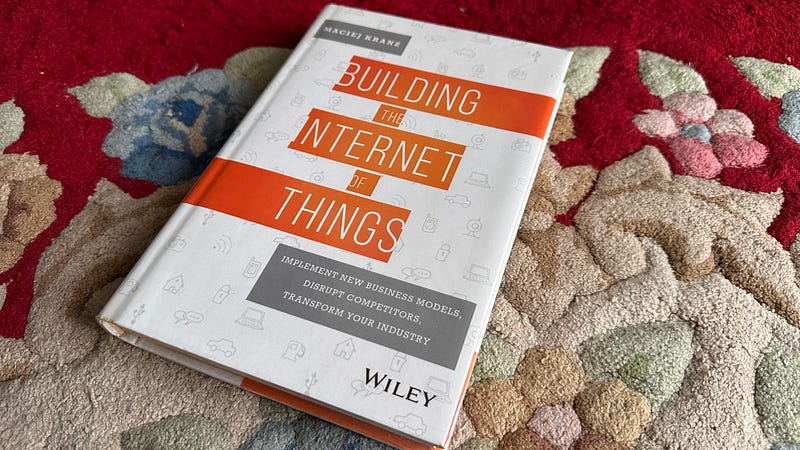
Where do I start with “Building the Internet of Things” by Maciej Kranz?

This book landed in my hands at a time when IoT was more of a buzzword to me than a clear-cut concept.

It was like finding a treasure map that promised to guide me through the maze of the Internet of Things.

Right off the bat, Kranz dives into the meat of IoT, not just skimming the surface with technical jargon that would fly over the heads of mere mortals like myself.

He’s talking business, strategy, and implementation, and my inner voice is like, “Finally, someone who gets it!

The book isn’t just a handbook; it’s a narrative that spins around the potential of IoT in a language that speaks directly to business decision-makers.

You know, the ones who nod along in meetings but are secretly wondering how IoT fits into their quarterly plans.

Kranz has this way of breaking it down, making you realize the vast opportunities IoT brings to the table.

And there I was, thinking, “This is it. This is the blueprint to revolutionize our business.

Kranz doesn’t stop at just selling you the dream.

He walks you through crafting a tangible IoT strategy that aligns with your company’s goals.

It’s not about jumping on the bandwagon; it’s about steering your ship with precision in the IoT sea.

The book made me pause and reflect, “Is my organization ready to embrace this? How can we not just participate but lead in this new frontier?

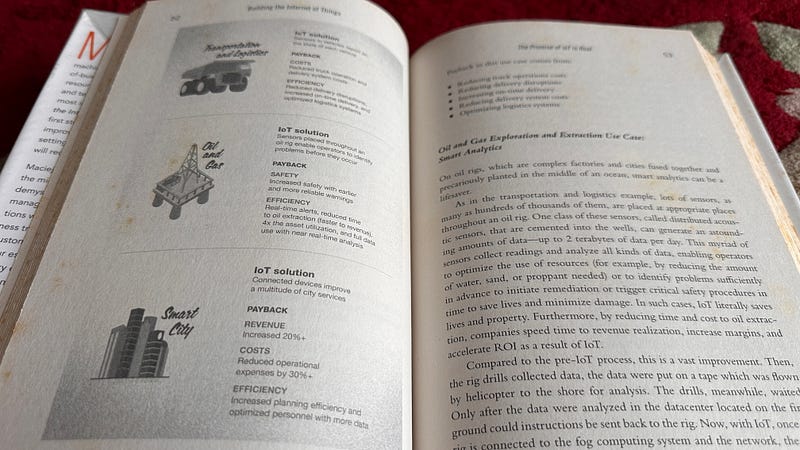
The use-cases sprinkled throughout the book are like mini lightbulb moments. T

hey’re not just hypothetical scenarios but real-world applications that show the ripple effect of IoT.

It’s as if Kranz is saying, “See, this isn’t just theory. It’s happening, and here’s how you can be a part of it.

And let’s talk about the security aspect.

In an era where data breaches are more common than I’d like to admit, Kranz doesn’t shy away from the nitty-gritty of securing your IoT infrastructure.

It’s reassuring, to say the least.

My inner skeptic was like, “Ah, finally someone who’s not glossing over the potential pitfalls.

Reading this book felt like having a mentor guiding me through the IoT landscape.

It’s not just about understanding IoT but about leveraging it to drive tangible business outcomes.

Building the Internet of Things” isn’t just a read; it’s an action plan that prompts you to get up and start integrating IoT into your strategy now, not tomorrow.

To anyone hovering on the edges of IoT, wondering how to dive in, or even the seasoned professional looking to deepen their understanding, this book is a beacon.

It’s like Kranz is right there, cheering you on, saying, “You’ve got this. Here’s how you can turn disruption into profit.

In conclusion, “Building the Internet of Things” is not just another book on my shelf. It’s a playbook that I find myself returning to, each time uncovering new insights.

It has shaped my approach to IoT in business, and I can’t help but think,

What would I have done without this gem?

If you’re in IoT or considering it, do yourself a favor and give this book a read. Trust me, your future self will thank you.

Get this book “Building the Internet of Things” from Amazon (Note: Affiliate link)

Book reviewed by Mazlan Abbas.

IoT Education in Universities: The Favoriot Solution

The image was created using Midjourney by the Author of Startup Journey

Universities globally are racing to stay abreast of the latest advancements in tech education.

A critical focal point in this pursuit is the Internet of Things (IoT), a revolutionary field reshaping industries and everyday life.

Yet, there’s a burgeoning challenge in IoT education in many academic institutions.

Let’s delve into the complexities of this issue and the unique struggles students and lecturers face and introduce Favoriot — a cutting-edge IoT platform poised to transform IoT learning.

The Challenge in IoT Learning

Imagine a world where IoT education is no longer confined to textbooks and lectures but is a hands-on, interactive experience.

Unfortunately, this is not the reality in many universities.

The core of the problem lies in inadequate IoT lab setups, particularly the absence of an IoT middleware or platform.

This gap severely limits students’ ability to effectively comprehend and apply IoT concepts.

Student Struggles Without Proper Tools

Students, the primary learners of IoT, are often left navigating a maze of theoretical knowledge with no practical outlet to apply these concepts.

Their curriculum’s lack of a dedicated IoT platform leads to a superficial understanding of IoT’s potential and applications.

They face the challenge of accessing suitable project platforms, which is crucial for a more profound, experiential learning process.

Lecturers’ Dilemmas with Incomplete Syllabi

Conversely, lecturers grapple with delivering comprehensive IoT education without the proper infrastructure.

An incomplete IoT syllabus, lacking practical tools, hampers their ability to provide a holistic learning experience.

This shortfall affects the quality of teaching and stifles innovation and research in the IoT field within academic circles.

The Conundrum of External IoT Platforms

Many students turn to free versions of external IoT platforms to bridge this gap.

However, these platforms often need improved features, and the advanced functionalities crucial for in-depth projects are locked behind paywalls.

This arrangement could be better, especially for students working on Capstone projects or those exploring IoT as a career path.

The Role of Universities in IoT Infrastructure

Universities have a crucial role in addressing these challenges.

They can significantly enhance the learning experience by implementing on-campus IoT platforms.

These platforms, hosted within the university’s IT center or IoT labs, could offer students comprehensive features necessary for diverse IoT projects, ranging from lab exercises to commercial IoT initiatives.

Introducing Favoriot: A Tailored IoT Solution

Recognizing this educational gap, Favoriot has developed an on-premise IoT platform solution specifically designed for academic institutions.

This platform circumvents the need for students to rely on external, often inadequate, services.

Favoriot’s IoT platform offers a robust, feature-rich middleware that students and lecturers can access throughout the campus.

The Comprehensive Benefits of Favoriot

  1. Hands-on Experience: Favoriot provides a real-world IoT platform, giving students hands-on experience with the tools and technologies prevalent in the industry.
  2. Empowering Educators: Lecturers can offer a more comprehensive syllabus incorporating practical IoT skills and theoretical knowledge.
  3. Innovation and Research: With Favoriot, universities can foster an environment conducive to IoT innovation and research, enabling students and faculty to undertake groundbreaking projects.
  4. Campus-wide Implementation: The platform can be used for educational purposes and for implementing smart IoT solutions across the campus, serving as a live testbed for IoT applications.
  5. Cost-Effective Learning: By using an on-campus platform like Favoriot, universities eliminate the need for costly subscriptions to external platforms, making IoT education more accessible.

Empowering Students with the Right Tools

By integrating Favoriot’s IoT platform into its infrastructure, universities can significantly elevate the quality of their IoT education.

Students access comprehensive tools necessary for in-depth learning and project development.

This practical experience prepares them for real-world IoT challenges and opportunities.

A New Era of IoT Education

Integrating Favoriot’s platform in university labs marks a pivotal step towards future-ready IoT education.

It bridges the gap between theoretical learning and practical application, equipping students with the tools and experience needed to excel in IoT.

Conclusion: Shaping the Future of IoT Learning

In summary, introducing a dedicated IoT platform like Favoriot in academic settings is a game-changer for IoT education.

It enhances students’ learning experience and empowers lecturers to deliver a more rounded curriculum.

This approach is essential for preparing the next generation of IoT professionals and researchers.


For universities looking to advance their IoT education and infrastructure, Favoriot offers a tailored, comprehensive solution.

To explore how Favoriot can transform your IoT education and campus projects, contact info@favoriot.com.

Let’s embark on a journey to reshape IoT learning and make it more accessible, practical, and impactful for students and educators.


Remember to Subscribe to receive email updates on every post I publish.

Through Thick & Thin: Inside FAVORIOT’s Thrilling Six-Year Voyage!

Photo by Pedro Velasco on Unsplash

Six roller-coaster years have unfurled since FAVORIOT burst onto the IoT startup scene.

During this period, its tenacious team navigated through a sea of challenges, starting from a point of zero revenue, grappling with hefty operational costs, and hustling hard to attract their initial customers.

Embarking on a startup journey isn’t a sprint; it’s a grueling marathon to a remote and arduous destination dotted with daunting hills and towering mountains.

For the founder of FAVORIOT, uncertainty isn’t a stranger but a constant companion, silently questioning the startup’s survivability year after year.

While success stories of other startups – from inception to IPOs – are loudly broadcasted, the tales of numerous startups that didn’t make it are quietly buried in the shadows.

FAVORIOT, founded on February 20, 2017, and operational from April 1 that year, has had its fair share of close calls, challenges, and changes in its lineup, with many original members handing over the baton to newcomers.

The journey included developing “Raqib”, an IoT product meticulously designed for monitoring the elderly and pilgrims.

Despite significant investment and effort, the first year yielded no revenue.

What went wrong?

The situation further compounded when the Malaysian Hajj was delayed for two years due to the global health crisis, sidelining the freshly minted product.

Frustration also mounted in the early days as curious minds approached for knowledge but not for purchase.

Many wanted to understand IoT or explore collaborations, yet no one seemed ready to invest or even request a quote.

It felt as though people wanted to glean insights without giving back, leaving the founder feeling exploited and undervalued.

Initially, the team was hesitant about IoT training, assuming self-learning was sufficient. Recognizing the misjudgment, they course-corrected and launched commercial IoT courses in late 2021.

Despite the early turbulence, FAVORIOT’s user base swelled from a mere 20 to a whopping 7200 across 121 countries.

Its brand presence strengthened, positioning it as a top search result on Google.

Navigating through the notorious “Valley of Death” – a stage where many startups stumble and fall without gaining traction or customers – FAVORIOT stood resilient.

Past rejections from investors and accelerators didn’t deter them; instead, it emboldened their resolve to knock on more doors, seeking partnerships and venture capital to fuel expansion.

As they raise a toast to their sixth anniversary, the FAVORIOT team wishes to extend heartfelt gratitude.

They acknowledge the relentless effort and undying perseverance of each team member, the invaluable trust bestowed by their early patrons, and the unyielding support and encouragement from friends.

Life Lessons Summarized:

  • The startup journey is a relentless marathon, not a sprint, often filled with uncertainty and unending challenges.
  • Not every product will be a hit from the start; be prepared for failures and setbacks.
  • Early days are often riddled with frustration; persistence is key.
  • Recognition and customer base growth require time and consistent effort.
  • Past rejections should not hinder future opportunities; instead, use them as learning experiences to approach new partnerships and investors with renewed vigor and insight.

Here’s to FAVORIOT, to many more triumphant years ahead!

List of Keynotes, Talks, Lectures and Publications by Dr. Mazlan Abbas (CEO- FAVORIOT)

LIST OF TALKS (INCLUDING UPCOMING TALKS)

2020

  1. Mazlan Abbas, “IR 4.0 — Embrace or Become Obsolete”, ICSSA 2020, 7–9 April 2020, Malaysia

2019

  1. Mazlan Abbas, “IoT in E-Commerce Innovation”, E-Commerce Cross Border Conference 2019, Oct. 30, 2019
  2. Mazlan Abbas, ICOM 2019, Oct. 30, 2019
  3. Mazlan Abbas, Keynote Speaker, ICETiA 2019 (International Conference on Emerging Technology and Innovative Applications 2019), Oct. 21–22, 2019, MaGIC, Cyberjaya, Malaysia
  4. Mazlan Abbas, “IR 4.0 and IoT — Get Ready for Jobs of The Future”, Guest Lecture, Sept. 20, 2019, School of IT UCSI University, Malaysia
  5. Mazlan Abbas, “Internet of Things (IoT) and Crowdsensing in AFM Industries”, Asset Management : Readiness And Challenges Towards IR 4.0, August 20, 2019, UTM, Kuala Lumpur
  6. Mazlan Abbas, “Impact of IoT in Your Future Career”, MOE-MTDC GE I4.0, August 6, 2019, Malaysia
  7. Mazlan Abbas, “IoT Solutions for Societal Well-Being”, APAN 48, July 22, 2019, UPM, Malaysia
  8. Mazlan Abbas, “Where Are We in the Era of Industrial Revolution”, CITA 2019, July 16, 2019, Kuching
  9. Mazlan Abbas, “New Talents for New IoT Ecosystems in Malaysia”, TVET Conference 2019, 8 July, 2019, Malaysia
  10. Mazlan Abbas, “IoT and 4IR”, Invited Talk MRSM Ulul Albab Kepala Batas, July 6, 2019, Malaysia
  11. Mazlan Abbas, “Internet of Things (IoT)”, Fintech for Banks and Development Finance Institutions”, 17–19 June, 2019, Istanbul, Turkey
  12. Mazlan Abbas, “Ageing in Smart Cities”, Smart Convention — 2nd Annual Smart Cities Conference, April 22, 2019, Kuala Lumpur
  13. Mazlan Abbas, “IR 4.0 — To Surf or Not to Surf”, Keynote Talk, PARS 2019, 10–11 April, 2019, UTM Skudai
  14. Mazlan Abbas, “Journey Towards Fourth Industrial Revolution and IoT”, SEDC, 8–9 April, Kuching
  15. Mazlan Abbas, “Entrepreneurship in the Digital World”, SEDC, 8–9 April, Kuching
  16. Mazlan Abbas, “The RAQIB Journey — Real World Problem Meets IoT — How Solutioning is Done in the Wild”, IoT Asia 2019, Singapore
  17. Mazlan Abbas, “Building a Career in IoT Industry”, Executive Talk, Politeknik Ungku Omar, March 21, 2019, Ipoh
  18. Mazlan Abbas, “IR 4.0 — To Surf or To Drown”, Academic Afternoon Discourse, March 20, 2019, UiTM
  19. Mazlan Abbas, “Military in the Era of Fourth Industrial Revolution”, Digital Revolution Conference — Today is the Future, March 20, 2019, MINDEF

2018

  1. Mazlan Abbas, “Business Disruptions in the Era of 4th Industrial Revolution”, UniKL Business School, Kuala Lumpur, Dec. 8, 2018
  2. Mazlan Abbas, “Business Disruptions in the Era of 4th Industrial Revolution”, Keynote Address, RAMA University, India, Nov. 30, 2018
  3. Mazlan Abbas, “Living in the Era of 4thIndustrial Revolution”, TEDx Kenyalang, November 17, 2018, Kuching
  4. Mazlan Abbas, “Empowering Digital Lifestyle in the Internet of Things”, MCMC, Kuching, Nov. 8, 2018
  5. Mazlan Abbas. “IoT Applications, Services & Analytics”, Guest Lecture, UNITEN, Oct. 31, 2018
  6. Mazlan Abbas, “The Potential of IoT in Agriculture”, Agrobank Knowledge Sharing Series, Oct. 26, 2018
  7. Mazlan Abbas, “Your Journey Towards Fourth Industrial Revolution”, Time to Talk, Digital Media, IUMW, Oct 25, 2018
  8. Mazlan Abbas, “Your First ioT Journey”, Majlis Kolaborasi Hubungan Industri Binaan & Senibina, UKM, 24 October 2018
  9. Mazlan Abbas. “RAQIB — For Elderly Care and Pilgrims”, Technomart IoT: Social Healthcare Services, MIGHT, Oct. 22, 2018
  10. Mazlan Abbas, “The Next Big Wave — How IoT Will Shape the Future of Projects”, PMIMY 2018, Sept. 25, 2018
  11. Mazlan Abbas, “Smart Cities and IoT: The Opportunities and Challenges Ahead”, Khazanah ICT Day 2018, August 29, 2018, Kuala Lumpur
  12. Mazlan Abbas, “IR4.0 Transitional Stage — Where Are We Now?”, Pos Aviation Innoviation 2018 , July 26, 2018
  13. Mazlan Abbas, “Unleashing Your Potential — From ZERO to Thought Leader”, Adjunct Professor Lecture, Dewan Auditorium FIK, UniSZA Kampus Besut, July 8, 2018
  14. Mazlan Abbas, “Trend and Challenges in IoT”, CIS Adjunct Professor Lecture, Universiti Teknologi Petronas (UTP), July 5, 2018, UTP
  15. Mazlan Abbas, Guest Speaker, Industry 4.0 Implementation and Adoption Workshop, July 2 & July 17, 2018, National Instruments Academy and Innovation Nucleus, TPM, Malaysia
  16. Mazlan Abbas, “IoT Innovation Ecosystem”, Keynote Speech, June 27–28, 2018, Smart Cities Global Technologies and Investment Summit, Algiers, Algeria
  17. Mazlan Abbas, “Industry Revolution 4.0 — How Disruptive Technology Affects Business Globally”, Invited Talk, Arshad Ayub Graduate Business School (AAGBS), UiTM SHAH ALAM, June 9, 2018, Malaysia.
  18. Mazlan Abbas, “IoT Innovation Ecosystem”, Invited Lecture, April 24, 2018, UTHM
  19. Mazlan Abbas, “Internet of Things — The Enabler for 4thIndustrial Revolution”, April 17, 2018, Seminar Revolusi Industri 4.0: Memperkasa Pendidikan, Dewan Ibnu Sina, TATI University College, Terengganu
  20. Mazlan Abbas, “Digital Revolution 4.0 is Here Today”, Purwadekha Tech Wave 2018, March 14–15, 2018, Jakarta, Indonesia
  21. Mazlan Abbas, “4th Industrial Revolution — Riding the Waves”, TVET Malaysia Engagement Towards Industry 4.0, March 22, 2018, PWTC, Malaysia
  22. Mazlan, Abbas, “Journey from Product-Based to Outcome-Based IoT Business Model”, One Day Seminar on ‘Smart Cities & Urban Science, Feb. 27, 2018, Wisma IEM, 01- Auditorium Tan Sri Prof. Chin Fung Kee, Third Floor, Petaling Jaya, Malaysia
  23. Mazlan Abbas, “Building Smart Cities and Smart Communities”, MEDINI CEO Forum, January 25, 2018
  24. Mazlan Abbas, “Industry Revolution 4.0 Disruptions”, Engineering Professional Talk 3.0, Kelab Komuniti Taman Tasik, January 21, 2019

2017

  1. Mazlan Abbas, “Journey into Monetizing Internet of Things”, IoT Kuwait 2017, Dec. 19–21, 2017, Kuwait
  2. Mazlan Abbas, “IoT in the Cloud”, Network Week, UPM, Dec. 7, 2017
  3. Mazlan Abbas, “Moving Up or Down the IoT Value Chain”, Keynote, 2017 International Conference on Electrical, Electronic, Communication and Control Engineering, 5–6 December 2017, UTM KL.
  4. Mazlan Abbas, “A Tea Talk on IoT”, UniKL BMI, Nov. 30, 2017
  5. Mazlan Abbas, “Industry 4.0 Disruptions”, Nov. 29, 2017, MaGIC
  6. Mazlan Abbas, “Building Industry Revolution 4.0 Applications”, FKEE, UTHM, Nov. 28, 2017
  7. Mazlan Abbas, “Your Journey Towards Industry 4.0 With Internet of Things”, UnisZA, kampus Besut, Kuala Trengganu, Nov. 23, 2019
  8. Mazlan Abbas, “Challenges of Making IoT a Ubiquitous Service”, World Access Interconnect Forum (WAIF), Nov. 21–23, 2017, Kuala Lumpur
  9. Mazlan Abbas, “Journey Towards IoT 4.0 With IoT”, IoT Open Day, UTM, Nov. 21, 2017
  10. Mazlan Abbas,” IoT & The Anatomy of a Smart City”, Keynote, 2017 Asia Pacific Microwave Conference, 13–16 November 2017, Renaissance Kuala Lumpur Hotel.
  11. Mazlan Abbas, “Industry 4.0 and Smart City — The “Energy Pill” for IoT in Malaysia”, SIRIM Symposium on Manufacturing with Nanotechnology — Towards Industry 4.0, November 6–7, 2017
  12. Mazlan Abbas, “Driving Towards an IoT Payoff: Keep It Simple — It’s Not Just About the Technology”, Indonesia Digital Economic Summit 2017, Oct. 25–26, 2017, Jakarta
  13. Mazlan Abbas, “How the Internet of Things Shape Better Outlook for Your Business in the 21stCentury”, Tech Talk, Volume II, Oct. 24, 2017
  14. Mazlan Abbas, “IoT — The Third Internet Tsunami Is Here”, Oct. 9, 2017, EPF IT Day
  15. Mazlan Abbas, “Are We Ready for IoT Now? Or Risk Being Left Behind”, Sept. 29, 2017, IIUM
  16. Mazlan Abbas, “Awareness of IoT Platforms and Applications”, German-Malaysia Institute, GMI Auditorium, Sept. 27, 2017
  17. Mazlan Abbas, “Generation-IoT: The Key to Business Survival in 21stCentury”, Sept. 14, 2017, WOU, Penang
  18. Mazlan Abbas, “The Facility Manager of Tomorrow”, Building Maintenance 2017, August 23–24, 2017, Kuala Lumpur
  19. Mazlan Abbas, “The Internet of Things (IoT) Journey”, August 10, 2017, UTP
  20. Mazlan Abbas, “IoT — The Third Wave of Tsunami is Here”, MYSEC 2017, August 7, 2017, Universiti Malaysia Terengganu (UMT)
  21. Mazlan Abbas, “Ride the Wave of IoT to Survive the 21stCentury”, Industry and Industry Engagement (I2E), August 4, 2017, MJII, Beranang
  22. Mazlan Abbas, “Challenging the Giants”, Asean Technology Summit, July 27–28, 2017, Kuala Lumpur
  23. Mazlan Abbas. “Global Economic Trend — How Internet of Things and Big Data Shape Better Outlook for Your Business”, INSKEN, July 27, Kuala Lumpur
  24. Mazlan Abbas, “Building a Sustainable Citizen-Centric Smart City Approach”, Tech Trend, July 17, 2017, APU, Kuala Lumpur
  25. Mazlan Abbas, “Your Next IoT Journey is NOW”, IoT Innovation Day, APU, July 11, 2017, Kuala Lumpur
  26. Mazlan Abbas, “Internet of Things — Trends, Challenges, and Opportunities”, Industrial Talk, 21 June 2017, UiTM Shah Alam.
  27. Mazlan Abbas, “Your Next IoT Journey”, Industrial Talk, 29 May 2017, UniMAP, Perlis.
  28. Mazlan Abbas, “Internet of Things — We Are at The Tip of An Iceberg”, Industrial Talk, 24 May 2017, UTeM, Melaka.
  29. Mazlan Abbas, “Internet of Things Journey”, Industrial Talk, 21 May 2017, Universiti Teknologi Malaysia, Skudai.
  30. Mazlan Abbas, “Where Do Service Providers Stand in the Age of IoT?”, Digital Leadership Transformation Seminar, Hosted by Dhiraagu, Maldives, May 10, 2017
  31. Mazlan Abbas, “IoT for Smart Cities”, Invited Talk, The 6thInternational Conference on Computing and Informatics 2017 (ICOCI 2017), 25–27 April 2017, Sama-Sama Hotel.
  32. Mazlan Abbas, “10 Tips — How To Avoid Citizen Engagement Pitfalls”, IGPLUS 2017, April 5, 2019, MMU
  33. Mazlan Abbas, “Guide in Building Smart Cities by Profiling Them”, International Symposium on IoT Cloud Infrastructure Technology (IoT-CIT), UniKL, March 8, 2017
  34. Mazlan Abbas, “Internet of Things”, Invited Lecture, IMechE UNITEN Student Chapter, UNITEN, 10 Jan 2017

2016

  1. Mazlan Abbas, “Internet of Things Workshop,” Smart Cities Expo World Forum (SCEWF) 2016, Sydney, Australia, 12–13 Dec. 2016
  2. Mazlan Abbas, “Building Smart Cities Through the Eyes of Citizens and Avoiding Citizen Engagement Pitfalls,” Smart Cities Expo World Forum (SCEWF) 2016, Sydney, Australia, 12–13 Dec. 2016
  3. Mazlan Abbas, “The Road to Smart Cities and Connected Citizens — Are We There Yet Barriers and Tolls”, TM Forum Live! Asia 2016, 7–8 December 2016, Marina Mandarin Hotel, Singapore
  4. Mazlan Abbas, “Developing Interconnectedness of Citizens”, Smart Cities Asia 2016, 18–19 Oct. 2016, Kuala Lumpur Convention Centre
  5. Mazlan Abbas, “Revolutionizing FM Services through Internet of Things (IoT): Is Your Facility Ready” Building Maintenance Conference 2016, 21–22 Sept. 2016, Istana Hotel, Kuala Lumpur
  6. Mazlan Abbas, “Smart Citizens — Power to Sense”, APAC Smart Cities Forum 2016, 26–27, Sept. 2016
  7. Mazlan Abbas, “Internet of Things — Preparing Yourself for a Smart Nation”, 2017 Budget Discourse, Ministry of Finance, April 6, 2016
  8. Mazlan Abbas, “Issues and Challenges of Deploying a Smart Citizen Engagement Solution”, IoT Asia 2016, Singapore Expo, 30–31 March 2016
  9. Mazlan Abbas, “Sensing-as-a-Service — A New Business Model for IOT”, Adjunct Professor Talk, UTHM, Batu Pahat, 21 March, 2016
  10. Mazlan Abbas, “Profiling the City with IOT”, Adjunct Professor Talk, UTHM, Batu Pahat, 21 March, 2016
  11. Mazlan Abbas, “Smart Citizens”, UK Connected Cities, UK Trade & Investment, Kuala Lumpur, 14–16 March 2016
  12. Mazlan Abbas, “The Connected World: Future of Possibilities”, BW Internet of Things Expo, 11th March 2016, The Leela Ambience, Gurgaon, India
  13. Panel Session,“IoT & Smart Cities: Connected Cities. Connected Governance”, Internet of Things Expo, 11th March 2016, The Leela Ambience, Gurgaon, India
  14. Mazlan Abbas, “IoT — The Tip of an Iceberg”, Invited Talk, MUBIN, March 6, 2016
  15. Mazlan Abbas, “IoT for Smart Cities”, Invited Talk, UTM-KL, March 4, 2016
  16. Mazlan Abbas, “Smart City Application for Local Authority Using CitiAct — A Case Study”, Building Local Capacity in Understanding, Analyzing and Visualizing Big Data in Malaysian Cities in Melaka, 4thMELAKA Workshop, 29 Feb — 2 March 2016
  17. Mazlan Abbas, “Social Media & Crowdsensing for National Development”, Social Media Discourse Themed “Infinite Possibility — Where Voice is raised Anonymously”, Invited Talk, UiTM Lendu, Malacca, Feb. 23, 2016
  18. Mazlan Abbas, “REDtone IOT Smart City Solutions — CitiAct and CitiSense”, Invited Speaker, MESCORP IoT-X, 11, 2016, MMU, Cyberjaya

2015

  1. Mazlan, Abbas, “Sensing-as-a-Service for Smart Cities”, 2015 IEEE 12th Malaysia International Conference on Communications (MICC 2015), Hilton Kuching, 23–25 November, 2015 — http://micc2015.comvt.org
  2. Mazlan Abbas, “Current and Future Trends in IOT”, Industrial Talk, 3rd Thundercloud Mini Symposium, MMU Melaka, 14 Dec. 2015
  3. Mazlan Abbas, “Building Smart Cities with Smart Citizens”, GeoSmart Asia 2015, 29th Sep — 1st Oct 2015, PWTC, KL
  4. Mazlan Abbas, “IOT — Smart City and Smart Citizens”, Invited Speaker, UTP IEEE Circuits & Systems Malaysia, 28 Oct. 2015, UTP, Malaysia
  5. Mazlan Abbas, “Listen to the Pulse of the City Using IOT”, Adjunct Prof. Lecture, UTHM, 21 Sept. 2015
  6. Mazlan Abbas, “IOT — Better Insights with Data Blending”, Industrial Talk, MMU, 17 Sept. 2015,
  7. Mazlan Abbas, “Internet of Things and Big Data — The Perfect Marriage”, Invited Keynote Speaker, International Conference on Soft Computing in Data Science 2015 (SCDS2015), 2–3 Sept. 2015, Pullman, Putrajaya
  8. Mazlan Abbas, “Empowering Smart Citizen to Sense” — ASEAN IoT Innovation Forum, 25–26 August, 2015, Hotel Istana, Malaysia
  9. Mazlan Abbas, “Internet of Things — Connecting and Aggregating the Innovative Minds”, Invited Keynote Speaker, International Conference on Electrical and Electronic Engineering 2015 (IC3E 2015) 10–11 August, 2015, Malacca
  10. Mazlan Abbas, “IoT is Here: Where Do Service Providers Stand in the Age of IoT?”, Invited Speaker, CommunicAsia 2015, June 2–5, 2015, Singapore
  11. Mazlan Abbas, “M2M/IoT Success — Overcoming industry fragmentation and a lack of standards”, Invited Panelist, Asia M2M/IOT Business Platform, May 28–29, 2015, Bangkok
  12. Mazlan Abbas, “Research Challenges — The Characteristics of a Good Researcher”, Adjunct Professor Invited Talk, May 18, 2015, UTHM
  13. Mazlan Abbas, “Sensing-as-a-Service: Prepare for the Next Business Model for Internet of Things”, IOT Global Innovation Forum 2015, April 21–22, 2015, Dallas USA
  14. Mazlan Abbas, “Internet of Things — Building a Smarter World”, Invited Talk, April 15, Taylor’s University, 2015
  15. Mazlan Abbas, “Internet of Things — The Gold is in the Sensor data”, Adjunct Professor Invited Talk, Feb. 9, 2015, UTHM

2014

  1. Mazlan Abbas, “Trends and Challenges in Delay Tolerant Network (DTN) or Mobile Opportunistic Network (OppNet)”, Adjunct Professor Invited Talk, April 2, 2014, UTHM
  2. Mazlan Abbas, “Quantified Self & Lifelogging Meets Internet of Things”, Adjunct Professor Invited Talk, April 1, 2014, UTHM

2013

  1. Mazlan Abbas, “Internet of Things — The Tip of the Iceberg or the Tipping Point?”, Adjunct Professor Invited Talk, Dec. 5, 2013, UTHM
  2. Mazlan Abbas, “Future of Broadband in Malaysia”, Adjunct Professor Invited Talk, Dec. 4, 2013, UTHM
  3. Mazlan Abbas, “Research and Commercialization Challenges”, Adjunct Professor Invited Talk, Aug. 29, 2013, UTHM
  4. Mazlan Abbas, “Latest Trends in Wireless Technology”, Adjunct Professor Invited Talk, Aug. 28, 2013, UTHM
  5. Mazlan Abbas, “Digital Lifestyle Malaysia — Initiatives and Challenges”, The 3rdAnnual International Congress U-World 2013, June 20–22, Dalian, China
  6. Mazlan Abbas, Nur Husna and Norsheila Fisal, “Performance Evaluation of Binary Spray and Wait OppNet Protocol in the Context of Emergency Scenario”, PerNEM 2013, March 18–22, 2013, San Diego, USA

2012

  1. Mazlan Abbas, “Internet of Things: Technology and Applications”, Invited Speaker, WSN Seminar, 10 Oct. 2012, UiTM
  2. David Chieng Heng, Ting Kee Ngoh, Kwong Kae Hsiang, Mazlan Abbas, “Analysis of IEEE802.11n Dual Radio Relay Network Topologies”, ICNI 2012, 24–25 Nov 2012. Bangkok.
  3. Lo Ka Kien, Kwong Kae Hsiang, Ting Kee Ngoh, David Chieng Heng Tze, Choong Khong Neng, Mazlan Abbas, “Bridging the Gap of Digital Divide Between Rural and Urban Areas in Malaysia with Low Cost WiMAX-WiFiMultihop Network for Rural Broadband Connectivity”, IET ICWCA, Oct 8–10, 2012, Kuala Lumpur
  4. Seyed Dawood Sajjadi Torshizi, Lo Ka Kien, Kwong Kae Hsiang, Ting Kee Ngoh, David Chieng Heng Tze, Mazlan Abbas, Fazirulhisyam, Heng-Siong Lim, “An Investigation of Vegetation Effect on the Performance of IEEE 802.11n Technology at 5.18 GHz”, IET ICWCA, Oct 8–10, 2012, Kuala Lumpur
  5. Ho Peng Hou, Derek, Lim, Kwong Kae Hsiang, Ting Kee Ngoh, David Chieng Heng Tze, Chien, Mazlan Abbas, “End-To-End Performance Analysis on Wireless Multi-Hop Network with Deterministic Offered Load”, IET ICWCA, Oct 8–10, 2012, Kuala Lumpur
  6. Kwong Kae Hsiang , Lo Ka Kien, Seyed Dawood Sajjadi Torshizi, David Chieng Heng Tze and Mazlan Abbas, “Mesh Network in Tropical Rural Areas: A Feasibility Study”, ICECCS 2012, Nanning, China, 15–17 June,
  7. Mazlan Abbas, “WiWi — the WiFi Solution for bridging the Digital Divide in Malaysia”, WiFI World Summit, 11–12 September, 2012, Barcelona
  8. Mazlan Abbas, Invited Speaker, “WiWi — Bridging the Digital Divide Solution” at Malaysian Pavillion (CommunicAsia 2012, Singapore, 20 & 21 June, 2012)
  9. Mazlan Abbas, Invited Speaker, “Beyond Broadening Broadband” at SMIDEX, 21 June, 2012.
  10. Mazlan Abbas, Keynote Speaker, 1stUTM-MIMOS Symposium on Advanced Telecommunications Technology (USATT-2012), 25–26 April, 2012
  11. Mazlan Abbas, “Wireless Communications”, Asian Forum on Information Communications Technology 2012 (AFICT 2012), June 7, 2012

2011

  1. Norhidayu Shahila Abu Hassan, Sazzad Hossain, Nur Halina Abd Wahab. Sharifah Hafizah Syed Ariffin, Liza Abd Latiff, Norshiela Fisal, Mazlan Abbas and Choong Kheng Neng, “Performance Analysis of Location Tracking System for Multiple Levels”, Proceedings of the Asia Pacific Advanced Network, Apricot-APAN 2011, 15–25 Feb. 2011, Hong Kong.
  2. Satiman, N.N.I. Maarof, A.I.A. Zamani, N. Fisal, S.K.S. Yusuf, S.H.S. Ariffin and M. Abbas, “A Route Selection Algorithm for WiMAX Mobile Multi-Hop Relay Networks”, 4thInternational Conference on Modeling, Simulation & Optimization (ICMSAO 2011), 19–21 April, 2011.
  3. Anis Izzati A.Z., Norsheila Fisal, Sharifah K. Syed Yusof and Mazlan Abbas, “On the performance of Space-Time Cooperative Relay in Fading Channel”, 4thInternational Conference on Modeling, Simulation & Optimization (ICMSAO 2011), 19–21 April, 2011
  4. Nurul Nazirah M.I.Mm, N. Satiman, Anis Izzati A.Z., Norsheila Fisal, Sharifah K. Syed Yusof, Sharifah H.S. Ariffin and Mazlan Abbas, “Cross-Layer Routing Approach in Highly Dynamic Networks”, 4thInternational Conference on Modeling, Simulation & Optimization (ICMSAO 2011), 19–21 April, 2011.
  5. Anis Izzati A.Z., Norsheila Fisal, Sharifah K. Syed Yusof and Mazlan Abbas, “On the performance of Space-Time Cooperative Relay in Fading Channel”, 4thInternational Conference on Modeling, Simulation and Applied Optimization”, 19–21 April, 2011, Kuala Lumpur, Malaysia
  6. M. Abbas, “Wireless Broadband — Building the Ecosystem for Emerging Markets”, 18–19 January 2011, Dubai.

2010

  1. M. Abbas, “WiMAX and e-Government”, WiMAX Forum Southeast Asia Regional Focus, 23–25 November 2010, Kuala Lumpur
  2. M. Abbas, Keynote Speech, “Wireless Broadband — Building the Ecosystem”, T&M Circle 2010, 15 July 2010, Sime Darby Convention Centre, K.Lumpur, Malaysia
  3. M. Abbas, “Wireless Broadband Eco-System — How We Can Do Better?”, The Asia-Pacific Telecommunications and ICT Development Forum (ADF), 18–20 May 2010, Tokyo, Japan
  4. M. Abbas, Keynote Speech, “Wireless Broadband — Building the Ecosystem”, Fourth International Symposium on Broadband Communications (ISBC’10). 11th — 14th July 2010, Hotel Equatorial, Melaka, Malaysia

2009

  1. M. Abbas, Special Lecture on Telecommunications, “Introduction to WiMAX”, 31 Dec. 2009, UTeM, Melaka.
  2. N. Choong, M. Abbas, O.M. Said, C.S. Lee and R.M.A.R. Mohamed, “The setup of national IP multimedia subsystem (IMS) testbed: Approach and Challenges”, International Conference on Information Networking, 20–23 January 2009, Cheng Mai, Thailand.
  3. N. Choong and M. Abbas, “OpenFMC lab: The convergence platform for next generation applications development”, 3rdIEEE International Conference on Digital Ecosystems and Technologies, 31 May — 3 June, 2009, Istanbul, Turkey.
  4. S. Lee, K.N. Choong, S.G. Koh, C.O. Chow and M. Abbas, “Performance study on audio codec and session transfer of open source VoIP applications”, International Conference on Mobile, Wireless and Optical Communications Networks, 25–27 December 2009, Bangkok, Thailand.
  5. Nur Haliza Abdul Wahab, Sharifah H. S. Ariffin, Norsheila Fisal, Adel, Liza Abdul Latiff, Choong Khong Neng and Mazlan Abbas, “Location Tracking for Nearest Device in Device Switching”, Proceedings of 2009 IEEE International Conference on Antennas, Propagation and Systems (INAS 2009), 3–5 Dec. 2009, Johor, Malaysia.
  6. M. Abbas, “Bridging the Digital Divide Using WiMAX”, Awareness Seminar on Telecommunication Standards & Practices”, Aug. 11, 2009, SKMM, Cyberjaya, Malaysia
  7. M. Abbas, Invited Speaker at P1 Expert Net, “Enabling Technology for Connecting Communities”, Aug 14, 2009, Packet Hub, Malaysia
  8. M. Abbas, “Can WiMAX Provides Solution for Bridging the Digital Divide?”, WiMAX World Congress Asia, Singapore, April 28–29, 2009
  9. M. Abbas, “Connecting the Unconnected — Bridging the Digital Divide Using WiMAX”, IPCentral/Wireless World, CeBIT 2009, Hannover, Germany. March 4, 2009.

2008

  1. M. Abbas, “Providing WiMAX Broadband Services for Underserved Areas”, Asia pacific Telecommunications and ICT Development Forum (ADF), Bangkok, Thailand, November 11–13, 2008.
  2. Rashid A. Saeed , Hafizal Mohamad , Borhanuddin Mohd. Ali, Mazlan Abbas, “WiFi/WiMAX Heterogeneous Seamless Handover”, 2008 Third International Conference on Broadband Communications, Information Technology & Biomedical Applications, November 2008 , pp. 169–174, South Africa.
  3. M. Abbas, “Implementing Ubiquitous Networks with IPv6”, Invited Speaker, MIMOS Technology Preview Symposium 2008, Malaysia, June 30, 2008.

2007

  1. Abbas, “Mobile WiMax — Will it stands on its own to be successful?”, Invited Speaker, MIMOS Technology Forum 2007, Malaysia, 5 December 2007.
  2. M. Abbas, “IMS Application Developer Eco-System — Catalyst for NGN” as an Invited Speaker at Motorola Penang Technical Symposium, Penang, Malaysia, 27 November 2007.
  3. M. Abbas, “Building NGN Together — Towards a Regional IMS Eco-System”, Doc. 140, 36thAIC Conference, Manila, Phillipines, 19–23 November 2007.
  4. M. Abbas, “Towards Ubiquitous Malaysia — Issues and Challenges”, Doc. 162, 35thAIC Conference, Saitama, Japan, 5–9 March 2007.

1987–2006

  1. M. Abbas, “Harnessing the Power of Developers”, MEDC (Microsoft Mobile & Embedded DevCon) 2006, Kuala Lumpur, Malaysia, June 27, 2006 (Invited Speaker)
  2. M. Abbas, “Implementing the Wireless Enterprise”, Mobile Asean 2005, Bangkok, Thailand, 11–14 Oct. 2005
  3. M. Abbas, “Examining the New Value Chain in 3G”, Doc №36, 28thAIC Conference, Manila, Philippines, 11–15 November 2002 (Also presented similar paper at Mobiles Malaysia, Kuala Lumpur, Malaysia, 12–13 August 2002)
  4. M. Abbas, “Wireless Commercial Services in Malaysia”, 26thAPECTEL, Moscow, Russia, 19 –20 August 2002
  5. M. Abbas, “Advanced Telecommunication Technologies — An Operator’s Perspectives”, CITA’01, Kuching , Malaysia, 2001
  6. M. Abbas, “Celcom’s Short Message Services (SMS) — The Era of Mobile Data Era in Malaysia”, Doc SS/24, 26thAIC Conference, Hanoi, Vietnam, 5–9 November 2001
  7. M. Abbas and M.A. Ali, “Integrating Billing and Customer Care Systems for Customer Satisfaction”, Integrating eBilling & eCustomer Care, Singapore, 24–26 July 2000.
  8. M. Abbas, “AIC Internet Video-on-Demand (I-VOD) Project Status”, 22ndAIC Conference, Tokyo, Japan, 15 -18 June 1999.
  9. M. Abbas, “AIC Internet Video-on-Demand (I-VOD) Multimedia Service — Project Updates”, Doc 50/P, 21stAIC Conference, Tokyo, Japan, 24–28 August 1998.
  10. M. Abbas, “TEMAN Test-bed International Inter-working”, Doc. 51/P, 21stAIC Conference, Tokyo, Japan, 24–28 August 1998.
  11. M. Abbas and N. Mustafa, “Proposal for Experimenting and Video Hosting the Web Site for AIC Internet Video-on-Demand (I-VOD) Multimedia Service”, Doc 11/D, 20thAIC Conference, Kuala Lumpur, Malaysia, 2–6 March 1998.
  12. M. Abbas, “ATM Developments in Malaysia — Status Updates”, Doc 13/P, 19thAIC Conference, Phuket, Thailand, 12–17 May 1997.
  13. M. Abbas, “Performance Analysis of a Non-Preemptive Priority Scheme for ATM Multimedia Services”, SBT/IEEE International Telecommunications Symposium (ITS’94), Rio de Janeiro, Brazil, pp. 447–451, 22–25 Aug. 1994
  14. M. Abbas and N.M. Kassim, “Design of an ISDN Mini Switching System”, Seminar Penyelidikan Fakulti Kejuruteraan Elektrik 1994, UTM, Kuala Lumpur, Malaysia, 22–23 June 1994.
  15. M. Yusoff and M. Abbas, “Sistem Suis Kecil Luar Bandar”, Seminar Penyelidikan Fakulti Kejuruteraan Elektrik 1994, UTM, Kuala Lumpur, Malaysia, 22–23 June 1994
  16. M. Abbas, “Modelling of Multimedia Traffic Control for ATM Networks”, Broadband Islands ’94,- Connecting with the End-User, Elsevier Science B.V., pp. 253–264, 1994 (Also appear in Proc. of the 3rdInternational Conference on Broadband Islands, Hamburg, Germany, 7–9 June 1994)
  17. Seman and M. Abbas, “Basics of Software Technology”, Asian ISDN Council (AIC) 13thWorking Groups Meeting, Singapore, May 29-June 2, 1994
  18. M. Abbas, “ATM Technology: The Key for Tomorrow’s Multimedia Applications”, First National Seminar on Telecommunications in Conjunction with World Telecommunications Day, Kuala Lumpur, Malaysia, 17–18 May 1994.
  19. M. Abbas and Z. A. Ahmad, “Performance Evaluation of Selective Cell Discarding Control in ATM Networks”, Proceedings IEEE ICCS/ISITA ’92, Vol. I, Singapore, 16–20 Nov. 1992, pp. 142–146
  20. M. Abbas and Z. A. Ahmad, “Analysis of a Partial Buffer Sharing Control with Bursty Traffic in ATM Networks”, Proceedings 1992 IEEE Region 10 International Conference (TENCON ’92), Vol. I, Melbourne, Australia, 11–13 Nov. 1992, pp. 16–20
  21. M, Abbas, Z.A. Ahmad and D.G. Smith, “A Congestion Control Scheme for Integrated Voice and Data Multiplexer”, Proceedings XIV International Switching Symposium (ISS’92), Vol. II, Japan, 25–30 Oct. 1992, pp. 316–340.
  22. Yahya, H. Ismail and M. Abbas, “Making Long Distance Communication for the IBM PC/Compatible More Worthy”, Proceedings EDUCOMP ’91, Malaysia, November 1991, pp. 103–109
  23. M.A. Bakar and M. Abbas, “Integrated Services Switching System (ISSS)”, International Conference on Communications Systems (ICCS’90), 5–9 November 1990, Singapore, pp. 270–274
  24. M. Abbas, A.R. Seliman and M.N. Dimon, “ISDN in Malaysia — A Dream Towards Reality”, First Computer Science National Conference, Kuala Lumpur, Malaysia, 24–25 January 1989
  25. Seman and M. Abbas, “Information Technology: The Beginning of a New Era in Malaysia”, PTC’89, Hawaii, USA, 15–18 January, 1989
  26. A. Ahmad, S. Hassan and M. Abbas, “Telecommunications Development in Malaysia”, PTC’88, Hawaii, USA, 15–18 February 1988
  27. M. Abbas and N. Saat, “Computer Aided Video (CAV) — Video Production and Information Network System”, EDUCOMP ’87, Genting Highlands , Malaysia, 24–26 November 1987
  28. M. Abbas, “ISDN: Prospects and Challenges for Malaysia”, National Conference on Networking and Data Communications in National Development, Telecomms ’87, Invited Paper, Kuala Lumpur, Malaysia, 12–13 October 1987
  29. Hassan and M. Abbas, “Office Automation: Applications to the University Environment”, Recent Trends In Communications Engineering Conference, Universiti Teknologi Malaysia, Malaysia, 15–18 September 1987
  30. M. Abbas, “ISDN: The Needs for a Transition in Malaysian Telecommunications Network”, Data Communications Symposium, MNCC’87, K. Lumpur, Malaysia, 17 August 1987

LIST of PANEL SESSIONS

  1. Panellist on “Careers on Emerging Technology”, MyDigitalMaker Fair 2018, Sept. 30, 2018, Axiata Arena
  2. Panellist on “Realising IR4.0 in Malaysia — Achievements and Lessons”, Selangor Smart City and Digital Economy 2018, Sept. 13, 2018 Kuala Lumpur
  3. Panellist on “Revolusi Industri 4.0 : Isu dan Ancaman Siber”, Persidangan Pengurusan dan Profesional Kinabalu (PPPK) V 2018, Kota Kinabalu, July 23, 2018
  4. Panellist on “The Role of Fintech in IR 4.0”, ESTCON 2018, August 13, 2018, KL
  5. Moderator on “IoT Security”, IoT@NICE 2017, Oct. 13, 2017
  6. Moderator on “Big Data and Smart City”, Selangor Smart City and Future Commerce Convention 2017, Sept. 7–9, 2017,
  7. Panelist on “How Can Facility Managers Promote Employee Engagement and Productivity?”, Building Maintenance Conference 2017, August 24, 2017, Kuala Lumpur
  8. Panelist on “IoT Dialogue”, I2E 2017, August 4, 2017, Beranang, Selangor.
  9. Panelist on “David vs Goliath — Innovative Startups Challenging Giants”, ASEAN Technology Summit, July 28, 2017, Kuala Lumpur
  10. Panelist on “Nurturing IoT Ecosystem and Driving IoT Innovations”, IOT Innovation Day, APU, 11 July, 2017.
  11. Panelist on “Management Insight: Managers Need to Lead, Guide, Direct”, Building Maintenance Conference 2016, 21–22 Sept. 2016, Istana Hotel, Kuala Lumpur
  12. Panelist on “Living Smart: The Rise of Cyberjaya (and how it compares to its regional counterparts), Property Report Congress Malaysia 2016, August 11, 2016, Intercontinental Hotel, Kuala Lumpur
  13. Panelist on Understanding the Scope and the Infrastructure Needs for a Faster CIoT Adoption, 2 June 2016, CommunicAsia 2016, Singapore
  14. Panelist on Monetizing Digital Services: Where’s the Profit, Telecom Asia’s — Telco Strategies Summit on May 18–19 at Grand Hyatt Kuala Lumpur, Malaysia
  15. Panelist on “Smart Dialogue — The making of “Cities of Tomorrow”, Smart Cities Asia 2015, Oct. 20, 2015, PWTC, Malaysia
  16. Panelist on “Living Lab to Catapult IoT Adoption”, ASEAN IoT Innovation Forum, 25 August 2015, Hotel Istana, Malaysia
  17. Panelist on “Measuring the Impact of IoT”, CommuniAsia 2015, June 2, 2015, Singapore.
  18. Panelist on “M2M/IoT success — Overcoming industry fragmentation and a lack of standards”, M2M/IOT Business Platform Asia 2015, 26–27 May, 2015, Bangkok, Thailand
  19. Moderator for session “Building IOT-Friendly Infrastructure”, IOT Technical Working Group, 14–15 May, 2014.
  20. Panelist for the Forum session entitled “Towards Developing Innovative and Creative Culture”, organized by Department of Communication and Department of Telematic & Optic Engineering, Faculty of Electrical Engineering, Universiti Teknologi Malaysia, March 24, 2010
  21. Moderator for Session on “Rolling Out the Next Generation Network — Towards Broadband as a Basic Utility”, Asia Telecommunications Forum, 16–17 July, 2009, PWTC, KL

Learn How-To Develop a Smart Garbage Collection

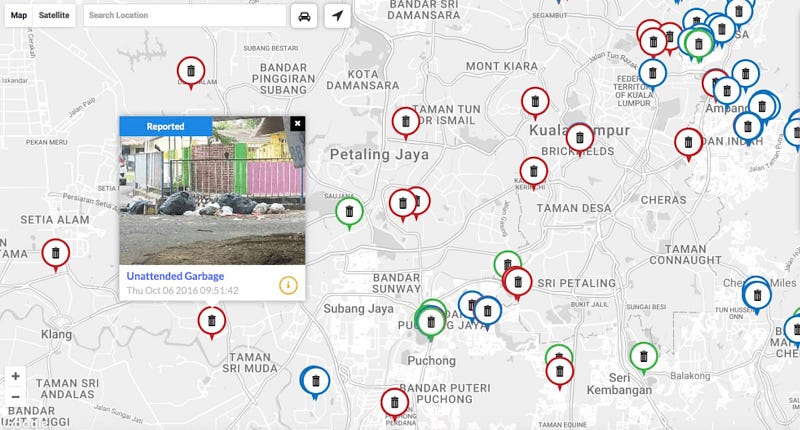
This will be the start of a series of “Learn How-To” articles to develop IoT solutions. We will initiate the series with the problem of “Unattended Garbage” that posed a lot of complaints regarding the cleanliness and might cause the outbreak of diseases.

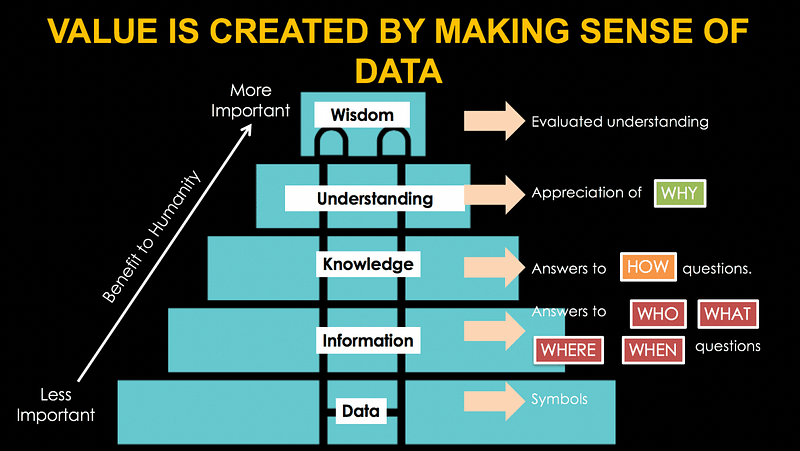
Value is created when you make sense of the right data. But before we start deploying sensors, we also need to define the business problems and the pain points from different stakeholders. Probably you need to gather a team from various stakeholders or maybe you can start defining yourself and later validated with stakeholders later.

Problem Statement

  1. Who is collecting the garbage?
  2. What is the status of garbage bin?
  3. When was the garbage collected?
  4. Where is the location of full bins?
  5. How to plan the route of the trucks?
  6. How many days till the next collection?
  7. How much garbage is produced in an area?
  8. Why is the garbage truck not picking up garbage?
  9. Why is a particular area producing more garbage?

How-To

  1. Garbage level sensors on garbage bins and garbage trucks
  2. GPS on garbage trucks
  3. Network infrastructure (Wifi, 3G)
  4. IOT Middleware (FAVORIOT) — SUBSCRIBE FREE PLAN Now!
  5. Visualization dashboard
  6. Analytics

This is by no means a comprehensive step-by-step solution but it will help you to start your exciting journey in developing your own IoT solution. Feel free to add your suggestions.

[Original article “ How-To Develop a Smart Garbage Collection” published in IOT World]

What Will You Discover in IOT & Smart Cities — “Gold Mines” or “Time Bombs”?

Sometimes we wondered why in some countries, Smart Cities initiatives are very successful but others failed — either it was not accepted or fully adopted by the people, or it’s stuck on the Blueprint shelves.

In any Smart Cities implementations, we can’t avoid Internet of Things (IOT) because it’s how we aggregate the data and derive meaningful insights about the cities. Cities that use data as their decision-making process are the ones that will propel forward and lead the rest. They will understand what the current issues are and how to improve the cities operations and reduce costs.

Benchmarking cities and creating city’s indicators are the first steps towards a continuous process of becoming an ROI-driven and green-driven cities. You can’t reach the state of vanity-driven cities without successfully implement the latter.

In fact, the IOT maturity model shows that you need to move from monitoring, controlling, optimizing and finally to autonomous. And we can see that many vanity-driven cities have already reached the stage whereby the city’s assets and infrastructure such as roads, bridges, buildings, parking, transportation, etc. have been partly or wholly monitored and controlled.

The only way that you can plan the way forward if you can also optimize the city’s resources — i.e. understanding where and how congested are the roads, utilization of parking bays, consumption of electricity, etc. It looks like a perfect plan, right? But then, why can’t we see the growth of smart cities around the world as fast as we would expect? What stops or delay them?

Other than the necessary funding, I believed mindset change is the biggest stumbling block. If coupled with certain personal agenda, most projects will fail and become white elephants. IOT devices embedded in strategic locations and assets will be able to uncover many things. The data derived from that single asset will tell you whether the investment that you have put in place being utilized or not. Whether the current way of doing things are cost-effective, or it is the source of leakages concerning money or time.

Be careful of what you will uncover from the data — it can be a gold mine which can reduce your operational costs and increase your productivity, or it can be time-bombs that are already waiting to explode.

People viewed Internet of Things(IOT) — either they save you or “kill” you. It’s like the saying — are you looking a “half-full glass or half-empty glass”.

[Original article “What Will You Discover in IOT & Smart Cities — “Gold Mines” or “Time Bombs”?” published in IOT World]

Telco Digital Services: How To Monetise the IoT Data

There are 4 main reasons why telcos are that NOT interested in IOT:

  1. The growth of M2M is not as fast as expected. The idea of connecting the machines are not new. Most operators have started offering vehicle tracking and remote meter reading more than ten years ago.
  2. The M2M ARPU (Average revenue per user) is low. Probably 4–10 times lower than the normal 3G/4G broadband ARPU.
  3. M2M devices (with Sim cards) are difficult to manage. And most of these devices are left unattended. Operational costs can be high.
  4. Undecided how and where the telco can add the value. Will it be end-to-end (which is not their core expertise) or only provide connectivity.

When I wrote that points, it was in early 2015. But maybe things have changed now.

Three reasons some telcos start to enter the IOT business.

  1. Price war — many telcos offered bundled packages and some with unlimited Data, SMS, and Calls
  2. IOT starts to grow and become more matured in certain market verticals — although the hype is still on-going, IOT starts to move from “Monitoring” to “Controlling” and “Optimisation” phases. In these phases, data analytics are key to trigger and make better decision making.
  3. The ecosystem is growing — many new players, startups are onboard. Bigger and incumbent players also seek the opportunity. Jump start their business by acquiring the smaller but innovative IOT companies.

But maybe the toughest part will be the business model. The question remained — should the telco provide an end-to-end solution or only part of them? Should they manage the customers or not?

Monetising the IOT Data

As we moved our sensor data to the IOT Cloud, we can manipulate the data for useful applications. In many countries, the government has already started their smart cities projects. However, solely dependent on the government alone can be slow and at times faced with many bureaucratic challenges Thus, the need for a third-party such as IOT service providers to take the lead. These are business entities who deploy and manage sensors by themselves by keeping ownership. They earn by publishing the sensors and sensor data they own through sensor publishers.

We will be able to use the term “Sensing-as-a-Service” meaning that they can provide a free or chargeable service to any person who wishes to view or manipulate the data. It’s also possible to combine different multiple sensor data sources and create many innovative applications such as mixing between parking sensor data and public transport data, between environmental data and flood detection data, between river quality data and fertility of soil data.

An IOT service provider can provide such services, and thus, it will help to open up many other opportunities to generate new ways of monitoring and managing our valuable assets. A new business model can be created by way of monetising the new cloud service called “Sensing-as-a-Service.”

But then, IOT is not all about making new revenue streams. It will start with simple cost reduction and increase productivity. When they have plug the so-called leakages in the processes and resources, only then telcos will be able to help companies to:

  1. Generate new revenue streams by developing new innovative products,
  2. Better customer experience by making the process more seamless and autonomous,
  3. Better retention by understanding the client’s behavior.

What we are seeing is only the tip of the iceberg. IOT offers a vast amount of opportunities that has not been discovered yet. Many companies are still struggling to find the best business model, how to monetize the data and convince the end-users.

Who will win the game? That’s a one billion dollar question and everyone’s guess at the moment.

[Similar article “Monetising Digital Services: Where’s the Profit?” published in IOT World]

Download FREE eGUIDE

Learn The Truth About IoT Adoption Challenges In Less Than 3 Minutes.

People often asked me why Malaysia is slow in adopting Internet of Things. After so much hype, we rarely hear any success stories. Despite that we have been actively talking for more than two years (but if you are talking about M2M, i.e., pre-IOT days, this topic has been discussed for more than a decade). Also, we have been listening to many of IOT seminars regarding the promises of IOT to connect Billions of devices with Trillions of dollars of revenue, we still can’t see much of its implementation here in Malaysia. Why is that so? Why in other countries around the world, the take-up is far better than here?

In fact, I have always stressed the importance of collecting the data because what’s the use of talking about Big Data Analytics and IOT when there are not enough data in analyzing (sigh)? Where are the sensor data? Where is the IOT business?

There is one particular post at one of the IOT Group in LinkedIn that interests me. It’s about IOT frustration survey and the top 5 results are:

1. Hype and Confusion — 40% — the top answer by a wide margin, companies are confused by the bombardment of IoT messages, articles and ads. They are not sure what is true and how to proceed.

2. Implementation Difficulties and Ease of Use Issues — 23% — companies are frustrated by the process of finding the correct IoT hardware and software components for their situation. Where do they find easy ways to design, deploy, administer, and maintain their IoT network?

3. Security of data and transactions — 16% — security is the key frustration for companies that have started on an IoT Strategy Plan (they are past the hype and initial implementation questions) and are facing concerns over data privacy, anti-hacking protection methods and regulations.

4. Lack of IoT Standards — 14% — companies listed frustrations with the many wireless protocols, device clouds, data representation formats, and data analysis tools.

5. High Cost of IoT Deployments — 7% — companies are frustrated with the high cost of purchasing IoT components, software development, and system integration compared to the financial return. Given IoT is in such an early stage, it’s not surprising that Cost is currently lower on the frustration list. But Cost will go to the top of this list over time as IoT components become interoperable and commoditised.

I think Malaysia also faces similar frustrations although not in a particular order. However, I would add the sixth frustration i.e. IOT awareness. People might have heard about IOT but mainly in the consumer space — wearables and smart homes applications. But since the cost is still expensive, not many are willing to use them except for the few — i.e. the early adopters. Wearables and Smart home appliances are very fashionable and trendy. It will quickly become obsolete or less trendy when new and better gadgets are introduced. Personally, I have invested in many such devices just for the sake of becoming one the early adopters even though I know that after a year, it will be an “old” gadget. But then again, there are not many people like me.

Enterprise IOT applications are still lacking. These devices are not as trendy and fashionable like their consumer’s counterparts. Sensors that are being used in enterprises will last longer — maybe 3–5 years or even more. They are more robust and sometimes well-hidden somewhere. Thus, there is no need for some fancy design to house the sensors. However, these sensors can be more expensive, and when we talk about hundreds or thousands of sensors, the cost of deployment can become very prohibitive. To solve this, we need to have a win-win business model for both the IOT vendor and user.

Another “unspoken challenge” is the “resistance from within the company” itself. I have already described this in my previous post. Check — “Don’t let this ONE reason STOP you from implementing IOT”.

What other challenges or frustrations of IOT companies in doing business in Malaysia? Or are we facing similar problems elsewhere too? Why are we hearing a lot more success stories in developed countries such as Japan, Korea, USA, Spain, UK etc? Why not in our home country?

Or simply, most people JUST DON’T KNOW where to start their IOT journey?

[Similar article “IOT Adoption Challenges in Malaysia” published in IOT World]

Download FREE eGUIDE

Seven (7) Key Lessons for Smart Parking Deployment

In the early days of M2M/IoT, you might recalled that one of the earliest examples of M2M is connecting the Coke vending machine. Later, another popular example is to connect the fridge which tells you when to replenish your Milk and order automatically. Nowadays, almost in all (or nearly) IoT conversations, “Smart Parking” application will be the main topic as an example for a smart city application. One of the main reason because traffic congestion in cities have reached a state where citizens got so frustrated and tired. Productivity can be simply dropped because of the time wasted on the road. Carbon monoxide has been the main contributor to air pollution in cities. And studies have shown that 30% of the traffic congestion is being caused by drivers trying to find parking spaces. If we are able to solve parking, we might be able to solve the traffic congestion and thus reduce the carbon in the environment.

We have some good experience in developing a smart outdoor parking trial with different kinds of sensors. Below are some of the challenges and lessons that we faced during the trial.

  1. Quality of Sensors — We have tested three kinds of sensors. One made from China which is cheap but low quality and another from Netherlands (more expensive but higher quality). The third sensor we developed in-house used an Arduino as the controller. The ones that we developed in-house are simple and easily programmable with a rechargeable battery and a small solar panel. We placed at the back (end) of the parking bay which will detect the car’s presence. Another sensor (from China) is screwed on the tarmac. The other sensor (one from Netherland) is embedded into the parking bay by making a hole in the tarmac. It is recommended to get a high quality sensors to get accurate reading and reliability. You might regret getting cheap sensors because you might end up with high maintenance costs in the future.
  2. Coverage — Depending on the location of your gateway that collect the parking data, it can be quite challenging. You have to ensure the sensor signals are not being block by any obstacles. Otherwise, you need more gateways to provide good car park coverage.
  3. Location of Sensors — As mentioned in (2), placement of the sensors underneath the cars must not be block.
  4. Battery Life — Parking sensors battery normally have a life-span of about 3–5 years. We are not able to test to that extend but the low quality sensors doesn’t last that long. Another thing to note is the frequency of sending the data. Thus, it’s important if we are able to program the sensors easily.
  5. Management of Sensors — It’s easy to mange less than 10 parking sensors or one parking area. But how do you manage several parking areas in a big city? It can be big challenge managing several thousands sensors outdoor. In our case, we developed an IOT Network Management System that is able to monitor the health of each individual sensors including its data activity and battery level.
  6. Application — We have developed simple app to view the availability of the parking bays, its battery level for both desktop or mobile version. Depending on the objectives of the smart parking project — you can also develop a parking utilisation report or analytics for the parking management of city municipal. To make it more convenience for the public, the parking availability and its direction should be display on a bigger signboard.
  7. Culture and Attitude — It’s always a question whether the public is able to accept this new way of parking. Can we make a parking reservation or mobile payment? Are we able to discipline ourselves not to park illegally?

However, we believed that the reliability and accuracy of the data from the sensors are the utmost important in smart parking application. Once the public trust the new smart parking system, they will definitely adopt it naturally. Otherwise, whoever operates the smart parking will face many complaints everyday. Do you think our country is ready to adopt this?

[Original article — “Seven (7) Key Lessons for Smart Parking Deployment” published in IoT World]

IoT — Build Once, Use Many Times

The complexity of different owners of data sources will be a big stumbling block if we can’t find the right business model of sharing the data. This will defeat the purpose of IoT when its main suppose is to fuse different data sources. It’s like building several cellular base stations (towers) at the same location which provides similar coverage to the users. It’s such a waste of investment when we can’t actually reuse the same cellular tower. The same goes with IoT. Can the same sensor provides service to different stakeholders with different usage?

Who wants to send different groups of people to the tops of Himalayas mountains to get same sample of data? Who wanted to send spend billions of dollars to Mars to get the same photos? Who wanted to send different Astronauts to International Space Station and doing the same experiments? It’s a no brainer that we shouldn’t waste our money for doing the same thing. In fact, we have to find ways how to recoup back the investment by monetising the rare data that has been collected.

However, there are several issues and concerns that need to be address first:-

  1. Privacy and authenticity of data — there is a possibility that the data might reveal weakness of a system, open to security breach or fake data which results in wrong insights
  2. Determine the right value for the data — how much people are willing to pay that kind of data?
  3. What kind of data is worth sharing — Capturing the wrong sets of data will results in unnecessary investment
  4. How much detail of the data needs to be captured — since the infrastructure has been built (sensors, gateways, connectivity, towers, etc), we shouldn’t waste capturing only a single data point. Why can’t we use the same infrastructure to deploy different sensors too?

Internet of Things are quite similar to the current Internet — Millions or Billions of data sets are now sitting around in the World Wide Web whereby many of that same data is being used many times by different people in different ways. The question is — why can’t IoT do the same thing?

[Original article -”IoT — Build Once, Use Many Times” published at IOT World]