Here are 7 Signs You Were Born to Be an Entrepreneur.
Photo by Isaac Quesada on Unsplash
Ever wonder if the entrepreneurial spirit runs in your veins?
While the path to entrepreneurship isn’t one-size-fits-all, there are certain traits and behaviors that set natural-born entrepreneurs apart from the rest.
Whether it’s a burning desire to innovate, an uncanny knack for problem-solving, or an insatiable appetite for risk, these characteristics can often be spotted early in life.
If you’ve ever felt a restless drive to create, lead, and disrupt the status quo, you might just be destined to forge your own path in the business world.
Here are seven (7) signs that you were born to be an entrepreneur and entrepreneurship seems to be your natural calling.
1 — Innate Problem Solver
Since you were young, solving problems has come as naturally to you as breathing.
You found innovative solutions to everyday issues and enjoyed the process thoroughly.
2 — Constant Curiosity
You have an insatiable curiosity about how things work and how they can be improved.
Your mind is always buzzing with ideas for improving existing products or creating entirely new ones.
3 — Resilience in Failure
Photo by Kind and Curious on Unsplash
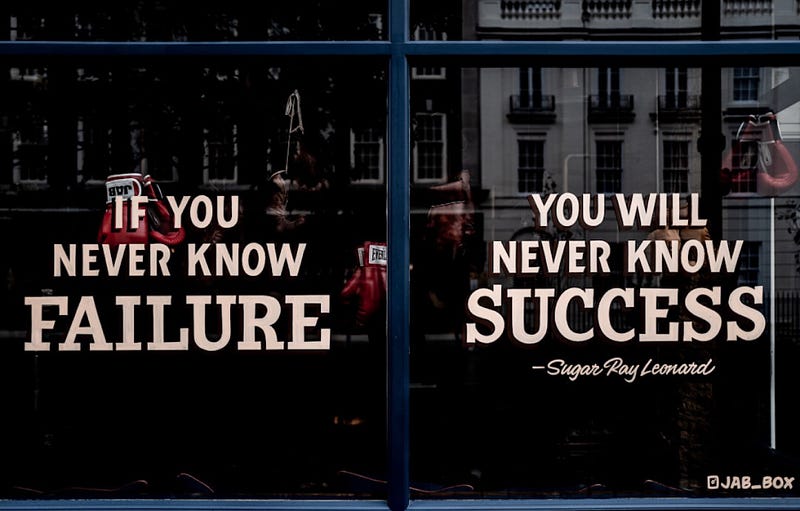
Where others see devastating failures, you see essential learning opportunities.
Every setback has been a stepping stone to your next big idea, fueling your determination rather than discouraging you.
4 — Passionate Persuader
You have a natural talent for convincing others.
Whether it’s selling a product, pitching an idea, or rallying a team, you do it with a persuasive and inspiring passion.
5 — Thrives on Autonomy
Photo by Jason Hogan on Unsplash
The thought of being confined to a traditional 9-to-5 job makes you feel restless.
You crave the freedom to make your own decisions and the flexibility to follow your entrepreneurial instincts.
6 — Visionary Thinking
You always think big.
While others may doubt and hesitate, you see the bigger picture and have a clear vision of what you want to achieve, often thinking several steps ahead of the current trends.
7 — Unwavering Commitment
The energy and commitment you bring to your ventures are unparalleled.
You’re not just involved in projects but committed to seeing them grow from mere ideas to successful enterprises.
Embracing the Entrepreneurial Life
Photo by Grant Ritchie on Unsplash
You thrive on the challenges that come with building something from the ground up.
The ups and downs of startup life don’t deter you — they invigorate you.
You’re not just looking for a job; you’re creating a legacy.
Taking the Entrepreneurial Leap
Photo by Joshua Earle on Unsplash
If these traits sound familiar, it’s time to embrace your entrepreneurial spirit fully.
Here’s how you can nurture your entrepreneurial journey:
Start Small and Scale: Begin with small projects to test your ideas and understand the market. Learn, adapt, and then scale your operations based on feedback and results.
Network Relentlessly: Connect with other entrepreneurs, mentors, and potential investors. Networking will not only inspire you but also open doors to opportunities.
Learn Continuously: The business world is ever-evolving, and staying updated with the latest trends and technologies is crucial. Invest time in learning new skills that will help you stay competitive.
Stay Resilient: Entrepreneurship is a rollercoaster ride of highs and lows. Prepare to face challenges head-on and don’t get discouraged by setbacks.
Plan Financially: Manage your resources wisely. Sound financial planning is essential for turning your entrepreneurial dreams into reality.
The entrepreneurial journey is as rewarding as it is challenging, and the world needs visionaries who dare to innovate and inspire.
Now, take the plunge, let your entrepreneurial spirit lead the way, and make your mark on the world.
Sitting alone, wrapped in the solitude of my early failures, the shroud of doubt often felt suffocating.
“Is this journey worth the pain?” I’d ask myself as the whispers of defeat echoed menacingly around me, each like a dark chorus tuned to discourage.
Yet, in my heart’s deepest, quietest part, a resilient voice softly countered, “Hold on, for there are victories you haven’t yet claimed, achievements that lie just beyond the horizon.”
Reflecting on the days of my youth, I remember how clumsy and unsure I felt.
“Will I ever get this right?” I’d mutter under my breath with each attempt to walk the path of my dreams, inevitably stumbling yet again.
Photo by Arturo Castaneyra on Unsplash
My steps were faltering, unsteady, but driven by an indomitable will that shouted back at the gravity of failure, “I will not yield!”
With each fall, my resolve wasn’t merely restored but redrawn — more robust, explicit, and determined.
In this struggle, I discovered my song, a melody of perseverance that would guide me through many battlegrounds.
Running wasn’t an option back then, nor was leaping towards the vast expanse of the sky.
“Why try again?” doubt would whisper as gravity mocked my efforts.
Yet, my spirit, unyielding and buoyant, always replied, “Watch me soar.”
And soar I did, higher with each attempt.
Photo by Ralph Mayhew on Unsplash
From the ashes of my failed endeavors, I learned not just to walk, but to fly, reaching milestones that once seemed nothing more than distant dreams and eventually, winning championships under the resounding cry of triumph.
As high school concluded, I stood distinctly apart from the traditional successes that crowned the journeys of my peers.
“Where do I fit in?” I often pondered, staring at a path unmarked and daunting.
However, within the smoldering embers of my youthful dreams, a fierce and unextinguished flame persisted, whispering, “Forge your own way.”
It propelled me towards the university’s gates, where I would rewrite my name as a student and a visionary ready to challenge the status quo.
The years that followed were a testament to persistence.
The right job — a fitting glove for my aspirations and abilities — seemed beyond reach.
Each rejection stung, venomous, and discouraging.
“Maybe it’s not meant to be,” I would sigh, yet deep inside, a firmer voice held fast, “Your vision is worth the fight.”
Photo by Zdeněk Macháček on Unsplash
Clutching the vision of my future tightly, I resolved to forge my path, to craft my destiny with the tools of innovation and the fire of ambition.
From the relentless echoes of ‘no,’ a new idea began to take wing.
Entrepreneurial dreams, long nurtured in the quiet corners of my resolve, crystallized.
“This is your moment,” I convinced myself as I stepped into the market’s harsh arena, not as a mere contender but as a would-be king, determined to create success from each failure, to learn from each fall, and to rise stronger with each setback.
Photo by the blowup on Unsplash
Failures were plentiful, like storms raging against the bow of my endeavors.
Yet, each setback and storm scripted a new page in my book of wisdom.
“What’s the lesson here?” I would ask after each loss, and resilience, my steadfast heritage, became my shield against the storms of doubt and failure.
From each loss, I crafted a victorious stage, turning the lessons of defeat into stepping stones toward success.
Now, I stand where once I fell, a tale of triumph etched into the lines of my life.
From the depths of failure’s well, I rose, basking in the sunlight of success, my journey illuminated by the lessons learned in the darkest times.
Photo by Daniel Jiménez on Unsplash
“You’ve made it, but keep climbing,” I remind myself, knowing the journey is far from over.
This relentless and testing journey proves that within each of us lies a quest, a silent battle against the odds.
It is a journey to transform failures into a zest for life, turn every misstep into a milestone, and find the best of ourselves in our darkest hours.
Let these words serve as a light for those who, amidst their struggles, seek to find a glimpse of hope — that every loss, every defeat, bears within it the key to unlocking the boundless sea of success.
Have you encountered such a journey? Please share your story.
Great Startup Tips – A Book Review by Mazlan Abbas
By one of the best authors — Guy Kawasaki
“The Art of the Start 2.0” authored by Guy Kawasaki emerges as a critical resource for contemporary entrepreneurs, guiding them through the complexities of initiating and nurturing a thriving business in our rapidly changing commercial environment.
My own foray into entrepreneurship evokes a sense of regret for not having discovered this profound guide earlier.
It skillfully amalgamates vital knowledge and pragmatic strategies, effectively avoiding the overwhelming plethora of resources that often inundate emerging startups.
Guy Kawasaki, esteemed in the entrepreneurial domain, imparts his substantial experience and distinctive insights within this revised edition.
While the original version enlightened numerous individuals, the current edition expands considerably to encompass the significant transformations within the business sphere over the recent decade, addressing the rise of social media, the democratization of startup tools, and the advent of crowdfunding.
Innovative Revisions and Enhancements
Rather than a mere update, version 2.0 represents a thorough revision, augmenting the content by 64% and integrating discussions on modern tools such as cloud computing, social media, and crowdfunding.
These updates mirror the dramatic shifts in business methodologies and startup culture, rendering the book a crucial asset for grasping and utilizing these contemporary trends.
Fundamental Entrepreneurial Challenges
Amidst the introduction of new tools and reduced barriers to entry, Kawasaki maintains focus on the perennial challenges of entrepreneurship: assembling a solid team, crafting an exceptional product or service, and strategically outperforming rivals.
His advice, grounded in years of experience, provides tangible, straightforward guidance to navigate these persistent challenges, ensuring readers comprehend the core principles even as they adjust to an evolving business landscape.
Actionable Guidance
A notable strength of the book lies in its practical advice, transcending theoretical discourse to present direct, applicable strategies.
Kawasaki’s discussions on various facets, from investor relations to brand development and team formation, offer lucid, actionable instructions that readers can promptly enact, guiding them away from typical missteps towards enduring achievements.
Entrepreneurship as a Mindset
Kawasaki advocates a view of entrepreneurship that transcends conventional job descriptions, portraying it as a mindset characterized by persistent innovation and pursuit of excellence.
This perspective permeates the text, motivating readers to adopt an entrepreneurial attitude irrespective of their sector or business phase.
His declaration that “Entrepreneur is a state of mind, not a job title” embodies this philosophy, inspiring readers throughout their entrepreneurial endeavors.
Evaluation and Praise
While the book’s comprehensive scope may appear daunting to some, especially those desiring in-depth exploration of particular topics, its encyclopedic nature is also among its key advantages, offering a broad yet practical and experience-based overview.
In summation, “The Art of the Start 2.0” stands as a seminal publication that adeptly connects past entrepreneurial challenges with today’s dynamic startup environment.
Its fusion of enduring insights and modern-day relevance renders it indispensable for both budding and seasoned entrepreneurs, alongside any individual keen to master the nuances of initiating and leading a business venture.
Kawasaki’s updated manual serves not merely as a book but as a beacon, furnishing both direction and motivation, ensuring the entrepreneurial path, though replete with hurdles, is ultimately fulfilling and transformative.
The early stumbles and mess-ups that all founders encountered
Alright, let’s dive in and chat about this whirlwind adventure of diving headfirst into the IoT scene with my squad at MIMOS. You know, being under the wing of MOSTI really gave us that, “Yeah, we can totally revolutionize wireless tech,” kind of vibe. We were all about pushing the boundaries with the 6LoWPAN standards — like, who even knew what that was back then?
But let me tell you, jumping ship to the telecom sector was like swapping a comfy bean bag for a stiff office chair.
Launching our IoT platform under Favoriot in 2017?
Man, we were on cloud nine, picturing this tech-hungry market just waiting for a slice of IoT magic.
Turns out, it wasn’t all confetti and fanfare.
Now, let’s talk facepalm moments — seven of them, to be exact.
First off, we thought the talent pool was Olympic-sized, but when we dipped our toes in, it was more like a kiddie pool. Getting folks to jump on our platform was like trying to start a campfire in a downpour.
Then, we peered into the halls of academia, hoping to find IoT wizards in the making. Spoiler alert: IoT education was basically a chapter they skipped. Back to the drawing board, right?
And oh, our brilliant idea to use YouTube as a training ground for Favoriot?
Big oops there.
People craved real-deal courses, not just snack-sized tutorials.
Client onboarding was another story. Imagine trying to explain rocket science to your grandma — that was us with IoT to our clients. They needed that guiding star, and we were still fumbling with the telescope.
Budgeting was another beast. Picture a snail race — that was the pace of decision-making in these orgs. No one wanted to sign the check without knowing the full menu.
The lack of a project catalyst was like waiting for paint to dry. But then, good ol’ 2020 hit, and suddenly digital transformation wasn’t just a buzzword anymore. Thanks, Covid?
And those training opportunities we breezed past? If only we’d hit pause on coding and marketing and actually looked around. Hindsight, huh?
Wrapping this up, those facepalms?
Gold mines, each one. They schooled us big time.
Now, we’re riding the IoT wave like pros, all thanks to those early stumbles that turned into our roadmap.
So, here’s to the mess-ups that shape us — cheers to the lessons learned and the wins scored on this wild IoT ride.
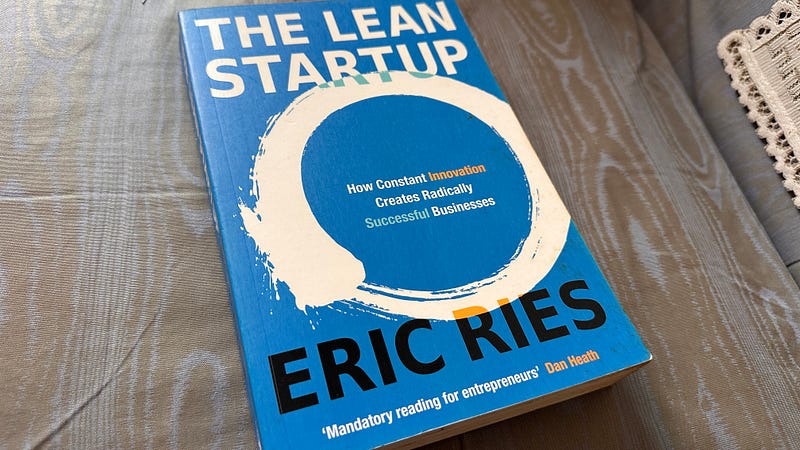
Discovering “The Lean Startup” by Eric Ries was a revelation that arrived after I had already embarked on the challenging journey of founding a startup.
The insights it offered were akin to uncovering a guide after a solo navigation through the formidable entrepreneurial waters.
I implore those on the cusp of starting their own venture, or even considering it, to not repeat my oversight.
This book is more than a suggestion; it is an essential part of the entrepreneur’s toolkit.
Eric Ries goes beyond theoretical discourse, providing a pragmatic blueprint for operation.
His central premise?
Startups can heighten efficiency and speed up innovation by embracing a lean methodology, an approach informed by the principles of lean manufacturing.
This philosophy doesn’t equate to mere cost-cutting; it emphasizes maximizing learning and ensuring that each step is corroborated by tangible market feedback.
Prior to encountering “The Lean Startup,” I labored under the illusion that my initial product concept was a guaranteed success, only to confront the stark reality that it didn’t resonate with consumers.
Ries promotes a concept that could have shielded me from such disillusionment: validated learning.
Rather than investing heavily in a finished product, he suggests starting with a minimum viable product (MVP) to quickly gauge customer desires.
This involves stepping out, engaging directly with users, and evolving the product based on their input.
Ries’s book offers a wealth of tactics to sidestep the allure of vanity metrics — those misleading figures that may look impressive on reports but fail to indicate your venture’s true vitality.
He instructs on concentrating on actionable metrics that accurately reflect progress and genuine customer value.
One of the most empowering elements of the Lean Startup approach is its stance on failure.
Within this framework, a failed experiment is not a defeat but a crucial learning opportunity, facilitating quick iterations, rapid knowledge acquisition, and the flexibility to pivot when it’s called for.
This alteration in perspective is invaluable.
What resonates most profoundly with me, though, is the realization that the Lean Startup methodology unravels the enigma of launching a business.
It’s less about possessing an infallible initial plan and more about the process of continual learning, adapting, and navigating through the inevitable uncertainty that shrouds new endeavors.
In retrospect, had I consulted “The Lean Startup” prior to releasing my first product, I could have avoided many pitfalls.
Yet, the beauty of Ries’s philosophy is its timeless applicability; it’s never too late to adopt this lean approach.
Whether one is just beginning or strategizing within the upper echelons of a well-established corporation, the principles of the Lean Startup can direct you toward the creation of something of genuine merit.
Thus, I extend this advice to all emerging entrepreneurs and established innovators: do not overlook “The Lean Startup.”
It is not merely literature; it is a fundamental resource.
For someone like myself, it has become the compass I wish I had from the start.
Do not release your vision into the market without it.
You can buy “The Lean Startup” book from Amazon (Note: This is an affiliate link).
Embarking on a journey as the CEO of an IoT company, especially when one has never envisioned reaching such a pinnacle, is an experience filled with unique challenges and valuable lessons.
My path to becoming a CEO was unconventional, as my career goal was always to become a CTO.
However, life had other plans, and I found myself at the helm of a new IoT company, a subsidiary of a publicly listed company.
This 2.5-year tenure was eye-opening and instrumental in shaping my professional insights.
Lesson 1: Understanding the Multifaceted Role of a CEO
My first revelation was the expansive scope of a CEO’s responsibilities.
Furthermore, this is a new subsidiary responsible for a new business venture.
And the business area is very new – the Internet of Things (IoT).
Unlike my previous technical-focused roles, being a CEO required a holistic approach, managing product development and technology and steering the business’s strategic direction.
Building a team of experienced professionals, we created Smart City Solutions, a venture that demanded a blend of technical understanding and business savvy.
Lesson 2: Navigating the Complexities of Selling IoT Solutions
One significant challenge was underestimating the complexity of selling IoT solutions to local councils.
The sales cycle was excruciatingly long, a factor I had initially overlooked.
Lesson 3: The Pitfall of a Singular Market Focus
Our strategy initially focused on a single market with a singular product line.
This approach was a miscalculation due to the lengthy sales cycle and the need for extensive customer validation.
In hindsight, pivoting earlier to a different product or a more competitive market segment would have been more effective.
Lesson 4: Establishing a Brand in a Nascent Industry
A silver lining in our journey was the ease of establishing ourselves as an IoT brand in Malaysia, one of the industry’s early players.
This positioning opened doors to numerous opportunities, including invitations to conferences globally, enhancing our brand visibility.
Lesson 5: Overlooking Synergies Within the Parent Company
A missed opportunity was not leveraging the strengths and networks of our parent company’s group.
Instead of venturing out to find new markets and customers, tapping into the existing network within the group would have been a strategic advantage.
Lesson 6: The Imbalance between Product Development and Market Outreach
Our focus leaned heavily toward product development, overshadowing the need for effective marketing and customer engagement.
This imbalance led to a lack of real-world feedback and potential partnerships, which could have significantly influenced our market presence.
Though my tenure as a CEO was brief, the lessons learned are invaluable.
They have enriched my professional outlook and laid a strong foundation for my future endeavors, particularly in building my own startup.
The journey taught me the importance of flexibility, understanding market dynamics, and the power of strategic partnerships, insights I eagerly carry forward into my next chapter.
I have been procrastinating on launching my digital product for nearly a year.
I have targeted to launch a book on IoT, but somehow, things have changed – I published a Startup journey instead.
What encouraged me to publish this is when I read so many articles from Medium about their digital products.
If they can, why not me?
The book is destined to launch on Jan 1, 2024 however, I decided to do it much earlier (Dec. 3, 2023).
Check the below preface if you are interested in getting one.
Book Preface
In this preface, I invite you on a journey that began with a single step into the unknown realm of Silicon Valley and expanded into a voyage across the vast ocean of the Internet of Things (IoT). It is a tale not just of technology and innovation but of personal growth, perseverance, and the relentless pursuit of a vision.
Part 1: The Awakening unveils the transition from a techie to an entrepreneur. It chronicles the birth of our first IoT product designed to enhance the lives of senior citizens and delves into the struggles and successes of monetizing cutting-edge technology. This section is a candid exposition of the thrills and tribulations accompanying the early stages of a Startup’s life.
Part 2: The Evolution details the maturation of our venture, Favorsense, amidst the fiercely competitive market. It is a story of navigating through the turbulent waters of the IoT industry, marked by early missteps, eventual milestones, and the philosophical underpinnings that propelled our venture forward.
Part 3: Expansion and Growth reflect on scaling our enterprise with limited resources. Here, I share our exploration of diverse sectors – academia, industry, and government – and the invaluable insights they offered. This part also touches on the creative lulls and the investment of faith and funds into our dreams.
Part 4: Navigating Success chronicles the strategic moves towards the acquisition and the harmonious blend of academic rigor with entrepreneurial zeal. It is a testament to the hard-earned lessons in building products and the joys of witnessing a startup blossom.
Part 5: The Mastery explores the nuances of team dynamics, revealing how my fourth IoT product was a pivotal turning point. It stresses the importance of adaptability and the critical role of product-market fit in the survival and success of a startup.
Part 6: Perseverance and Innovation is a homage to the grit required to overcome a startup’s myriad challenges. It uncovers the stories behind product failures and the resilience needed to navigate a global crisis while fine-tuning the pricing of our products.
Part 7: Personal Growth and Strategy delves into every entrepreneur’s self-discovery journey. It discusses the individuality of the entrepreneurial experience, the quest for recognition, and the relentless pursuit of the perfect investor pitch.
Part 8: Branding and Marketing highlights the lessons learned in branding and marketing with a lean budget. It shares insights into the personal branding intertwined with the company’s image and the real-world lessons from business dealings.
Part 9: Reflection and Insights offers a retrospective look at why some entrepreneurs reach the pinnacle of success while others falter. It brings forward the collective wisdom gained from both the startup community and the giants of the industry.
Part 10: Building Foundations closes the narrative by emphasizing the importance of community support, the strategic use of mailing lists, brand building on a shoestring budget, and the diversification of revenue streams.
This book is more than a compilation of entrepreneurial lessons; it is a mosaic of experiences, a beacon for aspiring innovators, and a testament to the power of a shared dream. It is dedicated to the team at Favoriot, whose dedication and innovation have shaped not just the company but also the very future of IoT. Welcome to our story.
Did you rake the opportunity to establish your personal brand or turn into business opportunities?
Well… I didn’t start that way.
In the early days, I focused on establishing myself as a knowledgeable voice in the IoT sector.
This meant engaging in public speaking at tech conferences, seminars, and workshops without directly promoting Favoriot.
My goal was to share insights on IoT trends, challenges, and future potential. This approach helped in gaining credibility and trust with a wider audience.
However, while these efforts enhanced my reputation, they didn’t translate into immediate business growth for Favoriot.
Changing Tactics: Talking About Favoriot
Photo by Matthew Osborn on Unsplash
Recognizing the need to align my expertise with business growth, I adjusted my approach.
During my talks, I began weaving in how Favoriot’s solutions addressed real-world challenges in IoT.
This wasn’t about a sales pitch; it was about demonstrating the practicality and effectiveness of our products through real use cases and customer stories.
This shift in approach helped the audience connect the dots between the theoretical knowledge I shared and the practical solutions Favoriot offered.
Seeing Results: More Business
This strategic change in content delivery began to pay off.
Audiences started associating my expertise with Favoriot’s innovative solutions.
This recognition led to increased interest in our offerings, resulting in more business queries and collaborations.
Over time, this approach not only solidified Favoriot’s position in the market but also turned many of those initial inquiries into loyal clients.
Conclusion: Public Speaking is Valuable
This journey reaffirmed that public speaking is a potent tool for business growth.
It’s more than just sharing knowledge; it’s about strategically showcasing your company’s strengths and solutions.
For startups and entrepreneurs, effectively combining your personal expertise with your business offerings in your talks can significantly boost your brand and business growth.
Photo by Priscilla Du Preez 🇨🇦 on Unsplash
Summary of Lessons Learned for Aspiring Entrepreneurs:
Build Credibility First: Start by establishing yourself as a knowledgeable expert in your field without immediately focusing on your product or service.
Share Industry Insights: Use public speaking to share insights on current trends, challenges, and the future of your industry.
Align Expertise with Business Goals: Gradually incorporate your business solutions into your talks to show how they address real-world problems.
Showcase Practical Applications: Demonstrate the effectiveness of your products through real use cases and customer stories.
Foster Brand Association: Use public speaking to link your expertise and your company’s offerings strongly.
Be Patient for Results: Understand that this strategy is a long-term approach, and converting interest into an actual business takes time.
Utilise Public Speaking as a Strategic Tool: Recognize the power of public speaking as a knowledge-sharing platform and as a vital tool for showcasing your company’s strengths and solutions.
To learn more about startup tips, check out my latest eBook, “Startup Survival.”
As the founder of Favoriot, my journey in the Internet of Things (IoT) entrepreneurship journey has been nothing short of an odyssey.
We take our first step with an ideal vision.
Thinking everyone will quickly start to use our IoT platform.
But that’s not the case.
Later, we set our sights on pioneering IoT training, a decision that unfolded amidst the challenges of introducing an IoT platform-as-a-service.
Here’s my story.
Confronting the Reality of an Unused Platform
Photo by Jorge Ramirez on Unsplash
A stark realization marked our early days.
We had developed a platform brimming with potential, yet it could have been more used.
Launching our IoT service, we faced tepid responses.
The crux of the issue? Favoriot was an unfamiliar name, a new entity in a realm ruled by established players like ThingSpeak and Azure.
The reluctance of tech enthusiasts and students to dive into this new venture was palpable.
Uncovering a Crucial Market Gap
Surveying the Malaysian market, a critical pattern emerged.
The landscape was teeming with resellers of IoT products, yet there needed to be more original product creation.
For Malaysia, aspiring to shift from a consumer to a producer nation, this represented a barrier and a deadlock.
The chasm between importing and producing technology was vast, and bridging it required nurturing homegrown IoT innovators.
Pivoting Towards Educational Empowerment
Photo by Campaign Creators on Unsplash
Recognizing this void, we made a strategic pivot towards IoT training.
We meticulously crafted a curriculum encompassing the essentials, the complexities, and the advanced facets of IoT data analytics.
The launch of Professional Certificates marked a turning point, enhancing the professional standing of our trainees.
Today, over 15 Malaysian universities have integrated our IoT platform into their curriculum, a testament to its relevance and impact.
Thus began the slow but impactful way to create awareness and prepare the necessary skills in hands-on IoT development for future graduates.
Furthermore, I have been personally invited to educational and industry IoT talks, which have given me better opportunities to introduce Favoriot to the public.
Beyond Training: Spreading the IoT Wave
But our vision extended beyond training.
This phase was merely a catalyst, igniting a broader adoption of IoT across Malaysia.
Our platform has become integral in diverse sectors, including manufacturing, agriculture, and smart city development.
Photo by Conny Schneider on Unsplash
In Conclusion: Lessons from the Journey
Reflecting on Favoriot’s trajectory, several vital lessons emerge:
Adaptability is Crucial: The ability to pivot and adapt strategies in response to market needs is vital.
Identifying Market Needs: Understanding and addressing specific market gaps can drive significant change.
The Power of Education: Empowering through education can catalyze broader technological adoption.
Beyond Immediate Goals: Long-term vision should extend beyond immediate objectives.
Collaboration and Influence: Collaborating with educational institutions can amplify impact and relevance.
As we continue on this path, our dedication to empowering Malaysia with innovative IoT solutions and robust training remains unwavering, fueling the flames of progress and innovation.
Photo by Izuddin Helmi Adnan on Unsplash
About Author:
Remember to Subscribe to receive email updates on every post I publish.

























 Dr. Mazlan Abbas