
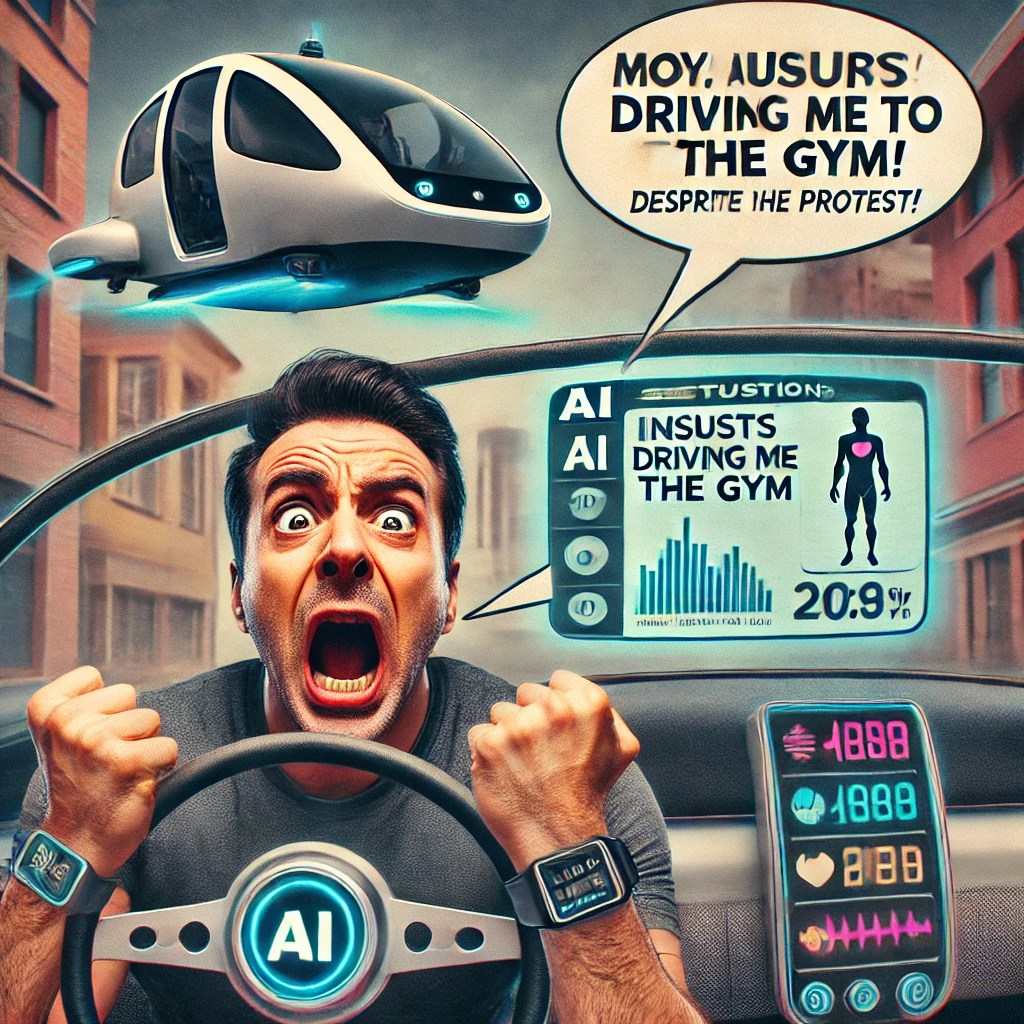
“Can you imagine living in a world where cars fly, robots prepare your breakfast, and your boss talks to you through a giant video screen? Wait a minute…that sounds oddly familiar!”
As a young boy in the 1960s, glued to our old family television, watching The Jetsons was more than entertainment—it was my window into the future. Back then, it was nothing short of magical. A futuristic family living in Orbit City, navigating daily life with technologies that, to me, seemed pure fantasy. Fast-forward to today, and I realize how incredibly prophetic this cartoon actually was.
My First Encounter with the Future
“Eh, takkan lah manusia boleh cipta robot yang pandai masak sarapan?” I often asked myself skeptically.
In my childhood, my weekend routine revolved around television shows and comic books. Among the Batman comics and Superman TV series, The Jetsons stood out for a specific reason: it painted the future as something exciting, fun, and incredibly convenient. Unlike many dystopian or overly complicated portrayals of technology, The Jetsons gave me hope and wonder.
I would sit cross-legged in front of our bulky black-and-white TV set, amazed by flying cars, robots like Rosie, and video conversations that seemed impossibly futuristic. I remember vividly telling my mother:
“Mak, suatu hari nanti, orang mesti ada telefon yang boleh nampak muka orang lain!” She just laughed, probably thinking it was an impossible dream. Yet, here we are today, with video calls as common as a glass of water.
Predicting Technologies That Didn’t Yet Exist
“Biar betul? Cartoonists ni boleh ramal masa depan ke?”
What fascinated me most about The Jetsons wasn’t just the sleek aesthetics or the witty dialogues but how eerily accurate their predictions were. The cartoon first aired in 1962—decades before the internet, smartphones, or even personal computers became mainstream. Yet, astonishingly, they showcased technologies that closely mirror today’s innovations:
1. Drones and Autonomous Vehicles
I distinctly remember the excitement of seeing George Jetson commute to work in a flying autonomous vehicle. It seemed impossibly futuristic—no steering wheels, no pilots, just smooth automated flights. Fast-forward to now, and autonomous vehicles and drones are rapidly becoming mainstream. Companies like Tesla, Waymo, and countless drone startups are turning the once-cartoonish concept into reality.
2. Video Conferencing and Teleworking
Who could forget George Jetson’s daily arguments with his boss, Mr. Spacely, via a giant video screen? Even as a child, I wondered how amazing it would be to talk to someone face-to-face from afar. Decades later, platforms like Zoom, Microsoft Teams, and Google Meet have made this our everyday reality.
3. Smartwatches and Wearable Tech
One of my favorite gadgets from the cartoon was the smartwatch. George Jetson regularly spoke into his wristwatch, something I emulated with a toy watch. Today, devices like the Apple Watch enable voice communication and monitor health, provide notifications, and manage daily activities effortlessly. It feels surreal, like I’ve stepped straight into George Jetson’s life.
Robots in Daily Life: From Rosie to Reality

“Wow, imagine having a Rosie at home… I’d never have to clean my room again!”
Perhaps one of the most beloved elements of The Jetsons was Rosie, their family robot. Rosie wasn’t just a tool; she was part of the family, intelligent, helpful, and capable of conversation. Today, we see early glimpses of Rosie through voice assistants like Siri, Alexa, and Google Assistant. Companies like Boston Dynamics and Samsung are pushing boundaries even further, creating humanoid robots capable of performing household chores, providing care, and interacting with humans meaningfully.
I distinctly remember asking my mother, “Mak, one day kita boleh cakap dengan robot macam ni tak?” Again, it seemed impossible, but now, conversational AI is an integral part of our lives.
How The Jetsons Influenced My Career Path
“Mazlan, tengok cartoon je dah nak jadi saintis?” my parents chuckled when I expressed dreams of a technology-driven future.
Looking back, I realize how significantly this cartoon shaped my path. The whimsical portrayal of technology in The Jetsons not only inspired my interest in science fiction but also subtly guided me toward my career in telecommunications, IoT, and smart cities. I pursued electrical engineering and telecommunications and eventually became deeply involved in building smart cities—environments not unlike Orbit City, where IoT devices, smart transportation, and digital assistants simplify life.
When I founded FAVORIOT, a platform designed to empower IoT applications, the spirit of innovation and imagination instilled by The Jetsons was always at the forefront. I saw clearly how dreams from animated fiction could fuel real-world technological advancements.
A Visionary Cartoon That Still Inspires Today
“Tak sangka, cartoon yang aku tonton masa kecil dulu betul-betul jadi kenyataan hari ni.”
Revisiting the show today makes me marvel at its creators’ visionary minds. How did they manage to foresee so accurately? Was it pure creativity or a deeper understanding of technological trajectories?
In my opinion, The Jetsons succeeded because it tapped into universal human desires: convenience, connectivity, and curiosity. These remain consistent through decades, guiding technologists, innovators, and entrepreneurs alike. The show taught us to dream boldly and envision beyond current limitations.
Imagining Tomorrow’s Technologies Today
“Apakah lagi teknologi yang kita belum capai? Apa lagi yang boleh aku wujudkan?”
As a technologist deeply involved in IoT and smart cities, I often reflect on how fiction shapes reality. Today, when developing smart city initiatives or mentoring young innovators, I remind them how important imagination is. Every groundbreaking technology begins as a seemingly impossible idea.
What about the technologies from The Jetsons that we haven’t fully realized yet? The cartoon showed cities elevated above the clouds due to environmental challenges on Earth. Given the increasing urgency of climate change, such imaginative solutions might not remain fictional forever. Maybe vertical, sustainable cities aren’t as far-fetched as we once believed.
Encouraging the Next Generation to Dream Big
“Kalau cartoon pun boleh predict future, kenapa kita tak boleh cipta teknologi baru lagi hebat?”
To inspire today’s youth—just as The Jetsons inspired me—I constantly share this simple message: imagination has no limits. I challenge them to envision solutions for future problems because what is imagined today is tomorrow’s reality. My journey, from a fascinated kid sitting on the living room floor watching George Jetson to an IoT entrepreneur and technologist, is proof of this.
Now, every time I make a video call, glance at my smartwatch, or see news about autonomous vehicles, I smile silently.
It all started with a cartoon.
Who knew? Maybe Hanna-Barbera creators were the real visionaries.
What futuristic cartoon today will become the blueprint for tomorrow’s innovations? Until then, I’ll continue watching, imagining, and building the future inspired by The Jetsons.


 Dr. Mazlan Abbas