Internet of Things (IoT) — Book Review by Mazlan Abbas

Internet of Things (IoT) — Book Review by Mazlan Abbas

Excellent IoT book for business professionals
Not a member? Click here to read this story for free.

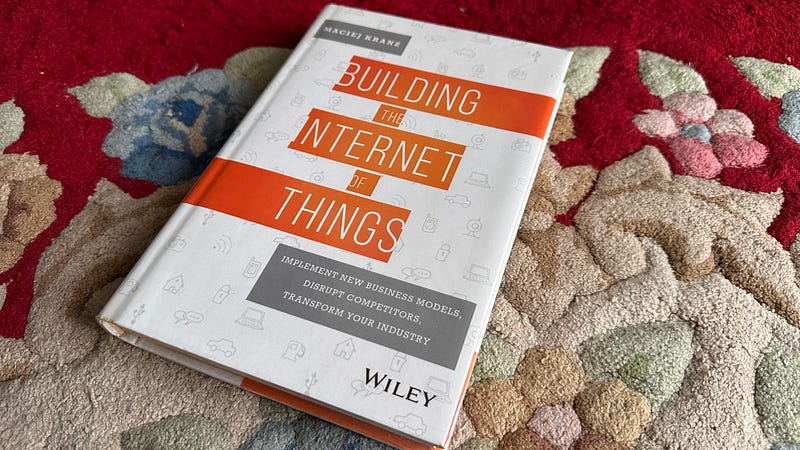
Where do I start with “Building the Internet of Things” by Maciej Kranz?

This book landed in my hands at a time when IoT was more of a buzzword to me than a clear-cut concept.

It was like finding a treasure map that promised to guide me through the maze of the Internet of Things.

Right off the bat, Kranz dives into the meat of IoT, not just skimming the surface with technical jargon that would fly over the heads of mere mortals like myself.

He’s talking business, strategy, and implementation, and my inner voice is like, “Finally, someone who gets it!

The book isn’t just a handbook; it’s a narrative that spins around the potential of IoT in a language that speaks directly to business decision-makers.

You know, the ones who nod along in meetings but are secretly wondering how IoT fits into their quarterly plans.

Kranz has this way of breaking it down, making you realize the vast opportunities IoT brings to the table.

And there I was, thinking, “This is it. This is the blueprint to revolutionize our business.

Kranz doesn’t stop at just selling you the dream.

He walks you through crafting a tangible IoT strategy that aligns with your company’s goals.

It’s not about jumping on the bandwagon; it’s about steering your ship with precision in the IoT sea.

The book made me pause and reflect, “Is my organization ready to embrace this? How can we not just participate but lead in this new frontier?

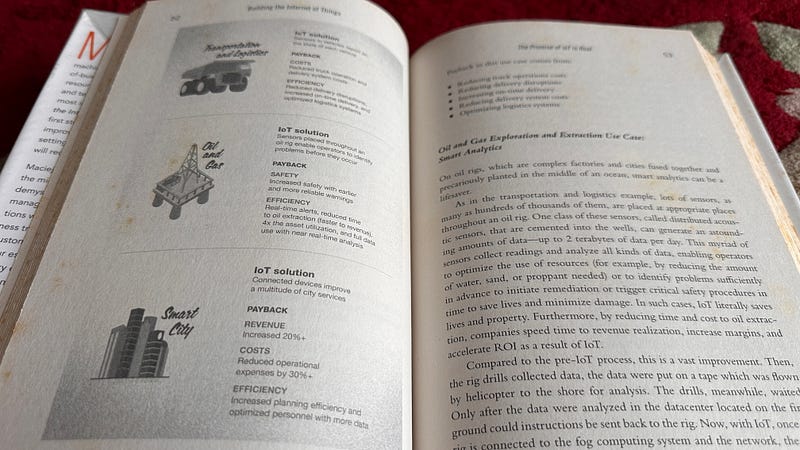
The use-cases sprinkled throughout the book are like mini lightbulb moments. T

hey’re not just hypothetical scenarios but real-world applications that show the ripple effect of IoT.

It’s as if Kranz is saying, “See, this isn’t just theory. It’s happening, and here’s how you can be a part of it.

And let’s talk about the security aspect.

In an era where data breaches are more common than I’d like to admit, Kranz doesn’t shy away from the nitty-gritty of securing your IoT infrastructure.

It’s reassuring, to say the least.

My inner skeptic was like, “Ah, finally someone who’s not glossing over the potential pitfalls.

Reading this book felt like having a mentor guiding me through the IoT landscape.

It’s not just about understanding IoT but about leveraging it to drive tangible business outcomes.

Building the Internet of Things” isn’t just a read; it’s an action plan that prompts you to get up and start integrating IoT into your strategy now, not tomorrow.

To anyone hovering on the edges of IoT, wondering how to dive in, or even the seasoned professional looking to deepen their understanding, this book is a beacon.

It’s like Kranz is right there, cheering you on, saying, “You’ve got this. Here’s how you can turn disruption into profit.

In conclusion, “Building the Internet of Things” is not just another book on my shelf. It’s a playbook that I find myself returning to, each time uncovering new insights.

It has shaped my approach to IoT in business, and I can’t help but think,

What would I have done without this gem?

If you’re in IoT or considering it, do yourself a favor and give this book a read. Trust me, your future self will thank you.

Get this book “Building the Internet of Things” from Amazon (Note: Affiliate link)

Book reviewed by Mazlan Abbas.
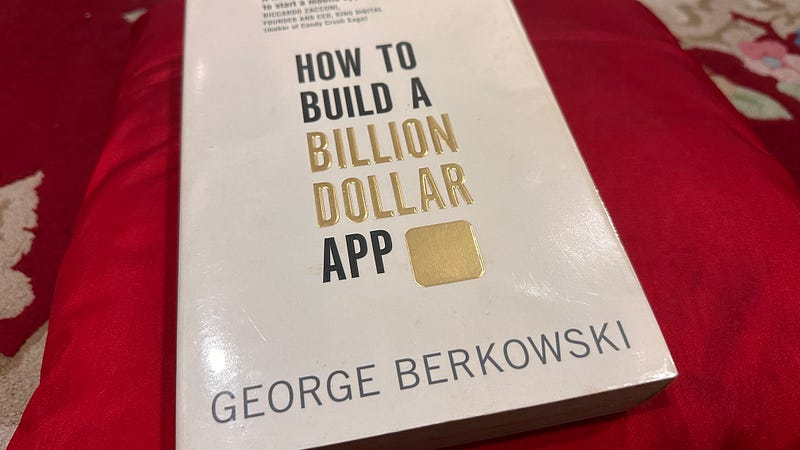
How to Build a Billion Dollar App — A Book Review

Make Money — Book Review by Mazlan Abbas

A must-read book if you want to start a mobile app business

Alright, let’s dive into “How to Build a Billion Dollar App” by George Berkowski, a book that seems to promise the golden keys to the kingdom of app-based riches.

Initially, I was skeptical.

I mean, how many of us haven’t fantasized about ditching the daily grind to launch something groundbreaking?

Yet, the road from dream to a billion-dollar reality is notoriously fraught with pitfalls.

But here’s the kicker: Berkowski isn’t just spinning daydreams; he’s laying down a roadmap based on the journeys of giants like Instagram, WhatsApp, Snapchat, Candy Crush, and Uber.

First off, the book is an eye-opener.

It’s not just about coding an app; it’s about birthing a mobile business behemoth.

Berkowski takes you from the seed of an idea — literally, something you might scribble on a napkin — through the throes of co-founder dating, team building, user addiction creation, and the relentless pursuit of staying relevant in an industry that never sleeps.

It’s like having a mentor who’s seen it all, guiding you through the highs and lows of startup life.

What I appreciated most is the unvarnished truth Berkowski serves up. Building a billion-dollar app is not for the faint of heart.

It requires a concoction of vision, tenacity, and a dash of madness.

The book is peppered with insider stories that read like Silicon Valley drama, making it informative and hugely entertaining.

The practical advice is gold.

Whether you’re a coding novice or a seasoned entrepreneur, there’s something in here for you.

Berkowski doesn’t shy away from the gritty details — funding rounds, user acquisition strategies, the pivot (oh, the inevitable pivot) — making it invaluable for anyone serious about scaling their mobile app into the stratosphere of valuation.

However, it’s not just a cheerleading manual for app moguls in the making.

It’s a reality check that underscores the immense effort, strategic planning, and a bit of luck required to join the ranks of the billion-dollar app club.

Berkowski’s candidness about the challenges adds a layer of credibility that’s often missing in the ‘get rich quick’ narratives.

In summary, “How to Build a Billion Dollar App” is a must-read for anyone daring to dream big in the digital arena.

It’s a blend of inspiration, practical guidance, and real-world wisdom.

Sure, not every reader will go on to create a billion-dollar app, but with Berkowski’s blueprint in hand, you’ll certainly have a fighting chance.

So, if you’re toying with an app idea or ready to take the plunge into the mobile business ocean, this book might just be your ultimate guide.

Get this “How to Build a Billion App” book from Amazon. (Note: This is an affiliate link)

Try Audible Premium Plus and Get Up to Two Free Audiobooks

https://amzn.to/48k29g3

Book review by Mazlan Abbas

The Lean Startup — A Book Review

Great Startup Books — Book Review by Mazlan

I regretted not reading this before building my Startup

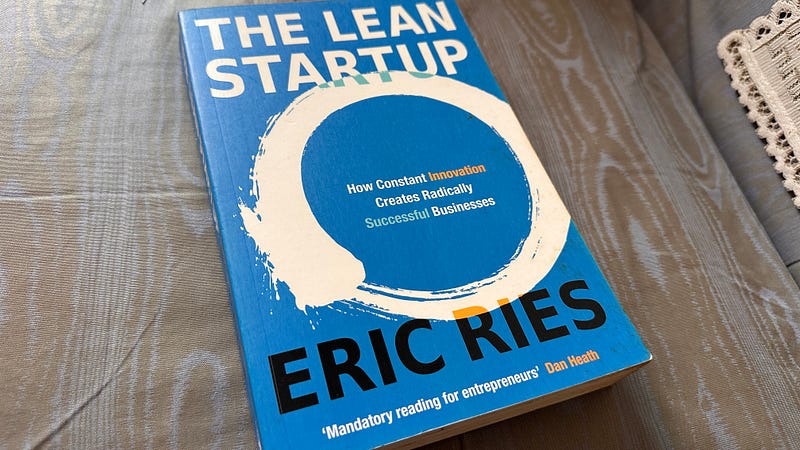
The Lean Startup by Eric Ries

Discovering “The Lean Startup” by Eric Ries was a revelation that arrived after I had already embarked on the challenging journey of founding a startup.

The insights it offered were akin to uncovering a guide after a solo navigation through the formidable entrepreneurial waters.

I implore those on the cusp of starting their own venture, or even considering it, to not repeat my oversight.

This book is more than a suggestion; it is an essential part of the entrepreneur’s toolkit.

Eric Ries goes beyond theoretical discourse, providing a pragmatic blueprint for operation.

His central premise?

Startups can heighten efficiency and speed up innovation by embracing a lean methodology, an approach informed by the principles of lean manufacturing.

This philosophy doesn’t equate to mere cost-cutting; it emphasizes maximizing learning and ensuring that each step is corroborated by tangible market feedback.

Prior to encountering “The Lean Startup,” I labored under the illusion that my initial product concept was a guaranteed success, only to confront the stark reality that it didn’t resonate with consumers.

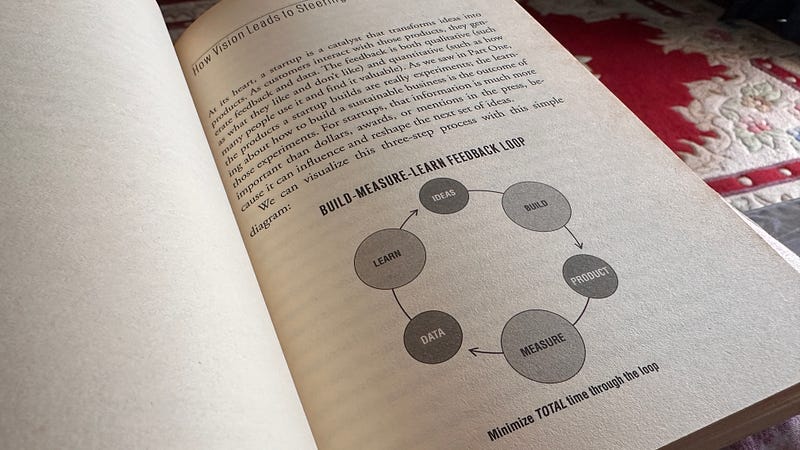
Ries promotes a concept that could have shielded me from such disillusionment: validated learning.

Rather than investing heavily in a finished product, he suggests starting with a minimum viable product (MVP) to quickly gauge customer desires.

This involves stepping out, engaging directly with users, and evolving the product based on their input.

Ries’s book offers a wealth of tactics to sidestep the allure of vanity metrics — those misleading figures that may look impressive on reports but fail to indicate your venture’s true vitality.

He instructs on concentrating on actionable metrics that accurately reflect progress and genuine customer value.

One of the most empowering elements of the Lean Startup approach is its stance on failure.

Within this framework, a failed experiment is not a defeat but a crucial learning opportunity, facilitating quick iterations, rapid knowledge acquisition, and the flexibility to pivot when it’s called for.

This alteration in perspective is invaluable.

What resonates most profoundly with me, though, is the realization that the Lean Startup methodology unravels the enigma of launching a business.

It’s less about possessing an infallible initial plan and more about the process of continual learning, adapting, and navigating through the inevitable uncertainty that shrouds new endeavors.

In retrospect, had I consulted “The Lean Startup” prior to releasing my first product, I could have avoided many pitfalls.

Yet, the beauty of Ries’s philosophy is its timeless applicability; it’s never too late to adopt this lean approach.

Whether one is just beginning or strategizing within the upper echelons of a well-established corporation, the principles of the Lean Startup can direct you toward the creation of something of genuine merit.

Thus, I extend this advice to all emerging entrepreneurs and established innovators: do not overlook “The Lean Startup.

It is not merely literature; it is a fundamental resource.

For someone like myself, it has become the compass I wish I had from the start.

Do not release your vision into the market without it.


You can buy “The Lean Startup” book from Amazon (Note: This is an affiliate link).

Try Audible Premium Plus and Get Up to Two Free Audiobooks