Overcoming the Challenges of Making IoT a Ubiquitous Service

You are likely benefitting from The Internet of Things (IoT) today, whether you’re familiar with the term. If your phone automatically connects to your home, or if you have a smartwatch counting your steps, congratulations! You have adopted one small piece of a very large IoT pie, even if you haven’t adopted the name yet.

Ubiquitous IoT

IoT may sound like a business buzzword, but it’s a real technological revolution that will impact everything we do. It’s the next Internet Tsunami of new possibility that is destined to change the face of technology, as we know it.

IoT represents a massive wave of technical innovation. Highly valuable companies will be built and new ecosystems will emerge from bridging the offline world with the online into one gigantic new sensor network. Our limited understanding of the possibilities hinders our ability to see future applications for any new technology. Mainstream adoption of desktop computers and the Internet didn’t take hold until they became affordable and usable. When that occurred, fantastic and creative innovation ensued. We are on the cusp of that tipping point with the Internet of Things.

IoT matters because it will create new industries, new companies, new jobs, and new economic growth. It will transform existing segments of our economy: retail, farming, industrial, logistics, cities, and the environment. It will turn your smartphone into the command center and gateway for both digital and physical objects in your life. You will live and work smarter, not harder — and what we are seeing now is only the tip of the iceberg.

A very important concept within IoT is the “last 100 meters connectivity” concept, which refers to the low-power wireless devices that operate in the short-range of 100 meters. These are the devices that represent the growth in IoT. In fact, 90% of the market share will be in the small things that are in the short range of 50 m to 100 m. The “last 100 meters connectivity” presents a huge potential since today most of these devices are not yet connected to the Internet.

To overcome these challenges, there are several key factors that must be embraced:

  1. New IoT networks such as NB-IoT, LoRa and SigFox are great choices to the current GSM, 3G or 4G network that can bring along the benefits of good coverage and support low-powered devices
  2. Lower price of deployment will encourage IoT adoption in many sectors.
  3. Urban areas will be the main focus areas of IoT implementation especially in the Smart Manufacturing and Logistics including tracking of goods.
  4. Bigger coverage of NB-IoT will be the turning point for demand in consumer IoT.

[Original article “Challenges of Making IoT a Ubiquitous Service” published in IOT World]

Discover How a“Waze”-Like Citizen Engagement Solution Solve Cities Issues

Waze is a GPS-based geographical navigation application for smartphones with GPS support. Waze Ltd. was founded in 2008 in Israel by Uri Levine, software engineer Ehud Shabtai, and Amir Shinar. In June 2013 Google bought Waze for $1.1 billion, adding a social data aspect to its mapping business. Since November 2012, in monetizing its app, Waze offers resellers and advertisers a web interface to advertise based on locations where a small icon will appear in a particular place for an interested Wazer to engage with the ads.

However, with all the data that has been collected by Waze, I think it’s such a waste that the developers are unable to utilize them fully. Waze collected the data directly from the Wazers who willingly share their data to the cloud and in return will get the latest update about the best traffic routes and its alternatives etc.

Waze has captured Terabytes or Petabytes of mapping and real-time data from many major cities around the world. Why can’t we use these data to help the city municipals plan and build better roads to prevent the horrendous traffic jams faced by the public every day? Here’s some of the data that Wazers have been willingly share:

  1. Traffic Jam level — moderate, heavy or standstill
  2. Police
  3. Accident — minor or major
  4. Hazard — on-road, shoulder or weather
  5. Camera — Speed, red light or fake
  6. Map issue
  7. Pave new roads (if there’s non on the map) — Waze will get the latest map when new roads are paved.
  8. Speed of vehicle
  9. Location of vehicle
  10. Photos of the destination

I believed the city/urban planners would love to have these data to help them accurately plan the city roads in the future. Public will have a better picture where to live and work. Housing estates will know how to price their property . Businesses will know where to strategically build their offices. In fact, there are many other benefits if we are able to use the Waze data. It’s such a waste if Google limit the Waze data for advertising only.

But there’s also an option. What if we can build a similar “Waze-like” application ourselves rather than depending on Google’s Waze? And later share these data to our developers?

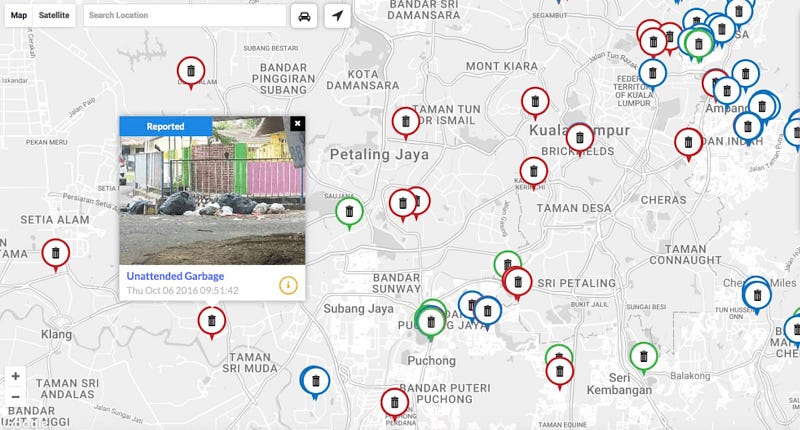
FAVORIOT developed FAVORSENSE, a crowdsourcing mobile app that collected information about city’s issues. These data are made available for free to download (iOS Version and Android Version).

[Original article “Building a “Waze”-Like Citizen Engagement Solution” published at IOT World]

The World is Facing Aging Population Issues. This Malaysian Startup Could Change All That

Waiting for his father’s in-law Doctor’s appointment for almost 6-hours, traveling twice a day to visit at the hospital and later calling home every day when he is back home.

Dr. Mazlan Abbas — CEO and Co-Founder of FAVORIOT

That’s how Dr. Mazlan Abbas, CEO, and co-founder of an IoT company FAVORIOT, describes his stressful and anxious moment whenever his in-laws are admitted to hospital or staying at home alone.

FAVORIOT specializes in Internet of Things (IoT) technology. Last year, FAVORIOT released the latest Smart Health solution for the Senior Citizen called RAQIB. Since then, FAVORIOT has extended RAQIB market into monitoring Hajj Pilgrims, Employee’s safety, Travellers and Outdoor Sports.

As the world is facing an aging population issue with health care costs are rising, the elderly will have no better choice but to age in place with no one to take care of them because their children are working or lived at different places.

Even though health services have become better with more people living longer, the senior people tend to have increased number of chronic diseases as they age. Now, it’s the turn for their children to monitor them and ensure that they are having a safe, secure and healthy life.

[Original article “The World is Facing Aging Population Issues. This Malaysian Startup Could Change All That” published in IOT World]

Learn How-To Develop a Smart Garbage Collection

This will be the start of a series of “Learn How-To” articles to develop IoT solutions. We will initiate the series with the problem of “Unattended Garbage” that posed a lot of complaints regarding the cleanliness and might cause the outbreak of diseases.

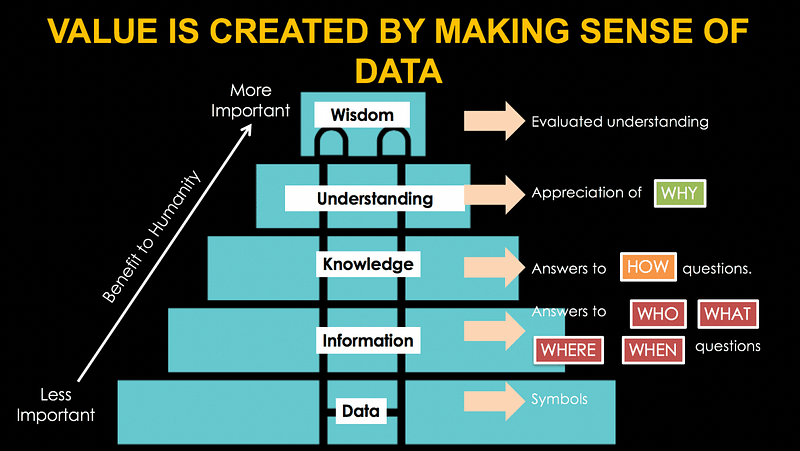
Value is created when you make sense of the right data. But before we start deploying sensors, we also need to define the business problems and the pain points from different stakeholders. Probably you need to gather a team from various stakeholders or maybe you can start defining yourself and later validated with stakeholders later.

Problem Statement

  1. Who is collecting the garbage?
  2. What is the status of garbage bin?
  3. When was the garbage collected?
  4. Where is the location of full bins?
  5. How to plan the route of the trucks?
  6. How many days till the next collection?
  7. How much garbage is produced in an area?
  8. Why is the garbage truck not picking up garbage?
  9. Why is a particular area producing more garbage?

How-To

  1. Garbage level sensors on garbage bins and garbage trucks
  2. GPS on garbage trucks
  3. Network infrastructure (Wifi, 3G)
  4. IOT Middleware (FAVORIOT) — SUBSCRIBE FREE PLAN Now!
  5. Visualization dashboard
  6. Analytics

This is by no means a comprehensive step-by-step solution but it will help you to start your exciting journey in developing your own IoT solution. Feel free to add your suggestions.

[Original article “ How-To Develop a Smart Garbage Collection” published in IOT World]

LearnHow-To Develop Smart River Monitoring

Let’s take a look at how we can solve the problem of river pollution and improve the quality of the river.

Example — River Pollution

Background & Impact of River Pollution

  • Malaysia has 120 rivers which are sources of water supply, and 43 were located in Selangor
  • Sungai Selangor provided water to 60 per cent of residents in the Klang Valley. Water treatment plant at Sungai Selangor cost about RM900 million
  • Nearly 40% of rivers in Selangor are known as dead rivers. Klang and Gombak rivers are among the most polluted water systems in Malaysia.
  • 64 cases of river contamination occurred in the past five years, with 15 in the last year alone
  • In Selangor alone, the amount of solid waste could rise to 6,000 tons by 2017. More than 19 percent of waste end up in the drains, which then causes flash floods and other health problems.
  • Consumers will face an increase in water tariffs if the current pollution of rivers in the city continues to worsen

Problem Statement

  1. What are the pollutants in the river?
  2. What is the pollution level?
  3. When is the highest pollution detected?
  4. Where is the location of contaminants?
  5. Who is contributing to the rise in pollution?
  6. How to control the pollution level?
  7. How much is the pollution level?
  8. Why is the pollution rising at a particular time?
  9. Why is the pollution rising at certain locations?

How-To

  1. IoT Middleware (FAVORIOT)
  2. Chemical sensors
  3. Water level sensors
  4. Network infrastructure (Wifi, 3G)
  5. Visualization Dashboard
  6. Analytics
  7. Crowd-sourced violation information (mobile device)
  8. GPS input
  9. Hydro morphology e.g. depth, width, flow
  10. Water temperature sensor
  11. In-situ (manual sampling)
  12. Weather sensors

Interesting Articles

This is by no means a comprehensive step-by-step solution but it will help you to start your exciting journey in developing your own IoT solution. Feel free to add your suggestions.

[Original article “How-To Develop Smart River Monitoring” published in IOT World]

Subscribe FREE PLAN IoT Platform from FAVORIOT

How-To Build Smart Cities Using Minimum Viable City (MVC) Approach

Think “Lean Methodology” — Build, Measure and Learn. I think that’s how we should build Smart Cities. We can no longer take the risks of building projects fast and become “white elephants” which Wikipedia defined as:

A white elephant is a possession which its owner cannot dispose of and whose cost, particularly that of maintenance, is out of proportion to its usefulness.

Most of the times, Smart Cities deployment failed even though we planned well but failed in execution. Failed in getting the citizens to use the facilities. Failed in maintaining and sustaining the business model.

The maturity of acceptance of city dwellers is also an essential element. I don’t think we can just replicate the success of one Smart City in one country to another country without proper understanding the priorities of the citizens due to the ethnicity and maturity of the city inhabitants.

No doubt, we need the masterplan for Smart Cities. A blueprint that lay the framework and the timeframe which is essential in measuring the success of any projects. But then, blueprints can be useless if there is no element of funding and the right business models in place. Most Smart Cities projects are delayed or canceled due to lack of financing from both parties (government and private entities).

To avoid such issues, let’s use the “lean methodology” in developing Smart Cities. The key element is the MVP (Minimum Viable Product), or in this case, we might call it “Minimum Viable City.” Here’re the steps:

  1. Develop a hypothesis by getting citizens inputs. Provide the citizen with tools that allow them to engage with the government or city authorities.
  2. Collect the data and analyze the citizen’s priorities
  3. Build the “Minimum Viable City” Smart Applications
  4. Measure the impact and usefulness.
  5. Learn from the citizens whether their pain points are adequately addressed. Iterate the process again.
  6. Scale up the deployment.

Think Big Start Small

Think Big Start Small” — that’s how we should build our Smart Cities without putting so many resources. But to implement this — we need funding from the Government. In Malaysia, I would suggest MOSTI, MCMC, MDEC, MIGHT or Cyberview allocate some funds to create many Proof-of-Concept (PoC) projects in various cities. That’s one of the ways to spur the local innovation within the country.

What’re your thoughts?

[Original article “How-To Build Smart Cities Using Minimum Viable City Approach” published in IOT World]

What Will You Discover in IOT & Smart Cities — “Gold Mines” or “Time Bombs”?

Sometimes we wondered why in some countries, Smart Cities initiatives are very successful but others failed — either it was not accepted or fully adopted by the people, or it’s stuck on the Blueprint shelves.

In any Smart Cities implementations, we can’t avoid Internet of Things (IOT) because it’s how we aggregate the data and derive meaningful insights about the cities. Cities that use data as their decision-making process are the ones that will propel forward and lead the rest. They will understand what the current issues are and how to improve the cities operations and reduce costs.

Benchmarking cities and creating city’s indicators are the first steps towards a continuous process of becoming an ROI-driven and green-driven cities. You can’t reach the state of vanity-driven cities without successfully implement the latter.

In fact, the IOT maturity model shows that you need to move from monitoring, controlling, optimizing and finally to autonomous. And we can see that many vanity-driven cities have already reached the stage whereby the city’s assets and infrastructure such as roads, bridges, buildings, parking, transportation, etc. have been partly or wholly monitored and controlled.

The only way that you can plan the way forward if you can also optimize the city’s resources — i.e. understanding where and how congested are the roads, utilization of parking bays, consumption of electricity, etc. It looks like a perfect plan, right? But then, why can’t we see the growth of smart cities around the world as fast as we would expect? What stops or delay them?

Other than the necessary funding, I believed mindset change is the biggest stumbling block. If coupled with certain personal agenda, most projects will fail and become white elephants. IOT devices embedded in strategic locations and assets will be able to uncover many things. The data derived from that single asset will tell you whether the investment that you have put in place being utilized or not. Whether the current way of doing things are cost-effective, or it is the source of leakages concerning money or time.

Be careful of what you will uncover from the data — it can be a gold mine which can reduce your operational costs and increase your productivity, or it can be time-bombs that are already waiting to explode.

People viewed Internet of Things(IOT) — either they save you or “kill” you. It’s like the saying — are you looking a “half-full glass or half-empty glass”.

[Original article “What Will You Discover in IOT & Smart Cities — “Gold Mines” or “Time Bombs”?” published in IOT World]

How-To Build Your Smart City in a Smarter Way

Teena Maddox wrote an interesting article “Smart Cities: The smart person’s guide” which was summarized beautifully:

  • What it is: A smart city uses IoT sensors and technology to connect components across a city to derive data and improve the lives of citizens and visitors.
  • What it does: Often, a mobile app is provided to give immediate access to data, communication channels and more, so that people can do everything from avoiding traffic jams, to finding a parking spot, reporting a pothole, or an overflowing dumpster.
  • Why it matters: The world is becoming more urbanized, and by 2050, more than 60% of the world’s population is expected to live in cities. Making these cities better places to live is essential to the quality of life by making them more sustainable and efficient with streamlined services.
  • Who it affects: It affects everyone on the planet.
  • When is this happening: This is going on now.
  • Where is this happening: Early adopters of smart city technology were European cities, but U.S. cities have quickly picked up steam and are incorporating technology into municipal infrastructure.
  • Who is making it happen: Public and private companies, as well as federal, state and city government, are getting involved in making it easier for municipalities to adopt new technology.
  • How to get it: Citizens can form a grassroots campaign to get support and ask government officials to incorporate more technology into their city.

What interests me most is the “How to get it” question and answer. Forming a grassroots campaign and asking the government actually seems to be easier said than done. The idea is not about complaining, but to inform the cities that both parties — citizens and municipal authorities can develop a better and smarter cities. Tools such as Favorsense is essential to turn the people into “IOT Sensors” because they can sense the invisible problems. Why can’t the cities utilize the people instead of investing sophisticated and expensive technology in the early stage of Smart City development?

If we want to build cities that are citizen-focused, provide them with the right tools. Successful cities are based on trust and two-way collaboration. Decisions are made based on the data that has been derived from the people.

What are your thoughts in this? Thanks for sharing!

[Similar article “Guide How-To Build Your Smart City” published in IOT World]

Telco Digital Services: How To Monetise the IoT Data

There are 4 main reasons why telcos are that NOT interested in IOT:

  1. The growth of M2M is not as fast as expected. The idea of connecting the machines are not new. Most operators have started offering vehicle tracking and remote meter reading more than ten years ago.
  2. The M2M ARPU (Average revenue per user) is low. Probably 4–10 times lower than the normal 3G/4G broadband ARPU.
  3. M2M devices (with Sim cards) are difficult to manage. And most of these devices are left unattended. Operational costs can be high.
  4. Undecided how and where the telco can add the value. Will it be end-to-end (which is not their core expertise) or only provide connectivity.

When I wrote that points, it was in early 2015. But maybe things have changed now.

Three reasons some telcos start to enter the IOT business.

  1. Price war — many telcos offered bundled packages and some with unlimited Data, SMS, and Calls
  2. IOT starts to grow and become more matured in certain market verticals — although the hype is still on-going, IOT starts to move from “Monitoring” to “Controlling” and “Optimisation” phases. In these phases, data analytics are key to trigger and make better decision making.
  3. The ecosystem is growing — many new players, startups are onboard. Bigger and incumbent players also seek the opportunity. Jump start their business by acquiring the smaller but innovative IOT companies.

But maybe the toughest part will be the business model. The question remained — should the telco provide an end-to-end solution or only part of them? Should they manage the customers or not?

Monetising the IOT Data

As we moved our sensor data to the IOT Cloud, we can manipulate the data for useful applications. In many countries, the government has already started their smart cities projects. However, solely dependent on the government alone can be slow and at times faced with many bureaucratic challenges Thus, the need for a third-party such as IOT service providers to take the lead. These are business entities who deploy and manage sensors by themselves by keeping ownership. They earn by publishing the sensors and sensor data they own through sensor publishers.

We will be able to use the term “Sensing-as-a-Service” meaning that they can provide a free or chargeable service to any person who wishes to view or manipulate the data. It’s also possible to combine different multiple sensor data sources and create many innovative applications such as mixing between parking sensor data and public transport data, between environmental data and flood detection data, between river quality data and fertility of soil data.

An IOT service provider can provide such services, and thus, it will help to open up many other opportunities to generate new ways of monitoring and managing our valuable assets. A new business model can be created by way of monetising the new cloud service called “Sensing-as-a-Service.”

But then, IOT is not all about making new revenue streams. It will start with simple cost reduction and increase productivity. When they have plug the so-called leakages in the processes and resources, only then telcos will be able to help companies to:

  1. Generate new revenue streams by developing new innovative products,
  2. Better customer experience by making the process more seamless and autonomous,
  3. Better retention by understanding the client’s behavior.

What we are seeing is only the tip of the iceberg. IOT offers a vast amount of opportunities that has not been discovered yet. Many companies are still struggling to find the best business model, how to monetize the data and convince the end-users.

Who will win the game? That’s a one billion dollar question and everyone’s guess at the moment.

[Similar article “Monetising Digital Services: Where’s the Profit?” published in IOT World]

Download FREE eGUIDE

Learn The Truth About IoT Adoption Challenges In Less Than 3 Minutes.

People often asked me why Malaysia is slow in adopting Internet of Things. After so much hype, we rarely hear any success stories. Despite that we have been actively talking for more than two years (but if you are talking about M2M, i.e., pre-IOT days, this topic has been discussed for more than a decade). Also, we have been listening to many of IOT seminars regarding the promises of IOT to connect Billions of devices with Trillions of dollars of revenue, we still can’t see much of its implementation here in Malaysia. Why is that so? Why in other countries around the world, the take-up is far better than here?

In fact, I have always stressed the importance of collecting the data because what’s the use of talking about Big Data Analytics and IOT when there are not enough data in analyzing (sigh)? Where are the sensor data? Where is the IOT business?

There is one particular post at one of the IOT Group in LinkedIn that interests me. It’s about IOT frustration survey and the top 5 results are:

1. Hype and Confusion — 40% — the top answer by a wide margin, companies are confused by the bombardment of IoT messages, articles and ads. They are not sure what is true and how to proceed.

2. Implementation Difficulties and Ease of Use Issues — 23% — companies are frustrated by the process of finding the correct IoT hardware and software components for their situation. Where do they find easy ways to design, deploy, administer, and maintain their IoT network?

3. Security of data and transactions — 16% — security is the key frustration for companies that have started on an IoT Strategy Plan (they are past the hype and initial implementation questions) and are facing concerns over data privacy, anti-hacking protection methods and regulations.

4. Lack of IoT Standards — 14% — companies listed frustrations with the many wireless protocols, device clouds, data representation formats, and data analysis tools.

5. High Cost of IoT Deployments — 7% — companies are frustrated with the high cost of purchasing IoT components, software development, and system integration compared to the financial return. Given IoT is in such an early stage, it’s not surprising that Cost is currently lower on the frustration list. But Cost will go to the top of this list over time as IoT components become interoperable and commoditised.

I think Malaysia also faces similar frustrations although not in a particular order. However, I would add the sixth frustration i.e. IOT awareness. People might have heard about IOT but mainly in the consumer space — wearables and smart homes applications. But since the cost is still expensive, not many are willing to use them except for the few — i.e. the early adopters. Wearables and Smart home appliances are very fashionable and trendy. It will quickly become obsolete or less trendy when new and better gadgets are introduced. Personally, I have invested in many such devices just for the sake of becoming one the early adopters even though I know that after a year, it will be an “old” gadget. But then again, there are not many people like me.

Enterprise IOT applications are still lacking. These devices are not as trendy and fashionable like their consumer’s counterparts. Sensors that are being used in enterprises will last longer — maybe 3–5 years or even more. They are more robust and sometimes well-hidden somewhere. Thus, there is no need for some fancy design to house the sensors. However, these sensors can be more expensive, and when we talk about hundreds or thousands of sensors, the cost of deployment can become very prohibitive. To solve this, we need to have a win-win business model for both the IOT vendor and user.

Another “unspoken challenge” is the “resistance from within the company” itself. I have already described this in my previous post. Check — “Don’t let this ONE reason STOP you from implementing IOT”.

What other challenges or frustrations of IOT companies in doing business in Malaysia? Or are we facing similar problems elsewhere too? Why are we hearing a lot more success stories in developed countries such as Japan, Korea, USA, Spain, UK etc? Why not in our home country?

Or simply, most people JUST DON’T KNOW where to start their IOT journey?

[Similar article “IOT Adoption Challenges in Malaysia” published in IOT World]

Download FREE eGUIDE