How We Developed Our First IoT Product

Learn about our journey of creating our first IoT product and discover crucial tips to remember during IoT development.

Favoriot’s First IoT Product After returning from Silicon Valley, we set out to address the issue of senior citizens’ safety using IoT technology. Our solution eventually became our first commercial IoT product, which took almost two years to develop from scratch, starting in April 2017.

Here are some of the key lessons we learned during the creation of our first IoT product. Look at these essential tips to consider when developing your own IoT technology.

Identifying the Problem

We are witnessing an “Aging in place” trend where elderly people stay at home alone or with their spouses or children. While they may live longer due to advancements in healthcare, they may suffer from various health problems such as heart disease, diabetes, or dementia.

Their adult children may be too busy with their jobs and families to keep a constant watch on their elderly parents. In emergencies, such as illness or falls, the elderly may have difficulty calling for help. And due to dementia, they may forget how to return home.

What if we could use technology to continuously monitor their health and safety and provide a simple way to call for help when needed?

Market Potential

The world’s population is aging, and by 2050, it’s estimated that 2 billion people will be over 60, accounting for 20% of the global population. In Malaysia, 3.5 million people, or 7% of the population, are above 65 years old. In countries like Japan, France, Italy, and Germany, over 20% of the population is over 65.

This presents a massive potential market for senior citizen healthcare.

IoT Solution

Our IoT solution aims to monitor the health and safety of senior citizens by using sensors to track their health condition and location to ensure their safety if they get lost or fall.

We opted for a single-device solution for the following reasons:

  • Easy to carry and manage
  • It can be monitored everywhere and supports mobility
  • Contact with the person’s body to monitor health vitals
  • Easy to trigger an alarm and show the location
  • Option to make or receive a call
  • Caretakers or family members can monitor from remote locations

With these requirements, we selected a wearable device with health sensors and GPS.

IoT Solution for Monitoring Elderly

The device can be a smartwatch with built-in sensors to monitor health indicators like steps, heart rate, blood pressure, ECG, and fall detection. GPS is the ideal solution to track location inside or outside the building. The device also has data connectivity to send information to the cloud or caretaker and can feature two-way communication.

The RAQIB device offers peace of mind to families by continuously tracking their elderly parent’s health and location.

Go-to-Market Strategy

Marketing a healthcare solution can be challenging for startups. We initially approached senior citizen care centers, anticipating a B2B market. However, we soon realized that these centers already provide round-the-clock care to their residents, making it an unsuitable demand for our product.

We then pivoted to B2C marketing through social media channels, exhibitions, and conferences. This approach generated some interest and led to inquiries and purchases.

Raqib for Hajj

However, the market was still small, so we pivoted again to a different market segment: Hajj Pilgrims. We approached Hajj and Umrah travel agents to package our product as a value-added service to monitor pilgrims’ health and safety while performing their rituals. But even this B2B model was not attractive enough, so we reverted to B2C, targeting individual Hajj or Umrah pilgrims.

Raqib at Mecca

Remember to Subscribe to receive email updates on every post I publish.

You can also follow my Medium Publications Aspiring Writer’s Journey, Influencer’s Journey, Startup Survival Journey, and IoT World.

How Silicon Valley Showed Me That Anything Is Achievable

Computer History Museum

In 2016, I had the opportunity to visit Silicon Valley as part of the MDEC delegation’s Silicon Valley Immersion Program.

Little did I know that this trip would change my life forever.

I had always envisioned becoming a CTO in a big corporation and had never considered entrepreneurship.

However, my visit to Silicon Valley transformed my perspective, and I realized that anything is possible with a grand vision and a can-do attitude.

One of the things that excited me the most was seeing the logos of famous companies like Hewlett-Packard, GE, Cisco, Apple, Google, and Facebook. Visiting the birthplace of the technology and products I used daily filled me with awe and inspiration.

The Computer History Museum in Mountain View was another excellent place to visit. Seeing how computer history began with the vacuum valve and progressed to integrated circuits and the first PC and Apple computer was incredible.

The power of our computers and smartphones can be traced back to the brilliant minds of the inventors and innovators of Silicon Valley.

Facebook Campus

Many unicorns, such as Dropbox, PayPal, LendingClub, Guardant, and Hippo, began with humble beginnings, some at Plug and Play Tech Center. The fact that these companies started from small cubicles and have now achieved enormous success inspired me to believe that if they could do it, so could we.

We had the opportunity to pitch to investors at Hero City, Draper University. It was nerve-wracking, but the constructive feedback we received was invaluable. Everyone we talked to was amicable and keen to listen to our ideas.

The startup ecosystem in Silicon Valley is like no other.

The sharing culture, bursting with new ideas, made me realize that anything is possible. Age doesn’t matter; anyone can start their entrepreneurship journey with a small cubicle or co-working space.

The energy, enthusiasm, and excitement were contagious, and the supportive startup ecosystem made me believe that we were not alone in this world.

The trip’s highlight was the walk-around on Google and Facebook campuses, which felt like small cities. The atmosphere was conducive to sparking new ideas and fusing them with others to improve them.

In conclusion, my visit to Silicon Valley changed my perspective and inspired me to become an entrepreneur and build a Startup called FAVORIOT.

In another article, I will share the rest of my entrepreneurship journey, discussing why I chose the Internet of Things (IoT) as our business focus and how we built the first IoT solution that we believe can conquer the world.

Google Campus

https://mazlanabbas.gumroad.com/l/startupsurvival?layout=profile

Download the sample:

https://mazlanabbas.gumroad.com/l/startupsurvival?layout=profile


Remember to Subscribe to receive email updates on every post I publish.

You can also follow my Medium Publications Aspiring Writer’s Journey, Influencer’s Journey, Startup Survival Journey, and IoT World.

Implementing IoT PaaS for a Successful Business Operation

IoT PaaS

Are you looking to enhance your business operations and take advantage of the benefits of IoT? One solution that can help is IoT Platform as a Service (PaaS).

It is a cloud-based platform that enables businesses to develop, deploy, and manage IoT applications without needing infrastructure management. Using IoT PaaS, companies can reduce costs, increase scalability, improve analytics, and speed up time-to-market.

Cost Savings and Scalability: Two Primary Benefits of IoT PaaS

One of the primary benefits of IoT PaaS is cost savings. By avoiding expensive infrastructure investments, companies can develop and deploy IoT applications cost-effectively.

Additionally, IoT PaaS offers scalability, enabling businesses to handle an increased workload as the number of IoT devices grows. This ensures that companies can maintain their performance without disruption.

Improved Analytics and Security Features of IoT PaaS

Another benefit of IoT PaaS is that it helps businesses to improve their analytics. With advanced analytics tools, companies can analyze the data generated by IoT devices, derive insights, and optimize their operations.

Additionally, IoT PaaS offers robust security features to protect businesses from cyber threats. The platform can encrypt data, monitor network traffic, and detect and prevent unauthorized access.

Critical Features and Tools of IoT PaaS

IoT PaaS offers various features and tools that help businesses manage their IoT operations effectively. For instance, device management tools enable companies to monitor and manage their IoT devices, while data analytics tools allow them to analyze the data generated by these devices.

Security features protect sensitive data, and integration tools enable businesses to integrate their IoT applications with other enterprise applications.

Best Practices for Implementing IoT PaaS

To successfully implement IoT PaaS, businesses must follow some best practices.

First, define your goals and requirements to select the right platform that aligns with your business objectives.

Second, choose an IoT PaaS platform that meets your specific requirements, such as scalability, security, data analytics, and integration capabilities.

Third, ensure data privacy by implementing encryption, access controls, and other security measures.

Fourth, train your employees to use the IoT PaaS platform effectively.

Finally, test and validate your IoT applications to identify and fix issues and ensure they meet your performance and quality standards.

Challenges of Implementing IoT PaaS

Despite its benefits, implementing IoT PaaS comes with some challenges. Businesses may need to hire additional staff or partner with a third-party provider to manage the platform effectively.

Integrating IoT applications with other enterprise applications can also be challenging, and security concerns can arise as IoT devices generate massive amounts of data.

Conclusion: Choosing FAVORIOT for IoT PaaS Implementation

In conclusion, implementing IoT PaaS can help businesses streamline their IoT operations and take advantage of the benefits of IoT. By reducing costs, increasing scalability, improving analytics, and speeding up time-to-market, IoT PaaS can help businesses achieve their goals and stay competitive.

However, implementing IoT PaaS can be complex, and businesses must follow best practices to ensure success. If you’re interested in implementing IoT PaaS, consider working with a trusted provider like FAVORIOT, which offers IoT PaaS to the developer community and companies.

With FAVORIOT, businesses can successfully implement IoT PaaS and take advantage of the benefits of IoT to achieve their business objectives.


Remember to Subscribe to receive email updates on every post I publish.

You can also follow my Medium Publications Aspiring Writer’s Journey, Influencer’s Journey, Startup Survival Journey, and IoT World.

Creating a Brighter Future for All: How a CoE for IoT Can Help Develop the Next Generation of IoT…

IoT CoE — Creating IoT Heroes

A young engineer named Jack was passionate about the Internet of Things (IoT). He loved connecting everyday devices to make life easier and more efficient. However, as he started working in the field, he realized a significant need for more talent in developing IoT products and solutions.

Jack wondered why this was happening. After researching, he discovered that many higher education institutions needed to update their syllabi and courses faster to keep up with the ever-evolving field of IoT. This meant that graduates needed to gain the latest technical skills and understanding of business acumen and industry needs.

Jack was determined to change and started a Centre of Excellence (CoE) for IoT. He wanted to provide hands-on, certified IoT courses closer to the industry’s demands. With the CoE, he hoped to produce graduates better equipped to tackle real-world IoT problems.

The road to setting up the CoE was a challenging one. Jack faced many challenges, including the slow approval process, upskilling or reskilling of instructors, and the need to fully equip an IoT lab with the latest devices and tools. However, he persevered, and with the help of his colleagues and partners like FAVORIOT, the CoE for IoT finally came to fruition.

The CoE proved to be a game-changer for the industry. Graduates from the CoE were equipped with technical skills and a better understanding of business acumen and industry needs. They could work on projects that solved industry problems, and the R&D output was transferred to local companies for commercialization.

With the continuous IoT talent pool from the CoE, many companies were able to survive in the current IR 4.0 era. They were able to embrace new technologies to increase productivity and save costs, which was crucial for their survival.

Jack was thrilled to see the CoE’s impact on the industry. He was proud to have made a difference in the world of IoT and was happy to see graduates from the CoE succeeding in their careers.

In conclusion, setting up a CoE for IoT may be challenging, but it is worth the effort. It can help develop technical skills, better understand business acumen and industry needs, and offer a continuous IoT talent pool for the industry. With partners like FAVORIOT, anything is possible, and the future of technology looks brighter than ever.

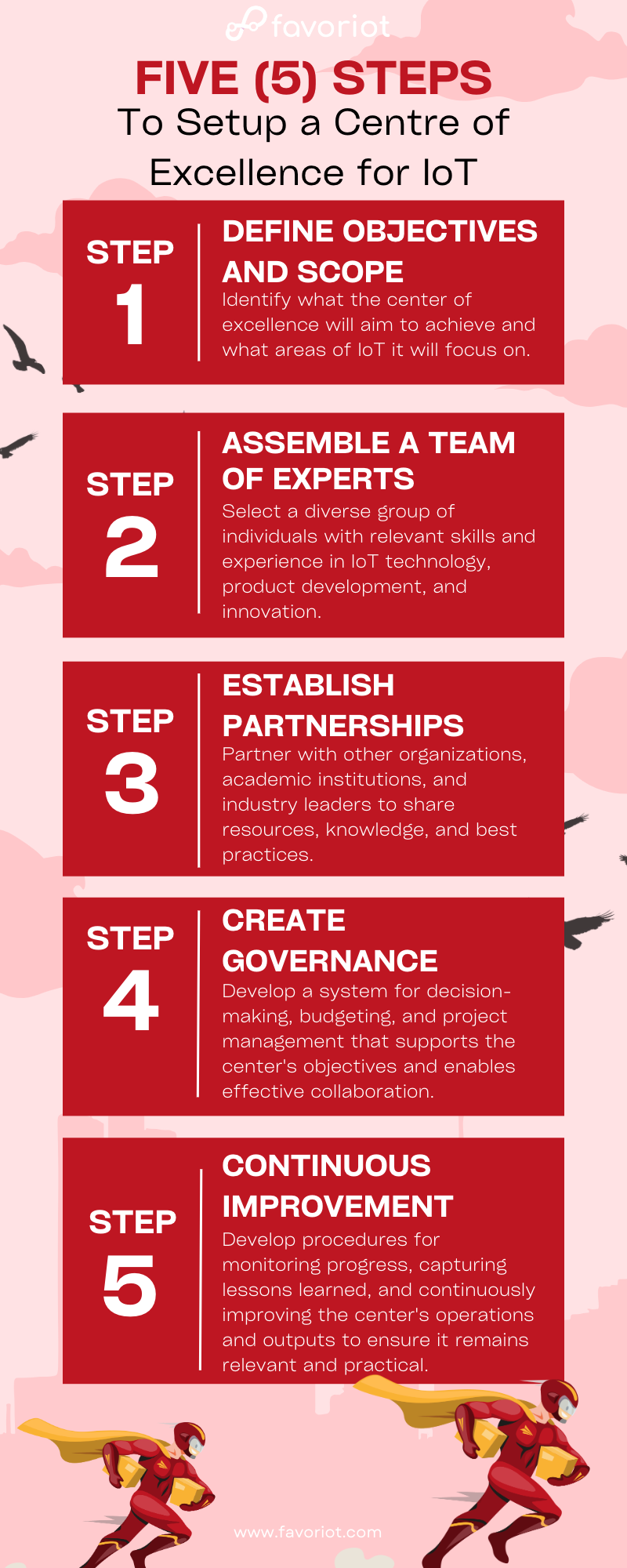
5 steps to build IoT CoE
FAVORIOT

Remember to Subscribe to receive email updates on every post I publish.

You can also follow my Medium Publications Aspiring Writer’s Journey, Influencer’s Journey, Startup Survival Journey, and IoT World.

Be the IoT Hero in 2024

Three Simple Tips to Transform Your Business

Be the IoT Hero in 2024 — Image created using Canva by Author

As we enter 2024, terms like IoT, IR 4.0, and digital transformation are on everyone’s lips. Nearly every individual and organization seemed to be searching for ways to elevate themselves to a more advanced and innovative level of doing business or work.

Amid all this change, it became clear that the individual was the critical success factor for this transformation. This means that you, too, can become the hero of change that will take your company to the next level in 2024.

With this in mind, embracing these innovations to improve our lives is time. It’s time to make the most of the technology that’s available to us today. We need to find ways to integrate this technology with our business models and use it. If we wait until others have embraced the technology, we’ll miss all the opportunities it presents.

You can become a hero on this transformation journey regardless of your occupation or role.

As an educator, you can use your knowledge to educate and build new and priceless IoT skills for your students.

As an IoT product manager or developer, you can create innovative products that bring new revenue streams to your business.

As an IoT system integrator, you can build, customize, and deliver IoT applications for your clients.

As an IT staff that manages the IoT system in your organization, you need to show that you can easily manage and monitor all the assets effectively and productively.

And as an end-user, you want to use new technology or “tools” to ease, simplify, and enhance operations.

The above examples show how you can become the hero in the IoT transformation of your business and organization.

So, how can you become an IoT hero? Here are three simple tips to follow:

  1. Learn both the theoretical and practical aspects of building an IoT project. It’s essential to understand the relationship between the four components of IoT — sensors, connectivity, platform, and applications or analytics. This knowledge will allow you to talk confidently, teach, or build IoT products and solutions.
  2. Think big, but start small. Identify a significant problem that can have a big impact with a small budget to give your bosses confidence that it works. It can be a solo project with proper buy-ins from various stakeholders. The idea is to reduce the complexity of integration until everyone agrees to proceed to the next step.
  3. Integrate and scale. Identify an open platform that can easily connect IoT devices from third-party vendors and is friendly enough to manage them and create IoT dashboards. Integrate the IoT product you developed earlier with the company’s backend or legacy system for easy workflow. After this stage of completion, you can now scale up with more sensors and later use machine learning to get better data insights.

We need more IoT heroes to transform the nation.

To become a high-income nation, we need more champions and heroes ready and willing to create new and innovative products that cater to the market’s needs.

As we move into this new era of IR 4.0, we will create new high-value jobs.

Companies will be more competitive in offering their products and solutions.

Customers will be more open to embracing new technologies when you can proudly show the impact and outcome of your IoT solutions.

So, are you ready to become an IoT hero in 2024?

Let’s embark on this journey together and transform our organizations with the power of IoT.


Mastering IoT with Favoriot (Download for FREE)

https://mazlanabbas.gumroad.com/l/masteringiot?layout=profile


Remember to Subscribe to receive email updates on every post I publish.

You can also follow my Medium Publications Aspiring Writer’s Journey, Influencer’s Journey, Startup Survival Journey, and IoT World.

Social Media Strategy for Favoriot IoT Platform

Discover the powerful Social Media Strategy for Favoriot IoT Platform designed to boost engagement and sales. Our comprehensive approach focuses on audience segmentation, tailored content, optimization, and customer support, ensuring consistent, authentic experiences that adapt to the ever-changing social media landscape.

Objective: To improve social media engagement and increase sales for the Favoriot IoT platform.

I. Audience Research and Segmentation

  1. Identify the target audience: IoT developers, tech companies, enthusiasts, and businesses looking for IoT solutions.
  2. Create audience personas: Understand each segment’s needs, preferences, and pain points.
  3. Choose the most suitable social media platforms: LinkedIn, Twitter, Facebook, and Instagram.

II. Content Creation and Distribution

  1. Develop a content calendar: Plan and schedule a mix of content types, including blog posts, infographics, videos, webinars, and case studies.
  2. Share customer success stories: Show the real-life impact of the Favoriot IoT platform through testimonials and case studies.
  3. Create engaging and educational content: Address pain points, provide solutions, and share industry insights.
  4. Use visual content: Images, infographics, and videos to grab attention and make content more shareable.
  5. Leverage industry influencers: Collaborate with IoT influencers to widen reach and credibility.
  6. Participate in industry events and webinars: Share insights, join discussions, and showcase the Favoriot IoT platform.

III. Social Media Optimization

  1. Optimize profile and content: Use relevant keywords, hashtags, and branding elements.
  2. Schedule posts at optimal times: Post when the target audience is most active.
  3. Use platform-specific content: Tailor content to suit the format and audience of each platform.

IV. Social Media Engagement and Customer Support

  1. Respond to comments and messages: Engage with the audience, answer questions, and address concerns.
  2. Monitor brand mentions: Track and participate in conversations about the Favoriot IoT platform.
  3. Encourage user-generated content: Run contests and encourage users to share their experiences with the platform.
  4. Provide support through social media: Offer assistance and direct users to appropriate channels for further help.

V. Performance Measurement and Analysis

  1. Set KPIs: Key Performance Indicators such as engagement, reach, conversions, and sales.
  2. Track performance: Use social media analytics tools to monitor progress.
  3. Adjust strategy: Regularly review and refine the strategy based on performance data.

VI. Promotions and Advertising

  1. Run targeted ads: Use social media advertising to reach a larger audience and drive traffic to the website.
  2. Offer exclusive promotions: Use social media to share limited-time offers and discounts to create a sense of urgency.
  3. Collaborate with partners: Cross-promote with industry partners to increase brand exposure.

By following this comprehensive social media strategy, the Favoriot IoT platform can expect improved social media engagement and increased sales. Remember to be consistent, authentic, and adaptive to the ever-changing social media landscape.

From Introvert to Confident Speaker: Tips for Navigating Public Speaking

You might recognize me as a simple person from my appearances on radio or TV, but I want to confess something to you. It was a very “scary” experience for me.

Of all the public speaking or media interviews, media interviews are the most nerve-wracking for me until today. I wasn’t an extrovert to begin with. Those who knew me when I was younger might have recognized me as an introverted person who was not good at socializing.

Maybe my experience as a lecturer gave me confidence to stand in front of a crowd and give a lecture. But being in a panel session still made me nervous because of the spontaneous questions that had to be answered together with the expert panel.

My first experience on TV was very disappointing for me because I panicked in front of the camera, and all the ideas in my head vanished.

Thankfully, the best way to overcome this fear and nervousness is to face it continuously until it disappears or reduces.

“Do What Scares You Until It Doesn’t.”

Here are some tips:

  1. Come early.
  2. Socialize with the audience, DJ, or moderator.
  3. Understand the topic in depth.
  4. Use notes if there are difficult facts to remember.
  5. Always talk with friends about the same topic (face-to-face, not online).
  6. Get used to Mindmap when preparing presentations. When giving an answer, imagine that Mindmap. Without a Mindmap, our answer may be disorganized.

In conclusion, being nervous during media interviews or public speaking is a common feeling, and it’s okay to feel that way. However, with practice and determination, we can overcome these fears and become more confident in our abilities.

By following the tips provided, such as coming early, socializing with others, and understanding the topic in depth, we can make sure that we are well-prepared and ready to face any challenge that comes our way. So, don’t let your fears hold you back. Instead, face them head-on and become the best version of yourself!

What about you?

FAVORIOT 6th Anniversary – The Journey Continues!

Over the past six years, the team at FAVORIOT has persevered through many challenges to build a successful IoT startup. From zero revenue and a high operational cost to struggling to find customers in the early days, they have faced many obstacles on their journey. Despite this, they have learned valuable lessons and emerged stronger for it.

The journey of building a startup is like running a marathon with a distant and challenging destination, filled with hills and mountains. The question of whether FAVORIOT will continue operating for the next year is a common one that constantly lingers in the mind of the founder. The outside world often portrays startup success stories, from humble beginnings to IPOs in just a few years. However, the reality is that many startups fail, and their stories often go unheard.

FAVORIOT was established on February 20, 2017, but only began operating on April 1, 2017, with a few employees. Many of the original employees have since left and been replaced by new ones. The team has faced many challenges, such as developing the “Raqib” IoT product for monitoring the elderly and pilgrims, with no revenue for the first year of operation. Additionally, the biggest challenge came when the Malaysian Hajj was postponed for two years due to COVID-19, rendering the product unusable after a significant investment was made in its development.

In the early days, despite many inquiries from individuals wanting to learn about IoT or collaborate, no one was interested in purchasing or even requesting a quotation. This was frustrating for the founder, who felt that people were only there to “pick their brains.” Additionally, the team initially refused to provide IoT training, assuming that people could learn independently. They realized their mistake after a few years and began offering commercial IoT courses in late 2021.

Despite these challenges, FAVORIOT has grown from 20 users to 7200 users in 121 countries. The company’s branding has also improved, and its name is now one of the top results when searched on Google.

FAVORIOT has overcome the “Valley of Death,” which is like a black hole that tries to pull startups back in, without any traction or customers. The company’s previous attempts at pitching to investors or entering accelerators were repeatedly rejected. However, they feel that it’s time to reopen the doors and seek new partners and venture capital funding to expand the business.

As FAVORIOT celebrates its 6th anniversary, the team is grateful for the hard work and perseverance of its employees, the early customers who put their trust in the company, and the friends who provided constant support and encouragement. Here’s to many more years of success for FAVORIOT.

IoT Infographics (Your IoT Journey Guide) – New eBook Release!

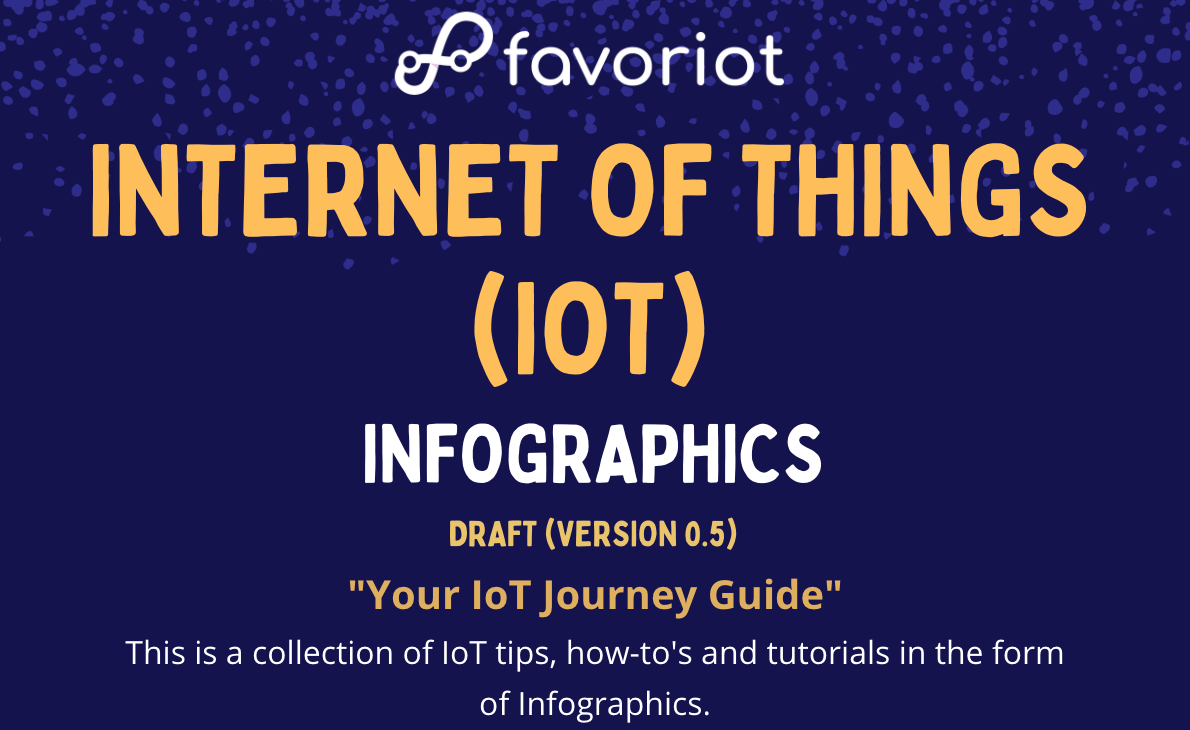
Today, I launched a new eBook in the form of Infographics entitled “Internet of Things (IoT) – Your IoT Journey Guide” and you can download it HERE (FREE)

IoT Infographics

You can also download other IoT eBooks as shown below:

Download all the 3 eBooks HERE

Related Book Review

The “Infographic Guide for Entrepreneurs” by Carissa Lytle and Jara Kern provides an easy-to-understand visual reference for starting and running a successful independent business. This graphic guide covers various topics, including leveraging skills for earning money, applying for business loans, tracking earnings and expenses, and more. With its clear and accessible infographics, readers can learn how to work for themselves, sell their skills without selling out, and stay afloat during dry spells. Overall, this guide is a valuable resource for anyone looking to start or grow their own business, earning a 4.6 out of 5 stars rating from 155 readers.

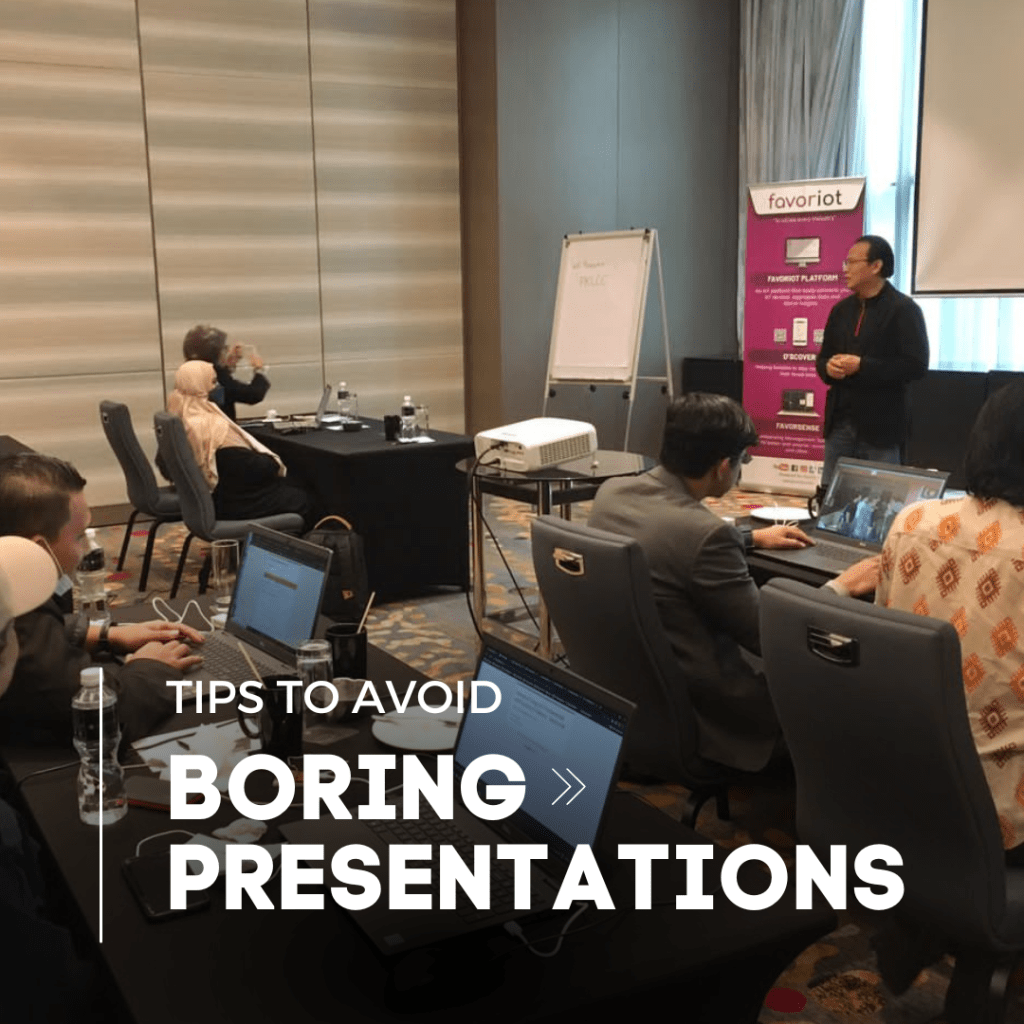
8 Tips to Avoid Making Boring Presentations

8 Tips to Avoid Making a Boring Presentation

1. Start with a strong opening: Begin your presentation with something attention-grabbing, such as a thought-provoking question or an interesting statistic. This will immediately capture your audience’s attention and set the tone for the rest of the presentation.

2. Use visual aids: Visual aids such as images, charts, and videos can help to make your presentation more engaging and easier to understand. Use them to supplement your points, not just fill the slides.

3. Use humor: Humor can be a great way to lighten the mood and keep your audience engaged. Just make sure that the humor is appropriate and relevant to your presentation.

4. Be interactive: Encourage your audience to participate in the presentation by asking questions, conducting polls, or inviting them to share their own experiences.

5. Tell stories: People love stories. They are a great way to make a point, illustrate an idea or create an emotional connection with the audience.

6. Use different media: Mix things up using various media types in your presentation, such as video, audio, images, and text.

7. Keep it simple: Avoid using jargon or technical terms that your audience may not understand. Keep your language simple and easy to understand.

8. Keep your slides clean and simple: Avoid cluttering your slides with too much text or images. Use clear and straightforward layouts and keep the text to a minimum.

9. Use the power of storytelling: Tell a relevant story to your topic. It will keep your audience captivated and help you to make your point.

10. Practice, practice, practice: Rehearse your presentation several times and practice delivering it in front of a live audience if possible. This will help you to become more comfortable with the material and to identify and address any areas that may be weak.