Leveraging Favoriot for Learning, Teaching, Building, and Deploying IoT

When it comes to learning, teaching, and developing Internet of Things (IoT) applications, Favoriot emerges as an exceptional platform. Combining advanced technology with ease of use, Favoriot stands as an invaluable resource for students, educators, developers, and business professionals alike. In this article, we will explore how Favoriot is revolutionizing the field of IoT by facilitating learning, teaching, building, and deployment of IoT applications.

Learning with Favoriot

Favoriot offers a user-friendly interface and extensive resources, making it an excellent tool for those keen to learn about IoT. The platform features a variety of tools that allow users to gain hands-on experience with IoT devices, data management, and real-time data analytics. In addition, Favoriot’s rich documentation and active online community provide learners with invaluable support, tutorials, and use-cases.

By working with Favoriot, learners can understand the mechanisms of data collection, transfer, and analysis in IoT, which are fundamental concepts in this domain. The platform also familiarizes learners with cloud computing, another cornerstone of IoT, through its cloud-based services.

Teaching with Favoriot

Educators can leverage Favoriot’s capabilities to teach IoT concepts effectively. The platform can be used to create real-world simulations, enabling students to see theoretical concepts in action. This practical approach enhances understanding and reinforces learning. Additionally, Favoriot’s multi-tenant capabilities allow educators to manage and monitor each student’s progress effectively, further enhancing the teaching process.

By integrating Favoriot into the curriculum, educators can help students understand how IoT can drive digital transformation across various sectors, from healthcare and agriculture to transportation and manufacturing.

Building with Favoriot

For developers, Favoriot provides a comprehensive suite of tools for building IoT applications. It allows for seamless integration of various IoT devices, offering a wide range of protocols like MQTT, CoAP, and HTTP. The platform also provides data storage and visualization tools, making it easy for developers to manipulate and present IoT data effectively.

Developers can use Favoriot’s API to develop custom applications or leverage pre-built modules to speed up the development process. With the capability to support millions of devices, Favoriot offers scalability, making it suitable for building both small and large-scale IoT applications.

Deploying with Favoriot

When it comes to deployment, Favoriot’s cloud-based platform ensures a streamlined process. The platform’s flexibility allows IoT solutions to be readily deployed across various sectors, irrespective of their scale or complexity. Additionally, Favoriot provides robust security features, ensuring data privacy and protection — critical factors in IoT deployment.

Moreover, Favoriot’s real-time monitoring and alerting features facilitate efficient management of deployed IoT applications. By identifying and alerting on any anomalies, these features enable quick troubleshooting, ensuring smooth operation of IoT applications post-deployment.

Conclusion

In a rapidly digitalizing world, the importance of understanding, developing, and deploying IoT cannot be overstated. Favoriot, with its robust, user-friendly, and versatile platform, is paving the way for learners, educators, developers, and professionals to tap into the vast potential of IoT. By facilitating learning, teaching, building, and deploying IoT applications, Favoriot is not only driving technological advancement but also fueling the digital transformation of the future.

Originally published at https://iotworld.co on July 15, 2023.

Powering IoT Success: Five Key Traits Behind ThingsBoard’s Rise

ThingsBoard, an open-source Internet of Things (IoT) platform, has emerged as a significant player in the rapidly evolving IoT landscape. Here are the five key traits that have played pivotal roles in ThingsBoard’s success:

ThingsBoard’s open-source nature is at the core of its appeal. This allows developers and businesses to access the platform’s source code, offering them the flexibility to customize it according to their specific requirements. Moreover, it fosters a sense of community where developers can contribute to the platform’s evolution, leading to constant improvement and innovation.

One of ThingsBoard’s major strengths is its high scalability and performance. The platform is built to handle millions of devices, making it an excellent choice for businesses dealing with large-scale IoT projects. This ability to scale efficiently and maintain high performance under heavy loads has made ThingsBoard a reliable choice in the IoT platform market.

ThingsBoard’s support for multiple IoT protocols, including MQTT, CoAP, and HTTP, is a significant advantage. This flexibility allows the platform to cater to a wide range of IoT applications and devices, making it a versatile solution in the diverse IoT landscape.

ThingsBoard provides powerful data visualization and analytics capabilities. Users can create dynamic dashboards to track real-time data, conduct complex analytics, and generate actionable insights. This capability to turn raw data into meaningful information is a standout feature that drives ThingsBoard’s success.

ThingsBoard’s comprehensive device and asset management capabilities offer users complete control over their IoT devices. The platform supports device provisioning, remote device control, and the ability to define relationships between devices and assets. These features simplify the management of complex IoT ecosystems, further enhancing ThingsBoard’s appeal.

In conclusion, ThingsBoard’s success can be attributed to its open-source nature, scalability, multi-protocol support, robust data visualization and analytics capabilities, and comprehensive device and asset management. These traits have positioned ThingsBoard as a powerful tool in the IoT platform space. As the IoT continues to grow and transform various industries, ThingsBoard’s commitment to innovation and meeting user needs is likely to solidify its place in the market.


Originally published at https://iotworld.co on July 14, 2023.

Creating a New Era of Living: How IoT and AI are Shaping the Housing Industry

For many of us, our homes are a personal haven, a secure fortress that provides comfort and safety. But what if our homes could be more? What if they could learn our habits, anticipate our needs, and enhance our comfort? Enter the Internet of Things (IoT) and Artificial Intelligence (AI), two technological wonders set to revolutionize the housing development industry.

Harnessing IoT and AI in Housing Development

IoT and AI technologies are transforming our homes into smart spaces, with devices and systems interconnected to provide a seamless and intuitive living experience. By embedding smart devices within the structures of homes, housing developers can offer residents the convenience of a fully integrated, responsive environment.

Imagine a home that adjusts heating based on your arrival time, lights that dim or brighten based on the time of day, or security systems that recognize your face and allow only authorized access. These innovations aren’t future concepts; they’re happening now, thanks to IoT and AI.

Shaping Future Living Spaces

In this digital age, housing developers must take on a new role as pioneers of smart living solutions. As they merge their architectural know-how with the power of IoT and AI, developers can design homes that are not only functional and aesthetically pleasing but also technologically advanced.

Aided by AI, IoT devices can learn and adapt to a family’s routines and preferences, leading to truly personalized homes. These technologies can dramatically improve energy efficiency, security, and convenience, from smart thermostats to AI-powered security systems.

Beyond Bricks and Mortar

Integrating IoT and AI technologies into housing development goes beyond just physical buildings. It’s about creating living spaces that interact with their inhabitants, enhancing their quality of life.

Take smart metering systems as an example. These systems allow residents to monitor and control their energy consumption, leading to cost savings and promoting sustainable living. AI-powered predictive maintenance can notify you of potential issues with appliances or structural components, preventing costly future repairs.

The Future is Smart

Housing developers stand on the brink of an exciting frontier. By harnessing the power of IoT and AI, they can transform how we live and interact with our homes. This approach is not just customer-centric; it’s customer-transformative.

So, as we look towards the future, it’s clear that the home is more than just a dwelling place. It’s a living, evolving entity that, with the help of IoT and AI, can improve our lives in ways we’ve only just begun to imagine. The future is smart, and it starts at home. Welcome to the future of housing development.


Originally published at https://iotworld.co on July 13, 2023.

Channeling Success: Five Key Traits Behind ThingSpeak’s Rise

ThingSpeak, an IoT (Internet of Things) platform first launched in 2010, has significantly gained prominence in the rapidly evolving IoT landscape. Here are the five key traits that contribute to ThingSpeak’s success:

One of ThingSpeak’s significant traits is its ease of use and accessibility. The platform has been designed to be intuitive, with clear interfaces and straightforward data visualization tools. This has made it appealing to both beginners exploring the IoT space and experienced developers needing a rapid prototyping tool.

ThingSpeak’s decision to be an open-source platform has significantly contributed to its success. By making its source code available to the public, ThingSpeak has facilitated a community-driven development approach. This allows for continuous improvements and the ability to customize the platform to meet specific user needs.

ThingSpeak’s capability for real-time data processing and visualization is a core feature driving its success. Users can monitor and analyze live data streams, making it an invaluable tool in many IoT applications, from weather monitoring to home automation systems.

ThingSpeak’s integration with MATLAB, a high-level programming language and environment for numerical computation, visualization, and programming, is a standout feature. This integration allows users to perform complex data analysis and visualization directly within ThingSpeak, adding significant value to the platform.

ThingSpeak has fostered a strong online community and offers comprehensive documentation and learning resources. This supportive ecosystem helps users troubleshoot issues, share ideas, and learn best practices. The community’s knowledge sharing and collaborative problem-solving have undoubtedly contributed to ThingSpeak’s popularity.

In conclusion, ThingSpeak’s success is fueled by its ease of use, open-source nature, real-time data processing capabilities, integration with MATLAB, and strong community support. These traits have positioned ThingSpeak as a preferred choice in the IoT platform space. As the IoT continues to grow and evolve, ThingSpeak’s commitment to user needs and continuous innovation is likely to further cement its position in the industry.


Originally published at https://iotworld.co on July 12, 2023.

Navigating the Web: Five Key Traits Driving Google’s Success

From its humble beginnings in 1998, Google has grown into a technology giant, influencing numerous aspects of our digital lives. Let’s uncover the five key traits that have led to Google’s remarkable success:

At the heart of Google’s success is its relentless pursuit of innovation. The company’s initial breakthrough came with the creation of the PageRank algorithm, which drastically improved the quality of search results. Since then, Google has continually innovated, developing a suite of popular products and services, including Gmail, Google Maps, and Google Docs, that showcase its technological prowess.

Google’s user-centric approach has played a pivotal role in its success. Google designs its products to be straightforward and efficient, focusing on delivering the best user experience possible. This commitment to users is encapsulated in Google’s guiding principle, “Focus on the user and all else will follow.”

Google’s innovative ad platform, AdWords (now Google Ads), has been a critical factor in its financial success. By allowing businesses to advertise to users searching for related keywords, Google turned its search engine into a powerful advertising medium. This targeted advertising approach has proven highly effective, driving the bulk of Google’s revenue.

Google’s success can also be attributed to its strategic diversification and expansion. The company has ventured into various technology sectors, from cloud computing with Google Cloud, to operating systems with Android, to hardware with Google Pixel. This diversification has allowed Google to generate multiple streams of revenue and cement its place in numerous tech sectors.

Google’s strategic acquisitions have significantly contributed to its growth. High-profile acquisitions such as YouTube, Android, and DoubleClick have not only enhanced Google’s product portfolio but also eliminated potential competitors, further strengthening Google’s position in the tech industry.

In conclusion, Google’s success can be traced back to its commitment to innovation, user-centric approach, effective monetization of search, strategic diversification, and smart acquisition strategy. These traits have propelled Google to the forefront of the global tech industry. As Google continues to innovate and expand, it is well-positioned to remain a technology powerhouse.


Originally published at https://iotworld.co on July 11, 2023.

What is Dark Factory?

Have you heard this new term called “Dark Factory”? Its interesting to see how our factories evolved.

  1. What is a Dark Factory? A dark factory is a concept from the field of Industry 4.0 where the manufacturing process is entirely automated, with no need for human labor. In such a factory, machinery can run in the dark, without any environmental conditions needed to support a workforce, hence the term ‘dark factory’.
  2. Co-botics as an Alternative: A variation on the dark factory model involves the use of co-botics — collaborative robots that assist human workers in their tasks. These co-bots can operate autonomously but still require some level of human intervention for maintenance and oversight.
  3. Dark Factories as Smart Factories: In the context of a dark factory, all manufacturing procedures, such as processing, handling, testing, packing, and shipping, are automated by industrial machinery. This reduces the need for manual labor, potentially lowers production costs, and improves efficiency.
  4. Use of Advanced Technology in Dark Factories: Some businesses are currently leveraging advanced technology, such as autonomous guided vehicles (AGVs), in their factories. AGVs operate on pre-programmed routes and tasks, furthering the degree of automation in the factory.
  5. Features of Dark Factories: The main features of a dark factory include autonomy, visual technology practice, self-structuring capabilities, and self-learning and maintenance capabilities. Each unit in the system can construct the optimal system structure based on work tasks independently, and faults can be diagnosed and eliminated automatically, or the correct system can be notified.

Originally published at https://iotworld.co on July 10, 2023.

Navigating the Social Network: Five Traits Behind Facebook’s Success

Since its launch in 2004, Facebook has grown into the largest social media platform in the world, boasting billions of users. Here are the five key traits that have contributed to Facebook’s staggering success:

Facebook leverages the power of network effects brilliantly. As more people join the platform, the value of Facebook increases for its existing users, as they can connect with more people. This encourages even more users to join, creating a self-reinforcing cycle that has led to Facebook’s vast user base.

Facebook’s commitment to constant innovation has been crucial to its longevity and success. From the introduction of the News Feed, Live Video, and Marketplace to the acquisition of platforms like Instagram and WhatsApp, Facebook continues to evolve, adapting to user habits and preempting competition in the social media space.

Facebook’s personalized user experience is a significant factor behind its popularity. The platform uses sophisticated algorithms to curate content that aligns with a user’s interests, based on their interactions. This ensures that the News Feed remains relevant and engaging, thereby increasing user time spent on the platform.

Facebook’s ability to foster and build communities has been a key trait behind its success. It enables people to create groups around shared interests, causes, or experiences. These virtual communities have not only made users stick to the platform but also have enriched the level of engagement.

Facebook’s highly targeted advertising model is the backbone of its monetization strategy. Leveraging the vast amount of user data it collects, Facebook allows advertisers to target specific demographics, enhancing the effectiveness of their campaigns. This has made Facebook an indispensable tool for businesses and has driven the company’s revenue growth.

In conclusion, Facebook’s success can be attributed to its leverage of network effects, continuous innovation, personalized user experience, focus on community building, and effective monetization strategy. These traits have allowed Facebook to maintain its dominance in the social media space. As the digital landscape continues to evolve, Facebook’s commitment to adapt and innovate will likely keep it at the forefront of the industry.


Originally published at https://iotworld.co on July 10, 2023.

Kolej Komuniti Hulu Langat Empowers Educators with 4IR IoT Training Program

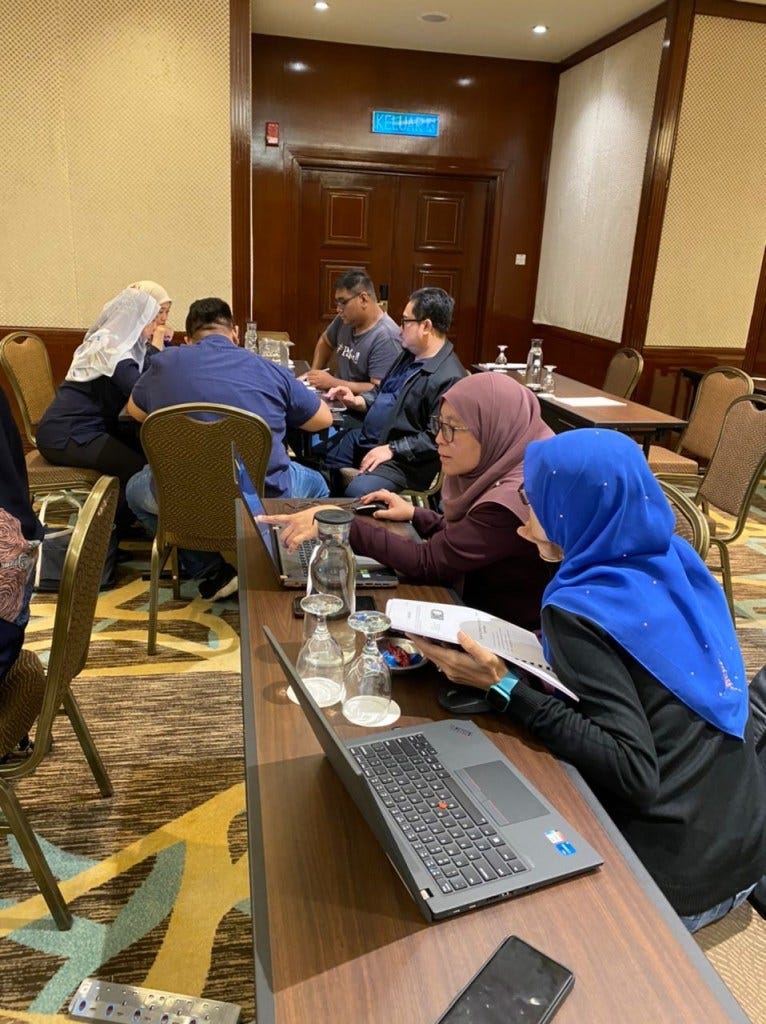
Subang Jaya, July 7, 2023 — Kolej Komuniti Hulu Langat, in collaboration with Favoriot, a leading Internet of Things (IoT) platform provider, hosted a transformative 5-day course on 4IR: IoT Embedded System and Hardware Interfacing. The training program, which took place from July 3 to July 7, 2023, at the prestigious Dorset Grand Subang Hotel, brought together lecturers from various Kolej Komuniti and Polytechnic institutions across Malaysia.

Recognizing the crucial role of educators in preparing students for the Fourth Industrial Revolution (4IR), Kolej Komuniti Hulu Langat organized the IoT training program in partnership with Favoriot. The course aimed to equip lecturers with the knowledge and skills to effectively incorporate IoT concepts into their curriculum, ensuring that students receive quality education in this rapidly advancing field.

Lecturers from different Kolej Komuniti and Polytechnic institutions participated in the 5-day course, eager to enhance their understanding of IoT embedded systems and hardware interfacing. The diverse group of educators brought with them a wealth of experience and a shared commitment to staying abreast of technological advancements.

Under the guidance of Favoriot’s expert trainers, the participants delved into various IoT topics, including the fundamentals of IoT, sensor integration, data acquisition and processing, communication protocols, and cloud connectivity. The trainers emphasized practical learning through hands-on exercises and real-world applications to ensure that lecturers gained a comprehensive understanding of the subject matter.

The training program culminated in a demo day on July 7, 2023, where the participating teams showcased their IoT projects and shared the knowledge and skills they acquired during the 5-day course. The demo day provided an opportunity for the lecturers to demonstrate their innovative IoT solutions (Smart Homes).

The teams’ presentations highlighted their creativity, problem-solving abilities, and the practical application of IoT concepts in their projects. The demo day served as a platform for knowledge sharing and collaboration, allowing the lecturers to exchange ideas and receive feedback from their peers and industry experts.

“We are delighted to witness the dedication and enthusiasm of the participating lecturers throughout the training program,” said Dr. Mazlan Abbas, CEO of Favoriot. “The demo day not only showcased their expertise but also their ability to inspire and prepare students for the digital era. We believe that their newly acquired knowledge and skills will have a profound impact on the education landscape in Malaysia.”

The participants expressed their gratitude for the opportunity to attend the training program and present their projects at the demo day. They commended the comprehensive curriculum, practical approach, and guidance provided by Favoriot’s trainers. The knowledge gained during the course empowered them to integrate IoT concepts into their teaching methodologies, fostering a deeper understanding of the subject matter among their students.

Kolej Komuniti Hulu Langat and Favoriot remain committed to nurturing and empowering educators in the field of IoT. By providing comprehensive training programs and practical experiences, they aim to create a ripple effect, ensuring that students across Malaysia receive quality education in the 4IR. The successful collaboration between these institutions sets a positive example for future initiatives in advancing IoT education and driving Malaysia’s digital transformation


Originally published at https://iotworld.co on July 7, 2023.

Tweeting to Triumph: Five Traits Driving Twitter’s Success

Since its inception in 2006, Twitter has grown into a formidable platform, boasting hundreds of millions of users and becoming an essential tool for everything from breaking news to cultural discourse. Let’s take a closer look at the five key traits that have contributed to Twitter’s success:

Twitter’s hallmark is its simplicity and brevity. The platform’s 280-character limit forces users to distill their thoughts into concise, easily digestible tweets. This unique format makes content easy to read and share, thus attracting users and making Twitter a powerful tool for quick and effective communication.

Twitter is often the go-to platform for real-time information. Whether it’s breaking news, live events, or trending topics, Twitter’s ability to provide instant updates sets it apart. This real-time nature makes it indispensable to journalists, politicians, celebrities, and everyday users who want to stay informed and connected with the world’s latest happenings.

Twitter’s ability to foster engagement is key to its success. The platform encourages interaction through retweets, replies, likes, and hashtags. These features not only allow users to voice their opinions but also enable them to participate in global conversations. Such active user engagement creates a vibrant and dynamic platform that keeps users coming back.

Twitter has become a platform where anyone can have a voice and potentially gain influence. It’s a space where everyday users can engage directly with influential figures, from celebrities to CEOs, and even world leaders. This level of accessibility and potential influence is a powerful draw for users and a distinguishing feature of Twitter.

Despite its relatively simple premise, Twitter has continually evolved to meet user needs and trends. Whether it’s the expansion from 140 to 280 characters, the introduction of video through Periscope, or the addition of temporary posts with Fleets (since discontinued), Twitter’s willingness to adapt and innovate has been instrumental in maintaining its relevance and appeal.

In conclusion, Twitter’s success lies in its commitment to simplicity and brevity, providing real-time updates, fostering user engagement, promoting accessibility and influence, and continually evolving to meet user needs. These traits have allowed Twitter to maintain its position as a prominent and influential social media platform. As it continues to adapt and innovate, we can expect Twitter to remain an important player in the digital landscape.


Originally published at https://iotworld.co on July 7, 2023.

Reaching for the Stars: Five Traits Fueling SpaceX’s Success

Founded in 2002, SpaceX has carved a unique path in the realm of space exploration. It’s the first private company to launch a spacecraft to the International Space Station and has redefined the economics of space travel with reusable rockets. Let’s explore the five crucial traits that drive SpaceX’s success:

Central to SpaceX’s extraordinary journey is the role of Elon Musk, the CEO and lead designer. His ambitious vision-to make life multiplanetary and establish a human colony on Mars-is not only inspiring but has also disrupted the status quo of space exploration. Musk’s relentless drive and commitment have powered SpaceX through numerous challenges.

SpaceX’s success is heavily rooted in its culture of innovation. One of the company’s most notable achievements is the development of reusable rockets, drastically reducing the cost of space travel. This revolutionary approach sets SpaceX apart from other space companies and exemplifies their commitment to breaking boundaries.

SpaceX’s approach to vertical integration-manufacturing nearly all components in-house-has been a game-changer. This strategy allows SpaceX to control costs, maintain quality, and adjust quickly to design changes or issues. Additionally, SpaceX operates with lean efficiency, maintaining a smaller team than many of its competitors, which results in cost savings and rapid innovation.

SpaceX has a high tolerance for risk, seen in its ambitious projects and tight timelines. The company has faced numerous setbacks, including rocket failures, but it has never shied away from learning from its failures and iterating its designs. This approach is often credited for its rapid advancements in rocket technology.

SpaceX has made space exciting and accessible for the public in a way that few other companies have achieved. By live-streaming launches and being transparent about their goals and progress, SpaceX has managed to create a large and engaged community of supporters. This public engagement has built a strong brand and has even opened avenues for crowdfunding.

In conclusion, SpaceX’s success can be traced back to its visionary leadership, innovative mindset, efficient operation through vertical integration, high tolerance for risk, and effective public engagement. These traits have allowed SpaceX to redefine the realm of space exploration and travel. With its sights set on Mars and beyond, we can expect SpaceX to continue pushing the boundaries of what’s possible in space travel.


Originally published at https://iotworld.co on July 6, 2023.