How to Build a Billion Dollar App — A Book Review

Make Money — Book Review by Mazlan Abbas

A must-read book if you want to start a mobile app business
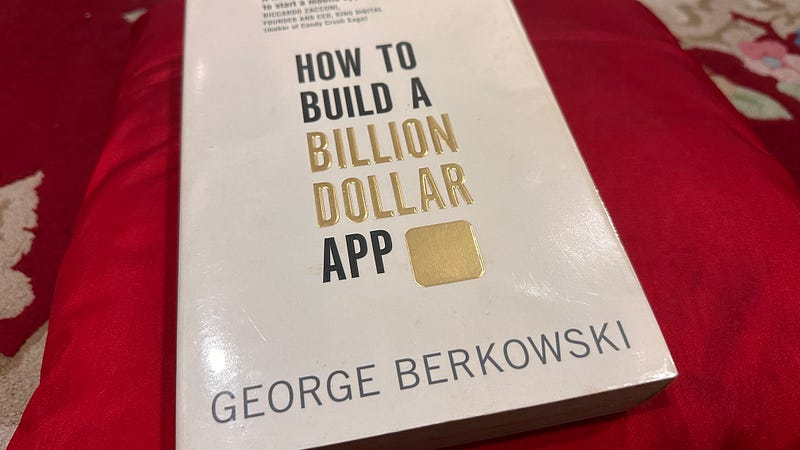
Alright, let’s dive into “How to Build a Billion Dollar App” by George Berkowski, a book that seems to promise the golden keys to the kingdom of app-based riches.

Initially, I was skeptical.

I mean, how many of us haven’t fantasized about ditching the daily grind to launch something groundbreaking?

Yet, the road from dream to a billion-dollar reality is notoriously fraught with pitfalls.

But here’s the kicker: Berkowski isn’t just spinning daydreams; he’s laying down a roadmap based on the journeys of giants like Instagram, WhatsApp, Snapchat, Candy Crush, and Uber.

First off, the book is an eye-opener.

It’s not just about coding an app; it’s about birthing a mobile business behemoth.

Berkowski takes you from the seed of an idea — literally, something you might scribble on a napkin — through the throes of co-founder dating, team building, user addiction creation, and the relentless pursuit of staying relevant in an industry that never sleeps.

It’s like having a mentor who’s seen it all, guiding you through the highs and lows of startup life.

What I appreciated most is the unvarnished truth Berkowski serves up. Building a billion-dollar app is not for the faint of heart.

It requires a concoction of vision, tenacity, and a dash of madness.

The book is peppered with insider stories that read like Silicon Valley drama, making it informative and hugely entertaining.

The practical advice is gold.

Whether you’re a coding novice or a seasoned entrepreneur, there’s something in here for you.

Berkowski doesn’t shy away from the gritty details — funding rounds, user acquisition strategies, the pivot (oh, the inevitable pivot) — making it invaluable for anyone serious about scaling their mobile app into the stratosphere of valuation.

However, it’s not just a cheerleading manual for app moguls in the making.

It’s a reality check that underscores the immense effort, strategic planning, and a bit of luck required to join the ranks of the billion-dollar app club.

Berkowski’s candidness about the challenges adds a layer of credibility that’s often missing in the ‘get rich quick’ narratives.

In summary, “How to Build a Billion Dollar App” is a must-read for anyone daring to dream big in the digital arena.

It’s a blend of inspiration, practical guidance, and real-world wisdom.

Sure, not every reader will go on to create a billion-dollar app, but with Berkowski’s blueprint in hand, you’ll certainly have a fighting chance.

So, if you’re toying with an app idea or ready to take the plunge into the mobile business ocean, this book might just be your ultimate guide.

Get this “How to Build a Billion App” book from Amazon. (Note: This is an affiliate link)

Try Audible Premium Plus and Get Up to Two Free Audiobooks

https://amzn.to/48k29g3

Book review by Mazlan Abbas

The Lean Startup — A Book Review

Great Startup Books — Book Review by Mazlan

I regretted not reading this before building my Startup

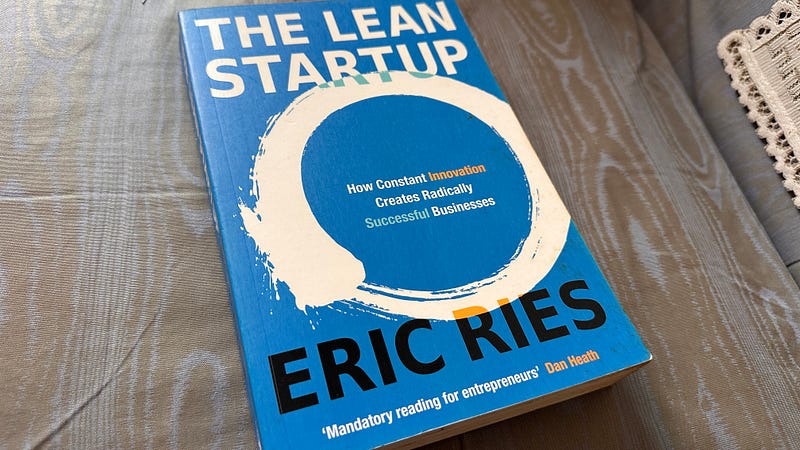
The Lean Startup by Eric Ries

Discovering “The Lean Startup” by Eric Ries was a revelation that arrived after I had already embarked on the challenging journey of founding a startup.

The insights it offered were akin to uncovering a guide after a solo navigation through the formidable entrepreneurial waters.

I implore those on the cusp of starting their own venture, or even considering it, to not repeat my oversight.

This book is more than a suggestion; it is an essential part of the entrepreneur’s toolkit.

Eric Ries goes beyond theoretical discourse, providing a pragmatic blueprint for operation.

His central premise?

Startups can heighten efficiency and speed up innovation by embracing a lean methodology, an approach informed by the principles of lean manufacturing.

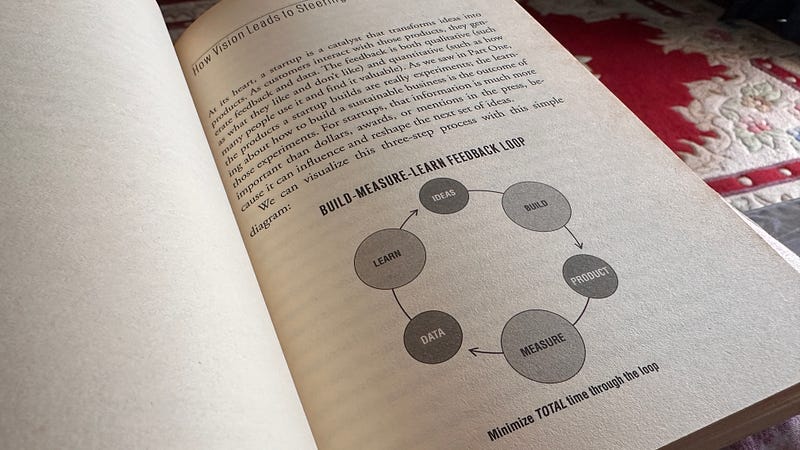
This philosophy doesn’t equate to mere cost-cutting; it emphasizes maximizing learning and ensuring that each step is corroborated by tangible market feedback.

Prior to encountering “The Lean Startup,” I labored under the illusion that my initial product concept was a guaranteed success, only to confront the stark reality that it didn’t resonate with consumers.

Ries promotes a concept that could have shielded me from such disillusionment: validated learning.

Rather than investing heavily in a finished product, he suggests starting with a minimum viable product (MVP) to quickly gauge customer desires.

This involves stepping out, engaging directly with users, and evolving the product based on their input.

Ries’s book offers a wealth of tactics to sidestep the allure of vanity metrics — those misleading figures that may look impressive on reports but fail to indicate your venture’s true vitality.

He instructs on concentrating on actionable metrics that accurately reflect progress and genuine customer value.

One of the most empowering elements of the Lean Startup approach is its stance on failure.

Within this framework, a failed experiment is not a defeat but a crucial learning opportunity, facilitating quick iterations, rapid knowledge acquisition, and the flexibility to pivot when it’s called for.

This alteration in perspective is invaluable.

What resonates most profoundly with me, though, is the realization that the Lean Startup methodology unravels the enigma of launching a business.

It’s less about possessing an infallible initial plan and more about the process of continual learning, adapting, and navigating through the inevitable uncertainty that shrouds new endeavors.

In retrospect, had I consulted “The Lean Startup” prior to releasing my first product, I could have avoided many pitfalls.

Yet, the beauty of Ries’s philosophy is its timeless applicability; it’s never too late to adopt this lean approach.

Whether one is just beginning or strategizing within the upper echelons of a well-established corporation, the principles of the Lean Startup can direct you toward the creation of something of genuine merit.

Thus, I extend this advice to all emerging entrepreneurs and established innovators: do not overlook “The Lean Startup.

It is not merely literature; it is a fundamental resource.

For someone like myself, it has become the compass I wish I had from the start.

Do not release your vision into the market without it.


You can buy “The Lean Startup” book from Amazon (Note: This is an affiliate link).

Try Audible Premium Plus and Get Up to Two Free Audiobooks

MSCA — The Answer to Smart Cities in Malaysia?

Malaysia Smart City Alliance Association (MSCA)

Time to get real, to get off the ground.

Not a member? Click here to read this story for free.

Just the other day, I stumbled upon a heated discussion on WhatsApp about the hurdles of rolling out Smart City projects in Malaysia. And there’s also a similar discussion on Facebook.

The thread was bursting at the seams with skepticism and a whole lot of negativity.

It’s too complex!” someone exclaimed. “We’re just not ready,” chimed in another.

Reading through, I couldn’t help but let out a sigh. It’s a familiar tune, this chorus of doubts and pessimism.

But here’s the thing — I’ve been in the trenches with the Malaysia Smart City Alliance Association (MSCA), a melting pot of government bodies, industry giants, academic minds, and individual enthusiasts all buzzing with one common goal: to give Smart City initiatives in Malaysia a real shot.

As an Exco member, I’ve had a front-row seat to the evolution of this dream, from lofty ideas to actionable strategies.

I have the opportunity to sit in high-level meetings, exchange firm handshakes with government officials, be invited as a smart city speaker, or dive deep into panel discussions at conferences.

Sounds pretty standard for this kind of gig, right?

But let me tell you a little secret — the real magic happens in those off-the-record moments.

You know, those coffee breaks, casual lunches, or the quick, hushed conversations that sidestep the formalities.

That’s where you get the unfiltered insights, the candid feedback, the kind of valuable nuggets you just can’t mine from a PowerPoint slide.

And guess what? It feels like we’re finally getting somewhere.

MSCA has become this incredible platform where all these diverse voices can come together, not just to talk the talk but to walk the walk — technically, financially, you name it.

Malaysia’s approach to Smart Cities is getting sharper, more focused. Instead of this massive, unwieldy Smart City Framework, we’re breaking it down into digestible, actionable plans tailored for States or Local Councils.

It’s like we’ve finally found the compass after years of wandering in the wilderness.

We’ve got these Smart City indicators now, a roadmap of sorts that helps local councils pinpoint exactly what they need to prioritize to earn their Smart City stripes.

No more shooting in the dark, claiming Smart City status without the official recognition to back it up.

We’re talking a full spectrum here, from early adopters dabbling in simple online services to the big leagues leveraging IoT and AI solutions.

Reflecting on the journey from when I first started talking Smart Cities back in 2015, it’s been one heck of a ride.

From the chaos and confusion to where we stand now, it’s a night-and-day difference.

The path ahead is clearer, and while the skeptics on social media might not see it yet, we’re no longer lost.

We’ve got a direction, a purpose, and, most importantly, a plan.

So, to all the naysayers out there, I get it. Change is hard, skepticism is easy.

But take it from someone on the inside — we’re on the brink of something big.

Malaysia’s Smart City dream? It’s not just a pipe dream anymore.

It’s happening, one small, smart step at a time.

From Today Onwards, I Will Stop Following Others (Using This Method)

Writer’s Dilemma

How I tried to balance my followers and following ratio.

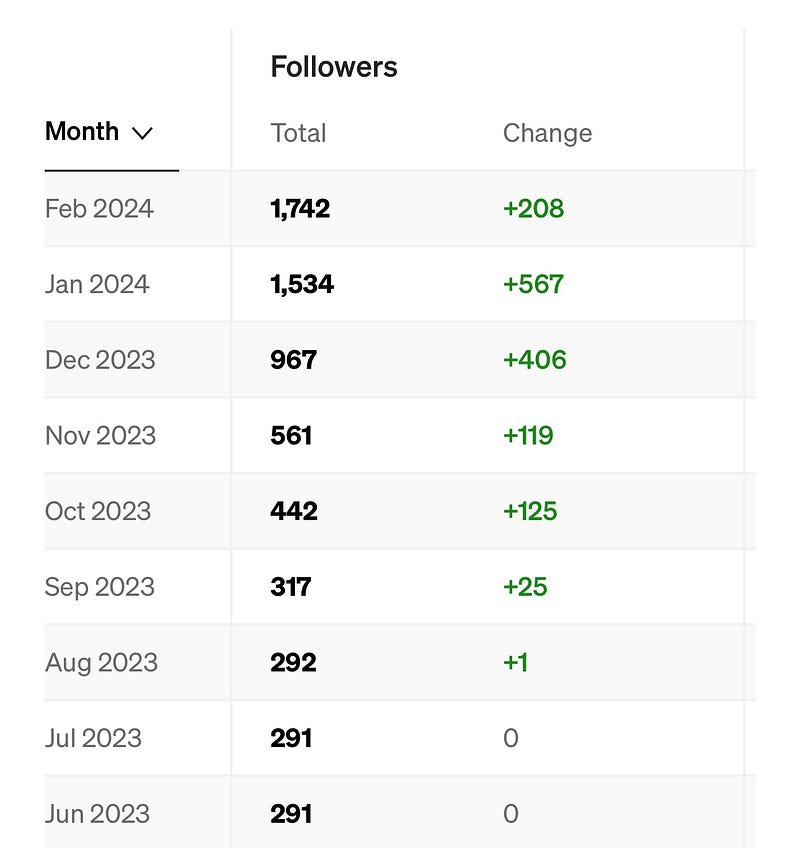
You know, I’ve always been kinda baffled by how some folks on Medium rack up followers like they’re collecting stamps or something.

There I was, stuck in the 200+ followers limbo for what felt like an eternity.

Then, one fine day, I stumble upon this article that’s all, “Hey, wanna boost your followers? Just start following people back!

Medium lets you follow up to 100 folks a day, and I’m thinking, “Why not give it a whirl?

But hold up, I didn’t just dive in willy-nilly.

Nope, I had a game plan. Instead of following every random person, I zeroed in on the clappers.

Yeah, you heard me right.

The clappers.

Those lovely souls who clap for articles.

My logic? If they’re clapping for stuff I like reading, chances are, we’ve got similar tastes.

Plus, hitting up the recent clappers meant they were active users.

Bingo!

Fast forward a bit, and boom — I’ve clocked in over 1,700 new followers.

But here’s the kicker: to get those numbers, I had to follow over 4.4K peeps.

Talk about a reality check.

Suddenly, my profile’s looking a tad lopsided.

More following than followers?

That’s not the writerly image I had in mind. It’s like walking around with a “Desperate for Attention” sign taped to my back.

So there I was, moseying to my office, coffee in hand, when it hits me.

Why not switch up the strategy?

From now on, I’ll cool it with the follow frenzy.

If someone digs my vibe and hits that follow button, sure, I’ll follow back. But initiating the follow? That’s on pause for now.

Let’s see how this plays out. Will my followers-to-following ratio start to look a bit more respectable? Only time will tell.

But hey, I’m all for experimenting.

After all, isn’t that what social media’s all about?

Finding your tribe, connecting over shared interests, and maybe, just maybe, not having to follow a small country’s worth of people to feel like you’re part of the club.

Thanks for tuning in, community.

Here’s to hoping my little epiphany pays off.

Cheers to balance, both in followers and in life.

Mini Weather Station — Use Case Scenarios

Harnessing the Power of Mini Weather Stations

Mini weather stations can be deployed anywhere

[Note: Click here to have FREE access to this member-only story]

One way or another, with accurate and localized weather information, value in all of it has never been more tangible, from agriculture, through environmental monitoring, to urban planning.

Lives are at stake.

While these systems function rather well for the purpose they serve, they are expensive, complex, and do not offer the granularity required to make site-specific and localized decisions.

That’s where the power of mini weather stations comes in — a solution that’s not only innovative but accessible and with the highest level of accuracy.

Why Precise, Local Weather Data Is Needed

You could think of it as planning an agricultural schedule without accurate rainfall predictions for your location down to the inch, or it’s like taking readings on urban air quality from a station miles off.

A shortage of localised weather data has the impact ranging from an inefficient use of resources to lesser productivity and to an additional environmental footprint.

Other than that, traditional weather stations are bulky, require substantial power, and added flexibility in deploying them effortlessly in different environments.

Increasing needs for accurate, real-time data on the environment

The rising impacts attributed to climate change elevate the importance, more than ever, of setting the bar high in environmental data production.

Demand is going through the roof — from farmers who need to know the precise time to plant or water, to city planners trying to mitigate urban heat islands.

This, obviously, delimits the existing system, pointing out to a critical necessity for a more flexible, accurate and cost-efficient solution.

Mini Weather Stations Driven by Solar Energy and 4G Connectivity

Enter the mini weather station: the compact and solar-powered IoT solution that redefines localized weather and environmental monitoring.

The sensors monitor the amount of rain, wind speed, atmospheric temperature, humidity, atmospheric pressure, and carbon dioxide, thus giving a complete environmental overview.

It is powered by solar energy, hence making the system to be up and be operational throughout, in the absence of other power sources.

Second, 4G cellular communicates real-time data with the IoT platform of Favoriot, hence, making collection and visualization of data easy.

Use Case Scenarios in Practice

1 — Precision Agriculture

An advanced knowledge of the environmental conditions provides information on the yield of the crops and helps in judicious decisions on how to manage resources.

The mini weather station is able to provide this real-time information on the data of rainfall, temperature, and humidity to the farmer, which informs judicious decisions on irrigation and planting.

This would not only optimize the use of water but also enhance the health of the crop and yield.

2 — Urban Environmental Monitoring

Microclimate differences and pollution are regularly evident in urban areas.

Mini weather stations are used by city managers and environmentalists to monitor levels of air quality and temperature and humidity conditions simultaneously in diverse segments of a city.

Such information is critical towards the formulation of methods of combating urban heat islands and air pollution that if successfully implemented, would further enhance urban livability.

3 — Disaster Preparedness and Response

Mini-weather stations would be of much use in disaster preparedness and response in areas affected by extreme weather events.

By way of illustration, monitoring the amount of rain and wind speed enables one to predict and reduce the impact of floods and hurricanes, hence further evacuations and resource allocation.

The Technology Edge

Really, what is intriguing about the mini weather station is its technological sophistication in the simplicity of use.

With solar power, it is deployable in remote areas without thinking of the battery life to recharge it.

It further ensures data is transmitted and received in real time, coverage and connectivity of 4G to the Favoriot platform, which collects the data and visualizes it, hence being accessible and actionable to the decision-makers.

The ability to use advanced sensors with connectivity options makes the mini weather station a robust tool for multiple applications.

Video — Mini Weather Station

Conclusion

The mini weather station is an innovative environmental monitor and data collection move that delivers a versatile, efficient, and accurate solution to real-time data collection.

And the applications in everything from agriculture to urban planning and disaster management show how geography could revolutionize our dealings with the earth and its response.

Taking advantage of the power of these mini weather stations to improve decision-making, make greater use of resources, and enhance preparedness for environmental challenges.

The next wave of environmental monitoring is here, and it’s compact, it’s solar-powered, and it’s smarter than ever before.

Contact Favoriot to schedule an appointment or for further details.

Your Emails Are Congesting My Inbox!

Medium Writer’s Dilemma

What would you do to your email notifications?

One early morning, I’m at my desktop, sipping on my probably-too-cold lemon tea, and I decide to check my emails.

There’s always a bunch of them, but one catches my eye.

It’s a direct reply to one of those emails I’ve been sending out ever since I got into the groove of writing for Medium.

You know, back in January 2024, I had this lightbulb moment: “Hey, why not ping my loyal followers with an email notification every time I drop a new piece?Thought it was genius at the time.

Photo by Stephen Phillips – Hostreviews.co.uk on Unsplash

But here’s the kicker: I didn’t just stop at once in a while.

Oh no, I got into a rhythm, sometimes churning out content more than once a day. And, well, turns out not everyone’s a fan of their inbox turning into a dedicated “Me” channel.

This one email, straight up, it was from a reader who’d had enough.

The gist? “Your emails are swamping my inbox!

Ouch, right?

But hey, I get it. We’re all fighting that never-ending battle against email overload.

So, I shot back a polite reply, something along the lines of, “Totally hear you! There’s this magical unsubscribe button for just such an occasion.

Photo by J Torres on Unsplash

Fast forward a couple of days, and there I am, stuck in traffic, the kind where you move a foot every ten minutes.

And my mind starts wandering. Was I overdoing it with the email blasts?

Is bombarding my readers with daily updates more annoying than useful?

That’s when the internal debate kicked off.

Part of me is like, “Keep it up! Your real fans want all the updates!

But then, the more considerate side pipes up, “Maybe tone it down? Not everyone needs their day narrated by you.

So, here I am, tossing it out to you guys – my fellow writers and avid readers.

What’s the play here? Should I hit pause on the daily email notifications?

Maybe keep it to just the really juicy articles?

Or how about a weekly roundup – a sort of “In case you missed it” vibe?

I’m all ears (or eyes, since we’re talking emails and comments).

What do you think?

Is too much of a good thing, or is more always better?

Why Malaysia Takes Almost 10 Years To Gain Traction in IoT

When New Technology Emerged

There must be a leading factor missing — this is what I found out.

Image created using Canva by Author

[Note: Click here to have FREE access to this member-only story]

Here I am, lounging in my office chair, a cup of my favorite tea in hand, staring out into the vastness of my thoughts.

It’s one of those moments where the world seems to slow down, and you’re left with nothing but your reflections.

Today, my mind wanders to a question that’s been bugging me for years: Why is the adoption of technology, specifically the Internet of Things (IoT), taking so much longer than expected?

I remember when Kevin Ashton coined the term IoT back in 1999.

It was a concept that promised to revolutionize the way we interact with the world around us.

Fast forward to 2014, Malaysia launched its National IoT Strategic Framework, and the buzz was electric. Yet, the excitement quickly fizzled out, and I couldn’t wrap my head around why.

Then came 2017, the year we launched our IoT platform at Favoriot.

We were pumped, ready to change the game, only to be met with a lukewarm response.

It was disheartening.

I spent countless nights looking at the stats, trying to figure out where we went wrong. It wasn’t until I hit the streets, talking to people, that it clicked.

The issue wasn’t with the technology itself but with the understanding of it.

Most people didn’t even grasp what IoT was, let alone why it was necessary. And if they were clueless about the ‘what’ and ‘why,’ the ‘how’ was even more of a mystery.

That’s when it hit me — the lukewarm response to our platform wasn’t about its functionality but about the lack of knowledge and understanding.

Fast forward a few more years, and the landscape started to change.

We realized that if we wanted to jumpstart IoT adoption, we needed to go back to the basics.

We needed to build awareness and nurture talent through IoT training.

It was a slow process, but with the push towards Industry 4.0 and AI, IoT began to gain prominence.

The need to collect data was undeniable, and how could you do that without IoT?

Image from Pixabay

Now, as I sit here in 2024, sipping my tea and looking over the latest stats, I can’t help but feel a sense of accomplishment.

The journey hasn’t been easy, but the growing IoT awareness and adoption is a testament to our efforts.

It’s a reminder that sometimes, to move forward, you have to take a step back and educate.

As I muse over this thought, I realize that the key to technology adoption isn’t just about creating cutting-edge solutions but also about bridging the gap in understanding.

And as the world slowly but surely embraces IoT, I can’t help but think, “We’re finally getting there.

Image from Pixabay

IoT Trainings Offered by Favoriot:

Break the Mind Barrier by Being Alone

Self-Improvement

When things get tough. What do you do?

Walking and Being Alone — Reflection Time

So, there I am, right?

Big problem on my plate, and the usual chit-chat in the office or those brainstorming sessions just aren’t cutting it.

What do I do? I make my way to this little oasis outside the office.

Yeah, that small garden where the only thing better than the morning sun is the cool shade from the building. It’s like my little escape pod.

Sitting there, feeling the breeze on my face, it’s like my mind starts to unclutter.

I dive deep into my thoughts, kinda like having a conversation with myself.

“What went wrong? What could I have done differently?”

It’s my time to hit the pause button, you know?

Reflect on this crazy ride of entrepreneurship, why I even started this journey, and remind myself of all the sacrifices that come with the title.

It’s funny, thinking about it. Nobody really gets what goes through a founder’s head.

The worries, the hopes, the endless “what ifs” that dance around at night.

And despite it all, there’s this sense of gratitude for my team.

They’re out there giving their all, blissfully unaware of the storms I weather.

And that’s how it should be.

Why drag them into this whirlwind of stress?

Their focus should be on the work, while I, as their leader, figure out how to navigate through the chaos.

Sometimes, putting pen to paper (or fingers to keys) feels like therapy.

It helps me process my thoughts, clear the fog.

Those articles I’ve been sending out?

They’re more than just words.

They’re a piece of me, hoping to light up a spark in someone else, maybe even drum up some business along the way.

And if my inbox bombardments have been too much for some, hey, the unsubscribe button is there for a reason.

But for those who stick around, your support means the world.

It’s this whole cycle of thoughts, reflections, and realizations that keep me going.

The garden isn’t just a place to escape; it’s where I find my ground, ready to face another day.

Why the Favoriot IoT Developer Plan is Ideal for System Integrators

How Favoriot IoT Developer Plan Can Help System Integrators to Expedite Their IoT Projects

[Note: Click here to have FREE access to this member-only story]

System integrators (SIs) are tasked with the challenging role of amalgamating diverse technologies to deliver comprehensive solutions.

Favoriot, as an innovative IoT platform, significantly simplifies this task, mainly through its Developer Plan, which is especially suited to the needs of SIs.

This article highlights why the Developer Plan of Favoriot is a superior choice for SIs looking to expedite their IoT projects effectively.

Understanding the Challenges in IoT Deployment

IoT deployment is laden with complexities, including device placement, seamless connectivity, platform integration, and ensuring robust security measures.

These challenges can be daunting, especially for smaller companies.

A seasoned IoT system integrator is crucial in weaving these disparate elements into a seamless solution.

Favoriot: A Strategic Partner for System Integrators

Favoriot offers a versatile IoT middleware that bridges a wide array of devices using standard IoT protocols.

Its significant features that cater particularly well to SIs include:

  • Versatile Connectivity: Compatibility with a diverse range of devices.
  • Flexible Deployment: Options for both cloud and on-premises deployment.
  • Customizable Solutions: Support for tailored dashboard and application development.
  • Scalability and Expansion: Designed for growth and interoperability, steering clear of vendor lock-ins.

The Developer Plan: A Closer Look

The Developer Plan by Favoriot is designed for advanced IoT developers, often including SIs working on complex, large-scale projects. Its features are:

  • Pricing: At MYR 180 per month, MYR 1,200 per year, or MYR 1,260 for the Developer Bundle, it’s an investment in high-level IoT development.
  • Capabilities: It encompasses all the features of the Beginner Plan and extends them significantly. This includes support for 100,000 daily APIs, data export options, unlimited dashboards, and advanced widget types.
  • Advanced Integration: It offers 3rd-party integration capabilities, manual and automated control, and comprehensive analytics.
  • Suitability: Tailored for complex projects that demand in-depth analytics, extensive device management, and third-party integrations.

Advantages for System Integrators

  1. Scalability and Flexibility: The Developer Plan allows SIs to scale and modify solutions as per evolving project requirements.
  2. Enhanced Device Management: With support for many devices and advanced control options, SIs can manage complex IoT ecosystems more efficiently.
  3. Advanced Analytics: Critical for SIs, as it enables them to derive meaningful insights and refine IoT solutions for optimal performance.
  4. Third-Party Integrations: SIs needs to incorporate various technologies and platforms, enhancing the functionality and reach of IoT solutions.
  5. Comprehensive Security: As IoT systems often handle sensitive data, the advanced security capabilities of the Developer Plan ensure robust protection.

Conclusion

The Developer Plan of Favoriot is particularly well-suited for system integrators due to its comprehensive features that cater to the demands of large-scale, complex IoT projects.

By choosing the Developer Plan, SIs can leverage advanced analytics, extensive device management, and robust integration capabilities, thus expediting their IoT projects while ensuring quality and scalability.

This plan is not just a tool but a strategic asset for SIs aiming to excel in the IoT domain, providing them with the necessary capabilities to successfully navigate the complexities of IoT deployment.


Download Mastering IoT With Favoriot eBook ← Here.

https://mazlanabbas.gumroad.com/l/masteringiot

Writing My Next Medium Article is Damn Difficult

How to get ideas for your upcoming Medium articles — this is how I do it.

Getting ideas while taking a morning walk — Image created using Midjourney by Author

It’s one of those mornings again, the kind where the air feels just right, and the world is slowly waking up, bathed in that golden hour glow.

I’m out for my morning walk, trying to kickstart my day (and my brain) into some semblance of productivity.

The rhythm of my steps seems to sync up with the fluttering ideas in my mind, each step a potential leap towards my next Medium article.

Come on, brain, do your thing,” I mutter to myself, half-encouraging, half-begging.

A dog barks in the distance, a bird chirps overhead, and somewhere in that symphony of everyday life, an idea starts to bubble up.

What if I write about the simplicity of morning routines? Or the chaos of it?” I muse aloud, pulling out my phone to jot down the fleeting thought before it escapes into the ether.

Image created using Midjourney by Author

Fast forward to the daily grind, and I’m stuck in traffic, the kind that moves so slowly you’d swear time was standing still.

The radio’s playing some forgettable tune, but my mind is elsewhere, weaving through the congestion of both cars and thoughts.

There’s something here,” I think, staring at the sea of brake lights ahead. “The parallels between traffic jams and mental blockages… Yeah, that could work.” I reach for my phone again, voice memo at the ready.

Article idea: Navigating mental traffic jams, inspired by actual traffic jams. Explore solutions and parallels.” The voice memo captures the thought, a digital reminder for later exploration.

Then there’s the calm before the storm at the office, that precious window of time when I’m at my desk but the day’s demands haven’t yet fully descended.

I sip my coffee, the warmth, and caffeine a comforting ritual as I stare at the blank document on my screen.

This is it, the quiet moment before chaos. There’s definitely an article in this,” I whisper to myself, fingers poised over the keyboard. “How to find peace in the small moments before the workday whirlwind.”

Image created using Midjourney by Author

I start typing, the words a slow trickle at first but gradually gaining momentum.

Finding Your Calm Before the Workday Storm,” the document is now boldly titled, a testament to this morning’s journey from walk, to traffic, to desk.

It’s in these moments, these snippets of everyday life, that the ideas come alive, finding their way onto the digital page to be shared, pondered, and maybe even smiled upon by someone, somewhere, who needed them just as much as I did.

Image created using Midjourney by Author