Feeling of Being Ghosted — After Pouring Heart and Soul in Project

Startup Journey Stories

What will you do if you encounter this?

Where do I even begin with this one?

Picture this: you’re all jazzed up about a potential partnership, right?

You’ve got this IoT solution that’s like the Swiss Army knife of tech solutions — versatile, innovative, the whole nine yards.

You dive headfirst into the deep end, doing your homework, crunching the numbers, and basically bending over backwards to tailor-make this solution architecture.

You’re talking pricing, materials, the works. And not just any materials, but the crème de la crème, sourced after what feels like a million discussions with various companies who, bless their hearts, took the time to entertain our endless queries.

So there we were, practically oozing optimism, dreaming about the hundreds of sites we were going to revolutionize in 2024.

And then, out of nowhere, radio silence.

Crickets.

Photo by Wolfgang Hasselmann on Unsplash

It’s like sending a text to your crush and watching that ‘read’ notification mock you without a reply.

So, what do I do? I chase them down, of course, because hey, maybe they’re just playing hard to get, right?

Wrong.

Cue the next meeting, where I’m hit with the kind of plot twist you’d expect from a telenovela.

Not only have they not decided to go ahead with us, but they’ve also got their eye on other solutions, and — get this — our meticulously crafted, bespoke solution apparently doesn’t meet their ‘standards.’ I mean, ouch.

Talk about a blow to the ego.

But here’s the kicker: there was zero feedback.

Nada.

It’s like our proposal was a free sample they snagged while window shopping. And that’s when it hit me — our proposal was probably used as a bargaining chip or, worse, handed over to their preferred partner on a silver platter.

Talk about feeling used.

Trust me, the frustration was real.

It’s one thing to lose out on a project, but it’s a whole other ballgame to feel like your hard work was just a means to an end for someone else’s negotiations.

It felt like our proposal was hijacked, and not in a cool, action-movie kind of way.

Photo by Jose P. Ortiz on Unsplash

So, what’s the moral of the story? I’ve learned the hard way that not all partners are created equal.

Trust is like that favorite hoodie of yours — comfortable, hard to find, and easy to lose. And once it’s gone, well, it’s pretty darn hard to get back.

The experience was a wake-up call.

Sure, it’s a bummer to realize that not everyone plays fair in the sandbox, but it’s also a reminder to guard your sandbox a little more carefully.

And maybe, just maybe, to not get too attached to potential partners until they’ve proven they’re not just in it for a free ride on your coattails.

So, to all the would-be partners out there, let’s keep it classy, shall we?

Because nobody likes feeling like they’ve been ghosted after pouring their heart and soul into a project.

Photo by Šimom Caban on Unsplash

Happy 7th Anniversary Favoriot!

Getting Older and Wiser

Here’s to Favoriot’s expansion into new markets, wisely navigating global challenges, and making a mark worldwide with its innovative solutions.

Happy 7th Anniversary FAVORIOT!

[Note: Click here to have FREE access to this member-only story]

I keep tossing this one question back and forth in my head: “Is FAVORIOT gonna keep the lights on for another year?

It’s like, running a startup feels like being in a marathon with no clear finish line – just hills, mountains, and valleys for days.

Jumping into entrepreneurship, I honestly didn’t see the rollercoaster ride coming.

From the outside, you always hear about these startups going from zero to hero, hitting that IPO jackpot in just a few years. It’s all about the glory days, right?

You often catch stories about startup founders bagging millions in funding, scaling from a duo to hundreds, even thousands of employees, and then making it big internationally.

Those are the success tales.

But for every one of those, there’s a bunch that just… vanish.

They’re part of the grim 90% of startups that crash and burn each year.

Those stories? Not so loud.

FAVORIOT kicked off officially on February 20, 2017, but didn’t really get rolling until April 1, 2017, with just a few of us.

Since then, a lot of the original crew has moved on, replaced by fresh faces.

The past seven years have been a wild ride, to say the least.

Here’s the scoop:

1 — Starting with Zero Revenue – We went a whole year without making a dime, with our costs through the roof.

All because we were deep in the R&D phase, working on our “Raqib” product (an IoT thing for monitoring the elderly and Hajj pilgrims).

Then, just as we were ready to roll in 2019, COVID hit, and Malaysia’s Hajj got postponed for two years (2020–2021).

Just like that, all the money we’d poured into Raqib felt like it went down the drain.

2 — When No One’s Buying – In the early days, folks would come up to me all excited about IoT, wanting to collaborate but not really sure how.

But then, crickets.

No one actually wanted to buy. I’d be lying if I didn’t admit to thinking, “Are they just here to pick my brain or what?

3 — Turning Down IoT Training Initially – At first, we thought people could just learn IoT on their own with all the tutorials out there.

Boy, were we wrong.

We only started offering commercial IoT courses by the end of 2021, almost four years too late!

4 — From 20 to 8300 Users – It began with just a handful of folks interested in our IoT platform.

Now? We’ve got users from 121 countries.

Talk about growth!

5 — Branding Favoriot – Once upon a time, googling “Favoriot” would get you “Favorito.”

Now, we’re the first thing that pops up.

We’ve made a name for ourselves in Malaysia as an IoT startup.

By some miracle, we’ve managed to claw our way out of the dreaded “Valley of Death,” despite its gravity trying to pull us back in.

Moving Forward

Maybe it’s time to hit up investors again, look for new partners, or VCs.

Back in the day, we didn’t stand a chance without traction or customers.

Rejection was the name of the game, whether pitching to investors or trying to get into accelerators.

But now?

It feels like it’s time to open up Favoriot’s doors again, see if we can snag some VC funding or find a company interested in making IoT part of their business.

Happy 7th Anniversary, FAVORIOT.

Here’s hoping this year, and the years to come, are even better than the last.

“May every team member of Favoriot grow wiser with the company, enjoying personal and professional development that leads to collective success.”

A shoutout to our earliest customers, too. Without their trust, it would’ve been a much tougher sell for the rest.

And finally, to my friends who’ve always had my back, thank you. Your support means the world.

D.K.L.T.S — The Art of Selling

Discover — Know — Like — Trust — Sell (DKLTS)

Too Much Selling and You Chase Your Potential Customers Away — Let’s Do the Right Way!

D.K.L.T.S — The Art of Selling

I must confess — I’ve been down this road way too many times.

Every morning, as I’m driving to the office, there’s this little voice in my head going, “Hey, let’s get this show on the road, time to sell, sell, sell!

It’s like I’ve got this inner salesperson that just can’t wait to throw our latest and greatest in front of anyone with a pulse.

But, if I’ve learned anything, it’s that slamming the pedal to the metal on selling from the get-go is like trying to sprint before you’ve even tied your shoes.

You’re just gonna trip.

That’s where D.K.L.T.S comes in, a neat little acronym that’s become my north star in navigating the social media selling galaxy.

1 — First up, “Discover.” This is all about letting your audience find you, kinda like laying out breadcrumbs for them to follow. No sales pitch here, just “Hey, look at this cool thing I know or did!It’s like making a new friend at a party without immediately trying to sell them your grandma’s secret cookie recipe.

2 — Then, “Know.” This is where things get a bit more personal. You share your story, your why, and what makes you tick. It’s like letting them in on the secret handshake without asking for anything in return. They get to see the real you, not just the seller you.

3 — Moving on to “Like.It’s all about building that relationship. Think of it like watering a plant; you gotta do it regularly, but not too much or you’ll drown it. Here, it’s about sharing values, interests, and maybe a laugh or two, making sure they know you’re not just another faceless seller.

4 — “Trust” is next. This is the big one. It’s where your audience goes, “Hey, this person really knows their stuff, and they’ve been consistent and genuine. Maybe I can trust them with my needs.It’s like the moment in a friendship when you realize you can count on them to have your back.

5 — Finally, “Sell.” And only now do you bring out the goods. But it’s different, because by now, they’re not just buying a product or a service; they’re buying into you and what you stand for. It’s the culmination of all that hard work, like asking someone out after you’ve gotten to know them and they’ve hinted they might say yes.

And then?

You rinse and repeat.

But spending time on steps 1 to 4, that’s where the magic happens.

It’s tough, not gonna lie.

It takes time, patience, and a whole lot of creativity — things that are in short supply when you’re eager to make a quick buck.

But the truth is, skipping straight to selling is like proposing marriage on the first date. It’s too much, too soon.

Why do people skip ads on social media?

Because it feels like someone’s trying to sell them something right out of the gate.

But when you take the time to go through D.K.L.T.S., you’re not just selling; you’re creating a connection.

And that’s how you make selling on social media simple, or at least, simpler.

It’s not just about making a sale; it’s about making a relationship.

And who knows?

Maybe that’s the secret ingredient in grandma’s cookie recipe after all.

Advising Higher Institutions as an Industry Panel (Tech)

The Role of Industry Panel

Offering guidance to the academic sector

Image created using Canva by Author

[Note: Click here to have FREE access to this member-only story]

“The journey of education and technology is not about equipping with the past, but empowering for the future. It’s a commitment to ‘Innovate, iterate, integrate!’ in every aspect of learning.”

Over the last decade, I have assumed the role of an industrial expert offering guidance to the academic sector.

Envision this scenario: universities and colleges are genuine in their desire to spearhead technological advancements.

However, the practicalities of revising curricula and acquiring appropriate technological tools often present unexpected hurdles.

It appears they are keen to progress yet find themselves unprepared for the journey ahead.

Year after year, I sit at the table with esteemed academics, divulging industry insights, endeavoring to harmonize their educational offerings with the pulsating demands of the commercial sphere.

The mantra I mentally chant is “Innovate, iterate, integrate!

The real triumph emerges when the concepts resonate with them, illuminating new possibilities.

“Empowering education with the latest technology is not just an investment in tools, but a pledge to future generations, ensuring they are not merely seekers of jobs but creators of opportunities.”

Nevertheless, the path is not without its challenges.

Funding does not always reach the necessary departments.

At times, entering some laboratories feels akin to traveling back to a bygone era, a stark reminder of the rapid pace at which technology evolves.

Propelling faculty to the forefront of modern technology is often a lofty aspiration, hampered by financial constraints.

The realm of IoT, for instance, is multifaceted, encompassing hardware, software, telecommunications, middleware, and application development.

Students require access to contemporary tools to engage meaningfully with their studies and not be left grappling with outdated equipment.

The pressure of final year projects can lead to a temptation to seek alternative means to complete their theses, a route that could compromise the integrity of their education.

The ultimate concern is the risk of producing graduates who are not viable candidates for employment within the industry. This outcome is precisely what we aim to avoid.

Thus, it is imperative that we elevate our efforts to ensure that the graduates we nurture are both competent and sought after in the professional world.

“Facing the rapid pace of technological evolution, the academic world must not only keep pace but leap ahead, ensuring graduates are not just prepared but are pioneers of the future.”

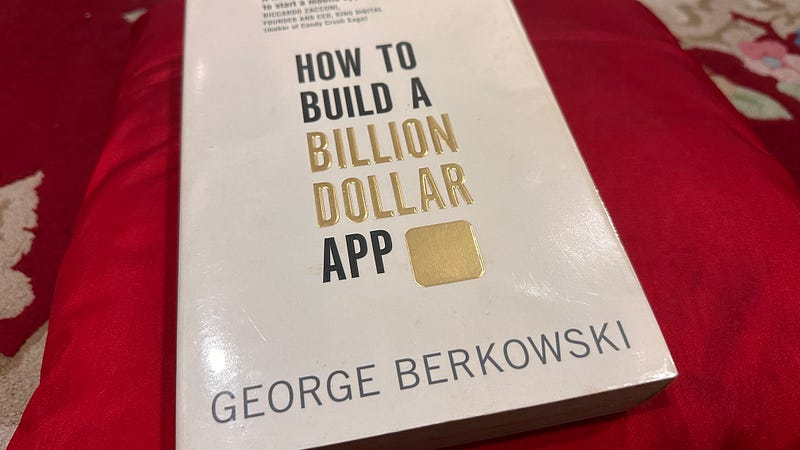
How to Build a Billion Dollar App — A Book Review

Make Money — Book Review by Mazlan Abbas

A must-read book if you want to start a mobile app business

Alright, let’s dive into “How to Build a Billion Dollar App” by George Berkowski, a book that seems to promise the golden keys to the kingdom of app-based riches.

Initially, I was skeptical.

I mean, how many of us haven’t fantasized about ditching the daily grind to launch something groundbreaking?

Yet, the road from dream to a billion-dollar reality is notoriously fraught with pitfalls.

But here’s the kicker: Berkowski isn’t just spinning daydreams; he’s laying down a roadmap based on the journeys of giants like Instagram, WhatsApp, Snapchat, Candy Crush, and Uber.

First off, the book is an eye-opener.

It’s not just about coding an app; it’s about birthing a mobile business behemoth.

Berkowski takes you from the seed of an idea — literally, something you might scribble on a napkin — through the throes of co-founder dating, team building, user addiction creation, and the relentless pursuit of staying relevant in an industry that never sleeps.

It’s like having a mentor who’s seen it all, guiding you through the highs and lows of startup life.

What I appreciated most is the unvarnished truth Berkowski serves up. Building a billion-dollar app is not for the faint of heart.

It requires a concoction of vision, tenacity, and a dash of madness.

The book is peppered with insider stories that read like Silicon Valley drama, making it informative and hugely entertaining.

The practical advice is gold.

Whether you’re a coding novice or a seasoned entrepreneur, there’s something in here for you.

Berkowski doesn’t shy away from the gritty details — funding rounds, user acquisition strategies, the pivot (oh, the inevitable pivot) — making it invaluable for anyone serious about scaling their mobile app into the stratosphere of valuation.

However, it’s not just a cheerleading manual for app moguls in the making.

It’s a reality check that underscores the immense effort, strategic planning, and a bit of luck required to join the ranks of the billion-dollar app club.

Berkowski’s candidness about the challenges adds a layer of credibility that’s often missing in the ‘get rich quick’ narratives.

In summary, “How to Build a Billion Dollar App” is a must-read for anyone daring to dream big in the digital arena.

It’s a blend of inspiration, practical guidance, and real-world wisdom.

Sure, not every reader will go on to create a billion-dollar app, but with Berkowski’s blueprint in hand, you’ll certainly have a fighting chance.

So, if you’re toying with an app idea or ready to take the plunge into the mobile business ocean, this book might just be your ultimate guide.

Get this “How to Build a Billion App” book from Amazon. (Note: This is an affiliate link)

Try Audible Premium Plus and Get Up to Two Free Audiobooks

https://amzn.to/48k29g3

Book review by Mazlan Abbas

The Lean Startup — A Book Review

Great Startup Books — Book Review by Mazlan

I regretted not reading this before building my Startup

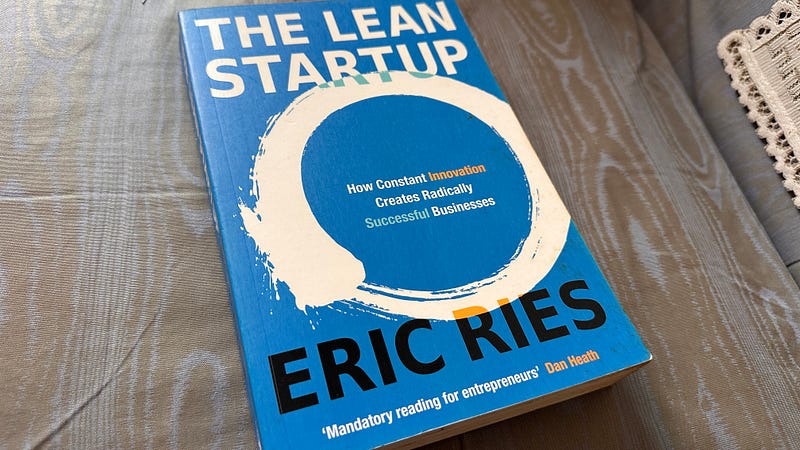
The Lean Startup by Eric Ries

Discovering “The Lean Startup” by Eric Ries was a revelation that arrived after I had already embarked on the challenging journey of founding a startup.

The insights it offered were akin to uncovering a guide after a solo navigation through the formidable entrepreneurial waters.

I implore those on the cusp of starting their own venture, or even considering it, to not repeat my oversight.

This book is more than a suggestion; it is an essential part of the entrepreneur’s toolkit.

Eric Ries goes beyond theoretical discourse, providing a pragmatic blueprint for operation.

His central premise?

Startups can heighten efficiency and speed up innovation by embracing a lean methodology, an approach informed by the principles of lean manufacturing.

This philosophy doesn’t equate to mere cost-cutting; it emphasizes maximizing learning and ensuring that each step is corroborated by tangible market feedback.

Prior to encountering “The Lean Startup,” I labored under the illusion that my initial product concept was a guaranteed success, only to confront the stark reality that it didn’t resonate with consumers.

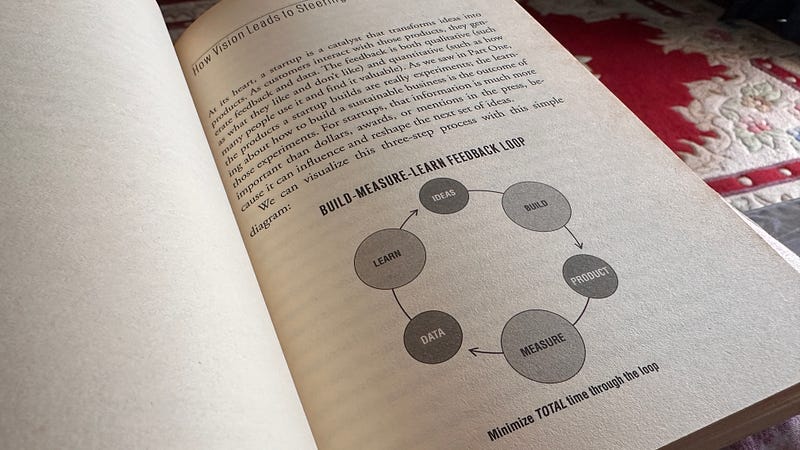
Ries promotes a concept that could have shielded me from such disillusionment: validated learning.

Rather than investing heavily in a finished product, he suggests starting with a minimum viable product (MVP) to quickly gauge customer desires.

This involves stepping out, engaging directly with users, and evolving the product based on their input.

Ries’s book offers a wealth of tactics to sidestep the allure of vanity metrics — those misleading figures that may look impressive on reports but fail to indicate your venture’s true vitality.

He instructs on concentrating on actionable metrics that accurately reflect progress and genuine customer value.

One of the most empowering elements of the Lean Startup approach is its stance on failure.

Within this framework, a failed experiment is not a defeat but a crucial learning opportunity, facilitating quick iterations, rapid knowledge acquisition, and the flexibility to pivot when it’s called for.

This alteration in perspective is invaluable.

What resonates most profoundly with me, though, is the realization that the Lean Startup methodology unravels the enigma of launching a business.

It’s less about possessing an infallible initial plan and more about the process of continual learning, adapting, and navigating through the inevitable uncertainty that shrouds new endeavors.

In retrospect, had I consulted “The Lean Startup” prior to releasing my first product, I could have avoided many pitfalls.

Yet, the beauty of Ries’s philosophy is its timeless applicability; it’s never too late to adopt this lean approach.

Whether one is just beginning or strategizing within the upper echelons of a well-established corporation, the principles of the Lean Startup can direct you toward the creation of something of genuine merit.

Thus, I extend this advice to all emerging entrepreneurs and established innovators: do not overlook “The Lean Startup.

It is not merely literature; it is a fundamental resource.

For someone like myself, it has become the compass I wish I had from the start.

Do not release your vision into the market without it.


You can buy “The Lean Startup” book from Amazon (Note: This is an affiliate link).

Try Audible Premium Plus and Get Up to Two Free Audiobooks

MSCA — The Answer to Smart Cities in Malaysia?

Malaysia Smart City Alliance Association (MSCA)

Time to get real, to get off the ground.

Not a member? Click here to read this story for free.

Just the other day, I stumbled upon a heated discussion on WhatsApp about the hurdles of rolling out Smart City projects in Malaysia. And there’s also a similar discussion on Facebook.

The thread was bursting at the seams with skepticism and a whole lot of negativity.

It’s too complex!” someone exclaimed. “We’re just not ready,” chimed in another.

Reading through, I couldn’t help but let out a sigh. It’s a familiar tune, this chorus of doubts and pessimism.

But here’s the thing — I’ve been in the trenches with the Malaysia Smart City Alliance Association (MSCA), a melting pot of government bodies, industry giants, academic minds, and individual enthusiasts all buzzing with one common goal: to give Smart City initiatives in Malaysia a real shot.

As an Exco member, I’ve had a front-row seat to the evolution of this dream, from lofty ideas to actionable strategies.

I have the opportunity to sit in high-level meetings, exchange firm handshakes with government officials, be invited as a smart city speaker, or dive deep into panel discussions at conferences.

Sounds pretty standard for this kind of gig, right?

But let me tell you a little secret — the real magic happens in those off-the-record moments.

You know, those coffee breaks, casual lunches, or the quick, hushed conversations that sidestep the formalities.

That’s where you get the unfiltered insights, the candid feedback, the kind of valuable nuggets you just can’t mine from a PowerPoint slide.

And guess what? It feels like we’re finally getting somewhere.

MSCA has become this incredible platform where all these diverse voices can come together, not just to talk the talk but to walk the walk — technically, financially, you name it.

Malaysia’s approach to Smart Cities is getting sharper, more focused. Instead of this massive, unwieldy Smart City Framework, we’re breaking it down into digestible, actionable plans tailored for States or Local Councils.

It’s like we’ve finally found the compass after years of wandering in the wilderness.

We’ve got these Smart City indicators now, a roadmap of sorts that helps local councils pinpoint exactly what they need to prioritize to earn their Smart City stripes.

No more shooting in the dark, claiming Smart City status without the official recognition to back it up.

We’re talking a full spectrum here, from early adopters dabbling in simple online services to the big leagues leveraging IoT and AI solutions.

Reflecting on the journey from when I first started talking Smart Cities back in 2015, it’s been one heck of a ride.

From the chaos and confusion to where we stand now, it’s a night-and-day difference.

The path ahead is clearer, and while the skeptics on social media might not see it yet, we’re no longer lost.

We’ve got a direction, a purpose, and, most importantly, a plan.

So, to all the naysayers out there, I get it. Change is hard, skepticism is easy.

But take it from someone on the inside — we’re on the brink of something big.

Malaysia’s Smart City dream? It’s not just a pipe dream anymore.

It’s happening, one small, smart step at a time.

From Today Onwards, I Will Stop Following Others (Using This Method)

Writer’s Dilemma

How I tried to balance my followers and following ratio.

You know, I’ve always been kinda baffled by how some folks on Medium rack up followers like they’re collecting stamps or something.

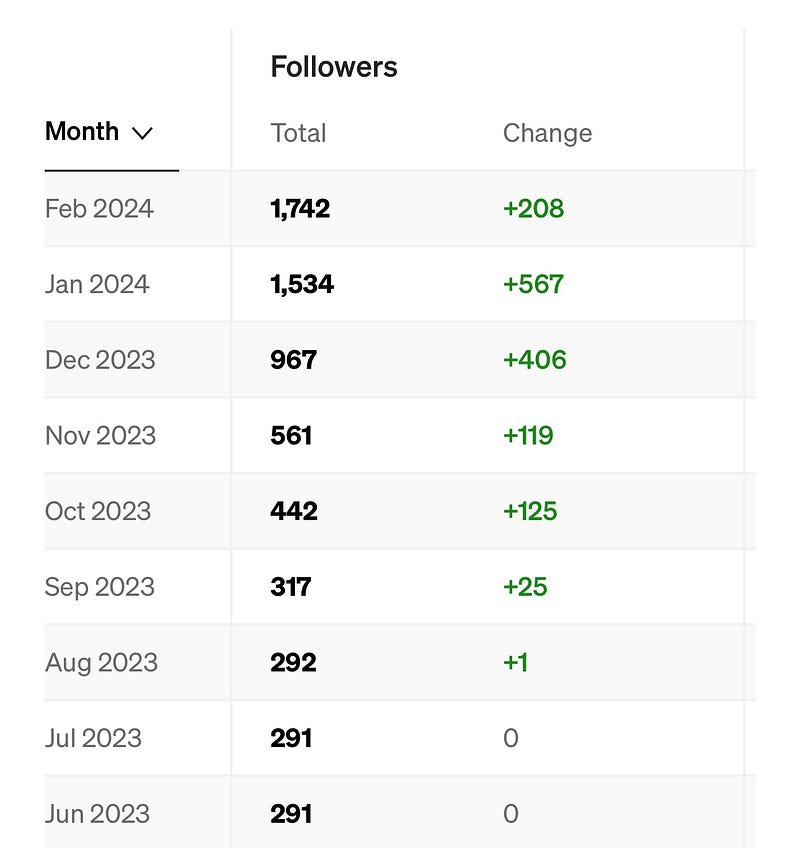
There I was, stuck in the 200+ followers limbo for what felt like an eternity.

Then, one fine day, I stumble upon this article that’s all, “Hey, wanna boost your followers? Just start following people back!

Medium lets you follow up to 100 folks a day, and I’m thinking, “Why not give it a whirl?

But hold up, I didn’t just dive in willy-nilly.

Nope, I had a game plan. Instead of following every random person, I zeroed in on the clappers.

Yeah, you heard me right.

The clappers.

Those lovely souls who clap for articles.

My logic? If they’re clapping for stuff I like reading, chances are, we’ve got similar tastes.

Plus, hitting up the recent clappers meant they were active users.

Bingo!

Fast forward a bit, and boom — I’ve clocked in over 1,700 new followers.

But here’s the kicker: to get those numbers, I had to follow over 4.4K peeps.

Talk about a reality check.

Suddenly, my profile’s looking a tad lopsided.

More following than followers?

That’s not the writerly image I had in mind. It’s like walking around with a “Desperate for Attention” sign taped to my back.

So there I was, moseying to my office, coffee in hand, when it hits me.

Why not switch up the strategy?

From now on, I’ll cool it with the follow frenzy.

If someone digs my vibe and hits that follow button, sure, I’ll follow back. But initiating the follow? That’s on pause for now.

Let’s see how this plays out. Will my followers-to-following ratio start to look a bit more respectable? Only time will tell.

But hey, I’m all for experimenting.

After all, isn’t that what social media’s all about?

Finding your tribe, connecting over shared interests, and maybe, just maybe, not having to follow a small country’s worth of people to feel like you’re part of the club.

Thanks for tuning in, community.

Here’s to hoping my little epiphany pays off.

Cheers to balance, both in followers and in life.

Mini Weather Station — Use Case Scenarios

Harnessing the Power of Mini Weather Stations

Mini weather stations can be deployed anywhere

[Note: Click here to have FREE access to this member-only story]

One way or another, with accurate and localized weather information, value in all of it has never been more tangible, from agriculture, through environmental monitoring, to urban planning.

Lives are at stake.

While these systems function rather well for the purpose they serve, they are expensive, complex, and do not offer the granularity required to make site-specific and localized decisions.

That’s where the power of mini weather stations comes in — a solution that’s not only innovative but accessible and with the highest level of accuracy.

Why Precise, Local Weather Data Is Needed

You could think of it as planning an agricultural schedule without accurate rainfall predictions for your location down to the inch, or it’s like taking readings on urban air quality from a station miles off.

A shortage of localised weather data has the impact ranging from an inefficient use of resources to lesser productivity and to an additional environmental footprint.

Other than that, traditional weather stations are bulky, require substantial power, and added flexibility in deploying them effortlessly in different environments.

Increasing needs for accurate, real-time data on the environment

The rising impacts attributed to climate change elevate the importance, more than ever, of setting the bar high in environmental data production.

Demand is going through the roof — from farmers who need to know the precise time to plant or water, to city planners trying to mitigate urban heat islands.

This, obviously, delimits the existing system, pointing out to a critical necessity for a more flexible, accurate and cost-efficient solution.

Mini Weather Stations Driven by Solar Energy and 4G Connectivity

Enter the mini weather station: the compact and solar-powered IoT solution that redefines localized weather and environmental monitoring.

The sensors monitor the amount of rain, wind speed, atmospheric temperature, humidity, atmospheric pressure, and carbon dioxide, thus giving a complete environmental overview.

It is powered by solar energy, hence making the system to be up and be operational throughout, in the absence of other power sources.

Second, 4G cellular communicates real-time data with the IoT platform of Favoriot, hence, making collection and visualization of data easy.

Use Case Scenarios in Practice

1 — Precision Agriculture

An advanced knowledge of the environmental conditions provides information on the yield of the crops and helps in judicious decisions on how to manage resources.

The mini weather station is able to provide this real-time information on the data of rainfall, temperature, and humidity to the farmer, which informs judicious decisions on irrigation and planting.

This would not only optimize the use of water but also enhance the health of the crop and yield.

2 — Urban Environmental Monitoring

Microclimate differences and pollution are regularly evident in urban areas.

Mini weather stations are used by city managers and environmentalists to monitor levels of air quality and temperature and humidity conditions simultaneously in diverse segments of a city.

Such information is critical towards the formulation of methods of combating urban heat islands and air pollution that if successfully implemented, would further enhance urban livability.

3 — Disaster Preparedness and Response

Mini-weather stations would be of much use in disaster preparedness and response in areas affected by extreme weather events.

By way of illustration, monitoring the amount of rain and wind speed enables one to predict and reduce the impact of floods and hurricanes, hence further evacuations and resource allocation.

The Technology Edge

Really, what is intriguing about the mini weather station is its technological sophistication in the simplicity of use.

With solar power, it is deployable in remote areas without thinking of the battery life to recharge it.

It further ensures data is transmitted and received in real time, coverage and connectivity of 4G to the Favoriot platform, which collects the data and visualizes it, hence being accessible and actionable to the decision-makers.

The ability to use advanced sensors with connectivity options makes the mini weather station a robust tool for multiple applications.

Video — Mini Weather Station

Conclusion

The mini weather station is an innovative environmental monitor and data collection move that delivers a versatile, efficient, and accurate solution to real-time data collection.

And the applications in everything from agriculture to urban planning and disaster management show how geography could revolutionize our dealings with the earth and its response.

Taking advantage of the power of these mini weather stations to improve decision-making, make greater use of resources, and enhance preparedness for environmental challenges.

The next wave of environmental monitoring is here, and it’s compact, it’s solar-powered, and it’s smarter than ever before.

Contact Favoriot to schedule an appointment or for further details.

Your Emails Are Congesting My Inbox!

Medium Writer’s Dilemma

What would you do to your email notifications?

One early morning, I’m at my desktop, sipping on my probably-too-cold lemon tea, and I decide to check my emails.

There’s always a bunch of them, but one catches my eye.

It’s a direct reply to one of those emails I’ve been sending out ever since I got into the groove of writing for Medium.

You know, back in January 2024, I had this lightbulb moment: “Hey, why not ping my loyal followers with an email notification every time I drop a new piece?Thought it was genius at the time.

Photo by Stephen Phillips – Hostreviews.co.uk on Unsplash

But here’s the kicker: I didn’t just stop at once in a while.

Oh no, I got into a rhythm, sometimes churning out content more than once a day. And, well, turns out not everyone’s a fan of their inbox turning into a dedicated “Me” channel.

This one email, straight up, it was from a reader who’d had enough.

The gist? “Your emails are swamping my inbox!

Ouch, right?

But hey, I get it. We’re all fighting that never-ending battle against email overload.

So, I shot back a polite reply, something along the lines of, “Totally hear you! There’s this magical unsubscribe button for just such an occasion.

Photo by J Torres on Unsplash

Fast forward a couple of days, and there I am, stuck in traffic, the kind where you move a foot every ten minutes.

And my mind starts wandering. Was I overdoing it with the email blasts?

Is bombarding my readers with daily updates more annoying than useful?

That’s when the internal debate kicked off.

Part of me is like, “Keep it up! Your real fans want all the updates!

But then, the more considerate side pipes up, “Maybe tone it down? Not everyone needs their day narrated by you.

So, here I am, tossing it out to you guys – my fellow writers and avid readers.

What’s the play here? Should I hit pause on the daily email notifications?

Maybe keep it to just the really juicy articles?

Or how about a weekly roundup – a sort of “In case you missed it” vibe?

I’m all ears (or eyes, since we’re talking emails and comments).

What do you think?

Is too much of a good thing, or is more always better?