There is a lot of IoT-related research from various universities.
However, many of them are either in silos or unable to share their data quickly with their collaborators. Thus, it impacts the timely delivery of the project.
What if we can make it simpler for you?
What if Favoriot could help you collect all your IoT data from various sites for in-depth analysis?
Just imagine below — that you are doing R&D work on the Malaysian climate and its impact on various industries or the citizens.
Embarking on Your Data-Driven Journey
You stand at the forefront of environmental research, where every dataset acts as a compass guiding you through the uncharted territories of climate science.
With the climate crisis upon us, your role as a researcher is more crucial than ever.
Here’s how an IoT platform like FAVORIOT becomes not just a supportive tool but a crucial ally in your quest for data.
Setting Up Your Mini Weather Stations
Use Favoriot as your Research tool.
Imagine this — a landscape peppered with your mini weather stations, each collecting vital data.
You have rainfall, wind speed, air temperature, air humidity, atmospheric temperature, and carbon dioxide levels at your fingertips.
The data collected from sensors can provide a wide range of insights, particularly in the context of weather forecasting, climate monitoring, environmental assessment, and smart city applications.
Here’s a brief overview of what each type of data can tell us:
1 — Rainfall: Measurement of precipitation can be used for water resource management, agricultural planning, flood prediction and warning systems. It’s crucial for understanding the water cycle and for managing water supplies, especially in urban and agricultural areas.
2 — Wind Speed: Wind data is essential for meteorology, navigation, aviation, and for the operation of wind farms. It helps in predicting weather patterns and is also critical for certain sports and outdoor activities.
3 — Air Temperature: This is fundamental for weather forecasting, climate study, and agricultural planning. It can influence the energy consumption patterns in buildings and affect how cities plan for heatwaves or cold snaps.
4 — Air Humidity: Humidity levels impact human comfort, health, agriculture, and preservation of materials. They are also used to predict weather changes, like fog or dew, which can impact transportation and agriculture.
5 — Atmospheric Temperature: Different from air temperature at ground level, atmospheric temperature profiles help in understanding weather patterns and climate dynamics, as well as in modeling the dispersion of pollutants.
6 — Carbon Dioxide Levels: CO2 measurements are critical for monitoring urban air quality, greenhouse gas emissions, and for assessing the impact of human activities on global climate change.
Your stations are more than just instruments; they are your eyes and ears in the diverse canvas of our planet’s climate.
Creating Connections Across the Map
With FAVORIOT, you create a web of data points.
This network spans cities to rural expanses, offering you a detailed, panoramic view of the environmental data.
Your research thrives on the versatility of data from different landscapes, offering insights into urban heat islands or rural microclimates.
Collaboration: Your Research Catalyst
The true power of FAVORIOT lies in collaboration.
It becomes your virtual roundtable where you and researchers from various universities bring your expertise to bear.
The platform supports your collective pursuit, growing with every new sensor you add, every dataset you integrate.
The Pulse of Continuous Data
The relentless march of time is mirrored in your unceasing data collection.
Real-time data feeds into FAVORIOT, providing you with an up-to-the-minute heartbeat of the environment.
This immediacy means you’re always ready to act, whether it’s a question of alerting communities to impending floods or informing policymakers about air quality issues.
Delving Deeper with Machine Learning
Data, while indispensable, is raw.
It’s the analysis that breathes life into numbers.
Here, machine learning becomes our ally.
You can feed this colossal stream of IoT-collected data into sophisticated analytical models, deciphering complex patterns and gleaning predictions that would elude human analysis.
For instance, by analyzing the correlation between humidity and temperature, you can develop localized models that predict fog with unprecedented accuracy — a boon for transportation safety.
A Nationwide Network: The Power of Scale
Let’s consider an example of yout nationwide project.
You can deploy mini weather stations across the country, creating a tapestry of data points.
In one instance, our network unveiled a microclimate in a small valley that consistently trapped pollutants.
This revelation led to the local government updating its land-use strategies, thereby improving the air quality for the community.
From Data to Action: Real-World Applications
The insights gained have tangible impacts.
Agricultural regions use your drought predictions to manage water resources more effectively.
Urban planners are redesigning neighborhoods to mitigate the heat island effect, informed by our temperature data analysis.
Even the realm of public health has benefited, as your studies on air quality and temperature have led to better predictive models for allergy and asthma flare-ups.
Your Journey Forward
FAVORIOT is the wind beneath the wings of your research aspirations.
It’s a powerful testament to how technology can amplify the human intellect and a shared dedication to safeguarding our environment.
As you continue on this journey, wielding FAVORIOT as your tool, remember: you are not just collecting data.
You are shaping a future that’s informed by knowledge, driven by data, and committed to the Earth’s sustainability.
The easiest way to collect the data using Favoriot is by subscribing to the Favoriot Platform on-cloud. However, if you need complete control of your data and security, opt for the on-premise Favoriot platform.
AI and the Art of Writing: A Non-Native Speaker’s Perspective.
The integration of artificial intelligence (AI) in our daily lives is a debate that has only grown more intense with time.
From driving cars to predicting weather, AI’s reach seems limitless.
But when it comes to the sacred act of writing, should we lean on AI for assistance, or is that crossing a sacred line of human creativity?
As someone who’s grappling with these questions personally, I’ve got some thoughts to share.
First off, let me be clear — I align with many writers who believe that using AI to write an entire article with just a prompt isn’t the way to go.
The essence of writing, for me, involves a deep personal engagement with the topic, a process that shapes thoughts into words in a way that’s inherently human.
To simply feed a prompt to an AI and let it churn out content feels like a shortcut that bypasses the soul of writing.
But here’s where my perspective might diverge from some purists — I use AI to assist in my writing.
Now, before you raise your eyebrows, hear me out.
English isn’t my first language, and I’m learning to master it.
This journey is filled with nuances, idioms, and syntactical structures that are sometimes baffling.
In my quest to express myself clearly and fluently, I’ve found AI to be a valuable ally.
When I write, the initial draft brims with my thoughts, raw and unfiltered.
It’s me at my most genuine, but it’s also me at my most vulnerable, grappling with a language that isn’t my mother tongue.
After pouring my thoughts onto paper, I turn to AI, not to rewrite my content but to refine it.
The essence, the core ideas, and the originality – all remain untouched, sourced from the wellspring of my creativity.
Now, you might wonder, is that wrong?
Is it cheating, or is it simply using available tools to bridge a linguistic gap?
To me, writing is an expression of the self, an art form that is as personal as it is universal.
When I use AI, it’s a bit like a non-native painter using a more advanced brush to bring their visions to life.
The painting’s concept, its emotion, and its message remain the artist’s own.
The brush is merely a tool to help realize that vision more vividly.
However, I recognize the other side of the argument.
Writing should maintain a human touch, they say.
It should reflect the imperfections, the quirks, and the unique style of its creator.
By involving AI, do we risk sanitizing writing to the point where it loses its individuality, its human essence?
I ponder this, especially when I see AI-written pieces that lack warmth or personal insight.
Yet, I believe the answer isn’t a blanket rejection of AI assistance but a balanced approach.
AI can help polish grammar, enhance clarity, and even suggest ways to make the prose more engaging.
But it should not – and cannot – replace the human experience, the personal stories, and the authentic voice that make writing resonate.
Consider this: every tool, from the quill pen to the word processor, has influenced how we write.
Yet, at their core, these are just tools – they don’t create art on their own.
Similarly, AI is a tool, albeit a sophisticated one.
It can assist, but the spark of creation? That remains distinctly human.
So, to those who argue that AI has no place in writing, I offer this perspective: AI is not a replacement but an enhancement, a means to bridge gaps and elevate expression.
For non-native speakers like me, it’s a way to communicate more effectively, ensuring our voices are heard and our messages understood.
In the end, isn’t the goal of writing to connect, to convey, to communicate?
If AI can help us do that more clearly, more powerfully, then perhaps it’s not the enemy but an ally.
After all, the essence of writing – the ideas, the passion, the message – will always come from the human heart and mind.
Let’s not shun AI in writing outright.
Instead, let’s find ways to use it responsibly, ensuring that it enhances rather than eclipses our human touch.
By doing so, we honor both the tradition of writing and the potential of technology, weaving them together in a way that enriches our expression and our understanding of each other.
Question to ponder — Is using AI … cheating or just another tool in the toolbox?
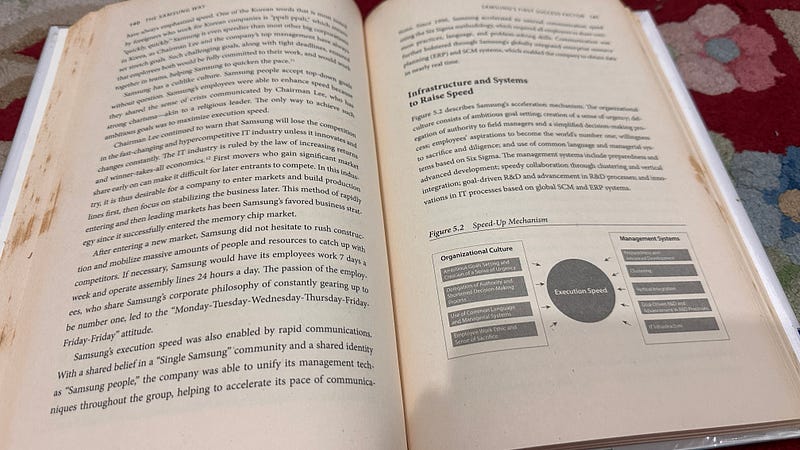
“‘The Samsung Way’ is not just a roadmap to success; it’s a testament to how visionary leadership and strategic innovation can elevate any enterprise.”
Immersing myself in “The Samsung Way,” authored by Jaeyong Song and Kyungmook Lee, was a revelatory experience that shed light on the foundational principles propelling Samsung from an underperforming electronics firm to a global colossus.
This book, underpinned by a decade of rigorous research and enriched by insights from over 80 top Samsung executives, serves as a compelling narrative and a blueprint for business excellence.
My fascination with Samsung’s transformative journey stems from its dramatic overhaul, a metamorphosis that not only reshaped its own destiny but also set a benchmark for organizational success worldwide.
“The Samsung Way” transcends being a mere publication; it is a profound elucidation of strategic acumen, a manual deciphering how Samsung harnessed nuanced decision-making, innovation, and cross-cultural integration.
Central to Samsung’s renaissance was Chairman Lee Kun-Hee’s visionary New Management Initiative, a cornerstone for the company’s revival.
Song and Lee meticulously unpack the “Three Paradoxes of Management,” strategic pillars that appear contradictory yet interlace to forge success.
“By harmonizing innovation with tradition, ‘The Samsung Way’ showcases how to achieve sustainable growth and a competitive edge in today’s dynamic business landscape.”
These include accelerating decision-making and execution, harmonizing convergence with competitive prowess in core domains, and blending Western and Eastern management philosophies — each a testament to practical wisdom validated through Samsung’s ascent.
The book compellingly navigates the dichotomy between Eastern and Western management paradigms, presenting Samsung’s model as an exemplary fusion that leverages global best practices.
This synthesis is especially resonant today, amidst the relentless pace of technological evolution and fierce international competition.
For leaders and business professionals across spectrums, “The Samsung Way” is a reservoir of actionable insights. It delineates strategies for streamlining decision processes, fostering interdisciplinary synergy, and embedding a culture of innovation.
The narrative provides a framework for realizing economies of scale while maintaining agility, a dual mandate vital for thriving in today’s hyper-competitive landscape.
For individuals like me, who seek wisdom from successful paradigms, the book is an affirmation of the enduring value of learning, adaptation, and visionary leadership.
It illustrates how to imbue every organizational stratum with innovation, ensuring that strategic thinking and creativity are not confined to the executive echelons.
In conclusion, “The Samsung Way” is not just a treatise on business strategy; it is an inspirational guide for those aiming to excel in the modern corporate milieu.
It champions a balanced approach, intertwining strategic foresight, operational excellence, and cultural depth.
For anyone eager to grasp the mechanics of Samsung’s success or to incorporate its tenets into their leadership repertoire, Song and Lee’s work is an essential compendium.
Reflecting on the insights shared by Song and Lee, I am invigorated with a renewed sense of purpose and determination. Samsung’s story, as articulated in this book, exemplifies the power of strategic clarity, relentless innovation, and purposeful leadership.
It’s an invigorating narrative that not only instructs but also inspires, prompting us to chart our courses to success, inspired by the pioneering ethos encapsulated in “The Samsung Way.”
“‘The Samsung Way’ is more than a book; it’s a manifesto for those who dare to dream big and are committed to turning those dreams into reality through relentless pursuit and strategic acumen.”
Get this book “The Samsung Way” from Amazon. (Note: Affiliate link)
Throughout 2023, I diligently crafted over 100 articles, yet disappointingly, more than 80% garnered fewer than ten views each.
This was disheartening and exhausting.
The purpose of writing is to communicate our thoughts and insights to our audience, yet, for a significant part of the year, my follower count stagnated.
Reflecting on this, I realized several errors in my approach.
Below are the crucial mistakes I identified and my resolve to rectify them in the upcoming year.
Personal Reflections on My Writing Shortcomings in 2023
Embracing Emotional Resonance:I acknowledge that my previous writings lacked emotional engagement, often feeling mechanical and distant. Moving forward, I am committed to writing with authenticity and passion, aiming to connect genuinely with my readers.
Prioritizing Problem-Solving: I recognize my past focus on imparting knowledge without addressing real-life applications or solutions. In 2024, I will strive to provide actionable insights and solve pertinent issues, thereby adding substantial value for my readers.
Engaging With My Audience:I realize the importance of selecting topics that resonate with my audience. In this 2024 year, I pledge to tune into their interests and needs, fostering a stronger connection through relevant and impactful content.
Mastering Headlines and SEO:I’ve learned the significance of compelling headlines and search engine optimization. By enhancing these aspects, I aim to broaden my reach and ensure my writings are easily discoverable and engaging.
Simplifying My Language:Reflecting on my past work, I see the necessity of avoiding overly complex sentences. I will focus on clarity and accessibility, making my articles easier to read and understand.
Building Genuine Connections:I intend to deepen my engagement with fellow writers, moving beyond superficial interactions. By fostering sincere relationships, I can learn, grow, and contribute to a supportive writing community.
Strategizing Content Republishing: I acknowledge the ineffectiveness of republishing old content without a clear strategy or updates. I plan to rejuvenate my previous articles thoughtfully, ensuring they offer fresh insights and remain relevant.
Staying Abreast of Trends:I have realized my oversight in not leveraging trending topics within my field. In 2024, I aim to stay informed and capitalize on current discussions, attracting a broader audience through timely and pertinent content.
Offering Practical Guides: I see the value in providing practical, step-by-step guidance in my writings. I will incorporate more “How-To” articles, offering readers clear, actionable advice that they can readily implement.
Sharing My Writing Journey: I have not consistently shared my personal writing experiences, triumphs, and setbacks. By opening up about my journey, I hope to inspire and connect with others on a more personal level.
These reflections are a condensed version of my learnings, guiding my path to improved writing in 2024.
Your City, Your Say: How Engagement Shapes Smarter Urban Living
The importance of Citizen engagement in smart city projects
Through various discussions and conferences, I’ve explored and emphasized the significance of involving community members in shaping our urban environments.
Let’s understand why citizen engagement is paramount, drawing from both practical insights and broader discussions I’ve encountered.
Starting with tailored solutions, consider this analogy: you wouldn’t prepare a meal without considering the preferences of those you’re serving.
Similarly, the development of smart cities needs to reflect the community’s actual requirements and desires.
Involving residents in the planning process ensures the outcomes are relevant and beneficial, much like a well-received, customized dish.
Moving on to increased adoption, involvement in the development process fosters a sense of ownership among citizens.
This sense of investment leads to a higher likelihood of embracing and utilizing new technologies.
It’s akin to putting effort into building something: you’re naturally more inclined to value and use it.
Transparency is Key
Transparency and communication are fundamental in nurturing trust. Keeping citizens informed and valuing their input fosters a sense of respect and partnership.
This foundation of trust is essential for smooth implementation and acceptance of new initiatives within a smart city.
Next, let’s discuss the importance of better outcomes.
Avoiding Missteps
Collaborative input ensures the development of inclusive and effective solutions, avoiding missteps and maximizing benefits for the entire community. This collective intelligence approach ensures resources are allocated effectively, meeting genuine needs.
Resource optimization refers to the strategic and judicious use of available resources, guided by community feedback.
This approach not only prioritizes essential projects but also ensures efficient utilization of funds and efforts, akin to meticulous planning that maximizes the quality and impact of a project.
Empowering the Community
Community empowerment is a profound aspect of citizen engagement.
When individuals contribute to the development of their environment, they develop a sense of stewardship and engagement, motivating them to contribute positively to their community’s well-being.
Diverse perspectives fuel innovation and creativity, essential elements in the evolution of smart cities.
Bringing together varied voices and experiences fosters a creative milieu that can lead to innovative solutions and breakthroughs.
Social Inclusion
Social inclusion ensures that the benefits of smart city initiatives are equitably distributed, and that all community members have a voice in the process.
Inclusion strengthens the social fabric and ensures that the advancements benefit a broad spectrum of residents.
Citizen engagement is not merely a beneficial addition to smart city projects; it is a vital component that ensures these initiatives are successful, sustainable, and aligned with the community’s needs.
Engaging citizens transforms them from passive recipients to active contributors, enriching the development process and outcomes of smart city initiatives.
If you would like to engage with Favoriot for further discussions on the Smart Cities project, do not hesitate to contact us.
Breaking Through the Noise: How I Carved My Niche in the Content Chaos
Every Like, Comment, and Share: The Story of My Digital Pursuit
Try everything on Social Media. Photo from Unsplash.
Everyone seems to be chasing the elusive dream of turning their online presence into gold.
That’s been me for the longest time, hopping from one social media platform to another, pouring my heart and soul into content creation, only to watch the numbers crawl.
Here’s my tale of digital hustle, occasional despair, and a glimmer of hope at the end of the tunnel.
Start with YouTube
It all began with YouTube, the holy grail of video content.
I thought, “Hey, I have ideas, I can be engaging, let’s give this a shot.”
So, I dived headfirst into the world of video making, learning the ropes of editing, scripting, and whatnot.
I imagined myself as the next big thing, with viewers hanging onto my every word, my every video.
Reality hit hard.
Despite the hours, days, and weeks I invested, my videos languished in obscurity.
The views were meager, the subscriber count dismal. Monetizing?
Ha, that was a distant dream.
YouTube, it seemed, was not my golden ticket.
Pivot to Instagram, Facebook and X
Undeterred, I pivoted to Instagram, Facebook, and the mysterious ‘X’. “Different platforms, different strategies,” I told myself.
I crafted posts, curated images, and waited for the magic to happen.
Spoiler alert: it didn’t.
My content was, apparently, a drop in the vast ocean of digital noise. I wasn’t influencing, engaging, or monetizing anything.
Finally, my follower count ticked up, and my videos gained traction.
But here’s the kicker — I had no clue how to convert that attention into cash.
Selling products on TikTok Live? Not my cup of tea.
I was content with the likes and shares, but they didn’t pay the bills.
Trying out Pinterest
Pinterest was next on my list. “Visual appeal,” they said. “It’s all the rage.”
So, I pinned. I pinned photos, videos, infographics — you name it. The result?
A resounding meh. My pins floated aimlessly in the vast sea of better, brighter content.
Merchandise here I come!
Redbubble offered a glimmer of hope. “Turn your creativity into merchandise!” they proclaimed.
So, I did. I designed, uploaded, and… waited.
A sale here, a sale there, but nothing to write home about.
My earnings were laughable, barely enough to buy a cup of coffee.
Time for Affiliate Marketing!
Amazon affiliate marketing was another venture that promised much but delivered little.
I linked, I promoted, I anticipated.
Alas, the commissions were as elusive as ever. My dreams of passive income remained just that — dreams.
Then, almost as a last resort, I stumbled upon Medium.
A platform for writers, they said. “Share your stories, your insights, your voice.”
So, with a cautious optimism, I began to write.
And what do you know?
People read. They clapped. They commented.
My articles, my thoughts, laid bare for the world to see, and they resonated.
Medium became my haven, my niche.
I discovered I could earn, albeit modestly, from my writing.
Each article contributed a few cents, sometimes dollars, to my account.
It wasn’t a fortune, but it was something tangible, a validation of my efforts.
Buoyed by this newfound success, I ventured further.
I promoted my eBooks on Medium, connecting with an audience keen on my content, my style.
Gumroad became my ally, a platform where my digital books found readers and, yes, buyers.
Reflecting on this journey, I’ve learned that the digital world is fickle, unpredictable.
Success on social media is a blend of talent, timing, and sheer luck.
For years, I chased the dream across various platforms, only to find my footing in a space that valued substance over style, quality over quantity.
Now, as I pen my thoughts on Medium, earn enough to indulge in a coffee, or cover my commute toll, I realize that success isn’t just about the numbers or the dollars.
It’s about finding your voice, your audience, and, importantly, your satisfaction in the content you create.
So, to all the digital wanderers out there, my advice?
Keep exploring, keep creating.
Your Medium might just be around the corner, waiting for you to make your mark.
And who knows?
That mark might just turn into your morning coffee, one word at a time.
Why I Now Prefer Panel Discussions Over Solo Presentations
Throughout my career, I’ve had the privilege of being invited to speak at various conferences, a role I initially cherished for the autonomy and control it afforded me.
As a speaker, I could meticulously plan my presentation, control the flow of my talk, and ensure that every slide was a perfect reflection of the points I wanted to convey.
This level of preparation provided me a comfort zone, a safe harbor in the sometimes unpredictable sea of public speaking.
Transitioning from Speaker to Panelist
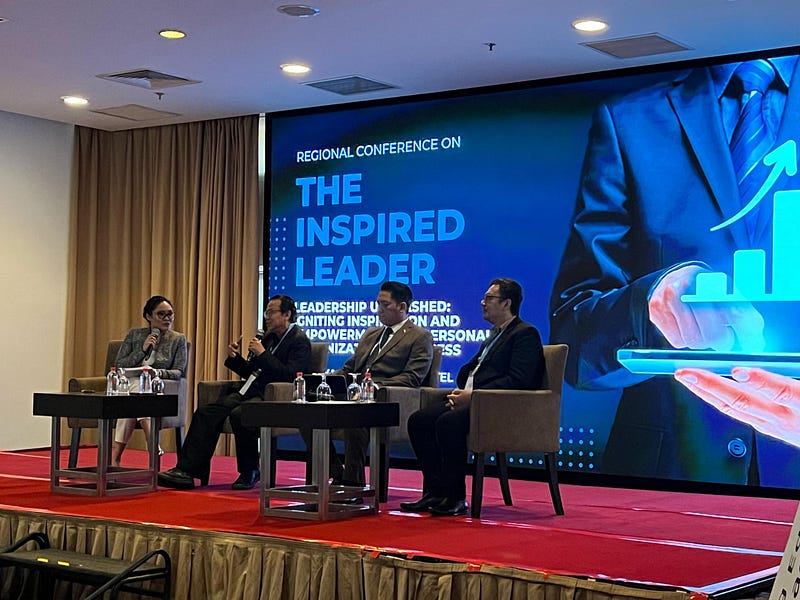
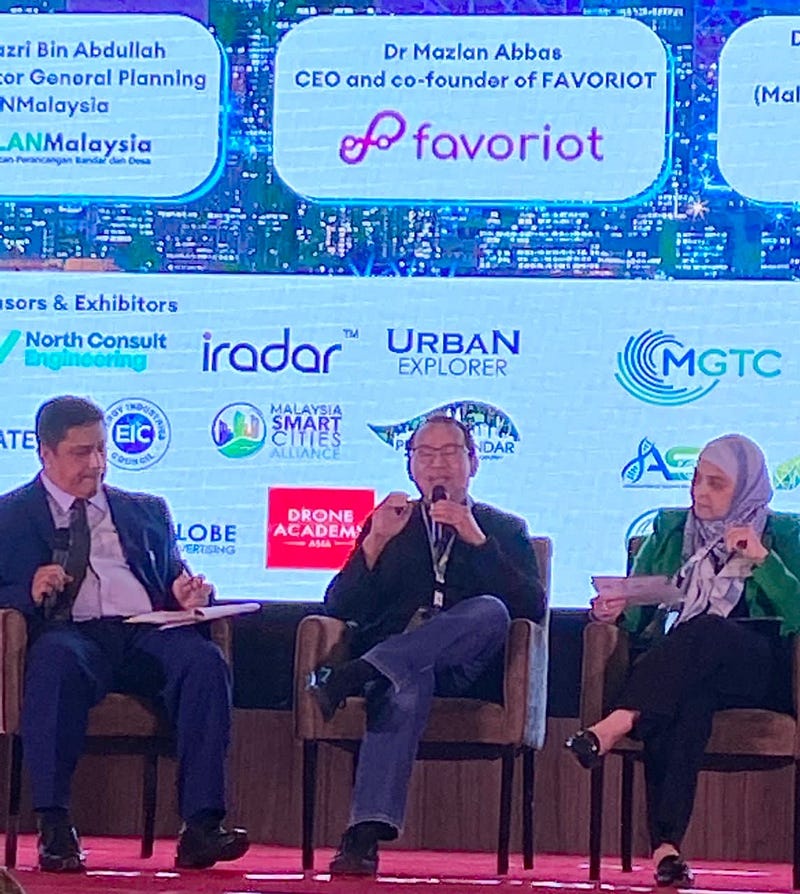
However, my experiences took an interesting turn when I began receiving invitations not as a sole speaker but as a panelist.
The dynamics of panel discussions are inherently different: instead of a monologue, it’s a dialogue – not just between the panelists but with the audience as well.
Suddenly, I found myself on stage with two or three other experts, each with their unique perspectives and areas of expertise, all under the guidance of a moderator whose job was to weave our individual narratives into a cohesive, engaging session.
Initially, this new role was a source of anxiety.
Sitting on stage, not knowing exactly what question would come next, I worried about whether I would be able to respond with the right mix of fact, insight, and eloquence.
Would I be able to hold the audience’s attention? Could I contribute meaningfully to the discussion and hold my own alongside my fellow panelists?
Over time, however, I discovered that most panels are less daunting than they seem.
Panelists often receive a set of questions in advance, allowing us to prepare our thoughts and consider our responses.
Some organizers even allow panelists to suggest questions, providing an opportunity to steer the conversation toward areas of our expertise or interest.
Facing Uncertainty on Stage
But even the best preparations can’t cover everything, and there are always moments when the moderator goes off-script or delves deeper into a topic than the prepared questions had anticipated.
In these situations, I learned the value of active listening, staying fully engaged not just when it was my turn to speak but throughout the entire session.
This attentiveness helped me respond more thoughtfully and dynamically, weaving my responses into the ongoing narrative of the discussion rather than delivering pre-packaged answers.
Preparation Meets Improvisation
In my early days as a panelist, I considered bringing notes on stage, a safety net of bullet points and facts. Yet, this approach soon felt contrived, more like a performance than a genuine conversation.
I realized that true professionalism in this context meant showing up authentically, ready to engage with the topic and the audience without the crutch of scripted responses.
To navigate these live, unscripted moments, I developed a technique akin to a mental mind map.
When listening to a question or another panelist’s response, I’d quickly organize my thoughts, connecting the dots between the discussion points and my own knowledge and experiences.
This mental mapping allowed me to respond more fluidly, adding depth and context to the conversation.
The Power of Humor and Storytelling
Humor became another tool in my arsenal, a way to lighten the mood and connect more personally with the audience.
Even in serious discussions, a well-placed joke or anecdote can humanize the panelists, breaking down barriers and fostering a more engaging, relatable session.
Building on Collective Insights
I also learned the value of building on my fellow panelists’ points, weaving their insights into my responses to create a richer, more interconnected dialogue.
This collaborative approach not only enriched the content of the discussion but also highlighted the collective expertise of the panel, creating a more compelling and informative experience for the audience.
Over time, my perspective on panel discussions has transformed.
What once felt like a daunting challenge has become a preferred format, offering a dynamic and interactive forum that forgoes the rigidity of prepared slides for the spontaneity of real conversation.
Today, I embrace these opportunities, confident in my ability to contribute thoughtfully and authentically, no matter where the discussion may lead.
Unintended Consequences: When Medium’s Guard Against Bots Backfires. Photo by Fabien TWB on Unsplash
A Writer’s Worst Nightmare – The Day My Followers Vanished
Did you notice this curious situation with Medium and its recent follower fiasco, which, honestly, has more twists and turns than a high-speed chase scene in an action movie.
So here I was, minding my own business, when I started noticing a dip in my Medium follower count.
At first, I thought, “Maybe my last article wasn’t a hit?”
But when I saw other writers voicing the same concern (for example DeryaSefer mentioned in her “Is The “Great Medium Purge” Over?” article recently), I realized it wasn’t just me. Something bigger was happening.
After poking around a bit, I discovered that Medium had launched a crackdown on scammers and fake accounts.
On paper, that sounds fantastic, right?
No one wants their feed cluttered with spam or to be duped by some bot.
But as the numbers dwindled, it became clear that some genuine accounts were also getting axed in the process. That’s where things got messy.
Now, losing followers is a bummer for anyone trying to build a presence or a brand.
But for genuine writers and creators who’ve poured their soul into their work, watching their follower count drop for no fault of their own? That’s heartbreaking.
And it begs the question: How did the real accounts get mistaken for fake ones?
One theory is that some users might have mistakenly reported genuine accounts.
But this feels like a tech-savvy platform like Medium should have safeguards against such mishaps, right?
Unfortunately, even the best systems aren’t foolproof, and it seems like some genuine creators got caught in the net meant for the bad guys.
My Nightmare with Instagram
This whole debacle reminds me of a personal nightmare I had with Instagram.
I find out there’s an imposter account out there, parading around with my identity, using my profile photo, and my personal album.
Creepy, right?
Naturally, I reported it, expecting Instagram to leap into action and take down the fraudster.
But here’s the kicker: Instead of targeting the imposter, Instagram blocked my account.
My genuine, real-deal, this-is-me account. I reached out to their customer service, tried every avenue available to plead my case, but hit wall after wall.
In the end, I couldn’t get my account back.
This experience was frustrating, to say the least.
It showed me firsthand how these well-intentioned measures to protect users can backfire spectacularly.
Medium is purging the Bots?
And now, seeing something similar unfold on Medium, it feels like déjà vu.
The impact of such blunders isn’t just a number game.
It’s about the trust and connection between platforms and creators.
Every time a genuine account gets unfairly penalized, it chips away at that trust.
For emerging writers and creators, building an audience is tough enough without these hurdles.
And when they see their hard-earned followers vanish overnight, it can be a major setback, not just numerically but also mentally and emotionally.
So, what can be done?
First off, platforms need to refine their detection mechanisms. They need to ensure that their nets catch the right fish, so to speak.
Second, there should be a more transparent and efficient process for appealing wrongful actions. No one should be left shouting into the void, like I was with Instagram.
Moreover, this situation highlights the importance of not putting all your eggs in one basket.
Relying solely on one platform for your audience and reach is risky, as these incidents show.
Diversifying your presence across multiple platforms can provide a safety net if one goes haywire.
While the intent behind cleaning up platforms is commendable, it’s vital that these actions don’t penalize the very users they aim to protect.
The balance between security and fairness is a delicate one, and as these platforms evolve, one can only hope that they find better ways to distinguish the good guys from the bad.
To all my fellow creators feeling the pinch of lost followers, I feel you.
It’s a frustrating ordeal, but it’s also a reminder of the resilience needed in the digital age.
We adapt, we reach out, we diversify, and above all, we keep creating, no matter what the follower count says.
After all, our true value isn’t just a number on a screen — it’s in the content we create and the impact we make.
“Letting go of meticulous tracking was not a step back, but a leap forward into a more intuitive and fulfilling way of connecting with my audience.”
It’s been a wild ride with ups and downs, but I learned a lot along the way. Photo from Unsplash.
I want to share my little adventure into the world of self-discipline and organization, particularly focusing on my writing and publishing journey on Medium.
It’s been a wild ride with ups and downs, but I learned a lot along the way.
It all started when I noticed that my writing and publishing were all over the place.
Some days I felt like a content-producing machine, while on others, I couldn’t even muster up the energy to type a single word.
My posts were random, my thoughts scattered, and my audience engagement was as unpredictable as the weather.
I knew I needed a change, a structure to bring some order to my chaos.
So, with a burst of motivation, I decided to discipline myself and structure my writing and publishing process.
The plan was simple: track everything in an Excel spreadsheet.
I wanted to record data that captured the date and time of my postings, whether the article was behind a paywall or not, if I needed to notify my email subscribers, and whether the article was ready to publish.
It sounded like a foolproof plan, right?
For about 1.5 weeks, I was on it.
I meticulously entered data into my spreadsheet after each post. It felt good at first, like I was in control of my content.
I could see patterns emerging and thought I was onto something big.
I had visions of optimizing my posting schedule to the minute, maximizing my audience engagement, and perhaps even predicting the future!
But let me tell you, it was exhausting.
The initial thrill of organization quickly gave way to the tedium of data entry.
Every post became a chore, another row to fill, another set of cells to format. The joy of writing and sharing my thoughts was overshadowed by the mechanical process of tracking everything.
And so, after almost 1.5 weeks, I gave up. I just couldn’t keep up with the self-imposed bureaucracy.
Now, I’ve adopted a simpler approach to scheduling my posts.
Instead of getting bogged down in the minutiae, I focus on a broader strategy.
I discovered that posting just before midnight (Malaysian time) yields the best engagement for my audience.
This revelation was quite a surprise and highlighted the importance of timing in content publishing.
The difference between my old random posting and my current semi-structured schedule is night and day.
My audience knows when to expect new content, and I can prepare my posts in advance, ensuring they’re of higher quality and better thought out.
It’s a more relaxed approach, but it’s far more sustainable and enjoyable for me.
Through this experience, I learned a valuable lesson: balance is key.
While it’s important to have some structure and discipline in your work, especially when you’re aiming to build an audience and engage with them regularly, it’s equally important not to get lost in the details.
The essence of writing — sharing ideas, expressing thoughts, connecting with others — should always come first.
In the end, I’ve found a rhythm that works for me.
It’s not as strict as my initial plan, but it’s effective.
My posts are more consistent, my audience engagement has improved, and, most importantly, I enjoy the process.
Writing is a passion, and while discipline is necessary to harness it, it should never extinguish the joy it brings.
So, to anyone struggling to find their footing in the world of online content creation, remember this: find your balance.
Don’t be afraid to try different methods to find what works best for you, but always keep your love for writing at the forefront.
It’s a journey, with its share of trials and errors, but it’s worth every step.
Remember to Subscribe to receive email updates on every post I publish.














 Dr. Mazlan Abbas