In the end, the best tales are those that take time to unfold.
Photo by Pim Chu on Unsplash
As I sit here reflecting on my past, I’m fighting a battle of emotions—a mix of frustration and pride.
People love to sell us stories of overnight success, of magic shortcuts that supposedly lead to instant fame and fortune. “Oh, how different reality is,” I often remind myself.
“Remember why you started, Mazlan?” Ten years ago, I was brimming with a desire to share my thoughts and insights with the world.
I took the plunge and began writing online.
Since then, it’s been a whirlwind filled with its own highs and lows.
I’ve built a community, launched a newsletter, and published books. I’ve grown immensely as a writer.
Photo by Aaron Burden on Unsplash
To outsiders, it may appear as though I’ve stumbled upon a glamorous success story. “But let me pull back the curtain for you,” I’d say if they were here.
Most people don’t see the immense amount of work that goes into each piece of content.
“I’ve published hundreds of stories to date!” Each one is like laying a brick in a vast wall.
I’m building brick by brick.
It can be tedious, and sometimes it truly is.
I’ve spent countless lonely hours at my keyboard, pouring my heart and soul into articles that sometimes never see the light of day — ending up in my drafts folder or disappearing into the internet’s black hole.
My follower count on Medium grew to over 2,000, which is an achievement.
Some articles have garnered good earnings, which are always a sweet bonus.
Photo by Josh Appel on Unsplash
But behind these small victories lies a vast sea of quickly forgotten content.
“And frankly, I’m still far from making a living solely from my writing,” I sigh.
During moments of reflection, I often ask, “Is all this effort worth it?”
Doubt creeps in, and I grapple with thoughts of giving up.
During these times, I pause and reconnect with my initial motivations.
“Why did you start writing, Mazlan?” My goal has always been to empower people through my writing and create a community.
Being your coach and cheerleader is no easy feat — it’s mentally exhausting.
Photo by Tim De Pauw on Unsplash
Yet, there’s nowhere else I’d rather be than right here, right now, doing what I love, regardless of the outcome.
I’ve realized that every article I write, whether a hit or a miss, contributes to my growth as a writer.
When I doubt myself among successful peers, I step back.
“Look how far you’ve come, Mazlan,” I remind myself.
It’s essential to appreciate the journey.
Photo by Khamkéo Vilaysing on Unsplash
The journey, with all its ups and downs, is what matters most.
The process of creating and expressing oneself is where the real value lies.
“You can’t fail if you’re doing what you love,” I affirm.
“But the moment you stop loving what you do, failure sneaks in.”
So, to anyone feeling overwhelmed by the pressure to succeed overnight, remember this: real success is not about hitting it big quickly.
It’s about resilience, writing your story over many nights, and staying true to your passion and purpose, no matter what.
“Let’s keep writing our own stories, filled with persistence and passion,” I encourage myself and others.
In the end, the best tales are those that take time to unfold.
Like my story? Remember to Subscribe to receive email updates on every post I publish.
As a technology entrepreneur deeply involved in IoT and smart cities, my days are often filled with writing: crafting blog posts, preparing speeches, or detailing the latest in tech advancements.
The process of turning ideas into written words is essential, not just for sharing knowledge but for clarifying my own thoughts.
However, finding the motivation to write daily can be a monumental task.
Here, I’ll share a more personal view of how I faced these challenges.
Discovering My Purpose
Photo by Kylo on Unsplash
“Why am I doing this?” This question surfaces frequently, especially on days filled with myriad responsibilities.
Writing isn’t just part of my job – it’s my primary method for sharing insights and educating others about emerging tech.
Realizing that my writing has the power to demystify complex technologies for many rejuvenates my purpose and fuels my drive.
It’s about making a difference, one article at a time.
Setting Small, Achievable Goals
Photo by Afif Ramdhasuma on Unsplash
“Let’s break this down.” When the prospect of writing something extensive looms over me, I remind myself to take it one step at a time.
Setting small goals – like drafting a few hundred words before lunch – seems more manageable. Each small victory not only propels me forward but builds up to larger accomplishments without the overwhelm.
“Just start with one paragraph, Mazlan,” I often mutter to myself, and before I know it, I’m several pages in.
Minimizing Distractions
Photo by Nick Fewings on Unsplash
“Focus, Mazlan.” In a world where notifications never cease, finding focus is crucial.
I strategize to combat distractions by creating a physical and digital environment conducive to writing.
This means silencing my phone and using apps to block off the digital noise.
Establishing specific times to write also compartmentalizes my day effectively, allowing uninterrupted stretches for writing amidst my other tasks.
Developing Good Writing Habits
Photo by Drew Beamer on Unsplash
“Plan first, edit later.” I’ve learned to streamline my writing process over the years.
Outlining is the first step, helping me organize my thoughts and structure my piece.
I avoid editing as I write to keep the flow going. “Leave the editing for later, focus on getting your thoughts out now,” is a mantra I repeat.
Breaks are also part of my routine – essential pauses that refresh my mind. “Time for a walk,” I’ll say, stepping away to clear my head.
Creating a Publishing Schedule
Photo by Jazmin Quaynor on Unsplash
“What’s on the schedule?” Having a clear publishing plan each week keeps me accountable.
It’s not just about maintaining productivity but also about satisfying the reader’s expectations.
I lay out what needs to be written and when, adjusting as needed but always keeping the rhythm.
“Monday for the blog, Wednesday for the white paper,” I plan, ensuring each project gets its due time.
Continuously Seeking Inspiration
Photo by Martin Shreder on Unsplash
“Need new ideas.” Staying inspired is critical.
I seek fresh perspectives through reading, conversations, or industry events.
Each new piece of information is a potential spark for writing.
“This could be a great topic for my next piece,” I think as I note down ideas that can be expanded into full articles.
Reflecting on Achievements and Setting New Targets
Photo by Salonagility.com Daniel on Unsplash
“Look how far you’ve come, Mazlan.” Reflecting on past writings and the milestones achieved is incredibly motivating.
It reminds me of the journey and the impact of my work. Setting new goals based on past successes pushes me to keep going.
“What’s the next challenge?” I ask myself, aiming always to contribute more meaningfully.
Engaging With My Audience
Photo by Melanie Deziel on Unsplash
“What do they think?” Finally, interacting with my readers brings me direct motivation.
The feedback I receive shapes my future writings and keeps me connected to my audience’s needs.
“This suggestion is great; I should cover this topic next,” I consider, making note of reader inputs.
Writing daily is a complex interplay of discipline, passion, and purpose.
Through manageable goals, structured schedules, and ongoing dialogues with myself, I stay motivated, making every piece a stepping stone to broader impacts in the tech world.
Each day is a new chance to influence through words, and I am here for it, one sentence at a time.
Feel free to leave any feedback and share what works best for you as a writer!
Stop being your own harshest critic; your writing is improving beautifully!
Photo by Jodie Cook on Unsplash
Take a deep breath and let this article be a peaceful moment for reflection. Here are 19 signs to remind you of your growth as a writer, some obvious and others more nuanced, all worth your consideration. Let’s get right into it.
You doubt your writing Self-doubt in writing isn’t always negative. It means you’re open to improving and can critically assess your work. The best writers often question their work, pondering if there might be a better way to express their thoughts.
You’ve completed writing projects Whether it’s an article, a blog post, or even a book, finishing a writing project is a milestone. Celebrate the completion, regardless of the outcome.
You’ve evolved in your writing style Over time, your writing style has developed and matured. You can see a difference in your voice and technique compared to last year, which is a sign of growth.
You read regularly Writers are readers. If you find yourself reading a lot — whether books, articles, or anything else — it’s helping you absorb different styles and expand your vocabulary.
You write regularly The more you write, the better you get. Consistency is key in writing, and if you’re managing to write on a regular basis, you’re on the right track.
You’ve faced writer’s block and overcome it Experiencing and overcoming writer’s block shows resilience and dedication to your craft.
You receive feedback on your writing Getting feedback, whether positive or constructive, is invaluable. It means people are reading your work and engaging with it, and that you’re open to improvement.
You’ve been published If your work has been published somewhere — anywhere — it’s an achievement. Each publication is a step forward in your writing career.
You’re part of writing communities Engaging with other writers for support, critique, and sharing experiences is a strong indicator of professional growth and integration.
You have favorite writing tools and resources Developing preferences for certain tools or resources means you’re fine-tuning your writing process.
You understand your strengths and weaknesses Recognizing what you’re good at and what you need to improve is crucial for personal development in writing.
You’re proud of some of your pieces Having work that you’re proud to show others is a sign that you’re achieving quality in your writing.
You have a dedicated writing space A personal space for writing helps you focus and take your craft seriously.
You’ve let go of pieces that don’t work Being able to scrap or revise work that isn’t working is an important skill that saves time and energy for better projects.
You find joy in the writing process Enjoying the act of writing, not just the results, is a true marker of a passionate writer.
You know how to recover from criticism If you can receive criticism and use it constructively without letting it discourage you, your mindset is aligned for success.
You see writing as a lifelong journey Understanding that writing is a continuous learning process shows maturity and commitment.
You experiment with different genres and formats Experimenting with your writing shows that you’re not afraid to explore and innovate.
You feel that writing is part of your identity When writing becomes a core part of who you are, it means you’re deeply connected to your craft.
Follow the six (6) steps to become a better writer.
Photo by Chase Clark on Unsplash
As a writer who has penned hundreds of articles through blogging and writing technical journals, I’ve had my fair share of learning curves when crafting engaging content.
The journey from a novice scribbler to an adept wordsmith has been both challenging and rewarding. Through it, I’ve gathered some insights that I believe can benefit any aspiring writer.
Today, I’d like to share my personal experience and the tips I’ve developed for writing more focused and engaging articles.
When I first started writing, I was overwhelmed by the desire to say everything at once.
My drafts were often a jumble of thoughts, anecdotes, and data that, while individually interesting, did not cohesively support a single point. This lack of focus not only diluted the impact of my writing but also confused my readers.
Photo by Stephen Kraakmo on Unsplash
I remember one particular instance where an editor told me, “You’ve lost track of what you’re saying. This could be two or three articles.”
That feedback was a turning point for me. It made me realize the importance of narrowing my focus and sticking to one subject at a time to avoid turning my articles into mazes filled with dead ends.
Here’s how I started refining my approach:
Step 1: Structuring My Writing
Initially, revisiting the basic structure of essays and articles felt like a step backward.
But I quickly realized that even a casual piece needs a skeleton to support it. Each article starts with an introduction, in which I introduce the topic and explain why it matters.
This is followed by the body, where I delve into the details, using subheadings and paragraphs to organize my thoughts and make the content digestible.
Finally, I conclude by tying all my points together, referring back to the introduction, and leaving the reader with a final thought. This structure organizes my writing and helps the reader follow along easily.
Step 2: Knowing My Audience
One of the key lessons I learned early on was the importance of understanding my audience.
Who are they? What do they care about? How can my article add value to their lives?
Answering these questions before I start writing helps me tailor my content to the people most likely to read it.
Step 3: Paring Down My Ideas
Having too many ideas is more problematic than having too few.
I learned to be ruthless in cutting out or setting aside ideas that don’t directly support my main topic.
This streamlines the article and saves those “extra” ideas for future pieces, effectively building up a stockpile of content to draw from.
Step 4: Adding Personal Touches
While structure and focus are crucial, injecting personal anecdotes and emotions into my writing makes it resonate on a human level.
Whether it’s a touching moment shared with a grandchild or a frustrating day trying to master verb conjugations, these snippets bring my narrative to life and engage readers on a deeper level.
Step 5: Research and Validation
As much as personal stories enrich an article, facts, data, and expert opinions bolster credibility. I always take the time to research my topics thoroughly, ensuring that every claim I make can be backed up.
This is particularly important when writing about topics like health, finance, or technology, where misinformation can have real-world consequences.
Step 6: Editing with Precision
Finally, no article is ready for publication without a thorough edit.
This process involves proofreading for grammar and spelling and revising sentences and paragraphs for clarity and impact. I read my drafts aloud to catch awkward phrasings and ensure natural flow.
After consistently implementing these steps, I noticed a significant improvement in the engagement and clarity of my articles.
Seeing readers respond positively is gratifying, especially when an editor sends a piece through with few or no revisions.
Photo by Slim Emcee on Unsplash
To encapsulate, here are the essential tips for writing focused and engaging articles that I’ve shared:
Structure Your Writing: Use a clear introduction, body, and conclusion.
Understand Your Audience: Tailor your content to their interests and needs.
Focus Your Topic: Limit your scope to maintain clarity and depth.
Inject Personal Stories: Make your writing resonate more deeply with readers.
Back-Up Claims: Use research and data to lend credibility to your article.
Edit Thoroughly: Never underestimate the power of revision for enhancing readability and impact.
Writing is more than a mechanical task; it’s a form of communication that requires empathy, clarity, and, most importantly, a connection with your reader.
As writers, our goal is to share information and invite our audience into an enriching and enlightening conversation.
By continually honing our craft and focusing on these principles, we improve our skills and enhance the reader’s experience.
While the process can sometimes feel daunting, creating a well-received article is immensely rewarding.
Each piece is a learning experience, an opportunity to connect with others and share a part of ourselves.
This iterative process of writing and feedback makes a writer’s journey so uniquely fulfilling.
Remember, the art of writing is not just about adhering to techniques; it’s about evolving and adapting.
The more we write, the more we learn about ourselves and our audience, and the better we communicate our thoughts and ideas effectively. This beautiful growth cycle fuels personal and professional development.
I encourage you to embrace the process, cherish your unique voice, and continue to share your insights with the world.
The path may be lined with challenges but also rich with rewards.
Keep writing, keep learning, and most importantly, keep engaging your readers with every word you write.
Each journey challenges me, changes me, and ultimately rewards me in ways I could not have anticipated.
“Hiking boots” – Photo by Wes Hicks on Unsplash
Every time I lace up my hiking boots and set out for the mountains, I feel a surge of anticipation, much like when I open a new document on Medium. There’s something about standing at the base of a towering mountain or facing a blank page that fills me with a mixture of excitement and apprehension.
Each journey, whether it be on rocky paths or through lines of text, begins with a simple step forward accompanied by a simple thought: “Let’s see where this takes me.”
As I begin my hike, the path before me is often shrouded in mist, the peak nowhere in sight – similar to the initial stages of writing, where my ideas are muddled and my end goal unclear. “Is this really a good idea?” I ask myself as I face the steep inclines and the daunting task of organizing my thoughts into a coherent narrative.
Photo by Brad Barmore on Unsplash
“What if I don’t find anything new to say?” The self-doubt is as real as the rugged terrain under my feet.
However, as I persist, the path gradually becomes clearer. With each step uphill, I find my rhythm, and similarly, each sentence crafted brings me closer to clarity in my writing.
“Just focus on the next line, the next step,” I tell myself, pushing through the initial resistance.
This mantra helps me overcome the toughest parts of both my hike and my drafts. It’s all about momentum, about pushing forward even when the peak seems unreachable.
The solitude of hiking allows me to delve deeper into my thoughts, much like the solitary nature of writing.
As I ascend, surrounded by nothing but the sound of my breath and the rustle of leaves, I enter into a dialogue with myself. “Why am I here? What am I hoping to discover?” These questions echo in my mind, guiding my hiking and writing journeys. In both scenarios, it’s a quest for discovery – of the self and of the world around me.
“Catching a breath” – Photo by Simon English on Unsplash
Occasionally, I stop to catch my breath and look back at how far I’ve come, taking in the view. In writing, these moments occur when I pause to read over what I’ve written. I assess the structure, refine the flow, and ensure that each paragraph leads logically to the next.
“Does this piece convey what I feel? Is the emotion palpable?” Just as I gauge the stability of the trail behind me, I ensure the stability of my narrative structure.
Nature’s unpredictability is another element that hiking and writing share. Just as a sudden change in weather can force me to alter my hiking route, unexpected insights or feedback can shift the direction of my article.
“This isn’t working. Maybe I should approach this from a different angle,” I think when a particular section feels as insurmountable as a steep, slick rock face.
Flexibility and adaptability are key in both arenas; they are the skills that help me navigate through unexpected challenges.
“Mountain summit” – Photo by Gaurav K on Unsplash
The summit of the hike is not unlike the conclusion of an article. There’s a profound sense of accomplishment in reaching the top of a mountain, just as there is in concluding a piece of writing.
The journey’s end provides a moment of reflection. “What have I learned? How have I changed?” These reflective questions are crucial.
In writing, they help me understand the deeper significance of my narrative, while in hiking, they connect me to the larger journey of life.
Yet, reaching the summit or the end of an article isn’t the end of the journey – it’s preparation for the next.
Each hike and each piece written sharpens my skills, making me more prepared for the next challenge.
“Next time, I’ll start stronger,” or, “I’ll take a different path,” are thoughts that propel me forward, eager for new adventures.
Moreover, sharing the experience is part of both journeys. Just as I might share tales of my hike with friends, publishing on Medium allows me to share my stories with a wider audience.
The feedback, whether it comes in the form of comments from fellow hikers about a hidden trail or readers discussing a point I made, enriches the experience.
It’s about community, learning from each other, and growing together.
In retrospect, both hiking and writing are about exploration and expression. They are about setting out with a goal, facing difficulties, adapting to them, and emerging stronger and more insightful. They demand resilience, perseverance, and a constant curiosity about what lies around the next bend or in the next paragraph.
“Mountain hiking” – Photo by KAL VISUALS on Unsplash
So, why is writing on Medium like mountain hiking?
Because each is a journey of discovery that challenges me, changes me, and ultimately rewards me in ways I could not have anticipated.
Both are journeys I undertake with a deep breath and a bold step forward, knowing that the path will be anything but straight, the views will be worth the climb, and the stories I bring back will be worth every step.
Each word I write, like each step I take, brings me closer to understanding the landscapes of the world and of my own inner mind.
It’s an ongoing process of mapping uncharted territory, where every finished piece or conquered trail marks a point on my personal map, but also a starting point for new explorations.
The parallels between hiking and writing extend into the experiences themselves.
In both, there are moments of sheer joy, like finding a breathtaking vista or the perfect metaphor, alongside periods of struggle, like battling through a difficult climb or a complex argument.
Each element contributes equally to the richness of the experience.
On the trail, the environment constantly shifts – a serene forest path opens up to a rugged, rocky ascent. Similarly, in writing, the tone and style can shift from reflective and introspective to critical and analytical.
Photo by Ansgar Scheffold on Unsplash
“Adapt and overcome,” I remind myself when the terrain or the topic gets tough.
This flexibility is not just a skill but a necessity, allowing me to navigate through varied landscapes and literary challenges.
Companionship is another aspect that brings both experiences closer.
Just as a hiking buddy can offer support, share the load, or boost morale, fellow writers and readers on Medium provide similar companionship.
They offer encouragement, share insights, and challenge my perspectives, enriching my journey.
“Look at this view! Have you seen this angle before?” Whether discussing a physical landscape or an ideological viewpoint, the exchange is invaluable.
Moreover, both hiking and writing are forms of personal expression that connect me to others who share similar passions.
They are ways to communicate not just ideas, but emotions and experiences, bridging gaps between people of different backgrounds and cultures.
Through sharing my hikes and my writings, I invite others into my world, just as I step into theirs through their shared stories and trails.
Each hike ends with a descent, a return to the familiar, yet I am not the same person who started the climb.
Similarly, each article I publish marks a return to the beginning, to another blank page, but I am richer for what I have written, changed by what I have expressed and learned through the process.
“What’s next?” isn’t just a question but a call to action, an invitation to begin again, to explore anew.
“Mountain summit” – Photo by Alessandro Erbetta on Unsplash
The satisfaction derived from both writing and hiking does not just stem from reaching a physical or metaphorical peak, but from the journey itself.
The act of moving forward, of creating and expressing, is as fulfilling as the achievements that punctuate these efforts. It is a continuous cycle of striving, achieving, reflecting, and striving again.
And so, as I unlace my boots or hit the ‘publish’ button, I feel a sense of completion coupled with anticipation for the next adventure.
The trails I’ve hiked and the articles I’ve written are part of a larger journey – one that stretches out invitingly, filled with unknown challenges and untold stories.
In the end, whether I am tying my hiking boots or sitting down to write, I am embarking on a quest not just to explore the physical and intellectual landscapes but also to understand and articulate my place within them.
Each step, each word, is a testament to the journey – a journey of constant learning, discovery, and expression.
And just like the mountain trails, the paths of words are infinite; there are always higher peaks to scale and deeper truths to uncover.
This parallel journey of hiking and writing on Medium is a profound reminder of the endless potential for growth and the enduring joy of exploration.
As I tap away on my Day One app (available on iOS and Android), the clean interface somehow feels less intimidating than the stark whiteness of a traditional word processor.
Still, the cursor blinks expectantly, a silent challenge to spill my thoughts.
Becoming a writer has been a complex adventure — fraught with highs and lows, yet immensely fulfilling.
Today, as I pause to reflect on this path, I am compelled to explore why we, as voracious seekers of knowledge and connection, are drawn to express ourselves through the written word.
“Why am I doing this?” I often wonder aloud, especially during moments when words refuse to flow.
Photo by Jason Rosewell on Unsplash
It’s a sentiment that plagues many who pick up a pen—or, in my case, a smartphone.
With the digital world overflowing with content, it’s easy to feel lost in the sea of voices.
“Who will bother to read my thoughts in this world oversaturated with words?” Yet, there’s this persistent, gentle voice that nudges me forward, assuring me of the significance of my own voice.
The online world is bustling with individuals eager for fresh insights, solutions to their myriad problems, and a sense of connection.
This digital landscape is ripe with opportunities to impact, to share wisdom, or simply to offer comfort.
Photo by Soundtrap on Unsplash
The rapid evolution of our global society calls for a constant supply of new perspectives and narratives.
Thus, despite the overwhelming amount of content that already exists, there is always a niche, always someone out there who might find value in my unique take — whether it’s a deep dive into a technical topic or a simple recounting of my day’s adventures.
Taking a more analytical approach, I reassure myself, “You’ve built a following by just being you.”
Without much aggressive promotion, my articles on various blogs, alongside my musings on LinkedIn and Medium, have connected with thousands.
This connection reaffirms a simple truth: the thoughts and worries that occupy my mind often echo in the lives of others.
“Words” – Photo by Glen Carrie on Unsplash
Writing transcends the mere act of stringing words together.
It’s about linking life’s experiences into narratives that inform, entertain, or provoke thought.
It’s crucial to remember, “Not everyone will love every piece I write.” And that’s absolutely fine.
The diversity of writing is what allows it to reach across different segments, resonating with varied audiences in unique ways.
I realize now that writing is not merely a pursuit but a contribution — a way to enrich the cultural fabric without burdening our physical world.
Each story I jot down in Day One or each post I draft for my blog is an opportunity to share a piece of myself, to contribute to a global dialogue and to add another layer to the human experience.
“Treasure trove” – Photo by Bjorn Pierre on Unsplash
“I’m sitting atop a treasure trove of tales,” I think to myself. “It’s time to set them free.”
The challenge, of course, remains: how does one maintain the momentum and enthusiasm needed for continuous storytelling without succumbing to self-doubt or fearing obscurity?
The solution, I’ve found, lies in committing to personal growth and genuine expression.
Finding an audience that vibes with my stories not only fuels my growth as a writer but also bolsters my confidence — creating a symbiotic relationship where both writer and reader benefit.
To my fellow writers, I say, “Share your truths, your beliefs, your dreams. Your voice is crucial.”
Even the simplest narrative can touch hearts, shift perspectives, or inspire change.
As these reflections transform into text on my Day One app, I sense a revival of my writing spirit.
Our words can have a powerful impact – this session is a reminder of that.
“Connect” – Photo by Vonecia Carswell on Unsplash
They possess the ability to connect, to mend, and to transform — not just the reader, but the writer as well.
So, for anyone hesitating at the threshold of writing, remember: your insights are priceless.
They represent your unique viewpoint, and by sharing them, you help others see the world anew.
Write because the world is perpetually changing, and it yearns for your stories to help navigate those changes.
“Write,” I whisper to myself, with each tap on my screen reinforcing the conviction.
“Write because it truly matters.” With that resolve, the once daunting blank page of my app fills up, word by word, blossoming into a narrative ripe with potential and purpose.
Finally, I can close down my Day One app with a smile and feeling satisfied.
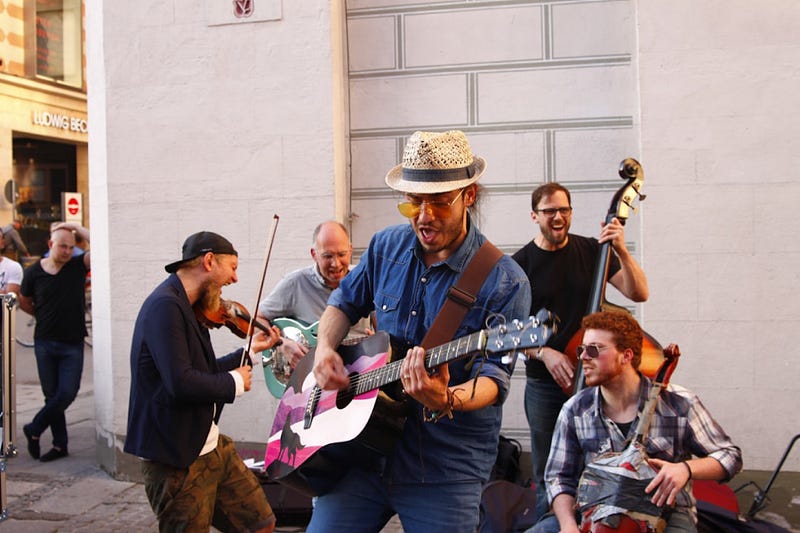
Both musicians and writers are all about connecting with their audience.
Photo by Luwadlin Bosman on Unsplash
Not a member? Click here to read this full story for free.
Did you know that being a writer on Medium is a lot like being a musician?
It’s a pretty cool comparison because both gigs involve getting creative, putting in the work, and connecting with people.
Here are the common reasons why Medium writers are like the rock stars or indie artists of the writing world.
1. Getting Creative
So, whether you’re strumming a guitar or typing away, it’s all about letting your creativity flow.
Musicians mix melodies and lyrics to hit us right in the feels or get us thinking.
Medium writers?
They’re doing their thing with words, painting pictures in our minds, stirring up emotions, or dropping some knowledge.
Every note or word is like a little piece of a bigger masterpiece, making us sit up and pay attention.
2. Skills Matter Too
Alright, having a wild imagination is great, but you’ve got to have the skills to back it up.
Musicians need to know their way around their instruments, get the theory down, and keep their ears sharp.
Writers on Medium?
They have to nail their grammar, structure their stories correctly, and do their homework to ensure their writing is on point.
Being able to blend all that technical know-how with your creative side is what sets the real pros apart.
3. Practice Makes Perfect
Photo by Chase Yi on Unsplash
Whether you’re aiming to be the next big thing in music or writing, you’ve gotta put in the time.
Musicians live and breathe their tunes, practicing for hours and consistently trying to up their game.
Writers on Medium are in the same boat, constantly drafting, editing, and fine-tuning their pieces.
Plus, reading helps them stay sharp and in tune with what’s hot.
It’s all about that grind to get better.
4. It’s Showtime
Here’s where it gets real.
Both musicians and writers are all about connecting with their audience.
Musicians hit the stage, pouring their hearts out and hoping to make a lasting impression.
Medium writers?
They hit ‘publish,’ sharing their thoughts or stories and looking to spark conversations or share new perspectives.
Getting feedback is key in both scenes, helping artists grow and vibe with their fans.
5. Better Together
Photo by Austin Loveing on Unsplash
Even though writing and making music can feel like solo journeys, they’re pretty communal.
Musicians jam with other artists or work with producers to find their sound.
On Medium, writers can collaborate with editors or bounce ideas off other writers.
Plus, there’s this whole community vibe where everyone shares the highs and lows and roots for each other.
6. Keeping It Real
At the end of the day, it’s all about being true to yourself.
Musicians use their tunes to share their stories or take a stand.
Medium writers?
They pour their experiences, opinions, and life lessons into their articles.
This real talk strikes a chord with folks and makes the work stand out.
7. Always Evolving
Both music and writing never stand still—they’re always morphing, with artists trying out new styles or exploring fresh ideas.
Musicians might mix genres or play with new sounds, while Medium writers could experiment with different kinds of articles, mix in some multimedia, or tackle the latest hot topics.
It keeps things exciting and forward-moving.
8. Leaving a Mark
Photo by Kobe Subramaniam on Unsplash
Lastly, both musicians and writers on Medium have this chance to leave a mark, to create something that will last and make a difference.
Music has the magical power to transcend time and cultures, and great writing can shift views, kickstart conversations, or just stay with someone long after they’ve read it.
It’s all about making stuff that matters and lasts.
So, to wrap this up, seeing Medium writing as a kind of musicianship highlights how both paths involve pouring out one’s heart, honing one’s craft, and touching lives.
Whether you belt out a tune or craft a killer article, you’re making art that resonates and sticks with people.
Finding Fulfillment in Writing Without Obsessing Over Medium’s Metrics
Photo by lilartsy on Unsplash
Initially, I was all hyped up about cracking the code to Medium’s algorithm and figuring out how to rake in some cash with my writing.
I mean, who wouldn’t be, right? Those tips and earning reports from other writers were like a siren song, pulling me in with promises of success and visibility.
For a while, it was great.
I devoured every article about increasing traffic, boosting engagement, and maximizing earnings on Medium.
I was determined to replicate the success stories I read about, so I started churning out content focused on “how to make money on Medium” and “how to gain more traffic.”
It felt like I was on the right path, contributing my voice to the chorus of experts and enthusiasts.
Photo by christopher lemercier on Unsplash
But then, something started to shift.
After three months of reading and writing the same kind of content, a sense of monotony crept in. It was like Groundhog Day, but with articles on Medium strategies.
The initial thrill of discovery faded, replaced by a growing sense of ennui.
I no longer felt that spark of excitement when I came across yet another article on Medium’s secrets to success.
It was all becoming a bit… well, boring.
Photo by Siavash Ghanbari on Unsplash
That’s when I realized I needed a change.
I decided to break away from the echo chamber of Medium monetization strategies and traffic tips.
I wanted to rediscover the joy of writing, to explore topics that genuinely interested me, without worrying about algorithms or analytics.
So, I ventured into new territories – writing travelogues and poems, sharing my personal experiences and creative expressions.
It was like taking a deep breath of fresh air after being cooped up indoors for too long. Suddenly, writing felt exciting again.
I was no longer constrained by the need to fit into a particular niche or follow a formula for success.
I was writing for me, and it was liberating.
Reading different stories on Medium added another layer of refreshment.
I was exposed to a diversity of voices and perspectives, reminding me of the vastness and richness of human experience.
Photo by Brad Neathery on Unsplash
It was a welcome change from the repetitive content I had grown so tired of.
In the end, this journey taught me an invaluable lesson: writing should be a source of joy, not just a means to an end.
It’s important to stay true to oneself and explore various avenues of creativity.
After all, the beauty of writing lies in its infinite possibilities and the unique stories each of us has to share.
So, here’s to new beginnings and the endless joy of writing about what truly matters to us!






































 Dr. Mazlan Abbas