From Hardware to Insights: Why Universities Should Prioritise Data Analytics and AI Over IoT Hardware

A Change in Our Universities Focus Areas
Artificial Intelligence (AI) and Big Data Analytics have become the talk of the town.

Everywhere I go, someone discusses how these technologies are transforming industries and reshaping how organisations work.

But let me tell you, all of this innovation boils down to one thing: data. AI can’t learn without data, and analytics can’t deliver insights.

This realisation has enormous implications for how universities prepare students and educators for the future.

Over the years, many universities have focused on teaching students to build their Internet of Things (IoT) hardware.

Don’t get me wrong, it’s a great way to learn the technical basics, but I’ve always felt it’s not the best use of resources or time.

The truth is that the hardware is just a means to an end.

The real value is in the data these devices collect and what you do with that data. That’s where I think universities should shift their focus: data analytics and AI.

Why Data is the Real Hero in AI and Big Data Analytics

Here’s the thing about AI: it’s only as good as the data you feed.

Whether you’re predicting customer behaviour, analysing health trends, or optimising supply chains, the first step is always about collecting, cleaning, and understanding data.

And guess what generates a lot of that data? IoT devices.

From smart sensors to wearables, these devices are constantly collecting information streams. But the value isn’t in the device; it’s in the insights you can extract from the data.

Take smart cities, for example. IoT sensors might monitor traffic flow, air quality, or energy usage.

That’s impressive, but more amazing is how AI models and analytics make sense of all that data to improve city living.

Building the hardware for these sensors is straightforward; developing the AI and analytics platforms behind them is the real challenge.

Why Universities Need to Prioritise Data Analytics

1. Meeting Industry Needs

Let me be honest — the industry doesn’t need more people building IoT hardware.

They’re hungry for data analysts, AI developers, and data scientists. Companies are about insights that drive decisions, not the physical gadgets that generate the data.

Shifting the focus to data analytics would better prepare students for what’s waiting for them in the real world.

2. Endless Applications

Consider this: data analytics and AI can be applied across many industries. Whether it’s healthcare, agriculture, manufacturing, or retail, the possibilities are endless.

With skills in data analytics, students can work on anything from predicting machinery maintenance to forecasting disease outbreaks or personalising customer experiences.

Meanwhile, hardware skills are mostly limited to niche engineering roles.

3. Lowering Barriers to Entry

Let’s face it: building IoT hardware isn’t cheap. You need tools, components, and a workshop.

That’s a big ask, especially for students or universities with limited budgets.

In contrast, data analytics only requires access to software tools, cloud platforms, and datasets, which are much more accessible.

4. Using What’s Already Available

These days, you don’t even have to build IoT devices from scratch.

There are ready-made solutions, like FAVORIOT, AWS IoT, and Azure IoT.

These platforms make collecting, storing, and managing IoT data easy. So why reinvent the wheel? Use these tools and focus on creating value through analytics and application development.

How Universities Can Make the Shift

1. Rethink the Curriculum

If I were designing a university course, I’d ensure it included data analytics, AI, and IoT platforms. Students should learn how to:

  • Collect and preprocess IoT data.
  • Use tools like Python or MATLAB to analyse data.
  • Build machine learning models and deploy them in real-world scenarios.
  • Understand cloud computing and work with IoT platforms to manage data.

2. Partner with Industry

One of the smartest moves universities can make is partnering with companies. Industry collaboration gives access to real-world datasets, tools, and expertise.

Plus, internships and collaborative projects can give students the hands-on experience they need to hit the ground running.

3. Focus on Real-World Problems

When I was a student, I always enjoyed projects that felt meaningful.

Educators should design projects that challenge students to solve actual problems.

For example, they could predict energy usage patterns on campus or analyse traffic data to improve transportation systems.

4. Train the Trainers

Let’s not forget the educators.

They need to stay ahead of the curve, too.

Universities should invest in training programmes for lecturers, helping them stay updated on the latest AI and data analytics trends.

5. Provide the Right Tools

Students can’t learn data analytics without the right tools.

Universities should give them access to software, cloud-based platforms, and open-source datasets. This doesn’t have to break the bank — many affordable or even free options exist.

Imagine the Applications Students Can Build

By focusing on data analytics, students can work on exciting applications like:

  • Smart Agriculture: Analysing soil and weather data to optimise irrigation and fertilisation.
  • Healthcare: Using wearable data to predict health trends.
  • Retail: Analysing customer behaviour to personalise shopping experiences.
  • Manufacturing: Implementing predictive maintenance to cut costs and downtime.

These examples show how data analytics can drive innovation across industries.

Isn’t that more impactful than soldering circuit boards?

My Advice to Universities

The world is changing fast, and universities need to keep up.

It’s time to move away from DIY IoT hardware and focus on the bigger picture: data analytics.

By doing this, universities can prepare their students for a future where data is king.

As educators, it’s our job to help students see the actual value of IoT — not the gadgets but the insights they enable.

And for students, my advice is simple: dive into data analytics and AI. These skills will open doors and help you make a real difference.

The future is all about harnessing the power of data.

Let’s make sure our universities are ready to lead the way.

How IoT Projects in Universities Can Become a Commercial Success

The Current State of IoT Projects in Universities

The secret to fast-to-market commercialization

Photo by micheile henderson on Unsplash

[Note: Click here to have FREE access to this member-only story]

I’ve observed a burgeoning interest and commitment toward developing Internet of Things (IoT) projects.

These projects, emerging from various research groups and faculties, signal a promising direction in leveraging technology to solve complex problems, enhance learning, and offer innovative solutions to industry.

However, despite the evident progress and enthusiasm, a critical challenge persists the difficulty of transitioning these projects from academic exercises to commercially viable products.

Observing the Development of IoT Projects in Silos

As I engage with various teams in the Universities, I notice a familiar pattern — many IoT projects operate in isolation.

Each project progresses independently, fueled by its objectives and developmental timelines.

While this approach allows teams to dive deep into their specific challenges and innovations, it inadvertently creates silos that hinder collaboration and scalability.

In these silos, researchers and students dedicate immense efforts to developing bespoke IoT platforms and systems, often reinventing the wheel.

The division is apparent in how technology and standards vary, in the sharing of knowledge, and the use of resources.

This fragmented landscape poses significant barriers to commercialization, as transitioning a project from a university setting to the market requires a level of standardization and interoperability that these isolated projects need to improve.

The Challenge of Bringing Products to Market

Why can’t we bring these innovations to market more effectively?” I often ponder.

The crux of the issue lies in the inherent diversity and customization of the IoT solutions being developed within academic settings.

Each project, tailored to specific research goals or educational outcomes, evolves on its trajectory, leading to many unique yet incompatible systems and platforms.

While a boon for academic exploration, this diversity becomes a bottleneck for commercialization.

The path to transforming an academic project into a commercial product is fraught with challenges, including aligning with industry standards, ensuring scalability, and integrating with existing ecosystems.

The bespoke nature of university-developed IoT systems demands extensive customization and re-engineering to fit commercial contexts, escalating costs and complicating deployment.

Envisioning a Unified IoT Platform

Imagine a world where these barriers are dismantled—a single, unified IoT platform is the backbone of all university IoT projects.

Such a platform would offer a standard API, enabling seamless data collection and management across diverse projects.

Researchers and students could then focus on their core competencies: data analysis, application development, and innovation rather than the intricacies of platform maintenance.

This shared platform would facilitate knowledge exchange and collaboration and streamline the transition from research to commercialization.

By standardizing the underlying IoT infrastructure, we could reduce the need for extensive customization and ensure that projects are built on a solid, scalable foundation.

The Role of Favoriot in Shaping the Future

Favoriot On-Premise

Enter Favoriot, an enterprise-based IoT platform that promises to bridge these gaps.

Favoriot offers an on-premise solution tailored for academic and research environments. It aims to simplify IoT development, reduce costs, and foster a more collaborative ecosystem.

With Favoriot, universities can consolidate their IoT initiatives on a single platform, ensuring consistency, interoperability, and easier maintenance.

This consolidation would enable researchers to leverage shared resources and insights, accelerating innovation and enhancing the educational experience.

Furthermore, by standardizing the IoT infrastructure, Favoriot paves the way for smoother commercialization paths.

Projects developed on this common platform can transition to market with fewer hurdles, as the core technological foundation remains consistent and industry-aligned.


A Unified Path Forward

Reflecting on the potential of such a unified IoT platform, I am optimistic about the future of academic IoT projects.

By breaking down the silos and fostering a collaborative environment, we can amplify the impact of our innovations and bring them to market more efficiently.

The journey from academic research to commercial success is undoubtedly complex.

Still, initiatives like Favoriot bring us one step closer to a future in which the fruits of our academic labor can reach wider audiences and create tangible, lasting value in the world.


Contact Favoriot to schedule an appointment for further information.

How an IoT Platform Can Help Your IoT Research

Use FAVORIOT as your tool to collect sensor data.

There is a lot of IoT-related research from various universities.

However, many of them are either in silos or unable to share their data quickly with their collaborators. Thus, it impacts the timely delivery of the project.

What if we can make it simpler for you?

What if Favoriot could help you collect all your IoT data from various sites for in-depth analysis?

Just imagine below — that you are doing R&D work on the Malaysian climate and its impact on various industries or the citizens.

Embarking on Your Data-Driven Journey

You stand at the forefront of environmental research, where every dataset acts as a compass guiding you through the uncharted territories of climate science.

With the climate crisis upon us, your role as a researcher is more crucial than ever.

Here’s how an IoT platform like FAVORIOT becomes not just a supportive tool but a crucial ally in your quest for data.

Setting Up Your Mini Weather Stations

Use Favoriot as your Research tool.

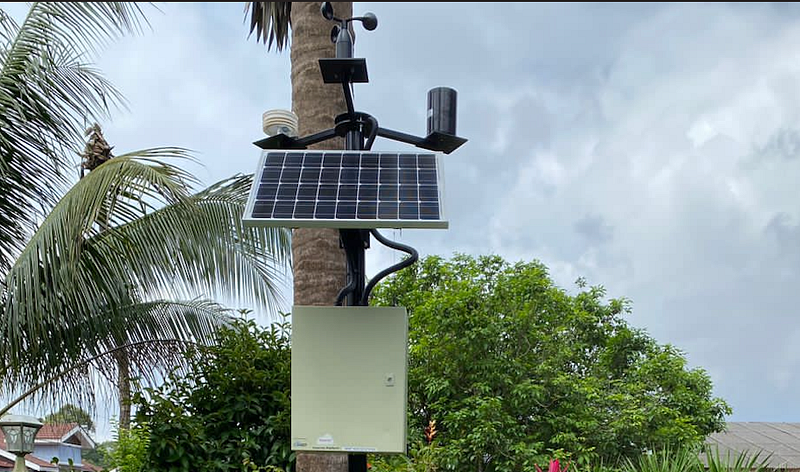
Imagine this — a landscape peppered with your mini weather stations, each collecting vital data.

You have rainfall, wind speed, air temperature, air humidity, atmospheric temperature, and carbon dioxide levels at your fingertips.

The data collected from sensors can provide a wide range of insights, particularly in the context of weather forecasting, climate monitoring, environmental assessment, and smart city applications.

Here’s a brief overview of what each type of data can tell us:

1 — Rainfall: Measurement of precipitation can be used for water resource management, agricultural planning, flood prediction and warning systems. It’s crucial for understanding the water cycle and for managing water supplies, especially in urban and agricultural areas.

2 — Wind Speed: Wind data is essential for meteorology, navigation, aviation, and for the operation of wind farms. It helps in predicting weather patterns and is also critical for certain sports and outdoor activities.

3 — Air Temperature: This is fundamental for weather forecasting, climate study, and agricultural planning. It can influence the energy consumption patterns in buildings and affect how cities plan for heatwaves or cold snaps.

4 — Air Humidity: Humidity levels impact human comfort, health, agriculture, and preservation of materials. They are also used to predict weather changes, like fog or dew, which can impact transportation and agriculture.

5 — Atmospheric Temperature: Different from air temperature at ground level, atmospheric temperature profiles help in understanding weather patterns and climate dynamics, as well as in modeling the dispersion of pollutants.

6 — Carbon Dioxide Levels: CO2 measurements are critical for monitoring urban air quality, greenhouse gas emissions, and for assessing the impact of human activities on global climate change.

Your stations are more than just instruments; they are your eyes and ears in the diverse canvas of our planet’s climate.

Creating Connections Across the Map

With FAVORIOT, you create a web of data points.

This network spans cities to rural expanses, offering you a detailed, panoramic view of the environmental data.

Your research thrives on the versatility of data from different landscapes, offering insights into urban heat islands or rural microclimates.

Collaboration: Your Research Catalyst

The true power of FAVORIOT lies in collaboration.

It becomes your virtual roundtable where you and researchers from various universities bring your expertise to bear.

The platform supports your collective pursuit, growing with every new sensor you add, every dataset you integrate.

The Pulse of Continuous Data

The relentless march of time is mirrored in your unceasing data collection.

Real-time data feeds into FAVORIOT, providing you with an up-to-the-minute heartbeat of the environment.

This immediacy means you’re always ready to act, whether it’s a question of alerting communities to impending floods or informing policymakers about air quality issues.

Delving Deeper with Machine Learning

Data, while indispensable, is raw.

It’s the analysis that breathes life into numbers.

Here, machine learning becomes our ally.

You can feed this colossal stream of IoT-collected data into sophisticated analytical models, deciphering complex patterns and gleaning predictions that would elude human analysis.

For instance, by analyzing the correlation between humidity and temperature, you can develop localized models that predict fog with unprecedented accuracy — a boon for transportation safety.

A Nationwide Network: The Power of Scale

Let’s consider an example of yout nationwide project.

You can deploy mini weather stations across the country, creating a tapestry of data points.

In one instance, our network unveiled a microclimate in a small valley that consistently trapped pollutants.

This revelation led to the local government updating its land-use strategies, thereby improving the air quality for the community.

From Data to Action: Real-World Applications

The insights gained have tangible impacts.

Agricultural regions use your drought predictions to manage water resources more effectively.

Urban planners are redesigning neighborhoods to mitigate the heat island effect, informed by our temperature data analysis.

Even the realm of public health has benefited, as your studies on air quality and temperature have led to better predictive models for allergy and asthma flare-ups.

Your Journey Forward

FAVORIOT is the wind beneath the wings of your research aspirations.

It’s a powerful testament to how technology can amplify the human intellect and a shared dedication to safeguarding our environment.

As you continue on this journey, wielding FAVORIOT as your tool, remember: you are not just collecting data.

You are shaping a future that’s informed by knowledge, driven by data, and committed to the Earth’s sustainability.


The easiest way to collect the data using Favoriot is by subscribing to the Favoriot Platform on-cloud. However, if you need complete control of your data and security, opt for the on-premise Favoriot platform.

Contact us and schedule an appointment to discuss further.

The Impact of IoT Platforms on Student Innovation

Future-Proofing Higher Education

The IoT Campus: How Universities Are Becoming Living Labs for Smart Technology

From Theory to Tech: How IoT Platforms Are Making Education More Interactive and Engaging

On-Premise IoT Platform from Favoriot — benefits all parties in the Universities.

[Note: Click here to have FREE access to member-only story]

The hype around IoT (Internet of Things) in universities gets me all fired up!

You see when we talk about integrating an on-premise IoT platform like Favoriot into university settings, we’re not just talking tech.

We’re talking about a revolution in how education is delivered, research is conducted, and students are introduced to real-world applications.

Let me break it down for you, nice and easy, why this stuff is game-changing.

Kicking Things Off in the Labs

Imagine this: you’re a student in a lab, surrounded by gadgets, sensors, and all sorts of techie goodies.

It’s not just about reading from textbooks or watching simulations.

With IoT devices at your fingertips, learning becomes a whole new ball game.

You get to tinker with real IoT applications, seeing firsthand how data is collected, analyzed, and transformed into actionable insights.

It’s one thing to learn about sensor dynamics in theory, but when you’re actually deploying these sensors, watching them interact, and analyzing the data they produce?

That’s where the magic happens.

It’s active learning on steroids, pushing students to think critically, solve problems on the fly, and get a deep, intuitive understanding of complex concepts.

And let’s be honest, it’s just way more fun.

Livening Up Lectures with Favoriot

Now, let’s wander over to the lecture hall.

Imagine a lecturer armed not just with a PowerPoint but with a live IoT platform like Favoriot.

This is where lectures come alive.

Students aren’t just passive listeners; they’re engaged observers, watching real-time data flow, seeing IoT systems in action, and getting a grasp of the nitty-gritty of IoT architecture.

Using Favoriot, educators can demonstrate live scenarios, break down the workings of IoT systems, and even allow students to interact with the platform themselves.

It’s a dynamic way to keep the curriculum fresh, relevant, and in step with the latest in tech.

Plus, it demystifies a lot of the tech jargon, making these concepts accessible and, dare I say, exciting!

Boosting R&D with IoT and AI

The research angle is where things get really juicy.

By integrating IoT into their research environment, universities can supercharge their R&D, especially in hot areas like IoT and AI.

Think about it: IoT devices churn out massive datasets, ripe for analysis, modeling, and innovation.

This opens doors for faculty and students to dive into cutting-edge research, exploring how to harness IoT data to advance AI, improve machine learning algorithms, and much more.

It’s a fertile ground for interdisciplinary work, too, bridging departments and pooling expertise to tackle complex, real-world challenges.

And when these projects bear fruit?

The implications extend far beyond academia, influencing industries, shaping tech evolution, and even informing policy.

Empowering Final Year Projects

When final year students embark on their capstone projects, having an IoT platform like Favoriot at their disposal is like hitting the jackpot.

They can design, test, and refine IoT solutions, applying everything they’ve learned to create something tangible, innovative, and potentially impactful.

Whether it’s smart home tech, urban IoT applications, or something completely out of left field, these projects are their launchpad into the tech industry.

They’re not just proving they can think critically and innovate; they’re gaining hands-on experience with the tools and technologies that will define their careers.

From PoC to Real-World Implementation on Campus

Now, imagine a campus that doesn’t just teach IoT but lives it.

Universities can use their campuses as testing grounds for IoT solutions, moving from proof of concept to actual deployment.

This not only gives students a front-row seat to the lifecycle of IoT projects but also transforms the campus into a smarter, more efficient, and more sustainable environment.

It’s one thing to talk about smart buildings or energy efficiency in the abstract. It’s quite another to see those concepts in action, reducing costs, enhancing safety, and improving campus life in real-time.

Plus, it’s a fantastic way for the university to showcase its commitment to innovation and sustainability.

A Cross-Disciplinary Bonanza

One of the things I love most about IoT is how it transcends traditional academic boundaries.

It’s not just for the tech geeks in engineering or computer science.

Whether you’re studying environmental science, health care, business, or even the arts, there’s an IoT angle relevant to your field.

By adopting an IoT platform university-wide, we’re not just equipping students with tech skills.

We’re fostering a culture of collaboration, where knowledge and ideas flow freely between disciplines, sparking innovation that’s rooted in diverse perspectives and expertise.


In summary, the case for universities to get on board with an on-premise IoT platform like Favoriot is compelling.

It’s not just about staying current with tech trends.

It’s about transforming education, energizing research, and preparing students for a future where IoT will touch nearly every aspect of our lives.

And honestly?

I think it’s one of the most exciting opportunities on the horizon for higher education.

So here’s to the universities that are ready to lead the charge, embracing IoT to educate, innovate, and inspire.

Cheers to that!

How To Simplify Your Final Year IoT Projects

The Challenges in Building University’s IoT Projects

Use this method to demonstrate a great IoT project.

Collect, Aggregate, and Visualise the IoT Project in a Rapid Manner

[Note: Click here to have FREE access to this member-only story]

Let me share a bit about my experience listening to the struggles faced by university students who have to tackle an IoT project for their final year.

It’s fascinating and a bit daunting, to be honest.

Most students get the gist of what IoT is capable of, but when it comes down to actually building their projects, they hit some real roadblocks.

The challenges of building an IoT project

First off, there’s the hardware side of things.

It’s not just about slapping together some components; it requires genuine electrical and electronics know-how, which not everyone has.

Then, there’s the programming aspect — getting the IoT device to do what you want, or setting up an app to make sense of the data.

And speaking of data, the third hurdle is figuring out how to collect it from the sensors, store it properly, and then pull it out again for useful stuff like dashboard visualizations or app functions.

These steps can eat up a ton of time, especially if you’re trying to do it all solo.

From what I’ve seen, a student working alone often ends up with a simpler demo, not because they lack ideas, but because of resource and skill limitations.

Funding and team projects

While some universities don’t provide any funding for these projects, others might give just enough to cobble together a basic IoT setup.

In contrast, when students work in teams, they can pool their resources and skills, often leading to a more sophisticated project outcome.

That’s why I think it’s smarter for students to play to their strengths.

If you’re good with hardware, focus on that; if you’re a whiz at coding or data analysis, make that your centerpiece.

And here’s a bit of advice: don’t sweat the middleware or setting up a server from scratch.

Platforms like Favoriot can be a real game-changer.

They simplify device onboarding, streamline data collection, and offer ready-made dashboard widgets for customization.

This approach can free students up to concentrate on what they do best, whether that’s engineering a neat piece of hardware or developing killer app functionality, leading to a more polished and impressive final project.


Check out the Free Favoriot IoT Plan for a test run on an IoT platform.

Advising Higher Institutions as an Industry Panel (Tech)

The Role of Industry Panel

Offering guidance to the academic sector

Image created using Canva by Author

[Note: Click here to have FREE access to this member-only story]

“The journey of education and technology is not about equipping with the past, but empowering for the future. It’s a commitment to ‘Innovate, iterate, integrate!’ in every aspect of learning.”

Over the last decade, I have assumed the role of an industrial expert offering guidance to the academic sector.

Envision this scenario: universities and colleges are genuine in their desire to spearhead technological advancements.

However, the practicalities of revising curricula and acquiring appropriate technological tools often present unexpected hurdles.

It appears they are keen to progress yet find themselves unprepared for the journey ahead.

Year after year, I sit at the table with esteemed academics, divulging industry insights, endeavoring to harmonize their educational offerings with the pulsating demands of the commercial sphere.

The mantra I mentally chant is “Innovate, iterate, integrate!

The real triumph emerges when the concepts resonate with them, illuminating new possibilities.

“Empowering education with the latest technology is not just an investment in tools, but a pledge to future generations, ensuring they are not merely seekers of jobs but creators of opportunities.”

Nevertheless, the path is not without its challenges.

Funding does not always reach the necessary departments.

At times, entering some laboratories feels akin to traveling back to a bygone era, a stark reminder of the rapid pace at which technology evolves.

Propelling faculty to the forefront of modern technology is often a lofty aspiration, hampered by financial constraints.

The realm of IoT, for instance, is multifaceted, encompassing hardware, software, telecommunications, middleware, and application development.

Students require access to contemporary tools to engage meaningfully with their studies and not be left grappling with outdated equipment.

The pressure of final year projects can lead to a temptation to seek alternative means to complete their theses, a route that could compromise the integrity of their education.

The ultimate concern is the risk of producing graduates who are not viable candidates for employment within the industry. This outcome is precisely what we aim to avoid.

Thus, it is imperative that we elevate our efforts to ensure that the graduates we nurture are both competent and sought after in the professional world.

“Facing the rapid pace of technological evolution, the academic world must not only keep pace but leap ahead, ensuring graduates are not just prepared but are pioneers of the future.”

The Best Universities in Malaysia That Offers IoT Courses or Programmes

The Universities That Implement and Embrace These Traits Will Become the Leaders in IoT Education

Image created using Canva by Author

“The spark of IoT innovation will transform students into architects of tomorrow’s interconnected world.”

Which Universities offer the best IoT education in Malaysia?

But how do we define the best IoT education?

As someone involved in building the IoT curriculum for universities and TVET institutions in Malaysia, I would like to share my perspectives.

Malaysia’s approach to weaving IoT into the academic fabric is cultivating a future workforce ready to navigate and shape the technological frontiers of the local industries.

How many Malaysian universities architect their IoT academia, spotlighting their holistic course offerings, cutting-edge lab environments, synergistic industry ties, and scholarly faculty?

Let’s dive deep into the traits of IoT Education leaders.

Crafting a Multifaceted IoT Curriculum

“Through the loom of academia, the comprehensive IoT curriculum weaves together the essence of innovation and application, shaping the pioneers who will navigate the technological frontiers of tomorrow.”

An exceptional IoT program must be characterized by its comprehensive and multidisciplinary curriculum, addressing all critical facets of IoT technology:

  • Embedded programming
  • Programming languages
  • Microcontrollers
  • Fundamentals of telecommunications (connectivity options)
  • Data communications (protocols)
  • Middleware (IoT Platforms such as Favoriot, Azure IoT or ThingSpeak)
  • Mobile or web development.

Furthermore, it should delve into specialized skills such as:

  • Data Analytics
  • Machine learning
  • IoT security

The curriculum’s design within these universities must be meticulously crafted to provide a deep dive into IoT’s theoretical underpinnings and practical applications, ensuring a well-rounded education.

Laboratories Equipped for the Future

“Within the crucible of our labs, theory is transformed into action, where every experiment brings us closer to the future we’re not just predicting but creating.”

Hands-on experience is indispensable in IoT education, necessitating laboratories with the latest IoT tech.

These labs are incubators for innovation, where students engage directly with IoT devices, navigate programming challenges with microcontrollers, explore connectivity through various protocols, and send data to the IoT platform.

They have become adept in harnessing IoT platforms (such as Favoriot) for:

  • Data aggregation
  • Understanding the IoT protocols such as MQTT, REST, or CoAP
  • Mastering the art of data visualization and analytics.

This hands-on approach is critical, bridging the gap between theoretical knowledge and real-world application, ensuring graduates are proficient in both.

Fostering Industry-Academia Synergies

“The bridge between academia and industry is built on shared visions, where classrooms extend into the real world, and students emerge not just as graduates but as pioneers of IoT innovation.”

The symbiosis between academia and industry is a cornerstone of IoT education.

Universities with robust industry connections offer students unparalleled access to real-world IoT projects, internships, and the chance to earn IoT Professional Certifications.

These collaborative ventures are more than educational enhancements; they are a conduit to the practicalities of the IoT landscape, preparing students for the dynamic challenges of the industry.

Scholarly Faculty: The Pillars of Excellence

“Behind every great innovation in IoT, there stands a mentor from academia, whose wisdom lights the path from knowledge to wisdom, from classrooms to the cosmos of technology.”

The caliber of an IoT program is significantly uplifted by the faculty’s expertise and industry experience.

The distinction of Malaysian universities in IoT education can be attributed to their accomplished faculty, whose academic rigor and practical insights equip students with a profound understanding of IoT’s technical and business dimensions.

Their guidance ensures students are well-versed in the latest technological advancements and prepared to navigate the complexities of the IoT ecosystem.

Envisioning a Future Forged by IoT Expertise

“In the realm of IoT education, Malaysia is not just a participant but a visionary architect, crafting a future where technology serves as a bridge to an innovative, interconnected world.”

Malaysian universities are at the vanguard of global IoT education, heralding a new era of technological leadership.

By offering a curriculum that is both comprehensive and cutting-edge, fostering hands-on learning through advanced labs, cultivating industry partnerships, and being home to esteemed faculty, these institutions are laying the groundwork for IoT innovation.

The burgeoning demand for skilled IoT professionals underscores the significance of their mission, positioning these graduates as pivotal contributors to the local and global technological landscapes.

The achievements of these educational programs transcend national boundaries, marking Malaysia as a critical influencer in the IoT domain’s future direction.


IoT Trainings Offered by Favoriot:


Contact Favoriot to schedule an appointment or for further details

Why Universities Should Focus on Data Analytics Rather Than DIY IoT Hardware

Use Industrial Grade, Reliable, and Robust Hardware for Real IoT Projects and Research

Image created using Canva by Author

[Note: Click here to have FREE access to this member-only story]

The focus of IoT subjects in academic institutions, particularly universities, is at a pivotal juncture.

While it’s beneficial for students to delve into IoT projects, utilizing affordable sensors and microcontrollers to grasp the basics of IoT hardware design and development, this approach only scratches the surface of what the industry demands.

As educational institutions aim to prepare students for the realities of the professional world, the emphasis should shift towards data analytics rather than constructing IoT hardware.

Bridging the Gap Between Academic Projects and Industry Standards

The hands-on experience gained from building IoT projects with cost-effective tools like Arduino or Raspberry Pi is invaluable for understanding the fundamental concepts of IoT.

However, this experience is markedly different from the challenges faced in the commercial sector.

Commercially viable and robust IoT hardware development transcends the capabilities of the affordable sensors used in academic projects.

Prototypes crafted in university labs often need more durability and accuracy when deployed in real-world conditions, frequently yielding unreliable data.

The Essential Role of Data Analytics

In the professional realm, commercial and industrial-grade IoT hardware is the norm.

These high-quality devices are designed to endure rigorous conditions and provide precise, consistent data.

Robust and reliable hardware provides a trusted and continuous data stream.

The crux of IoT’s value in the industry lies not in the hardware itself but in the insights derived from the data it collects.

This is where the focus on data analytics becomes crucial.

Data analytics in the context of IoT extends beyond simple visualization to encompass predictive modeling and decision-making.

It requires a robust skill set in coding, artificial intelligence (AI), and machine learning (ML). The data harvested from diverse IoT devices across various scenarios present unique challenges in interpretation and application.

The ability to transform raw data into compelling narratives and actionable insights — a skill known as data storytelling — is increasingly recognized as pivotal in unlocking the full potential of IoT implementations.

Cultivating Future-Ready Skills

Universities have the opportunity to equip students with the skills necessary to thrive in a data-driven IoT landscape.

This entails a curriculum emphasizing data analysis, AI, and ML, in conjunction with an understanding of leveraging IoT platforms such as the Favoriot IoT platform for data collection, visualization, and analysis.

Ensuring students are adept in these areas prepares them to make meaningful contributions to their organizations from the outset, enabling them to handle industry-grade hardware and, more importantly, to extract and interpret the valuable data it provides.

Conclusion

The shift towards a data-centric approach in IoT education is not just a response to industry trends; it’s a forward-looking strategy to empower the next generation of technologists.

By focusing on data analytics, universities can bridge the gap between academic exercises and the real-world demands of IoT, fostering a workforce capable of leveraging IoT technologies to their fullest potential.

As we continue to navigate the complexities of digital transformation, the ability to understand and act upon data insights will be paramount, underscoring the need for an educational paradigm that prioritizes data analytics in the realm of IoT.

“With Favoriot, your vision doesn’t have to fit the mold — the platform bends to your innovation, making custom IoT solutions not just possible, but seamless.”


Check out industrial-grade commercially ready sensors that help to collect your data for further insights:


Contact Favoriot to schedule an appointment or check out Favoriot IoT Professional Courses.


Learn IoT using this FREE IoT Notes eBook.

https://mazlanabbas.gumroad.com/l/iotnotes

IoT Education in Universities: The Favoriot Solution

The image was created using Midjourney by the Author of Startup Journey

Universities globally are racing to stay abreast of the latest advancements in tech education.

A critical focal point in this pursuit is the Internet of Things (IoT), a revolutionary field reshaping industries and everyday life.

Yet, there’s a burgeoning challenge in IoT education in many academic institutions.

Let’s delve into the complexities of this issue and the unique struggles students and lecturers face and introduce Favoriot — a cutting-edge IoT platform poised to transform IoT learning.

The Challenge in IoT Learning

Imagine a world where IoT education is no longer confined to textbooks and lectures but is a hands-on, interactive experience.

Unfortunately, this is not the reality in many universities.

The core of the problem lies in inadequate IoT lab setups, particularly the absence of an IoT middleware or platform.

This gap severely limits students’ ability to effectively comprehend and apply IoT concepts.

Student Struggles Without Proper Tools

Students, the primary learners of IoT, are often left navigating a maze of theoretical knowledge with no practical outlet to apply these concepts.

Their curriculum’s lack of a dedicated IoT platform leads to a superficial understanding of IoT’s potential and applications.

They face the challenge of accessing suitable project platforms, which is crucial for a more profound, experiential learning process.

Lecturers’ Dilemmas with Incomplete Syllabi

Conversely, lecturers grapple with delivering comprehensive IoT education without the proper infrastructure.

An incomplete IoT syllabus, lacking practical tools, hampers their ability to provide a holistic learning experience.

This shortfall affects the quality of teaching and stifles innovation and research in the IoT field within academic circles.

The Conundrum of External IoT Platforms

Many students turn to free versions of external IoT platforms to bridge this gap.

However, these platforms often need improved features, and the advanced functionalities crucial for in-depth projects are locked behind paywalls.

This arrangement could be better, especially for students working on Capstone projects or those exploring IoT as a career path.

The Role of Universities in IoT Infrastructure

Universities have a crucial role in addressing these challenges.

They can significantly enhance the learning experience by implementing on-campus IoT platforms.

These platforms, hosted within the university’s IT center or IoT labs, could offer students comprehensive features necessary for diverse IoT projects, ranging from lab exercises to commercial IoT initiatives.

Introducing Favoriot: A Tailored IoT Solution

Recognizing this educational gap, Favoriot has developed an on-premise IoT platform solution specifically designed for academic institutions.

This platform circumvents the need for students to rely on external, often inadequate, services.

Favoriot’s IoT platform offers a robust, feature-rich middleware that students and lecturers can access throughout the campus.

The Comprehensive Benefits of Favoriot

  1. Hands-on Experience: Favoriot provides a real-world IoT platform, giving students hands-on experience with the tools and technologies prevalent in the industry.
  2. Empowering Educators: Lecturers can offer a more comprehensive syllabus incorporating practical IoT skills and theoretical knowledge.
  3. Innovation and Research: With Favoriot, universities can foster an environment conducive to IoT innovation and research, enabling students and faculty to undertake groundbreaking projects.
  4. Campus-wide Implementation: The platform can be used for educational purposes and for implementing smart IoT solutions across the campus, serving as a live testbed for IoT applications.
  5. Cost-Effective Learning: By using an on-campus platform like Favoriot, universities eliminate the need for costly subscriptions to external platforms, making IoT education more accessible.

Empowering Students with the Right Tools

By integrating Favoriot’s IoT platform into its infrastructure, universities can significantly elevate the quality of their IoT education.

Students access comprehensive tools necessary for in-depth learning and project development.

This practical experience prepares them for real-world IoT challenges and opportunities.

A New Era of IoT Education

Integrating Favoriot’s platform in university labs marks a pivotal step towards future-ready IoT education.

It bridges the gap between theoretical learning and practical application, equipping students with the tools and experience needed to excel in IoT.

Conclusion: Shaping the Future of IoT Learning

In summary, introducing a dedicated IoT platform like Favoriot in academic settings is a game-changer for IoT education.

It enhances students’ learning experience and empowers lecturers to deliver a more rounded curriculum.

This approach is essential for preparing the next generation of IoT professionals and researchers.


For universities looking to advance their IoT education and infrastructure, Favoriot offers a tailored, comprehensive solution.

To explore how Favoriot can transform your IoT education and campus projects, contact info@favoriot.com.

Let’s embark on a journey to reshape IoT learning and make it more accessible, practical, and impactful for students and educators.


Remember to Subscribe to receive email updates on every post I publish.

A Decade of Teaching at a University and How It Has Evolved Me as An Individual and Educator

Image created using Midjourney by Author of Startup Journey

For the first ten years of my career, my role as a lecturer at Universiti Teknologi Malaysia (UTM) has offered me a treasure trove of experiences, deeply enriching my understanding of education and student engagement.

This period has refined my professional abilities and spurred significant personal development, transforming me into an educator of greater influence and confidence.

Grasping the True Essence of Student Needs

In my early days, I viewed teaching primarily as imparting knowledge.

It didn’t take long to recognize that students sought something more profound – a blend of motivation, engagement, and practical knowledge application.

Recognizing and adapting to these needs marked a pivotal transformation in my teaching approach.

Strategies to Engage and Inspire

Capturing the interest of students requires an innovative approach.

I turned to interactive methods, using group discussions, real-life scenarios, and digital technology integration to make my lectures more dynamic and relevant.

These techniques made learning more enjoyable and deepened students’ comprehension and interest.

The Power of Knowledge and Earning Respect

One vital realization was the necessity of thorough preparation and expertise in my field.

Students naturally gravitate towards and respect lecturers who demonstrate comprehensive subject knowledge.

Earning this respect was instrumental in creating an environment conducive to learning and engagement.

Cultivating Confidence Through Public Speaking

Delivering regular lectures became a foundation for honing my public speaking skills.

Over time, this consistent practice significantly boosted my confidence, equipping me to present with poise and clarity at international conferences.

The skill of effective communication, garnered through my teaching experiences, has been invaluable.

View at Medium.com

Beyond Teaching: Research and Development

My responsibilities extended far beyond the lecture hall, involving rigorous research and academic paper publication.

Staying at the cutting edge of my field advanced my professional development and offered tangible benefits to my students.

This aspect of my career has been particularly gratifying, contributing to the broader academic sphere.

Fostering Enduring Connections

One of the most fulfilling outcomes of my tenure at UTM has been the lasting relationships established with students.

Many of them have evolved into friendships, professional relationships, or even client connections, often reminding me of my positive influence during their academic journey.

This has underscored the enduring impact that educators can have on their students’ lives.

Image created using Midjourney by Author of Startup Journey

Reflecting on this decade-long journey, it’s evident that my experiences at UTM have been as much about personal learning and growth as they have been about imparting knowledge.

I am very thankful. The lessons learned have enhanced my capabilities as a lecturer and enriched my life in numerous ways.

My tenure at UTM underscored that being an educator transcends teaching; it’s about inspiring, connecting, and continually evolving personally and professionally.


The story of my second job in a corporate organization (telco):

View at Medium.com

The story of my third job as a Research Director:

View at Medium.com


You can also check out my personal Blog here or the latest eBooks I have recently published — here.