How To Ease The Pain of Writing Tech Articles

WRITER’S STORIES

Seven (7) Tips to Ease That Pain

Not a member? Click here to read the full story for free.

“The pain of explaining tech subjects” – Photo by Sander Sammy on Unsplash

“How to explain something that is too complex into something simple,” I pondered. Every time I explained about what is Internet of Things, I will try to see the reaction of the person. If he still feels blank, I can try to rephrase or explain a a different way.

But what if you don’t have the chance to explain face-to-face and you can’t get that reaction? What if you tried to explain in the form of an article. And most of the times, tech articles will not receive much comments or reactions.

Reflecting on my writing experience via blogging, I’ve gathered a treasure trove of insights on how to tackle these complex subjects with finesse.

I’m not claiming guru status yet, but let me pull back the curtain on some of my misadventures and breakthroughs that might just light the way for fellow aspiring writers.

Photo by Apollo Reyes on Unsplash

1 – Write Consistently

“Write consistently,” they say.

Easier said than done, right? When I first started, my thoughts were like a bunch of unruly wires — needed some serious untangling.

Establishing a writing routine was like programming my brain — set the schedule, debug the laziness, and run the creativity script.

It’s like coaxing a Wi-Fi signal out of a two-bar scenario — it’s frustrating but oh-so-satisfying when you finally get full bars.

If you want to keep your ideas fresh and your style crisp, you’ve got to keep at it — daily, bi-weekly, whatever fits your circuit board!

2 – Craft Compelling Headlines

Ah, headlines. Those elusive creatures that can make or break your article.

Early on, my headlines could have put a caffeinated techie to sleep.

Then it clicked — headlines are like the sleek, sexy exterior of a high-tech gadget. They need to draw eyes in a crowded room (or page). So, I began to craft them with the precision of an engineer designing the next big IoT device.

Think less “How to Turn On Your IoT Device” and more “Unlocking the Power of IoT: Transform Your Everyday Gadgets into Smart Tech Marvels!” A good headline zaps the reader’s attention and keeps them hooked.

“Compelling headlines” – Photo by Aidan Bartos on Unsplash

3 – Select a Core Topic

Dabbling in everything tech was like trying to specialize in, well, everything.

Jack of all trades, master of none, right?

So, I zeroed in on IoT — my true techy love. It’s like finding your favorite coding language and sticking to it. This focus not only sharpened my expertise but also magnetized a dedicated tribe of readers.

Specializing helps you carve out your niche in the vast digital cosmos. It’s about being the big fish in your own tech pond.

4 – Engage with Effective Formatting

Remember my early articles?

If this is your first time, just check out my IoT World Blog. Picture a dense block of code without comments or line breaks. Yeah, not very user-friendly.

Learning to break up my text with subheaders, bullet points, and visuals was like discovering the joy of whitespace in programming.

It turns a daunting wall of text into a welcoming gateway of information.

Each piece of the article is a stepping stone that guides the reader through the complex world of IoT without them getting lost in the jargon jungle.

“Stepping stone to success” – Photo by photonblast on Unsplash

5 – Avoid Begging for Attention

Oh, the cringe-worthy days of “Please like and share my post!”

Imagine a startup begging for investors without showing any prototype — it just feels desperate, right?

I learned that the strength of your content, like the robustness of a well-designed app, should naturally engage your audience.

Make your articles so compelling that readers can’t help but share them. You want your content to be the app everyone recommends to their friends because it’s just that good.

6 – Connect and Converse

Writing doesn’t end when you hit ‘publish’. Engaging with readers is like the customer service of writing — you’ve got to keep the users happy.

I started interacting in the comments and on social media, turning feedback into a goldmine for improvements and new ideas.

It’s like debugging in real-time; you find out what works, what doesn’t, and how to enhance your next update.

“Connect” – Photo by Toa Heftiba on Unsplash

7 – Reflect and Adapt

Receiving tough feedback is like getting your code reviewed — it stings a bit but it’s crucial for growth.

I treat every piece of feedback like a kernel of knowledge that can refine my writing algorithm.

Regularly revisiting my old work, I’m often surprised by how far I’ve come and how much further I can go. It’s an iterative process, much like software development.

Keep refining, keep learning, and stay agile.

Navigating the complex terrain of IoT in writing has been a whirlwind of trials, errors, and triumphs.

By executing these strategies into your writing practice, you can not only enhance your skills but also deeply engage your readership, making the journey as rewarding as the destination.

Remember, each article is not just a publication but a stepping stone towards mastering the art of writing about the ever-changing world of technology.

Keep plugging away, keep your circuits firing, and let every word you write connect you closer to your audience.

Discover How a“Waze”-Like Citizen Engagement Solution Solve Cities Issues

Waze is a GPS-based geographical navigation application for smartphones with GPS support. Waze Ltd. was founded in 2008 in Israel by Uri Levine, software engineer Ehud Shabtai, and Amir Shinar. In June 2013 Google bought Waze for $1.1 billion, adding a social data aspect to its mapping business. Since November 2012, in monetizing its app, Waze offers resellers and advertisers a web interface to advertise based on locations where a small icon will appear in a particular place for an interested Wazer to engage with the ads.

However, with all the data that has been collected by Waze, I think it’s such a waste that the developers are unable to utilize them fully. Waze collected the data directly from the Wazers who willingly share their data to the cloud and in return will get the latest update about the best traffic routes and its alternatives etc.

Waze has captured Terabytes or Petabytes of mapping and real-time data from many major cities around the world. Why can’t we use these data to help the city municipals plan and build better roads to prevent the horrendous traffic jams faced by the public every day? Here’s some of the data that Wazers have been willingly share:

  1. Traffic Jam level — moderate, heavy or standstill
  2. Police
  3. Accident — minor or major
  4. Hazard — on-road, shoulder or weather
  5. Camera — Speed, red light or fake
  6. Map issue
  7. Pave new roads (if there’s non on the map) — Waze will get the latest map when new roads are paved.
  8. Speed of vehicle
  9. Location of vehicle
  10. Photos of the destination

I believed the city/urban planners would love to have these data to help them accurately plan the city roads in the future. Public will have a better picture where to live and work. Housing estates will know how to price their property . Businesses will know where to strategically build their offices. In fact, there are many other benefits if we are able to use the Waze data. It’s such a waste if Google limit the Waze data for advertising only.

But there’s also an option. What if we can build a similar “Waze-like” application ourselves rather than depending on Google’s Waze? And later share these data to our developers?

FAVORIOT developed FAVORSENSE, a crowdsourcing mobile app that collected information about city’s issues. These data are made available for free to download (iOS Version and Android Version).

[Original article “Building a “Waze”-Like Citizen Engagement Solution” published at IOT World]

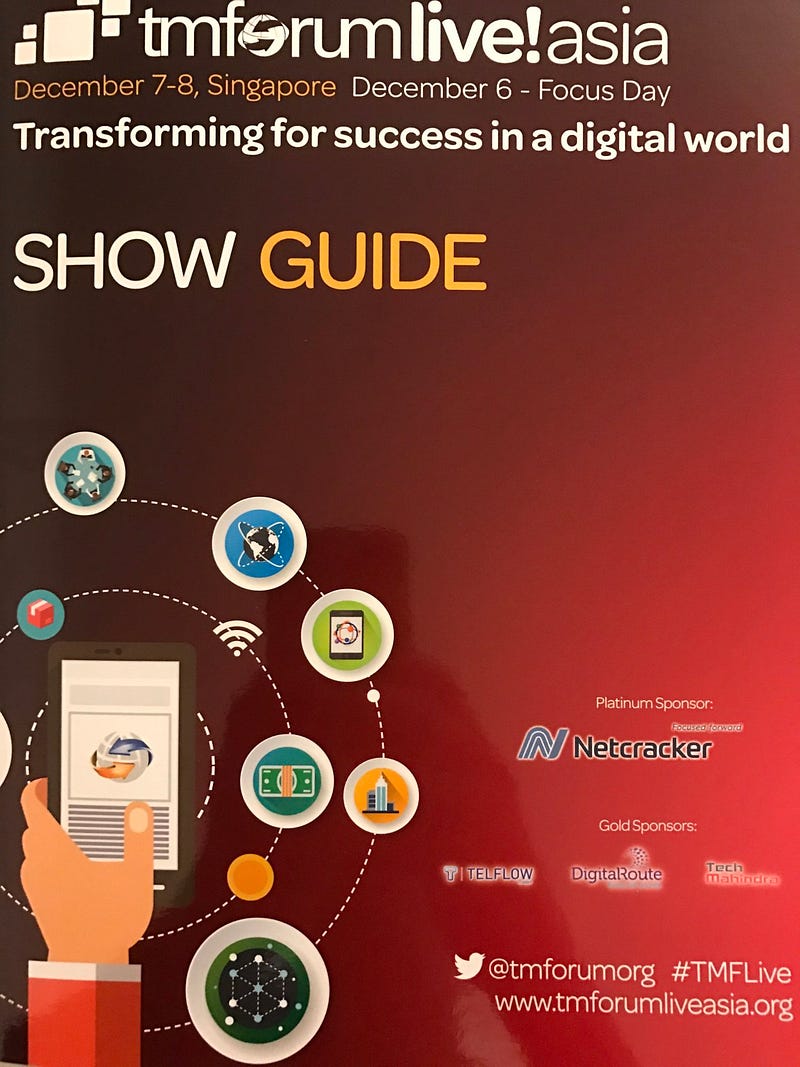
The Telecom World — Being Relevant is the Next Big Thing

For the past two years, I am more involved in the IOT world that seemed to be more biased to IT as compared to the Telecommunications industry. I found that there are four main topics that seems to get more serious attention than others:

  1. Digital Services as new revenue streams
  2. Partnerships are key to provide non-traditional telco services
  3. Getting to know customers better by personalisation of services
  4. Monetizing APIs

What’s interesting is that the exhibition booths are filled with companies introducing their Open API Frameworks. The question is why only now the telcos are excited in APIs when this topic has been widely discussed and developed in the IT/IoT world?

The only answer I could find is — to ensure survivability and still remained relevant in the future. Companies like Apple, Google, Facebook, WhatsApp, Skype have been slowly eating their “lunch” by offering voice and video services. Personally, I no longer use traditional voice call and SMS during overseas trips. With data roaming that only costs Rm 38 per day, not only I can constantly reached over WhatsApp/Facebook/Skype messages but also I can make video calls with either Facetime and WhatsApp video.

These companies have further encroached into the telcos business by developing new broadband infrastructure especially over the air targeted for rural areas.

Telcos realized about this several years ago when their data ARPU superseded voice. Not because their data services are getting any better but the OTT players have been getting a “free” ride on their connectivity pipes. They can no longer be just another connectivity player — they MUST win this battle or risk being overtaken by the non-telco players.

Telcos know that they are no longer the monopoly. But they also realize that they can’t change overnight. Big companies that have 1000’s of employees need more than just reorganisation of their business units — they need to have a new mindset, agile and innovative culture and new competencies. How can they beat smaller startups that are more agile and have entrepreneurial spirit?

Here’re my observations for the last two years:

  1. Formation of Digital Services Division to understand the impact and finding new revenue streams
  2. Be agile or invest on startups
  3. Opening up their telco infrastructure and back-end systems with Open APIs. Try to find ways how to further monetise the APIs.
  4. Developing partner ecosystems — vendor and application developers. App developer can use the Open APIs.
  5. Leveraging partner in Smart City projects
  6. Bundling OTT services into their current offerings
  7. Using Big Data Analytics to get better insights and impact between network, marketing campaign on their customer behavior.
  8. Planning to invest on NB-IOT to compete with LoRa and SigFox.
  9. Eyeing on IoT
  10. Going global — telcos are expanding beyond their shores

What’s your opinion?

[Original Article — “The Telecom World — Being Relevant is the Next Big Thing” was published in IoT World]