Shaping The Future IoT Talents — The Need to Empower IoT Educators

IOT EDUCATORS

Who are these IoT Educators? Why are they vital in shaping our nation?

Photo by Kenny Eliason on Unsplash

Not a member? Click here to read the whole story for free.

IoT’s omnipresence is undeniable.

However, the key to harnessing this technological marvel lies in nurturing the right talent, which begins with the educators themselves.

My journey, which has encompassed diverse roles from academia to industry leadership, has provided profound insights into the critical aspects of IoT education.

The Vital Role of IoT Educators

Photo by Kenny Eliason on Unsplash

IoT educators are the linchpins in the ecosystem of IoT learning and development.

Their role transcends beyond mere transmission of theoretical knowledge; they are the catalysts that ignite curiosity and innovation among students.

But to kindle this spark effectively, educators themselves need to be adept with not just the theories but the very fabric of IoT technology — its tools, applications, and real-world implications.

Bridging the Practical Knowledge Gap
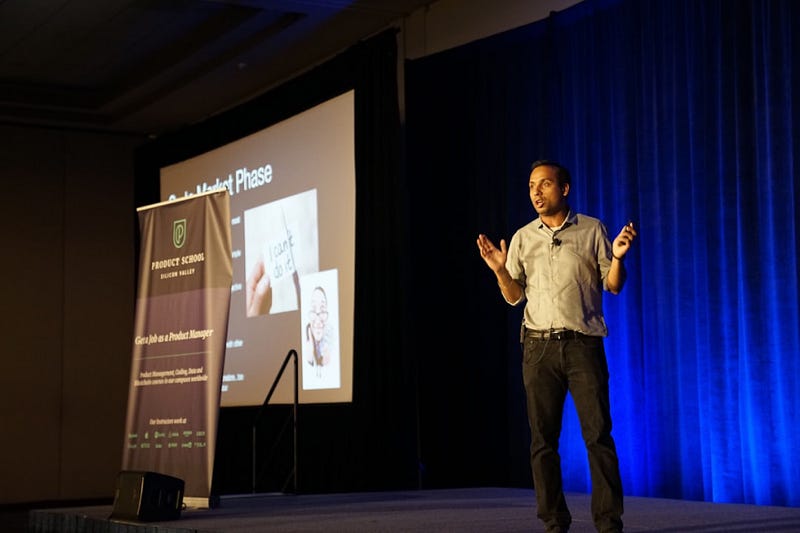
Photo by Product School on Unsplash

The disparity between theory and practice is one glaring void in the current educational framework.

While theoretical knowledge lays the foundation, true mastery of IoT necessitates hands-on experience with cutting-edge hardware and software tools.

Therefore, educators must first be practitioners, immersing themselves in the nuances of these tools.

Only then can they impart meaningful knowledge to their students.

They are responsible for updating the syllabus dynamically, integrating contemporary tools employed by the industry, and thereby ensuring that students are industry-ready.

Syllabus Evolution — Keeping Pace with Industry

Photo by Patrick Tomasso on Unsplash

The IoT curriculum needs to be a living entity, evolving with the field’s rapid advancements.

This evolution is imperative to equip students with relevant and current skills.

Educators should collaborate closely with industry experts to curate a curriculum that mirrors real-world applications and challenges, fostering a learning environment that bridges the gap between academia and industry.

Understanding Industry’s Challenges and Realities

Photo by Rob Lambert on Unsplash

Another critical aspect that often needs to be addressed is comprehending industry-specific problems.

Theoretical learning often showcases IoT applications at a high level, glossing over the intricate web of challenges that professionals face in the real world.

Educators must delve deeper, understanding, and conveying the multifaceted nature of these challenges to their students.

This involves not just a theoretical grasp but an empirical understanding, necessitating educators to engage directly with the industry, gain insights into actual problem scenarios, and integrate this knowledge into their teaching.

Cultivating a Practical and Business-Oriented Mindset

Photo by christopher lemercier on Unsplash

The ultimate test of IoT solutions lies in their viability and acceptance in the market.

Despite their innovative edge, many projects falter because they do not align with practical constraints or fail to address genuine market needs.

Educators need to instill a mindset that looks beyond the technicalities and understands the economic and business dimensions of IoT solutions.

This perspective is crucial for students to develop solutions that are not just technologically advanced but are also pragmatic and market-driven.

My Journey — From Academia to Industry

Photo by Heidi Fin on Unsplash

My career trajectory, spanning academia and industry, highlights the importance of this integrated approach to IoT education.

From my tenure as an academic to leading roles in the industry and now as an Adjunct Professor, the constant learning and interaction with the dynamic field of IoT have been pivotal.

These experiences have enriched my perspective, allowing me to contribute more effectively to educating the next generation of IoT professionals.


Conclusion

The journey of nurturing IoT talents is complex yet rewarding, with educators playing a pivotal role.

By embracing a holistic approach that blends theoretical knowledge with practical insights and industry engagement, educators can unlock the true potential of their students, paving the way for innovative solutions that resonate with real-world needs.

As we continue to navigate the IoT landscape, we must focus on empowering educators, for they are the architects who will shape the future of IoT talents.


Favoriot offers an IoT platform that has become an indispensable tool for learning and teaching IoT in academia. Contact Favoriot to learn how we can help you with your IoT education.


More stories about IoT in Universities:

1 — The Best Universities in Malaysia That Offers IoT Courses or Programmes

View at Medium.com

2 — IoT Education in Universities: The Favoriot Solution

View at Medium.com

3 — How an On-Premise IoT Platform for Universities Can Propel Your IoT Education

View at Medium.com

4 — Malaysian Higher Education Institutions Using Favoriot IoT Platform

View at Medium.com

5 — The Impact of IoT Platforms on Student Innovation

View at Medium.com

Why the Success of Smart City Projects Depends on People and Talent

The missing link

Executing the blueprint of a Smart City is like conducting an orchestra.

Photo by Patrick Langwallner on Unsplash

Not a member yet? Click here to read the full story for free.

The buzz around smart cities often highlights groundbreaking technologies, substantial funding, and strategic plans.

Yet, through my experiences and observations in this field, I’ve come to understand a profound truth — the people and their talent truly drive the success of smart cities.

Despite the pivotal roles of funding and strategic planning, without the right individuals at the helm, the most meticulously crafted blueprints for smart cities remain inert ideas on paper.

Let me share why I firmly believe that people and talent stand at the core of transforming any city into a smart one.

The Illusion of Funding as the Panacea

In the initial phases of conceptualizing a smart city, it’s easy to be trapped by the notion that if only we had enough funds, any vision could be realized.

Funding is indeed crucial — it buys the technology, pays the workforce, and builds the infrastructure.

Yet, money alone cannot innovate, adapt, or envision.

It’s a facilitator, not an executor.

Photo by Kaleidico on Unsplash

The Blueprint Without the Architect

Similarly, having a vision and action plan is imperative.

They set the direction and milestones.

But who charts the course to these milestones?

Who interprets these visions into tangible actions and technologies that resonate with the citizens’ needs and the city’s unique character?

It’s the people — engineers, planners, policymakers, and many others whose expertise and commitment breathe life into these plans.

The Architects of Reality: People and Talent

In every meeting I’ve attended, every project I’ve led, and every challenge I’ve navigated, the defining factor for success was always the quality and dedication of the team involved.

These individuals are the problem-solvers, the visionaries, and the doers.

Without them, the most advanced technologies are just tools lying idle.

When we talk about leading the vision and developing action plans, it’s the people who strategize and contextualize, ensuring that goals align with the city’s ethos and future.

It is their foresight that anticipates challenges and weaves resilience into the fabric of urban design.

Concerning funding mechanisms and business models, again, it’s the human intellect and creativity that discern the most viable and sustainable pathways.

Financial strategies are not conjured from thin air; they are meticulously crafted through expertise, experience, and understanding of the market and societal needs.

Executing the blueprint of a smart city is akin to conducting an orchestra — each player, each instrument, holds intrinsic value, but it is the conductor, understanding each nuance, who creates harmony.

In the realm of smart cities, project managers, engineers, IT specialists, and many others work in concert, guided by leaders who ensure that every action aligns with the overarching vision.

Choosing the right technology is not merely a matter of preference or trend but a critical decision that requires deep understanding and foresight.

The individuals responsible for this selection must navigate a landscape full of options, identifying what best serves their city’s specific needs, now and in the future.

Governance in smart cities is not just about rules and regulations; it’s about making informed decisions that affect millions.

It demands leaders and teams who not only understand the intricate mechanics of urban systems but also grasp the broader implications of their decisions on society and the environment.

When it comes to executing and managing projects, the need for skilled individuals becomes even more apparent.

These are the people who turn concepts into reality, overcoming obstacles and adapting to unforeseen challenges along the way.

Developing the architecture, design, and specifications of a smart city requires not only technical skill but also a vision that integrates functionality with sustainability and livability.

It’s a task for creators and innovators who can envisage the interplay between diverse elements of the urban landscape.

Lastly, managing the operations of a smart city is a colossal and continuous endeavor.

It demands a dedicated team adept in handling sophisticated technologies, analyzing data, and responding proactively to the evolving needs of the city.

Photo by Ismael Bashiri on Unsplash

Reflections

In my reflections and engagements with smart city initiatives, I’ve witnessed firsthand the transformative power of human talent and dedication.

Technologies evolve, funding fluctuates, and plans adapt, but the constant that underpins all progress is the people.

Without the right team — individuals who are not only skilled but also passionate and visionary — any smart city project is destined to remain grounded, an unrealized potential.

Thus, as we venture further into the era of smart cities, let us not lose sight of the human element.

It is the creativity, ingenuity, and perseverance of people that turn the dream of smart cities into a vibrant reality.

For this reason, I steadfastly advocate that when we invest in smart cities, we must invest equally in nurturing and valuing the people and talent behind them, for they are the true architects of our urban future.

Photo by Mohd Jon Ramlan on Unsplash

More stories about Smart Cities:

1 — How Smart City Tech Can Boost Your City’s Finances
2 — Why Many Smart Cities Failed? Here’s How to Avoid.
3 — Why do Smart Cities Require an IoT Platform?
4 — Why Managing a Smart City Command Centre is a Headache and How to Overcome This.
5 — How Smart City Solutions Elevate Living and Cut Costs
6 — How Chief Smart City Officers Transform Urban Landscapes
7 — What Slows Down the Smart Cities Implementations in Malaysia?
8 — MSCA — The Answer to Smart Cities in Malaysia?


Contact Favoriot to schedule an appointment to learn how the Favoriot IoT platform can expedite the data collection for smart city solutions.

Where are the IoT Talents in Malaysia?

Challenges to Become a Producer Nation

What talents do we need to be at the forefront of IoT?

Building new Generation-IoT

Not a member yet? Click here to read the full story for free.

Are we ready to propel forward in IoT?

What do we need to achieve this?

As we know, the Internet of Things (IoT) is not just a technological revolution; it’s an economic and industrial transformation reshaping how businesses operate and how consumers interact with the physical world.

As IoT continues gaining traction, the need for skilled engineers and technical professionals with a deep understanding of IoT technologies and a firm grasp of business theory becomes increasingly critical.

This article examines why the industry needs more such professionals, particularly emphasizing Malaysia’s ambition to become a nation that not only consumes but also produces locally made IoT products.

Bridging the Gap between Demand and Supply

The IoT market is burgeoning.

By interconnecting devices and systems, IoT offers efficiencies, insights, and control that were unimaginable just a decade ago.

However, the supply of skilled professionals who can navigate the complexities of IoT needs to catch up with demand.

Addressing this talent gap is essential for countries like Malaysia that aspire to be at the forefront of this revolution.

Producing homegrown IoT solutions requires a workforce that understands not only the technical aspects of IoT but also the business implications and opportunities it presents.

The Five Crucial Technology Layers of IoT

  1. Hardware and Sensors: IoT begins with the hardware—the sensors and devices that collect data. Engineers must understand the myriad of sensors available and their applications in various industries. This requires knowledge of electronics and embedded systems and integrating hardware into physical environments.
  2. Connectivity: IoT devices must communicate, meaning professionals must be versed in networking. They need to know the best connectivity options—whether Wi-Fi, Bluetooth, LTE, or emerging technologies like 5G—and understand their implications for bandwidth, latency, and power consumption.
  3. Middleware or IoT Platforms: This is where data is aggregated and managed. A robust understanding of choosing and utilizing an IoT platform — be it cloud-based or on-premises — is crucial. This includes making decisions based on scalability, reliability, and cost.
  4. Applications: The value of IoT is realized through applications that turn raw data into insights and actions. Engineers must be skilled in software development and user interface design and have experience developing applications that meet customer needs.
  5. AI and Security: As IoT systems generate massive amounts of data, using AI for analysis and machine learning becomes critical. Securing IoT systems against cyber threats is also non-negotiable. Professionals must be well-versed in cybersecurity strategies specific to IoT.

The Business Acumen in IoT

Understanding IoT technology is only half the battle.

The other half is grasping the ‘why’ behind IoT.

What problems does IoT solve? How can it drive business value?

Technical professionals must understand the business or industry they’re developing solutions for.

This includes market analysis, business case development, and articulating the return on investment for IoT initiatives.

Professionals should also be adept at designing and architecting IoT solutions that align with business goals.

They must understand how to leverage IoT data for strategic decisions, which requires a thorough understanding of data analytics, big data technologies, and how IoT can provide a competitive edge.

IoT in the Malaysian Context

For Malaysia to transition from a consumer to a producer nation in IoT, there must be an emphasis on education and training that equips future generations with the right skill sets.

Malaysian industries require professionals who can develop local IoT products that cater to the region’s unique needs, understand the local market, and navigate the intricacies of domestic and international business landscapes.

Training and Development

Recognizing this need, companies like Favoriot are stepping up to offer comprehensive IoT training programs.

These programs are tiered to cater to varying levels of expertise — from business professionals who need a foundational understanding of IoT to engineers seeking advanced training in AI and IoT security.

Such training modules are vital for industry engineers, business professionals, and academics who will eventually be responsible for disseminating IoT knowledge.

Conclusion

The demand for engineers and technical professionals with a comprehensive understanding of IoT and its technology layers, coupled with solid business theory, is not just a sector-specific necessity; it’s a national imperative for countries like Malaysia.

Investing in specialized IoT training, fostering a culture of continuous learning, and encouraging innovation is crucial to achieving the vision of becoming a producer nation.

By doing so, Malaysia can ensure that its future generation of talented professionals is capable of entering the industry and pioneering it, thereby securing a place for the nation at the forefront of the IoT revolution.


Favoriot offers four (4) IoT Training Courses, from business to AI. Contact us for the latest information about Favoriot IoT training.

IoT Training


Favoriot Testimonial Videos. Listen to what they have to say about the IoT Trainings.