How New Writers Can Attract More Readers

WRITERS JOURNEY

4 Practical Tips from My Journey

Photo by Silas Baisch on Unsplash

When I first started writing, I felt like I was tossing messages into a vast ocean, hoping anyone would find them and read them. It was a challenging time, filled with self-doubt and uncertainty.

But over the years, I’ve discovered strategies that helped me grow my readership and engage more effectively with my audience.

Let me share these insights with you, drawing from my experiences and lessons learned.

1 — Write What You’re Passionate About

Photo by Randalyn Hill on Unsplash

I covered many topics when I began writing, thinking this would attract more readers.

However, I soon realized that my most successful articles were those where my passion and expertise shone through. That meant focusing on IoT, smart cities, and technology.

Why aren’t people reading my articles?” I asked myself, frustrated by the lack of engagement.

Maybe it’s because you’re not writing about what you truly care about,” my introspective self suggested. “Focus on your passions — IoT and smart cities.

Following this advice, I noticed a significant shift.

Writing about topics I was passionate about made the process more enjoyable and resonated more with readers.

They could sense my enthusiasm and expertise, which made the content more engaging and credible.

2 — Share Personal Stories and Experiences

Photo by S O C I A L . C U T on Unsplash

People connect with stories.

When I started incorporating personal anecdotes and experiences into my articles, I saw a marked increase in reader engagement.

Sharing my journey, challenges, and lessons I learned made my articles more relatable and compelling.

Is it okay to share personal stories in a professional article?” I wondered, unsure about blending personal and professional narratives.

Yes, it makes you more relatable,” my confident self replied. “People want to know the person behind the expertise.”

One of my most popular articles detailed my struggles with starting a tech company.

I shared the highs and lows, the sleepless nights, and the small victories. Readers responded positively, appreciating the transparency and authenticity.

It made them feel like they were part of my journey.

3 — Engage with Your Audience

Photo by Everton Vila on Unsplash

Building a readership isn’t just about writing great content; it’s also about building relationships.

I started responding to comments, participating in discussions, and contacting readers directly. This boosted my article views and fostered a sense of community.

Do you think replying to comments really makes a difference?” my skeptical self asked, unsure about the impact of engagement.

Absolutely,” I replied. “It shows readers that you value their input and encourages them to return.

Engaging with my audience helped me better understand their interests and preferences, which, in turn, informed my future articles. It created a feedback loop that benefited both my readers and my writing.

4 — Optimize for Search Engines

Photo by Stephen Phillips – Hostreviews.co.uk on Unsplash

While passion and engagement are crucial, technical aspects like SEO can’t be ignored.

I learned to optimize my articles for search engines to increase visibility.

This involved using relevant keywords, crafting compelling headlines, and ensuring my articles were well-structured.

Isn’t SEO just for marketing people?” I asked, hesitant to dive into the technicalities.

Not at all,” my strategic self responded. “It’s an essential tool for any writer looking to increase their reach.

I started researching keywords related to my niche and incorporating them naturally into my content.

I also focused on creating catchy headlines and using subheadings to make my articles easier to read.

These small changes had a significant impact on my article’s discoverability.


Deep Dive into Each Strategy

Photo by Amy Lister on Unsplash

Writing with Passion: Finding Your Unique Voice

Passion is the lifeblood of writing.

When I shifted my focus to topics I was genuinely excited about, it transformed my writing.

My articles on IoT and smart cities began to flow more naturally, and readers could feel my enthusiasm.

Passion is infectious; when you write about something you love, your readers can sense it and are more likely to engage with your content.

Personal Anecdote: My IoT Journey

When I first started FAVORIOT, I faced numerous challenges, from technical hurdles to market acceptance.

Writing about these experiences helped me process them and resonated with readers facing similar struggles.

Sharing my journey made my articles more relatable and showed readers they weren’t alone in their challenges.

Connecting Through Stories: The Power of Relatability

Sharing personal stories isn’t just about airing your experiences; it’s about connecting with your audience on a human level.

I remember writing an article about the early days of my career detailing the mistakes and lessons learned.

This article received much positive feedback because it showed readers that even experts face difficulties and learn from them.

Engaging with Your Audience: Building a Community

Engagement goes beyond the comments section.

It’s about creating a dialogue with your readers.

I viewed each article as the beginning of a conversation rather than a one-off piece of content.

This mindset shift led me to actively seek feedback and engage with my readers, turning casual readers into a loyal community.

Practical Tip: Leveraging Social Media

Social media platforms like LinkedIn and Twitter became invaluable tools for engagement.

I would share my articles, ask for feedback, and participate in relevant discussions.

This drove traffic to my articles and helped me connect with a broader audience.

Optimizing for Search Engines: The Technical Edge

SEO might seem daunting, but it’s a game-changer.

Learning to optimize my articles for search engines significantly increased my visibility.

I focused on researching relevant keywords and naturally integrating them into my content.

Tools like Google Analytics and Keyword Planner were instrumental in understanding what my audience was searching for.

Practical Tip: Crafting Effective Headlines

Headlines are your first impression.

I learned to craft headlines that were catchy and included keywords to improve SEO.

A well-crafted headline can distinguish between someone clicking on your article or scrolling past it.

Consistency: The Unsung Hero

Consistency is another crucial factor.

I committed to a regular publishing schedule, which helped build anticipation among my readers.

It also showed search engines that my blog was active, further boosting my SEO efforts.

Consistency doesn’t mean churning out content mindlessly; it’s about maintaining a steady pace that balances quality and quantity.

How can I maintain consistency without compromising quality?” I asked myself during a particularly busy period.

Plan and set realistic goals,” my pragmatic self advised. “It’s better to post fewer high-quality articles than to overwhelm your readers with subpar content.

Continuous Learning and Adaptation

The writing journey is a continuous learning process. I regularly analyze which articles perform well and why.

This helps me refine my strategies and adapt to changing reader preferences. Writing is not a static skill; it evolves with practice and feedback.

How can I stay relevant in a constantly changing landscape?” my forward-thinking self pondered.

Stay curious and open to learning,” I responded. “Adapt to new trends and continuously seek feedback from your readers.


The Journey is Ongoing

Photo by Clay Banks on Unsplash

Writing is a journey of passion, persistence, and continuous improvement.

Focusing on topics you’re passionate about, sharing personal stories, engaging with your audience, and optimizing for search engines can significantly increase your readership.

Remember, every writer starts somewhere, and with dedication and strategic efforts, you can build a loyal and engaged audience.

Do you think we’ll keep growing as writers?” my hopeful self asked.

Absolutely,” I replied with confidence. “As long as we stay true to our passions, engage with our audience, and keep learning, there’s no limit to what we can achieve.

So, to all the new writers who feel lost or discouraged, remember that every word you write is a step forward.

Keep writing, keep learning, and most importantly, keep believing in the power of your unique voice.

The readers will come, and your journey will be worth every effort.

Why Persistence in Writing Matters, Even Without Readers

WRITING STORIES

Why You Should Not Give Up Writing When No One is Reading Your Articles

Photo by Myriam Jessier on Unsplash

There I was, staring at my blog’s analytics, disheartened by the lack of traffic. The numbers were abysmally low, almost non-existent.

Why am I even doing this?” I thought, frustration bubbling up inside me.

This wasn’t the first time I had felt this way. But then, I remembered a conversation I had with myself years ago when I first embarked on this writing journey.

The Beginning

Do you remember why you started this, Mazlan?” I asked myself, my younger self nodding in response.

It wasn’t about the numbers or the recognition. It was about sharing your knowledge, insights, and passion for IoT and technology.

Yeah, but what’s the point if no one is reading?” my younger self retorted, a hint of desperation in his voice.

The point is that every piece you write is a step forward,” I replied, my voice firm but encouraging.

Every article helps you refine your thoughts, improve your skills, and build your body of work. Even if no one reads it now, that doesn’t mean they won’t in the future.

Finding the Purpose in Writing

Photo by Anete Lūsiņa on Unsplash

Writing has always been a deeply personal endeavor for me.

It’s a way to document my journey, express my thoughts and ideas, and connect with like-minded individuals.

But not every piece will be an instant hit.

Sometimes, it feels like shouting into the void.

But then, I remind myself of a lesson I learned early on.

Mazlan, writing is a marathon, not a sprint,” I often tell myself.

It’s about persistence, about showing up even when no one is listening.

Every article, every post, every word written is a brick laid on the path towards becoming a better writer and thinker.

Overcoming Self-Doubt

But what if I’m not good enough?” my self-doubt whispered, a familiar yet unwelcome voice.

Everyone starts somewhere,” I countered, remembering the countless drafts and revisions that shaped my early articles.

The only way to improve is to keep writing. Every writer faces rejection and criticism, but those who persist ultimately succeed.

The Journey

Photo by Mantas Hesthaven on Unsplash

There were times when I felt like giving up.

I remember one particularly rough patch when my articles seemed to need to be noticed.

It was during this time that I had another pivotal conversation with myself.

The Turning Point

Maybe it’s time to quit,” my frustrated self said, slumping in defeat.

Or maybe it’s time to change your perspective,” I responded, a spark of determination igniting.

Focus on the joy of writing, the process of learning, and the satisfaction of creating something from nothing. The recognition will come, but only if you keep going.

It was a turning point for me.

I started to enjoy the process more, to find joy in the act of writing itself rather than the external validation.

And slowly, things began to change.

My articles started to gain traction, and I received feedback from readers who found value in my words.

Celebrating Small Wins

Photo by Vitolda Klein on Unsplash

Hey, look at this comment!” my excited self exclaimed one day, pointing at a heartfelt message from a reader.

See? Your words are making an impact,” I said, a smile spreading across my face.

Celebrate these small wins, and let them fuel your passion to keep writing.

The Importance of Consistency

Consistency has been critical in my writing journey.

I’ve learned that writing regularly is crucial even when it feels like no one is reading.

It builds discipline and hone your craft.

I remember when I committed to writing several articles per month, regardless of the readership.

The Power of Consistency

Photo by Mohamed Nohassi on Unsplash

Do you think this will pay off?” my skeptical self asked, eyeing the blank page in front of us.

It’s not about immediate rewards,” I replied, my voice steady with conviction.

It’s about laying the groundwork for long-term success. Consistency breeds improvement, and improvement attracts readers.

Connecting with the Right Audience

Over time, I realized that finding the right audience is as essential as writing the content.

I started sharing my articles on different platforms, engaging with communities interested in IoT and technology, and participating in discussions.

This helped me connect with readers who genuinely appreciated my work.

Expanding Reach

Photo by Marc-Olivier Jodoin on Unsplash

Maybe you should try sharing your articles in new places,” my strategic self suggested.

Good idea,” I nodded. “Let’s explore forums, social media groups, and other platforms where our target audience hangs out. It’s about meeting readers where they are.

Learning from Feedback

Feedback, both positive and negative, has been invaluable. It has helped me grow as a writer and better understand my audience.

I remember receiving constructive criticism on one of my early articles, which initially stung but ultimately made me a better writer.

Embracing Criticism

Photo by Grant Ritchie on Unsplash

Ouch, that was harsh,” my hurt self winced, reading the critique.

Take it as a lesson,” I advised, my voice gentle but firm. “Every piece of feedback is an opportunity to learn and improve. Embrace it, and use it to grow.

Finding Your Voice

One of the most significant milestones in my writing journey was finding my unique voice.

It took time and experimentation, but eventually, I discovered a style that resonated with my readers.

Writing in the first person and using self-dialogues has been a game-changer, making my articles more relatable and engaging.

Discovering My Voice

Photo by Annie Spratt on Unsplash

I feel like I’m finally finding my groove,” my excited self said, a new confidence in his voice.

That’s because you’re being true to yourself,” I replied, a sense of pride welling up. “Keep writing from the heart, and your audience will find you.

The Joy of Writing

Ultimately, writing has brought me immense joy and fulfillment.

It has allowed me to express myself, share my knowledge, and connect with people worldwide.

Even during the tough times, I’ve always found solace in writing.

Rediscovering Joy

Why do we keep doing this?” my weary self asked during a particularly challenging period.

Because it’s what we love,” I answered, a smile spreading across my face. “Writing is a part of who we are. It’s our way of making a difference, one word at a time.”


Never Give Up

So, to anyone who feels like giving up on writing because no one is reading, remember this: Your words matter, even if it doesn’t feel like it right now. Keep writing, keep learning, and keep pushing forward. The journey may be arduous, but the rewards are worth it.

Final Encouragement

Do you think we’ll ever reach a wide audience?” my hopeful self asked.

I believe we will,” I said confidently. “But even if we don’t, the journey itself is worth every word written. Never give up because your voice deserves to be heard.

Writing is a journey of persistence, passion, and continuous growth.

It’s about staying true to yourself and finding joy in the process.

So, keep writing; one day, your audience will find you.

Do You Think It’s Hard to Achieve Success on Medium

WRITER’S STORIES

Success is a journey. It’s not a straight line.

Photo by marina on Unsplash

When I began writing on Medium, the platform seemed like a vast, uncharted ocean. Like many others, I was filled with excitement and trepidation, eager to share my thoughts but uncertain of my footing.

I had already built a career spanning academia, corporate leadership, and entrepreneurship, but this was a different arena.

The article “Why Is It So Hard to Achieve Success on Medium? Here’s the Answer” resonated with me deeply. It shed light on the challenges that I, too, faced in my writing journey.

”Success on Medium, what does that even mean?” I pondered as I had my regular morning walk exercise.

The article mentioned that success could mean different things to people – gaining followers, earning money, or simply finding a voice. It was about creating impact, sharing knowledge, and connecting with like-minded individuals. But achieving that was easier said than done.

Photo by matthew Feeney on Unsplash

I remember my early days on Medium, staring at the blank page with a mix of excitement and anxiety.

Where do I even start?” I often asked myself.

The article’s author pointed out that finding a niche is one of the biggest challenges. This advice was both liberating and constricting.

On one hand, I have a wealth of experience in IoT, smart cities, and entrepreneurship. On the other hand, I had varied interests—poetry, book reviews, personal reflections—that didn’t neatly fit into one category.

Should I focus solely on IoT?” I wondered.

My journey with FAVORIOT has given me profound insights into the industry, and I knew there was a lot I could share.

Yet, I didn’t want to limit myself.

I remembered the joy of writing about different topics, the thrill of exploring various subjects, and the satisfaction of seeing readers engage with my diverse content.

The article suggested consistency as a key to success. ”Consistency, huh?” I pondered.

It made sense.

Photo by Iñaki del Olmo on Unsplash

In my professional life, consistency has always been crucial. Whether it was leading a team, conducting research, or delivering a keynote speech, being consistently built trust and credibility.

However, applying that to writing was a new challenge.

Can I maintain a regular posting schedule?” I asked myself, aware of my often hectic schedule.

I decided to experiment.

Let’s start with what I know best,” I resolved, focusing initially on IoT and smart cities.

My first few articles blended technical insights and personal experiences. I shared stories from my time at MIMOS, where we pushed the boundaries of IoT research, and from FAVORIOT, where we implemented real-world solutions.

The response was encouraging, but I knew I had to diversify to keep my writing fresh and engaging.

The article also touched on the importance of engaging with the community.

Engagement, of course,” I noted.

This wasn’t just about writing; it was about connecting.

Photo by Ben Sweet on Unsplash

I began reading more, leaving thoughtful comments, and responding to those who engaged with my work.

It felt like building a network in my corporate and entrepreneurial roles.

People appreciate genuine interaction,” I reminded myself, drawing parallels to the countless meetings and conferences where meaningful conversations often led to significant opportunities.

Despite my efforts, there were days when my articles didn’t perform as well as I hoped.

What am I doing wrong?” I often asked myself in frustration.

The article I read addressed this feeling, explaining that the algorithm could be unpredictable and sometimes just about timing.

Patience and persistence,” I reminded myself, have served me well throughout my career.

I reflected on my journey into entrepreneurship, especially the early days of FAVORIOT.

Starting a company was never part of the plan,” I recalled.

Photo by Tim Gouw on Unsplash

My career had been firmly rooted in academia and then in corporate roles.

Yet, the opportunity to create something new, to drive innovation in IoT, was too compelling to resist.

The initial challenges were immense – securing funding, building a team, developing a product – but each hurdle taught me valuable lessons.

If I could navigate those challenges, I can figure out Medium,” I encouraged myself.

The article also highlighted the importance of storytelling.

”Stories, not just facts,” I noted.

This was a crucial insight.

My technical articles were informative, but the ones that resonated most were those in which I shared personal anecdotes—stories of failures and successes, of lessons learned the hard way.

I remembered a talk I gave at a conference about the importance of resilience.

The audience connected with the data and the story behind it,” I realized.

Photo by Jaime Lopes on Unsplash

Drawing from this, I began incorporating more personal narratives into my writing. I shared stories from my childhood, growing up in Johor Bahru and Kuala Lumpur, my early fascination with science fiction, and how these shaped my dreams of becoming a scientist.

Readers want to see the human side,” I reminded myself.

These articles saw better engagement, reinforcing the power of storytelling.

But how do I balance personal and professional?” This was a constant dilemma.

The article suggested being authentic, letting readers see both sides.

It was a balancing act, but one worth mastering. I wrote about my journey from academia to corporate and then to entrepreneurship, highlighting the seamless thread of curiosity and passion for innovation through each phase.

It’s all part of the same story,” I concluded.

Another point the article made was the importance of understanding the audience.

Who am I writing for?” I asked myself.

My audience on Medium was diverse – tech enthusiasts, budding entrepreneurs, students, and professionals seeking insights.

Photo by Nicholas Green on Unsplash

How can I serve them better?” This question became a guiding principle. I began tailoring my content to address common questions and challenges they faced, offering practical advice and insights drawn from my experiences.

I recalled a time working on a critical project at CELCOM-Digi. ”Understanding the customer’s pain points was key,” I remembered.

Applying this to my writing, I aimed to address my readers’ pain points.

Whether it was demystifying IoT for beginners or offering strategic advice to fellow entrepreneurs, I focused on adding value.

One of the article’s most profound pieces of advice was about perseverance.

It’s a marathon, not a sprint,” I reflected. My career was a testament to this truth. From the early days of struggling to secure research funding to leading a successful tech company, perseverance has been my constant companion.

Success on Medium won’t come overnight,” I reminded myself. It was about showing up consistently, learning, and improving with each piece.

Photo by Benjamin Davies on Unsplash

I thought back to my days at MIMOS, working on cutting-edge research.

Innovation takes time,” I smiled. The same applied to writing.

Each article was an iteration, a step towards refining my voice and message.

I embraced the process, knowing that each piece, regardless of its immediate success, was part of a larger journey.

As I continued to write, I also paid attention to the metrics – views, claps, comments.

What are these numbers telling me?” I wondered.

They were feedback, a way to gauge what resonated with my audience. I adjusted my approach based on this feedback, experimenting with different formats and topics.

It’s like fine-tuning a product,” I realized, drawing parallels to my work at FAVORIOT.

Yet, there were times when self-doubt crept in.

Am I good enough?” This question lingered, especially when my articles didn’t perform well.

The article I read addressed this, too, emphasizing the importance of self-belief.

Believe in your voice,” I told myself. My journey, my experiences, and my insights were unique. There was value in sharing them, even if the immediate response wasn’t always positive.

Photo by Soundtrap on Unsplash

I remembered the early days of FAVORIOT, the countless pitches to investors, and the rejections.

Every ‘no’ was a step closer to a ‘yes’,” I reflected. Writing on Medium felt similar. Each article was an opportunity, and persistence was key. ”Keep going,” I encouraged myself.

The article also highlighted the importance of learning from others.

Learn from the best,” it advised.

I began following successful writers on Medium, analyzing their style, the topics they chose, and how they engaged with their audience.

There’s always something to learn,” I reminded myself. This approach improved my writing and connected me with a community of supportive and inspiring individuals.

As months passed, I started seeing progress.

”Slow and steady,” I noted, appreciating the incremental growth.

My followers increased, engagement improved, and I felt more confident in my voice.

Photo by Melanie Deziel on Unsplash

Each article was a step towards building a body of work that reflected my journey and insights.

One of the most fulfilling aspects of this journey was the feedback from readers.

Your article helped me understand IoT better,” one comment read.

I resonate with your entrepreneurial struggles,” said another. These interactions reinforced the impact of sharing my story.

It’s about touching lives, even if just one at a time,” I reminded myself.

Looking back, the article “Why Is It So Hard to Achieve Success on Medium? Here’s the Answer” was a turning point. It offered clarity and direction at a time when I felt lost in the vast sea of content creation.

Success is a journey,” I concluded, requiring patience, persistence, and authenticity.

Reflecting on my journey, I feel accomplished as I sit here today.

Not just for the milestones achieved but for the lessons learned along the way.

Each article is a part of me,” I realize, a testament to my experiences, struggles, and triumphs. And as I continue to write, I do so with a renewed sense of purpose and a deep appreciation for the process.

Success is a journey,” I concluded, requiring patience, persistence, and authenticity.

How to Keep Readers Engaged on Your Medium Stories for Over 30 Seconds

WRITER’S STORIES

The core principles of engagement remain the same: deliver value, invoke curiosity, and foster interaction.

Photo by Manish Upadhyay on Unsplash

As someone deeply involved in the intersection of technology and communication, I’ve dedicated a significant portion of my career to understanding how digital platforms can enhance interaction and engagement.

My journey as an academic and now a CEO specializing in IoT has taught me the nuances of capturing and maintaining an audience’s attention.

Today, I want to share my insights tailored explicitly to writers on Medium, focusing on how you can get readers to not just click on your articles but stay engaged beyond the crucial 30-second mark.

Understanding the Medium Landscape

Photo by Mark Harpur on Unsplash

Medium is a platform rich with diverse content and an equally varied audience.

To capture the attention of these readers, it’s essential to understand the platform’s core mechanics.

Medium measures engagement through ‘reads,’ not just clicks, which means a reader has to stay on your page for a significant amount of time, usually over 30 seconds, for a visit to count as a read.

Achieving this isn’t just about improving your earnings; it’s about making a meaningful impact with your content.

Selecting a Topic

Photo by Dare Artworks on Unsplash

Choosing the right topic is your first critical decision.

It must resonate with a broad audience unless you target a specific niche.

As Mazlan Abbas, I often draw from my experiences in IoT and smart city innovations.

However, when I write, I aim to find a universal angle – perhaps focusing on how technology can improve everyday life, which appeals to a broader audience.

The goal is to find a topic that interests you and will spark curiosity among your readers.

Crafting the Headline

Photo by AbsolutVision on Unsplash

Your headline is your first impression.

Make it count.

It should be intriguing enough to draw readers in and reflective of the content they’re about to read.

Avoid clickbait.

Today’s readers are savvy and can feel betrayed by headlines that don’t deliver, leading them to bounce quickly off the page.

Engaging Introductions

Photo by Ozgu Ozden on Unsplash

The opening of your article should immediately engage the reader.

I like to start with a personal anecdote or an insightful observation that sets the tone for the discussion.

This approach humanizes the content and establishes a connection with the reader.

Here’s how I might begin an article on IoT:

Last week, as I walked along the bustling streets of Kuala Lumpur, I was struck by the seamless interaction between diverse IoT applications and urban life. Integrating technology and daily activities is no longer futuristic – it’s our reality.

Delivering Value Through Content

Photo by Alexander Grey on Unsplash

Once you’ve hooked your readers, the challenge is to keep them.

This is where the quality of your content plays a vital role.

It should be informative, well-researched, and, most importantly, offer a new perspective.

Even in fields as complex as telecommunications or IoT, the key is simplifying concepts without dumbing them down.

Ask yourself, “What new information or perspective am I offering?” This is what will keep your readers engaged.

Personal Opinions and Authentic Voice

Photo by Jason Rosewell on Unsplash

People connect with people, not just words on a screen.

Sharing your personal opinions can make your articles more relatable.

However, remember to use facts and experiences to maintain credibility.

Encouraging dialogue by addressing potential counterpoints can also increase engagement, as readers may stick around to ponder their views or craft a response.

Interactive Conclusions

Photo by Fab Lentz on Unsplash

Ending your article with a question or a call to action can be effective.

It invites readers to reflect on the topic and engage directly by leaving comments.

This increases the time they spend on your article and builds a community around your work.

For example, after discussing the impact of IoT on urban living, I might conclude with, “How do you see IoT technology playing a role in your city? Are there areas in your daily life where it could be beneficial?

Continual Learning and Adaptation

Photo by Conny Schneider on Unsplash

Lastly, engaging readers is an ongoing learning experience.

Use the analytics tools provided by Medium to see what works and what doesn’t.

Which articles have higher engagement?

What topics resonate most with your audience?

Based on this feedback, adapt and refine your strategies.


By following these strategies, you can significantly increase the time readers spend on your articles on Medium.

Remember, the goal is not just to get readers but to make an impact, to share knowledge, and to initiate conversations that matter.

As a technologist and an academic, I’ve learned that whether it’s through IoT or interactive articles, the core principles of engagement remain the same: deliver value, invoke curiosity, and foster interaction.

How I Finally Earned My First $100 After Six Months on Medium

WRITER’S STORIES

Seven (7) tips that you can follow.

Photo by Omid Armin on Unsplash

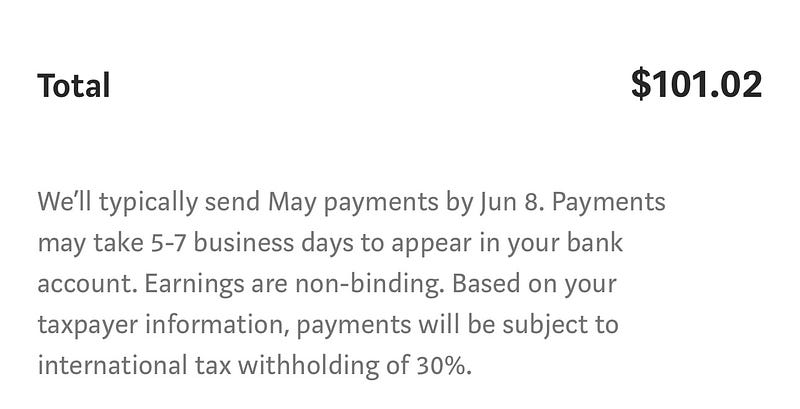
When I first joined Medium, I remember reading somewhere that only about 5% of writers make $100 or more monthly. This statistic stuck with me and became a personal milestone. “Can I be part of that 5%?” I often wondered.

After several months on the platform, my stories started gaining traction, but I hadn’t earned more than $65 in any given month. My initial goal was relatively modest — to earn around $100 per month.

Now that I’ve finally achieved this goal, I’m setting my sights higher, aiming for $200 next. It feels similar to my journey with followers; my goal started at 500, then 1000, 1500, and now 2000.

This journey has taught me persistence pays off,” I reminded myself.

If you stay on Medium long enough and continue to write, you will eventually meet your goals.

This has certainly been my experience. Reflecting on my recent success, I realize I did a few things differently this past month that contributed significantly to my earnings surpassing $100.

I want to share these strategies with you in the hope that they will also help you increase your earnings.

1 — Increasing Article Output

Photo by rivage on Unsplash

One of the most significant changes I made was increasing the number of articles I wrote each week.

Previously, I wrote one or two articles per week, but I noticed a remarkable shift when I started writing four to five articles weekly.

Writing every day seemed too ambitious and unsustainable, but four to five weekly articles struck the right balance.

There’s something transformative about writing more frequently on Medium,” I thought.

Some days, the words flow effortlessly; on others, it’s a struggle.

On days when inspiration strikes, I write as much as possible without worrying too much about editing.

I focus on getting the ideas out of my head and onto the page.

Later, when I’m not feeling as creative or have less time, I go back and edit these articles, refining and polishing them for publication.

This approach has increased my output and improved my consistency, keeping my readers engaged with regular content.

2 — Writing Longer, Engaging Content

Photo by Patrick Tomasso on Unsplash

Another pivotal change was making my articles longer.

I learned that the longer someone reads your story, the more you earn. However, writing longer content alone isn’t enough; it must be engaging.

If your article is lengthy but fails to hold the reader’s attention, they’ll likely leave before finishing, which won’t help your earnings or reader retention.

Initially, I resisted writing longer articles because I personally prefer shorter reads,” I admitted.

However, observing successful Medium writers who often write lengthy articles inspired me to experiment with longer content.

The key is ensuring every part of your article is engaging and adds value to the reader.

3 — Growing Your Follower Base

Photo by Free Walking Tour Salzburg on Unsplash

Followers play a crucial role in your success on Medium. “When I started actively following other writers, many followed me back,” I noted, which helped increase my visibility on the platform.

Having a larger follower base doesn’t guarantee they will read all your stories, but it does put you on their radar.

I’ve noticed that writers with a substantial following often have more credibility,” I reflected.

They’ve either been on Medium for a long time or have consistently produced quality content.

This credibility can attract more readers to your stories, increasing your chances of higher earnings.

4 — Repurposing Old Articles

Photo by Sergiu Vălenaș on Unsplash

After being on Medium for a while, you’ll notice that some of your older articles aren’t performing well.

Instead of deleting these underperforming stories, I considered repurposing them.

Change the title, restructure the content, and tweak anything that could use improvement,” I reminded myself.

Sometimes, a simple title change can bring new life into an article.

Recently, I learned how to embed links in my stories,” I said excitedly.

I revisited some of my older articles and added links to related content.

This strategy revived those articles and encouraged readers to explore more of my work, increasing overall engagement.

5 — Utilizing Popular Keywords

Photo by NisonCo PR and SEO on Unsplash

Writing frequently within a niche and using relevant keywords is another effective strategy.

For instance, I write a lot about IoT and entrepreneurship — these are my keywords, and they have a substantial following.

Incorporate these keywords in your titles and headings within the articles,” I advised myself.

Keywords help your stories get found on Medium and through search engines like Google.

They tell search engines what your story is about, which is crucial for getting more views.

6 — Writing for Your Audience

Photo by Nicholas Green on Unsplash

Understanding and writing for your audience is paramount. “Consider who your readers are and what they are looking for,” I constantly reminded myself.

Are you teaching them something new or sharing a personal story?

Tailoring your content to meet your audience’s expectations and needs will help you connect with them better and keep them coming back for more.

7 — Writing Because You Love It

Photo by Belinda Fewings on Unsplash

Today, I can confidently say that I have become a much better writer thanks to the practice and feedback I’ve received on this platform.

Writing frequently has improved my skills and solidified my identity as a writer.

Reaching the $100 mark is a significant milestone,” I thought with satisfaction, but the love for writing will keep you going in the long run.

By focusing on your passion and continuously honing your craft, the financial rewards and recognition will follow.


My journey to earning $100 monthly on Medium has been one of persistence, strategic adjustments, and much learning.

By increasing my output, writing longer and more engaging articles, growing my follower base, repurposing old content, using popular keywords, and writing with my audience in mind, I’ve been able to achieve this milestone.

And above all, writing because I love it has made the journey worthwhile.

If you’re on a similar path, I hope these insights will help you reach and surpass your goals on Medium.

This experience has reaffirmed my belief in perseverance and adaptability,” I concluded.

As I look forward to new goals and challenges, I remain committed to sharing my journey and insights with fellow writers and readers on Medium.

Together, we can continue to grow, learn, and succeed.


My Top Three (3) Stories in May 2024 — You Should Read This!

View at Medium.comView at Medium.comView at Medium.com

When Life Tests You, Read This Advice

Understand that it’s preparing you for greater things.

When life tests you, understand that it’s preparing you for greater things. Embrace these moments as opportunities for growth and transformation.


Remember, strength doesn’t come from comfort; it’s born from overcoming adversity. Each challenge you face is a chance to build resilience and fortitude.


In the face of difficulty, choose to be a light of hope. Your positive attitude can inspire and uplift others, even during the darkest times.


Recognise that challenges are opportunities in disguise. Embrace them with courage, knowing that each hurdle is a step towards your personal development.


Know that your spirit is unbreakable, even in the hardest times. Believe in your inner strength and let it guide you through the toughest moments.


Hardships are the training ground for resilience and growth. Every struggle is a lesson, a chance to become stronger and wiser.


You are capable of more than you imagine. Trust in your strength and potential, and don’t be afraid to push your limits.


Adversity is the grindstone of determination. Let it sharpen you, refine your skills, and strengthen your resolve.


Persevere through the trials. They are the stepping stones to success, each one bringing you closer to your goals.


Remember, your greatest victories will come from your hardest battles. Embrace the struggle, knowing that every effort brings you closer to triumph.

Finding Supporters in Public Speaking

THOUGHT LEADER’S ASPIRATION

From rejection to resonance.

As a keynote speaker, it’s important to realize that not everyone will resonate with your message, simply because it’s you.

However, there are always those who will be inspired by you, precisely because it’s you.

A common mistake is expecting everyone to applaud your ideas.

You can’t control others’ reactions or perceptions.

Instead, focus on what you can control.

Believe in the power of your message.

Speak with authenticity and passion.

Consistently hone your craft.

Your true audience and supporters will find you.

And you’ll connect with them in meaningful ways.

As you stand on stage, remember that your purpose is to share your unique perspective.

Embrace the differences in your audience; they bring richness to your experience.

Stay true to your values and vision.

Your words have the power to ignite change, inspire action, and create a ripple effect.

Be patient and persistent; success doesn’t come overnight.

Celebrate the small victories and learn from the challenges.

Build relationships and network with those who uplift and motivate you.

Stay committed to growth, both personally and professionally.

Your journey as a keynote speaker is not just about reaching everyone, but about deeply connecting with those who are ready to hear your message.

Keep moving forward with confidence and courage, and watch how your influence grows and inspires others.


How about you?

The Power of Momentum

Transforming challenges into opportunities.

Once Momentum Shows Up, Take Advantage of It

Photo by Sunder Muthukumaran on Unsplash

Momentum has always been an elusive yet powerful force.

It is a reminder that opportunities, once they present themselves, must be seized with both hands.

I often think back to the early days of my career, when momentum was not a concept I fully understood.

But over time, I learned that it is about recognizing momentum and leveraging it effectively to propel yourself forward.

In this article, I will share my experiences and thoughts on how to harness momentum.

This reflection is a recollection of past events and a dialogue with myself on the lessons learned and the wisdom gained over the years.

The Early Days: Recognizing Momentum

Photo by Nadir sYzYgY on Unsplash

When I started my career, fresh out of Universiti Teknologi Malaysia with a degree in Electrical Engineering, I clearly envisioned becoming a scientist.

My fascination with science fiction, from the vivid adventures in DC comics to the futuristic tales in “The Jetsons,” fueled this dream.

However, the reality of my career path soon diverged from these early aspirations.

Why didn’t I get to study abroad after Form 5?” I would often ask myself.

It felt like a missed opportunity, a moment when momentum could have been seized.

But looking back, I realize that not getting to study abroad was just the beginning of understanding how momentum works.

It was a challenge, a test of resilience. It taught me that sometimes, momentum comes disguised as obstacles.

As an assistant lecturer at Universiti Teknologi Malaysia, I immersed myself in academia.

Teaching, researching, and contributing to the faculty was fulfilling, but I felt something was missing.

I was waiting for momentum, for that push to take me to the next level.

Transitioning to the Corporate World

Photo by Icons8 Team on Unsplash

The transition from academia to the corporate world took a lot of work.

After earning my Ph.D. in Telecommunications, I joined CELCOM Axiata.

Here, I was exposed to the dynamic world of telecommunications, where I had to adapt quickly and learn new skills.

Is this where I’m supposed to be?” I questioned myself.

The answer wasn’t clear initially, but as I dug deeper into my roles, I began to understand the importance of flexibility and adaptability.

Momentum, I realized, often comes from stepping out of your comfort zone.

At CELCOM, I encountered various opportunities that pushed me to grow.

Each role demanded a different skill set, from R&D to billing and technology to network management.

This period was crucial in shaping my understanding of momentum.

It taught me that to create momentum, one must be willing to embrace change and take on new challenges.

The Turning Point: Leadership at MIMOS and REDtone

Photo by Hunters Race on Unsplash

My tenure at MIMOS Berhad as the Senior Director of the Wireless Communications Cluster marked a significant turning point in my career.

Here, I aimed to elevate the nation’s R&D standards.

However, after eight years, I felt my role had plateaued.

It was then that I faced a critical decision.

Should I stay where I am comfortable or seek new horizons?” This internal dialogue was crucial.

I realized that staying in a stagnant role could stifle my growth.

Momentum needed a new direction.

Taking on the CEO role at REDtone IoT was both exciting and daunting.

Moving from a technical role to a leadership position was a significant leap.

Establishing an IoT-focused subsidiary required vision, strategy, and, most importantly, the ability to inspire and lead a team.

Can I do this? Am I ready for such a challenge?” These questions haunted me.

But I knew that hesitation could kill momentum. I decided to embrace the challenge wholeheartedly.

Leading REDtone IoT was a transformative experience.

Here, I truly understood the power of momentum in driving innovation and growth.

The Birth of FAVORIOT: Embracing Entrepreneurship

Photo by Austin Distel on Unsplash

The decision to co-found FAVORIOT was a culmination of my experiences and a leap of faith.

Starting a business from scratch requires technical expertise, a deep understanding of the market, a clear vision, and the ability to navigate uncertainties.

Am I crazy to leave a stable job to start my own company?” This question lingered.

But the excitement of building something from the ground up was too compelling to ignore.

Momentum was on my side, and I knew I had to take advantage of it.

At FAVORIOT, our mission was to provide comprehensive IoT solutions for businesses seeking digital transformation.

The early days were challenging, with sleepless nights and endless brainstorming sessions.

But the thrill of seeing our ideas come to life kept us going.

Lessons Learned: Harnessing Momentum

Photo by Belinda Fewings on Unsplash

Looking back, there are several key lessons I have learned about harnessing momentum:

1 — Embrace Challenges as Opportunities

Challenges are often the catalysts for momentum. They push you to think creatively and adapt quickly. Every obstacle is an opportunity in disguise.

How can I turn this setback into a stepping stone?” This mindset has helped me navigate many difficult situations.

2 — Be Flexible and Adaptable

The ability to adapt to new roles and responsibilities is crucial. Flexibility allows you to pivot when necessary and take advantage of new opportunities.

What new skills do I need to learn to excel in this role?” Continuous learning and adaptation are essential.

3 — Seize the Moment

When opportunities present themselves, it’s essential to act quickly and decisively. Hesitation can kill momentum.

Is this the right time to make a move?” Trust your instincts and leap.

4 — Build a Strong Network

Networking is vital in creating and sustaining momentum.

Building strong relationships with peers, mentors, and industry leaders can open doors and provide valuable support.

Who can I reach out to for advice or collaboration? Never underestimate the power of a strong network.

5 — Stay Resilient

Momentum can be unpredictable.

There will be highs and lows, but resilience is key to maintaining progress.

How can I stay motivated during tough times?” Focus on your long-term goals and keep pushing forward.


The Future

Photo by Drew Beamer on Unsplash

As I continue my journey with FAVORIOT and beyond, I remain committed to leveraging momentum to drive innovation and growth.

The IoT and digital transformation landscape is fast-moving, and staying ahead requires constant vigilance and adaptability.

What’s next for FAVORIOT? How can we continue to innovate and lead in the IoT space?

These questions keep me motivated and excited about the future.

I also believe in giving back to the community.

As an adjunct professor and speaker at global conferences, I strive to share my knowledge and experiences with the next generation of leaders.

How can I inspire and mentor others?” This question drives my passion for teaching and mentoring.

I want to help others recognize and harness their momentum.

In conclusion, momentum is a powerful force that can propel you to new heights.

It requires recognizing opportunities, embracing challenges, and staying resilient.

My journey has taught me that momentum is not a one-time event but a continuous process of growth and adaptation.

By leveraging momentum, we can achieve our goals and impact the world meaningfully.

Am I ready for the next challenge?

Absolutely.

With each new opportunity, I am reminded that once momentum shows up, we must take full advantage of it.


Have you gained that momentum in you?

How to Embrace Courage

INFLUENCER’S STORIES

Fear is a reaction. Courage is a decision.

Photo by Cristi Ursea on Unsplash

Embrace courage by avoiding these common fears:

  1. Worrying about being judged by others.
  2. Fearing the opinions of those around you.
  3. Caring excessively about others’ feelings towards you.

In truth, most people are too preoccupied with their own lives to focus on yours.

This phenomenon is known as The Spotlight Effect.

You can’t control the thoughts or actions of others, and it’s a misconception to believe everyone is scrutinizing your every move.

So, let go of these worries.

They aren’t watching as closely as you think.

Freeing yourself from these concerns opens up room for personal growth.

Act in ways that reflect your true values and purpose.

Consider successful individuals; their achievements often stem from their disregard for public opinion.

They thrive because they don’t let the fear of judgment hold them back.

So, let courage lead your way and step forward boldly.

“Courage” – Photo by Jo Leonhardt on Unsplash

Staying True To Your Passion and Purpose

WRITER’S STORIES

In the end, the best tales are those that take time to unfold.

Photo by Pim Chu on Unsplash

As I sit here reflecting on my past, I’m fighting a battle of emotions—a mix of frustration and pride.

People love to sell us stories of overnight success, of magic shortcuts that supposedly lead to instant fame and fortune. “Oh, how different reality is,” I often remind myself.

Remember why you started, Mazlan?” Ten years ago, I was brimming with a desire to share my thoughts and insights with the world.

I took the plunge and began writing online.

Since then, it’s been a whirlwind filled with its own highs and lows.

I’ve built a community, launched a newsletter, and published books. I’ve grown immensely as a writer.

Photo by Aaron Burden on Unsplash

To outsiders, it may appear as though I’ve stumbled upon a glamorous success story. “But let me pull back the curtain for you,” I’d say if they were here.

Most people don’t see the immense amount of work that goes into each piece of content.

I’ve published hundreds of stories to date!” Each one is like laying a brick in a vast wall.

I’m building brick by brick.

It can be tedious, and sometimes it truly is.

I’ve spent countless lonely hours at my keyboard, pouring my heart and soul into articles that sometimes never see the light of day — ending up in my drafts folder or disappearing into the internet’s black hole.

My follower count on Medium grew to over 2,000, which is an achievement.

Some articles have garnered good earnings, which are always a sweet bonus.

Photo by Josh Appel on Unsplash

But behind these small victories lies a vast sea of quickly forgotten content.

And frankly, I’m still far from making a living solely from my writing,” I sigh.

During moments of reflection, I often ask, “Is all this effort worth it?”

Doubt creeps in, and I grapple with thoughts of giving up.

During these times, I pause and reconnect with my initial motivations.

Why did you start writing, Mazlan?” My goal has always been to empower people through my writing and create a community.

Being your coach and cheerleader is no easy feat — it’s mentally exhausting.

Photo by Tim De Pauw on Unsplash

Yet, there’s nowhere else I’d rather be than right here, right now, doing what I love, regardless of the outcome.

I’ve realized that every article I write, whether a hit or a miss, contributes to my growth as a writer.

When I doubt myself among successful peers, I step back.

Look how far you’ve come, Mazlan,” I remind myself.

It’s essential to appreciate the journey.

Photo by Khamkéo Vilaysing on Unsplash

The journey, with all its ups and downs, is what matters most.

The process of creating and expressing oneself is where the real value lies.

You can’t fail if you’re doing what you love,” I affirm.

But the moment you stop loving what you do, failure sneaks in.

So, to anyone feeling overwhelmed by the pressure to succeed overnight, remember this: real success is not about hitting it big quickly.

It’s about resilience, writing your story over many nights, and staying true to your passion and purpose, no matter what.

Let’s keep writing our own stories, filled with persistence and passion,” I encourage myself and others.

In the end, the best tales are those that take time to unfold.


Like my story? Remember to Subscribe to receive email updates on every post I publish.