The Challenge of Commercialising R&D in Big Corporations

THE TOUGH LIFE OF BUILDING A PRODUCT

Lessons from My Experience

Image from Unsplash

I sat in my office, reading an email from a colleague at one of our partner organisations.

It was a familiar story.

Their R&D division had spent years developing a product they were convinced would change the game, only for the product team to shelve it in favour of a faster-to-market solution from an external partner.

As someone who has spent years working in and with R&D organisations, I felt a pang of sympathy.

Yet, I also understood the product team’s perspective.

It’s a tug-of-war I’ve seen too many times — one that often ends with bruised egos and strained relationships.

The Slow Pace of R&D

Let me take you back to my days leading an R&D division.

We prided ourselves on our innovative projects, tackling cutting-edge technology that pushed boundaries.

But there was a catch: innovation takes time.

In an ideal world, we could refine our ideas, test them thoroughly, and ensure they were market-ready before launch.

But the market doesn’t wait.

I remember a heated discussion during one project review. The product team was growing increasingly frustrated with our timeline.

Dr. Mazlan,” they said, “we can’t wait another 18 months. Our competitors are already rolling out similar solutions. What’s the point of perfection if we’re late to the party?

I understood their frustration, but I also believed in the importance of doing things right. “If we rush,” I countered, “we risk launching a flawed product that damages the company’s reputation. We need time to get this right.

Despite my reasoning, the gap between R&D’s timeline and the product team’s urgency grew wider.

And the result?

They brought in an external vendor to deliver a quicker solution.

R&D for Publications, Not Products

Another issue I’ve observed is the focus on publications rather than practical solutions.

Don’t get me wrong — publishing research is important.

It showcases expertise and enhances the organisation’s reputation.

But when the primary goal of an R&D team is to publish papers, the end product often becomes secondary.

I’ve seen brilliant engineers and researchers produce groundbreaking work that earned accolades in journals but had little to no commercial viability.

I once asked a colleague, “Why aren’t we aligning our research with customer needs?

He smiled and said, “Dr. Mazlan, publications are what we’re measured on. Commercialisation is the product team’s problem.

That statement hit me hard.

If the R&D division isn’t focused on solving real-world problems, how can we expect their work to translate into products that sell?

Misaligned with Customer Needs

I’ve lost count of how many times I’ve seen products fail because they didn’t address real customer problems.

It’s a classic mistake: assuming we know what customers want without actually engaging with them.

I have known a company that had spent millions developing an IoT device. They were confident it would revolutionise the market.

When I asked how they had validated the concept with customers, their response was telling: “We didn’t. The technology speaks for itself.

When the product launched, sales were abysmal. It turned out the device was too complex for the target audience, and the features they had spent years perfecting weren’t even priorities for their customers.

Reflecting on that experience, I realised how vital it is to involve customers early and often.

Yet, in many R&D teams, there’s a reluctance to do so.

Perhaps it’s fear of criticism or an overconfidence in their expertise.

Either way, the result is the same: products that miss the mark.

The Strain Between R&D and Product Teams

The friction between R&D and product teams is almost inevitable in such scenarios.

The product team has a clear mandate: deliver solutions that generate revenue.

When R&D timelines don’t align with market demands, the product team often looks elsewhere.

I remember a particularly tense meeting where the product head said, “We appreciate the work R&D is doing, but we can’t afford to wait. Our survival depends on getting something out the door now.”

The R&D team felt betrayed. “We’ve been working on this for years,” one researcher said. “Now you’re telling us it’s not good enough? Why didn’t you involve us earlier if time was such a concern?

Both sides had valid points, but the damage was done.

The R&D team felt unappreciated, while the product team saw them as out of touch.

Bridging the Gap

Over the years, I’ve come to believe that the solution lies in better integration between R&D and product teams.

Here are a few approaches that have worked in my experience:

  1. Early Collaboration: Bringing product and R&D teams together from the start can help align goals. When both sides understand the market realities and technological possibilities, they can co-create solutions that are both innovative and practical.
  2. Customer-Centric Approach: R&D teams should be encouraged to engage directly with customers. This doesn’t mean abandoning research but rather ensuring it’s grounded in real-world needs.
  3. Flexible Metrics: Instead of measuring R&D solely on publications, companies should include metrics related to commercial impact. This can motivate teams to focus on creating market-ready solutions.
  4. Leveraging External Partnerships: While it’s ideal to commercialise in-house R&D, external partnerships can sometimes be the best option. The key is ensuring these partnerships are seen as complementary rather than competitive.

A New Mindset

One of the most important lessons I’ve learned is that success requires a mindset shift.

R&D teams need to see themselves as partners in the commercialisation process, not just creators of technology.

At the same time, product teams must recognise the value of R&D’s long-term contributions.

As I reflect on my own journey, I’m reminded of a project where we managed to get it right.

By involving the product team and customers early, we developed a solution that was both innovative and market-ready.

It wasn’t perfect, but it met the needs of the market — and that was enough.

I still believe in the power of R&D to drive innovation, but I also know that innovation must be paired with practicality.

It’s not an easy balance to strike, but when it works, the results can be transformative.

As I finished reading the email, I decided to share my thoughts with the sender. “I understand your frustration,” I wrote. “But perhaps this is an opportunity to reimagine how your teams collaborate. It’s not about choosing between R&D and product — it’s about finding a way to make them work together.

It’s a lesson I’ve learned the hard way, and one I hope others can learn without the same struggles.

Mini Weather Station — Use Case Scenarios

Harnessing the Power of Mini Weather Stations

Mini weather stations can be deployed anywhere

[Note: Click here to have FREE access to this member-only story]

One way or another, with accurate and localized weather information, value in all of it has never been more tangible, from agriculture, through environmental monitoring, to urban planning.

Lives are at stake.

While these systems function rather well for the purpose they serve, they are expensive, complex, and do not offer the granularity required to make site-specific and localized decisions.

That’s where the power of mini weather stations comes in — a solution that’s not only innovative but accessible and with the highest level of accuracy.

Why Precise, Local Weather Data Is Needed

You could think of it as planning an agricultural schedule without accurate rainfall predictions for your location down to the inch, or it’s like taking readings on urban air quality from a station miles off.

A shortage of localised weather data has the impact ranging from an inefficient use of resources to lesser productivity and to an additional environmental footprint.

Other than that, traditional weather stations are bulky, require substantial power, and added flexibility in deploying them effortlessly in different environments.

Increasing needs for accurate, real-time data on the environment

The rising impacts attributed to climate change elevate the importance, more than ever, of setting the bar high in environmental data production.

Demand is going through the roof — from farmers who need to know the precise time to plant or water, to city planners trying to mitigate urban heat islands.

This, obviously, delimits the existing system, pointing out to a critical necessity for a more flexible, accurate and cost-efficient solution.

Mini Weather Stations Driven by Solar Energy and 4G Connectivity

Enter the mini weather station: the compact and solar-powered IoT solution that redefines localized weather and environmental monitoring.

The sensors monitor the amount of rain, wind speed, atmospheric temperature, humidity, atmospheric pressure, and carbon dioxide, thus giving a complete environmental overview.

It is powered by solar energy, hence making the system to be up and be operational throughout, in the absence of other power sources.

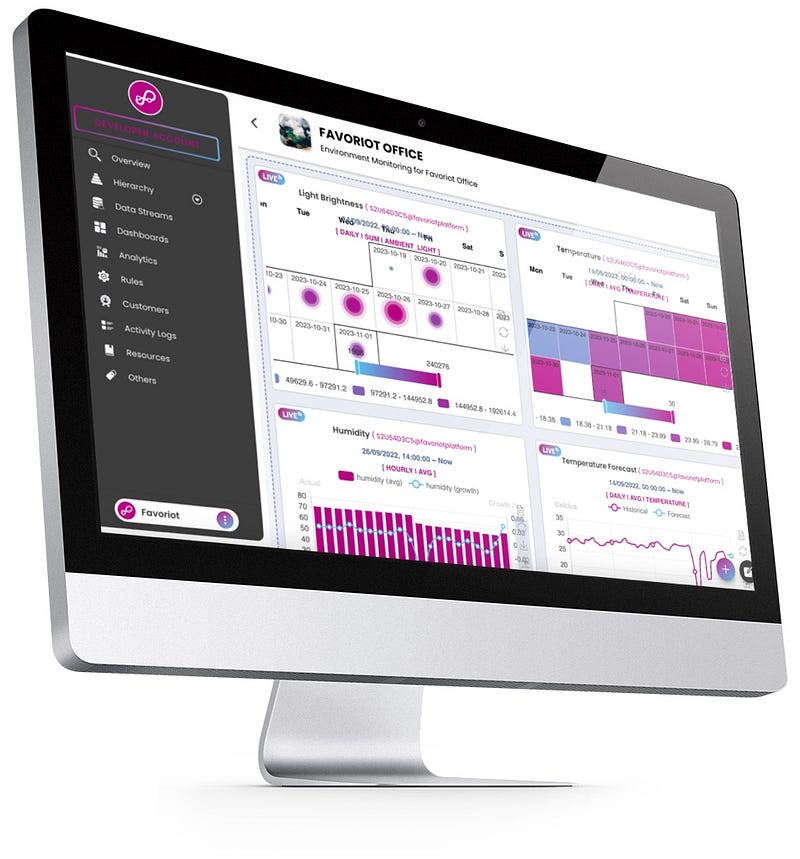
Second, 4G cellular communicates real-time data with the IoT platform of Favoriot, hence, making collection and visualization of data easy.

Use Case Scenarios in Practice

1 — Precision Agriculture

An advanced knowledge of the environmental conditions provides information on the yield of the crops and helps in judicious decisions on how to manage resources.

The mini weather station is able to provide this real-time information on the data of rainfall, temperature, and humidity to the farmer, which informs judicious decisions on irrigation and planting.

This would not only optimize the use of water but also enhance the health of the crop and yield.

2 — Urban Environmental Monitoring

Microclimate differences and pollution are regularly evident in urban areas.

Mini weather stations are used by city managers and environmentalists to monitor levels of air quality and temperature and humidity conditions simultaneously in diverse segments of a city.

Such information is critical towards the formulation of methods of combating urban heat islands and air pollution that if successfully implemented, would further enhance urban livability.

3 — Disaster Preparedness and Response

Mini-weather stations would be of much use in disaster preparedness and response in areas affected by extreme weather events.

By way of illustration, monitoring the amount of rain and wind speed enables one to predict and reduce the impact of floods and hurricanes, hence further evacuations and resource allocation.

The Technology Edge

Really, what is intriguing about the mini weather station is its technological sophistication in the simplicity of use.

With solar power, it is deployable in remote areas without thinking of the battery life to recharge it.

It further ensures data is transmitted and received in real time, coverage and connectivity of 4G to the Favoriot platform, which collects the data and visualizes it, hence being accessible and actionable to the decision-makers.

The ability to use advanced sensors with connectivity options makes the mini weather station a robust tool for multiple applications.

Video — Mini Weather Station

Conclusion

The mini weather station is an innovative environmental monitor and data collection move that delivers a versatile, efficient, and accurate solution to real-time data collection.

And the applications in everything from agriculture to urban planning and disaster management show how geography could revolutionize our dealings with the earth and its response.

Taking advantage of the power of these mini weather stations to improve decision-making, make greater use of resources, and enhance preparedness for environmental challenges.

The next wave of environmental monitoring is here, and it’s compact, it’s solar-powered, and it’s smarter than ever before.

Contact Favoriot to schedule an appointment or for further details.

How Favoriot Can Help Companies and IoT Developers to Expedite Their IoT Projects From Months to…

Image created using Canva by Author

Are you busy building IoT hardware but don’t have the time and resources to create an end-to-end solution in a short time frame for your customers?

Are you specializing in Data visualization and seeking an IoT project but need more tools or platforms to collect IoT data?

Deploying a robust IoT project, however, is an intricate task.

It involves blending diverse elements such as IoT devices, connectivity solutions, platforms, data processing, analytics, visualization, and user applications.

Companies specializing in IoT hardware often face significant hurdles when venturing into IoT platform development.

This challenge is amplified by the vast difference in the skill sets required for hardware versus software development, including the nuances of IoT platforms.

Crafting firmware is a world apart from managing sensor data and developing user-friendly dashboards.

This is precisely where Favoriot makes a grand entry, offering a streamlined on-premise IoT platform that effortlessly integrates with a company’s hardware solutions, thus delivering a holistic end-to-end IoT package to clients.

This strategy simplifies the entire IoT setup process and cuts down on the resources and capital needed to create a standalone IoT platform.

Challenges of In-House IoT Platform Development

The temptation to develop a bespoke IoT platform is strong among many organizations.

Yet, this path is often riddled with unforeseen reliability, scalability, and device management hurdles.

The endeavor to construct a secure, scalable, and efficient system for handling diverse device data is commonly underestimated.

This miscalculation leads to prolonged development phases and frequently results in a platform that needs to meet all predefined goals.

The High Cost of Delays and Inefficiency

In the dynamic IoT sector, time is a critical factor.

Delays in bringing products to market can lead to lost opportunities and weakened customer trust.

The ongoing necessity to customize the platform for new device integrations further slows development, leaving the final product ineffectual and obsolete.

Financial Considerations in Custom IoT Development

The cost of developing and maintaining a custom IoT platform often goes beyond initial estimates.

The investment required for design, testing, and ongoing upkeep typically exceeds budget forecasts.

Regular updates and security improvements further inflate the cost, rendering custom development a less viable option for numerous businesses.

The Benefits of Choosing Favoriot for IoT Projects

Favoriot offers a pre-built, comprehensive IoT platform that sidesteps the need for expensive and time-consuming in-house development.

Top Five Advantages of Favoriot’s IoT Platform:

  1. Speedy Deployment: Favoriot accelerates the IoT deployment process, significantly shortening the time from concept to market realization.
  2. Effortless Scalability: Designed for growth, Favoriot’s platform easily adapts to the addition of new devices, ensuring your project scales seamlessly.
  3. Cost-Effectiveness: Favoriot is an economical alternative to in-house platform development, offering predictable costs and financial efficiency. (Note: Perpetual License on-premise with unlimited APIs is available)
  4. Assured Security and Reliability: Favoriot ensures a safe and stable IoT environment with advanced security and reliability features.
  5. Consistent Support and Updates: Ongoing technical support and regular updates from Favoriot mean your platform remains cutting-edge.

Conclusion: Favoriot — Simplifying Your IoT Ambitions

In the intricate and competitive world of IoT, choosing the appropriate platform is vital.

Favoriot offers a solution that is inclusive and scalable and guarantees a swift and effective IoT project deployment.

Selecting Favoriot saves significant time and resources, positioning your IoT projects for success in a challenging market.

With Favoriot, you’re not merely picking a platform but embarking on a journey towards assured IoT achievement.


Contact Favoriot (info@favoriot.com) to schedule an appointment.


Relevant Information

https://mazlanabbas.com/elevate-your-iot-skills-with-advanced-iot-with-favoriot-iot-platform-training-2314245cf542https://mazlanabbas.com/elevate-your-iot-skills-with-advanced-iot-with-favoriot-iot-platform-training-2314245cf542https://mazlanabbas.com/elevate-your-iot-skills-with-advanced-iot-with-favoriot-iot-platform-training-2314245cf542

Lessons Learned From Building Multiple Products Into a Single Product

Photo by Kaleidico on Unsplash

In the early days of our startup, Favoriot embarked on an ambitious journey, driven by excitement and a pioneering spirit.

We ventured into developing four distinct products, embracing the common startup belief that diversification was key to success.

However, this strategy led us down a challenging path, one that taught us invaluable lessons about focus and precision in business.

The Struggles of Juggling Multiple Products

Initially, we faced a significant dilution of resources.

Managing four different products meant that none could receive the full attention and dedication it required.

Our agile and enthusiastic team found themselves stretched too thin, struggling to maintain and enhance these diverse offerings.

Marketing posed another significant challenge. Developing a clear, compelling message for each product was a Herculean task.

Our efforts to cater to a broad audience only led to confusion among potential customers, who were unclear about Favoriot’s area of specialization.

Furthermore, pricing strategies for each product added to our complexities. We had to navigate different customer segments, manage multiple social media channels, and create unique content for each product.

This exhaustive process led to a crucial realization – we were expending energy without making meaningful progress.

Photo by Peggy Anke on Unsplash

The Turnaround: Honing Our Focus

Faced with these challenges and an overextended team, we reached a turning point.

We had to choose between continuing our spread across various vertical markets or concentrating on our core technology.

Reflecting on our experiences, we chose the latter, marking the beginning of a significant transformation.

We decided to channel all our efforts into the Favoriot Platform, our premier IoT platform.

This focus was a game-changer.

It allowed us to enhance product quality significantly and streamline our marketing message.

The Rise of Favoriot Platform

As our focus narrowed to the Favoriot Platform, the market response shifted positively.

Customers gained a clear understanding of what Favoriot represented, and our expertise in the IoT space began to shine.

No longer spread thin, our product received the concentrated attention and refinement it needed.

Today, Favoriot stands as a formidable force in IoT in Malaysia and beyond.

This journey has underscored the importance of focus in the growth and success of a startup.

Comprehensive Lessons Learned

Our journey from managing multiple products to concentrating on a single platform taught us several key lessons:

  1. Focus is Essential: Spreading too thin can be detrimental in a startup. Focusing on core strengths and products can lead to better quality and more effective marketing.
  2. Clarity in Communication: A clear, focused message resonates more strongly with customers. It is vital to communicate what the company specializes in and stands for.
  3. Quality over Quantity: Concentrating on a single, well-developed product can be more beneficial than juggling multiple, less-refined ones.
  4. Adaptability is Key: The willingness to pivot and change strategies is crucial in the dynamic startup environment.
  5. Understanding the Market: A deep understanding of customer needs and market trends is essential for success.

In conclusion, our journey from multiplicity to singularity wasn’t just about changing our product strategy; it was a transformative experience that reshaped our entire approach to business.

It taught us the power of precision, the importance of focus, and the art of communicating clarity to our customers.

These lessons have been instrumental in shaping Favoriot into a leader in the IoT space, demonstrating that sometimes, less truly is more.


Remember to Subscribe to receive email updates on every post I publish.

You can also follow my Medium Publications:

I have also published several eBooks, such as:

Or, if you prefer, check my bookstore at Gumroad — https://mazlanabbas.gumroad.com

What You Can Learn From Government R&D to Avoid Failure in Building Your Startup Product

Photo by Jason Goodman on Unsplash

My career journey took an exciting turn when I transitioned from a government R&D agency to the dynamic world of startups.

This switch was not just a job title change but a transformative experience that reshaped my approach to business and innovation.

The frustrations in getting our R&D efforts to become a commercial product finally became great lessons for me.

Failures don’t mean we lose everything.

Stumbling blocks don’t mean it’s too high to overcome.

Blocks can turn into stairs to achieve success in the later stages of our careers.

Here, I share insights from my time in the bureaucratic labyrinth of government research and how those experiences now fuel my entrepreneurial spirit.

The Rigidity of Government R&D and Its Impact

In government R&D, I encountered an environment dominated by strict processes and red tape.

This stringent approach, though ensuring meticulous documentation and accountability, often hindered creative thinking.

Projects moved slowly, bogged down by the need for approvals at every step.

Almost every step of the way needs to be justified.

Different people who listen to our R&D work have other ideas or critiques. You can’t please them all.

Communication Gaps and Misaligned Visions

Regular progress checks, which should have fostered collaboration, felt like rigorous cross-examinations.

These interactions highlighted a significant gap in understanding between the R&D team and upper management, undermining the essence of innovative research.

After so much effort has been put in place, a project can suddenly be “killed.” Assigning the researchers to a different project seems like a big task to start all over again.

The Misalignment of Time Horizons

R&D is inherently a long-term endeavor.

However, a persistent push for short-term gains frequently led to a shift away from groundbreaking research to more immediate, less impactful tasks.

This short-sightedness had significant repercussions on the innovation process.

Many did not understand the risk and time factors between “Research” and “Development.” Both have different horizons.

The Dilemma of Patents versus Market-Ready Products

Our team’s efforts often resulted in an impressive array of patents, yet these innovations rarely translated into commercial products.

Focusing on immediate product development in other departments meant our groundbreaking ideas often would be shelved because we needed more resources to turn those patents into products.

Isolation from the Customer’s Voice

A critical limitation was the lack of direct interaction with the end-users. This disconnect led to assumptions about customer needs that seldom aligned with market realities.

Products developed in such isolation often failed to hit the mark upon release.

The High Cost of Rigidity

When products didn’t resonate with their target audience, making changes was expensive and time-consuming, given our rigid processes.

Despite significant investment, many products failed to make a lasting impact in the market.

Transforming Challenges into Startup Strengths

These experiences, while daunting, laid a solid foundation for my approach in the startup world.

I learned the importance of flexibility in R&D, embracing practices like Minimum Viable Product (MVP) and the Lean Method.

This approach allows for swift adaptation, a focus on customer needs, and the agility to pivot as necessary.

Photo by Dylan Gillis on Unsplash

Concluding Thoughts: Lessons for Aspiring Entrepreneurs

  1. Embrace Flexibility: Learn to adapt quickly and efficiently to changing circumstances.
  2. Prioritize Customer Feedback: Direct interaction with customers is invaluable for product development.
  3. Balance Long-Term Vision with Short-Term Goals: Don’t lose sight of long-term innovation while focusing on immediate tasks.
  4. Encourage Open Communication: Bridging gaps between different teams enhances understanding and collaboration.
  5. Convert Challenges into Opportunities: Use past experiences, even difficult ones, as learning opportunities for growth.
  6. Innovate with Market Focus: Align research and development with market demands and customer needs.

Though filled with hurdles, my time in government R&D provided invaluable lessons that now guide my journey through the startup ecosystem.

These insights have become a beacon, steering me towards efficient, customer-centric innovation and entrepreneurial success.


Remember to Subscribe to receive email updates on every post I publish.

You can also follow my Medium Publications:

I have also published several eBooks, such as:

Or, if you prefer, check my bookstore at Gumroad — https://mazlanabbas.gumroad.com

Finding Harmony in Chaos: What I Learned Building Three Products

Photo by Golden Antelope on Unsplash

The life of an entrepreneur often feels like navigating through a stormy sea, full of unexpected waves and hidden obstacles.

I’ve been on this exhilarating journey for a while, sailing through the challenges of creating and launching three unique products.

Today, I invite you to sit by the fireside and listen to my story.

It isn’t a narrative of regret but one filled with lessons, grit, and perseverance.

Every product was a chapter, and every stumble was a stepping stone to greater understanding.

Product One: Bridging the Digital World for Seniors

The spark for my maiden voyage was a heartfelt desire to help seniors connect with the digital realm.

But, as with many first ventures, I made some rookie mistakes. I should have judged the size of the market and the intricate needs of my audience. Seniors required a user-friendly interface that married simplicity with functionality.

A fact I initially overlooked.

This experience was my first tryst with the importance of genuinely grasping your audience’s psyche and sculpting a product that echoes their desires and challenges.

View at Medium.com

Product Two: Envisioning Smart Cities but Facing Smarter Rivals

A vision of futuristic smart cities fueled my second endeavor.

I was confident about my innovative solution but needed guidance on the ease with which competitors could replicate my ideas.

To make matters trickier, I needed to prepare for the uphill battle of convincing stakeholders in urban planning.

From this, I learned the undeniable importance of safeguarding one’s intellectual creations and the art of negotiating in bureaucratic mazes.

View at Medium.com

Product Three: The Delicate Dance with Privacy

I embarked on my third journey to enhance consumer safety and family security.

But I was met with an unforeseen adversary: the ever-complex world of privacy.

Despite my genuine intention to offer safety, many perceived it as an intrusion into their private lives.

This chapter underscored the necessity of balancing beneficial tech advancements with the ever-evolving societal expectations and regulations.

View at Medium.com

Sailing Ahead: Lessons from the Trenches

The hurdles I faced in my first three ventures were undeniably hard-hitting.

But they weren’t roadblocks; they were guideposts.

They honed my insights on what a product should truly stand for, polished my design instincts, and deepened my understanding of the intricate dance between tech, culture, and regulations.

Every setback was a lesson.

Every rise is a testament to my grit.

And this relentless spirit and gathered wisdom paved the way for the creation of my fourth product – a culmination of all the lessons from the past.

In the wise words of Henry Ford, “Failure is simply the opportunity to begin again, this time more intelligently.

So, cheers to all the brave souls who embrace their mistakes, draw wisdom from them, and set sail once more!

Gems from My Journey:

  1. Know Your Audience: Delve deep into understanding their needs and aspirations.
  2. Protect Your Ideas: It’s not just about creation but also preservation.
  3. Navigate Bureaucracy: Master the art of negotiation and stakeholder engagement.
  4. Balance Tech and Ethics: Marry innovation with societal expectations and norms.
  5. Embrace Setbacks: Each is a stepping stone to better understanding and growth.
  6. Endless Iteration: Continuously refine, innovate, and adapt to the changing tides.

I have written five eBooks, which you can download for free HERE.

View at Medium.com


View at Medium.com

How We Build Our Fourth IoT Product

Why did we build another IoT product? Why can’t we maintain the three IoT products developed earlier. Here’s the story.

When we launched the first IoT product called Raqib commercially in 2018, we received a lot of feedback from users and potential customers.

We have to decide to enhance the current product or spawn into a new product altogether.

Meanwhile, there are two more IoT products that we are still building and enhancing – the second product called Favorsense and the third product called Favoriot IoT platform.

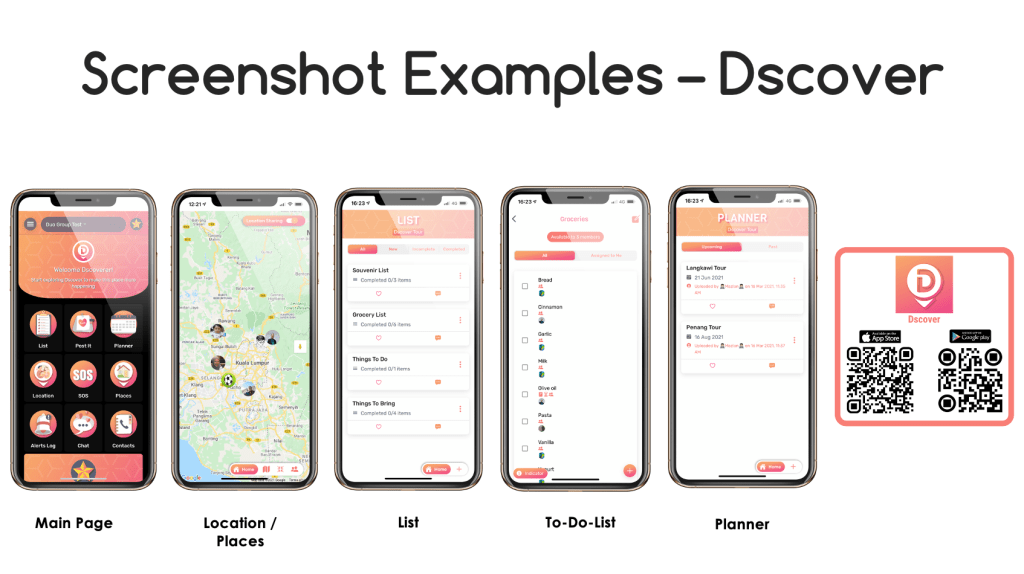
Finally, we decided to follow our gut feeling and start building our fourth IoT product called Dscover (formerly named D’scover – we will reveal the reason for changing the spelling later).

The Problem Statement

When we introduced Raqib as a single device solution for tracking (instead of using a Bluetooth smartwatch and a smartphone), we received much feedback that they don’t need the features of monitoring vital health signs.

But in which market is tracking the best suit for this product? Why the need for monitoring an individual in the first place?

In our early customer development process, tracking an individual is critical for safety – especially during travel.

If a person travels in a tour group, he wants to have some freedom on his own. But he also needs to be constantly connected with the group or his tour bus.

In the case of a tour guide responsible for the group, he must ensure the group’s safety, and the travel itinerary must be adhered to and to ensure no one is late or left behind.

If that person is lost, the easiest way is to locate through the mobile app. The app should also have a travel planner feature to organize and share among the tour members.

How Big is the Market

Initially, we targeted the Travel and Tourism market, which was vast and active before the Covid-19 strikes in early 2020.

Below are the statistics of the world’s and Malaysia’s No. of arrivals.

Travel and Tourism Market

However, when travel and tourism were severely affected in 2020 and 2021 by restricted movement orders and banned in traveling, we pivoted our market to a family and friends app.

The IoT Solution

We chose a mobile app as the solution because of the following reasons:

  • Cheaper because this “IoT” solution uses the individual’s device, i.e., smartphone. GPS is the only sensor needed. The user has paid their connectivity charges (mobile data). The user only needs to download the app and pay for premium features.
  • Easier to deploy and manage the users (only via the Google Store and App Store)
Dscover

Go-to-Market

The biggest challenge for such a product is that it has become a B2C model whereby the channel to market can be very challenging.

The most accessible marketing channel to reach the users is via Social Media – Facebook, Instagram, and Twitter.

To conduct targeted ads, we need to identify the users’ demographics – in this case, the family members and friends.

Earlier, we named the product D’scover, but it is complicated for a user to search the app in the App Store because of the unique spelling. Finally, we decided to change the name to Dscover.

In the travel and tourism market earlier, we have a B2B model approaching Travel Agencies and Government, but unfortunately, Covid-19 has a significant impact in this sector.

We have even expanded the market segment to solve the issues of monitoring quarantined patients. However, for some unforeseen reasons, this solution did not get the buy-in from the authorities.

Time to Stop Developing New IoT Products

We asked ourselves, have we done enough marketing and sales before moving into another product? Building a new product can be long and tiring.

All four IoT products have their strengths and weaknesses – which I will be able to share in other Blog articles. It is only the beginning of my IoT Adventure – you may subscribe to the newsletter or the RSS feed.

Dscover Resources

Articles worth reading:

  1. How We Build Our First IoT Product
  2. How We Build Our Second IoT Product
  3. How We Build Our Third IoT Product
  4. How We Build Our Fourth IoT Product