A Journey Inspired by Silicon Valley

Embracing Innovation and Pivoting the IoT Market

As we stepped off the plane, hearts full of ambition and minds buzzing with ideas, Silicon Valley had instilled in us a profound sense of purpose.

We had witnessed firsthand the epicenter of technological breakthroughs.

We were now fueled by a mission to harness the power of the Internet of Things (IoT) to transform the lives of senior citizens.

It was April 2017, and we were on the cusp of a two-year odyssey to breathe life into our vision, creating something innovative and truly impactful.

Understanding the Heart of the Matter

The landscape of aging is changing, with a growing number of seniors choosing to “age in place” yet facing formidable health challenges like heart disease, diabetes, and dementia.

This shift isn’t just a statistic; it’s about individuals striving to maintain their independence while wrestling with the vulnerabilities of age.

Their adult children, caught in the whirlwind of balancing careers and familial duties, find it increasingly difficult to provide the constant care their loved ones need.

In the dire moments of falls or sudden health crises, the harrowing truth hits home: these seniors might not be able to call for help in time.

The need for a technological guardian angel was undeniable — a beacon of hope that could offer round-the-clock monitoring and a lifeline to assistance.

The Growing Call for Innovation
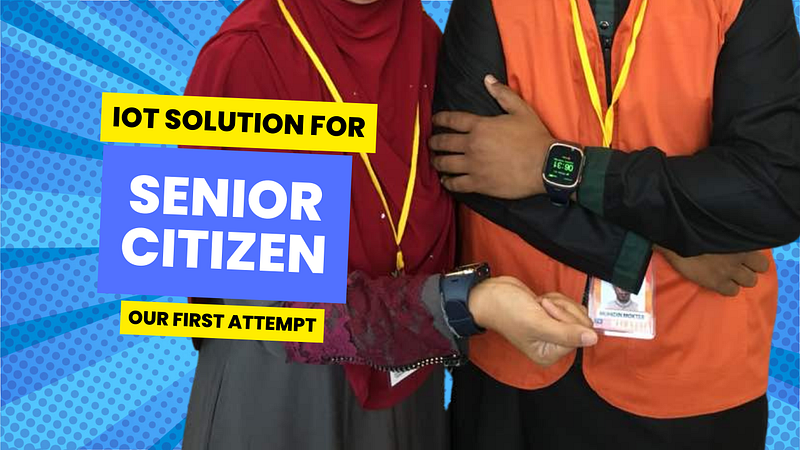
Start our IoT journey to solve senior citizen issues

Our research unveiled a stark reality: the global population is aging. By 2050, over 2 billion souls over 60 will grace our planet.

In Malaysia alone, the elderly constitute 7% of the populace, unveiling a vast horizon for healthcare solutions catering to seniors’ unique needs.

The potential to make a difference was immense, and our resolve only strengthened.

Crafting the IoT Guardian

We dreamed of a solution that would stand as a sentinel for the health and safety of our senior community — a beacon of innovation and care.

Our blueprint was clear:

  • A compact, wearable device that offered simplicity and freedom.
  • Continuous health monitoring, with sensors vigilant for the slightest signs of distress.
  • A GPS to weave a safety net indoors or beneath the open sky.
  • Seamless connectivity to bridge seniors with their caregivers.
  • A conduit for two-way communication, ensuring voices could always be heard.

After thorough consideration, we settled on a device reminiscent of a smartwatch.

This marvel of technology would monitor steps, heart rate, and blood pressure and stand vigilant for falls while championing the wearer’s independence.

The Journey Through the Market Maze

Introducing our first IoT product was a Herculean task.

Our initial venture into partnerships with Senior Citizen Care Centers revealed a misalignment with our target audience.

Pivoting with agility, we embraced the digital world, reaching out through social media and events, yet the vast seas of the market still seemed elusive.

Our path took an unexpected turn towards the Hajj pilgrims, offering a sanctuary of health and safety during their spiritual journey.

The response was a tapestry of mixed feelings, prompting us to recalibrate our strategy again.
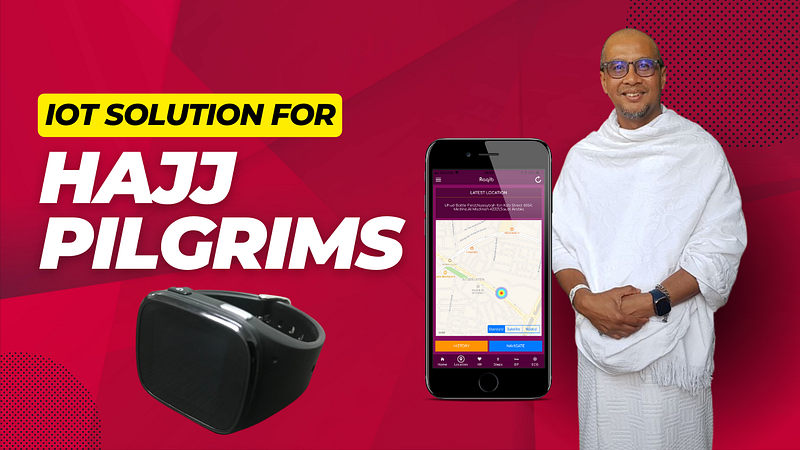
Pivoting the market to Hajj Pilgrims

Reflections and Revelations

Our initial venture into the realm of IoT for seniors was a mosaic of lessons, challenges, and boundless learning.

With each setback, our resolve deepened, and we were ready to evolve and flourish in this dynamic landscape.

As we look to the horizon, our hearts are buoyant with anticipation for the roads yet traveled.

Our journey is far from over; it’s a testament to innovation, resilience, and the relentless pursuit of making a difference.

Sharing the Three Pillars of Startup Wisdom:

  1. Embrace the Essence: Before you can solve a problem, immerse yourself in understanding the trials and tribulations of your audience.
  2. The Art of Adaptability: The market is a disruption of change. Stand ready to navigate its tides, adapting your course with the agility of a seasoned sailor.
  3. The Power of Connection: Forge bonds with your audience. Their insights are the compass that will guide your innovation, transforming them into champions of your cause.

This narrative isn’t just a story; it’s a beacon for all who dare to dream, innovate, and make the world a better place, one senior citizen at a time.


In the Startup Survival: The Journey of a Tech Entrepreneur eBook, I journaled my Startup journey.

https://mazlanabbas.gumroad.com/l/startupsurvival

6 Great Challenges Building an IoT Solution for Hajj

This article is the first part of our Raqib journey. The experience that we have learned building such a solution is priceless. We must always be prepared to overcome the technical challenges and go-to-market strategy.

RAQIB is the first IoT product we built when we launched our Startup in 2017. The initial target market was Senior Citizens. However, we pivoted (or expanded) our customer segment to cater to people going for their Hajj.

Target Hajj Market

Based on our market research, we saw Hajj market is very suitable for Raqib as per the following reasons:

  1. More than 2.3 Million perform Hajj per year (about 30,000 pilgrims are from Malaysia)
  2. Different languages and cultures make communication very difficult during an emergency.
  3. Many pilgrims went missing because of the crowded nature and unfamiliar with foreign places.
  4. People can easily fall sick or faint due to heat and dust. The need to call help immediately is a challenge.
  5. Constant care and monitoring are required to have peace of mind when performing Hajj, especially when traveling with a spouse that is elderly.
  6. The hajj peak period is between 5-6 days with crowded people in small areas. Thus, it’s a challenge to find a missing person, especially almost all wearing similar robes and clothes.
  7. When staying at Mina, the tents are very similar, and thus finding a way home can be a significant challenge.
  8. Crowded places include Mina, Arafat, Muzdalifah, and Tawaf at Kaaba.
During 2019 Umrah

Challenges of Building an IoT Solution (Raqib) for Hajj

We noticed that pivoting to a different market segment is not as straightforward as expected. The challenges are:

  1. Device – What are the main parameters that we should monitor? Is it health vital signs or safety (tracking locations)? For some, measuring the blood pressure level is more important, whereas others want to know the whereabouts of their spouse. 
  2. Network and Roaming – The model we offered only supports 2G networks and voice capability. Not many M2M sim cards provided by telcos have the roaming capability, and the cost can be high too due to the data roaming charges. Since we are bundling Raqib only for simple monitoring, we only limit data usage for wearable purposes and not for web browsing (users can detach the sim card and misuse it for other purposes). Enabling the right APNs of the device for different network operators in Saudi is also a challenge.
  3. Trial Period – Since Hajj is seasonal (once a year), we must find a way to trial at the Hajj site itself. The first option, we gave the device to our partners and customers who are performing their Umrah. We received a lot of issues during this trial, but we overcame it when we offered to our Saudi partner and our Malaysian trial customers to test during the 2018 Hajj. I also have personally tested Raqib during my Umrah in early 2019.
  4. User Behavior – It is also one of the biggest challenges because a user must always wear the Raqib watch to work as expected. If a person leaves the Raqib watch at their hotel, then the data on the Raqib app will not be accurate or consistent. The device must also be robust enough to withstand water during wudhu or bath. The user needs to charge the battery consistently, which is very challenging when the source of power is scarce in places like Arafat and Mina.
  5. Go-to-Market Strategy – Who will buy or subscribe to Raqib? Do we sell this to the Hajj authorities, or should we sell this to Hajj Travel Agencies? Or should we sell directly to the end-users? What’s the business model? It’s pretty challenging to sell as a CAPEX-based model because the Raqib requires sim cards, and the data need to be activated. Since this is a Hajj solution and it only happens once a year, what happens when a user returns home – do they want to continue using them. Or should it be a rental model for the travel agents – they can re-use the device for another group of Umrah pilgrims. Unfortunately, this rental doesn’t work because of the tedious logistics process – collecting the devices, cleaning them, and managing the stocks.
  6. Going Beyond Malaysian Market – For Raqib to be successful, it must capture a global market because the Hajj market is small and seasonal. However, to do this, we need to test the roaming capability of the sim cards – and we have done it successfully in Saudi Arabia, India, Maldives, Egypt, Bangladesh, and Thailand.

This article is the first part of our Raqib journey. The experience that we have learned from building such a solution is priceless. We must always be prepared to overcome the technical challenges and go-to-market strategy. 

Have you encountered any IoT solutions similar to Raqib? Please leave your comments below.

RAQIB Crowdfunding – Launchgood

Articles worth reading:

  1. TaqwaTech – RAQIB for Hajj
  2. Raqib Is The Companion You Need During Your Hajj & Umrah
  3. Raqib – Solution to Care and “Watch” The Pilgrims During Hajj and Umrah
  4. RAQIB Raising Donation Campaign With LaunchGood – Peace of Mind for Hajj Pilgrims in 2019