AI Agents: The Game Changer for 2025 and Beyond

AI Journey

IoT and AI Agents: A Perfect Team

As I get ready to start my day, I think about something I often ask myself: “What exactly is an AI agent?” It’s not just another complicated tech term; it’s an idea changing how we use technology and go about our daily lives.

An AI agent is like a super-smart assistant that can understand its surroundings, make decisions, and take actions to meet specific goals— all without needing constant instructions.

But what does “understand its surroundings” actually mean?

Picture a world where IoT sensors are like the eyes and ears of an AI agent. These sensors are embedded everywhere: in your home, your car, factories, farms, and even in your city.

They collect real-time data about everything — temperature, motion, air quality, energy use, etc.

An AI agent processes this data to get a clear picture of what’s happening and decides what to do next.

For example, a smart thermostat uses temperature sensors to learn when to heat or cool your home based on your habits.

On a larger scale, in a smart city, IoT sensors on traffic lights help an AI agent manage traffic flow, reducing congestion during rush hour.

Why AI Agents Matter

Picture a day when your assistant reminds you about meetings, plans your route to avoid traffic, and even orders your favourite snacks when you’re running low.

It’s not just about making life easier; it’s about being smarter with your time and energy.

Here are some reasons why AI agents are so helpful:

  1. Getting Things Done Faster: AI agents handle repetitive tasks like summarizing emails or making reports, leaving you free to focus on more significant ideas. Imagine never having to waste time on tedious chores again.
  2. Making Life Personal: AI agents learn about you — what you like and need — and give you tailored suggestions. Whether finding a new show to watch or giving health advice, they make things feel just right for you.
  3. Handling Big Loads: AI agents can manage a ton of work without slowing down in businesses. From answering customer questions to keeping track of supplies, they handle it all smoothly.
  4. Getting Smarter Over Time: Unlike regular systems that don’t change, AI agents learn from every interaction and improve continuously. They adapt to new challenges and keep getting better at helping you.

As I think about these benefits, I wonder: “Why is 2025 the year for AI agents?” The answer lies in how technology advances, businesses are ready, and people are trusting AI more.

Why 2025 Will Be the Year for AI Agents

There are several reasons why 2025 is shaping up to be a big year for AI agents:

  1. More Companies Using Them: Businesses realise how helpful AI agents can be. From helping customers to improving healthcare, these agents are becoming a must-have tool.
  2. Better Technology: AI agents are more intelligent than ever, thanks to language understanding and decision-making improvements. They can now handle complex tasks and make real-time choices.
  3. People Trust Them More: More and more people are comfortable using AI tools. For example, in 2024, the number of people using chatbots during the holiday shopping season skyrocketed — a clear sign that consumers are embracing AI.
  4. Industry Innovation: New AI tools designed for specific tasks make it easier for businesses and individuals to adopt these technologies. For example, personal virtual assistants are now more competent and more accessible than ever.

It’s not just about cool gadgets,” I remind myself. “It’s about creating a system that works for everyone.” That’s why things like data security and ethical AI are so important.

IoT and AI Agents: A Perfect Team

As someone who works closely with IoT (Internet of Things), I often think about how it fits with AI agents. IoT connects devices — like your smartwatch, fridge, or car — creating a network that collects loads of data.

But data alone isn’t valuable. AI agents are like the brain that makes sense of everything and acts on it.

Here’s how they work together:

  1. Making Data Useful: IoT devices collect information, but AI agents turn it into insights you can use. For example, a smart home can learn your daily habits and automatically adjust the lights or temperature to save energy.
  2. Deciding on Their Own: IoT sensors check the soil in agriculture, and AI agents choose when and how much to water crops. In healthcare, wearable devices monitor your health, and AI agents alert your doctor if something looks off.
  3. Simple and Easy to Use: Instead of confusing dashboards, you can just ask your AI agent questions like, “How much energy did we save this month?” and get clear answers.
  4. Managing Big Systems: Managing IoT networks can be a headache as they grow. AI agents make it simple by adapting to new devices and managing everything efficiently. In smart cities, they can control traffic lights to ease congestion.
  5. Improving Shopping Experiences: IoT sensors track what’s on the shelves in stores, and AI agents reorder items before they run out. It’s all about making sure customers get what they need without waiting.
  6. Helping the Environment: AI agents and IoT can reduce waste and save energy. Smart grids distribute electricity more efficiently, and AI agents optimize energy use at home and in factories.

Imagine this,” I think, “Your car tells your home’s AI agent you’re on your way. The garage door opens, the lights turn on, and the air conditioning adjusts to your preferred temperature. That’s the future — where everything works together seamlessly.

The Road Ahead

Of course, there are challenges. People worry about privacy and security. “How do we ensure AI agents work for us and not against us?” That’s a question I often come back to.

But the potential is enormous.

AI agents combined with IoT can change industries, simplify life, and solve problems in ways we’ve never seen before.

From improving healthcare to creating smarter cities, the possibilities are endless.

As I wrap up my thoughts, I feel excited about what’s to come. The year 2025 will be a turning point for AI agents and how we live and work.

It’s a year that could redefine everything.

So, let’s get ready to embrace this change. Let’s use AI agents to create a more imaginative, more connected world.

The future isn’t something we wait for — it’s something we build together.
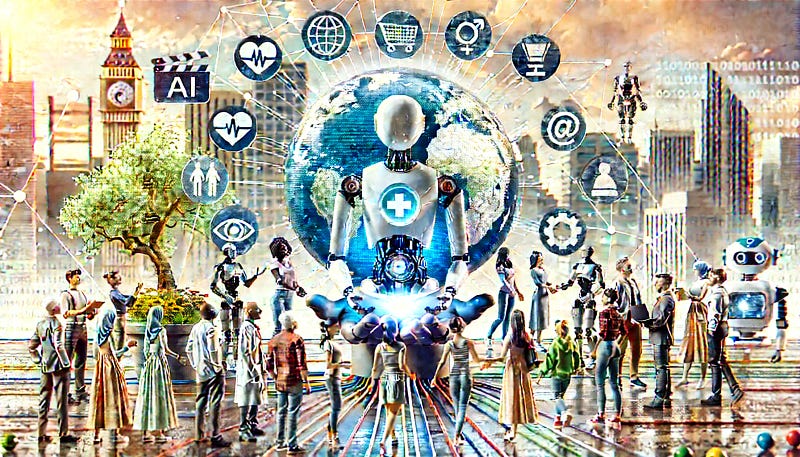
Living with AGI in 2030: How Everything Changed

ARTIFICIAL GENERAL INTELLIGENCE (AGI) REVOLUTION

An imaginary future

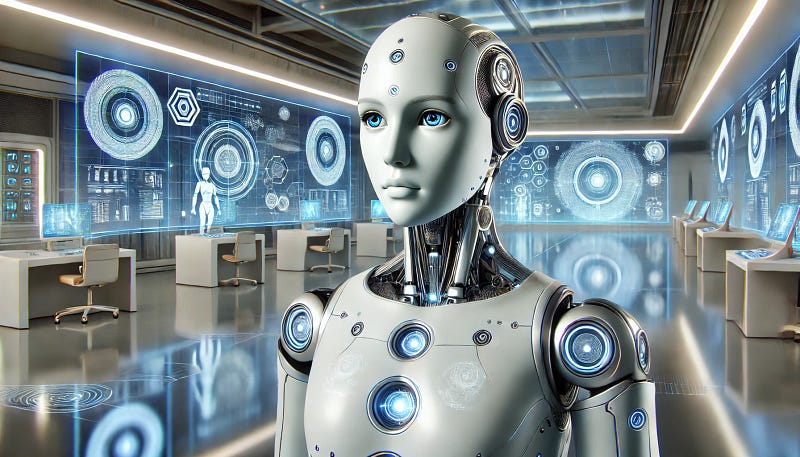
Image created by ChatGPT

I never thought I’d see the day. Artificial General Intelligence — or AGI as everyone calls it — is now part of everyday life. Back in the 2020s, it felt like something out of a movie.

You’d hear tech people throw around terms like “superintelligence,” and I’d nod along, not understanding.

But now? I’m living it.

And let me tell you, it’s not what I expected — it’s better.

“AGI? What’s That?”

I still remember the first time I heard about AGI hitting the scene.

It was all over the news: “AGI has arrived!” My first thought? Here we go, another overhyped tech buzzword.

It was just another fancy update to those voice assistants who could barely understand me half the time.

But then, over the next few weeks, things started to change—real change.

Hospitals began announcing breakthroughs, governments were talking about smarter cities, and my neighbours were raving about how AGI was making their lives easier.

Mornings Made Simple

Fast forward to today, and AGI is part of my daily routine.

Every morning, my assistant, let’s call it “Genie,” greets me like a friend who knows me a little too well.

Good morning, Mazlan! You didn’t sleep well last night — should I push your 9 a.m. meeting to the afternoon?

I blink at my screen, barely awake. How does it know? Then I glance at my smartwatch, which has been tracking my sleep patterns.

Of course, Genie knows. It’s connected to everything — my watch, calendar, even the temperature of my bedroom.

Yes, please,” I mumble, still groggy.

Genie’s not just a glorified organiser. It gets me.

If I’m feeling stressed, it suggests a quick meditation.

If I’m on a productivity streak, it lines up tasks so I can breeze through them.

It’s like having a personal assistant, life coach, and best friend rolled into one.

“Wait, My Health Is in Check?”

The biggest game-changer for me has been healthcare.

I’ve always been terrible about going to the doctor.

Who has the time? But now, I don’t need to. Genie monitors everything — heart rate, blood pressure, you name it.

Last year, it flagged something unusual with my heartbeat. “It’s probably nothing,” I thought, but Genie insisted I schedule a virtual check-up.

It turns out it wasn’t anything. The doctor said it could’ve turned into something serious if we hadn’t caught it early.

It’s weird, isn’t it? A piece of tech cared about my health more than I did.

And now, I don’t take it for granted. Knowing Genie’s got my back — even for things I can’t see — makes me feel safer.

My Kids Are Thriving

The way my kids learn now blows my mind. Back in school, it was all about memorising facts and fitting them into one-size-fits-all lessons.

But for my kids? AGI creates lessons tailored to them.

My youngest is obsessed with space. She’s learning everything from the physics of black holes to the history of space exploration—all in exciting ways.

The other day, she asked me, “Dad, did you know a black hole can ‘spaghettify’ a star?

Uh, sure,” I said, pretending to know what she was talking about. But inside, I was amazed. She’s learning things I didn’t even know existed at her age and loving it.

Cities That Work for Us

Even the city feels different now.

Remember those awful traffic jams? Gone. AGI manages the flow of self-driving cars so perfectly that I haven’t been stuck in traffic in years.

Buses, trains, even bikes — all move like clockwork.

And energy? Thanks to AGI’s smart grids, my house runs entirely on renewable power. I don’t even think about electricity bills anymore.

Genie ensures everything is efficient.

One day, I asked, “Why haven’t we had a blackout in years?

Genie replied, “Because every kilowatt of energy is optimised, Mazlan.

I didn’t fully understand the science, but I got the point: AGI handles things so well that I don’t have to worry about them.

Rediscovering What Matters

Here’s the surprising part: I’ve rediscovered things I’d forgotten about with AGI taking care of so much.

Like playing my guitar, I used to love strumming Bee Gees songs, but life got in the way. Now, I have time to pick it up again.

And it’s not just me.

My neighbour, a retired engineer, has started painting landscapes. Another friend is finally writing the book he’s been talking about for years. It’s like we’ve all been permitted to dream again.

Not Everything’s Perfect

Of course, not everything about AGI is sunshine and rainbows.

Some people are still trying to figure out who controls it. “What if it gets misused?” they ask. It’s a valid question.

I’ve even joined a few local forums to discuss how AGI should be managed.

Do you think AGI could ever take over?” I asked a tech-savvy friend recently.

Only if we let it,” he replied. “That’s why we need to stay involved.

It’s reassuring to know that while AGI is brilliant, the big decisions still rest with us.

Looking Ahead

As I sit here, writing this on my porch, I can’t help but feel grateful. AGI hasn’t just made life easier — it’s reminded us what it means to be human.

We’re no longer drowning in mundane tasks or endless stress. We have real-time time to connect, create, and enjoy life.

Life in 2030 isn’t perfect, but it feels like a step in the right direction.

For the first time in a long time, I’m excited about what’s next. And that is the greatest gift AGI has given us: hope for the future.

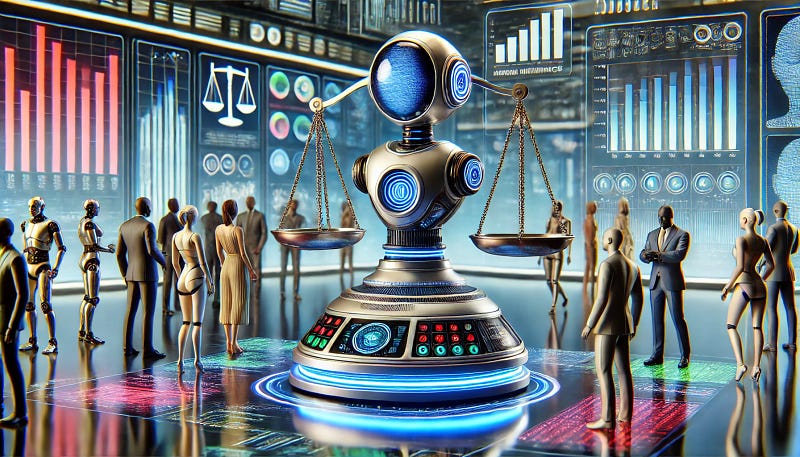
The Crucial Role of Inclusiveness in AI

AI ETHICS

Principle of AI — Inclusiveness

Image create using ChatGPT

I was fascinated by AI’s potential. It seemed like the future, with endless possibilities to revolutionize healthcare, education, and legal systems.

But one thought kept nagging at me: Who benefits from this technology? It dawned on me that if AI only serves a select group, it could widen existing social inequalities. If AI is only built for those with the most access, are we moving forward?

My work with the Internet of Things (IoT) and smart cities has already shown me how technology, while promising to enhance urban living, often caters to those with the resources to use it.

That same realization hit me with AI: AI must be inclusive.

It has to serve everyone, especially the vulnerable, or we risk creating deeper societal divisions. This is why AI must align with the principles of our Federal Constitution, which emphasizes equality, justice, and fairness for all.

Building Inclusiveness into AI Development

The first step to creating inclusive AI is ensuring the systems are designed for everyone, not just the privileged few.

I remember discussing this with a colleague. I asked, “What happens when AI systems in healthcare only use data from urban hospitals that serve wealthier patients?”

We both knew the answer.

Those systems wouldn’t be effective in rural areas, where diseases manifest differently and healthcare resources are more limited.

This example stayed with me. Imagine an AI designed to detect skin cancer, I thought. If it’s only trained on images of light-skinned individuals, what happens when it’s used on darker-skinned patients?

The answer is obvious: it could misdiagnose or fail to identify the condition entirely. Such bias has serious consequences—it could lead to poorer healthcare outcomes for large sections of the population.

That’s why AI systems need diverse data. We can ensure that AI serves everyone equally by training models on datasets that include various skin tones, environments, and lifestyles.

I remember thinking, This is more than just good design — it’s about justice. AI has to reflect the diversity of the people it’s meant to serve, or we’re not living up to our national values of fairness and equality.

Addressing the Needs of Vulnerable Groups

Then, there’s the issue of how AI tools can meet the specific needs of vulnerable populations.

AI should be for more than just those who live in developed, well-connected areas or who can afford the latest technology. It must serve everyone, especially those in need.

One day, I was thinking about the legal system and how difficult it is for many people to get proper legal representation.

I thought, “What if an AI could provide essential legal advice to those who can’t afford a lawyer?” This idea felt like a breakthrough. AI could help people understand their legal rights, assist in drafting contracts, or even generate legal documents.

But then another thought came to mind: What about people who struggle with reading? Or those without reliable internet access?

For AI to be inclusive, it must account for these users.

I imagined an AI legal assistant offering voice guidance for people with lower literacy levels or an AI working offline to reach remote areas. It became clear to me that AI could be the key to equal access to justice—but only if it’s designed to include everyone.

This aligns perfectly with our national principles of fairness and equality.

Ensuring Diversity Among AI Developers

As much as inclusiveness is about the technology itself, it’s also about who is building it. A diverse team of developers brings different perspectives, helping identify and address biases early on.

Are the people building this AI as diverse as those it serves?

Education is a perfect example of how a lack of diversity in AI development can lead to unintended consequences.

I once discussed AI-powered systems for grading student essays. I wondered, “What if the AI is biased towards a specific cultural or linguistic group?

Imagine a system that unintentionally favors students from urban areas who are more familiar with specific cultural references. Students from rural or minority backgrounds could be unfairly marked down simply because the AI doesn’t understand their context.

That’s where a diverse team of developers comes in.

They would bring a broader range of experiences and insights, helping to design AI systems that are fairer and more inclusive.

I pictured a scenario where developers from various backgrounds are involved in creating an AI-powered educational tool. A diverse team would recognize that not all students have the same internet access, so they design the system to work offline or in low-bandwidth environments.

That’s how AI can truly level the playing field for students, I thought. It’s about giving every student an equal chance, no matter where they come from.

Moving Forward with Inclusive AI

As I reflect on the future of AI, one thing becomes clear to me: Inclusiveness is not a choice; it’s a necessity.

If we’re not careful, AI could widen the gaps we want it to close.

That’s why we need to ensure that AI development techniques are inclusive, tools are designed to meet the needs of vulnerable groups, and that teams behind these systems are as diverse as the society they serve.

In my work with IoT and smart cities, I’ve always aimed to make technology accessible to as many people as possible.

The same approach must be taken with AI.

By focusing on inclusiveness, we can ensure AI systems benefit everyone, which aligns with our Federal Constitution and National Principles. This isn’t just about technology; it’s about creating a fairer, more just world.

In the end, I realized that inclusiveness in AI isn’t a luxury—it’s essential.

If we don’t take inclusiveness seriously, we risk creating technology that serves only the privileged and leaves the rest behind.

And that’s not the future I want to build.

Understanding Fairness in AI

UNDERSTANDING ARTIFICIAL INTELLIGENCE

How to build trust in AI machines and software.

Image created using ChatGPT

As I explore Artificial Intelligence (AI), one principle resurfaces in almost every conversation: fairness. But what does fairness mean when we talk about AI?

AI systems should be designed and implemented to avoid bias and discrimination. It sounds simple, but the more I think about it, the more complex it becomes. How can we ensure that a machine, learning from data that may contain past biases, remains fair to everyone?

I’ve spent years working in technology, from telecommunications to IoT, and I’ve seen firsthand how tech can change lives.

But what happens when this powerful technology, which is supposed to serve everyone, starts favoring particular groups? That’s the real issue with biased AI. Unfortunately, it’s not just a hypothetical concern—it’s happening all around us.

Is AI fair?” I often ask myself. And the answer, unfortunately, isn’t always “yes.

Example 1: The Recruitment Algorithm

Let me start with an easy-to-grasp scenario. Imagine a company using AI to screen job applicants.

The goal is simple: the AI looks at resumes and selects the best candidates for the job.

It sounds efficient.

But what if the historical data fed into the system reflects past biases? What if, historically, the company has hired more men than women for tech roles?

The AI would begin to learn from this data, thinking that men are more likely to succeed in these roles. The result? The AI starts favoring male candidates, even if female candidates are equally or more qualified.

As I think about this, I realize the real danger isn’t just the immediate bias — it’s the fact that it can perpetuate and amplify over time.

What if this AI system continues being used for years?” I ponder. “How many qualified candidates will be unfairly rejected just because the AI absorbed a biased pattern from the past?

This is why fairness is critical in AI systems.

We need to ensure that the algorithms don’t just mimic the past but actively help us create a more equitable future.

Example 2: AI in Healthcare

Another troubling example is in healthcare.

Imagine an AI system that helps doctors decide who should receive life-saving treatment first. Ideally, it should be a neutral tool that analyzes medical data to determine who is in the most critical condition.

But what if the AI has been trained on data favoring one demographic over another, such as wealthier patients who typically have better access to healthcare?

The AI might then start recommending treatments to wealthier individuals while overlooking those from underprivileged backgrounds who may have just as critical a need.

How can we let this happen in healthcare?” I ask myself. The stakes are too high. It’s a matter of life and death, and if we can’t ensure fairness in these systems, we are failing those who need help the most.

This is why AI fairness isn’t just a technical issue — it’s a moral one.

We’re dealing with real people’s lives, and any bias, no matter how small, can have far-reaching consequences.

Example 3: Facial Recognition and Law Enforcement

Facial recognition technology is another area where fairness is crucial. Several studies have shown that facial recognition systems often struggle to identify people with darker skin tones accurately.

How is this possible?” I ask myself. With all our advancements, how can a system still make such glaring errors?

But then I realized—it all comes back to the data. If the AI were trained primarily on images of lighter-skinned individuals, identifying darker-skinned people would be less accurate. If law enforcement agencies rely on these systems, it can lead to unjust outcomes, such as wrongful arrests or misidentification.

Imagine being misidentified by an AI system just because it wasn’t trained properly,” I think.

The impact of such a failure is profound.

People’s lives can be turned upside down instantly, all because an algorithm wasn’t built with fairness in mind.

The Path Forward

So, how do we ensure fairness in AI?

It starts with the data. We need diverse and representative datasets to train these systems. But it also requires constant vigilance. Even with the best data, biases can creep in through the design or implementation of the AI system itself.

I often remind myself, “It’s not enough to trust that AI will ‘figure it out’ on its own. As developers and users, we have to be proactive in identifying and correcting biases.” It’s a responsibility that we must take seriously, especially as AI becomes more integrated into every aspect of our lives.

For me, fairness in AI is about ensuring that the technology we build serves everyone equally.

It’s about not allowing past biases to shape the future.

It’s about holding ourselves accountable to the highest ethical standards. Only then can we truly unlock AI’s potential in a way that benefits all of humanity.

The Exciting Fusion of IoT, AI, and Robotics: A Vision of A Smarter Future

What are you most excited about for the future?

For the tech enthusiasts among us, the question, “What am I most excited about for the future?” is answered without missing a beat – it is the promise of technologies that make our world smarter and our lives simpler. Indeed, the future we eagerly anticipate is one where technologies such as Internet of Things (IoT), Artificial Intelligence (AI), and robotics are seamlessly integrated into our everyday life. This futuristic world isn’t merely about shiny new gadgets; it is about enhancing human life, augmenting our capabilities, and solving complex problems with precision and efficiency.

But, how exactly will these three transformative technologies change our lives? Let’s venture into a future where IoT, AI, and robotics meld together to create a smarter, simpler world.

Our Personal Lives: Smarter Homes and Healthier Lifestyles

Imagine waking up to a house that’s already anticipated your morning routine. The IoT-enabled coffee machine has brewed your coffee just in time for when you step out of the AI-powered shower that has adapted the water temperature to your preference. As you get ready, your smart mirror analyzes your health metrics, tracking any anomalies and providing updates on your overall well-being.

With the help of wearable IoT devices that monitor your vital signs and physical activities, preventive healthcare becomes the norm, and AI-powered applications can suggest personalized fitness routines and nutritional plans. Care for the elderly will be revolutionized with robots equipped with AI and IoT technologies offering assistance, companionship, and even medical aid.

Our Work: Increasing Efficiency and Productivity

In our workplaces, these technologies will work in synergy to streamline operations and enhance productivity. Imagine a smart office where your arrival triggers your preferred lighting and temperature settings. AI-powered tools could automate scheduling, organize your tasks based on your productivity patterns, and streamline communication between teams.

Collaborative robots, or ‘cobots,’ equipped with IoT sensors and AI capabilities, will work side by side with human employees. They will perform repetitive or dangerous tasks, leaving humans to focus on more creative and strategic aspects of their jobs. This not only increases safety but also boosts overall productivity.

Our Society: Smarter Cities and Improved Quality of Life

On a grander scale, the combination of IoT, AI, and robotics will facilitate the development of smarter, more efficient cities. IoT sensors could monitor everything from traffic patterns to air quality, helping to optimize urban planning and make cities more sustainable. AI could analyze the data to predict and manage any issues, such as traffic congestion, waste management, or energy use.

In disaster management, AI-powered robots could carry out rescue missions in hazardous environments where it is too dangerous for humans. They can help in search operations, deliver supplies, and even assist in medical procedures, potentially saving countless lives.

Our World: Environmental Conservation and Sustainability

As we grapple with climate change and environmental degradation, these technologies could provide innovative solutions for conservation and sustainability. IoT sensors can track environmental changes, providing valuable data to predict and mitigate the impact of climate change. AI can analyze this data to predict trends, while robots can be deployed for tasks like planting trees or cleaning up waste in hard-to-reach areas.

In conclusion, the fusion of IoT, AI, and robotics promises an exciting future where technology simplifies our lives, augments our abilities, and tackles global challenges. While we need to navigate issues around data privacy, security, and the digital divide, the benefits and potential of these technologies are undeniable. The future is not just about living in a high-tech world; it’s about living in a world where technology enhances human life, making us smarter, safer, healthier, and happier. As we stride into this exciting future, one can only wonder at the transformative changes we’ll see in the coming years.

Scientist of a Robotics Company

What’s a job you would like to do for just one day?

A scientist – that’s what I had in mind when I was a kid. That’s my ambition – to become a scientist that can design robots.

Probably I have been watching too many sci-fi movies during my childhood days. Starting from Jetsons to Land of the Giant to Star Trek.

Although I have not become a Scientist, I became an Engineer, a Lecturer, a Professor and a CEO.

Although I don’t design or develop robots, at least now I have a chance to use AI in my daily lives.

But maybe if there’s a wish that can come true – probably I would like to become a Scientist in an advanced Robotics company.

Giving myself a day to contribute my knowledge for the betterment of mankind in the future.

What about you?

A Scientist